Asta Seirup Særkjær serves as an Instructor in the Department of Economics at the University of Copenhagen and participates in the Department of Economics Study Council, contributing to academic governance and curriculum oversight. Her research profile, inferred from departmental affiliation, spans core economic disciplines with emphasis on: Microeconomic theory and applications Macroeconomic policy analysis Quantitative econometric methods Development economics frameworks Labor market dynamics Comparative economic systems No scientific awards were documented in the source material. Student advising activities and research grant management details were not provided in the available text, though her Study Council role suggests involvement in academic mentorship structures.
Annette Schellenberg-Lagler serves as Professor of Old Testament Studies at the University of Vienna's Faculty of Protestant Theology, where she concurrently holds leadership roles as Vice Dean, Director of Studies, and Deputy Head of the Institute for Old Testament Studies and Biblical Archaeology. Her academic career spans over two decades with significant contributions to biblical scholarship since joining Vienna in 2015 after positions at the University of Zurich and San Francisco Theological Seminary. Her educational foundation includes Protestant Theology studies at the University of Zurich (1991-1998), followed by doctoral completion in 2002 and habilitation in 2011 at the same institution. Key developmental phases include Swiss National Science Foundation research in Los Angeles (2003-2005) and tenure-track professorship in California (2007-2015). Schellenberg-Lagler's research centers on Prehistory (Genesis 1-11), Priestly literature, Wisdom literature, and the Song of Songs, with specialized focus on Old Testament Anthropology and theological controversies within ancient Near Eastern contexts. Her work consistently bridges textual analysis with anthropological and epistemological frameworks, particularly examining human cognition in wisdom texts and sensory dimensions in biblical poetry. Current projects include a Song of Songs commentary for Eerdmans' Illuminations series. Recent publications reveal evolving scholarly trajectories toward negative theology in Hebrew Bible studies and interdisciplinary epistemology, while maintaining deep engagement with Wisdom literature. Her editorial leadership as Editor-in-Chief of Vetus Testamentum since 2020 significantly shapes contemporary Old Testament scholarship. She actively mentors students through STEOP-Mentoring programs and doctoral seminars, building on early-career support from Swiss National Science Foundation and Zurich Young Talents scholarships. Her academic service extends to steering committees for the Society of Biblical Literature's 'Wisdom in Israelite Traditions' group and the Working Group on Old Testament Reception (AKRAT). As a core member of Vienna's Research Center 'Religion and Transformation in Contemporary Society' (RaT), she collaborates across multiple networks including the 'Epistemology in ancient Israel' consortium. Her institutional leadership drives curriculum development for Evangelical Theology programs while maintaining active participation in European scholarly societies like EABS and SBL.
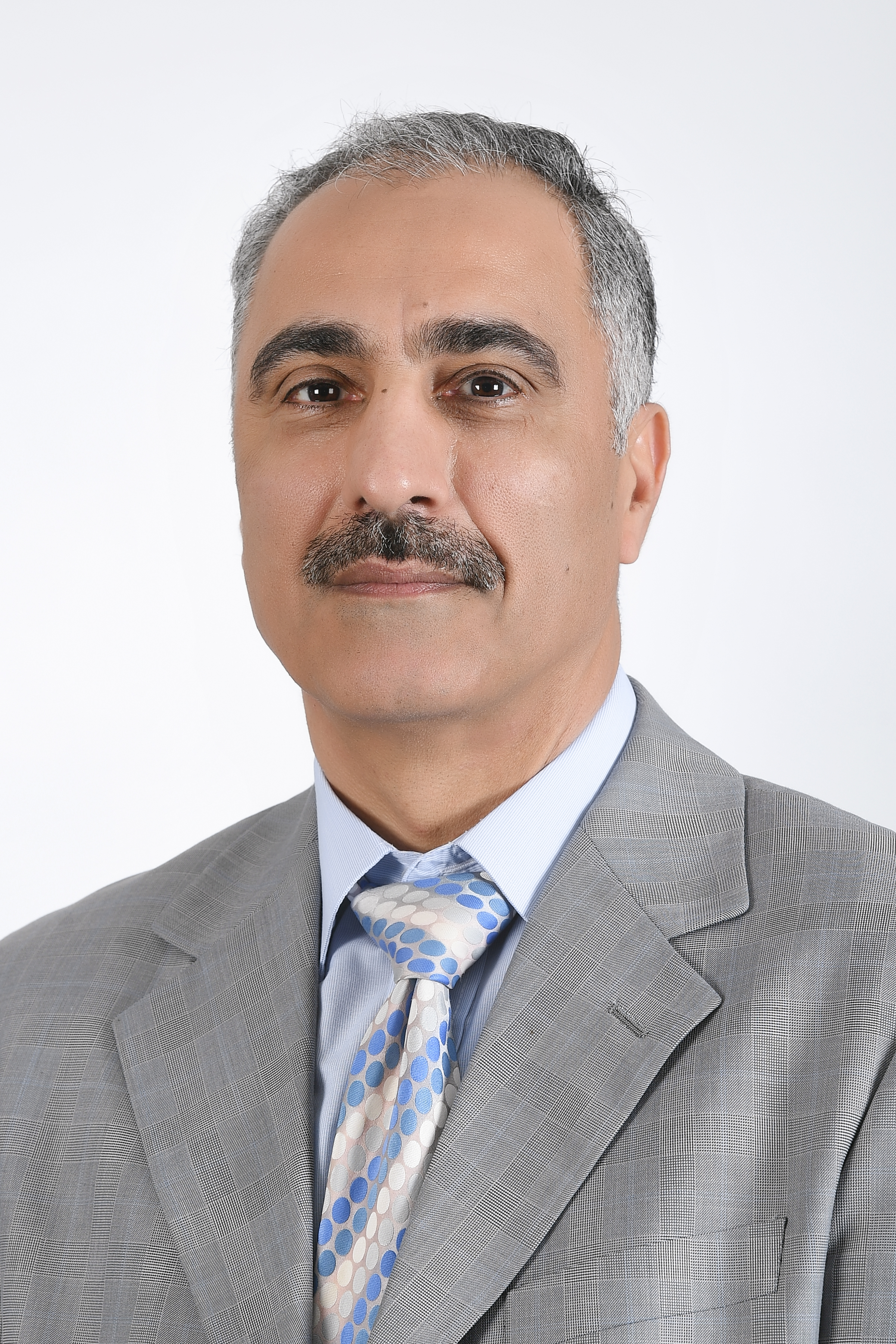
Dr. Nazar Ali serves as an Associate Professor in the Department of Electrical Engineering at Khalifa University, Abu Dhabi, UAE. With over three decades of academic experience since his 1990 PhD, he maintains active roles in research, teaching, and professional leadership within the electrical engineering domain. His educational foundation includes: PhD in Electrical Engineering, University of Bradford, UK (1990) BSc in Electrical Engineering, University of Mosul, Iraq (1984) Research spans cutting-edge RF engineering with emphasis on antenna design, high-efficiency power amplifiers, and indoor localization systems. His pioneering integration of Artificial Intelligence into traditional RF frameworks addresses modern wireless communication challenges, focusing on system optimization and next-generation wireless solutions. This interdisciplinary approach bridges hardware engineering with machine learning methodologies to enhance signal processing and device performance. Professional distinctions include: Senior Member of the Institute of Electrical and Electronics Engineers (IEEE) Internationally recognized Chartered Engineer certification Dr. Ali has mentored multiple MSc and PhD candidates through thesis supervision while teaching core electrical engineering curriculum including Applied Electromagnetics (ECCE320), Electric Circuits II (ECCE222), Electronic Circuits & Devices (ECCE312), and Microwave Circuits and Devices (ECCE316). His pedagogical approach combines theoretical rigor with practical laboratory implementation to develop industry-ready engineering competencies.
Deborah Fox is Associate Professor in Midwifery at the University of Technology Sydney (UTS), Faculty of Health, and a core member of the Centre for Midwifery, Child and Family Health. She serves as Co-lead of the Maridulu Budyari Gumal SPHERE Maternal and Women's Clinical Theme and Chair of the National Publicly Funded Homebirth Consortium. In 2024, she received the Faculty of Health Dean's Academic Excellence Award for Research (Mid Career Researcher), following her 2021 award as Highest Performing Early Career Researcher from the School of Nursing and Midwifery. Her research focuses on optimizing physiological processes and positive experiences for women with complex pregnancies, with particular emphasis on the mediation of technology in midwifery practice. Current projects include evaluation of non-invasive fetal ECG beltless and wireless fetal monitoring in labor and birth, and examining the social, economic and environmental impacts of telemonitoring and telehealth in pregnancy and postpartum care. Dr. Fox's scholarly work demonstrates consistent focus on technology's role in maternity care, women's experiences of monitoring during labor, and innovative approaches to midwifery practice. Her recent publications show increasing emphasis on digital health solutions, AI applications in women's health, and pandemic impacts on maternal care systems globally. Faculty of Health Dean's Academic Excellence Award for Research (Mid Career Researcher) 2024 Highest Performing Early Career Researcher award from School of Nursing and Midwifery 2021 Editorial Board Member, Women and Birth journal Dr. Fox is actively involved in higher degree research supervision and has developed innovative teaching resources, including an Objective Structured Clinical Examination for perinatal mental healthcare. She is scheduled to spend three months as a Visiting Scholar at the University of Oxford in 2025.
Asta Johanne Sigurdsson serves as a Lecturer in the Department of Political Science within the Faculty of Social Sciences at the University of Copenhagen. She is additionally affiliated with the department's Study Council, contributing to academic governance and curriculum oversight. Her research spans core Political Science disciplines, with emphasis on Government structures, Public Policy development, Political Theory frameworks, Comparative Politics across nations, and International Relations dynamics. This multidisciplinary approach addresses contemporary governance challenges and theoretical foundations of political systems. Through her Study Council role, she actively shapes educational programs and student academic experiences within the department, bridging teaching responsibilities with institutional administration.
Brad D. Jokisch is a Professor and Undergraduate Chair in the Department of Geography at Ohio University’s College of Arts and Sciences. He is affiliated with International Studies and Latin American Studies, and his research focuses on population, environment, and development, particularly in Latin America. His work explores transnational migration, land-use change, and livelihoods in the Ecuadoran Andes. Education: Ph.D., Clark University, 1998 B.A., Augustana College, 1989 His research interests lie at the intersection of cultural/political ecology, population dynamics, agriculture, and development. He investigates how migration influences environmental change and how development shapes population movements, with a regional focus on Latin America. His fieldwork in the Ecuadoran Andes examines the impact of remittances and emigration on landscapes and rural communities. Recent publications highlight trends in transnational migration, land-use change, and development policy. His work spans interdisciplinary journals in geography, anthropology, and development studies, reflecting a strong emphasis on human-environment systems and migration. Key themes include remittances, land cover change, indigenous urbanization, and migration policy in South America. Scientific Awards: Fulbright Scholarship (2023–2024) for research on family emigration in southern Ecuador Dr. Jokisch advises undergraduate students as chair and teaches core courses such as Population Geography, Geography of Latin America, and Agricultural Ecosystems. While specific grant details and advisees are not listed, his sustained research output and leadership in the department suggest active mentorship and scholarly engagement. He is currently conducting research in Ecuador under a Fulbright award, indicating ongoing international collaboration and field-based inquiry. He is a key contributor to human-environment geography and migration studies, with a long-standing commitment to theoretical and empirical research in Latin America.
Martin Jakobsson is a Professor of Marine Geology and Geophysics at Stockholm University's Department of Geological Sciences. His career spans international research expeditions and leadership roles, including Dean of Earth Science (2021) and Head of Department (2012-2018). A key member of the Marine Geology group, he studies Arctic and Antarctic glacial history through sediment analysis and seafloor mapping. PhD from Stockholm University (2000) Academy Fellow, Royal Swedish Academy of Sciences (2004-2009) Professor II position at University Centre of Svalbard (2011-) His research focuses on marine geological archives to reconstruct glacial cycles, ice-ocean interactions, and bathymetric mapping. As GEBCO Vice-Chair (2013-2020), he led initiatives for global seabed mapping through the Seabed 2030 project. Recent publications reveal expertise in: Arctic Ocean paleocirculation Methane release from thawing permafrost Ice sheet sensitivity to oceanic warming High-resolution bathymetric analysis Scientific recognition includes: Election to Royal Swedish Academy of Sciences (2012) 1st Vice President, Royal Swedish Academy of Sciences (2016-2019) Membership in Norwegian Scientific Academy for Polar Research (2016) He leads international collaborations on polar research vessels, with over a year of cumulative ship time and multiple Co-Chief Scientist roles on Arctic expeditions.
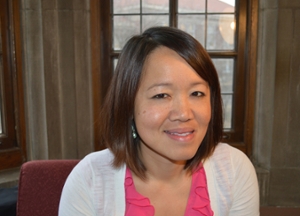
Monica Trieu is an Associate Professor in the School of Interdisciplinary Studies at Purdue University, where she focuses on the intersection of race, ethnicity, and immigration with particular emphasis on children of immigrants. Her scholarly work bridges sociology and Asian American studies through critical examination of identity formation and systemic inequalities. Education: Ph.D. in Sociology, University of California, Irvine (Asian American Studies emphasis) Master's in Sociology, University of California, Irvine Research Focus: Professor Trieu's expertise spans International Migration, Post-1960s Immigrants and Refugees, 1.5 and Second-Generation Identity, Transnational Ties, and Historical/Contemporary Asian American Experiences. Her scholarship critically analyzes internalized racism, regional identity formation (particularly in the Midwest), and the psychological impacts of anti-Asian violence during the pandemic. She employs intersectional frameworks to explore how refugee experiences, cultural adaptation, and transnational connections shape ethnic identity among Southeast Asian Americans and other immigrant communities. Publication Trends: Her 2013-2024 publications reveal evolving engagement with contemporary crises—from pandemic-induced mental health challenges and anti-Asian violence to structural invisibility of Midwest Asian American communities. While maintaining core focus on identity negotiation among second-generation immigrants, her recent work expands into comparative analyses of Asian American/Latina/o transnational patterns and refugee resettlement experiences, demonstrating methodological versatility across ethnographic, survey, and media analysis approaches. Professional Impact: As author of Identity Construction among Chinese-Vietnamese Americans: Being, Becoming, and Belonging (2009) and publications in Journal of Ethnic and Migration Studies and Journal of Asian American Studies , Trieu has established herself as a key voice in Midwest Asian American scholarship. Her research directly informs institutional responses to rising anti-Asian sentiment and contributes foundational frameworks for understanding regional ethnic identity formation beyond coastal enclaves.
Justin Russell Greene serves as an Advanced Instructor in the Department of English within Virginia Tech's College of Liberal Arts and Human Sciences. With over 15 years of teaching experience across multiple institutions, he currently teaches courses in film, literature, and writing at Virginia Tech, where he has been employed since 2019. His academic journey spans various teaching positions at Virginia Tech, Hampden-Sydney College, Virginia Commonwealth University, and several community colleges. Greene earned his BA, MA, and PhD in English and Media, Art, and Text from Virginia Commonwealth University. His educational background reflects his interdisciplinary approach that bridges traditional literary studies with contemporary media and cultural analysis. He has also completed professional development certifications in Anti-Racist Teaching and Foundations of Online Teaching at Virginia Tech. His research focuses on the intersections of cinema, media, and cultural studies, with particular attention to authorship, celebrity, and gender performance. Greene examines how authors and celebrities construct their identities across various media platforms, exploring topics ranging from Quentin Tarantino's cinematic masculinity to Roxane Gay's digital presence. His work often analyzes the performative aspects of identity in contemporary culture, particularly through fashion, social media, and visual storytelling. Greene's scholarly output demonstrates a consistent focus on authorial identity construction across media platforms. His publications reveal a trajectory from examining literary authors' fashion choices to analyzing digital performances of identity on social media, and more recently to cinematic studies of directors like Quentin Tarantino and Jordan Peele. The evolution of his work reflects broader cultural shifts toward digital and visual media while maintaining a consistent theoretical framework centered on performance and identity construction. Joyce Gentry Smoot Award (2025) for Excellence in Teaching by an Instructor As an educator, Greene has served as a reader on graduate student capstones and has been actively involved in curriculum development and pedagogical innovation. He has participated in numerous professional development activities focused on writing instruction, anti-racist pedagogy, and the integration of AI in teaching. His teaching philosophy emphasizes building student confidence in writing abilities, recognizing diverse student backgrounds, and providing individualized feedback to help students develop their unique voices. Greene is currently working on projects examining Jordan Peele's Nope (2022) regarding point-of-view and gore, as well as speculative adaptations in contemporary US media. His research interests continue to evolve with cultural trends while maintaining his core focus on performance, identity, and media representation.
Vicente Talanquer is a University Distinguished Professor in the Department of Chemistry and Biochemistry at the University of Arizona, College of Science. His academic journey includes a B.S., M.A., and Ph.D. in Chemistry from the Universidad Nacional Autónoma de México (UNAM), followed by postdoctoral research at the University of Chicago's James Frank Institute. He has held various academic roles, including Professor and Associate Professor at UNAM before joining the University of Arizona in 2000. His research focuses on chemistry education, particularly student reasoning, assessment, and the development of chemical thinking. Key areas include understanding how students conceptualize chemical reactions, design learning progressions, and improve formative assessment strategies. He has led initiatives such as the Instructional-Teams Model to enhance teaching practices in STEM courses. Dr. Talanquer has received numerous awards, including the ACS Award for Achievement in Research (2021) and Arizona Professor of the Year (2015). He actively contributes to national and international educational committees, editorial boards, and professional societies such as the American Chemical Society and NARST. His work emphasizes curriculum innovation, teacher preparation, and fostering equity in science education. His research is supported by grants from the National Science Foundation and the UA Provost Investment Fund, focusing on active learning, large-enrollment course redesign, and systems thinking approaches. Talanquer's publications span over 200 peer-reviewed articles, textbooks, and educational resources in chemistry education, reflecting his commitment to advancing both research and practice in the field.
Benjamin Arold is a University Assistant Professor at the Faculty of Economics, University of Cambridge. His academic career spans theoretical and applied research in labor economics, education economics, and AI-driven policy analysis. Previously, he held postdoctoral positions at ETH Zurich and visiting roles at Harvard University and Princeton University. Education: Ph.D. in Economics, LMU Munich His research bridges economic theory with empirical applications, focusing on: Long-term impacts of school curricula on student outcomes AI and NLP applications in labor economics Economics of religion and its societal implications Recent Article Trends: His work highlights intersections between education policy and technological innovation, including meta-analyses of private schooling effects, charter school performance evaluations, and computational methods for analyzing educational interventions. Scientific Awards: Prize for Best Dissertation (2021/2022) - German Economic Association Fürther Ludwig Erhard Prize (2023) Teaching: He teaches advanced courses on NLP in economics at Princeton University and Basel University, with a focus on computational methods for non-standard data.
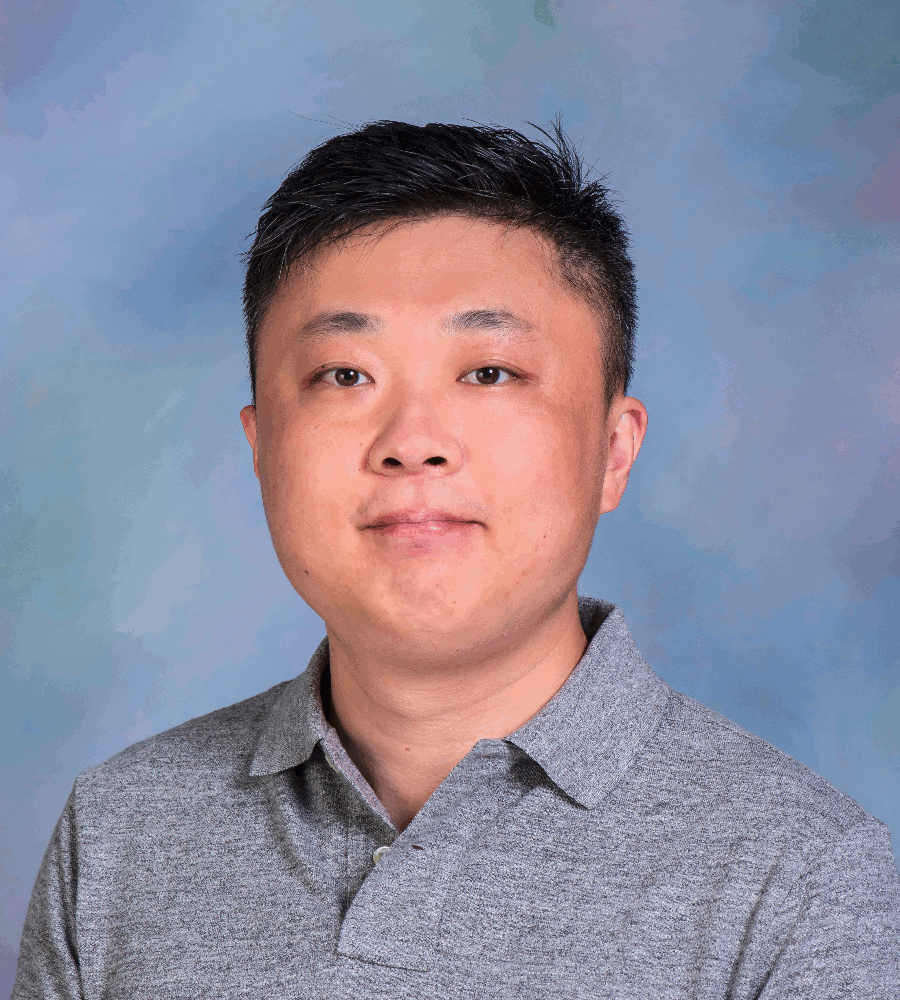
Kaiyu Hang is an Assistant Professor in the Department of Computer Science at Rice University, where he directs the Robotics and Physical Interactions Lab (RobotΠ Lab). His research spans multiple domains of robotics with a focus on physical interaction systems. Before joining Rice, he completed his postdoc at Yale University, earned his Ph.D./M.Sc. at KTH Royal Institute of Technology, and received his B.Eng. from Xi'an Jiaotong University. His research interests include robotic manipulation, grasping, in-hand manipulation, optimization, planning, learning, estimation, and control systems. He develops algorithms that enable robots to physically interact with other robots, people, and the world across scales from small grasping tasks to large-scale dual-arm and multi-robot manipulation systems. His work has practical applications in factories, kitchens, hospitals, warehouses, and construction sites. His recent publications demonstrate strong trends in in-hand manipulation techniques, energy-efficient drone operations, and benchmarking frameworks for robotic grasping. The 2025 IROS papers accepted highlight his leadership in developing standardized competition frameworks for evaluating robotic manipulation capabilities across diverse hardware platforms. ASME Rising Star of Mechanical Engineering (2024) NSF CAREER Award (2023) Multiple finalist awards at IEEE-RAS Humanoids and ICRA conferences Junior Fellowship Award from Institute for Advanced Study, HKUST (2017-2018) As an educator, he has taught multiple robotics courses including COMP 462/562: Introduction to Modern Robotics and COMP 461: Senior Design in A Robotized World. He serves as Faculty Advisor for the Rice Robotics Club and participates in graduate admissions. His lab actively recruits Ph.D. students and offers research opportunities for undergraduate and master's students who have completed core robotics courses.
Serdar K. Gozpinar serves as a Clinical Associate Professor in the Department of Physics within the College of Arts and Sciences at the University at Buffalo, where he has been teaching faculty since 2013. His academic credentials include: Bachelor of Science in Electrical and Electronics Engineering from Baskent University (2006) Doctor of Philosophy in Experimental High Energy Physics from Brandeis University (2012) Professor Gozpinar specializes in experimental particle physics with deep involvement in the ATLAS collaboration at CERN's Large Hadron Collider. His research focuses on fundamental particle interactions and high-energy collision analysis, contributing to advancements in subatomic physics. His engineering background uniquely bridges theoretical physics with experimental instrumentation design. As a dedicated teaching faculty member, he delivers physics curriculum across undergraduate programs. His pedagogical approach integrates cutting-edge research methodologies with core physics principles, particularly in electromagnetism and quantum mechanics. The department leverages his CERN experience to provide students with real-world experimental physics perspectives.
Dr. Jane Gair is a tenured Teaching Professor in the Division of Medical Sciences at the University of Victoria, where she teaches first and second-year medical students in the Island Medical Program (IMP). She serves as IMP Site Lead for Case-Based Learning (CBL) and Director for CBL Faculty Development, leading provincial curriculum implementation and faculty training. Her academic credentials include: BSc from McMaster University BSc from University of British Columbia (UBC) PhD from University of British Columbia (UBC) Her research centers on medical education methodologies including Problem-Based Learning (PBL) and Case-Based Learning (CBL), with emphasis on small-group pedagogy effectiveness. She maintains active scholarship in medical genetics and personalized medicine, as demonstrated through public lectures on epigenetics and genetic testing. International collaborations extend her work to the University of Newcastle (Australia), Patan Academy of Health Sciences (Nepal), and National University of Defense Technology (China). Dr. Gair directs UVic's branch of the national Let's Talk Science Outreach Program, engaging medical students in K-12 STEM education across Vancouver Island. This initiative serves as a core component of the FLEX course curriculum where she mentors students as Advisor, Assessor, and Supervisor. Her provincial faculty development work indicates ongoing grant-supported activities though specific funding sources aren't detailed. She maintains affiliations with the Centre for Biomedical Research (CBR) at UVic and the Centre for Health Education Scholarship (CHES) at UBC. Her leadership in Let's Talk Science coordinates medical student volunteers and community partners in delivering science literacy programs, with recent activities including 2023-2024 Mini Med School sessions on AI in healthcare, diabetes management, and genetic testing.
Dina Verdín serves as Assistant Professor in Engineering Education Systems and Design at Arizona State University's Polytechnic School, where she leads research on broadening participation in engineering through critical analysis of access and persistence barriers for first-generation, minoritized, and women students at intersectional identity junctions. Her educational foundation includes: Ph.D. in Engineering Education from Purdue University M.S. in Industrial Engineering from Purdue University B.S. in Industrial & Systems Engineering from San José State University Verdín's research program employs asset-based frameworks to examine how funds of knowledge and identity development influence engineering pathways. Her access strand investigates high school exposure barriers through culturally responsive activities that foster engineering interest and agency, while her persistence strand analyzes undergraduate institutional structures affecting identity negotiation and degree completion. This work centers intersectional methodologies to redefine engineering identity beyond traditional norms. Analysis of her 15 most recent publications (2020-2024) reveals consistent focus on first-generation Latinx students, classroom belonging mechanisms, and funds of knowledge applications. Her work predominantly utilizes mixed-methods approaches within Hispanic Serving Institutions, with growing emphasis on migratory student populations and critical engineering agency development. Her accolades include: NSF Graduate Research Fellowship IEEE Frontiers in Education Best Diversity Paper Award College of Engineering Outstanding Graduate Student Research Award AGEP Distinguished Scholar Award AERA Division D Top 3 In-Progress Research Verdín currently directs multiple NSF-funded initiatives including SAFE Teams (Student Asset-based Approach to Equitable Teams) and Reconceptualizing Community Cultural Wealth in engineering design. Her grants portfolio exceeds $1.3 million as PI/Co-PI, focusing on mastery learning implementation, engineering discipline disparities, and migratory student empowerment through gamified curricula. She teaches core courses in engineering statistics and research methods while mentoring graduate researchers. Her work actively shapes engineering education through community-engaged scholarship that centers student assets and challenges deficit-oriented paradigms in STEM persistence research.