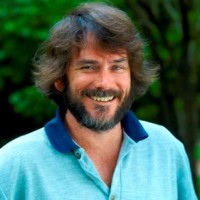
Robin Beaman is an Adjunct Senior Research Fellow at James Cook University in Cairns, Australia. With over 30 years of experience, he specializes in marine geology and ocean mapping, focusing on submerged geological features and their ecological implications. Research Interests : Drowned reefs, mesophotic coral ecosystems, submarine canyons, turbidite sediment flows, underwater landslides, and deep-water marine life Projects : GBR Marine Park mapping, Queensland Coastline Capture, Crowdsourced bathymetry, and Antarctic marine census initiatives His work develops 3D depth models of the Great Barrier Reef and Coral Sea, integrating geological and ecological data. Recent publications focus on Halimeda bioherms, carbonate platform drowning, and benthic community distributions across depth gradients. While no awards are listed, his research spans interdisciplinary collaborations with academic, government, and industry partners.
Brett Gonzalez is a Research Fellow at the School of Biological Sciences , University of Western Australia, affiliated with the Minderoo-UWA Deep-Sea Research Centre . He holds a PhD in Biology (University of Copenhagen, 2017), an MSc in Wildlife and Fisheries Sciences (Texas A&M University, 2010), and a BSc in Marine Biology (Texas A&M University at Galveston, 2005). His research focuses on enhancing understanding of rare and unique taxa in underexplored environments like the deep-sea, subterranean caves, pelagic zones, and interstitial habitats . He integrates traditional taxonomy with modern techniques such as high-throughput sequencing, 3D-reconstruction, and advanced microscopy. Key research areas include evolutionary processes shaping biodiversity , adaptation mechanisms in extreme environments, and biogeographic distributions of marine organisms. Recent work includes studies on scale worm diversity in hadal zones, cryptic species in subterranean estuaries , and molecular delimitation of leech species . Active Research Projects: Characterisation of high-resolution tubular eyes in Acoetidae scale worms (2025) - Chief Investigator at University of Western Australia. External Affiliations: Research Associate, Smithsonian National Museum of Natural History (2023–). Former Postdoctoral Researcher (2018–2023), Smithsonian National Museum of Natural History.
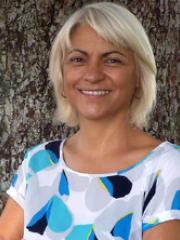
Professor Jane Williamson is a marine ecologist and fisheries biologist at Macquarie University's School of Natural Sciences, leading the Marine Ecology Group (MEG). She has over 30 years of experience assessing ocean health and human-induced challenges, focusing on threatened species, sustainable fishing practices, and species like sharks, rays, and sea cucumbers. Her roles include Chair of the NSW Fisheries Scientific Committee, membership in Plastic Oceans Australasia's Technical Advisory Panel, and editorial roles for Frontiers in Marine Science , Oceans , and Remote Sensing . Education: PhD in Marine Ecology (University of New South Wales, 2001) MSc (Hons I) in Zoology (University of Auckland, 1992) BSc in Marine Biology (University of Sydney, 1990) Research Interests: Marine biodiversity, sustainable fisheries, shark/ray biology, aquaculture, and ocean health. Her work integrates ecological assessments with policy recommendations to address overfishing and habitat degradation. Recent projects include studying coral reef complexity impacts on damselfish cognition and optimizing fishing practices for species resilience. Publications: Over 160 peer-reviewed articles, with recent focus on elasmobranch behavior, marine conservation, and ecosystem monitoring. Key themes include species identification, climate change effects, and technological innovations in marine research. Awards: 2014: Department of Biological Sciences Creativity & Teaching Award 2012: Faculty of Science Learning & Teaching Citation 2020: FSE Excellence in HDR Supervision 2014: Macquarie Excellence in Research (Highly Commended) Grants & Projects: MQ Marine Research Centre funding (2015–present) Evaluating DNA metabarcoding in pelagic fishes (2023) NSW Fisheries Scientific Committee leadership Labs & Teams: MEG collaborates internationally on projects like coral reef health, shark movement ecology, and marine debris management. The group emphasizes interdisciplinary approaches combining fieldwork, molecular tools, and policy advocacy.
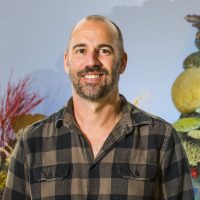
Dr. Andrew Baird is a Professorial Research Fellow and Chief Investigator at the ARC Centre of Excellence for Coral Reef Studies, James Cook University. His career spans over two decades, with roles including ARC Future Fellow (2010–2013), Principal Research Fellow, and Senior Research Fellow. He holds a Ph.D. and B.Sc. (Honours) in Marine Ecology from James Cook University. His research focuses on coral reef systematics, biogeography, and resilience to climate change. Key interests include coral reproductive strategies, bleaching mechanisms, and the impacts of environmental disturbances on reef ecosystems. Baird has contributed to landmark studies on coral spawning patterns, species delimitation, and the consequences of mass bleaching events. He has authored over 100 peer-reviewed articles, including seminal works in Nature , Science , and Annual Review of Ecology . Notable awards include the ARC Future Fellowship and leadership in global coral reef monitoring networks. His work bridges taxonomy, ecology, and conservation, emphasizing the urgency of addressing climate-driven threats to reefs. Awards: ARC Future Fellow (2010–2013), ARC Australian Postdoctoral Fellow (2002–2005) Education: Ph.D. (JCU), B.Sc. (Honours) in Marine Ecology (JCU) Labs/Teams: ARC Centre of Excellence for Coral Reef Studies, Reef Ecology Lab Baird advises seven graduate students and collaborates internationally on projects like the Coral Spawning Database and BioTIME biodiversity initiative. His current work explores genomic adaptations to warming and the functional consequences of reef degradation.
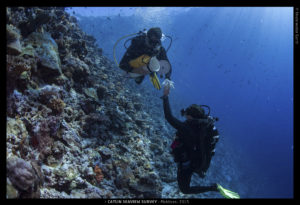
Dr. Veronica Radice is a Research Fellow at the University of Queensland and a member of the Australian Research Council Centre of Excellence for Coral Reef Studies. Her work focuses on coral physiology in relation to environmental conditions, particularly in mesophotic ecosystems, using biogeochemical techniques, genetics, and field experiments to study impacts of ocean warming and thermal stress on coral recovery from bleaching. Education: Bachelor’s degree in Biology from Johns Hopkins University, followed by research assistant and lab manager roles at Temple University. Research: Investigates coral trophic ecology, nutrient cycling, and gene expression under climate stress, with fieldwork in the Indo-Pacific and Maldives. Awards: XL Catlin Seaview Survey Ocean Scholar. Expertise: Mesophotic coral ecosystems, coral bleaching resilience, biogeochemistry, and oceanographic influences on reef productivity. Resources: Contributed to datasets and platforms like Mesophotic.org for coral reef research.
Dr. Alexandra Grutter is a researcher at the School of the Environment, University of Queensland, with a focus on coral reef ecology and marine parasitology. She is affiliated with the Centre for Marine Science and conducts research programs at Lizard Island on the Great Barrier Reef and on campus. Dr. Grutter earned her Doctor of Philosophy from James Cook University. Her research integrates multiple disciplines including evolutionary biology, molecular biology, parasitology, and animal behaviour. She uses field observations to generate hypotheses which are tested using field and laboratory experiments. Her primary research interests focus on cleaning symbiosis as a model system for developing and testing models of non-kin cooperation in multispecies mutualisms. She investigates the ecological significance of cleaning behaviour in reef fishes, the direct and indirect effects of cleaner fish on the coral reef community, interactions between larval coral reef fish and parasites, the effects of parasites on fish physiology, and the taxonomy of gnathiid isopods. Dr. Grutter also studies the role of colour and pattern in communication among animals, the molecular and colour pattern biogeography of cleaner fish, and sustainable amateur marine aquaria. Analysis of Dr. Grutter's recent publications reveals a strong focus on coral reef ecology, parasitology, and fish behaviour. Her work spans disciplines including marine biology, ecology, evolutionary biology, and conservation science. Recent research has particularly emphasized the role of cleaner fish in reef ecosystems, parasite-host interactions, and the impacts of environmental changes on marine communities. Dr. Grutter has supervised 28 postgraduate students, all of whom are now employed in science-related areas. Her research has been supported by multiple grants including ARC Discovery Projects, National Geographic Society grants administered by Deakin University, and Sea World Research and Rescue Foundation grants. Current projects include investigating the effects of climate change on reef mutualisms and the role of parasites in coral reef fish recruitment. Dr. Grutter's research is conducted through the Coral Reef Ecology Lab, with field programs at Lizard Island and Heron Island on the Great Barrier Reef. Her work involves collaborations with researchers across multiple institutions and countries, contributing significantly to our understanding of marine ecosystem dynamics and conservation.
Troy Gaston is an Associate Professor and Associate Dean for Engagement and Outreach at the University of Newcastle's School of Environmental and Life Sciences. His work focuses on environmental monitoring and assessment programs investigating the health and functioning of estuarine and coastal systems. He specializes in tracking nutrient sources and quantifying food-web interactions via stable isotope analysis across benthic, planktonic, and pelagic habitats. Education: PhD, University of New South Wales Bachelor of Science (Honours), University of New South Wales Graduate Certificate in University Teach & Learn, University of Tasmania Gaston's research centers on ecosystem-based management approaches, with particular expertise in stable isotope analysis to trace nutrient flows in coastal ecosystems. He investigates how estuarine and coastal habitats like saltmarsh, mangroves, and seagrass contribute to fisheries productivity, and has developed methods to link these habitats to commercial and recreational fishery yields. His work extends to the South Pacific, where he leads coral reef health assessment programs in the Cook Islands and Samoa, combining chemical tracers, remote-underwater survey techniques, and community-based science workshops. Gaston is also known for his innovative research on bycatch reduction in prawn-trawl fisheries. His recent publications demonstrate a strong focus on marine ecology, climate change impacts on coastal systems, and the application of novel technologies for ecosystem monitoring. Key research themes include stable isotope analysis for tracking nutrient flows, ray bioturbation and its ecosystem impacts, predator-prey dynamics in urchin barrens, and the effects of anthropogenic stressors on marine communities. His work spans from molecular-level investigations of marine organism physiology to large-scale continental assessments of climate-driven species range shifts. As an educator, Gaston has taught courses including Environmental Science: Concepts and Methods, Sustainable Fisheries and Aquaculture, Integrated Coastal Ecosystems, and Spatial Science. His teaching approach integrates field studies, laboratory work, and theoretical concepts to prepare students for careers in environmental science and management. Gaston leads collaborative research projects across Australia and the South Pacific, working with government agencies, local communities, and international partners to translate ecosystem science into conservation practice. His work emphasizes community engagement and capacity building, particularly in Pacific Island nations where he helps transfer scientific tools and knowledge to local marine park managers and communities.
John Veron is a researcher affiliated with James Cook University (JCU), specializing in marine biology and coral reef conservation. His work focuses on taxonomy, distribution patterns, and climate change impacts on zooxanthellate Scleractinia. His research spans coral taxonomy, evolutionary ecology, and conservation strategies for reef systems such as the Great Barrier Reef and the Coral Triangle. Key contributions include studies on coral growth patterns, extinction risks under climate change, and biogeographical distributions of reef-building corals. The 15 most recent articles highlight his expertise in: Coral taxonomy and classification Climate change effects on marine ecosystems Coral reef conservation and resilience Biogeographical distribution patterns Ecological risk assessment Marine biodiversity studies His publications often address the intersection of scientific research and policy for coral reef protection.
Associate Professor Annette Koenders is an Associate Dean (Medical and Exercise Science) at Edith Cowan University (ECU) within the School of Medical and Health Sciences. She leads initiatives in curriculum development, international collaborations (China/UK), and indigenisation of science curricula. Her roles include fostering inclusive academic culture and managing teaching strategies. She holds a PhD in Monash University and a Graduate Certificate in Education from ECU. Research Interests: Conservation biogeography, environmental DNA (eDNA) monitoring for species detection, genetic resistance in rodents, and metabolomics in endangered crayfish. Her work spans aquatic invertebrates, conservation genomics, and teaching pedagogy. Over $600k in grants support her projects on rodenticide resistance, seagrass microbiomes, and stygofauna biodiversity. Teaching: Current courses include MMS2103 Clinical Biochemistry. Past roles include coordinating courses, curriculum design, and serving on ECU committees like Academic Board and Student Appeals. Her teaching innovations include online delivery strategies during the pandemic and interdisciplinary collaborations. Awards: 2011 Dean’s Award (ECU), 1999 Teaching Fellowship Award (ECU). She has supervised 6 Honours, 6 Master’s, and 7 PhD students. Her professional associations include the Australian Council of Deans of Science and HERDSA. Grants & Projects: Key projects include eDNA tracking in rivers, rodenticide resistance detection, and biodiversity monitoring in WA ecosystems. She has led over 20 grants since 2002, including studies on Pilbara crustaceans and seagrass holobionts.
Associate Professor Tracy Ainsworth is a leading marine biologist at UNSW Sydney’s School of Biological, Earth and Environmental Sciences , specializing in coral reef ecology, microbiome dynamics, and climate change impacts on marine ecosystems. Her work bridges cellular-level stress responses with global reef conservation strategies, focusing on coral bleaching, disease mechanisms, and resilience-building frameworks. Research Themes : Coral microbiomes, thermal stress adaptation, disease diagnostics, and human impacts on reef systems Key Collaborations : Partnerships with marine conservationists, climate scientists, and microbiome researchers globally Recent studies highlight her role in developing predictive tools for coral bleaching, analyzing coral-algal interactions in subtropical reefs, and investigating microbial communities in deep-sea and high-latitude corals. Her meta-analyses reveal temperature-disease correlations, while innovative imaging techniques redefine coral decay metrics. She advocates for inclusive scientific practices and ecosystem-based management. Scientific Awards : No explicit awards mentioned in the text. Leadership : Co-author on over 50 peer-reviewed publications, with editorial and methodological contributions to marine microbiology. Her work informs global coral reef policy frameworks.
Tom Bridge is a Senior Research Fellow at James Cook University and Senior Curator of Corals at the Queensland Museum Network. His research focuses on coral reef biodiversity, particularly in deeper waters beyond SCUBA diving depth, and the relationship between deep and shallow reef habitats. Dr. Bridge's research interests span coral reef ecology, biogeography and conservation, with particular emphasis on mesophotic coral reef ecosystems, depth-diversity patterns in coral reefs, and the application of new technologies for marine environment mapping and 3D reconstruction. His work integrates traditional field surveys with cutting-edge remote imaging techniques to better understand reef community structure across depth gradients. His publications reveal a strong focus on coral taxonomy, biodiversity assessment across depth zones, and the ecological relationships between corals and associated organisms. Bridge's research demonstrates how technological innovations in imaging and mapping are revolutionizing our understanding of reef ecosystems, particularly in deeper mesophotic zones that have historically been understudied due to accessibility challenges. Dr. Bridge currently supervises multiple PhD candidates and collaborates extensively across international research networks. His work has significant implications for coral reef conservation strategies, particularly regarding the potential role of deeper reefs as refuges from climate change impacts affecting shallow water ecosystems.
Matthew Nitschke is a Research Team Leader at the Australian Institute of Marine Science (AIMS) in Townsville, Australia. He holds a PhD in Biology from the University of Queensland (2014) and prior degrees in Marine Conservation Science and Science from Victoria University of Wellington. His research focuses on marine symbioses, particularly coral-algal symbioses, examining how these interactions adapt to climate change. Key areas include symbiont evolution, thermal tolerance, and microbial community dynamics. Current affiliations include AIMS since 2021, preceded by postdoctoral roles at Victoria University of Wellington (2019–2021) and the University of Aveiro (2016–2019). He leads projects funded by the Marsden Fund (2022–2025) exploring bio-optical niche modeling of coral-symbiont systems under climate change. Research Interests: Physiological Ecology, Comparative Physiology, Coral Symbiosis, Climate Change Impacts Supervision: Advises PhD candidates including Corinne Allen, Bede Johnston, and Tahirih Perez Key Collaborations: Partnerships with international institutions on coral microbiome and symbiosis research Publications emphasize experimental evolution of symbionts for reef restoration, symbiont diversity patterns, and bio-optical phenotyping techniques. His work bridges ecological theory with applied conservation strategies to enhance coral resilience.
Dr. Selina Ward is an Honorary Senior Research Fellow at the University of Queensland's School of the Environment, with over three decades of research focused on coral reef ecology. Her work bridges marine biology, parasitology, and climate change impacts, contributing significantly to understanding reef resilience through extensive field studies and international collaborations across the Indo-Pacific region. Her research centers on coral reproductive biology and symbiotic relationships , with key investigations into: Spawning dynamics and larval settlement under environmental stress Symbiodinium transmission mechanisms between coral life stages Herbivore-coral interactions (including sea hares and fish) Parasite-host coevolution in reef ecosystems Climate change impacts on bleaching and recovery processes Analysis of her 29 publications (1992-2024) reveals evolving research trajectories from nutrient pollution effects (1990s) to contemporary climate resilience studies. Recent work emphasizes coral-algal competition dynamics , large-scale spawning databases , and artificial reef innovation , consistently highlighting the interplay between local stressors and global climate threats to reef survival. Dr. Ward maintains active research collaborations with leading institutions including the Australian Coral Reef Society, Great Barrier Reef Marine Park Authority, and global networks studying coral spawning phenology. Her work with the Brisbane Declaration team demonstrates engagement with environmental policy frameworks addressing freshwater ecosystem conservation.
Dr. Joseph Di Battista is a Senior Lecturer in the School of Environment and Science at Griffith University, affiliated with the Australian Rivers Institute. He holds a PhD from McGill University (2009) and has held roles including NSW Senior Research Scientist at the Australian Museum (2018–2023) and Early Career Research Fellow at Curtin University. His research focuses on molecular ecology, particularly environmental DNA (eDNA) for coastal and marine ecosystem monitoring, fish biodiversity, and citizen science integration. Education: BSc (McGill, 2001), MSc (University of Ottawa, 2005), PhD (McGill, 2009). His career includes postdoctoral work at the Hawai'i Institute of Marine Biology (2009–2012) and the King Abdullah University of Science and Technology (2013–2015). He has secured over AU$3.2M in grants from national/international agencies and philanthropic sources. Research interests include eDNA applications, fish microbiomes as ecological indicators, and leveraging citizen science for biodiversity audits. He coordinates projects like the Marine Biodiversity of Southern Sydney Harbour (inaturalist.org). Recent grants support eDNA tools in Australia, Japan, Oman, and Chile. He has co-supervised 4 PhD, 3 MSc, and 5 Honours students, training in field, lab, and analytical techniques. Current collaborations span institutions like the Australian Museum and CSIRO. His work addresses Sustainable Development Goals 13, 14, and 15 (Climate Action, Life Below Water, Life on Land).
Dr. Rosemary Golding is a Lecturer in Dentistry (Education-Focused) at Sydney Dental School, part of the University of Sydney's Faculty of Medicine and Health. She holds a BSc(Adv)(Hons), a PhD in Evolutionary Biology, and a DMD from the University of Sydney. Her career bridges academic research and dental education, with a focus on oral and systemic biosciences. Before entering dentistry, Dr. Golding conducted postdoctoral research at institutions like The Australian Museum and The Field Museum, funded by an Australian Biological Resources Study grant. Her work has centered on molluscan systematics, evolutionary biology, and anatomical morphology. Notably, she has contributed to taxonomic revisions of gastropod families and pioneered the use of micro-CT for 3D anatomical reconstruction. Since 2023, she has been an academic educator, designing curricula to enhance student confidence in foundational biosciences. Her research spans molluscan phylogeny, biogeography, and shell morphology, with over 20 peer-reviewed publications since 2007. She has received awards including the Brigadier A. Gordon Rowell Prize for Preventive Dentistry and the Goldsworthy Sullivan Memorial Prize in Oral Biology. Her academic contributions include leading projects on vermetid worm-snails and amphiboloid gastropods, emphasizing interdisciplinary approaches to taxonomy and evolutionary biology. Collaborations with global institutions underscore her international impact in malacology.