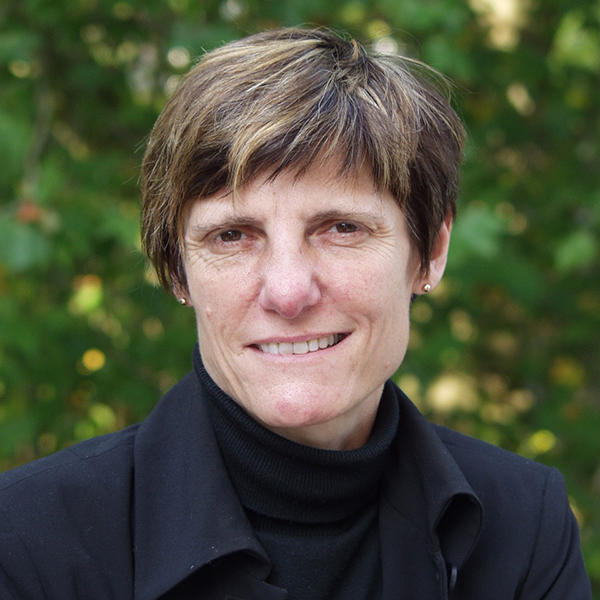
Dr. Faith Majekolagbe is an Assistant Professor at the University of Alberta's Faculty of Law in Canada. Her research focuses on the intersection of intellectual property (IP) law, technology law, and their impacts on access to knowledge, innovation, human development, and the UN Sustainable Development Goals (SDGs). She has advised governments and international organizations on IP-related policies and development matters. Notably, she was a 2022/2023 Fellow at the Berkman Klein Center for Internet and Society at Harvard University. Her work includes participations in events such as '7 Fellows Predict the Future' (May 2023) and discussions on copyright, text mining, and AI training (April 2023), alongside experts like Michael Geist and Ruth Okediji. Her research emphasizes how IP laws and systems shape technological advancement and equitable human development, aligning with global sustainability frameworks. While no specific articles are listed, her scholarship bridges legal frameworks, innovation policy, and societal impact. Awards include her Harvard fellowship, reflecting recognition of her contributions to internet and society studies.
University of North Carolina at Chapel HillUnited States
Zhun Deng is a tenure-track Assistant Professor at the Department of Computer Science, University of North Carolina at Chapel Hill. His research bridges machine learning, statistics, and theoretical computer science, focusing on rigorous frameworks for responsible AI systems. He previously held postdoctoral positions at Columbia University and completed his Ph.D. at Harvard's Theory of Computation group under Cynthia Dwork. Ph.D. in Computer Science, Harvard University (2022) B.Sc. in Mathematics, Chu Kochen Honors College, Zhejiang University His research spans theoretical foundations of machine learning, including: Quantile-based risk control and conformal prediction Fairness guarantees in algorithmic decision-making Uncertainty quantification for LLMs Copyright frameworks for generative AI Physics-informed hybrid models Multi-agent reinforcement learning with constraints Recent work analyzes LLM alignment through distribution-free methods (ICML 2025), explores performativity challenges (ICML 2025), and develops calibration techniques (ICLR 2024). Collaborations include research interns from Stanford, MIT, and NYU. Students in his group include: Ruomeng Ding (Ph.D., UNC) Xiaowei Yin (Ph.D., UNC) Kaicheng Zhang (Ph.D., UNC)
Daniel E. Ho holds multiple prestigious positions at Stanford University: William Benjamin Scott and Luna M. Scott Professor of Law Professor of Political Science Professor of Computer Science (by courtesy) Senior Fellow, Stanford Institute for Economic Policy Research Senior Fellow, Stanford Institute for Human-Centered Artificial Intelligence Faculty Fellow, Center for Advanced Study in the Behavioral Sciences He serves on the National Artificial Intelligence Advisory Commission (NAIAC), as Senior Advisor on Responsible AI at the U.S. Department of Labor, and as a Public Member of the Administrative Conference of the United States (ACUS). Ho earned his J.D. from Yale Law School and Ph.D. from Harvard University, completing a clerkship with Judge Stephen F. Williams on the U.S. Court of Appeals for the District of Columbia Circuit. His research bridges artificial intelligence, law, and public policy with emphasis on: Regulatory governance frameworks for AI systems Fairness and bias mitigation in algorithmic decision-making Environmental enforcement using satellite imagery and computer vision Methods for estimating racial disparities without direct demographic data Legal AI reliability and statutory research systems Analysis of his 2025 publications reveals a consistent focus on practical AI governance tools addressing real-world regulatory challenges. Key themes include developing benchmarks for legal applications, mitigating hallucination in legal AI tools, and creating systems for statutory research. His work demonstrates strong integration of technical AI methods with policy implementation, particularly in environmental enforcement and fairness assessment. As Director of the Regulation, Evaluation, and Governance Lab (RegLab), Ho leads interdisciplinary research partnerships with government agencies. While specific grant details aren't provided, RegLab's operational model indicates substantial research funding for policy-relevant AI projects. No student advisees are mentioned in available materials. Ho's leadership extends to national advisory roles where he shapes federal AI policy through evidence-based recommendations, particularly regarding environmental protection and civil rights enforcement mechanisms.
Stacey Lantagne is a Professor of Law at Western New England University School of Law , joining in 2022. Her research explores the intersection of digital creativity and intellectual property law, focusing on fanfiction and internet memes. She actively engages with pop culture and fan studies communities as a presenter and guest speaker. Education : B.A. summa cum laude, Boston College (English major, Computer Science minor) J.D. cum laude, Harvard Law School Her work addresses evolving legal challenges in digital communication, trademark expansion, and fair use doctrine. Articles like “Building a Better Mousetrap” and “Mutating Internet Memes” highlight her expertise in copyright law’s adaptation to internet culture. She serves on the Legal Committee of the Organization for Transformative Works , advocating for fan creators. Prior roles include teaching at the University of Mississippi and Loyola University New Orleans, along with intellectual property litigation experience at Goodwin Procter and Drinker Biddle & Reath.
Bryan H. Choi is an Associate Professor of Law at the University of Colorado Law School , where he bridges law and computer science to address software and AI safety. His work on software liability has influenced national cybersecurity strategy discussions. As an Adviser for the ALI Principles Project on Civil Liability for Artificial Intelligence , he shapes legal frameworks for emerging technologies. Education : JD and AB in Computer Science from Harvard University; clerkships with U.S. Court of Appeals judges Leonard I. Garth and William C. Bryson. Roles : Former joint appointment at Ohio State University Law School and Computer Science Department; Faculty Fellow at UPenn's CTIC; Director of Law and Media at Yale's ISP. Research Focus : Choi's scholarship examines software liability , AI accountability , and privacy law through interdisciplinary lenses. He critiques institutional approaches to software safety and advocates for empirical legal frameworks over participation-based models. Recent Articles address AI malpractice , NIST software standards , and forensic tool validation , reflecting trends in AI regulation and cyber-physical system liability . His 2021 NSF grant funded technical-legal methods for safety-critical systems. Awards & Grants : National Science Foundation (NSF) Grant (2021) Adviser, ALI Principles Project on Civil Liability for Artificial Intelligence Community Engagement : Active in Law and Computer Science communities , serving on committees for the ACM Symposium , Cybersecurity Law and Policy Scholars Conference , and co-organizing the AAAI Bridge Program on AI and Law .
Eric Beeko is a Teaching Assistant Professor in the Department of Africana Studies at the University of Pittsburgh, affiliated with the Kenneth P. Dietrich School of Arts and Sciences. His teaching focuses on African studies, including courses like African Civilization, Liberation Movements, and Music in Africa. He holds a Ph.D. in Ethnomusicology from the University of Pittsburgh (2005), alongside advanced degrees from institutions in Ghana. His research explores African musical traditions, cultural practices, and performance aesthetics. Current projects include studies on Neo-Pentecostal/Charismatic church music in Ghana and the interplay between tradition and modernity. Future research plans involve multi-volume studies on African linguistic-cultural distribution and Black performance practices globally. Publications include analyses of Akan music rights, Ghanaian choral innovations, and African cultural heritage. He is developing works on Neo-Pentecostal worship aesthetics and the role of music in identity expression across the African diaspora. Advising and grants are not explicitly listed, but his scholarly activities emphasize collaborative research in ethnomusicology and cultural studies. He is based in Posvar Hall, Office #4152.
Deborah R. Kidd serves as an Associate Professor in the Music Business/Management department at Berklee College of Music, bringing extensive industry experience as an entertainment attorney and executive to her teaching role. With over two decades of legal practice and over a decade of direct involvement in the music, entertainment, and media industries, she provides students with practical insights into the legal aspects of the music industry, copyrights, and contract negotiations. Education: J.D. from Cumberland School of Law (1999) LL.M. in entertainment and media law from Southwestern Law School (2015) M.A. in music business from Berklee College of Music B.S. in business administration from the University of Alabama in Huntsville Research Interests: Kidd's academic focus lies at the intersection of law and music business, with particular emphasis on entertainment law, music industry law, copyright law, and legal frameworks governing the entertainment sector. Her teaching philosophy centers on equipping students with practical skills to protect their intellectual property and navigate the legal landscape of the music industry, with the aim of unlocking their full potential for success. Professional Experience: She has founded and led Kidd Legal LLC, providing comprehensive legal services to artists and businesses in the entertainment industry. Her practice covered transactional and litigation matters across music, television, film, and social media platforms. She has also served as chief executive officer of PopDaze Entertainment LLC and worked at Virago Artist Management and Virago TV, where she pioneered livestreamed music and entertainment experiences during the pandemic. Professional Affiliations: Past board member of the Veterans Empowerment Organization Professional member of the National Academy of Recording Arts & Sciences United States Air Force JAG Corps veteran
Massachusetts Institute of TechnologyUnited States
Catherine Tucker is the Sloan Distinguished Professor of Management and Professor of Marketing at the MIT Sloan School of Management. She serves as the faculty director of the EMBA program and has chaired the MIT Sloan PhD Program. Her research focuses on the intersection of technology, marketing, and public policy, with expertise in digital privacy, online advertising, and blockchain applications. She co-founded the MIT Cryptoeconomics Lab and has testified before Congress on digital privacy issues. Tucker holds a PhD in Economics from Stanford University and a BA from the University of Oxford. Education: PhD in Economics, Stanford University Bachelor of Arts, University of Oxford Research Interests: Algorithmic bias and fairness Privacy regulation and consumer data Blockchain technology applications Healthcare technology and digital health Marketing strategy in digital ecosystems Awards: NSF CAREER Award (2010s) William F. O’Dell Award (Long-term Impact in Marketing) Garfield Economic Impact Award (2020) Editorial Roles: Senior editor at Marketing Science , former co-editor at Quantitative Marketing and Economics , and associate editor roles at Management Science and Journal of Marketing Research . Labs & Initiatives: Co-director of the NBER Digital Economics and AI program, and co-founder of the MIT Cryptoeconomics Lab studying blockchain applications.
Raymond Ku is the John Homer Kapp Professor of Law at Case Western Reserve University School of Law. He has served as Associate Dean for Academic Affairs and Co-Director of the Center for Law, Technology and the Art. His work focuses on Constitutional Law, Cyberlaw, Privacy, and Copyright, with an emphasis on how technology and evolving societal norms intersect with individual liberties. Education Juris Doctor (J.D.), New York University (1995) Bachelor of Arts (A.B.), Brown University (1992) Professor Ku’s research explores the tensions between free speech and copyright, the implications of digital technology on privacy, and the constitutional boundaries of surveillance. His publications span topics like peer-to-peer file sharing, reproductive rights, and data privacy, reflecting a commitment to addressing contemporary legal challenges through interdisciplinary lenses. His scholarship appears in prestigious law reviews, including Berkeley, Chicago, and Vanderbilt. He authored the first casebook on cyberspace law. Awards include the 2009 Distinguished Teacher Award and being voted Professor of the Year by the 2009 graduating class. Raymond Ku clerked for Judge Timothy K. Lewis and practiced constitutional, intellectual property, and antitrust law before transitioning to academia. He has taught at multiple institutions, contributing to legal education and research related to technology and civil liberties.
Joshua Fairfield is the William Donald Bain Family Professor of Law and Director of Artificial Intelligence Legal Innovation Strategy at Washington and Lee University's School of Law. His expertise spans digital property, data privacy, cryptocurrencies, and virtual worlds regulation. He holds a BA from Swarthmore College and a JD from the University of Chicago. Professor Fairfield's research focuses on the intersection of law and technology, particularly in digital ownership, privacy rights, and emerging technologies like IoT and blockchain. He has authored influential books, including Owned: Property, Privacy and the New Digital Serfdom (2017) and Runaway Technology: Can Law Keep Up? (2021). His work critiques corporate control over digital devices and advocates for consumer rights in the digital age. Education: BA, Swarthmore College; JD, University of Chicago Key Achievements: Fulbright Grant (2012–2013), American Law Institute Member (2013) Consulting: Advises U.S. agencies like the White House Office of Technology and Homeland Security Privacy Office His recent articles address topics such as environmental AI ethics, NFT regulation, and smart contract governance. Fairfield emphasizes the need for updated legal frameworks to protect digital rights and ensure democratic control over technology. He directs the AI Legal Innovation Strategy initiative, focusing on integrating AI into legal systems while addressing ethical and regulatory challenges.
Michael J. Meurer is a Professor of Law at Boston University School of Law, holding the Abraham and Lillian Benton Scholar title. He holds an SB in Economics and Interdisciplinary Science from MIT, a JD cum laude from the University of Minnesota, and a PhD in Economics from the same institution. His research focuses on Intellectual Property & Economics , with emphasis on patent policy, antitrust, and high-tech industry regulation. He has received multiple Pew Charitable Trust Grant Ford Foundation Grant Olin Faculty Fellowship at Yale Law School AT&T Bell Labs Postdoctoral Fellowship His teaching includes core courses in Intellectual Property and Patent Law, alongside workshops for international scholars and policymakers. Meurer's recent publications analyze patent reform frameworks collusion dynamics in patent disputes economic models for nonobviousness costs of patent trolling copyright policy in digital markets innovation economics He actively contributes to antitrust symposiums and law & economics workshops, maintaining a dual focus on legal theory and empirical economic analysis.
University of Illinois Urbana-ChampaignUnited States
Seung-Hyun Hong is an Associate Professor and Associate Head of the Department of Economics at the University of Illinois, affiliated with the College of Liberal Arts & Sciences. His research focuses on industrial organization, real estate economics, and digital technology impacts. He has contributed to understanding housing market dynamics, real estate brokerage practices, and the effects of digital platforms on industries like music and postal services. Key works include analyzing financing risks in housing markets and the influence of Napster on music sales. His research bridges theoretical frameworks with empirical applications, addressing issues of market efficiency, consumer behavior, and regulatory implications. Notable publications include studies on housing finance risks (2024), real estate agent influence (2022), and Napster's economic impact (2004–2013). His work often employs difference-in-differences approaches and explores strategic behaviors in markets. Hong's research spans multiple disciplines, including urban economics, consumer behavior, and technological adoption patterns. He maintains an active academic profile with collaborations across institutions. His advising and grants are not explicitly listed, but his extensive publication record indicates sustained research activity. Hong is based at the David Kinley Hall campus in Urbana, Illinois.
Jack Bernard is a Lecturer at the University of Michigan Law School and Associate General Counsel in the University of Michigan’s Office of the Vice President and General Counsel, where he has worked since 1999. He teaches at the Law School, School of Information, School of Education, Ford School of Public Policy, and Ross School of Business. Education: MA in Higher Education and JD from the University of Michigan. Bernard specializes in intellectual property, First Amendment, student rights, academic freedom, privacy, security, computing and cyber law, media rights, transactional work, and disability law. His work focuses on balancing legal frameworks with academic needs, particularly in digital rights and accessibility. He has received numerous accolades, including the L. Ray Patterson Copyright Award, the First Decade Award, and the Neubacher Award. His advocacy for open access and fair use in educational resources has significantly impacted U-M’s copyright initiatives. Leadership Roles: Chair of U-M’s Council for Disability Concerns; Board member of the Rudolf Steiner School of Ann Arbor. As the lead copyright lawyer for the University of Michigan, Bernard successfully defended the establishment of HathiTrust and ensured accessibility for print-disabled individuals in the Google Book Search project. He continues to promote the Open Access movement and fair use analyses in educational resource development.
Carla Hesse is the Peder Sather Professor of History at the University of California, Berkeley, where she has served as Assistant Professor, Associate Professor, and Professor since 1989. Her scholarly work centers on European intellectual and cultural history with a focus on France from the early modern period through the twentieth century. Hesse earned her PhD in History from Princeton University in 1986, following an MA from Princeton (1982) and a BA in History and French Literature from UC Santa Cruz (1978). Her educational journey established the foundation for her interdisciplinary approach to French history. Professor Hesse's research explores the intersections of gender, print culture, and political transformation in revolutionary France and the Enlightenment. She has pioneered studies on women's intellectual contributions during the Enlightenment, the cultural dimensions of revolutionary law, and the evolution of intellectual property. Her work consistently bridges social, legal, and cultural history to reveal how ideas shaped European society across centuries. Her extensive publication record demonstrates a sustained engagement with France's revolutionary legacy, particularly examining how print media, gender dynamics, and legal frameworks transformed during periods of radical political change. Hesse's scholarship reveals the complex relationship between cultural production and political upheaval, with recurring themes of authorship, intellectual networks, and the social construction of political subjects. Professor Hesse's exceptional contributions have been recognized through numerous prestigious awards and fellowships. National Humanities Center Fellowship (2000-2001) Guggenheim Fellowship (1998-1999) William Koren Jr. Prize for best article in modern French history (1991) Chevalier of the Ordre des Palmes Académiques (1993) NEH Fellowship at Institute for Advanced Study (1992-1993) Throughout her career, Hesse has actively mentored graduate students through committee service on admissions and education matters at both UC Berkeley and Rutgers University. Her research has been consistently supported by major funding from organizations including the National Endowment for the Humanities, American Council of Learned Societies, and the Whiting Foundation. She has also served as a peer reviewer for leading historical journals and funding bodies. Professor Hesse has played leadership roles in several research initiatives including co-directing the French Cultural Studies Program, chairing the French Studies Program at the Institute for European Studies, and serving on the Executive Committee for the Human Rights Program at the Townsend Center for the Humanities.
Graeme B. Dinwoodie is a University Distinguished Professor and Global Professor of Intellectual Property Law at Chicago-Kent College of Law, Illinois Institute of Technology, where he also serves as Co-Director of the Program in Intellectual Property Law. He has held prestigious academic positions at the University of Oxford (2009-2018), where he was Director of the Oxford Intellectual Property Research Centre and a Professorial Fellow of St. Peter's College, and Queen Mary College, University of London (2005-2009). Prior to his Oxford appointment, he led Chicago-Kent's intellectual property program for several years. Dinwoodie earned his J.S.D. from Columbia Law School, LL.M. from Harvard Law School, and LL.B. in Private Law (first class honors) from the University of Glasgow. He was the Burton Fellow at Columbia Law School (1988-89) and a John F. Kennedy Scholar at Harvard Law School (1987-88). Before entering academia, he practiced intellectual property law at Sullivan and Cromwell in New York. A leading international authority in trademark law, design law, and international intellectual property law, Dinwoodie's research focuses on the intersection of national and international IP systems, trademark theory and doctrine, and the evolving landscape of digital copyright. His work explores how trademark law serves consumer interests, the challenges of harmonizing IP systems across jurisdictions, and the role of international organizations like WIPO in shaping global IP norms. He has made significant contributions to understanding territoriality in trademark law and the impact of digital technologies on IP enforcement. Dinwoodie's extensive publication record reveals a consistent focus on the tension between national sovereignty and international harmonization in intellectual property law. His recent work examines the implications of Brexit for IP systems, the evolving role of internet intermediaries in IP enforcement, and the normative foundations of trademark law. He has increasingly focused on the practical application of IP law in digital contexts while maintaining his foundational work on international IP architecture. Scientific Awards and Recognition: Inducted into the IP Hall of Fame (2020) Recipient of the Ladas Memorial Award from the International Trademark Association (2008) Awarded the Pattishall Medal for Teaching Excellence in trademarks and trade identity law (2008) Three-time recipient of the Goldman Prize for Excellence in Teaching (University of Cincinnati) Elected to membership in the American Law Institute (2003) Named Norman and Edna Freehling Scholar (2001) Dinwoodie has served in significant advisory roles, including as a consultant to the World Intellectual Property Organization on private international law matters, an adviser to the American Law Institute Project on Principles on Jurisdiction and Recognition of Judgments in Intellectual Property Matters, and a consultant to the United Nations Conference on Trade and Development on the Protection of Traditional Knowledge. He currently serves as an adviser on the ALI's project on the Restatement of Copyright Law. He has held leadership positions as past chair of the Intellectual Property Section of the Association of American Law Schools and president of the International Association for the Advancement of Teaching and Research in Intellectual Property (ATRIP) from 2011 to 2013. As Co-Director of the Intellectual Property Program at Chicago-Kent, Dinwoodie helps shape one of the nation's leading IP law programs. His work with the Center for Design, Law & Technology reflects his commitment to addressing contemporary challenges at the intersection of law and innovation. Through his extensive scholarship, teaching, and professional service, Dinwoodie continues to influence both the theoretical foundations and practical applications of intellectual property law worldwide.