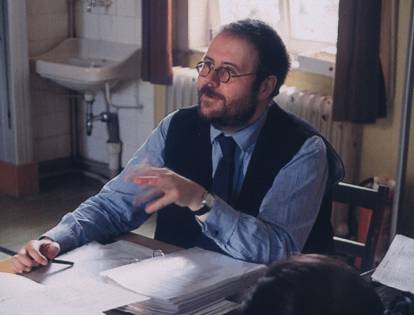
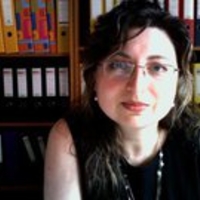
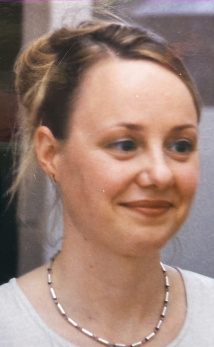
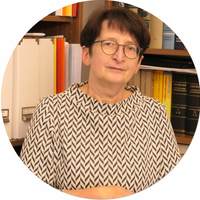
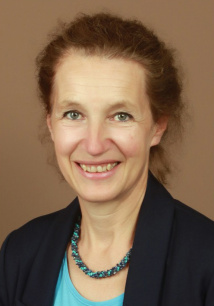
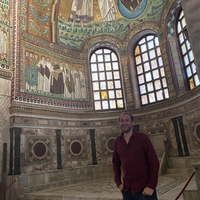
Eliese-Sophia Lincke is a Junior Professor at the Department of History and Cultural Studies, Freie Universität Berlin, since May 2022. Her work bridges computational methods with Egyptology, focusing on digital tools for studying ancient texts. Bachelor's and Master's in Egyptology, Humboldt-Universität zu Berlin (2007) PhD in "The Conception of Spaces in Language" (TOPOI Cluster, 2012) Research interests include: Digital Humanities : Developing machine learning models for Hieroglyphic, Demotic, and Coptic text processing Linguistic Typology : Analyzing classifier systems in Ancient Egyptian and Sign Languages Spatial Linguistics : Investigating prepositions and spatial adverbs in Egyptian-Coptic Recent publications focus on Neural Lemmatization , OCR for Coptic , and Classifier Semantics , demonstrating her commitment to computational Egyptology. Scientific awards include the Humboldt-Preis 2008 for best Master's thesis and the Prize for Good Teaching 2014 . She has co-organized workshops like "Wege zum Ägyptischen" and served as Co-Editor for Lingua Aegyptia . Her teaching contributes to the Digital Studies of Ancient Texts Master's program.
Prof. Dr. Frank Kammerzell is a Professor at the Department of Archaeology and Cultural History of Northeast Africa within Humboldt University of Berlin since May 2003. His academic career includes habilitation at the University of Göttingen (1999) and extensive research collaborations with Hebrew University of Jerusalem and University of Vienna. His educational background encompasses Medieval and Modern History (major 1980), Egyptology (major), Coptic Studies, General and Indo-European Linguistics, and Assyriology. He earned his Dr. phil. from Göttingen with a dissertation on 'Studies on the Language and History of the Carians in Egypt' (1990) and completed habilitation with 'Language contact and language change in ancient Egypt' (1999). Kammerzell's research spans Egyptian phonology, morphology, syntax, lexis, language history, diachronic typology, language contact, writing systems, and Carian history in Egypt. His work integrates linguistic analysis with archaeological contexts, examining language evolution through contact and typological shifts. Notable projects include studies on Egyptian-Akkadian typological developments and classifiers in ancient Egypt. His publications since 2000 demonstrate sustained focus on Egyptian linguistic structures, writing systems, and cross-linguistic influences. Key themes include verb classifiers, glossing rules for Ancient Egyptian, and lexical semantics-pragmatics interfaces, bridging Egyptology with broader linguistic theory. Graduate Scholarship from the State of Lower Saxony (Doctoral Scholarship) 1987-1989 Kammerzell has led significant research projects funded by the DFG, Fritz Thyssen Foundation, and Volkswagen Foundation. His collaborative work with institutions in Jerusalem and Göttingen highlights international partnerships. While specific advisees aren't listed, his editorial roles suggest mentorship in academic publishing. He co-founded research groups on multilingualism and script systems, contributing to journals like Lingua Aegyptia and Ägypten und Levante , underscoring team-based archaeological-linguistic research.
Dr. Mina Ibrahim is a Researcher at the Center for Conflict Research (ZfK) at Philipps University of Marburg , Germany. She is also the founder and director of Shubra’s Archive for Research & Development (SARD) in Cairo, Egypt, and serves as a project manager for the MENA Prison Forum and Institute for Foreign Relations (IFA) in Lebanon and Germany. PhD in Cultural Studies & Social Sciences (2022, Summa Cum Laude), Justus Liebig University & GCSC Giessen Master of Arts (2015, Cum Laude), Central European University (CEU), Hungary Bachelor of Arts (2014, Highest Honours), American University in Cairo (AUC), Egypt Her research explores minority dynamics , prison studies , urban sociology , and archives of conflict in the Middle East. Recent publications focus on Coptic Christian identity, sectarianism, and post-revolutionary Egypt. She has received prestigious fellowships from the DFG , Arab Council for Social Sciences , and Carnegie Endowment . Dr. Ibrahim supervises graduate students and teaches courses on prison systems, ethnography, and Middle Eastern cultural studies. Her fieldwork bridges Germany , Egypt , and Lebanon , emphasizing interdisciplinary approaches to power, memory, and urban marginalization .
Dr. Diliana Atanassova is a dedicated Coptic studies scholar currently serving as a Post-Doc researcher at the Göttingen Academy of Sciences, working on the Digital Comprehensive Edition and Translation of the Coptic-Sahidic Old Testament. Her academic journey spans multiple prestigious institutions including Macquarie University, University of Salzburg, and the Center for the Study of Eastern Christianity. Her research focuses on Coptic Bible, Coptic Literature, Coptic Manuscripts, and the Liturgy of the White Monastery in Upper Egypt, with particular expertise in Sahidic Coptic liturgical texts. She has made significant contributions to understanding the typika (liturgical directories) of the White Monastery, codicological analysis of Coptic manuscripts, and the liturgical practices of Southern Egyptian Christianity. Her extensive publication record demonstrates consistent scholarly output since 2004, with particular emphasis on manuscript identification, liturgical text analysis, and the reconstruction of early Christian liturgical practices in Egypt. Her work shows a clear trajectory from specific manuscript analysis toward broader understanding of Southern Egyptian liturgical traditions. As Project Supervisor for the DFG-Project 'Die Hymnen in der koptischen Liturgie des Weißen Klosters in Oberägypten' and previous FWF-Projects, she has demonstrated leadership in major research initiatives. She has also served as a board member of the 'Corpus dei Manoscritti Copti Letterari' research project since 2009. Dr. Atanassova has taught Coptic courses at multiple institutions including Georg-August-Universität Göttingen and the Faculty of Catholic Theology at the University of Salzburg, contributing to the education of future Coptic scholars.
Holger Strutwolf is a Professor at the University of Münster , where he chairs Patristics and New Testament Textual Research. He also serves as director of the Institute for New Testament Textual Research (INTF) and the Bible Museum. Education Studied Protestant theology at Bethel and Heidelberg Universities 1988: First theological examination at the Evangelical Lutheran Church of Oldenburg; MTheol at Heidelberg 1991: Doctorate at Heidelberg 1997: Habilitation at Münster Research Focus Strutwolf specializes in New Testament textual research, ancient church history (with particular interest in Gnosticism, Origen, and Eusebius of Caesarea), and the intersection of ancient theology with philosophy. His work explores Platonic influences on early Christian thought and methodological approaches to biblical textual criticism. Publications & Methodological Contributions His scholarship spans critical editions, book reviews, and analyses of scribal practices in manuscript transmission. Key themes include the reception of Gnosis in patristic writings, theological cosmology in late antiquity, and digital tools like the New Testament Virtual Manuscript Room for textual analysis. Academic Roles After academic and pastoral roles (1998–2004), he has led the INTF since 2004. His career integrates textual scholarship with systematic theological inquiry, particularly in patristic contexts.
Tonio Sebastian Richter is a Professor of Egyptology with a focus on Coptology at the Free University of Berlin's Department of History and Cultural Studies, Institute of Egyptology. He holds the position of Academy Professor at the Berlin-Brandenburg Academy of Sciences and Humanities and has served as the head of several major research projects including the DFG long-term project "Database and Dictionary of Greek Loanwords in Coptic" (DDGLC) and the Academy project "Structures and Transformations of the Vocabulary of the Egyptian Language. Text and Knowledge Culture in Ancient Egypt." His educational background includes a Magister Artium in Egyptology and Religious History from the University of Leipzig (1996), followed by a doctorate in 1999 and habilitation in 2005, both based on works concerning Coptic legal documents and their linguistic features. Richter has held academic positions at the Universities of Leipzig, Heidelberg, and Berlin, including serving as a Heisenberg Fellow of the German Research Foundation from 2011-2014. Richter's research interests span the history and cultural history of Egypt during the Roman, Byzantine, and early Islamic periods, with particular focus on Coptic language and texts. His work examines documentary texts including papyri, ostraca, and inscriptions that illuminate economic, legal, and social history. He has made significant contributions to the study of Coptic legal documents, magical and alchemical texts, and language contact phenomena between Egyptian/Coptic and Greek/Arabic. His research has revealed important insights into Coptic alchemical papyri, which represent some of the earliest witnesses to "the divine art" and enrich our knowledge of the development of late antique science and its transmission from Greek to Arabic. Richter has also pioneered work on language change and contact in the Egyptian-Coptic language, particularly regarding Greek and Arabic loanwords. Academy Professor, Berlin-Brandenburg Academy of Sciences and Humanities (2015-present) Professor of Egyptology with focus on Coptology, Free University Berlin (2014-present) Heisenberg Fellow, German Research Foundation (2011-2014) Extraordinary Professor, University of Leipzig (2011) Richter has received numerous scientific awards including the Heisenberg Fellowship from the German Research Foundation (2011) and the Friedrich-Weller Prize from the Saxon Academy of Sciences (2000). He serves on the scientific advisory boards of several prestigious institutions including the International Thesaurus Commission of the Thesaurus Linguae Latinae and the Scientific Advisory Board of the German Archaeological Institute. As an educator, Richter has been a main instructor for multiple International Summer Schools in Coptic Papyrology and has organized numerous academic conferences and workshops on Coptology, papyrology, and Egyptology. His work bridges linguistic, historical, and archaeological approaches to understanding ancient Egyptian civilization through its textual remains.
Rhenish Friedrich Wilhelm University of BonnGermany
Dr. Stefan Bojowald is a Lecturer in the Egyptology department at the Institute of Archaeology and Cultural Anthropology, University of Bonn. He holds a doctorate completed between 2014 and 2017 and has been actively contributing to the field through teaching and extensive scholarly publication. His institutional affiliations include membership in ATINER, Academic Genesis, and the Alliance Academy of Sciences, reflecting his engagement with international academic networks. Doctoral studies: 2014–2017 Master's degree: 2001 Studies: Egyptology, Classical Archaeology, Classical Philology, Semitic Studies, and Studies of the Christian Orient (1992–2000) Stefan Bojowald's research is deeply rooted in philological and linguistic analysis of ancient Egyptian and Coptic texts. His primary interests include Egyptian lexicography and phonology, with a particular focus on sound changes and word origins. He investigates cultural and linguistic contacts between Egypt and the Near East, drawing parallels between Egyptian, Hebrew, Akkadian, and Ugaritic languages. A distinctive aspect of his work is Egyptian ornithology—the study of birds in ancient Egyptian literature and symbolism. Additionally, he explores Coptic monasticism, especially through the lens of the Vita of Pachom , analyzing textual details, moral themes, and biblical intertextuality. His scholarship often bridges linguistic precision with cultural and religious interpretation. His recent publications, spanning from 2021 to 2025, reveal a consistent output in high-quality journals such as Aula Orientalis , Göttinger Miszellen , N.A.B.U. , and Le Muséon . These articles primarily focus on etymological investigations, phonological shifts (e.g., loss of 'q', 'n', 'h'), lexical analysis of specific terms, and comparative studies across Semitic and Afro-Asiatic languages. A significant trend is his exploration of linguistic survivals from ancient Egyptian into Coptic, metaphorical language in religious texts, and the interpretation of monastic literature. His 2023 monograph on the Vita of Pachom underscores his expertise in Coptic hagiography. While no scientific awards are listed in the provided text, Bojowald’s extensive publication record in specialized Egyptological and Coptic journals demonstrates scholarly recognition and contribution to the field. Dr. Bojowald advises students in Egyptology and Coptic studies, particularly through his courses in Coptic language (Koptisch I + II) and Coptic reading. There is no public information on external research grants he may have received. He is an active academic with a strong focus on textual analysis and linguistic research. There is no information provided about specific research labs or collaborative teams led by Dr. Bojowald. However, his membership in academic platforms and frequent publication in collaborative journals suggest participation in broader scholarly communities and networks within Egyptology and Coptic studies.
Daniele Cantini is a Senior Research Fellow and scientific coordinator at the Martin-Luther-Universität Halle-Wittenberg ’s Graduate School ‘Gesellschaft und Kultur in Bewegung’ . He specializes in social anthropology, Middle Eastern studies, and knowledge production dynamics, with a focus on Egyptian and Jordanian universities. His work bridges ethnographic research, critical theory, and institutional analysis. Education PhD in Cultural Anthropology (2006), University of Modena and Reggio Emilia & University of Milano – Bicocca MA in Cultural and Social Ethnology (2002), University of Modena and Reggio Emilia Research Interests Knowledge production in Middle Eastern universities Migration and integration in the Mediterranean Religious belonging and secularism Doctoral education in the Global South Recent Publications 2019: University reforms in the Middle East 2018: Knowledge production in Egyptian doctoral studies 2016: Private universities in Egypt
Dr. Katharina D. Sandmeier (Schröder) MA is a Research Fellow at the University of Münster, affiliated with the project "Novum Testamentum Graecum - Editio Critica Maior" under the North Rhine-Westphalian Academy of Sciences, Humanities and the Arts. She contributes to textual criticism and philological research on biblical manuscripts. Current role: Research Fellow in New Testament textual criticism Contact: k.d.sandmeier@uni-muenster.de Project focus: Greek and Coptic textual traditions of the Gospel of John
Dr. Rebecca E. Döhl is a researcher at the Institute of Archaeology, Humboldt University of Berlin, specializing in the Department of Archaeology and Cultural History of Northeast Africa (AKNOA). Her work bridges traditional Egyptology with cutting-edge digital methodologies, focusing on prehistoric and Predynastic Egypt, rock art, and complex system theory. Doctorate from Free University of Berlin (2009-2017) on rock paintings in Egypt Part-time degree in Academic Geoinformatics from University of Salzburg (2009-2011) MA in Egyptology from Free University of Berlin (2008) Her research combines landscape archaeology with digital tools like GIS, 3D modeling, and agent-based modeling to analyze ancient Egyptian communication systems. Notable projects include: 2023: Leading field campaigns in Gebel el-Nezzi, Eastern Desert 2018-present: Project coordinator for CaeMmCom (Corpus of Ancient Egyptian Multimodal Communication) 2010-2016: Rock paintings survey in Wadi Berber She has received prestigious funding from Gerda Henkel, TOPOI, and DAAD, and her publications explore spatial approaches to rock art and multimodal communication in Ancient Egypt. Her work also contributes to theoretical discussions on social development and complex systems in archaeology.
Prof. Dr. Gesa Schenke is a Professor of Coptology at the University of Münster’s Institute for Egyptology and Coptology. She leads Project A3-28 within the Cluster of Excellence ‘Religion and Politics,’ focusing on Coptic papyri and the cult of saints. Her academic journey includes research roles at the University of Oxford (2014–2018) and Leiden University (2009–2014), with stipends from the Fritz Thyssen Foundation and others. Education: PhD in Classical Archaeology (University of Cologne, 2000), MA studies in Egyptology, Classical Archaeology, and Ancient Greek (Cologne, Munich), BA in Classics and Anthropology (Pitzer College, USA). Research interests span Coptic papyrology, Late Antique Egyptian society, monastic archaeology, and medical texts. Recent work explores monastic land management and healing cults in Coptic legal documents. Publications include monographs on martyr legends and edited volumes on Coptic texts. Teaching includes courses on Coptology, papyrology, and ancient Egyptian archaeology. Awards include Honorary Senior Research Associate at Oxford (2014). Active in interdisciplinary research, she collaborates with archaeologists and historians to contextualize textual and material evidence.
apl. Prof. Dr. Heike Sternberg-el Hotabi has served as Associate Professor (apl. Prof.) in the Department of Egyptology and Coptic Studies at the University of Göttingen since 2000. She previously held visiting positions at the University of Graz (2000-2010) and interim professorships in Basel (1999) while directing the DFG-funded Prosopographical Lexicon of Non-Royal Women of the New Kingdom (1999-2005). Education & academic milestones: 1974-1978: Undergraduate studies in Egyptology, Coptology and Assyriology, Göttingen & Tübingen 1980: M.A. Göttingen 1983: Ph.D. Tübingen 1995: Habilitation, Göttingen Research focus: Her work concentrates on Egyptian religion of the 1st millennium BCE, especially temple texts and decorative programs of the Greco-Roman period, Horus stelae, gender-specific prosopography, and cultural contacts under Persian rule. She combines philological analysis of hieroglyphic, Demotic and Coptic sources with broader questions of religious history and syncretism. Publication profile: Across five monographs and c. seventy articles she has treated royal annals, funerary religion, divine kingship, and the transformation of script and myth in Late Antique Egypt. Recent papers continue her long-term editorial commitment to the Göttinger Miszellen and the TUAT series, illustrating an enduring interest in editing and contextualising primary sources. Editorial & collaborative roles: Co-editor, Texte aus der Umwelt des Alten Testaments (Egyptology section), 1980-2000 Co-editor, TUAT.NF , since 2001 Editorial board, Göttinger Miszellen , since 2004 Member, Graduate School 896 “Images of Gods – Images of God – Worldviews” Advisory Board, journal Abgadiyat , Bibliotheca Alexandrina She currently advises from her office at Heinrich-Düker-Weg 14, 37073 Göttingen, and can be contacted at hsternb@uni-goettingen.de .
Dr. Ute Pietruschka (b. 1959) is a senior research fellow at the Academy of Sciences Göttingen and associate researcher in the Seminar für Arabistik/Islamwissenschaft, University of Göttingen. From 2001-2021 she taught as Lehrbeauftragte at the Oriental Institute, University of Halle, after earlier appointments at Queensland and Marburg. Her projects include the Corpus of Arabic and Syriac Gnomologia and the Union Catalogue of Oriental Manuscripts in Germany. Education & Career 1982 Diplom, Martin-Luther-Universität Halle-Wittenberg (Arabic & Christian-oriental languages) 1986 Dr. phil. Halle, thesis on Ethiopian transmission of Greek philosophical sayings 1985-1992 wiss. Mitarbeiterin / Oberassistentin, University of Halle 1992-1994 Lecturer, University of Queensland 1994-2001 Assistentin, University of Marburg 2001-2021 Lecturer, Oriental Institute, University of Halle 2012-2022 Senior researcher, Academy of Sciences Göttingen Research Interests Pietruschka investigates the circulation of Greek wisdom literature into Arabic, Syriac, Coptic and Ethiopic cultures. Using philological and Digital-Humanities methods she edits gnomologia, traces manuscript transmission, and studies the educational role of monasteries and schools in the Islamicate world. Additional interests include the representation of nomads in Syriac writing and the reuse of biblical material in Islamic adab. Publication Profile Recent articles cluster around three thrusts: (1) Edition and analysis of Greek-Arabic gnomologia and doxographies, showing how compilations like Ps.-Plutarch’s Placita served as textbooks; (2) Study of Christian Arabic and Syriac wisdom collections, especially the monastic Apophthegmata Patrum and their pedagogical Sitz im Leben; (3) Codicological surveys of Coptic and Karšūnī manuscripts, highlighting monasteries as intellectual hubs after the Islamic conquest. Projects & Grants Head, Corpus der arabischen und syrischen Gnomologien (since 2011, continuation planned 2023-) Co-leader (with Jürgen Tubach) DFG-SFB project “Das Bild des Nomaden in der syrischen Literatur” (2004-2008) Senior researcher, Union Catalogue of Oriental Manuscripts in Germany, Göttingen Academy (2012-2022) Teaching & Digital Humanities Together with Dr. Marco Büchler (Leipzig) she regularly offers courses on Digital Humanities applied to Semitic manuscript cultures, combining codicology, XML/TEI and network analysis.
Angelika Lohwasser is a Professor of Egyptology at the University of Münster's Institute of Egyptology and Coptic Studies. She holds a habilitation (2008) and doctorate (1997) from the Free University of Berlin and University of Vienna, respectively. Her research focuses on ancient Nubian/Kushite society, funerary practices, and cultural history, with a strong emphasis on the Wadi Abu Dom region in Sudan. Lohwasser leads multiple DFG-funded projects, including the Wadi Abu Dom Itinerary survey and studies on Meroitic religion. She has authored/co-authored over 100 publications, including monographs on Kushite royalty and Napatan society. Awards include the Heinz Maier-Leibnitz Prize (2009–2014). She advises numerous research initiatives and collaborates internationally on archaeological surveys and conferences. Education: Habilitation (2008, Free U Berlin), PhD (1997, U Vienna), MA (1991, U Vienna). Professional milestones include visiting professorships (e.g., Free U Berlin, 2008–2009) and roles at institutions like Berlin's Egyptian Museum. Research Interests: Egyptology, Coptology, Sudanese archaeology, ancient Nubian burial practices, cultural hybridity in Kush, and transregional connectivity. Ongoing projects explore interregional contacts in Sudan's Bayuda Desert and 3D documentation of Coptic artifacts. Publications reflect expertise in ancient Nubian politics, religion, and material culture. Recent articles analyze cattle figurines, Meroitic statues, and Kuschite royal women. She co-edited volumes on religion and politics in ancient Thebes and organized conferences like the 2024 Meroitisten-Konferenz in Münster. Awards: Heinz Maier-Leibnitz Prize (2009–2014), multiple DFG grants, and international research fellowships. Current grants include EXC 2060 Religion and Politics cluster funding.
Rhenish Friedrich Wilhelm University of BonnGermany
Yannick Alexander Wiechmann is a Lecturer and doctoral candidate in the Department of Egyptology at the Institute of Archaeology and Cultural Anthropology, University of Bonn. He teaches courses in Middle Egyptian, late hieroglyphic texts, and thematic seminars on ancient Egyptian religion and text transmission. His academic work is deeply embedded in the philological and cultural study of ancient Egypt, with strong interdisciplinary ties to Indology and Near Eastern studies. His research interests center on funerary texts , particularly the Book of the Dead and Coffin Texts , exploring themes of paratextuality , intertextuality , and textual canonization . He investigates cultural contacts in antiquity, especially in Late Antique Egypt, where his work on the Coptic script examines the intersection of linguistics, religious symbolism, and Christian identity. His philological analyses extend to Sandhi phenomena in earlier Egyptian and the interpretation of classical texts like the Prophecy of Neferti. The trends in his publications reveal a strong focus on textual history , linguistic evolution , and religious symbolism across ancient Egyptian and Coptic traditions. His work often bridges Egyptology with religious studies, epigraphy, and comparative philology, demonstrating a methodologically rigorous and interdisciplinary approach. His scientific awards include: Promotionsstipendium der Konrad-Adenauer-Stiftung (since 2023) Stipendium der Studienstiftung des Deutschen Volkes (2017–2019) He has advised no students listed publicly but has served as a tutor (student assistant) from 2015 to 2019. He has been involved in multiple research projects, including collaborative grants with Emory University, and has presented at international conferences such as Current Research in Egyptology and the European Conference of Egyptologists. He has not received external grant funding explicitly mentioned in the text. He is affiliated with several academic bodies: Verband der Ägyptologie Verein zur Förderung des Ägyptischen Museums der Universität Bonn e.V. Arbeitsgemeinschaft Christliche Archäologie International Association of Egyptologists