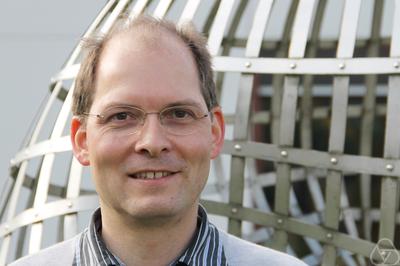
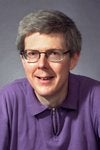
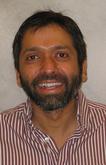
Ralph Neininger is a Professor at the Department of Computer Science and Mathematics, Goethe University Frankfurt. His research focuses on Probability Theory, Algorithms, Stochastic Analysis, and Data Structures, with a particular emphasis on the analysis of randomized algorithms and combinatorial structures. Key research areas: Randomized algorithms, stochastic processes, data structures, and distributional analysis. Recent publications address complexity fluctuations in algorithms, analysis of satisfiability problems, and probabilistic models for trees and urns. His methodological work leverages advanced probabilistic techniques to derive limit theorems and convergence rates for algorithms. Though no scientific awards are explicitly mentioned, his extensive publication record underscores significant contributions to theoretical computer science and applied probability. He has not been listed with advisees or students in the provided materials.
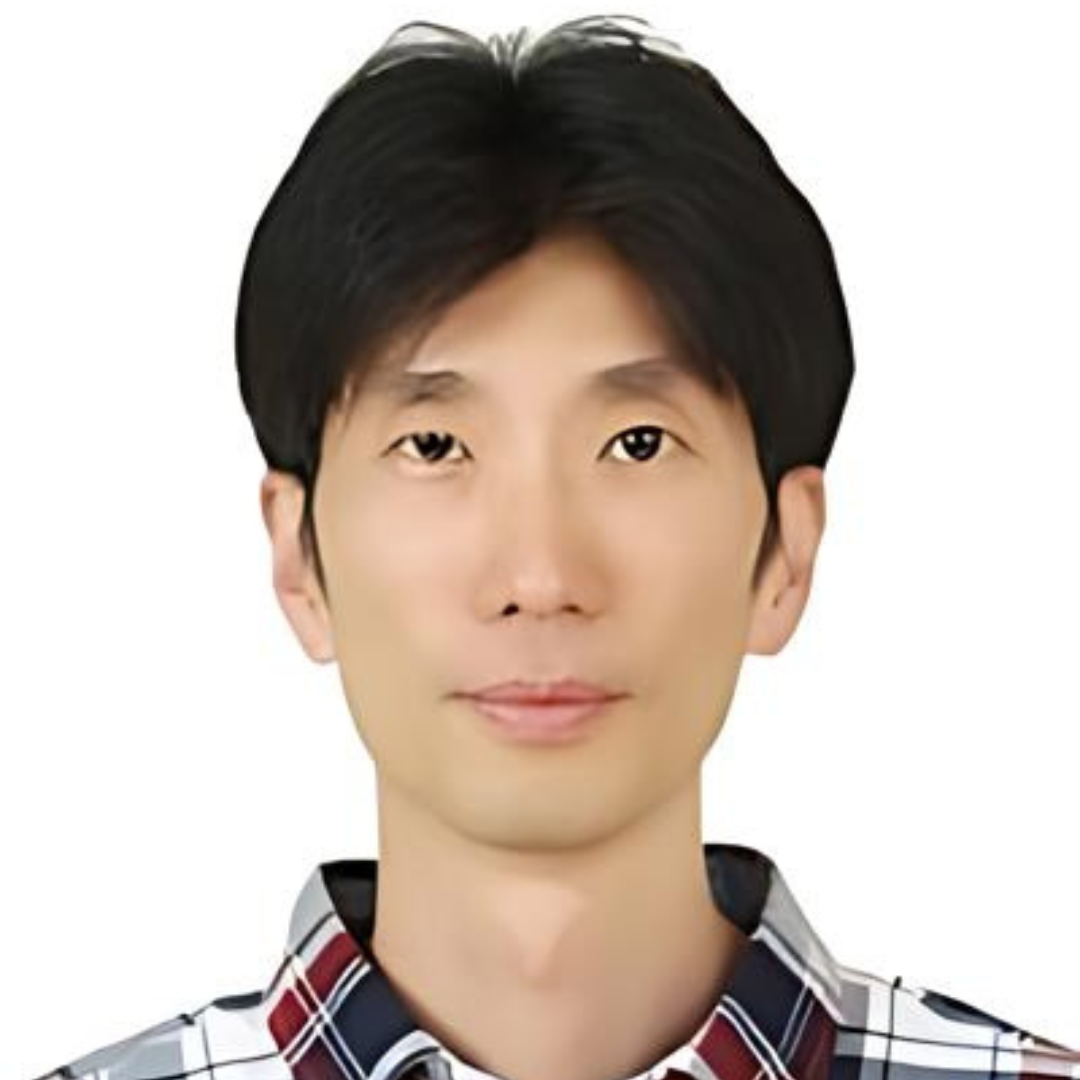
Dr. Jaho Seo is an Associate Professor in the Department of Automotive and Mechatronics Engineering at Ontario Tech University, part of the Faculty of Engineering and Applied Science. He holds a PhD in Mechanical Engineering from the University of Waterloo and has extensive experience in academia and industry. His research focuses on mechatronics, autonomous systems, intelligent construction/agriculture machinery, and control systems. Education: PhD (Mechanical Engineering), University of Waterloo, 2011 M.Ing (MSc in Mechanical Engineering), École de Technologie Supérieure (Montreal), 2006 BSc (Agricultural Machinery & Process Engineering), Seoul National University, 1999 Research Interests: Dr. Seo specializes in mechatronics, autonomous mobile machines, and intelligent systems. His work emphasizes safety-control mechanisms, electro-hydraulic systems, and hardware-in-the-loop simulation. He has developed algorithms for autonomous excavation, vehicle dynamics, and sensor integration. Professional Activities: Board Member, IT Convergence Technology Division of the Korean Society of Mechanical Engineers (2016–2017) Local Arrangement Co-Chair, 30th Institute of Control, Robotics and Systems Annual Conference (2015) Government R&D evaluator for Korean ministries (2014–2017) Awards: Multiple Best Conference Paper Awards (2014–2016) KIMM Technical Support Award (2015) University of Waterloo Graduate Scholarship (2009–2011) Grants & Labs: He leads the AVeC Lab (Automated Vehicle and Construction Lab). His grants focus on autonomous systems, safety-control, and energy-efficient machinery. He has secured funding for projects related to excavator automation and agricultural machinery. Future Work: Dr. Seo is advancing autonomous construction equipment, real-time safety systems, and sustainable agricultural technologies. His lab collaborates with industry partners to commercialize innovations in electro-hydraulic systems and machine learning.
Xavier Mathieu is a Lecturer in International Relations at the University of Sheffield, School of Sociological Studies, Politics and International Relations. He joined in 2023 after previous positions at the University of Liverpool, Aston University, and as a Post-doctoral Fellow at the Centre for Global Cooperation Research in Germany. He holds a PhD from the University of Sheffield and an MA in International Relations from Sciences Po Bordeaux. His research examines violence and French coloniality, particularly terrorism and anti-terrorism in colonial/post-colonial contexts, sovereignty concepts, and international interventions. His current project analyzes violence through embodied practices in colonial/post-colonial settings, investigating how bodies build racial hierarchies and resist colonial power structures. Mathieu's publications focus on disaster dynamics, risk modeling, and optimization methods applied to political contexts. His methodological approaches integrate social, geospatial, and computational perspectives to understand complex political systems.
Cecile Mailler is a Professor in Probability at the University of Bath, affiliated with the Probability Group (Prob-L@B). She holds a PhD from the Laboratoire de Mathématiques de Versailles (2013), supervised by Brigitte Chauvin and Danièle Gardy. Previously, she was an EPSRC Postdoctoral Fellow (2018-2021) and a postdoc at Prob-L@B (2013-2016). Her research focuses on branching processes, random trees, reinforcement models, Pólya urns, random networks, and statistical physics. She serves as an Associate Editor for the Applied Probability Trust and Stochastic Processes and Their Applications . Research interests include: Branching processes and random trees Reinforcement mechanisms and stochastic approximation Random networks and preferential attachment Statistical physics models (zero-range processes, condensation) Satisfiability and analytic combinatorics Recent work emphasizes phase transitions in random trees, reinforcement learning algorithms, and applications to network dynamics. She has organized conferences on random walks and stochastic processes, including a 2026 event at CIRM. Her teaching includes mini-courses on Pólya urns and probabilistic combinatorics at international summer schools. Grants and fellowships include the EPSRC Postdoctoral Fellowship (2018-2021) and contributions to projects on stochastic networks and condensation phenomena. She advises PhD students in areas like multi-city ants processes and Pólya urn dynamics. Her work is supported by collaborations with institutions worldwide, including ETH Zurich, LMU Munich, and the Banff International Research Station.
C.-H. Luke Ong is Professor of Computer Science and Director of Graduate Studies at the Department of Computer Science, University of Oxford, and Tutorial Fellow at Merton College. He holds a BA in Mathematics (1984, Triple First) and a Postgraduate Diploma in Computer Science (1985, Distinction) from University of Cambridge, and PhD in Computer Science (1988) from Imperial College University of London. After positions at National University of Singapore (1991) and Trinity College Cambridge (1992-1993), he joined Oxford in 1994, becoming Reader in 2002 and Professor in 2004. His research spans multiple areas of theoretical computer science with recent focus on probabilistic programming, higher-order model checking, and semantics of computation. His work bridges theoretical foundations with practical applications in program verification and analysis. Ong has made significant contributions to game semantics, lambda calculus, and type theory, with recent work extending into algorithmic game theory and probabilistic computation. Ong's publication record shows a clear evolution from foundational work in semantics toward practical applications in verification and probabilistic programming. His recent articles demonstrate increasing focus on bridging theoretical computer science with practical problems in machine learning, probabilistic inference, and program analysis, particularly through higher-order model checking techniques applied to modern programming paradigms. General Chair of ACM/IEEE Symposium on Logic in Computer Science (LICS) Vice Chair of ACM Special Interest Group in Logic and Computation (SIGLOG) Member of European Association of Theoretical Computer Science (EATCS) Chairman of Singapore's Expert Panel on Mathematics and Informatics (2006-2014) Member of Singapore's Academic Research Council (since 2013) Ong has supervised 20 doctoral students to completion and currently co-supervises 9 doctoral candidates. His research has been supported by numerous grants from EPSRC and international collaborations. He has served as PC Chair for major conferences including LICS 2007, CSL 2005, FoSSaCS 2010, and TLCA 2011, demonstrating significant leadership in the theoretical computer science community. He leads research in the Centre for Metacomputation at Oxford, with active projects in higher-order model checking, algorithmic game semantics, and verification of concurrent systems. His work with the Games for Design and Verification research network has fostered international collaboration across Europe and Asia.
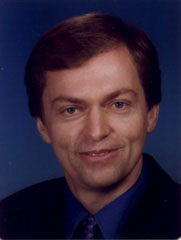
Uwe Schmock is a Full Professor at the Vienna University of Technology , leading research in Financial and Actuarial Mathematics within the Institute for Statistics and Mathematical Methods in Economics. His work bridges theoretical probability with practical financial and insurance risk modeling. Research interests include large deviations theory , risk aggregation , credit risk models , and stochastic integration . He has contributed to insurance mathematics through catastrophe bond analysis (e.g., WinCAT coupons) and annuity valuation tables. His recent publications focus on U-empirical measures , Panjer's recursion , and exotic options under market constraints. Scientific awards include the Charles A. Hachemeister Prize and the David Garrick Halmstad Memorial Prize . He actively collaborates with institutions like ETH Zurich and the American Casualty Actuarial Society.
Prof. Dr. Aykut Hocanin is a faculty member in the Department of Electrical and Electronics Engineering at Eastern Mediterranean University (EMU). He holds a PhD in Electrical and Electronics Engineering from Bogazici University, an MS in Electrical Engineering from Texas A&M University, and a BS in Electrical and Computer Engineering from Rice University. PhD: 1994-2000, Bogazici University MS: 1992-1993, Texas A&M University BS: 1988-1992, Rice University Research Interests: Dr. Hocanin specializes in adaptive signal processing algorithms, wireless communication systems, and sparse system identification. His work focuses on developing efficient algorithms for impulsive noise environments and improving CDMA system performance through robust detection and interference cancellation techniques. He has contributed significantly to adaptive filtering methods, including recursive inverse algorithms and variable step-size LMS approaches. Scientific Contributions: His recent research (2020-2024) includes fast quasi-Newton adaptive algorithms and data-reuse extended NLMS techniques. Earlier work (2011-2015) explored entropy-based subspace separation, 2D recursive inverse filtering, and mobility modeling in wireless networks. He has supervised numerous graduate theses on these topics. Professional Role: As a professor at EMU, Dr. Hocanin teaches courses like INFE362 and EENG461 while maintaining active research in digital signal processing and wireless communication. He serves as an associate editor and reviewer for academic journals and conferences.
Krishnakumar Balasubramanian is an Associate Professor in the Department of Statistics at the University of California, Davis. His research focuses on deep learning theory, sampling and stochastic optimization, geometric and topological statistics, and nonparametric methods. He has contributed to advancements in high-dimensional statistical inference, optimization algorithms, and theoretical foundations of machine learning. He holds a Ph.D. in Statistics and has published extensively in top-tier journals and conferences. His work bridges statistical theory with practical machine learning challenges, addressing topics such as sampling algorithms, non-smooth optimization, and the analysis of complex data structures like manifolds and networks. Notably, he won the Grad Advising Award, reflecting his dedication to student mentorship. His research spans diverse areas including Stein's method applications, Langevin Monte Carlo analysis, and the theoretical properties of gradient descent dynamics. He also explores nonparametric modeling, geometric statistics, and the interplay between optimization and statistical guarantees in high-dimensional settings. Key Areas: Deep Learning Theory, Stochastic Optimization, Geometric Statistics, Topological Data Analysis, Nonparametric Methods, High-Dimensional Statistics Awards: Grad Advising Award Advising: Actively involved in mentoring graduate students, as highlighted by his award.
Andrew Heunis is a Professor at the University of Waterloo, cross-appointed with the Department of Statistics and Actuarial Sciences. He holds a BSc from the University of the Witwatersrand (Johannesburg) and an MSc from Imperial College, London. His research focuses on stochastic algorithms, system identification, nonlinear filtering, and stochastic differential equations. His work integrates advanced probability theory with applications in control systems, financial mathematics, and signal processing. Recent research emphasizes theoretical foundations of nonlinear filtering and stochastic optimization, with contributions to portfolio optimization and convergence analysis of stochastic algorithms. He has supervised numerous PhD and MASc theses, including studies on mean-variance portfolio optimization, stochastic control, and quantum annealing. Current students include Dian Zhu (PhD), Pradeep Ramchandani (PhD), and Alisa Tazhitdinova (MASc). Teaching responsibilities include courses on stochastic processes, linear systems, and probability theory at both undergraduate and graduate levels. Technical reports include work on convex duality in constrained portfolio optimization, extending his research into financial applications. No scientific awards are listed in the provided information.
Dr. Matthew Giamou is an Assistant Professor in the Department of Computing and Software at McMaster University, leading the Autonomous Robotics and Convex Optimization (ARCO) Lab. His research focuses on global optimization, sensor calibration, SLAM, and motion planning, with applications in robotics, manufacturing, and geosciences. He emphasizes developing interpretable and safety-certifiable algorithms as alternatives to deep learning. Education: B.A.Sc. in Engineering Science (University of Toronto, 2015), M.Sc. in Aeronautics and Astronautics (MIT, 2017), Ph.D. in Aerospace Studies (University of Toronto, 2022). Postdoctoral work at Northeastern University’s Institute for Experiential Robotics. Research interests include mobile robotics , convex optimization , computer vision , and machine learning . ARCO Lab’s current projects involve scalable spatiotemporal algorithms for robust perception and planning. His work bridges theoretical optimization with practical robotics challenges like multi-robot communication and medical robotics. Publications reflect a focus on geometric robotics, optimization methods, and sensor systems. Key themes include inverse kinematics, SLAM, and calibration algorithms with formal safety guarantees. Scientific Awards: - 2020 IEEE IROS Best Workshop Paper Award - 2020 Robotics: Science and Systems Best Student Paper - 2019 RBC AI Graduate Fellowship Advising: Actively mentoring graduate students in robotics and optimization. Lab activities emphasize collaboration with non-experts in fields like space exploration and manufacturing. Teaching includes advanced courses on group theory for optimization and machine learning (CAS 752). Lab Infrastructure: ARCO Lab is housed in ABB C536, with facilities for robotics prototyping and algorithm testing. Ongoing projects aim to deploy safe autonomy tools for diverse end-user domains.
Raghu Pasupathy is a Professor of Statistics at Purdue University, affiliated with the Department of Statistics within the College of Science. He holds a Ph.D. from Purdue University (2005) and a B.Tech from the Indian Institute of Technology, Chennai (1995). His research focuses on stochastic optimization, simulation methodologies, uncertainty quantification, empirical processes, and stochastic processes. He teaches courses such as Stochastic Processes (STAT/MATH 532) and has contributed to software tools like RA-Level for stochastic linear programs and PyMOSO for multiobjective simulation optimization. His work emphasizes bridging theoretical foundations with practical applications, including algorithm development for simulation optimization and statistical inference methods. Notable contributions include ASTRO-DF for derivative-free optimization and R-SPLINE for integer-valued problems. He has advised several PhD students, including Jingyuan Chen and Guy Feldman. Pasupathy's research also involves collaborations on computational solvers and experimental comparisons through platforms like SimOpt.
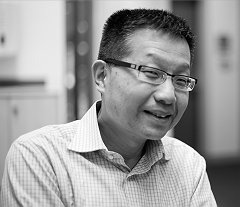
Yang Shi is a Professor at the Department of Mechanical Engineering, University of Victoria. He holds Fellowships from IEEE, ASME, CSME, CAE, and EIC. His research focuses on control systems, model predictive control (MPC), networked control systems, and autonomous vehicles. He leads the Applied Control and Information Processing Lab (ACIPL) and has supervised numerous graduate students. Shi has authored/co-authored multiple books and over 200 journal articles. His work spans cyber-physical systems, energy optimization, and robotics. Education: BSc/MSc (Northwestern Polytechnical University), PhD (University of Alberta) Affiliations: IEEE Transactions on Industrial Electronics Co-Editor-in-Chief, IFAC Council Member Research interests include MPC, distributed control, mechatronics, and smart energy systems. Notable awards include the IEEE Canada Outstanding Engineer Award (2024) and Humboldt Researcher Fellowship (2017). His lab develops advanced control strategies for autonomous systems and industrial applications.
Jun Seok Lim is a Professor in the Department of AI Convergence Electronic Engineering at Sejong University, specializing in underwater signal processing and channel estimation. With an h-index of 9 and over 466 citations, his research has made significant contributions to signal processing theory and applications, particularly in sonar and acoustic environments. Education: Ph.D., Seoul National University (1996) M.S., Seoul National University (1988) B.S., Seoul National University (1986) Professor Lim's research focuses on developing robust signal processing algorithms for challenging environments. His work spans underwater signal processing (including robust DEMON for passive sonar and robust TDE for sonar systems) and channel estimation (variable forgetting factor methods and noisy sparse channel estimation techniques). His research integrates mathematical rigor with practical engineering applications, particularly in sonar and acoustic signal processing domains. Analysis of his recent publications (2020-2024) reveals a consistent research trajectory focused on time delay estimation, beam pattern synthesis, and robust signal processing algorithms. His work increasingly incorporates machine learning techniques like Elastic Net regularization while maintaining strong foundations in statistical signal processing and optimization theory. The publications demonstrate progression from theoretical algorithm development to practical implementation in noisy and complex acoustic environments. Professor Lim has maintained active research productivity since 1995, with notable publication peaks around 2005-2007 and continued output through 2024. His work shows strong interdisciplinary connections between electrical engineering, mathematics, and underwater acoustics, with applications spanning defense, telecommunications, and sonar technologies.
Antar Bandyopadhyay is a Professor at the Theoretical Statistics and Mathematics Division of the Indian Statistical Institute (ISI), currently serving as Head of the Delhi Centre (May 01, 2023 - present). He has previously served as Professor-in-Charge of the Theoretical Statistics and Mathematics Division (September 18, 2020 - September 17, 2022). His academic journey includes a Ph.D. in Statistics from the University of California, Berkeley (2003), postdoctoral studies at the Institute for Mathematics and Its Applications (University of Minnesota) and Chalmers University of Technology (Sweden). Professor Bandyopadhyay's research focuses on theoretical and applied probability, with emphasis on discrete problems arising from combinatorics, statistical physics, and computer science. His specific interests include random graphs, probability on trees, combinatorial optimization, recursive distributional equations, branching random walks, percolation theory, interacting particle systems, Markov chains, random walks in random environments, and urn models. His work demonstrates a strong connection between theoretical developments and applications in various scientific domains. Analysis of his recent publications reveals a consistent focus on probability theory with particular emphasis on urn models, branching random walks, and random processes on graphs and trees. His research shows a progression from foundational work on recursive distributional equations to more complex applications in network theory and statistical physics. The publications demonstrate significant contributions to theoretical probability with practical implications in fields such as epidemiology, combinatorial optimization, and stochastic geometry. Outstanding Graduate Student Instructor Award from UC Berkeley (2002) Teaching Effectiveness Award from UC Berkeley (2002) Professor Bandyopadhyay has supervised multiple Ph.D. students including Deborshi Das (expected 2026), Partha Pratim Ghosh (2022), Gursharn Kaur (2018), Debleena Thacker (2015), and Farkhondeh Sajadi (2013). He has also guided M.Stat. dissertation students including Somak Laha (2021-2022) and Subhabrata Sen (2012-2013). His collaborative work spans numerous institutions including UC Berkeley, Chalmers University, and various Indian Statistical Institute centers.
Josep Solé-Pareta is a Professor in the Department of Computer Architecture at the Polytechnic University of Catalonia (UPC), specializing in optical networking and telecommunications. His research spans optical burst switching, wavelength assignment algorithms, network planning, and emerging 5G network architectures. He has contributed significantly to the ALLIANCE project developing converged network solutions for 5G and beyond. His research interests focus on Optical Networks , Optical Communication , Broadband Networks , and Computer Architecture , with particular emphasis on physical layer impairments, routing algorithms, and network optimization. His work bridges theoretical network models with practical implementations in next-generation optical infrastructures. Analysis of his recent publications reveals a strong trend toward converged network architectures integrating optical transport with 5G wireless systems, energy-efficient network design, and machine learning applications for network monitoring. His research consistently addresses critical challenges in spectrum fragmentation, quality of transmission, and network resiliency across multiple generations of optical networking technologies. Professor Solé-Pareta has contributed to significant research projects including the ALLIANCE project for 5G network infrastructure. His work demonstrates consistent funding support for advanced research in optical networking and telecommunications infrastructure. He has been involved with the SMARTxAC platform used by the Supercomputing Center of Catalonia (CESCA) for monitoring the Catalan Research and Education Network. His research group appears to focus on optical network architectures, traffic engineering, and next-generation network planning methodologies.