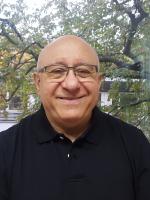
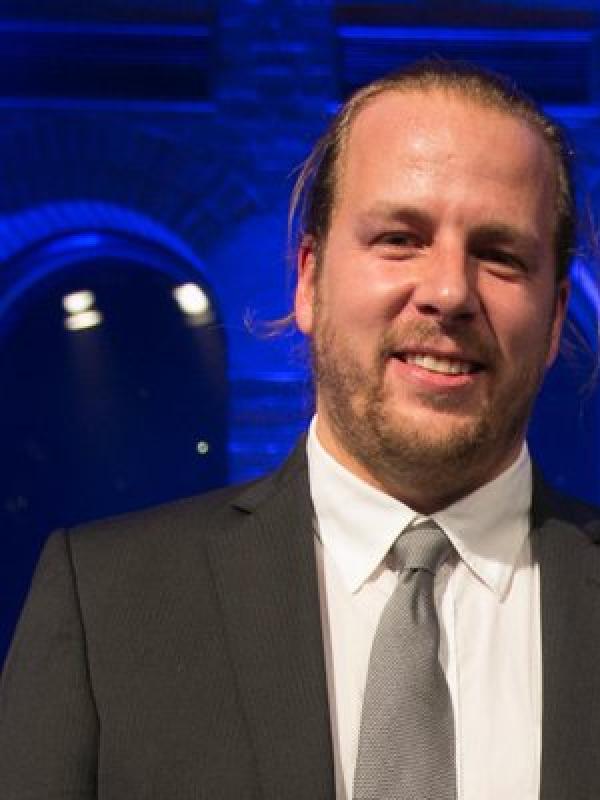
Dr. David Leutwyler is a Lecturer at the Department of Environmental Systems Science, ETH Zurich. His research focuses on Clouds, Convection, and Climate, with a particular emphasis on convection-resolving climate models and high-performance computing. He explores topics such as tropical island impacts on climate, soil moisture-precipitation feedbacks, and the dynamics of cyclones and convective systems at kilometer-scale resolutions. Leutwyler’s work integrates supercomputing and heterogeneous computing techniques to advance climate modeling capabilities. His outreach includes a presentation at the 34C3 conference in 2017, discussing challenges in convection-resolving climate simulations. His publications span journals like the Quarterly Journal of the Royal Meteorological Society and the Journal of Advances in Modeling Earth Systems, emphasizing innovative methodologies and climate dynamics analysis.
Dr. Philipp Vieweg is a Postdoctoral Researcher and Walter Benjamin Fellow at the University of Cambridge's Faculty of Mathematics, working under Prof. Colm-Cille Caulfield. His research focuses on fluid mechanics, particularly thermal convection and turbulence, leveraging direct numerical simulations and machine learning. He holds a PhD in Theoretical Fluid Mechanics from the University of Technology Ilmenau (2023) and prior degrees in Mechanical Engineering and Thermodynamics. Education: 2020–2023: PhD in Theoretical Fluid Mechanics, University of Technology Ilmenau 2018–2020: MSc in Thermodynamics and Fluid Mechanics, University of Technology Ilmenau 2014–2018: BEng in Mechanical Engineering, University of Applied Sciences Hof Research Interests: Philipp investigates pattern formation and heat transport in horizontally extended convection systems, with applications in geophysics and astrophysics. His work explores mechanisms like inverse cascades, self-organization of flow structures, and the role of boundary conditions. He employs machine learning (e.g., Lagrangian particle analysis) and high-performance computing (e.g., 131,072 CPUs) to study large-scale turbulent flows. Awards: Walter Benjamin Fellowship (University of Cambridge) Advising & Grants: While no students are listed, his research has been supported by high-performance computing resources. Collaborations include work on shear-driven turbulence and stable stratification. Labs/Teams: Active in the Fluid Mechanics and Numerical Analysis research groups within the Faculty of Mathematics.
Michael Kirkpatrick is Associate Professor in Fluids, Energy and Environment at the University of Sydney's School of Aerospace, Mechanical and Mechatronic Engineering. His research develops advanced mathematical models for river systems to predict water quality impacts from climate and flow changes. Education: PhD, University of Sydney (2002) BE (Mechanical Engineering), University of Sydney (1996) Kirkpatrick's work focuses on thermal stratification in rivers—where solar heating creates surface warm layers inhibiting vertical mixing—which can cause oxygen depletion and toxic conditions. His models predict mixing efficiency under varying weather and flow conditions, enabling optimized water releases from reservoirs to prevent ecological damage. Research combines computational fluid dynamics (including lattice Boltzmann methods), laboratory experiments, and field data. His publications demonstrate expertise in stratified flows, turbulent mixing, and computational methods. Recent articles analyze meandering river hydrodynamics, negatively buoyant jets, and urban microclimate modeling. Work emphasizes practical applications in environmental management and features experimental validation of numerical models. Kirkpatrick teaches fluid mechanics, thermal engineering, and renewable energy courses. He leads projects on sustainable water resource management supported by Australian research councils.
Associate Professor Nicholas Williamson is affiliated with the School of Aerospace, Mechanical and Mechatronic Engineering at The University of Sydney, specializing in fluid dynamics and environmental fluid mechanics. His research focuses on turbulent transport phenomena in stratified flows, urban environmental flows, and computational fluid dynamics. Current research students include Omar Azmi Abedullah (hydrogen storage systems), Ankith DAS (urban atmospheric dispersion modeling), and Mark GEORGE (Navier-Stokes solvers). He leads grants such as the ARC Discovery Project on riverine thermal stratification and non-Boussinesq effects in natural convection. Publications highlight work on stratified channel flows, buoyant jet dynamics, and entrainment mechanisms. His research bridges theoretical fluid mechanics with environmental applications, including algal bloom dynamics in rivers and urban air quality modeling. Key collaborations include Prof. Stephen Armfield and Dr. Mike Kirkpatrick on turbulent mixing and boundary layer stability. His work is published in journals like Journal of Fluid Mechanics and Physics of Fluids .
Dr. Doyeon Kim is an Assistant Professor in the Department of Earth Science & Engineering at Imperial College London, Faculty of Engineering. His research focuses on terrestrial and planetary seismology, with expertise in planetary interiors, geophysical techniques for subsurface investigation, and seismic analysis of Mars and the Moon. He holds a PhD from Cornell University and has held academic positions including Visiting Assistant Professor at the University of Maryland and Senior Scientist at ETH Zurich. Education: PhD in Earth Science, Cornell University (United States) MSc in Earth Science, Yonsei University (Republic of Korea) BSc in Earth Science, Yonsei University (Republic of Korea) Research Interests: Planetary seismology of Mars and the Moon Core-mantle boundary studies using seismic waves In-situ resource utilization via subsurface geophysical methods Machine learning applications in seismology Lunar crustal thickness analysis Martian crustal composition and tectonics His work integrates seismic data from missions like InSight and Apollo, focusing on crustal structure, mantle dynamics, and impact cratering processes. Key Research Themes (2023-2025): Marsquake catalog refinement and denoising Lunar seismic network development for Artemis missions Core-mantle boundary seismic signatures Impact seismology and multi-messenger observations Grants & Advising: Active in mentoring graduate students/postdocs on planetary seismology projects. Research supported by NASA and European Space Agency grants. Labs/Teams: Collaborates with the Marsquake Service team and InSight mission scientists, contributing to planetary seismology instrument development.
Anke M. Friedrich is a Professor at the Department of Earth and Environmental Sciences, Ludwig-Maximilians-Universität München, leading research in active tectonics, earthquake studies, and geological remote sensing. She also holds an Adjunct Professor position at the University of Utah. PhD in Geology, MIT Master's Degree in Geology, Ludwig-Maximilians-Universität München Her research focuses on the evolution of Earth's surface and continental lithosphere under geodynamic and climatic influences, with expertise in intraplate deformation , fault dynamics , and machine learning applications in geological remote sensing. She leads projects like DFG Graduate School UPLIFT and StruCtiv, and coordinates international exchange programs including ERASMUS. Recent publications highlight her work on global hiatus mapping , mantle convection modeling , and seismic hazard assessment . Key contributions include integrating PSI-InSAR data with field observations to study salt diapir deformation and earthquake fault systems. Scientific Awards: Leopold-von-Buch Medal (2010) Her collaborative grants involve institutions like the German-Czech Science Foundation and the Geological Survey of Bavaria. She mentors graduate students and develops virtual geological laboratories for teaching and research.
Dr. Stephen R. Guimond is an Associate Professor in the Department of Atmospheric and Planetary Sciences (APS) at Hampton University and Director of the HU Severe Weather Research Center (SWRC). He holds a Ph.D. in Atmospheric Science from Florida State University and previously served at NASA Goddard Space Flight Center (GSFC) for over a decade, including roles as a NASA Postdoctoral Fellow and Research Professor at the University of Maryland. Education: Bachelor of Science in Atmospheric Science, Iowa State University M.S. and Ph.D. in Atmospheric Science, Florida State University Research Interests: Dr. Guimond specializes in fluid dynamics of extreme weather phenomena (hurricanes, winter storms, wildfires) and advanced radar systems. His work focuses on radar data analysis (e.g., IWRAP, HIWRAP), computational modeling of tropical cyclones, and improving climate models through sub-grid-scale physics. He also explores novel applications of extended reality (XR) for scientific visualization of weather data. Publications: His recent work emphasizes hurricane boundary layer dynamics, wildfire smoke plumes, and radar-based observational techniques. Notable contributions include using wavelet analysis for turbulence documentation and developing XR tools for climate model visualization. Awards: Robert H. Goddard Award (NASA, for high-altitude radar group contributions) Advising & Grants: As SWRC director, he mentors students (e.g., Protzko, Hasan) and leads projects on severe weather prediction. His work at NASA GSFC included joint appointments with the University of Maryland, focusing on algorithm development for airborne radar systems. Labs & Teams: Directs the HU Severe Weather Research Center, which integrates radar observations, numerical models, and XR visualization to advance extreme weather research.
Jan Olaf Härter is an Adjunct Professor of Complex Systems at the School of Science, Constructor University in Bremen, Germany. His research focuses on climate science, atmospheric processes, and complex systems, with a strong emphasis on understanding convective systems, precipitation dynamics, and climate model biases. He has contributed to studies on extreme precipitation scaling, cold pool interactions, and mesoscale convective systems (MCSs). His work bridges theoretical climate modeling and observational analysis, addressing how changes in temperature and atmospheric dynamics influence weather patterns. Key themes include the Clausius-Clapeyron scaling of precipitation extremes, the role of cold pools in organizing convection, and developing conceptual models for diurnal sea surface temperature effects. He has also explored stochastic processes in microbial dispersal and social network cooperation dynamics, showcasing interdisciplinary interests. Recent research highlights include analyzing MCS contributions to European precipitation extremes, advancing cold pool detection techniques via machine learning, and investigating tipping points in aggregated convective states. His studies often integrate field observations with high-resolution simulations to uncover mechanisms behind weather extremes and climate change impacts.
Hugo Peyre is a Professor of Child Psychiatry at the Montpellier University Hospital and an associated member of the Laboratory of Cognitive Sciences and Psycholinguistics. His work spans interdisciplinary research in oceanography, atmospheric science, and climate dynamics. Research Interests Peyre's research focuses on: Ocean surface turbulence and Lagrangian dispersion mechanisms Atmospheric response to sea surface temperature anomalies Submesoscale and mesoscale ocean-atmosphere interactions Stratospheric plume dynamics from wildfires and volcanic eruptions Geophysical fluid dynamics and baroclinic instabilities Three-dimensional ocean current reconstruction from surface data Publication Trends His recent articles (2025-2021) emphasize nonlinear dynamics in oceanic and atmospheric systems, with a focus on Lagrangian transport, internal wave interactions, and climate-scale feedback mechanisms. Key topics include the role of ageostrophic motions in turbulence predictability, stratospheric vortex behavior, and satellite-based ocean-atmosphere modeling using SWOT mission data.
Wenxian Lin is a Professor at James Cook University's Department of Mechanical Engineering. His research focuses on fluid dynamics, thermal engineering, and renewable energy systems. He specializes in buoyancy-driven flows, turbulence modeling, heat transfer mechanisms, and solar thermal systems. Lin has held roles such as Head of Mechanical Engineering (2010) and has extensive experience in academic leadership and research mentorship. His work includes projects on thermal energy storage, solar systems, and fluid flow dynamics in environmental contexts. Education and Employment: Postdoctoral Research Fellow, Texas Tech University ARC Australian Postdoctoral Fellow, The University of Sydney (2004–2006) Senior Lecturer, James Cook University (2006–2009) Associate Professor, James Cook University (2010–2015) Professor, James Cook University (2016–present) Research Interests: Buoyancy-Driven Flows and Entrainment Turbulence Modelling and Boundary Layers Solar Thermal Engineering and Energy Storage Heat Transfer in HVAC Systems and Electrical Vehicles Fluid Dynamics in Environmental Systems Articles Trends: Recent publications emphasize natural convection boundary layers, thermal stratification effects in open-channel flows, and experimental studies on heat transfer mechanisms. His work bridges computational modeling and experimental validation, particularly in renewable energy applications and fluid dynamics. Awards: JCU Citations for Outstanding Contributions to Student Learning (2015) Australian Awards for University Teaching (2015) Dean’s Research Excellence Award (2006) Advising and Grants: Lin has led projects like the 'Thermal Energy Storage System for Photovoltaic-Powered Homes' (2024–2025) and contributed to research on gravitational water vortex hydropower. His mentorship spans multiple PhD/Master’s students, though specific names are not listed here. Labs/Teams: Involved in interdisciplinary teams at JCU focusing on thermal engineering, fluid dynamics, and sustainable energy solutions.
Gonzalo Miguez Macho is a Professor at the Department of Particle Physics within the Faculty of Physics at the University of Santiago de Compostela, Spain. He is affiliated with the Center for Interdisciplinary Research in Environmental Technologies (CRETUS). His research focuses on climate dynamics, land-use change impacts, numerical weather prediction, and hydroclimatic processes. Key contributions include studies on the climatic effects of urbanization in Phoenix, Arizona, and the hydrological sustainability of bioenergy crops in the U.S. His work integrates atmospheric modeling (e.g., WRF, RAMS) with observational data to analyze extreme weather events, wildfire behavior, and groundwater-vegetation interactions. Notable projects address moisture recycling in agricultural regions, soil moisture feedbacks in climate systems, and the role of deep roots in Amazonian ecosystems. Recent studies highlight climate change’s influence on wildfire dynamics and heatwaves in Mediterranean regions. Miguez Macho has co-authored over 50 peer-reviewed articles, including influential papers on spectral nudging techniques, groundwater-atmosphere interactions, and the socio-ecological impacts of landscape changes. Collaborations span institutions like Rutgers University and the National Center for Atmospheric Research (NCAR). His research bridges theoretical climate science with applied environmental challenges, emphasizing interdisciplinary solutions to global environmental issues.
Edriss S. Titi is a Professor in the Department of Applied Mathematics and Theoretical Physics (DAMTP) at the University of Cambridge. His research focuses on nonlinear dynamical systems, fluid dynamics, and mathematical physics, with particular emphasis on geophysical fluid dynamics, partial differential equations, and data assimilation. Titi's work addresses fundamental questions in ocean and atmospheric modeling, turbulence, and climate systems. He has contributed extensively to the mathematical analysis of equations such as the Navier-Stokes, Euler, and primitive equations, exploring their well-posedness, regularity, and numerical treatment. His recent research includes studies on the hydrostatic approximation limit, energy conservation in fluid flows, and the application of machine learning to data assimilation in chaotic systems. Titi collaborates with international teams to develop advanced models for climate prediction and ocean dynamics, incorporating eddy parametrization and multiscale analysis techniques. Key areas of focus include: Global well-posedness of geophysical fluid models Non-uniqueness and admissibility of weak solutions Machine learning-enhanced data assimilation Mathematical analysis of turbulence and boundary layers
Dr Alison Donna Ming is a NERC Independent Research Fellow in the Atmosphere-Ocean Dynamics group at the Department of Applied Mathematics and Theoretical Physics (DAMTP), University of Cambridge, and a Fellow in Mathematics at Churchill College. Her research focuses on large-scale stratospheric processes, including radiative-dynamical interactions, stratospheric ozone chemistry, and the Brewer-Dobson Circulation. She explores seasonal-to-decadal atmospheric variability and collaborates internationally on projects like the APARC community's study of ozone feedbacks in the Quasi-Biennial Oscillation (QBO). Her work integrates data analysis, numerical models, and theoretical frameworks to address climate-related questions. She is affiliated with the CREATES Doctoral Training Partnership and supervises PhD/Masters projects. Key research themes include tropical widening, aerosol transport, and stratosphere-troposphere coupling. No scientific awards are explicitly listed in the provided texts. Labs/Teams: Part of the DAMTP Atmosphere-Ocean Dynamics group and the APARC international collaboration. Active in training initiatives like the CREATES DLA program.
Joachim Moortgat - Professor of Geosciences Joachim Moortgat is a Professor in the School of Earth Sciences at The Ohio State University, leading the Computational Geosciences Group. His research focuses on multiphase flow in porous and fractured subsurface media, with applications in reservoir engineering, carbon sequestration, groundwater remediation, and unconventional hydrocarbon production. He holds a Ph.D. from Radboud University (2006) and has pioneered advanced numerical methods for reservoir simulation, including higher-order finite element techniques. Education Ph.D. in Theoretical and Computational Physics, Radboud University, Netherlands (2006) Research Interests Moortgat's work spans scales from molecular-level sorption in shale nanopores to large-scale reservoir dynamics. Key areas include: Compositional reservoir simulation Fractured media modeling CO₂ sequestration and enhanced oil recovery Unconventional shale gas reservoir characterization Geomechanical interactions in subsurface systems Publications Overview His 2021–2020 publications emphasize shale gas adsorption mechanisms, fault architecture analysis, and high-fidelity simulation of multiphase systems. Earlier work includes groundbreaking studies on gravitational fingering and compositional modeling in fractured reservoirs. Awards Recipient of the Cedric K. Ferguson Medal (2014) for excellence in reservoir engineering research. His work has been recognized for bridging computational methods with practical subsurface engineering challenges. Labs & Teams Directs the Computational Geosciences Group, collaborating with industry and academic partners. Active in developing open-source simulation tools for reservoir and environmental applications.
Raphael Hirschi is Professor of Stellar Hydrodynamics and Nuclear Astrophysics at Keele University. His research develops multi-scale stellar models to study nucleosynthesis, massive star evolution, and the early universe. He combines 3D hydrodynamics simulations with 1D stellar evolution codes to improve predictions of element formation and supernova progenitors. As chair of the ChETEC COST Action, he coordinates European research linking nuclear physics to astronomy. Key achievements include determining fates of the most massive stars and explaining chemical anomalies in ancient stellar populations. He received the Plantamour-Prevost Prize for his PhD work on massive star evolution.