Liqiu Hu is a Doctoral Researcher at the Laboratory of Natural Materials Technology , affiliated with the Faculty of Science and Engineering at Åbo Akademi University. Their research focuses on bio-based materials , polymerization techniques , and nanocellulose applications , contributing to Sustainable Development Goals like responsible consumption and climate action. Key research areas: Lignin, Nanocellulose, Polymerization, Bio-based films, Green chemistry, Biocomposites Recent work trends: In-situ polymerization, Pickering emulsions, Drug delivery systems, Agricultural waste upcycling, Aqueous dispersion processing Collaborations include researchers from Åbo Akademi University and TAPPI Press. Publications span from 2017 to 2025, highlighting innovations in biopolymer interfaces and sustainable packaging . The laboratory's fingerprint indicates strong alignment with lignin (100%), nanocellulose (75%), and polymerization (66%) research.
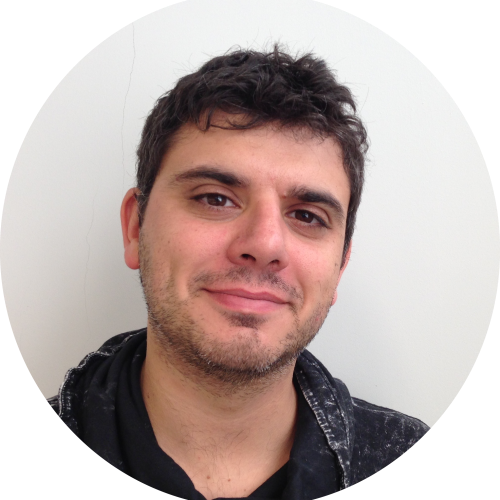
Marcos García Fuentes is a Professor at the Department of Pharmacology, Pharmacy and Pharmaceutical Technology, University of Santiago de Compostela (USC), Spain. He leads the NANOBIOFAR research group focused on nanotechnologies for drug delivery systems and is affiliated with the Center for Research in Molecular Medicine and Chronic Diseases (CIMUS). His expertise includes pharmaceutical biomaterials, cancer therapy, and gene delivery. He earned his PhD in 2004 from USC with a thesis on lipid nanoparticles for peptide transport, supervised by Dr. María José Alonso Fernández and Dr. Dolores Torres López. His research interests revolve around nanomedicine, particularly in designing drug delivery systems using polyphosphazenes, viral protein nanoparticles, and mRNA-activated matrices. He explores applications in glioblastoma treatment, cancer immunotherapy, and regenerative medicine. His work bridges biomaterials science with pharmaceutical innovation, addressing challenges in targeted drug delivery and controlled release systems. Recent publications highlight advancements in gene therapy via polyphosphazene derivatives, protamine-based nanotherapeutics, and self-assembled peptide-polymer hybrids. His contributions span oncology, immunology, and tissue engineering, with a focus on translating nanotechnologies into clinical applications. No scientific awards are explicitly mentioned, but his prolific publication record underscores his impact in the field. He advises research in biomaterials and drug delivery systems through CIMUS and the NANOBIOFAR group. His lab develops platforms for cancer treatment, stem cell differentiation, and chronic disease management. Collaborations include multidisciplinary projects in biomaterial design, pharmaceutical formulation, and nanomedicine.
Rahima Benhabbour is an Associate Professor in the Lampe Joint Department of Biomedical Engineering at the University of North Carolina at Chapel Hill, with an adjunct appointment at the UNC Eshelman School of Pharmacy . Her work bridges polymer chemistry, engineering, and pharmacology to create innovative drug delivery platforms. Ph.D. in Chemistry (McMaster University, 2008) MSc in Medicinal Chemistry (University of Minnesota, 2001) Research focuses on polymer-based biomedical devices for HIV prevention and cancer treatment , emphasizing translational science and 3D-printed intravaginal rings . Articles highlight trends in biomaterials , multipurpose prevention , and nano-delivery systems . KL-2 CTSA Award (2015-2018) for HIV prophylaxis research Teaches BMME 890 - Special Topics and BMME 900 - Research in Biomedical Engineering . Lab is affiliated with the Center in Nanotechnology and Drug Delivery and collaborates with clinical experts in HIV/oncology.
Samo Smrke is a Researcher at the ZHAW School of Life Sciences and Facility Management, specializing in the Coffee Competence Centre and Analytical Technologies. His work focuses on advancing coffee science through projects like the SCA Coffee Expertise Program and collaborations with industry leaders such as Nespresso and Julius Meinl. He has led multiple research initiatives including studies on coffee freshness, roasting effects, aroma release mechanisms, and packaging technologies. Smrke's research interests span coffee chemistry, analytical techniques, and sensory analysis. He has published extensively on topics such as degassing kinetics of roasted coffee, antioxidant generation during roasting, and aroma modulation in instant coffee products. His work often employs advanced methods like proton transfer reaction mass spectrometry (PTR-MS) and gravimetric analysis. He is a co-author of influential books including The Coffee Freshness Handbook and The SCA Water Quality Handbook , which provide foundational knowledge for industry professionals. Smrke’s projects frequently bridge academic research with practical applications, addressing challenges in coffee production, storage, and quality assurance.
Jamal Lewis, Ph.D., is an Associate Professor in the J. Crayton Pruitt Family Department of Biomedical Engineering at the University of Florida, within the Herbert Wertheim College of Engineering. His Immuno-modulatory Biomaterials Laboratory focuses on developing biomaterial systems to manipulate the immune system for treating autoimmune diseases, allergies, and transplant rejection. His work integrates biomaterials engineering, drug delivery, and immunology. Education: Ph.D. in Biomedical Engineering, University of Florida (2012) M.S. in Biomedical Engineering, North Carolina State University (2007) B.S. in Chemical Engineering, Florida A&M University (2004) Research interests include immunoengineering, biomaterials design for controlled immune responses, and drug delivery systems targeting dendritic cells. His lab explores how mechanical forces and biochemical cues influence immune cell behavior, with applications in vaccines and immunotherapies. Recent publications emphasize biomaterial-based strategies for immunomodulation, including polymeric particle therapies and sustained-release systems. His work spans topics like lactate modulation of immune cells, fungal pathogen interactions, and anti-inflammatory treatments for osteoarthritis. Notable awards include the University of Florida 40 Under 40 (2021), recognition as a 1000 Inspiring Black Scientist in America (2021), and Biomaterial Science RSC Emerging Investigator (2021). He has contributed to over 50 publications and holds multiple patents related to immunomodulatory materials. Dr. Lewis leads interdisciplinary collaborations, bridging engineering and immunology. His lab focuses on translating biomaterial innovations into clinical applications for autoimmune diseases and regenerative medicine. Current projects include developing nanoparticle-based vaccines and microfluidic fabrication methods for precision medicine.
Professor Michael De Volder is a Fellow and College Lecturer at St John's College, University of Cambridge, holding the position of Professor of Advanced Materials Engineering in the Department of Engineering. His research focuses on energy storage solutions, nanotechnology, and scalable manufacturing methods for sustainable battery technologies. Belgian Royal Academy Laureate Co-founder of Echion Technologies (niobium-based anode materials) Expert in Li-ion/Zn-ion battery innovation Research activities center on improving battery sustainability through novel synthesis techniques, extending battery lifetime via structural optimization, and developing high-energy-density materials. His work spans nanoscale engineering, electrode design, and fundamental electrochemical investigations. Scientific publications from 2022-2025 demonstrate expertise in: Li-ion/Zn-ion battery systems, nanotube integration, electrode manufacturing, and degradation analysis. Recent work explores mechanochromic displays, dual-gradient electrodes, and aqueous-organic electrolyte formulations. Belgian Royal Academy Laureate Co-founder of battery technology startup Echion Technologies
Claire Gaiani is a full Professor at the University of Lorraine, leading the Laboratoire d'Ingénierie des Biomolécules (LIBio). With an ORCID iD: 0000-0003-0434-8453 , she focuses on sustainable food ingredient development from agroresources and food-waste, specializing in the formulation of bioactive compounds (probiotics, glycans, PUFA, flavonoids) into functional powders through industrial-academic collaborations. Habilitation to supervise research (2012, University of Lorraine) PhD in Food Science (2006, University of Lorraine) Engineer (M.Sc.) from ENSAIA (2002, University of Lorraine) Her research combines atomic force microscopy (AFM), XPS analysis, and industrial partnerships (Nestle, Arla Foods) to optimize dairy and plant-based powder properties. Recent work explores cryogel monoliths for probiotic delivery, plant seed gums as structuring agents, and maltodextrin surface characterization. Key scientific contributions include: Over 140 peer-reviewed papers (90% Q1 Food Science/Chemistry/Biophysics) 2 book editions ( Engineering Plant-Based Food Systems , 2023; Atomic Force Microscopy for Food Research , 2023) 10 book chapters 2 patents (FR2807932A1, FR2112358A) 65 international lectures (17 invited) Honors include: 2023 Grand Prix en Sciences Lorraine-Luxembourg 2015 IUF junior member (5-year term) 2011 Marcel Loncin Prize 2014 NIZO Dairy Conference keynote She supervises 9 postdocs and 15 PhD students, and serves on the European Bioencapsulation Research Group board. Her work drives innovations in powder rehydration, probiotic encapsulation, and sustainable food systems through the Agria Grand Est association.
Bernard MARTEL is a Professor at the University of Lille's Faculty of Science and Technology, Department of Chemistry, and leads research in the Polymer Systems Engineering team at the Materials and Transformations Unit (CNRS UMR 8207). His work focuses on developing functional polymer systems for biomedical applications, including drug delivery, tissue engineering, and antibacterial materials. Research interests span: Design of therapeutic biomaterials (hydrogels, nanofibers) Functionalized medical implants and textiles Antimicrobial/antiviral material engineering 3D-printed medical devices His recent publications (2019-2024) demonstrate strong emphasis on: Advanced characterization of biomaterial interactions Functionalization techniques for controlled drug release Solutions for diabetic wound care and orthopedic reconstruction Eco-friendly materials for environmental remediation Patent innovations include: 3D-printed endoprostheses (WO2024213841) Antiadhesive hydrogel compositions (FR3080539) Cyclodextrin-modified biomedical textiles Significant PhD supervision includes 23+ students, with current research on: Functionalized visceral implants (Camille DUCHEMIN) Antithrombotic stent design (Kim VANDEN BROECK)
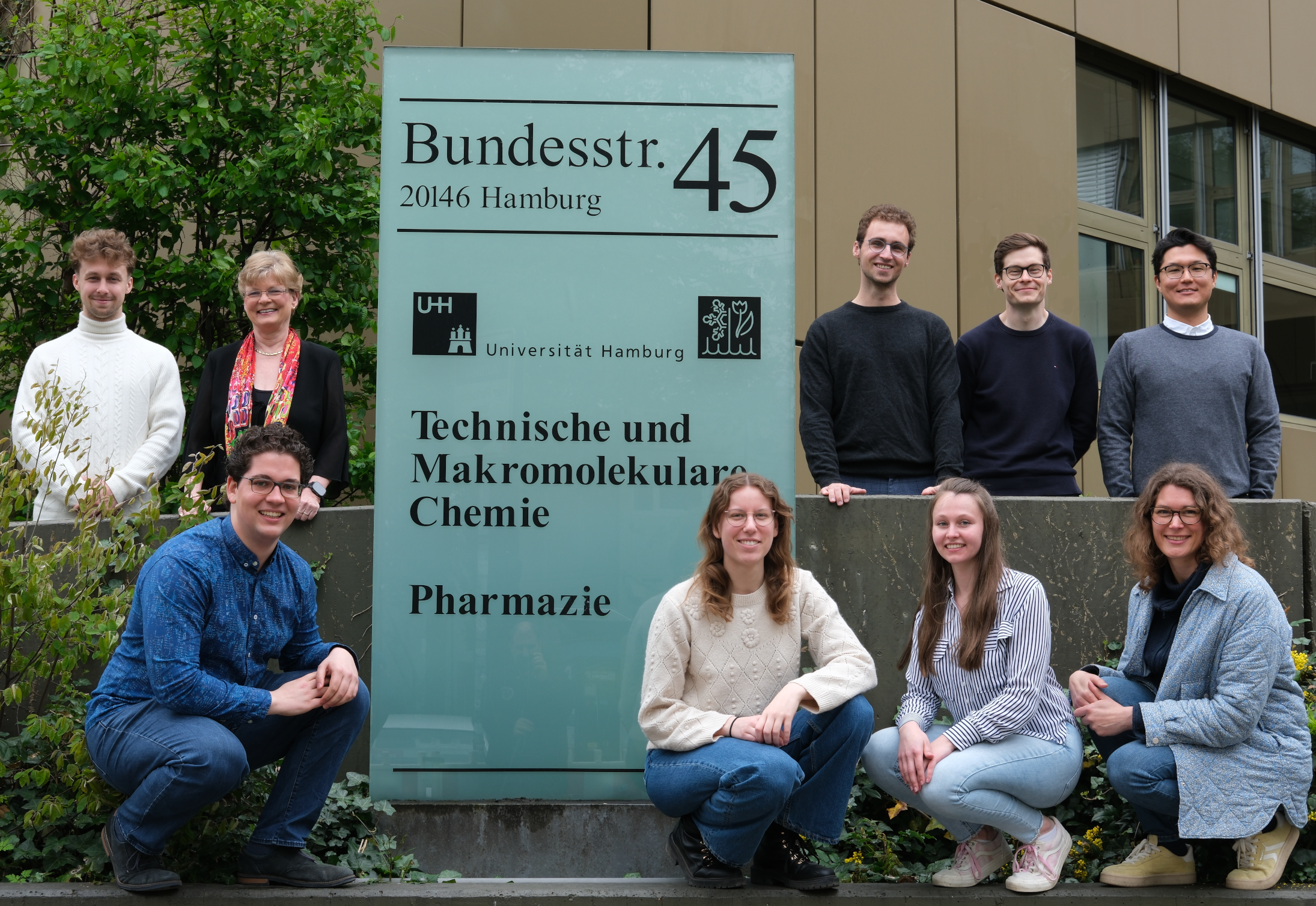
Professor Claudia S. Leopold serves as Professor and Head of the Institute of Pharmacy within the Department of Chemistry at the University of Hamburg's MIN Faculty. With over 35 years of academic experience, she leads the Pharmaceutical Technology Department and maintains an active research program focused on advanced pharmaceutical manufacturing processes and drug delivery systems. Her educational background includes a pharmacy degree from Heinrich-Heine-University Düsseldorf (1981-1985), followed by pharmacist certification in 1987. She completed her doctoral research in 1992 on skin penetration enhancement, conducted postdoctoral research at Stanford Research Institute and UC San Francisco, and achieved her habilitation in pharmaceutical technology in 1999. Her academic progression includes professorial positions at Leipzig University (2000-2005) before joining the University of Hamburg in 2005. Prof. Leopold's research program centers on pharmaceutical technology innovations, particularly in tablet formulation and manufacturing processes. Her laboratory investigates optimization of process flows during tableting, use of co-processed excipients, characterization of dustiness within containment systems, control of drug release through polymer interactions, and improving water solubility of active ingredients through co-amorphization techniques. Her work bridges fundamental pharmaceutical science with practical manufacturing applications, addressing critical challenges in modern pharmaceutical production. Her recent publications (2022-2025) demonstrate a strong focus on continuous manufacturing technologies, co-amorphous drug systems, and advanced process analytical techniques. These works reveal trends toward real-time monitoring of pharmaceutical processes, spatial analysis of powder behavior, and sophisticated approaches to enhancing drug solubility and stability. Her research group has made significant contributions to understanding powder flow dynamics, tablet coating mechanics, and the application of novel spectroscopic methods in pharmaceutical manufacturing. Habilitations-Förderpreis der Deutschen Pharmazeutischen Gesellschaft (1997) Ehrendoktorwürde (Dr. h.c.) (2020) Prof. Leopold has supervised over 25 doctoral students throughout her career, with recent dissertations focusing on powder characteristics, co-amorphous systems, continuous manufacturing optimization, and advanced tablet technologies. Her laboratory maintains strong industry connections through contract research in formulation development, tableting process optimization, drug release measurements, and expert consultation on pharmaceutical-technological issues. The research group operates specialized equipment for pharmaceutical technology studies and collaborates with international partners in continuous manufacturing and drug delivery research. The Leopold research group (AG Leopold) operates within the Institute of Pharmacy at the University of Hamburg, maintaining a comprehensive suite of equipment for pharmaceutical technology research. The team includes multiple scientific associates, research assistants, technical staff, and visiting scientists working collaboratively on various aspects of pharmaceutical development and manufacturing. The laboratory environment supports both fundamental research and applied contract work for industry partners, with particular expertise in tableting processes, drug delivery systems, and analytical method development for pharmaceutical applications.
Prof. Dr. Olivia Merkel is the Chair of Drug Delivery at LMU Munich (since 2022) and holds a tenured professorship in the Faculty of Pharmacy. Her academic journey includes postdoctoral work at Philipps-Universität Marburg (2009), a PhD in Pharmaceutics (2009), and a tenure-track professorship at Wayne State University (2011–2017). She leads the Merkel Lab, focusing on advanced drug delivery systems, particularly siRNA and nanoparticle-based therapies. Research interests: Nanomedicine, targeted drug delivery, polymer engineering, and pulmonary delivery systems. Editorial roles: Molecular Pharmaceutics, Journal of Controlled Release, and European Journal of Pharmaceutics and Biopharmaceutics. Award: 2020 PHOENIX Pharma Science Award. Her lab combines experimental and computational approaches, with recent work on machine learning-driven polymer discovery and molecular dynamics simulations. Over 20 students and researchers collaborate in her group, addressing challenges in lung fibrosis treatment and T-cell targeting in asthma.
Zeynep Atamer is an Assistant Professor at Oregon State University's Food Science and Technology Department, affiliated with the Food Innovation Center in Portland, OR. Her research focuses on dairy science and technology, particularly bacteriophage dynamics, spore inactivation, milk protein behavior, membrane processing, and food safety optimization. Primary affiliation: Oregon State University, Food Innovation Center Department: Food Science and Technology Research interests include: Dairy bacteriophages and their thermal/non-thermal inactivation Spore-forming bacteria in dairy processing Milk protein fractionation and functional properties Membrane separation technologies for dairy applications Cheese and fermentation process optimization Development of phage-free dairy products and sensitive detection systems Recent publications highlight advancements in UV-C/phage reduction strategies, casein-based material development, bitter peptide characterization in cheese, and encapsulation technologies for microbial control. Key subfields include dairy processing stressors, whey protein stability, and gut microbiota modulation via phage delivery. Her work integrates industrial-scale validation with lab-to-commercial translation, addressing critical challenges in dairy safety and functionality through interdisciplinary approaches spanning microbiology, biochemistry, and food engineering.
Jane Wang is a Professor in the Department of Food Science at the University of Arkansas , where she has served since 1999, progressing from Assistant to Full Professor. She also holds the title of Director of the Experiment Station in the Department of Food Science. Her research focuses on starch structure-functionality relationships , rice quality , and biomaterial utilization , with over 120 refereed publications and 5 patents. Education: B.S. in Agricultural Chemistry (1986) from National Taiwan University , M.S. in Food Science (1989) from the University of Minnesota , and Ph.D. in Food Science (1992) from Iowa State University . Postdoctoral research in starch chemistry at Iowa State University (1993-1994). Research Interests: Jane Wang's work explores starch chemistry, rice processing optimization, and value-added applications of agricultural byproducts. She investigates how starch modifications affect food and pharmaceutical properties, with a particular focus on parboiling, germination, and enzymatic treatments. Her research also examines the impact of environmental factors on rice starch development and quality. Scientific Awards: Outstanding Departmental Research Award (2008) Outstanding Volunteer, IFT Carbohydrate Division (2007) Outstanding Mentor, University of Arkansas (2005) Grants & Professional Service: She has secured over $3M in research funding, including USDA-NIFA grants and industry contracts with more than 50 food companies. Jane has served on numerous academic committees (Patent, Promotion & Tenure, Curriculum) and held leadership roles in professional organizations like IFT and AACC. She has also acted as associate editor for Cereal Chemistry and Carbohydrate Polymers , and reviewed for multiple journals and agencies. Labs & Teams: Dr. Wang leads the Carbohydrate Research Program at the University of Arkansas, focusing on starch structure-functionality, rice fortification, and biomaterial development. Her lab collaborates with industry partners and academic institutions to advance food science applications.
Dr. Ting-Yu Shih is an Assistant Professor at the University of Rhode Island College of Pharmacy . His research focuses on biomaterials-based targeted therapies for precision medicine , particularly in improving cancer treatment safety and efficacy. He earned his Ph.D. in Engineering Sciences (Bioengineering) from Harvard University under Prof. David Mooney and completed postdoctoral training at Boston University. Education : Ph.D. (2018), Harvard University M.S. (2012), Johns Hopkins University B.S. (2009), Johns Hopkins University Post-doctoral Fellow (2019-2024), Boston University Dr. Shih’s work spans hydrogels , nanoparticles , and RNA vaccines , with recent studies on self-amplifying RNA platforms, tumor extracellular matrix targeting, and mast cell stabilizers for diabetic wound healing. His research has been supported by the International Lung Cancer Foundation Fellowship Grant (2023) . Selected publications highlight innovations in ultrasound-triggered drug delivery , compression-induced adipocyte behavior , and biomaterial-enhanced immunotherapy . Collaborative efforts include injectable scaffolds for vascular grafts and bone marrow engineering. Scientific Awards : International Lung Cancer Foundation Fellowship Grant (2023)
Professor Luke Connal is a full professor at the Research School of Chemistry at the Australian National University (ANU), where he leads the Connal Group. He joined ANU in 2017 after serving as a Senior Lecturer at the University of Melbourne. Currently, he holds an ARC mid-career industry fellowship and serves as the chair of the Royal Australian Chemical Institute (RACI) polymer division. Professor Connal is also an associate editor for the Royal Society of Chemistry journal "Molecular Systems Design and Engineering" and co-founder of two spin-out companies focused on polymer technologies. Professor Connal received his Bachelor of Chemical Engineering and PhD in polymer chemistry from the University of Melbourne, Australia. Following his doctoral studies, he completed a post-doctoral position with Professor Frank Caruso at the University of Melbourne, developing new techniques for the self-assembly of polymers. He then held a joint Sir Keith Murdoch postdoctoral Fellowship and Australian Linkage International Fellowship at the University of California, Santa Barbara, working with Professor Craig Hawker. Professor Connal's research focuses on the development of molecular design concepts to create new materials for diverse applications, including artificial skin and tissues, sustainable polymers and surfactants, additive manufacturing electronics, and water harvesting. His core competencies center around advanced polymer design, self-assembly, and catalysis . His group explores four main research themes: Catalysis, Functional Materials and Interfaces, Soft Matter, and Supramolecular Chemistry . They develop innovative materials such as enzyme-inspired polymer catalysts, smart polymers for 3D printing, and polymer electrolytes for energy storage applications. Analysis of Professor Connal's recent publications reveals a strong focus on developing biomimetic materials and responsive polymers. His work bridges fundamental polymer chemistry with practical applications in environmental remediation, healthcare, and sustainable technologies. A notable trend is the increasing emphasis on CO2 capture technologies through enzyme-inspired catalysts and hydrogel systems. His group has also made significant contributions to 3D printing of functional materials , particularly self-healing gels and pH-responsive polymers. The research demonstrates a consistent trajectory toward creating smart, responsive materials with applications addressing global challenges in sustainability and healthcare. David Syme Research Prize (2020) Grimwade Prize in Industrial Chemistry (2019) Professor Connal actively supervises multiple PhD students including Lilian Boton, Jason Buchanan, Sandra Jestin, Saif Rahaman, Peidong Shen, Ming Li Tan, Moki Thanusing, and Jekaterina Viktorova. His current research is supported by several significant grants including projects on sustainable and compostable plastic alternatives, multimaterial 3D printed antenna arrays, developing vitrimers as next-generation reusable plastics, multi-material 3D printing, and smart materials for atmospheric water management. These projects demonstrate his commitment to translating fundamental polymer research into practical solutions for environmental and technological challenges. The Connal Group at ANU operates at the intersection of polymer chemistry and materials science, developing innovative solutions across multiple domains. Their laboratory work focuses on creating new polymers with applications spanning artificial skin development, sustainable packaging alternatives, atmospheric water harvesting, and advanced electronics. The group's unique approach combines biomimicry principles with cutting-edge polymer synthesis techniques to create materials with precisely controlled properties. Current projects include developing strong and self-healing polymer materials for biological applications, expanding 3D printing capabilities for functional materials, creating fully recyclable or compostable plastics, and designing thermoresponsive polymer desiccants for sustainable water harvesting.
Dr. Meng Deng is an Associate Professor in Agricultural & Biological Engineering at Purdue University, specializing in biomaterials, regenerative engineering, and drug delivery. He holds a B.E. from Tsinghua University and a Ph.D. from the University of Virginia, with postdoctoral training at the University of Connecticut Health Center and MIT. His research focuses on designing polymeric biomaterials for musculoskeletal tissue regeneration and controlled drug delivery, including nanoparticle-based therapies for obesity and metabolic disorders. He has received awards such as the Society for Biomaterials STAR Award and Young Scientist Award (2012 World Biomaterials Congress). His work integrates nanotechnology and bioengineering to develop inductive materials that modulate cell behavior. Current research interests include bioactive hydrogels, muscle regeneration, and browning of white adipose tissue. Dr. Deng advises postdoctoral fellows, graduate students, and undergraduates in his lab at Regenerative Matter, with publications available via Google Scholar. Affiliations: Purdue University Department of Agricultural & Biological Engineering Key Research Themes: Biomaterials, Drug Delivery, Nanotechnology His lab explores applications in musculoskeletal repair, metabolic engineering, and regenerative medicine. Recent studies include gamma-secretase inhibitors for obesity therapy and glycosaminoglycan-based scaffolds for muscle regeneration. Collaborations include work with MIT’s Robert Langer and University of Connecticut’s Cato Laurencin.