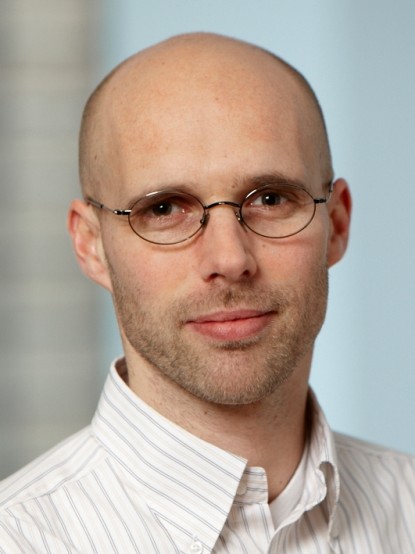
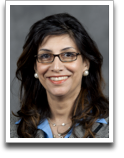
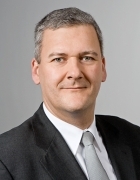
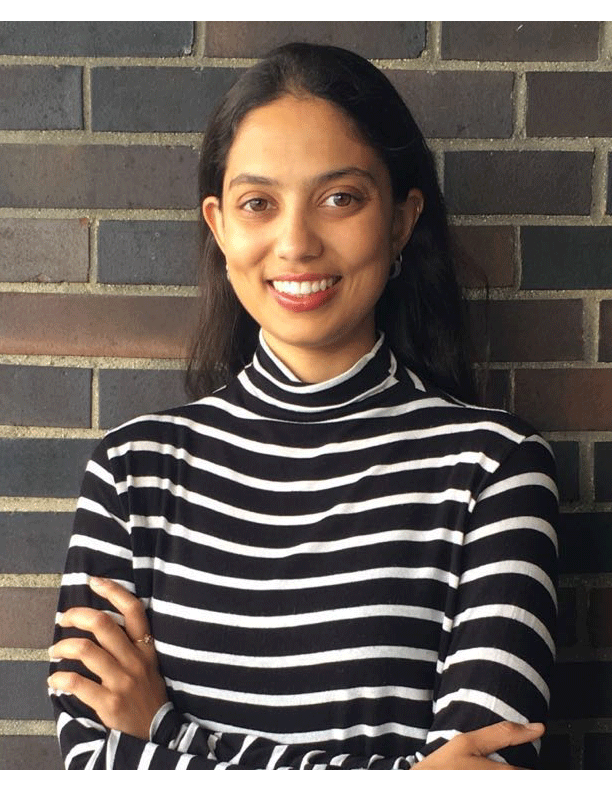
Dr. Alessandro Ottaviano is a Researcher affiliated with the Department of Digital Integrated Circuits and Systems at ETH Zürich. His work focuses on advanced computer architecture and embedded systems, particularly in the domains of RISC-V processors, real-time systems, and heterogeneous computing. He contributes to the design of time-predictable virtual memory solutions, mixed-criticality systems, and energy-efficient hardware-software interfaces. Key research areas include modular processor architectures, hardware monitoring for safety-critical applications, and power management in high-performance computing (HPC) systems. His recent projects involve developing controllers for 2.5D systems-in-package and creating open-source networking solutions for mixed-criticality environments. Ottaviano’s work often emphasizes open-source hardware design and scalable system-level approaches to address challenges in autonomous systems and edge computing. He collaborates on advancements in interrupt handling for virtualized systems, peripheral event linking for IoT devices, and FPGA-based thermal emulation for many-core processors. His research bridges theoretical computer architecture principles with practical implementations in embedded and real-time systems.
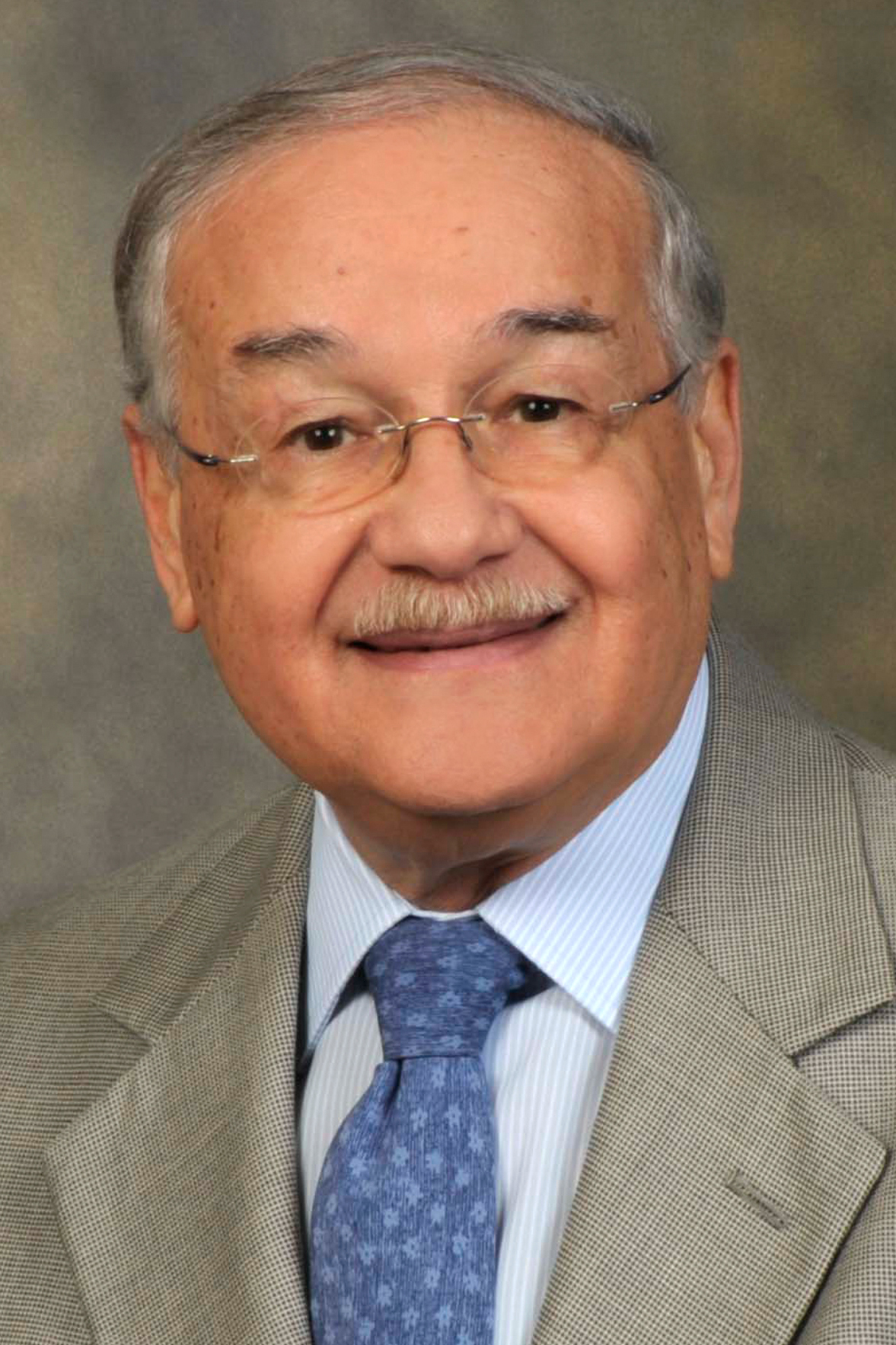
Bahaa E. A. Saleh is a UCF Distinguished Professor of Optics and Photonics at CREOL, The College of Optics and Photonics, University of Central Florida, and former Dean of CREOL (2009–2019). He holds a B.S. from Cairo University (1966) and a Ph.D. from Johns Hopkins University (1971), both in Electrical Engineering. His career includes roles as Chair of the Department of Electrical and Computer Engineering at Boston University (1994–2007) and Deputy Director of the NSF-funded Gordon Center for Subsurface Sensing and Imaging Systems (2000–2008). His research spans quantum optics, statistical optics, nonlinear optics, and optical communication. He authored three influential books, including Fundamentals of Photonics , and has published over 600 papers. He founded the Optical Society (OSA) Advances in Optics and Photonics and held editorial leadership roles in major optics journals. Awards include the 2013 C.E.K. Mees Medal, 2006 Kuwait Prize, and multiple fellowships from SPIE, IEEE, and OSA. Current research focuses on quantum information applications, such as entangled photon generation and quantum imaging. He advises students in optics and photonics, with notable alumni including Seth Smith-Dryden and Walker Larson. His work emphasizes interdisciplinary contributions to optics education and technology.
Prof. Heinz Koeppl is a Professor in the Department of Electrical Engineering and Information Technology at TU Darmstadt. His research focuses on self-organizing systems, systems biology, and control theory, with applications in synthetic biology, robotics, and stochastic processes. He explores interdisciplinary topics such as genetic circuit design, UAV swarm dynamics, and machine learning-driven modeling of biochemical systems. Key research areas include the development of deep learning frameworks for kinetic modeling, Bayesian optimization for riboswitch design, and mean field control theory for sparse networks. His work bridges theoretical foundations with practical engineering solutions, addressing challenges in molecular communication, gene regulation, and robotic swarm coordination. Publications from 2023–2025 highlight advancements in bio-inspired algorithms, swarm intelligence, and computational biology. Notable contributions include studies on RNA-based circuits, active matter dynamics, and optimization strategies for large-scale systems. His research emphasizes interdisciplinary collaboration, leveraging tools from electrical engineering, mathematics, and life sciences. No scientific awards are explicitly listed in the provided text. Advising and grants details are not available. Prof. Koeppl’s lab focuses on integrating systems biology approaches with engineering principles to solve complex problems in healthcare, environmental sustainability, and technological innovation.
Pierre Baldi is a Distinguished Professor of Computer Science and Director of the Institute for Genomics and Bioinformatics at the University of California, Irvine (UCI). He is affiliated with the Donald Bren School of Information and Computer Sciences. His research spans artificial intelligence, machine learning, bioinformatics, and communication networks, with notable projects in protein structure prediction, gene expression modeling, and neutrino physics collaborations like DUNE. Baldi’s work bridges theoretical foundations (e.g., neural network theory) and applied domains, including medical imaging and fusion technology. Key research interests include AI-driven biomedical applications, neural network theory, and interdisciplinary projects such as the DUNE neutrino experiment. His contributions to neural network engineering were recognized with the 2023 INNS Dennis Gabor Award, highlighting his paradigm-changing impact on computational neuroscience and physics. Baldi’s academic leadership includes directing UCI’s Institute for Genomics and Bioinformatics, fostering collaborations in computational biology and AI. His recent work explores AI’s role in healthcare, climate modeling (e.g., ClimSim-Online), and fundamental physics challenges like neutrino oscillation studies.
Professor Ian Ruthven is a Professor of Information Seeking and Retrieval in the Department of Computer and Information Sciences at the University of Strathclyde. He chairs the Scottish Library and Information Council (SLIC) and the Steering Committee of the Information Seeking in Context (ISIC) conference series. His research focuses on human information interaction, including information seeking in health, migration, and cultural heritage contexts. He authored Dealing With Change Through Information Sculpting , proposing a theory explaining how people use information behaviors to adapt during life transitions. Education: PhD in Abduction, Explanation, and Relevance Feedback (University of Glasgow, 2001), MSc (University of Birmingham, 1993), BSc in Computing Science (University of Glasgow, 1992). Research Interests: Information seeking theory, interface design for information access, user studies. His work bridges human-computer interaction with socio-technical systems, emphasizing ethical and inclusive design. Publications: Over 170 peer-reviewed papers, including influential works on information resilience, digital divides, and pandemic impacts on international students. Recent work includes Grey Digital Divide: Factors Associated with Older People’s Use of the Internet for Financial Transactions (2025) and Information Avoidance: A Critical Conceptual Review (2025). Awards: Tony Kent Strix Memorial Award (2020), Fellow of the Royal Society of Arts (2010), and multiple best paper awards. His contributions span academic and policy realms, addressing societal challenges through information science. Projects: Co-investigator in the Participatory Harm Auditing Workbenches and Methodologies (PHAWM) project (2024–2028) and leader of the Scottish Network on Digital Cultural Resources Evaluation (ScotDigiCH) (2015–2016). These projects emphasize participatory design and cultural heritage evaluation. Professional Activities: Editorial roles for major conferences, visiting researcher at the University of Pretoria (2021), and advisory roles in library and information science initiatives. His work fosters collaboration between academia and cultural institutions.
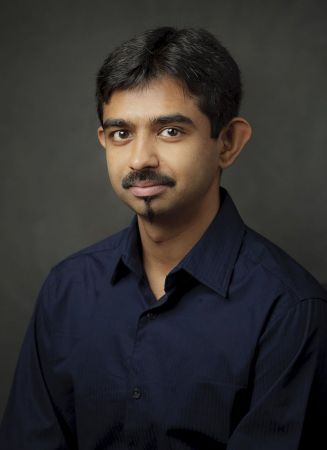
Parv Venkitasubramaniam is a Professor in the Department of Electrical & Computer Engineering at Lehigh University, affiliated with the P.C. Rossin College of Engineering. Previously, he served as a postdoctoral researcher at UC Berkeley under Prof. Venkat Anantharam. His research focuses on theoretical foundations of privacy and security in networks, leveraging statistical signal processing, information theory, and game theory. Key application areas include smart grids, transportation systems, and peer production networks. Education includes a Ph.D. and M.S. in Electrical Engineering from Cornell University, and a B.Tech from the Indian Institute of Technology. His doctoral work concentrated on wireless sensor networks, particularly distributed communication and statistical inference. Research interests span privacy-utility tradeoffs, cybersecurity in control systems, and resilient network design. He explores topics like stealthy attacks on dynamical systems, privacy-aware stochastic games, and resilient energy storage systems. Recent work emphasizes transportation system resilience and cyber-physical system security. His publications address cutting-edge challenges in anonymizing networks, detecting cyber attacks, and optimizing privacy-preserving mechanisms. Notable projects include NSF-funded research on anonymous networking and information-theoretic security frameworks.
Soosan Beheshti is a Professor and Program Director in the Department of Electrical, Computer, and Biomedical Engineering at Toronto Metropolitan University. She holds a B.S. from Isfahan University of Technology and M.S./Ph.D. from MIT. Her research focuses on signal processing, statistical learning, and information theory, with applications in biomedical systems, data denoising, and system modeling. She has received awards such as the Dean's Teaching Award (2010) and the EECS Carlton E. Tucker Award (1998). Education: B.S., Electrical Engineering, Isfahan University of Technology (1996) M.S. & Ph.D., Electrical Engineering, MIT (2002) Research Interests: Statistical Signal Processing Information Theory Data Denoising & Compression System Modeling & Control Machine Learning Applications Awards: Dean's Teaching Award (2010) Gold Paper Award (PacRim 2009) Best Paper Award (Remote Sensing 2008) MIT Teaching Excellence Award (1998) Teaching: Courses include Signals and Systems, Control Systems, and Statistical Inference. She has supervised numerous graduate students and postdocs in her Signal and Information Processing (SIP) Lab. Labs/Teams: Director of the SIP Lab, conducting research in signal processing, information theory, and biomedical applications. Collaborates with industry partners like Myant Inc. and Huawei Technologies.
Dirk Praetorius is a Professor of Numerics of Partial Differential Equations (PDEs) at the Technische Universität Wien (TU Wien) , affiliated with the Institute for Analysis and Scientific Computing (ASC) within the Faculty of Mathematics and Geoinformation . He leads the research group on Numerics of PDEs and has held various leadership roles, including Institute Director (since 2020) and head of the Numerics research area. His work focuses on numerical methods for PDEs, including Finite Element Methods (FEM), Boundary Element Methods (BEM), adaptive algorithms, and computational micromagnetics. Education and Career: Praetorius earned his Diplom in Mathematics (2000) and PhD in Applied Mathematics (2003) from TU Wien, followed by a Habilitation in Numerical Analysis (2005). He has been a faculty member at TU Wien since 2005, progressing from Assistant Professor to full Professor in 2017. He has also held visiting positions at institutions such as the University of Jyväskylä and RICAM (Linz). Research Interests: His research spans numerical analysis, adaptive FEM/BEM, a-posteriori error estimation, matrix compression, and computational micromagnetics. He has contributed to modeling spin dynamics, magnetic skyrmions, and multiscale systems. His work emphasizes efficient algorithms for large-scale problems and optimal computational complexity. Awards and Editorial Roles: Praetorius received the TU Best Teacher Award (2021) and TU Best Lecture Award (2019). He serves as Senior Editor for Computational Methods in Applied Mathematics (CMAM) and on the editorial board of Applied Numerical Mathematics (APNUM) . He co-founded the outreach initiative TUForMath to promote mathematics education. Grants and Projects: He leads or co-leads several research projects funded by the Austrian Science Fund (FWF), including the collaborative SFB "Taming Complexity in Partial Differential Systems" (2017–2025) and international collaborations with Germany. His work addresses topics like functional error estimates, nonlinear PDEs, and computational design of magnetic devices. Labs and Teams: He contributes to the ASC Institute and coordinates interdisciplinary projects involving computational physics and engineering. His team develops software tools like MooAFEM and Commics for micromagnetic simulations.
Prithvi Ravi Kantan is a full-time Researcher at Aalborg University's Department of Architecture, Design and Media Technology within The Technical Faculty of IT and Design. His work focuses on developing sound-based and multimodal feedback systems for motor rehabilitation, integrating principles from music technology and biomedical engineering. Education: PhD in Embodied Sonification Design (2021-2023) M.Sc. in Sound and Music Computing (2018-2020) B.E. in Electronics and Telecommunications (2009-2013) Research interests include real-time auditory feedback systems for neurological rehabilitation, user-centered design of clinical technologies, and the application of generative music in data sonification. He actively contributes to projects like HearWalk (2023-2027), exploring sound-facilitated motor learning in cerebral palsy patients. Notable achievements include winning the Danish Sound Day Research Pitch Battle (2023) and receiving the Best Student Paper Award at ICAD 2024. His work aligns with UN SDG 3 (Good Health) and SDG 4 (Quality Education). Teaching responsibilities include coordinating bachelor and master-level courses in PBL-based learning, emphasizing interdisciplinary approaches. He has supervised multiple student projects and contributed to over 39 publications since 2013.
Kevin P. O'Brien is an Associate Professor in the Department of Electrical Engineering and Computer Science (EECS) at the Massachusetts Institute of Technology (MIT), affiliated with the Research Laboratory of Electronics (RLE). He leads the Quantum Coherent Electronics (QCE) group, focusing on advancing superconducting quantum computing, microwave quantum optics, and quantum metamaterials. His research explores nonlinear and quantum-mechanical light-matter interactions using superconducting circuits, aiming to improve quantum technologies like qubits and amplifiers. Education: B.S. in Physics from Purdue University, Ph.D. in Physics from UC Berkeley, and postdoctoral research at UC Berkeley developing superconducting quantum processors. His group collaborates with MIT Lincoln Laboratory and institutions nationwide. Research Interests: Quantum computing hardware, superconducting circuits, parametric amplifiers, qubit measurement systems, and metamaterials for quantum applications. His work emphasizes scalable architecture design, noise reduction, and novel device concepts. Key projects include directional qubit readout resonators, Floquet-mode amplifiers, and quarton couplers for ultrafast readout. The group actively engages in training graduate students and postdocs, emphasizing open collaboration and problem-solving in quantum technologies. Advising & Grants: Supervises a dynamic team of graduate students and postdocs. Students like Bright Ye and Kaidong Peng have contributed to award-winning projects. The group receives support through fellowships (e.g., Jin Au Kong, NSF GRFP) and industry partnerships. Labs/Teams: Quantum Coherent Electronics Group at MIT, collaborating on quantum device fabrication, theoretical modeling, and experimental validation of quantum systems.
Prof. Dr.-Ing. Hans-Georg Herzog is a Professor of Energy Conversion Technology at the Technical University of Munich (TUM), School of Engineering and Design. He has headed the Energy Conversion Technology group at TUM since 2002 and is a Senior Member of IEEE and member of VDE and VDI professional organizations. His research focuses on energy-efficient electromechanical drives and related technologies critical for modern electric and hybrid vehicles. Prof. Herzog's research interests encompass energy-efficient electromechanical drives, with key expertise in design and optimization of hybrid-electric and battery-electric powertrains, automated design methods for electromechanical actuators, energy and power management systems, and analysis of loss mechanisms in soft magnetic materials. His work bridges fundamental electromagnetic theory with practical automotive applications, particularly in fault-tolerant systems and reliability engineering for electric propulsion. His recent publication trends show a strong focus on vehicular power systems, with particular emphasis on electronic fuses, fault diagnosis in multiphase machines, wireless power transfer, and reliability analysis of electric aircraft propulsion systems. The research spans from fundamental electromagnetic modeling to practical automotive applications, with increasing attention to autonomous driving power requirements and next-generation vehicle electrical architectures. Prize for Good Teaching of the Free State of Bavaria (2010) Prof. Herzog leads a substantial research team including doctoral candidates and postdoctoral researchers who contribute to his extensive publication record. His research group collaborates with automotive industry partners on various grants focused on electric vehicle technology, power system reliability, and advanced electromagnetic systems. The team regularly develops novel methodologies for machine design, fault tolerance analysis, and power system optimization. The research is conducted within TUM's Energy Technology Workshop with specialized facilities for electrical machine testing, power electronics development, and automotive power system simulation. The team maintains strong connections with industry partners in the automotive and aerospace sectors, facilitating technology transfer from academic research to practical applications.
Retsef Levi is the J. Spencer Standish (1945) Professor of Operations Management at the MIT Sloan School of Management, affiliated with the MIT Operations Research Center. He co-directs the Leaders for Global Operations (LGO) Program. His work focuses on data-driven decision models for healthcare systems, supply chain optimization, and risk management. Levi holds a PhD in Operations Research from Cornell University and has led industry collaborations with major hospitals and organizations like the FDA and Walmart Foundation. Education: PhD in Operations Research, Cornell University, 2005 Bachelor’s in Mathematics, Tel-Aviv University, 2001 Research Interests: Levi’s research addresses complex decision-making under uncertainty in healthcare, supply chains, and logistics. Key areas include food safety analytics, risk-based sampling, and predictive modeling for zoonotic diseases. He designs algorithms for inventory control, appointment scheduling, and healthcare resource allocation. Articles Overview: Recent work spans AI-driven epidemiological models, supply chain cybersecurity, and agricultural market interventions. His articles emphasize practical applications of operations research in healthcare and public health. Awards: NSF Career Grant INFORMS Optimization Prize (2008) Wagner Prize (2013) Harold W. Kuhn Award (2016) Advising & Grants: Advised 10 PhD students and 34 master’s students. Led multi-million-dollar projects like the Walmart Foundation initiative for China’s food safety. Active in hospital process optimization and FDA risk management contracts. Labs & Teams: Runs MIT’s Food Supply Chain Analytics and Sensing Initiative, collaborating with global partners on predictive risk tools and healthcare analytics.
Samuel Jean Bassetto is an Associate Professor in the Department of Mathematics and Industrial Engineering at Polytechnique Montréal. He serves as Director of the Continuous Improvement Laboratory (LABAC) and holds membership in multiple prestigious research groups including the Research Group on Globalisation and Management of Technology (GMT), Poly-Industries 4.0 Laboratory, Interuniversity Research Centre on Enterprise Networks, Logistics and Transportation (CIRRELT), and Institute for Data Valorization (IVADO). Dr. Bassetto's research spans multiple disciplines, focusing on continuous improvement through the integration of engineering, artificial intelligence, cognitive science, psychology, and design. His primary sphere of excellence is in New Frontiers in Information and Communication Technologies, with secondary expertise in Modeling and Artificial Intelligence and Human Health. He develops tools that place humans at the center of technology to enhance organizational performance while respecting human rhythms and cognitive limitations. His recent publication portfolio reveals a strong interdisciplinary approach, with research bridging industrial engineering, cognitive neuroscience, and AI ethics. His work addresses practical challenges in lean manufacturing assessment, racial bias in medical AI systems, cognitive data collection in natural environments, and condition monitoring for industrial machinery. The research consistently demonstrates a commitment to developing practical solutions that integrate human factors with technological innovation. NSERC Synergy Prize for Innovation recipient Principal investigator on multiple research grants from NSERC, FRQ, and MITACS Collaborations with over a dozen institutions across multiple countries Supervision of over 150 highly qualified personnel throughout his career Dr. Bassetto teaches specialized courses including CAP7011 (Creativity in Research), IND8444 (Continuous Improvement), IND8203 (Industrial Launch), and previously taught IND8178 (Production). His teaching philosophy emphasizes practical application, with courses featuring hands-on exercises, real-world scenarios, and gamification techniques to enhance learning. His supervision portfolio includes numerous Ph.D. and Master's students working on topics ranging from human-technology collaboration to reinforcement learning for production management. Through LABAC, Dr. Bassetto leads research initiatives focused on developing human-centered tools for continuous improvement in organizational settings. The laboratory conducts projects related to industrial IoT applications, cognitive aspects of process improvement, and the development of practical frameworks for organizations to enhance performance while maintaining respect for human rhythms and cognitive capabilities.
Karan Singh serves as an Assistant Professor of Operations Research at Carnegie Mellon University's Tepper School of Business, where he develops theoretically rigorous algorithms for machine learning systems with emphasis on reinforcement learning and control theory. His work synthesizes techniques from online learning, optimization, and statistics to address complex interactive learning challenges. His academic journey includes: PhD in Computer Science from Princeton University under Elad Hazan Postdoctoral research at Microsoft Research (Redmond) Bachelor's degree in Computer Science from Indian Institute of Technology (IIT) Kanpur Singh's research program centers on three interconnected pillars: Algorithmic Reductions : Creating efficient methods to solve complex learning problems (e.g., reinforcement learning) using solvers for simpler tasks, yielding breakthroughs in online boosting and RL with concave rewards Nonstochastic Control : Establishing an algorithmic foundation for control theory through provably efficient instance-optimal algorithms that extend online learning to stateful systems Privacy-Preserving Online Learning : Investigating fundamental limits of regret minimization under differential privacy constraints while maintaining performance His approach consistently bridges theoretical computer science and practical control applications. Analysis of his 15 most recent publications reveals a clear evolution toward integrating algorithmic reductions with nonstochastic control frameworks. Recent work (2023-2025) demonstrates increasing focus on sample efficiency in agnostic boosting, privacy-aware optimization without smoothness assumptions, and competitive ratio analysis in online control. A unifying thread is the development of regret-optimal algorithms for linear dynamical systems under adversarial disturbances. His contributions have earned significant recognition: Best Paper Award at OptRL workshop (NeurIPS 2019) Spotlight Prize from New York Academy of Sciences' ML Symposium (2018) Multiple oral presentations at NeurIPS/ICML (acceptance rate Though specific student advisees aren't listed, Singh's extensive publication record with junior co-authors indicates active mentorship. His research has secured substantial support including a US patent (11,138,513 B2) for dynamic learning systems and collaborations through CMU's Machine Learning and Optimization group. Current projects involve interdisciplinary work on differentiable control libraries (Deluca) and medical applications like mechanical ventilation control. Singh leads research within CMU's Machine Learning and Optimization ecosystem, collaborating across computer science and engineering departments. His team develops foundational tools like the Deluca differentiable control library while pursuing real-world applications in healthcare systems, demonstrating strong cross-disciplinary integration.
Gireeja Ranade is an Assistant Teaching Professor in the Department of Electrical Engineering and Computer Sciences at the University of California, Berkeley. She previously served as a Researcher at Microsoft Research AI in the Adaptive Systems and Interaction Group. Her educational background includes a PhD in Electrical Engineering and Computer Science from UC Berkeley and an undergraduate degree from MIT. Research Focus Prof. Ranade's research spans control theory, information theory, and machine learning, with applications in wireless communication, algorithmic fairness, and misinformation analysis. Her work addresses fundamental challenges in system stabilization under uncertainty, real-time control optimization, and equitable resource allocation. She maintains strong collaborations across disciplines, resulting in publications at premier venues like IEEE Transactions on Automatic Control, PNAS, and The Web Conference. Her recent publications demonstrate a consistent focus on robustness in control systems, fairness in algorithmic decision-making, and analysis of information propagation in online ecosystems. The work frequently combines theoretical rigor with practical implementations in robotics, networking, and social systems. Awards and Recognition 2017 UC Berkeley Electrical Engineering Award for Outstanding Teaching 2020 UC Berkeley Award for Extraordinary Teaching in Extraordinary Times Academic Leadership Prof. Ranade leads a dynamic research group including PhD candidates, master's students, and undergraduates. She has advised over 25 students on projects ranging from neural network controllers to fairness metrics in resource allocation. She founded the CalMentors program, which connects UC Berkeley students with K-12 learners for tutoring support during the COVID-19 pandemic. Educational Innovation She co-designed and teaches UC Berkeley's introductory EECS 16A/B sequence, integrating linear algebra with applications in machine learning and circuit design. She has also developed courses on optimization (EECS127/227A) and data science (Data 102), with publicly available lecture videos demonstrating her teaching methodology.