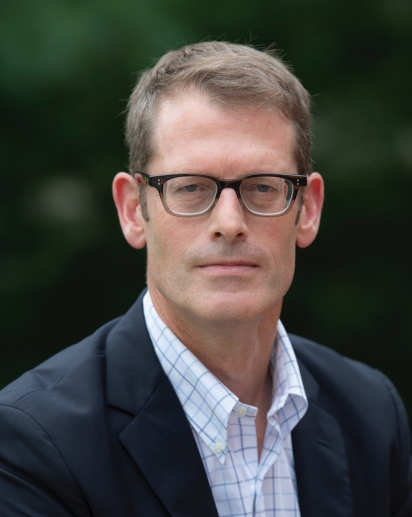
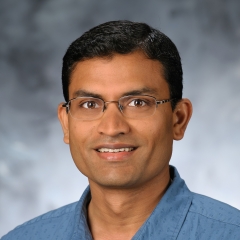
Daryl G. Press is a Professor of Government at Dartmouth College and the inaugural Faculty Director of the Davidson Institute for Global Security . He co-founded the Strategic Forces Boot Camp with Sandia National Laboratories and serves as a non-resident Senior Fellow at the Atlantic Council . Research Expertise U.S. National Security Policy Nuclear Deterrence Dynamics Technological Evolution in Warfare Strategic Stability Analysis Defense Department Consultancy Recent Publications (2023–2025) Examined U.S.-China military dynamics in East Asia Analyzed North Korean deterrence strategies Explored post-primacy U.S. foreign policy frameworks Investigated nuclear escalation risks Contact Information Email: daryl.g.press@dartmouth.edu Phone: (603) 646-1707 Office: Silsby Room 120, HB 6108
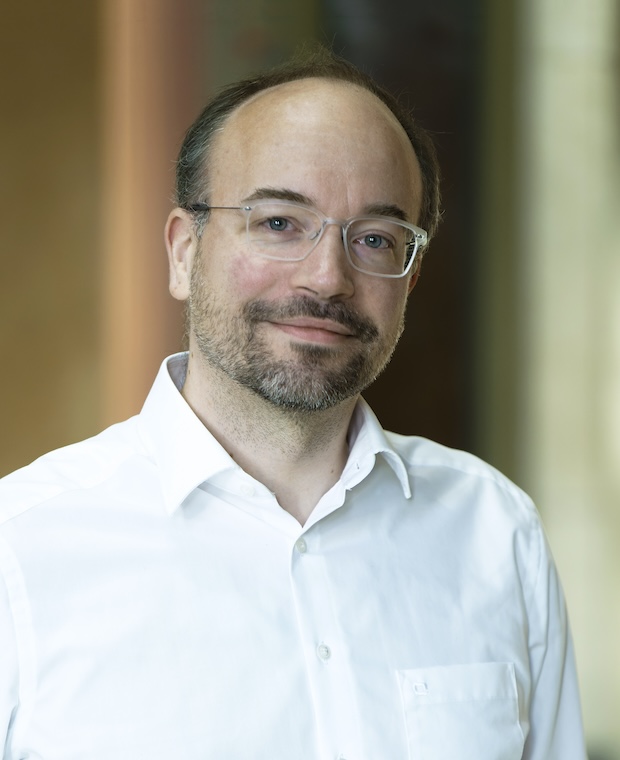
Georges Kaddoum is a Professor at École de technologie supérieure (ÉTS) , specializing in Electrical Engineering. He holds the Canada Research Chair in Unlocking the Power of IoT 6G-Networks and the LACIME – Communications and Microelectronic Integration Laboratory affiliation. His work bridges wireless communications, IoT, and machine learning. Research Interests include wireless communication systems, physical layer security, machine learning for networking, and 6G technologies. He focuses on optimizing network performance in challenging environments (impulsive noise, underwater, non-terrestrial networks) and developing AI-driven solutions for jamming mitigation, resource allocation, and secure IoT frameworks. Recent Publications highlight 6G-enabled vehicular networks, quantum-safe blockchain integration, federated learning for transportation systems, and deep learning-based receivers for chaotic communication systems. His work emphasizes semantic communication, interference management, and digital twin applications. Awards IEEE TCSC Award for Excellence in Scalable Computing (2022) Prix d’excellence de la relève (Université du Québec, 2018) Prix d’excellence en recherche (ÉTS, 2018) Multiple IEEE Exemplary Reviewer and Best Paper Awards (2014–2022) Supervision includes 15+ PhD/Master’s students working on topics like index modulation, physical layer security, UAV communications, and intelligent resource management. Research Units Ultra Research Chair on Intelligent Tactical Wireless Networks LACIME Laboratory Canada Research Chair in IoT 6G-Networks
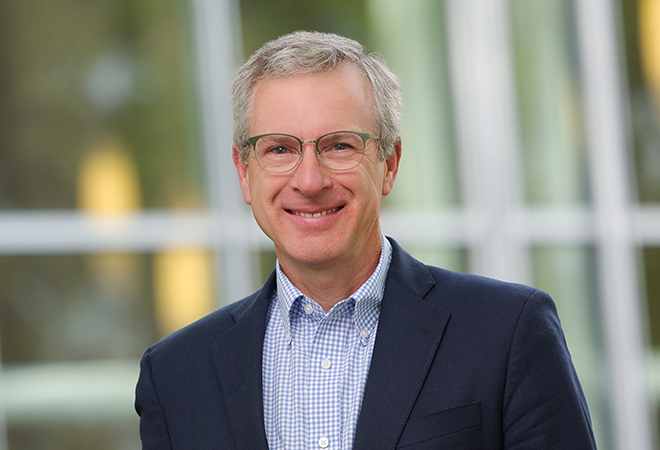
Prof. Dr. Markus Bachmayr is a full professor at the Institute for Geometry and Practical Mathematics, RWTH Aachen University, holding the chair for Applied Mathematics. His research focuses on nonlinear approximation, high-dimensional partial differential equations (PDEs), uncertainty quantification, and numerical methods in quantum chemistry. He leads the ERC Consolidator Grant project Computational Complexity of Highly Nonlinear Approximations (COCOA) and contributes to CRC 1481 Sparsity and Singular Structures, and RTG 2326 Energy, Entropy, and Dissipative Dynamics. His recent work emphasizes adaptive low-rank and sparse approximation techniques for parametric and stochastic PDEs, including applications in radiative transfer and poroviscoelastic flow modeling. He serves as Editor-in-Chief of Foundations of Computational Mathematics and Associate Editor for multiple journals. Scientific Awards: John Todd Award 2013 Borchers Plakette 2014 Erwin Wenzl Preis 2007 He has taught courses such as Numerische Analysis I/II, Numerische Mathematik für Elektrotechniker, and seminars on numerical methods and approximation theory.
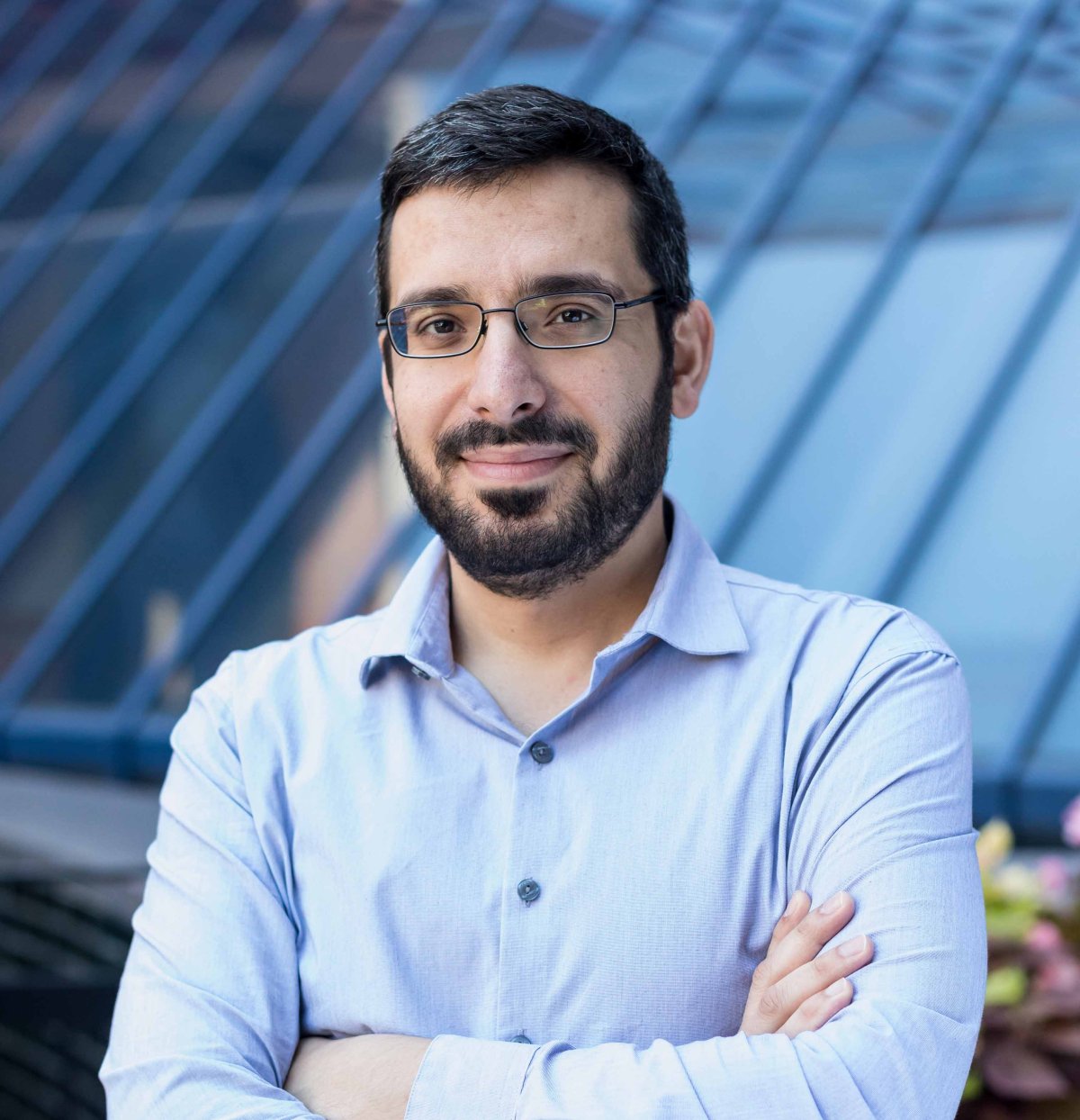
Tommy Sveen is Professor of Economics at BI Norwegian Business School and serves as Head of the Department of Economics. He also holds an adjunct professorship at the Norwegian School of Economics (NHH) and directs the Centre for Monetary Economics. His career includes extensive experience at Norges Bank in roles including Assistant Director and Senior Advisor across Research and Monetary Policy departments. Education: PhD (Dr.Oecon) in Economics from Norwegian School of Economics (NHH), 2001 Master Cand. Oecon from Norwegian School of Economics (NHH), 1995 Master of Science in Business from BI Norwegian Business School, 1988 Research Focus: Professor Sveen specializes in Monetary Economics, Macroeconomics, and Open Economy Macroeconomics. His work examines monetary-fiscal policy interactions, investment dynamics under nominal rigidities, labor market adjustments to technological shocks, and exchange rate mechanisms. He frequently employs New Keynesian frameworks to analyze policy transmission and economic stabilization. Publication Trends: Recent research (2020-2025) focuses on optimal policy coordination in small open economies, monetary responses to export shocks, and labor market margins. Earlier work (2013-2018) established foundational insights into lumpy investment behaviors, Taylor rule applications, and real exchange rate determinants. His articles consistently integrate microeconomic foundations with macroeconomic policy analysis. Leadership: Directs the Centre for Monetary Economics and authors the independent evaluation report Norges Bank Watch , critically assessing Norwegian monetary policy.
Ahmad Al-Dabbagh is an Assistant Professor in Manufacturing Engineering and holds a Principal's Research Chair in Control Systems (Tier 2) with the School of Engineering at The University of British Columbia. As a Senior Member of IEEE and ISA, he contributes significantly to the field of resilient automation and control systems through research, teaching, and professional service. His academic journey includes postdoctoral fellowships at Imperial College London, the University of Toronto, and the University of Alberta, where he also earned his PhD in Electrical and Computer Engineering. Dr. Al-Dabbagh's research focuses on designing resilient automation and control systems by addressing critical challenges in fault diagnosis, cyber security, and alarm management. His work spans theoretical foundations and practical applications in industrial control systems, with particular emphasis on detection and isolation of faults and cyber attacks, control reconfiguration, event-triggered control, remote state estimation, and alarm systems design. His research interests also extend to causality analysis, prediction methods, and root cause analysis for industrial processes. His extensive publication record demonstrates consistent contributions to control systems security and reliability, with recent work focusing on sophisticated methods for detecting false data injection attacks, analyzing alarm correlations using advanced machine learning techniques, and developing recommender systems for human operators in industrial environments. The trajectory of his research shows an evolution from foundational control theory toward increasingly complex applications in cyber-physical security and human-system interaction in industrial settings. NSERC Postdoctoral Fellowship NSERC Alexander Graham Bell Canada Graduate Scholarship (CGS – D3) Queen Elizabeth II Graduate Scholarship Governor General's Academic Medal (Gold) As a graduate student supervisor, Dr. Al-Dabbagh mentors the next generation of control systems engineers while maintaining an active research program. He serves as an Associate Editor on the IEEE Control Systems Society Conference Editorial Board and is a licensed Professional Engineer in British Columbia and Ontario. His teaching portfolio includes courses such as System Identification, Digital Enterprise, Systems and Control, and Internet of Things, reflecting the breadth of his expertise. Dr. Al-Dabbagh leads the Okanagan Laboratory for Control Systems Research, where his team develops innovative approaches to enhance the security and reliability of industrial automation systems. The laboratory serves as a hub for interdisciplinary research that bridges theoretical control engineering with practical industrial applications, particularly in the energy, manufacturing, and process industries.
Jonathan B. Wiener is the William R. Perkins Distinguished Professor of Law at Duke Law School, Professor of Environmental Policy at the Nicholas School of the Environment, and Professor of Public Policy at the Sanford School of Public Policy at Duke University. He serves as Co-Director of the Duke Center on Risk in the Science & Society Initiative and holds affiliations with Resources for the Future (RFF), the Administrative Conference of the United States (ACUS), Duke Kunshan University, and the Harvard Center for Risk Analysis. President, Society for Risk Analysis (2008) Co-Chair, SRA World Congress on Risk (2012) Founding Faculty Director, Duke Center for Environmental Solutions (2000-05) Co-Director, Rethinking Regulation Program (2015-19) His research focuses on comparative risk regulation , climate change policy , environmental economics , and international regulatory cooperation , with recent work on solar radiation modification governance , multirisk frameworks , and adaptive policy design . Key projects include the Duke Center on Risk and the Duke Rethinking Regulation initiative. Scientific awards include the Chauncey Starr Young Risk Analyst Award (SRA, 2003) Richard J. Burk Outstanding Service Award (SRA, 2014) University Fellow of Resources for the Future Senior Fellow of ACUS He has advised on climate treaties , international risk assessments , and regulatory reform , with grants from institutions like the Intergovernmental Panel on Climate Change and China Council for International Cooperation on Environment & Development . His work bridges law , policy , and decision sciences .
University of Illinois Urbana-ChampaignUnited States
Roy Dong is an Assistant Professor at the University of Illinois at Urbana-Champaign, affiliated with the Coordinated Science Laboratory. His research bridges Control Theory Economics Statistics Optimization to address challenges in cyber-physical systems and the Internet of Things, focusing on data manipulation, privacy, and strategic behavior in interconnected systems. His academic journey includes a Ph.D. in Electrical Engineering and Computer Sciences from UC Berkeley (2017) and dual B.S. degrees in Economics and Computer Engineering from Michigan State University (2010). At Illinois, he teaches courses ranging from Control Systems to Convex Optimization , with multiple teaching excellence awards. Roy's research explores Closed-loop effects of machine learning Causality in decision systems Incentive design for strategic agents Privacy-utility tradeoff optimization Human behavior modeling with applications in smart grids, transportation networks, and semi-autonomous vehicles. His work formulates privacy-preserving mechanisms as optimization problems, balancing data utility against user privacy in dynamic systems. Article trends show expertise in Game theory for strategic data sources Energy disaggregation techniques Nonlinear basis pursuit algorithms Privacy-aware control systems with a focus on cyber-physical systems and human-in-the-loop applications. Scientific recognition includes 'Teacher Ranked as Excellent' awards (ECE 120, ECE 486, ECE 515) Contributions to smartSDH building control and CPRL compressive sensing Roy leads the Privacy-aware Control Systems research group, collaborating with institutions like UC Berkeley and Michigan State University , and directs projects funded by grants including the New USDA NIFA grant for agricultural robot autonomy .
Turan Birol is an Associate Professor in the Department of Chemical Engineering and Materials Science at the University of Minnesota, with a secondary appointment in the School of Physics. He leads the Theoretical Materials Physics Group , focusing on computational materials design to discover exotic condensed matter phenomena. Education: PhD in Physics (Cornell University), Postdoc (Rutgers University) Research Areas: Ferroelectricity, Charge Density Waves, Multiferroics, Strongly Correlated Systems, Kagome Metals His work combines Density Functional Theory with Dynamical Mean Field Theory to study materials like perovskites, layered antiperovskites, and 2D/3D compounds. Recent projects include Office of Naval Research -funded ferroelectric design and NSF Discovery File -featured transparent conductors. Scientific contributions include 15+ recent articles on topics spanning structural chirality in superconductors, strain-tuned magnetism, and catalytic resonance theory. Former advisees include PhD graduates in Physics and Materials Science.
University of California , Santa Barbara (UCSB)United States
Yogananda Isukapalli is a Teaching Professor and Vice Chair in the Computer Engineering Program at the Electrical and Computer Engineering Department , University of California, Santa Barbara . He joined the faculty in Winter 2017 after a career as a staff scientist at Broadcom (2010–2017), where he designed Wi-Fi chips (11n/11ac/11ax) and worked on underwater wireless communication models during a postdoctoral stint at Scripps Institution of Oceanography (2009–2010). His PhD in Communication Theory and Systems from UC San Diego (2009) forms the basis of his expertise in wireless systems and digital design .
Jari Holopainen is a Senior Lecturer at the Department of Electronics and Nanoengineering , Aalto University. His work focuses on advanced antenna systems, wireless communication, and RFID technologies, with significant contributions to broadband, tunable, and wearable antenna designs. Current affiliation: Aalto University Academic role: Senior Lecturer Research interests span antenna design for mobile terminals, microwave engineering, and machine learning applications in RF systems. His publications highlight innovations in: Bluetooth antennas for metallic smartwatches and jewelry Wideband and dual-polarized antenna arrays RFID transponders with beam steering Machine learning-driven load optimization 3D-printed and capacitive-coupling antenna structures Wave propagation and scattering analysis Scientific contributions include: 15+ peer-reviewed articles (2025-2020) Collaborations with leading researchers in electromagnetics (e.g., Ville Viikari, Pertti Vainikainen)
Murat FİDAN serves as an Associate Professor in the Department of Economics at Kastamonu University's Faculty of Economics and Administrative Sciences, where he has been a full-time faculty member since 2020. Previously, he held academic positions at Gaziantep University and Kilis 7 Aralık University, specializing in Ottoman economic history and price dynamics. His career spans over two decades of teaching and research in Turkish higher education. His academic credentials include a PhD in Islamic History and Arts from Ondokuz Mayıs University (2003), a Master's in Islamic Law from İnönü University (1996), and a BA in Theology from Ankara University (1993). His foreign language proficiency includes English (YÖKDİL score 60, 2017). FİDAN's research centers on Ottoman economic structures, with particular expertise in price history, trade relations, and institutional analysis. His work bridges Ottoman history with economic methodology, examining narh (price control) records, guild systems, and international trade dynamics. He has published extensively on Kastamonu's regional economy, Ottoman-Russian commercial relations, and the evolution of monetary systems, contributing significantly to understanding pre-modern economic mechanisms through primary source analysis. His publication portfolio shows consistent output with 43 total works including 19 journal articles, 14 conference papers, 2 books, and 8 book chapters. The research demonstrates chronological depth from 2004 to 2024, with recent focus on waqf (endowment) institutions, comparative economic thought, and Eastern Mediterranean maritime history. Methodologically, he combines archival research with economic analysis, primarily using Ottoman-era price records and customs tariff documents. FİDAN has successfully supervised 13 master's theses focusing on Ottoman economic history, Turkish women's labor participation, and regional price dynamics. His sole research project (2016-2018) examined price movements in Kastamonu between 1673-1806 using narh records. He maintains active collaborations with scholars like Serkan Dilek and Tolga Ulusoy, co-authoring multiple publications on economic history topics.
Steven D. Levitt is the William B. Ogden Distinguished Service Professor of Economics at the University of Chicago, where he directs the Becker Center on Chicago Price Theory. He has been affiliated with the university since 1997, following a PhD from MIT and BA from Harvard. Fields of Interest: Economics, Criminology, Education Policy, Real Estate, Political Economy, Social Policy, Game Theory Levitt's research spans empirical economic analysis across diverse domains, including crime, education, politics, and behavioral economics. His work often employs unconventional data sources and focuses on identifying causal relationships through natural experiments. Recent publications highlight intersections between incentives, social behavior, and policy outcomes. Notable awards include the John Bates Clark Medal (2004) and recognition as one of Time magazine's 100 People Who Shape Our World (2006). He is widely known for co-authoring the Freakonomics book series and blog, which popularized the application of economic principles to real-world phenomena. Contact: SLevitt@UChicago.edu
Phillip B. Gibbons is a Professor in both the Computer Science Department and Electrical & Computer Engineering Department at Carnegie Mellon University. He received his Ph.D. in Computer Science from the University of California at Berkeley in 1989 and has held research positions at AT&T Bell Laboratories, Lucent Bell Laboratories, and Intel Research Pittsburgh before joining CMU's faculty. His research spans parallel computing, distributed systems, databases, computer architecture, and machine learning. Gibbons' work bridges theory and systems, with publications in top-tier conferences including SOSP, OSDI, SIGMOD, VLDB, NeurIPS, and many others across computer science and engineering disciplines. His research has been supported by significant funding from NSF, Intel, and other organizations. Gibbons has made substantial contributions to streaming algorithms, parallel computing frameworks, distributed systems security, and large-scale machine learning systems. His work on data stream algorithms with Alon, Matias, and Szegedy has been particularly influential in the field. He has served in numerous leadership roles including Editor-in-Chief of ACM Transactions on Parallel Computing (2012-2018) and on the editorial boards of Journal of the ACM and IEEE Transactions on Cloud Computing. He has also been active on program committees for major conferences in systems, databases, and theory. IEEE Fellow (2014) - For contributions to parallel computing and databases ACM Fellow (2006) - For contributions to parallel computing, databases, and sensor networks Selected for Oral Presentation at NeurIPS '13 (only 20 selected out of 1420 submissions) Co-winner of the best paper award for NSDI '06 Gibbons has advised numerous students and mentored researchers who have gone on to make significant contributions in academia and industry. His research has been supported by major grants including the $15M Intel Science and Technology Center for Cloud Computing (2011-2015) where he served as Co-PI/Co-Director. He currently leads research projects on write-efficient algorithms, big learning systems, and visual cloud systems. His laboratory work focuses on bridging theoretical computer science with practical systems implementation, particularly in the areas of parallel and distributed computing. Current research directions include adapting algorithms for emerging memory technologies and optimizing machine learning systems for large-scale deployment.
Markus Heilig is a Professor of Psychiatry and Head of the Department of Biomedical and Clinical Sciences (BKV) at Linköping University. He serves as Director of the Center for Social and Affective Neuroscience (CSAN), integrating basic and clinical neuroscience to address addictive and affective disorders. His work bridges neuropharmacology, molecular psychiatry, and clinical trials. Linköping University (Current) Center for Social and Affective Neuroscience (CSAN) (Director) Wallenberg Center for Molecular Medicine (Collaborator) His research focuses on alcohol dependence mechanisms, stress-neurotransmitter interactions (e.g., CRF, substance P, endocannabinoids), and personalized medicine approaches. Using animal models and human neuroimaging (fMRI), his lab explores epigenetic changes in frontal lobe and amygdala neurons that drive compulsive alcohol use. Recent publications highlight his work on endocannabinoid modulation for PTSD treatment, neural correlates of reward choices, and pharmacological interventions targeting GABA and opioid receptors. His studies often combine brain imaging, behavioral analysis, and pharmacology. Scientific awards include the 2019 Wallenberg Clinical Scholar grant and 2017 CAN/Nordic Drugs prizes. Heilig's research is supported by Vetenskapsrådet (SEK 57 million center funding) and international donations like the Andrew J. Bock Memorial Fund.
Rochester Institute of Technology (RIT)United States
Edith Hemaspaandra is a Professor in the Department of Computer Science at the Rochester Institute of Technology (RIT), located in the Golisano College of Computing and Information Sciences. She holds a BS, MS, and Ph.D. in Computer Science from the University of Amsterdam (the Netherlands). Her research focuses on computational social choice, computational complexity theory, logic complexity, and formal methods. She teaches courses such as CSCI-262/263 (Introduction to Computer Science Theory) and CSCI-664 (Computational Complexity). Her work explores the algorithmic aspects of voting systems, including election manipulation, control, and bribery, with a focus on their computational complexity. She has also contributed to formal methods for automata theory, educational tools like JFLAP extensions, and the study of complexity classes such as LWPP and WPP. Her research bridges theoretical computer science with practical applications in social choice theory and algorithm design. Her grants include an NSF-funded project on computationally protecting elections from manipulation (2011). She actively publishes in top venues like STACS and ISAAC, addressing topics ranging from graph reconstruction to hybrid election models. Though no awards are explicitly listed, her extensive publication record highlights her contributions to theoretical computer science. Her advising and grant activities include collaborative research projects and educational tool development. She is affiliated with RIT’s Department of Computer Science and maintains a personal website and ORCID profile.