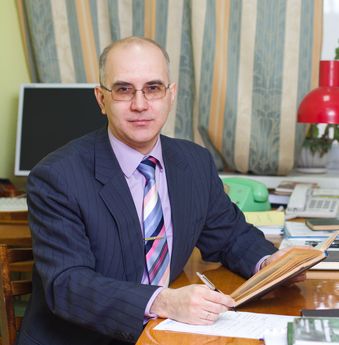
Olena Chuiko is a Professor and Head of the Department of Social Rehabilitation and Social Pedagogy at the Faculty of Psychology, Taras Shevchenko National University of Kyiv. With over 100 scientific publications, she specializes in social rehabilitation, psychosocial support, and inclusive education environments. Education : Psychology degree from Taras Shevchenko National University (1985), 2-year training in applied psychology (1995) Research Focus : Social rehabilitation technologies, professional socialization, social leadership, and inclusive education systems Projects : Directed initiatives like 'New Home' for displaced children (2015-2016), 'School of Social Leadership' (2016), and 'Creating an Inclusive Environment in Universities' (ongoing) Leadership : Dean Deputy for Scientific Research (2008-2011), Head of Department (2016-ongoing) Publications : Authored monographs, textbooks, and articles on social work, psychosocial support, and professional development Her work spans educational environment design, social leadership frameworks, and psychosocial integration of vulnerable groups. She has contributed to methodology development for social workers and university-level rehabilitation strategies.
Oleksandr Nakonechnyi is a Professor at the Department of System Analysis and Decision Making Theory, Taras Shevchenko National University of Kyiv. He has held this position since 1984 and currently serves as Head of the Department. His academic career spans nearly five decades, including roles as Assistant Professor (1970–1975) and Associate Professor (1975–1984) at the same institution. Education: Ph.D. in Probability Theory (1973), Doctor of Phys.-Math. Sciences in Mathematical Cybernetics (1981), both from Taras Shevchenko National University of Kyiv. His research focuses on mathematical methods for decision-making theory, system analysis under uncertainty, and optimal control. Key themes include modeling socio-economic and ecological processes, stochastic networks, and a posteriori estimation in dynamic systems. Recent work applies these methods to biomedical research and information-communication technologies. The 10 listed publications (2013–2021) emphasize inverse problems, minimax estimation, and differential equation parameter identification. Subfields span differential equations, numerical methods, robust control, and uncertainty quantification in mathematical physics and cybernetics. Current projects aim to develop decision-making methods under uncertainty and conflict, with applications in combating informational influences and advancing biomedical/ICT systems. His work has been recognized through collaborations with France (2011–2012), Ukrainian-Lithuanian R&D projects (2022–2023), and grants like CRDF (1997).
Sergey Lyashko is a Professor and Head of the Department of Computational Mathematics at the Faculty of Computer Sciences and Cybernetics, Taras Shevchenko National University of Kyiv. He is also a correspondent member of the National Academy of Sciences of Ukraine. His academic career spans decades of research and leadership in computational mathematics and optimal control theory. Education : Master’s Degree in Mathematics (1977), Ph.D. in Mathematics (1981), Doctor of Science in Physics and Mathematics (1990) from Taras Shevchenko National University of Kyiv and V.M. Glushkov Institute of Cybernetics. Lyashko’s research focuses on singular optimal control problems, generalized solutions of operator equations, and optimization methods applied to systems described by partial differential equations. His work bridges theoretical mathematics with practical applications in environmental science, biomedical engineering, and computational modeling. Recent publications highlight advancements in Richards-Klute equation control, microneedle drug delivery systems, and generalized solutions in operator theory. His research trends emphasize interdisciplinary approaches combining mathematical physics, optimization, and real-world problem-solving. Scientific Awards : Correspondent Member of the National Academy of Sciences of Ukraine. Lyashko has extensive methodological expertise in distributed parameter systems, optimal control, and medical image processing. His future projects aim to develop efficient methods for variational inequalities, bilevel optimization, and applications in machine learning.
Anatolii Veklych is a Professor and current Head of the Physical Electronics Department at Taras Shevchenko National University of Kyiv, Ukraine, with continuous service since 1976. His career progression from student to department leadership spans over four decades in plasma research and academic administration. His academic qualifications include: Graduate, Radio Physics Faculty, Taras Shevchenko National University of Kyiv (1981) PhD, Taras Shevchenko National University of Kyiv (1997) Senior Researcher qualification (2001) Associate Professor (2004) DrSci (Physics & Mathematics) (2014) Professor (2016) Professor Veklych's research centers on thermal multi-component plasma systems , specializing in electric arc discharges with metal vapors (copper, chromium, iron) in molecular gases. His work employs optical emission/absorption spectroscopy for plasma diagnostics, investigates plasma-electrode interactions, and develops microprocessor-controlled plasma generation systems. Key applications span energy technologies , space plasma phenomena , and nanoparticle synthesis for biomedical use, with notable contributions to two-temperature plasma modeling and radiation transport analysis. Analysis of his 2020-2022 publications reveals consistent focus on spectroscopic characterization of metal-vapor plasmas, underwater spark discharge mechanisms, and plasma-material interactions. The research demonstrates strong methodological continuity in optical diagnostics while expanding into biomedical applications through metal nanoparticle synthesis, reflecting interdisciplinary trends in plasma technology. His professional recognition includes: Academician of Academy of Sciences of the Higher School of Ukraine As department head and research group leader, Veklych oversees academic operations and mentors junior researchers, though specific student names and grant details aren't provided in the source text. His administrative leadership complements active research supervision within the department's technical framework. He directs the Plasma & Electric Discharge Technologies research group, which has developed specialized hardware/software complexes for plasma property analysis. The team maintains active international engagement through conference organization and committee participation in fields including switching arc physics and high-tech plasma processes.
Iurii Krak is a Professor and Doctor of Phys.-Math. Sciences at the Taras Shevchenko National University of Kyiv , leading the Theoretical Cybernetics Department . He serves as a Senior Researcher Fellow (part-time) at the Glushkov Institute of Cybernetics and is a Corresponding Member in Informatics at the National Academy of Sciences of Ukraine . Education: M.Sc. in Cybernetics (1980), PhD (1987), Doctor of Phys.-Math. Sciences (1999) Roles: Visiting Professor at Lublin University of Technology (2008-2019), Chalmers University (2002), and others His research spans Artificial Intelligence, Robotics, Sign Language Recognition, and Medical Informatics , with a focus on 3D human modeling, emotional state analysis, and gesture synthesis. Recent work explores augmentative communication , big data analysis , and human-computer interfaces . Publications highlight mathematical optimization in robotics, sign language modeling, and intelligent decision-making systems. Scientific honors include membership in the National Academy of Sciences of Ukraine. Collaborations include institutions in Sweden, Poland, and Kazakhstan.
Vladimir Vysotskii is a Professor and current Head of the Department of Mathematics and Theoretical Radiophysics at Taras Shevchenko National University of Kyiv, where he has served since 1974. His career progression includes Junior Researcher (1974-1976), Senior Researcher (1976-1979), Associate Professor (1979-1993), Professor (1993-2006), and Leading Researcher (2014-2015), demonstrating five decades of continuous academic service in theoretical physics. Education: 1969: Master degree in Radiophysics, Taras Shevchenko National University of Kyiv 1974: Ph.D., Kyiv Bogolyubov Institute for Theoretical Physics 1992: Dr. Phys.-Math. Sci., Taras Shevchenko National University of Kyiv Research Focus: Vysotskii's pioneering work centers on coherent correlated states in quantum systems, with groundbreaking contributions to Low Energy Nuclear Reactions (LENR). His research bridges nuclear physics and biophysics through investigations into barrier transparency optimization, nuclear reactions in biological systems, and modeling of neuron synchronization mechanisms. Key methodological innovations include three-dimensional correlation techniques for radiation source detection and mathematical models for molecular diffusion in complex solutions. Publication Trends: His 2012-2015 publications reveal a concentrated exploration of correlated state formation to enhance nuclear reaction efficiency at low energies. These works, appearing in high-impact journals like Journal of Experimental and Theoretical Physics (SNIP=2.736), establish theoretical frameworks for LENR applications in environmental remediation, energy production, and biological transmutation. The consistent focus on quantum coherence under damping conditions demonstrates both theoretical rigor and practical interdisciplinary relevance.
Alexey Popov is an Associate Professor at Taras Shevchenko National University of Kyiv, Ukraine, with a focus on advanced ceramic materials and reaction sintering techniques. His academic career spans over two decades, including roles as a Reader (2006–2012) and Research Scientist (2003–2006). He holds a Doctor of Science degree (2018) and a Ph.D. (2006) in Solid State Physics from his affiliated university. Education: Master's (1999), Ph.D. (2006), Doctor of Science (2018) Current Position: Associate Professor (2014–Present) His research emphasizes ultra-high temperature ceramics (UHTC) with in-situ formed carbon nanostructures, exploring how processing parameters influence material properties. Key contributions include enhancing UHTC toughness using graphite plates and CNTs, developing reactive hot pressing methods for dense ceramics, and studying thermal shock resistance mechanisms. Recent publications highlight his work on graphene-reinforced composites, high-entropy ceramics, biocompatible materials, and advanced sintering techniques. His methodological expertise includes powder metallurgy, X-ray diffractometry, and scanning electron microscopy with energy-dispersive spectroscopy. Future projects aim to expand reaction sintering to new ceramic systems like ZrB2-SiC-C and HfB2-SiC-C, develop multiphase and high-entropy ceramics, and explore applications in armor plates, bone prosthetics, and concentrated solar energy absorbers.
Nataliia Lukova-Chuiko is a Professor and current Head of the Department of Cybersecurity and Information Protection at Taras Shevchenko National University of Kyiv. Her career spans roles as Associate Professor, Senior Teacher, and Methodist in institutions like State University of Telecommunications and Ukrainian State University of Finance and International Trade. Doctor of Technical Science (Information Technology, 2018) PhD in Physical and Mathematical Sciences (Geometry and Topology, 2010) Her research focuses on cybersecurity, functional stability of distributed systems, and network security. She has authored over 80 scientific works, including monographs, textbooks, and 50+ articles in Ukrainian and international journals, with Scopus publications in fields like anomaly detection, augmented reality security, and vehicle network resilience. She participated in the ENGENSEC project under TEMPUS IV and held leadership roles in Ukrainian education policy, including advising the Minister of Education and Science of Ukraine (2016-2019) and assisting the Verkhovna Rada Committee for Science and Education (2014-2016). She also led international internships in Poland, Latvia, and the U.S., focusing on innovation in education and civil society development. Lukova-Chuiko serves as Editor-in-Chief of the journal «Information Systems and Technologies Security» and participates in accreditation bodies for cybersecurity and information systems programs. Her work bridges technical cybersecurity research with national policy and educational reform.
Radmyla Hrevtsova serves as Associate Professor at Taras Shevtchenko National University of Kyiv's Department of Public Service Law and Medical Law within the Education and Research Institute of Law. She concurrently directs the Educational and Research Centre of Medical Law and maintains active legal practice as an attorney-at-law admitted before all Ukrainian courts. Her professional affiliations include Governor of the World Association for Medical Law, Vice-President of the International Association of Medical Law, and Head of the Ukrainian Unit of the International Network for UNESCO's International Chair in Bioethics. Her research spans Medical Law , Pharmaceutical Law , Public Health Law , and Bioethics with emphasis on health emergency response systems, reproductive rights, and international health governance. Current projects focus on Organizational and Legal Support to Health Emergencies Prevention and Response examining institutional frameworks, legislative landscapes, and intersectoral cooperation during crises like the COVID-19 pandemic and Russia's military aggression against Ukraine. Analysis of her 15 most recent publications reveals dominant trends in Health emergency legal frameworks (35%) Reproductive and genetic rights (25%) International health law harmonization (20%) Clinical research regulation (15%) Tobacco control policy (5%) Her work demonstrates strong interdisciplinary integration between legal theory, public health practice, and military medicine contexts. Professional recognition includes: Three-time "Advocate of the Year" award recipient (2017-2019) Inclusion in Client’s Choice Top 100 Best Lawyers of Ukraine (2017, 2018, 2020) Ukrainian Women in Law 2021 ranking Editorial board membership for "Medicine and Law" journal As Director of the Educational and Research Centre of Medical Law, she leads WHO consulting projects while maintaining legal practice specializing in medical/pharmaceutical law. Her advisory work includes drafting legislation for Ukraine's Ministry of Health and serving on the Public Council at the Ministry of Health (2014-2018). Current research integrates legal, medical, and IT expertise to develop multi-faceted emergency response frameworks.
Professor Tatyana Zheltonozhskaya is a Leading Scientific Researcher and Professor at Taras Shevchenko National University of Kyiv, where she has served since 1972. She currently heads an active scientific team focused on advanced polymer chemistry and nanotechnology. Education: 1967–1972 – Specialist in Chemistry (Polymer Chemistry), Moscow State University M.V. Lomonosov, Moscow, Russia 1988 – Ph.D., Taras Shevchenko National University of Kyiv, Ukraine 1996 – Senior Researcher (advanced academic certification) 2003 – Doctor of Chemical Sciences, Taras Shevchenko National University of Kyiv, Ukraine 2006 – Professor, Taras Shevchenko National University of Kyiv, Ukraine 2014 – Honored Worker of Science and Technology of Ukraine Research Interests: Professor Zheltonozhskaya’s research centers on the design, synthesis, and application of advanced polymer systems. She has pioneered work on template block and graft copolymerization , discovering intramolecular polycomplexes (IntraPCs) that enable precise control over macromolecular architecture. Her group develops micelle and micelle-like nanocontainers from asymmetric block copolymers and polymer/inorganic hybrids for targeted drug delivery and in-situ synthesis of metal nanoparticles. These nanostructures are exploited to solubilize poorly soluble or toxic drugs such as doxorubicin, prednisolone, melanin, and vitamin E, as well as to generate biocidal silver nanoparticles. Environmental applications include the creation of high-efficiency flocculants (Unicomfloc) for water purification from radionuclides and suspended matter. Publication Trends: Her most recent articles (2004–2016) emphasize the fabrication of block/graft copolymers and their hybrids, elucidating structure–property relationships that underpin nanomedicine, energy storage (solid polymer electrolytes for lithium batteries and solar cells), and environmental remediation. The body of work repeatedly highlights self-assembly, pH-responsive behavior, ionic conductivity, and the templating role of complementary polymer components. Scientific Awards & Honors: Honored Worker of Science and Technology of Ukraine (2014) US Patent No. 8,323,838 B2 for solid polymer electrolytes (2012) Team & Funding: Since 1990, Professor Zheltonozhskaya has led a scientific team that presently comprises three researchers, one engineer, one Master’s student, and two Bachelor students. The group has continuously attracted national funding for successive multi-year projects, ranging from multicomponent polymer flocculants to nano-sized block copolymer systems for drug delivery and nanoreactor applications. Laboratory & Methodological Expertise: The team employs state-of-the-art techniques including NMR, FTIR and UV-Vis spectroscopy, gel-permeation chromatography (GPC), static and dynamic light scattering, dilatometry, viscometry, potentiometric titration, transmission electron microscopy (TEM), differential scanning calorimetry (DSC), wide- and small-angle X-ray scattering (WAXS/SAXS), and more to characterize and fine-tune the molecular structure and functional properties of synthesized materials.
Valeriy Chernyak serves as Professor at the Department of Physical Electronics within the Faculty of Radio Physics, Electronics and Computer Systems at Taras Shevchenko National University of Kyiv, Ukraine. His 60-year career at the institution progressed from student (1966-1971) to Junior Research Scientist (1971-1982), Assistant Professor (1983-1990), Associate Professor (1990-2006), and Professor (2006-present). His academic credentials include: 1971: Graduate, Radio Physics Faculty, Taras Shevchenko National University of Kyiv 1986: PhD, Taras Shevchenko National University of Kyiv 2006: DrSci and Professor title, Taras Shevchenko National University of Kyiv Chernyak's research pioneers plasma chemistry and technology for sustainable development, with dual focus on environmental applications (water purification, toxic agent destruction) and energy solutions (hydrogen production, plasma-assisted fuel reforming). His work explores nonequilibrium plasma phenomena, plasma-liquid interactions, and acoustic wave dynamics in plasma systems, emphasizing practical implementations for ecological and energy challenges. The group he leads specifically targets Environment/Ecology, Energy, and Key Enabling Technologies. Analysis of his 2011-2015 publications reveals concentrated innovation in dynamic plasma-liquid systems, particularly rotating gliding arcs and tornado-type discharges for hydrogen generation from ethanol/water mixtures, hydrocarbon reforming, and nanomaterial synthesis. These works demonstrate consistent advancement in plasma diagnostics, reactor design, and catalytic plasma applications. His scientific recognition includes: Soros docent award (1996) As leader of the Plasma chemistry and Plasma technology for sustainable development research group, Chernyak directs laboratory efforts in plasma diagnostics and reactor development for environmental remediation and energy conversion. His sustained publication record across 50+ years indicates continuous research activity, with current work focused on plasma applications for water treatment and sustainable fuel processing.
Prof. Dr.Sci. Yaroslav Zhuk is the Head of the Department of Theoretical and Applied Mechanics at the Mechanics and Mathematics Faculty of Taras Shevchenko National University of Kyiv, Ukraine. With a career spanning over two decades, he has held positions at prestigious institutions such as the S.P. Timoshenko Institute of Mechanics, Imperial College London, and the University of Aberdeen. His expertise lies in structural dynamics , coupled thermomechanics , and nanocomposite materials , supported by international grants from the Royal Society, EPSRC, and American Physical Society.
Dr. Yuriy Rapoport is a Leading Research Fellow at the Space Physics Laboratory of the Physical Faculty, Taras Shevchenko National University of Kyiv, Ukraine. With a career spanning over three decades, he has held positions as Senior Research Fellow (1991-2003; 2006-2018) and Junior/Senior Researcher at Research Institute "Saturn" (1985-1991). His affiliations include collaborations with institutions in the UK, Japan, Finland, Denmark, Mexico, Poland, and USA. MSc (1978) from Taras Shevchenko National University of Kyiv PhD (1986) from Taras Shevchenko National University of Kyiv Doctor of Physical-Mathematical Sciences (2017) from Taras Shevchenko National University of Kyiv Dr. Rapoport’s research focuses on nonlinear wave processes in plasma and metamaterials, electromagnetic wave propagation in layered media, and space-terrestrial physics. Key areas include soliton control, quantum wave resonances in graphene-based systems, hot spot formation in hyperbolic metamaterials, and seismo-ionospheric coupling mechanisms. His publications demonstrate expertise in plasma physics , nonlinear optics , metamaterial design , and Earth-Ionosphere waveguides . Trends include modeling of VLF electromagnetic waves, acoustic-gravity wave interactions, and applications to space weather and disaster monitoring. Grant of National Science Foundation of the USA (1999-2000) Individual Grant of International Science Foundation (1994) Grant of American Physical Society (1993) He has led international projects on resonant wave phenomena in plasma and metamaterials and contributed to studies on ionospheric responses to earthquakes, hurricanes, and magnetic storms. His collaborative work involves teams from Aalto University, University of Sheffield, and Hayakawa Institute of Seismo Electromagnetics.
Zoia Voitenko is a Full Professor of Organic Chemistry at the Faculty of Chemistry, Taras Shevchenko National University of Kyiv since 2006. She has held administrative roles including Deputy Dean of Science (2007-2015) and Deputy Dean for International Relations (2008-2016), and currently coordinates international cooperation for the Faculty of Chemistry. Her research focuses on heterocyclic chemistry , particularly the synthesis, reactivity, and properties of isoindoles and their derivatives . Key areas include: Uncovering three novel rearrangements in [4+2]-cycloaddition reactions of condensed isoindoles Elucidating the azido-tetrazole tautomerism and ring-opening mechanisms Developing cyanine dyes derived from tetrazoloisoindoles and triazoloisoindoles with high extinction coefficients Investigating hyperconjugation effects in isoindole-derived amides and thioamides Her work combines experimental and computational approaches, utilizing NMR, UV-Vis, X-ray structural analysis , and quantum chemistry to explore reactivity patterns and electronic structures. She collaborates internationally as Editor-in-Chief of the French-Ukrainian Journal of Chemistry and coordinates the France-Ukraine Chemistry Association (GRDI). Recent publications highlight her contributions to: RAFT polymerization control Fluorinated reagents in cross-coupling reactions Metalla-assembled supramolecular systems Photophysical properties of cyclohexadiene chromophores Electronic tuning in π-extended TTF derivatives
Fedir Garashchenko is a Professor and Head of the Complex Systems Modelling Department at Taras Shevchenko National University of Kyiv. A Laureate of the State Prize of Ukraine in Science and Technology, Honored Worker of Science of Ukraine, and Honored Professor, he leads cutting-edge research in mathematical modeling and control systems. His educational foundation includes Postgraduate studies (1969-1972), Candidate of Science (1972-1975), and Ph.D. in Physical and Mathematical Sciences (1984), all from Taras Shevchenko National University of Kyiv. Garashchenko's research centers on control system modeling, analysis, and optimization with applications spanning dynamic systems stability , beam dynamics in particle accelerators , satellite attitude control , and computational finance . His pioneering work in practical stability theory and structural-parametric optimization bridges theoretical mathematics with real-world engineering solutions, particularly in aerospace and financial systems. Recent publications demonstrate expanding interdisciplinary reach into real-time image processing and adaptive data technologies. His scientific contributions are recognized through Ukraine's highest academic honors, including the State Prize of Ukraine in Science and Technology and the title of Honored Worker of Science. Garashchenko has secured major international grants including CRDF (USA) and STCU (USA/Canada/Sweden/Ukraine) projects, directing teams of approximately 20 PhD and Doctorate researchers. His current work focuses on future-oriented projects in trajectory optimization, microsatellite control systems, and advanced data compression techniques. He leads an active research group developing mathematical methods for accelerating/focusing systems and satellite gravimetry, with applications implemented at institutions including Moscow Radio Technical Institute and Yale University.