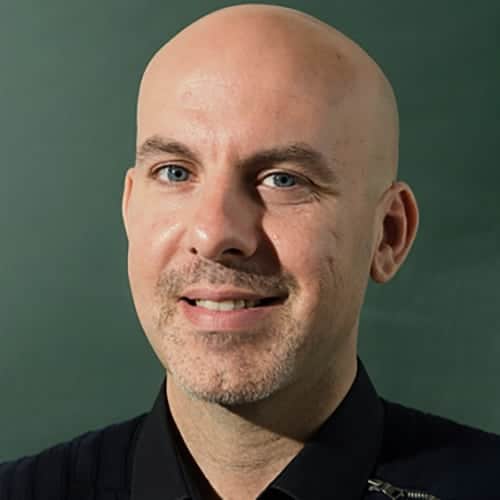
Jiri Srba is a Professor at Aalborg University's Department of Computer Science, part of the Technical Faculty of IT and Design. He leads research in the Distributed, Embedded and Intelligent Systems group and contributes to projects like "ControLing wAter In an uRban Environment" and "Collective Adaptive System SynThesIs using Non-zero-sum Games". His office is located at Selma Lagerløfs Vej 300, 9220 Aalborg Øst, Denmark. Contact him at +4599409851 or srba@cs.aau.dk. His core research focuses on formal methods and applied computer science: Model checking and verification of concurrent systems Petri nets and their applications Network protocol verification and synthesis Distributed system correctness Automated reasoning for industrial systems His publication record shows strong emphasis on network verification, model checking optimization, and applying formal methods to environmental systems. Recent work integrates computer science with sustainable engineering, particularly in water management systems and energy control.
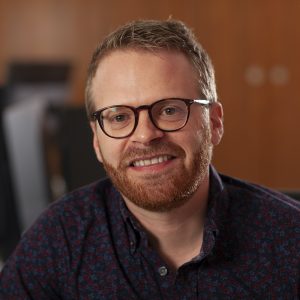
Jesper Rindom Jensen is an Associate Professor in the Department of Electronic Systems at Aalborg University, Denmark, under the Technical Faculty of IT and Design. He is the Head of the Audio Analysis Lab, a leading research group in audio signal processing, since 2023. His work bridges theoretical signal processing and practical applications in artificial intelligence and audio systems. Full Name: Jesper Rindom Jensen Institution: Aalborg University School: The Technical Faculty of IT and Design Department: Department of Electronic Systems Research Lab: Audio Analysis Lab Email: jrj@es.aau.dk Office: Fredrik Bajers Vej 7B, B5-206, 9220 Aalborg Øst, Denmark Education: M.Sc. in Electronic Systems, Aalborg University (cum laude, 2009) Ph.D. in Signal Processing, Aalborg University (2012) Research Interests: Jesper Rindom Jensen's research centers on audio signal processing, with a strong emphasis on artificial intelligence, speech enhancement, noise reduction, beamforming, and multichannel systems. His work applies to diverse domains including robot and drone audition, spatial audio, and active noise control. He develops novel filtering techniques, including variable span linear filters and harmonic beamformers, to improve speech quality and intelligibility in noisy and reverberant environments. Publication Trends: His recent publications (2023–2025) show a strong trend toward integrating deep learning with classical signal processing, particularly in direction-of-arrival estimation, underwater acoustics, and robust multichannel systems. There is a clear focus on real-world applications, including sound zone control, active noise control, and limited-data scenarios using knowledge distillation. His work consistently emphasizes robustness, efficiency, and practical deployment. Scientific Awards and Recognition: AAU Talent for emerging research leaders Recipient of a competitive postdoc grant from the Danish Independent Research Council Advising and Grants: Jesper has supervised multiple PhD and master’s students, including Nørholm, Karimian-Azari, Zhang, and Wang. He has led significant research projects such as 'Sound Processing for Robots and Drones' (2018–2020) and participated in others related to joint audio-visual tracking and speech enhancement. His research has been supported by national funding bodies, reflecting its innovation and impact. Labs and Teams: He is a founding and core member of the Audio Analysis Lab at Aalborg University, which focuses on cutting-edge audio signal processing and AI-driven solutions. The lab fosters interdisciplinary collaboration and has produced numerous publications, datasets, and real-world applications. Jensen’s leadership since 2023 underscores his pivotal role in shaping the lab’s research direction.
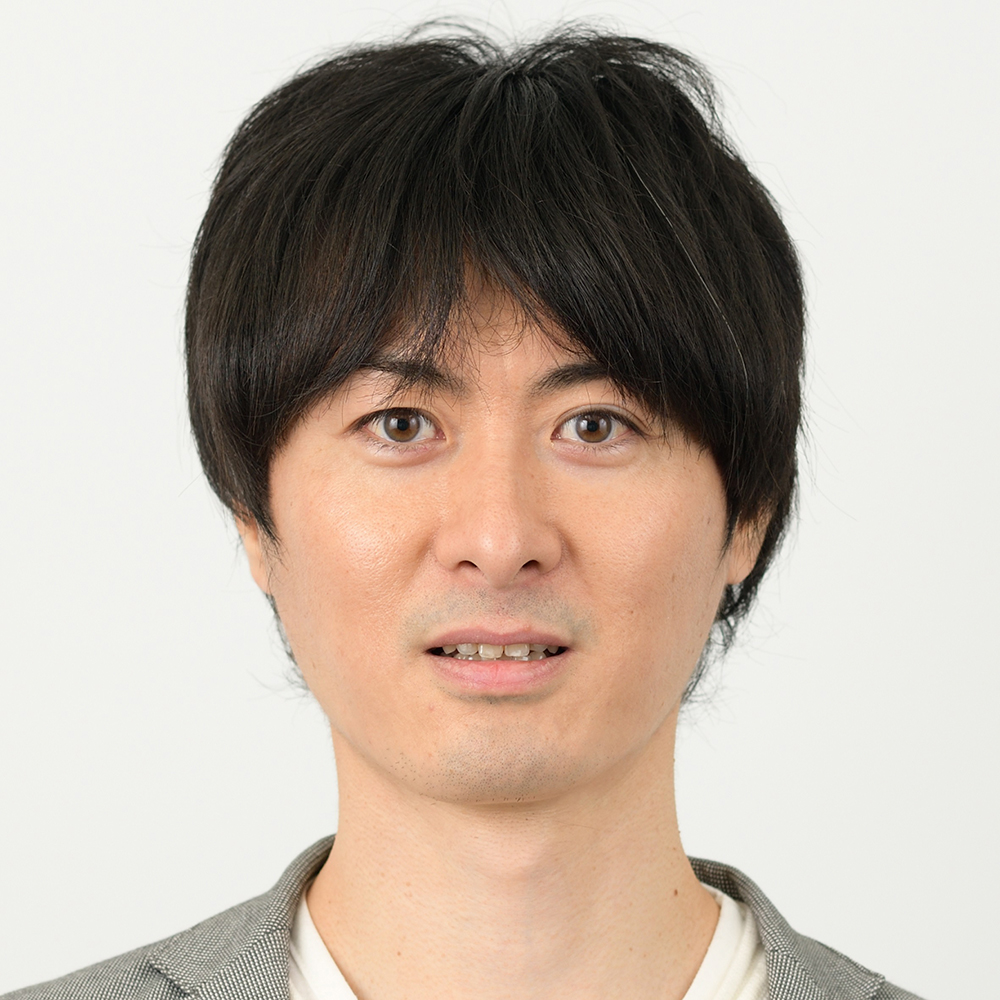
Wenjing Zhang is a Professor and Head of the Section for Water Technology and Processes at the Department of Environmental and Resource Engineering, Technical University of Denmark (DTU). She is also affiliated with the DTU Microbes Initiative, contributing to interdisciplinary research in sustainable water technologies and environmental nanomaterials. Professor, DTU Head of Section, Water Technology & Processes Member, DTU Microbes Initiative Her research spans nanofiber technology, electrospinning, membrane processes, and catalytic materials for environmental applications. She focuses on innovative solutions for water purification, plastic waste recycling, CO2 photoreduction, and green hydrogen production, aligning with UN Sustainable Development Goals. The recent publications highlight a strong trend in advanced materials for environmental sustainability, particularly electrospun nanofibers, heterojunction photocatalysts, and ceramic membranes. These works emphasize applications in microplastic degradation, solid oxide cells, and chemical recycling of plastics, reflecting a multidisciplinary approach combining materials science, electrochemistry, and environmental engineering. Researcher at DTU Energy becomes honorary professor in China Wenjing Zhang actively supervises PhD students and leads multiple research projects, including EU and nationally funded initiatives on decentralized wastewater treatment and biocatalytic membrane systems. She collaborates with leading researchers and institutions, securing funding for high-impact environmental technologies. Her lab focuses on nanostructured membrane design and advanced fabrication of porous ceramics for industrial and municipal applications.
Remus Teodorescu is a Professor at AAU Energy , Aalborg University , specializing in Power Electronics System Integration and Materials . His work bridges Lithium-Ion Batteries , Modular Multilevel Converters , and Smart Battery Systems . Education : Not explicitly mentioned in the text. Research Interests focus on Battery Management Systems , AI-Driven Energy Optimization , and Power Electronics for renewable energy integration. Key projects include Digital Twin for Lithium-Ion Batteries and BMS-DC for Data Centers . Recent Publications (2025) emphasize Finite Set MPC , Gradient Descent Optimization , and AI in Battery Parameter Estimation . His 2024 work explores Physics-Informed Neural Networks and Fault-Tolerant Converters . Scientific Awards : Villum Foundation Grant (313 million kroner, 2021) Named world's best in electrical engineering (2023) Advising includes supervising PhD projects on AI-Accelerated Battery Twins and Data-Driven SOH Estimation . Collaborations span Energy Cluster Denmark and Villum Fonden .
Daniel Stilck França is an Associate Professor at the Department of Mathematical Sciences within the Faculty of Natural and Life Sciences at the University of Copenhagen . He is affiliated with the QMATH Centre for Quantum Mathematics and related research networks. His research focuses on quantum information and computation , particularly on noise characterization in quantum systems, its impact on computational tasks, and quantum-inspired convex optimization algorithms. Recent work explores tensor networks and quantum error mitigation limitations. Key publications (2023-2025) address topics like Pauli channel estimation, Hamiltonian parameter learning, and quantum simulator scalability. His work has been featured in Nature Communications , Nature Physics , and ACM/IEEE conferences.
Alex Arenas is a Full Professor in the Department of Computer Engineering and Mathematics at Universitat Rovira i Virgili (URV), Tarragona, Spain. He is also an External Faculty member at the Complexity Science Hub in Vienna and Chief of Complex Systems Science at the Pacific Northwest National Laboratory, USA. His research spans complex systems, network science, computational epidemiology, and multilayer dynamics, with applications in public health, neuroscience, and social systems. Research Interests: His work focuses on the physics of multilayer networked systems, particularly the interplay between structure and function in complex networks. Key areas include synchronization, epidemic modeling, network medicine, the physics of the microbiome, and higher-order interactions in spreading processes. He investigates dynamic transitions using functional multilayer frameworks and develops models for real-world systems like urban mobility and misinformation diffusion. The recent articles highlight a strong trend in computational epidemiology, especially post-COVID modeling of vaccination strategies, rebound dynamics, and wastewater surveillance. There is also significant work on synchronization in oscillator networks, chimera states, and higher-order network effects, reflecting a deep engagement with nonlinear dynamics and theoretical network science. Applications span medicine, urban planning, and social systems. Scientific Awards: Fellow, American Physical Society (2018) Fellow, Network Science Society (2020) ICREA Academia (2011, 2017, 2022) Narcís Monturiol Medal (2022) Web Science Trust Test of Time Award (2024) Complex Systems Society Senior Award (2024) Advising and Grants: Arenas has supervised numerous PhD students and postdoctoral researchers, though specific names are not listed. He has been Principal Investigator on 47 research projects, including EU FP7 projects, a James S. McDonnell Foundation grant, and Horizon Europe's CREXDATA project. He has served as an editor for Physical Review E , Journal of Complex Networks , and Network Neuroscience , and has reviewed for major funding agencies including ERC, MINECO, and international bodies. Labs and Teams: He leads the Alephsys Lab at URV, which develops tools like Radatools for network analysis and community detection. His team focuses on interdisciplinary modeling of real-world complex systems using data-driven and theoretical approaches.
Sebastian Risi is a Professor at the IT University of Copenhagen , where he directs the Creative AI Lab and co-directs the Robotics, Evolution and Art Lab (REAL) . His work bridges computational evolution, deep learning, and collective intelligence for applications in robotics, art, and video game design. His research focuses on self-organizing AI systems that grow or assemble through local interactions, inspired by biological development. Key areas include neuroevolution , neural cellular automata , and generative modeling , with applications in adaptive robotics, game content creation, and damage-resilient AI. Recent publications highlight trends in self-assembling neural architectures (NDPs) and 3D functional machine generation (Minecraft experiments). Awards include ERC Consolidator Grant (2022), Best Paper at FDG’21 , and Google Faculty Award (2019). Scientific Awards : ERC Consolidator Grant (GROW-AI), Best Paper FDG’21, Runner-Up IEEE Games’20, GECCO 2017 Competition Winner, Sapere Aude Grant, Amazon/Google Faculty Awards He advises on projects like GROW-AI (EU-funded), AI-TESTER (game testing), and C2SIM (military systems). Media coverage includes Science , Wired , and Popular Science .
Philip Loldrup Fosbøl is an Associate Professor in the Department of Chemical and Biochemical Engineering at the Technical University of Denmark (DTU), College of Engineering. He is actively affiliated with CERE – Center for Energy Resources Engineering, where he conducts research on CO 2 capture, storage, transport, and utilization. His work integrates thermodynamic modeling, process simulation, and pilot-scale experimentation to address challenges in carbon management and sustainable energy systems. His research interests include: Carbon Dioxide Capture and Storage (CCS) Thermodynamics and Phase Equilibrium of Electrolyte Solutions Process Design, Simulation, and Optimization CO 2 Corrosion in Energy Systems Biogas Upgrading and Cleaning CO 2 Utilization and Conversion Development of Predictive Thermodynamic Models Mobile and Large-Scale Pilot Facilities for CO 2 Capture His recent publications (2025) highlight a strong focus on biogas upgrading, solvent degradation in industrial CO 2 capture, thermophysical property measurements, and novel electrochemical separation methods. These works reflect a consistent trend toward energy-efficient, scalable, and industrially applicable solutions for decarbonization, particularly in flue gas and biogas treatment. Scientific awards received: Top PhD Thesis of the Year (2008) He actively supervises multiple PhD students and leads research projects funded by industrial partners such as Ørsted, Shell, Equinor, and Novozymes, as well as EU initiatives including CASTOR, iCap, and OCTAVIUS. His work contributes to UN Sustainable Development Goals related to climate action and affordable, clean energy. He is involved in laboratory research on thermodynamic equilibrium (VLE, SLE), heat capacity, corrosion mechanisms, and core flooding for CO 2 storage. His team develops experimental methods and operates pilot facilities for CO 2 capture and biogas cleaning, often in collaboration with key researchers like Kaj Thomsen, Nicolas von Solms, and Georgios Kontogeorgis.
Navid Bayati is an Associate Professor at the University of Southern Denmark, affiliated with the Institute of Mechanical and Electrical Engineering and the Centre for Industrial Electronics. He leads the Control and Protection of Smart Grids (CAP-SG) group and focuses on renewable/hybrid power systems, microgrid protection, and grid code compliance. Education: Ph.D. in Power Systems & Microgrid Protection (2020, Aalborg University); M.Sc. in Power Systems (2017, Amirkabir University of Technology) His research spans renewable energy integration , transient analysis , grid interconnection , and digital twin applications . Recent work includes machine learning for carbon emission prediction, fault localization in DC microgrids, and supercapacitor resilience in hybrid systems. Collaborations include projects like IEA Wind Task 50 and RePoSys , addressing grid renovation, life cycle assessment, and digital twin resilience. His teaching portfolio covers power electronics , energy management , and microgrid control .
Yanbo Wang is an Associate Professor and Vice Head of the Wind Power Research Programme at AAU Energy, part of Aalborg University's Faculty of Engineering and Science. He leads research in Electric Power Systems and Microgrids, focusing on intelligent energy systems and flexible markets. His work emphasizes stability analysis, control strategies for hybrid AC/DC systems, and renewable energy integration. He supervises multiple PhD projects on topics like multi-port energy routers and wind power converter optimization. Research interests include power electronics, microgrid stability, and energy storage systems. Key projects include the EU-funded 'S3SF: Smart Energy Solutions for Sustainable Future' and machine learning-based control strategies for multi-energy systems. He has authored over 176 publications, with recent work on DC microgrid reliability, converter design, and offshore wind energy systems. His team collaborates internationally to advance grid-friendly technologies and smart energy solutions. Notable contributions include advanced control schemes for retired batteries in DC microgrids and stability assessment methodologies for offshore wind inverters. He advises on six PhD projects and maintains a lab focused on renewable energy systems and power electronics innovation.
Pooya Davari is a Professor and Head of the Section for Applied Power Electronic Systems at Aalborg University , Denmark. He leads the EMI/EMC in Power Electronics Research Group and serves as Vice Chair of the Energy Efficiency Mission. His research focuses on electromagnetic interference (EMI) and harmonic mitigation in power electronic systems, with over 200 publications and significant contributions to renewable energy integration. Education: B.Sc. and M.Sc. in Electronic Engineering (2004, 2008), Ph.D. in Power Electronics from Queensland University of Technology (2013) Prior Roles: Lecturer at QUT (2013–2014), Postdoc at AAU (2014) Research Interests: Harmonic and EMI analysis in grid-tied converters High power density converter design Signal processing for converter modeling Reliability of power electronic systems Article Trends: Recent work emphasizes EMI/EMC in renewable energy systems, wide bandgap semiconductors (SiC/GaN), and reliability modeling for EVs and hydrogen production via electrolysis. Sub-fields include converter topologies, grid integration challenges, and AI-driven diagnostics. Scientific Awards: Equinor 2022 Prize (Denmark’s oldest engineering award) IEEE EMC Society Young Professional Award (2020) World’s Top 2% Highly Cited Scientist (Stanford, 2021–2025) Multiple best paper awards (IEEE, Applied Sciences, etc.) Grants & Editorial Roles: Recipient of grants from Innovation Fund Denmark (Supra-EMC project), Horizon Europe (SOLARIS), and industry partnerships. Serves as Area Editor for IEEE Transactions on Transportation Electrification , Associate Editor for IEEE Transactions on Power Electronics , and Editor-in-Chief of Circuit World Journal (2020–2025). Labs & Standards: Coordinator of the EMC Laboratory at Aalborg University. Member of IEC standardization Working Groups 6 and 8 (TC77A), focusing on EMC strategies for power grids.
Yang Cheng is an Associate Professor at the Department of Materials and Production, Aalborg University, Denmark. He holds a PhD in Mechanical Engineering from the same institution (2011), focusing on manufacturing strategy and network dynamics. His research spans supply chain management, sustainability, and global operations, with a focus on integrating technology and environmental policies into manufacturing systems. He leads or participates in high-impact projects like MAASive (2024–2026) and the Sino-Danish Center Research Project (2011–present), addressing resilience in value networks and global operations innovation. Research Interests: Supply Chain Management & Integration Sustainability & Green Technologies Manufacturing Strategy & Networks Technology Policy & Digitalization Global Operations & Cross-Border Collaboration Recent Work Trends: Prof. Cheng's 2025 articles emphasize blockchain in sustainable supply chains, green technology investments under carbon policies, and digitalization's ethical implications. His 2024 research explores smart factories, EU battery regulations, and robotization in manufacturing. These studies blend quantitative models with case-based analysis to address real-world challenges. Awards: 2024 Emerald Literati Awards – Outstanding Reviewer Advising & Grants: As PI for multiple Global Operations Management PhD programs (2019–2025), he guides research on digital transformation and university-industry collaboration. His projects receive funding from Danish and international grants, focusing on innovation and resilience in manufacturing networks. Labs/Teams: Collaborates with the Center for Industrial Production at Aalborg University and engages in international partnerships through the Sino-Danish Center. Active editorial roles include Production Planning & Control and Journal of Manufacturing Technology Management .
Professor Søren Kegnæs is a faculty member in the Department of Chemistry at the Technical University of Denmark. He holds the rank of Professor and leads a research group focused on functional nanomaterials and heterogeneous catalysis. His work addresses industrial chemical production, including the synthesis of nanoparticles, zeolites, and high-surface-area materials with controlled porosity. Key research areas include CO₂ utilization, sustainable chemical processes, and catalytic conversion of bio-based feedstocks. Education: Ph.D. in Chemistry (Technical University of Denmark, 2009), M.Sc. in Chemistry (University of Copenhagen, 2005), and a Graduate Certificate in Business Administration (Copenhagen Business School, 2012). Research Interests: The Kegnæs Group explores the design and application of nanomaterials in catalytic systems. Current projects focus on CO₂ hydrogenation, methanation, and the development of zeolite-based catalysts for renewable energy applications. Their work emphasizes industrial relevance, particularly in reducing carbon footprints through sustainable chemical processes. Advising & Grants: Supervises multiple PhD students (e.g., Spyros C., Zhuo G.J.S., Iltsiou D.) and leads projects funded by grants such as the Design of Novel Heterogeneous Catalyst for Dry Reforming (2025–2028) and CO₂ Utilization Catalyst Development (2024–2027). Collaborates widely on topics like bio-based chemical valorization and catalytic oxidation. Labs/Teams: The Kegnæs Group operates within the Department of Chemistry, utilizing advanced facilities for materials synthesis and characterization. Their work is showcased on csc.kemi.dtu.dk and kegnaesgroup.dk .
Martin Nordal Petersen is an Associate Professor at the Department of Electrical and Photonics Engineering , Technical University of Denmark (DTU) . His work spans Internet of Things (IoT) , optical networking , and wireless communication systems, with notable contributions to LoRa , NB-IoT , and LPWAN technologies. He actively supervises PhD projects on topics such as machine learning in IoT edge devices , secure 5G communication , and smart community architectures . Active projects (2024–2027): Machine Learning in IoT Edge Devices , Deterministic and Secure 5G Communication Finished projects (2021–2024; 2018–2021; 2015–2018): Reliable M2M/IoT Communication , Smart Communities , IoT 100% , Network Slicing His research explores: IoT Reliability : Multi-RAT communication, backup systems, and signal propagation Optical Networks : Alien wavelength integration, SDN control, and network emulation platforms Wireless Innovation : GPS-free geolocation, maritime NB-IoT use cases, and multimode fiber distribution Current collaborations emphasize cross-disciplinary applications of IoT in healthcare , industrial ergonomics , and smart environments .
Kantaro Fujiwara serves as Associate Professor at the Graduate School of Medicine, The University of Tokyo, with concurrent appointments at the International Research Center for Neurointelligence (IRCN) and the Department of Mathematical Informatics, Graduate School of Information Science and Technology. He also manages the Data Science Core infrastructure for IRCN. His academic background includes a Ph.D. in Information Science and Technology from the University of Tokyo (2008), followed by postdoctoral research at the University of Tokyo (JSPS) and University of Cambridge, then assistant professorships at Saitama University and Tokyo University of Science before joining the University of Tokyo faculty. Dr. Fujiwara's research bridges computational neuroscience and neural data analysis through mathematical modeling of neural networks, development of neural data analysis methodologies, and exploration of brain-inspired machine learning. His work extends to biological information processing with specific applications in pancreatic beta cell modeling for diabetes research, establishing connections between theoretical frameworks and experimental neuroscience. His publication record (2017-2023) reveals consistent interdisciplinary contributions applying echo state networks, recurrence analysis, and nonlinear dynamics to neural data classification, physiological signal processing, and disease modeling. These works demonstrate strong integration of computer science, neuroscience, and biomedical engineering methodologies to solve complex neurobiological problems. As Data Science Core Manager at IRCN, he oversees computational infrastructure and software resources that enable advanced neurointelligence research across the University of Tokyo ecosystem, providing critical support for data-intensive neuroscience projects.