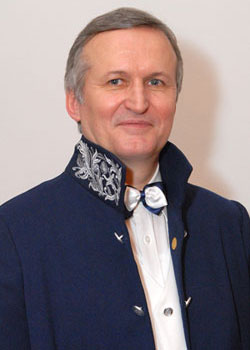
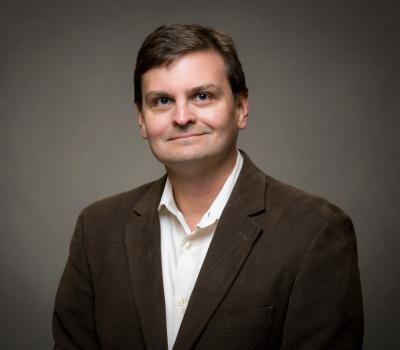
Ion Tiginyanu is a prominent materials scientist and academic leader. Currently serving as President of the Academy of Sciences of Moldova since 2019, he previously held roles including Vice-President (2012-2019), and has been Director of the National Center for Materials Study and Testing at Technical University of Moldova since 2001. His academic career includes visiting professorships at the University of Michigan (USA) and Technical University Darmstadt (Germany). He holds a Doctor Honoris Causa from Gheorghe Asachi Technical University and is a Fellow of SPIE. Education: Graduated Moscow Institute of Physics and Engineering (1978), PhD in Semiconductor Physics from Lebedev Institute (1982), Habilitation from Institute of Applied Physics (1991), and became Full Professor in 1993. Research focuses on nanotechnologies, metamaterials, and nanoarchitectures with applications in photonics, electronics, and biomedical engineering. His work produced over 400 publications (H-index 42) and 52 patents. Key achievements include developing novel semiconductor compounds and aero-materials for electromagnetic applications. Grants & Awards: Over 20 major recognitions including National Prize in Science (2004), WIPO 'Outstanding Inventor' (2011), and Honorary Doctorates from Romania/Japan. Labs: Leads the National Center for Materials Study and Testing, and collaborates internationally with institutions like TU Darmstadt and University of Michigan.
Geoff Hollinger is a Professor in the Department of Mechanical, Industrial, and Manufacturing Engineering at Oregon State University, and a Ron and Judy Adams Faculty Scholar. His research focuses on robotic decision-making, planning, and coordination for autonomous systems, particularly in underwater and multi-robot environments. He leads the Robotic Decision-Making Laboratory and has expertise in mission planning, control systems, and marine robotics. Dr. Hollinger holds a PhD in Robotics from Carnegie Mellon University (2010), an MS in Robotics (2007), and a BS in General Engineering and BA in Philosophy from Swarthmore College (2005). His work spans theoretical advancements and practical applications, including underwater docking systems, autonomous exploration, and soft robotics for hazardous environments. Research Interests: Autonomous underwater vehicle (AUV) systems and docking Multi-robot coordination and task assignment Probabilistic planning and decision-making Behavior trees and formal grammars for task planning Underwater manipulation and grasping Energy-efficient trajectory planning Key Achievements: Recipient of the 2017 ONR Young Investigator Award 2017 Celebrate Excellence Awards and Engelbrecht Young Faculty Award Developed frameworks like Angler for intervention tasks and Wave for underwater emulation Labs/Teams: Robotic Decision-Making Laboratory, Collaborative Robotics and Intelligent Systems Institute (CRIS).
Jens Kattge is an Independent Research Group Leader at the Max Planck Institute for Biogeochemistry in Jena, Germany, specializing in Functional Biogeography. His career spans roles from Research Associate (2002–2005) to Senior Scientist (2010–2012) and current group leadership since 2013. He focuses on plant functional traits, their role in terrestrial ecosystems, and their integration into Earth system models. He coordinates the global TRY Initiative , a plant trait database for biodiversity research, and contributes to the German Centre for Integrative Biodiversity Research (iDiv). His research spans functional biogeography, trait-climate relationships, ecosystem modeling, and biodiversity-ecosystem functioning. Key projects include developing the rtry R package for trait data preprocessing and analyzing global datasets like CoRRE Trait Data and sPlotOpen. Recent publications investigate leaf cuticle thickness, drought responses in tree species, trait controls on biomass, global biodiversity patterns, and the integration of citizen science with Earth observation data. His work emphasizes trait data representativeness and future-proofing ecological science.
Jessica A. Mong, PhD , is a Professor in the Department of Pharmacology & Physiology at the University of Maryland School of Medicine , where she also serves as Assistant Dean for Graduate & Post-Doctoral Studies and Director of Graduate Education for the Program in Neuroscience. Her research focuses on the neuroendocrine mechanisms underlying sex differences in sleep circuitry and the estrogenic modulation of sleep-wake cycles. Primary Appointment: Pharmacology & Physiology Administrative Title: Assistant Dean for Graduate & Post-Doctoral Studies Laboratory Director: Program in Neuroscience Research Interests: Dr. Mong's work investigates how ovarian steroids influence sleep-wake behavior through sexually differentiated neuroanatomical substrates. Key areas include: Mechanisms of estrogenic modulation in the median preoptic nucleus (MnPN) Developmental programming of sex differences in sleep sensitivity Translational studies using rodent and nonhuman primate models of menopause Functional significance of hormonal influences on sleep quality and recovery Scientific Trends: Her recent publications (2023-2025) emphasize: Role of KCNMA1 channelopathy in sleep regulation Adenosinergic signaling in MnPN Translational menopause models Estrogen's protective effects against noise-induced hearing loss Sex-dependent responses to kynurenine pathway challenges Awards & Appointments: NIH BIRCWH Scholar (Building Interdisciplinary Research Careers in Women's Health) Co-Chair, Society for Women’s Health Research Interdisciplinary Research Network on Sex-Differences in Sleep Health NIH/NHLBI R01 HL129138 grant recipient Education & Training: B.S., Biology, Gettysburg College (1987-1991) Ph.D., Neuropharmacology, University of Maryland Baltimore (1994-2000) NIH Postdoctoral Fellowship in Endocrinology, Rockefeller University (2000-2003)
Zhe Dong is an Associate Professor (Researcher) and doctoral supervisor in the Department of Chemistry at the Southern University of Science and Technology . He obtained his B.S. from Peking University (2012), Ph.D. from the University of Chicago (2018), and conducted postdoctoral research under 2021 Nobel laureate David MacMillan at Princeton University (2018–2021). Current focus on photoredox-enabled organoboron chemistry and heterocycle functionalization Developed stereospecific coupling reactions for chiral quaternary carbon synthesis Innovated carbocation-carbanion substitution reactions and bioimaging probes His 15+ publications include Nature , JACS , and Nature Chemistry papers spanning: Photoredox-mediated deoxygenation Pd/NBE cooperative catalysis Protein hydrophobic pocket mapping Natural product total synthesis C-H bond functionalization strategies Scientific Recognition: National Scholarship for Outstanding Self-funded Students (2015) Reaxys PhD Prize Finalist (2017) University of Chicago Best Thesis Award (2018) Overseas High-level Talent Program (2020) Current funding includes Ministry of Science and Technology Key R&D Program (2021–2024) and participation in Peacock Team and Guangchuang Team research consortia.
Yang Fan is an Associate Professor at the Shenzhen University of Technology, currently serving as Deputy Director of the Shenzhen Key Laboratory of Marine Energy and Environmental Safety and Deputy Director of the Center for Frontier Science and Engineering Applications of Surfaces and Interfaces. He is a recipient of the Shenzhen 'Peacock Plan' Overseas High-Level Talent Program and Pingshan District Second Prize in the 2020 Shenzhen Innovation and Entrepreneurship Competition. Educational Background: Bachelor in Materials Science (2006), Huazhong University of Science and Technology Master in Materials Science (2009), University of Alberta PhD in Chemical Engineering (2015), University of Alberta Research Interests: Focuses on magnetic functional materials, silicon-carbon anode materials for lithium-ion batteries, and superhydrophobic coatings. His work on oil-water emulsion stability mechanisms and nanosilver composite applications has been recognized by major energy companies. Prominent Research Trends: Publications highlight advancements in energy storage materials (e.g., potassium-ion battery anodes), functional coatings for water treatment, and innovative carbon encapsulation strategies for silicon nanoparticles in batteries. Scientific Awards: Shenzhen 'Peacock Plan' Overseas High-Level Talent Program Nanshan District Pilot Talent Guangdong Province Yuyue Card 2019 Guangdong Provincial University Achievement Transformation Competition - First Place in Environmental Protection and New Materials 2020 Shenzhen Innovation and Entrepreneurship Competition - Third Place in Finals Grants & Projects: Currently leads the Shenzhen Key Laboratory of Marine Energy and Environmental Safety (5000k RMB, 2021-2023) and co-leads the Shenzhen University of Technology's Center for Surface and Interface Science (10,000k RMB, 2021-2023). Previously contributed to NSERC-funded projects in Canada and Guangdong's leading talent program. Labs & Teams: Associated with the Shenzhen Key Laboratory of Marine Energy and Environmental Safety and the Center for Surface and Interface Science and Applied Engineering at Shenzhen University of Technology.
Sergio Burgos, PhD is an Associate Professor in the Department of Animal Science at McGill University's Faculty of Agricultural and Environmental Sciences, and a Scientist at the Research Institute of the McGill University Health Centre (RI-MUHC). He leads an interdisciplinary research program integrating animal nutrition, human health, and environmental sustainability. Pan-American School of Agriculture, Zamorano, Honduras (Agrónomo) University of Florida (BSc Animal Science) University of California, Davis (MSc Animal Science) University of Guelph (PhD Animal Science, 2009) Research Focus examines protein foods' roles in: Human Nutrition & Cardiometabolic Health Dairy Production Systems & Rumen Microbiome Milk Metabolomics & Bioactive Compounds Climate Impact Reduction through Dietary Transitions Publication Trends demonstrate: 2024-2025: Prioritization of plant-animal protein substitutions for climate & health 2020-2023: Mechanistic studies on amino acid regulation of mammary cell function 2016-2020: Foundational work on insulin resistance and dairy nutrition Awards Richard and Edith Strauss Postdoctoral Fellowship (2010-12) Professional Affiliations Regroupement OptiLAIT (2015-present) American Society for Nutrition (2015-present) Canadian Diabetes Association (2012-present) Teaches core courses in animal nutrition, protein metabolism, and computational ration balancing.
Prof. Dr. Kirsten Jung is a faculty member at the Department of Microbiology , Faculty of Biology , Ludwig Maximilian University of Munich . Her research focuses on bacterial signal transduction, stress response mechanisms, and systems biology approaches to understand microbial regulatory networks. Key research areas include stress-dependent gene expression in bacterial populations Structural and functional analysis of membrane-integrated receptors Metabolism-based chemical communication in bacteria Integration of experimental and computational systems biology Recent publications highlight her lab's work on Escherichia coli epitranscriptomic modifications under heat stress, m 5 C rRNA dynamics, and the role of RNA methylation in host-pathogen interactions. Collaborative studies address bacterial acid stress responses and their implications for antibiotic tolerance. Her interdisciplinary work bridges microbiology with ecological studies, as evidenced by research on biodiversity conservation in forest and urban ecosystems. Publications also demonstrate expertise in advanced imaging techniques (e.g., arterial spin labeling for glioma analysis) and bioinformatics approaches. Current advisees include Gloria Gessinger and Tania P. Gonzalez-Terrazas . She can be contacted at jung@lmu.de .
Professor Jana Zaumseil is a distinguished academic at Heidelberg University, holding the position of Professor for Applied Physical Chemistry at the Faculty of Chemistry and Earth Sciences since 2014. She also maintains a co-opted position with the Faculty of Physics and Astronomy since 2016. Currently serving as Executive Director of the Institute for Physical Chemistry and Spokesperson for the DFG Research Training Group GRK 2948, she leads the Zaumseil research group (also known as the Nanomaterials for Optoelectronics group) at Heidelberg University's Institute for Physical Chemistry. Her educational background includes a PhD in Physics from the University of Cambridge (2003-2007) with a Gates Cambridge Trust Scholarship, and a Diplom (equivalent to M.Sc.) in Chemistry from the University of Leipzig (1997-2022). Prior to her position at Heidelberg, she served as Professor for Nanoelectronics at Friedrich-Alexander-Universität Erlangen-Nürnberg (2009-2014), and completed postdoctoral work at Argonne National Laboratory (2007-2009) following an internship at Bell Laboratories (2002-2003). Zaumseil's research program focuses on the optical and electronic properties of carbon-based nanomaterials, particularly single-walled carbon nanotubes (SWCNTs) and organic semiconductors. Her group specializes in processing, functionalization, characterization and application of these unconventional semiconductors for optoelectronic devices and sensors. They investigate charge transport and light-matter interaction using a wide range of experimental techniques including synthesis, optical spectroscopy, atomic force microscopy, device fabrication, and electrical/optical device characterization. Their work bridges fundamental understanding with potential applications in sensing, imaging, circuits, and energy conversion. Analysis of her recent publications reveals a strong trend toward defect engineering in carbon nanotubes, particularly creating and optimizing luminescent sp 3 defects for near-infrared applications. Her research increasingly integrates fundamental studies of charge transport with practical device applications, especially in neuromorphic computing, biosensors, and thermoelectrics. The interdisciplinary nature of her work is evident in the combination of chemistry, physics, and materials science approaches across her publication record. Dan Maydan Prize for Nanoscience and Nanotechnology (2024) Jahrespreis der Universität Heidelberg (2023) ERC Consolidator Grant (2019) ERC Starting Grant (2012) Alfried-Krupp-Award for Young University Professors (2010) Professor Zaumseil has secured substantial research funding including multiple ERC grants and leads several major collaborative projects such as the ERC Advanced Grant SCALE-NT, Collaborative Research Center SFB 1249, Cluster of Excellence 3D Matter Made to Order, and Research Training Group GRK 2948. She has mentored numerous doctoral and master's students, with her group recently receiving recognition including a Student Poster Presentation Award for Niklas Herrmann. As Dean of the Faculty of Chemistry and Earth Science (2019-2021) and current Vice Dean (2021-), she has played significant leadership roles within the university structure. The Zaumseil research group operates within Heidelberg University's Institute for Physical Chemistry, utilizing advanced facilities for nanomaterial synthesis, optical spectroscopy, and device characterization. The group participates in several major collaborative initiatives including the Cluster of Excellence 3D Matter Made to Order and the Collaborative Research Center SFB 1249, reflecting its integration within Heidelberg's broader research ecosystem focused on molecular systems and materials science.
Lotty Hooft is a Full Professor at Utrecht University, affiliated with the University Medical Center Utrecht (UMC Utrecht), where she contributes to strategic research programs in Child Health and Methodology development. She holds key external roles as a member of the independent advisory committee for the Advenzo funding scheme at Zorginstituut and the Cochrane Council and Methods Groups for Prognosis, Screening, and Diagnostic Tests. Her research focuses on Evidence-Based Medicine, specializing in Systematic Reviews and Diagnostic Test Accuracy, with clinical applications in Paediatric and Perinatal Medicine. She investigates methodological challenges such as bias in diagnostic studies using expert panels, stakeholder engagement in paediatric trial reporting, and neonatal outcomes in preterm infants. Her work bridges rigorous methodology with real-world clinical impact across diverse medical domains. Analysis of her 2025 publications reveals a cohesive trajectory in advancing diagnostic methodology—particularly in reference standard development and bias mitigation—while expanding into patient-centered paediatric research and neonatal care. Her contributions to sleep medicine diagnostics and workforce well-being further demonstrate cross-disciplinary relevance in improving healthcare systems and clinical practice. No scientific awards were documented in the provided materials. Professor Hooft actively shapes research funding through her Advenzo committee role, evaluating project proposals and subsidy applications, though specific grant awards or student mentorship details remain unreported. Her Cochrane involvement underscores leadership in global evidence synthesis standards, yet no laboratory or dedicated research team structure is specified in the current data.
Dr. Nandika Bandara serves as Associate Professor and Tier 2 Canada Research Chair in Food Proteins and Bioproducts at the University of Manitoba's Department of Food and Human Nutritional Sciences within the Faculty of Agricultural and Food Sciences. Her research program focuses on advancing sustainable protein technologies for food, materials, and bioproduct applications through integration of material science and nanotechnology. Education: CFS (Certified Food Scientist), Institute of Food Technologists / International Food Science Certification Council PhD (Food Science & Bioresource Technology), University of Alberta, Canada MSc (Food Science & Technology), University of Alberta, Canada BSc (Agriculture), University of Peradeniya, Sri Lanka Dr. Bandara's research explores protein and biopolymer-based nanostructures for bioactive delivery, sustainable protein extraction from Canadian crops and byproducts, and renewable biopolymers for food packaging and biomedical materials. Her lab investigates novel processing technologies' effects on protein structure-function relationships using advanced characterization techniques. Current projects include protein-lipid conjugation for nanodelivery systems, feather keratin-based wound-healing materials, and deep eutectic solvents for protein extraction. Her publication record demonstrates strong focus on plant protein valorization, nanodelivery systems, and functional materials. Key trends include development of electrospun nanofibers, protein-based packaging films reinforced with nanocellulose, and metabolomics approaches for bioactive compound analysis in Canadian berries. The research bridges fundamental protein chemistry with industrial applications in sustainable food systems. Awards and Honors: Outstanding Volunteer Service Award of the Food Chemistry Division at Institute of Food Technologists (IFT) - 2019/2020 Institute of Food Technologists (IFT) Emerging Leaders Network (ELN) Program finalist - 2019 Natural Science and Engineering Research Council (NSERC) of Canada Postdoctoral Fellowship - 2018 Agricultural Institute of Canada Foundations' (AICF) Karl C Iverson Agricultural Scholarship - 2016 MITACS Accelerate Graduate Scholarship - 2015 Queen Elizabeth II Doctoral Graduate Scholarship - 2015 American Oil Chemist Society Honored Student Award - 2015 Graduate Student Teaching Award of the Faculty of Graduate Studies and Research/ Faculty of Agricultural, Life and Environmental Sciences, University of Alberta - 2015 Alberta Innovates Technology Futures Graduate Student Doctoral Scholarship Dr. Bandara actively supervises graduate students through the University of Manitoba's Food and Human Nutritional Sciences program and holds an adjunct professorship at Dalhousie University. She serves as Associate Editor for Food Chemistry Journal and on the editorial board of Food Research International. Her research is supported by her Canada Research Chair position and industry partnerships focused on Canadian agricultural innovation. She directs the Food Proteins and Bioproducts Lab at the Richardson Centre for Food Technology and Research, which specializes in protein characterization, nanomaterial development, and sustainable extraction technologies. The lab collaborates with researchers across Canada and internationally to translate fundamental discoveries into industrial applications for food, packaging, and biomedical sectors.
Kristy M. Ainslie, PhD, is a Professor in the Department of Pharmacoengineering and Molecular Pharmaceutics at the University of North Carolina at Chapel Hill's Eshelman School of Pharmacy and a member of the UNC Lineberger Comprehensive Cancer Center. Her research develops immune-modulatory therapies using biomaterials to treat infectious and autoimmune diseases as well as cancer, with explicit focus on scalable production for resource-limited settings globally. Dr. Ainslie's work integrates biomaterials science and immunology to engineer practical drug delivery systems, particularly using acetalated dextran (Ac-DEX) platforms. Her lab specializes in creating microparticles and nanofibers for antigen/vaccine delivery, cancer immunotherapy, and autoimmune disease treatment, prioritizing formulations adaptable to developing nations. Recent advancements include electrospray techniques for non-denaturing protein encapsulation and machine learning models for predicting drug release kinetics. Her publication trajectory reveals consistent innovation in nanomedicine, with increasing emphasis on translational applications. Key trends include acid-responsive polymer systems for controlled therapeutic release, scalable manufacturing methods for global vaccine access, and immune-modulation strategies targeting T-regulatory cells for autoimmune conditions like multiple sclerosis. Dr. Ainslie's accolades include: Sato Memorial International Award (2023) Controlled Release Society Fellow (2022) American Institute for Medical and Biological Engineering Fellow (2021) OSU Council of Graduate Students Distinguished Faculty Advising Award (2012) She actively mentors PhD and Master's students, with recent advisees including Nicole Rose Lukesh, Sophie Mendell, and Ryan Woodring. Her lab comprises postdoctoral researchers like Pamela Tiet and Monica Johnson, supported by collaborative projects with institutions including Ohio State University. While specific grants aren't detailed, her high-impact publications and lab operations indicate substantial external funding. The Ainslie Lab, headquartered at 4012 Marsico Hall, drives translational nanomedicine through interdisciplinary teams. It maintains active outreach initiatives like school science demonstrations and hosts international collaborators, reflecting its commitment to education and global health impact.
Dr. Susanne Striegler is a Professor of Organic Chemistry in the Department of Chemistry & Biochemistry at the University of Arkansas, College of Arts & Sciences. Her research focuses on designing glycosidase inhibitors, developing microgel/nanogel catalysts, and exploring antimicrobial agents through interdisciplinary approaches combining synthesis, catalysis, biochemistry, material science, and computational methods. Education: Habilitation, Dr. rer. nat., Diplom, Vordiplom (Ulm, Germany) Her recent work demonstrates how surfactant properties, secondary coordination spheres, and matrix effects enhance microgel/nanogel catalytic performance for carbohydrate transformations. She has pioneered microgels as antimicrobial agents, with notable publications in ACS Catalysis and ACS Applied Bio Materials . Scientific accolades include the NSF CAREER Award (2008), Arkansas Biosciences Institute New Investigator of the Year (2016), and multiple Fulbright College Master Researcher/Teacher Awards (2018, 2024). Her lab has secured grants such as Chancellor's Commercialization Grants (2013, 2019, 2020) and NSF funding (2019). Susanne mentors students like Lidia, Babloo, and Carlie, who have received honors including SURF Grants (Lauren, Kristin), Fellowships (Sara), and STEM Immersion Day recognition. Her research team actively explores enzyme mechanisms and material design, with ongoing projects supported by recent funding.
Guillermo A. Ameer serves as the Daniel Hale Williams Professor of Biomedical Engineering at Northwestern University's McCormick School of Engineering and Professor of Surgery in the Feinberg School of Medicine. He directs the Center for Advanced Regenerative Engineering (CARE) and maintains affiliations with the Simpson-Querrey Institute, Chemistry of Life Processes Institute, and the IBiS Graduate Program. His leadership extends to founding the Regenerative Engineering Laboratory, which pioneered citrate-based antioxidant biomaterials known as polydiolcitrates. Americas' leading innovator in regenerative engineering, Ameer's research spans vascular, orthopaedic, and bladder tissue engineering. His lab developed Nanonets™ thermoresponsive oligomers and photoresponsive liquid polymers for applications including wound healing, islet transplantation, and 3D-printed vascular scaffolds. Notable breakthroughs include bioresorbable stents, bladder regeneration scaffolds, and diabetic wound healing technologies that have received FDA clearance and commercial implementation through companies like Acuitive Technologies and VesselTek BioMedical. His publication record demonstrates consistent innovation in biomaterials science, with research trends showing progression from fundamental polymer chemistry to sophisticated clinical applications. Recent work focuses on electroactive bladder scaffolds, 3D-printed vascular devices, and wearable health monitoring systems, reflecting his commitment to translating laboratory discoveries into tangible medical solutions. The 2025 launch of the Regenerative Engineering Institute underscores his growing institutional impact. Percy L. Julian Award (2024) BMES Athanasiou Medal of Excellence in Translational Bioengineering (2023) Election to National Academy of Medicine (2021) National Academy of Inventors Fellow (2019) AAAS Fellow (2018) AIChE Fellow (2017) Ameer has mentored over 30 PhD and Master's students who now lead research at institutions including Penn State, USC, and the FDA. His lab secures substantial NIH funding, including an American Recovery and Reinvestment Act Challenge Grant for liquid cast arterial stents. Current projects include the development of citrate-based biomaterials for bladder regeneration, diabetic wound healing, and bioresorbable vascular scaffolds, with multiple technologies transitioning to clinical applications through partnerships with medical device companies. The Regenerative Engineering Laboratory maintains a collaborative interdisciplinary environment with approximately 20 researchers spanning engineering and natural sciences disciplines. Recent initiatives include the development of wearable skin gas sensors (2025) and CITREPORE™ bone void filler (2024), demonstrating the lab's capacity to address diverse clinical challenges through biomaterials innovation.
Christian Nielsen is a Professor of Materials Chemistry and Head of the Department of Chemistry at Queen Mary University of London (QMUL). He leads the Nielsen Lab, focusing on designing semiconducting materials for organic electronic and bioelectronic applications. His research spans organic solar cells, field-effect transistors, and biosensors, emphasizing structure-property relationships to advance device performance. He holds a PhD from the University of Copenhagen (2004) and has held academic and industrial roles in the US and UK. Key roles include Reader in Organic Materials (2022), and leadership in the Centre for Chemical Research and School of Physical and Chemical Sciences. Research interests include organic bioelectronics, semiconducting polymers, and thermoelectric materials. Notable achievements include EPSRC grants for graphene defect design, Leverhulme Trust funding for sequence-defined pi-conjugated materials, and an Academy of Medical Sciences award for bioelectronic sensors in epilepsy diagnosis. Supervision includes PhD students Dilara Gunturkun, Roman Halaksa, and others. Awards include the 2017 Higher Education Academy Fellowship and the Academy of Medical Sciences Springboard Award. His lab collaborates globally, with projects in EU consortia like ICONIC and MITICS.