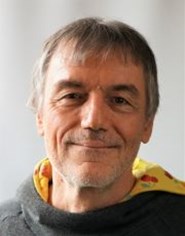
Dag Hanstorp is a Professor at the Department of Physics, University of Gothenburg. His office is located at Fysikgränd 3, Göteborg (Room F8032), and he can be contacted via email or telephone. His research focuses on experimental atomic/molecular physics and laser applications, including: Quantum phenomena in levitated droplets Ultraprecise spectroscopy of radioactive molecules (e.g., radium monofluoride) Laser-induced dynamics in fuels and aerosols Electron affinity measurements of alkali metals Vacuum laser particle acceleration techniques Spin Hall nano-oscillator characterization Recent publications (2023-2025) demonstrate interdisciplinary work combining atomic physics, fluid dynamics, quantum optics, and nanotechnology. Common themes include advanced laser spectroscopy, quantum system control, and novel imaging techniques applied to fundamental physical processes.
Yu Xia is a Post Doc at the Department of Chemistry, Stockholm University, Sweden. He is affiliated with the Tom Willhammar Research Group, focusing on advanced electron microscopy and diffraction techniques for structural characterization of materials. PhD (2019–2023) from a joint program between the University of Birmingham (UK) and the Southern University of Science and Technology (China). Research emphasizes fabrication of metallic nanoparticles with non-equilibrium structures and shapes using gas-phase condensation and thermal shock methods. Specializes in scanning transmission electron microscopy (STEM), in-situ heating experiments, and electron energy loss spectroscopy (EELS) for nanoparticle analysis. Current work prioritizes 4DSTEM imaging for electron beam-sensitive materials and Python-based post-processing of electron microscopy datasets. Yu Xia's research spans Materials Science , Nanotechnology , and Electrocatalysis , with applications in photocatalytic hydrogen evolution , graphene composites , and advanced electron microscopy techniques . His work often integrates computational image processing with structural characterization to optimize material properties. Publications highlight innovations in heterostructure engineering , metallic alloy catalysts , and electron beam-sensitive material imaging . No scientific awards are explicitly mentioned in the provided text. Yu Xia's technical expertise includes Python scripting for image analysis, in-situ electron microscopy , and multifunctional graphene-based materials .
Martin Norgren is a Professor at KTH Royal Institute of Technology, leading the Department of Electromagnetic Fusion Physics. His research focuses on electromagnetic inverse problems, including material characterization, biomedical imaging (e.g., brain current sources), environmental monitoring (e.g., snow and avalanche prediction), and smart grid technologies. He specializes in reconstructing object properties using electromagnetic measurements and has contributed to applications in healthcare, energy systems, and environmental science. His work involves advanced analytical and numerical methods such as mode-matching techniques, perturbation theory, and convex optimization. Notable projects include noncontact current measurement in power grids and transformer diagnostics using microwave radiation. Norgren teaches courses in electromagnetic field theory and electrical engineering design, emphasizing practical applications and interdisciplinary collaboration. Recent research trends highlight advancements in glide/twist symmetry-based metamaterial design, waveguide analysis, and inverse scattering techniques. His studies bridge fundamental physics with applied engineering, addressing challenges in energy infrastructure and medical diagnostics. As a department head, he oversees educational and research programs at KTH, fostering innovation in electromagnetism and fusion physics. His contributions to curriculum development include project-based courses integrating theory and hands-on design.
Louise Olsson is a Professor and Head of the Department of Chemical Engineering at Chalmers University of Technology. Her research focuses on catalysis for emission control and alternative fuel production, combining experimental and kinetic modeling approaches. She leads a research group affiliated with the Competence Center for Catalysis (KCK), integrating basic and applied projects with industry partners. Her work spans catalyst design for exhaust gas purification, biofuel production via lignin valorization, and sustainable chemical processes. Notable research areas include sulfur poisoning mechanisms, NOx reduction catalysts, and kinetic modeling of catalytic systems. Over 230 publications highlight her contributions to catalysis, with recent studies exploring novel catalysts for expanded temperature ranges and bio-oil upgrading. Louise’s research emphasizes bridging fundamental science with industrial applications, addressing challenges in renewable energy and emission reduction. Her group’s collaborations with industry ensure practical impact, while their kinetic models provide insights into catalyst behavior under varying conditions.
Georgios Andrikopoulos is an Assistant Professor at KTH Royal Institute of Technology's Department of Industrial and Environmental Management (ITM), affiliated with the Digital Futures Faculty. He serves as Co-Principal Investigator (Co-PI) on the 'Real-time exoskeleton control for human-in-the-loop optimization' project, focusing on advanced robotics and human-technology interaction. His research spans soft robotics, exoskeleton systems, and adaptive climbing robots, with applications in healthcare, aerospace, and education. Key projects include: "Connecting Bodies – Designing Shape-changing Wearables" (Postdoc Fellowship, 2023–2025) "Advancing real-time exoskeleton control for human-in-the-loop optimization" (Demonstrator Project) SEC scholar collaboration with Mohamed Elbadawi (May–June 2024) Research interests emphasize: Soft robotic actuators for safe human interaction Optimization of compliant mechanisms in robotics Vortex adhesion systems for autonomous inspection Design of child-friendly interactive robots His work integrates robotics with control systems, biomechanics, and human-centered design. Over 50 peer-reviewed articles demonstrate contributions to exoskeleton technology, climbing robot algorithms, and soft actuator modeling. He advises students like Laia Turmo Vidal (Postdoc) and Mohamed Elbadawi (SEC scholar). Affiliated with the cross-disciplinary Digital Futures initiative, he collaborates with Stockholm University and RISE Research Institutes to address societal challenges through digital innovation.
Verena Siewers is a Research Professor at the Department of Biology and Biological Engineering, Chalmers University of Technology. Her work focuses on synthetic biology and metabolic engineering of yeast cell factories for producing biofuels, pharmaceuticals, nutraceuticals, and bioplastics, with particular emphasis on developing biosensor tools for pathway optimization. Key research themes: yeast-based biosensors, lipid metabolism engineering, CRISPRi/a applications, and dynamic gene regulation Notable projects include: Development of acetic acid tolerance mechanisms Optimization of fatty acid ethyl esters production Engineering phosphoketolase pathways for acetyl-CoA overproduction Her recent articles reveal trends in: CRISPR-mediated pathway engineering Stress response transcriptional profiling Heterologous plant gene expression in yeast Promoter and transcription factor engineering Funding sources: VINNOVA Novo Nordisk Foundation Carl Tryggers Stiftelse EU Horizon grants Swedish Research Council (VR) Formas
Nikolaos Kourentzes is a Professor of Informatics at the University of Skövde , specializing in forecasting and operations research. His work bridges theoretical advancements in time series analysis with practical applications in supply chain management, tourism demand, and renewable energy forecasting. Academic Rank: Professor Department: Department of Information Technology Research Interests: His research focuses on hierarchical and temporal forecasting methodologies, integrating macroeconomic indicators into demand planning, inventory optimization, and machine learning applications. He explores forecast reconciliation, shrinkage estimators, and the role of expert judgment in predictive analytics. Recent Publications: Highlights include advances in hierarchical forecasting with leading indicators, probabilistic forecasts during crises like the pandemic, and complex smoothing techniques. His work spans journals such as Omega , International Journal of Forecasting , and European Journal of Operational Research . Collaborations: Kourentzes collaborates with researchers globally, including George Athanasopoulos, Rob Hyndman, and Robert Fildes, across domains like tourism analytics, tire industry forecasting, and public health modeling.
Jan Stake is a Professor of Terahertz Electronics and head of the Terahertz and Millimeter-Wave Laboratory at Chalmers University of Technology. He holds a MSc (1994) and PhD (1999) in electrical engineering and microwave electronics from Chalmers. His research focuses on terahertz technology for space missions, climate science, and industrial applications. Key projects include developing THz components for the Jupiter Icy Moons Explorer (Juice) and MetOp satellites, and creating sensors for pharmaceutical manufacturing. He has authored 388+ publications, served as Editor-in-Chief of IEEE Transactions on Terahertz Science and Technology , and is an IRMMW-THz board member. Current work emphasizes integrated THz components for space science and wireless communication. Awards include visiting research fellowships at the UK’s National Physical Laboratory (2023). Teaching includes semiconductor physics and microwave engineering, with a weekly journal club for PhD students. Research Interests: Terahertz fundamental science and applications Space instrumentation (e.g., SWI instrument for Juice mission) Climate monitoring via atmospheric THz measurements Graphene-based THz detectors and amplifiers THz radar systems for industrial process monitoring Recent Work Trends: Recent articles (2023–2025) emphasize high-precision quantum-cascade lasers , antenna alignment optimization , industrial THz sensing systems , and space-borne receiver reliability . Key themes include improving THz component integration, enhancing spectral resolution for molecular analysis, and advancing THz applications in manufacturing and environmental science. Awards & Roles: Editor-in-Chief, IEEE Transactions on Terahertz Science and Technology (2016–2018) Chair, IEEE THz Best Paper Award Committee (2019–2021) Elected IRMMW-THz Board Member (2017–2024) Visiting Research Fellow, UK National Physical Laboratory (2023) Grants & Collaborations: Active in EU and industry partnerships for space instrumentation (e.g., Juice mission) and pharmaceutical sensing. Lab develops THz components with companies in aerospace and medical sectors. Labs/Teams: Leads the Terahertz and Millimeter-Wave Laboratory, collaborating with National Physical Laboratory (UK) and ESA on space instrument development.
Olli-Pekka Kallioniemi is a Professor of Molecular Precision Medicine and Director of Science for Life Laboratory (SciLifeLab) at Karolinska Institutet. He leads the Precision Cancer Medicine research group within the Department of Oncology-Pathology, focusing on translational research to improve cancer treatment through ex vivo drug testing and multi-omics profiling. His work bridges laboratory discoveries with clinical applications, emphasizing actionable insights for personalized therapy. Research Interests: Dr. Kallioniemi’s group develops functional precision medicine approaches to identify therapeutic vulnerabilities in cancers like AML, ovarian, prostate, and renal cancers. Techniques include patient-derived 2D/3D cell models, organoids, and comprehensive genomic/drug-response profiling. Their work progresses through three translational phases: model feasibility (Phase I), representativity optimization (Phase II), and clinical actionability (Phase III). Selected Achievements: - Directed 75 million SEK in grants from the Swedish Cancer Society (2022) - Pioneered functional drug testing platforms for solid tumors and hematologic malignancies - Coordinated multi-institutional collaborations between Karolinska Institutet and the Institute for Molecular Medicine Finland Labs/Teams: His group operates at SciLifeLab (Stockholm) and the Institute for Molecular Medicine Finland (Helsinki), with sub-teams like the Functional Systems Oncology group led by Dr. Tom Erkers. Core personnel include postdoctoral researchers, PhD students, and clinical assistants.
Sebastian Diehl is a Professor at Umeå University's Department of Ecology, Environment and Geoscience. His research focuses on mathematical modeling of aquatic ecosystem dynamics, with particular emphasis on consumer-resource interactions and climate change impacts on northern lake ecosystems. Current affiliations: Umeå University (Department of Ecology, Environment and Geoscience) Previous affiliations: Ludwig-Maximilians-Universität München (Professor of Aquatic Ecology) Academic background: Biology undergrad from University of Göttingen, PhD in Animal Ecology from Umeå University (1994) Research interests center around aquatic ecosystem dynamics in response to environmental change, including: Climate change effects on lake ecosystems (temperature and terrestrial nutrient inputs) Mathematical modeling of consumer-resource interactions Benthic-pelagic coupling in nutrient and energy flows Phytoplankton-zooplankton dynamics under environmental stressors Trophic interactions in stream and lake systems Stoichiometric constraints on ecosystem function His recent publications (2025-2020) demonstrate an integrated approach combining mathematical modeling with experimental validation through field studies and lab experiments, focusing particularly on: Climate-induced regime shifts in lake ecosystems Stoichiometric mismatch in warming systems Functional response modeling Vertical niche partitioning in plankton Resource acquisition trade-offs Browning impacts on primary producers Administrative roles include: Final examiner for PhD education Chair of Umeå Marine Science Centre advisory council Steering group member of Integrated Science Lab (IceLab)
Micael Derelöv is an Associate Professor at Linköping University's Department of Management and Engineering (IEI), specializing in Product Realisation (PROD). His work focuses on optimizing safety, reliability, and efficiency in industrial and aerospace systems. He contributes to sustainable product development through advanced methodologies in design optimization and failure analysis. His research integrates robotics, manufacturing systems, and systems engineering to address challenges in collaborative assembly, aircraft design, and risk management. Dr. Derelöv’s research interests include multi-objective optimization for balancing safety and weight in aircraft systems, industrial safety demonstrators, and reliability-centric design processes. He has developed frameworks for evaluating design concepts and identifying potential failures in early-stage engineering projects. His work also explores the application of genetic algorithms in concept synthesis and the use of qualitative modeling for risk assessment. His publications highlight trends in industrial safety, systems reliability, and aerospace engineering. Recent work includes advancements in safe collaborative robotics on assembly lines and methodologies for industrial safety demonstrators. Earlier contributions address cost optimization in reliability-focused design and bio-mechatronic product development. While no specific scientific awards are listed, his active research and academic role reflect a commitment to advancing engineering practices. He collaborates on student projects, such as a recent initiative designing a pressure-resistant device for space exploration, demonstrating engagement in applied and interdisciplinary research. Micael Derelöv’s affiliation with the Department of Management and Engineering positions him at the intersection of academic research and industrial innovation, particularly within the Product Realisation group. His work emphasizes sustainable, integrated approaches to product development, blending theoretical insights with practical applications in manufacturing and aerospace sectors.
Fredrik Henriksson is an Assistant Professor at Linköping University's Department of Management and Engineering (IEI), within the Division of Product Realisation (PROD). His work focuses on sustainable integrated product development, particularly addressing challenges in material selection and adoption in industries like automotive and construction. He actively contributes to curriculum development, emphasizing material-driven design education for engineering students to bridge theoretical knowledge with practical industry needs. Research Interests: His primary areas include sustainable materials innovation, decision-making processes in material selection, and the integration of production systems with product development. He explores barriers to adopting renewable materials such as wood-based solutions and investigates how production systems can adapt to circular material flows. His work also addresses industrial implementation challenges of new materials, including IoT integration in wood products and multi-material automotive body solutions. Key Contributions: His 2021 doctoral thesis highlighted the role of personal habits and biases in material selection decisions, reshaping perceptions of rationality in product development. He has developed case-study methodologies for engineering education that foster cross-disciplinary collaboration and industry-relevant problem-solving. His research outcomes are published in journals like International Journal of Sustainable Engineering and SAE International Journal of Materials & Manufacturing . Labs/Teams: He is affiliated with the Unit of Design and Product Development (PRODDOP), collaborating with the Product Realisation division to advance sustainable industrial practices. His work often involves industry partnerships to ensure real-world applicability of academic research.
Marlene Ågerstrand is a Senior Lecturer at the Department of Environmental Science , Stockholm University . Her research focuses on the science-policy interface in chemical risk assessment and management, emphasizing how scientific data inform decision-making, the effectiveness of regulatory strategies, and the role of experts in policy development. She actively collaborates with ecologists, toxicologists, chemists, political scientists, and environmental lawyers. Key affiliations: International Panel on Chemical Pollution (IPCP) Board member Co-developer of the SciRAP web tool for structured chemical evaluations Member of the Baltic Sea Fellows interdisciplinary network Research Interests include improving environmental risk assessments of chemicals, science-policy interactions in chemical management, and pathways to a non-toxic circular economy. She specializes in qualitative methods like document analysis and stakeholder interviews. Recent Publications span environmental quality standards under the Water Framework Directive, essential-use concepts in REACH authorization, regulatory disparities in antimicrobial substance controls, and systematic review frameworks for endocrine disruptors.
Claudia Custodio is a Professor of Finance at Imperial College London Business School, with additional research affiliations at the Centre for Economic Policy Research (CEPR) and the European Corporate Governance Institute (ECGI). Her academic work spans corporate finance, CEO characteristics, capital structure decisions, and financial education. Her research interests focus on understanding how CEO characteristics and expertise influence corporate policies and performance. She has made significant contributions to understanding the impact of financial education on executive decision-making, the relationship between CEO generalist versus specialist experience and innovation, and how working capital management responds to external shocks like political violence and climate change. Her work often employs rigorous empirical methods including randomized controlled trials to establish causal relationships. Analysis of her recent publications reveals a strong trend toward field experiments and policy-relevant research, particularly in emerging markets. Her work on financial education in Mozambique demonstrates how targeted educational interventions can improve financial decision-making among executives. She also investigates how external shocks like the opioid crisis and climate change affect corporate behavior and economic outcomes through various channels including supply chains and real estate markets. Her research has been supported by various institutions including the Swedish House of Finance, with whom she has collaborated on multiple projects examining working capital management under political violence and information frictions in government support programs during the pandemic. Professor Custodio maintains active research collaborations with scholars across Europe, particularly in Portugal, Sweden, and the Netherlands, reflecting the international nature of her research agenda focused on corporate finance issues in both developed and emerging economies.
Jenny Madestam is an Associate Professor of Political Science and Lecturer in Public Administration at Södertörn University's Academy of Public Administration, Department of Social Sciences. She has been affiliated with Södertörn University since spring 2015 after previously working at Stockholm University where she completed her doctoral studies. Academic Position: Associate Professor of Political Science Institutional Affiliation: Södertörn University, Academy of Public Administration Department: Department of Social Sciences Contact: jenny.madestam@sh.se Dr. Madestam defended her doctoral thesis in 2009 at Stockholm University on leadership ideals in the Social Democrats and the People's Party. Her educational background reflects a strong foundation in political science with a specialization in Swedish party politics and leadership structures. Madestam's research program spans several interconnected areas within political science and public administration. Her primary focus is on political leadership, examining leadership ideals, recruitment processes, and gender dynamics within Swedish political parties. She has expanded her research to include the intersection of politics and social media, analyzing how politicians construct leadership identities online. More recently, she has developed a significant research stream on police training and diversity attitudes, investigating how institutional training affects perspectives on diversity within law enforcement. The analysis of Madestam's publication record reveals consistent scholarly engagement with leadership dynamics across multiple institutional contexts. Her work demonstrates a methodological range from qualitative case studies of party leadership to quantitative analyses of social media strategies and diversity training outcomes. The predominant themes across her publications include leadership structures, institutional governance, and the evolving nature of political representation in contemporary Sweden. Madestam has secured competitive research funding for her projects, including a current study on police training and diversity attitudes funded by the Swedish Research Council. Previously, she conducted research on leadership recruitment in Swedish parties funded by the Anna Ahlström and Ellen Terserius Foundation, which resulted in her 2014 book How to be Elected? Her scholarly contributions extend to collaborative projects examining shared leadership structures in educational settings and the impact of institutional frameworks on leadership practices. Madestam actively participates in interdisciplinary research, as evidenced by her contribution to the 2020 edited volume Religion, Migration and Police Work , where she authored a chapter on working with prejudices in the police.