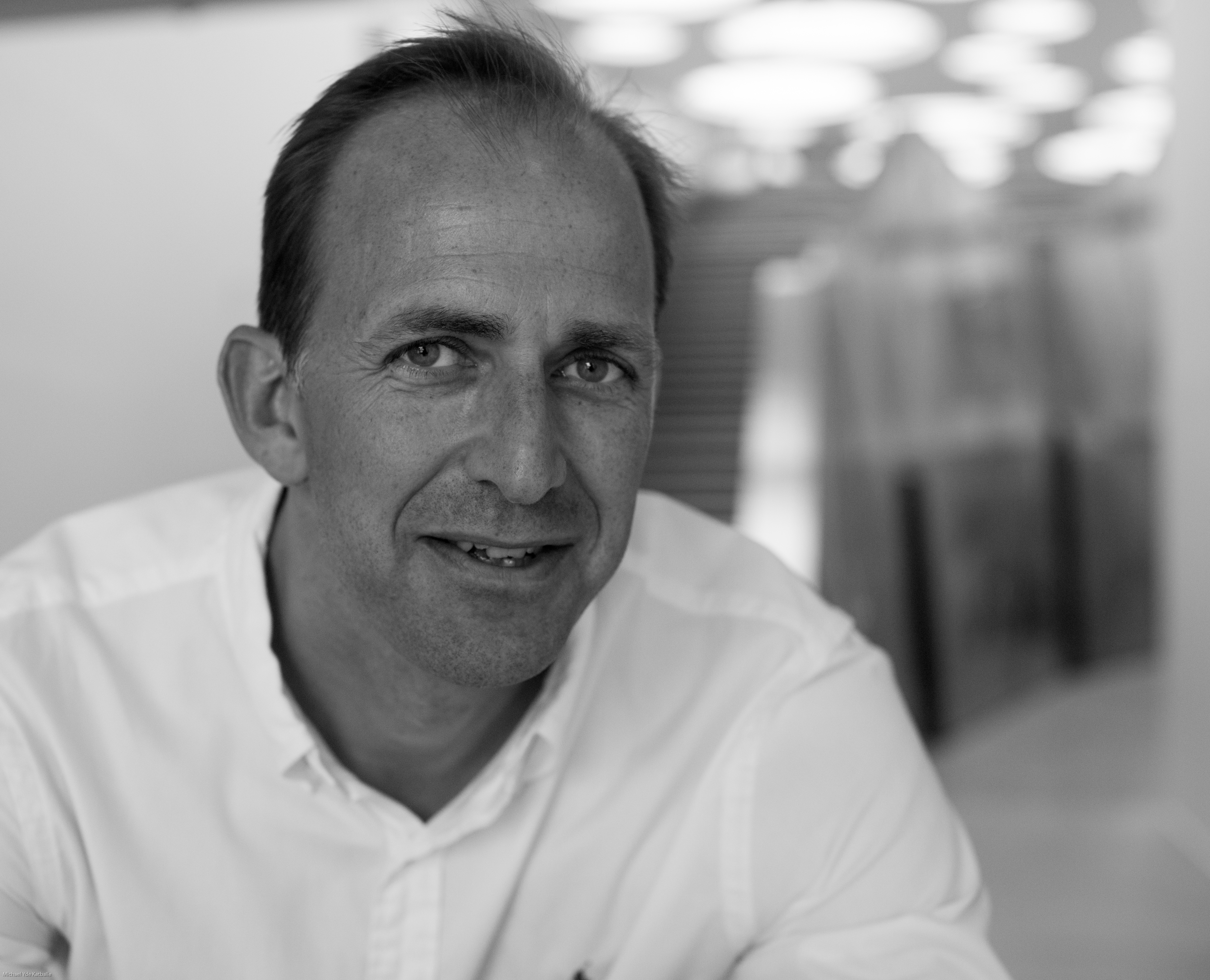
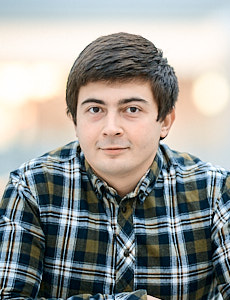
Klaus Mølmer is a Professor at the Niels Bohr Institute, University of Copenhagen, specializing in Quantum Optics and Photonics. His research spans quantum information, entanglement, and cavity QED, leveraging machine learning and Grover's algorithm for quantum state engineering. His recent work focuses on spin squeezing, Rydberg atom interactions, and mechanical resonator cooling. A leader in quantum simulation and superradiance, he collaborates on cavity-mediated emission and quantum network design. The 15 most recent articles highlight advancements in quantum state manipulation, entanglement protocols, and robust differential phase sensing. These studies bridge theoretical frameworks with experimental applications in cavity QED, Rydberg arrays, and zero-photon detection.
N. Asger Mortensen is a Professor and D-IAS Chair at the Danish Institute for Advanced Study , University of Southern Denmark. He serves as Scientific Director of the DNRF Center of Excellence POLIMA , focusing on polariton-driven light-matter interactions. His career spans leadership roles at SDU and DTU, including VILLUM Investigator grants. Education : Dr. scient. (2021) University of Copenhagen; Dr. techn. (2006), PhD (2001), MSc (1998) from Technical University of Denmark. Research Interests : Quantum plasmonics, nanophotonics, metamaterials, optofluidics, and light-matter interactions in structured materials. His work bridges classical electrodynamics and quantum physics, emphasizing nonlocal effects and polaritonic phenomena. Recent Articles : Explore nonlocality in photonic materials, plasmonic systems in 2D materials, and polariton dynamics. Keywords include Nanophotonics , Quantum Optics , and Condensed Matter , with subfields like Surface Plasmons , Exciton Polaritons , and Topological Insulators . Scientific Awards : Fyens Stiftstidendes Forskerpris (2023) Elected Member, Royal Danish Academy of Sciences and Letters (2022) VILLUM Investigator (2017) European Optics Prize (2008, 2004) Grants : Leads DNRF CoE (2023-2029, ~60 MDKK) and VILLUM Investigator (2017-2023, ~40 MDKK). Co-applicant on numerous international collaborations. Editorial Roles : Associate Editor for Science Advances and Nanophotonics , with past roles at Optics Express and Journal of Physics: Condensed Matter .
Efren Fernandez Grande is an Associate Professor at the Technical University of Denmark , specializing in Acoustic Technology within the Department of Electrical and Photonics Engineering. His research focuses on advanced acoustic modeling and signal processing techniques. Key Research Areas: Sound Field Engineering, Room Acoustics, Acoustic Holography, Beamforming, Neural Networks for Acoustic Modeling Recent publications highlight his work on sound field reconstruction, acoustic rainbows, and physics-informed neural networks, emphasizing spatial and frequency limitations in acoustic modeling. He supervises multiple PhD students in projects related to noise control and acoustic space reproduction. His contact details include efgr@dtu.dk and links to his ORCID and research website .
Olena Kalyanova Larsen is an Associate Professor at Aalborg University's Department of the Built Environment, part of the Faculty of Engineering and Science. Her work focuses on energy-efficient building technologies, particularly double-skin facades and ventilation systems. She leads projects like I-DIFFER (integrating double-skin facades and diffuse ceiling ventilation for school renovations) and EDYCE (dynamic energy certification systems). Her research emphasizes thermal comfort, indoor environmental quality, and sustainable renovation strategies. Key contributions include over 100 publications, including technical reports on facade performance and datasets from monitoring six Danish office rooms. She has collaborated on projects funded by Danish energy initiatives and international networks. Larsen actively engages in conferences, presenting on topics like CFD simulation validation and building energy modeling. She contributes to educational initiatives on sustainable building practices and advises on holistic indoor environmental assessment methodologies. Her work bridges academic research and practical applications, addressing challenges in building energy systems, ventilation optimization, and climate-responsive design. Current activities include advancing dynamic energy certification frameworks to reflect real-world building performance.
Per Kvols Heiselberg serves as Professor and Deputy Head of Department for Research at the Department of Construction, Urban and Environmental Engineering within the Faculty of Engineering and Science at Aalborg University. He leads the Research Group for Energy in Buildings, focusing on building physics and energy efficiency. His research spans over three decades with significant contributions to zero-energy buildings and hybrid ventilation systems. His research interests encompass building physics, energy efficiency of buildings, design and operation of low- and net-zero energy buildings, the role of buildings as 'prosumers' in future smart energy systems, and data analysis for online optimization and fault detection of building operations. He has been internationally recognized for developing concepts for zero-energy buildings and hybrid ventilation through leadership in large international projects. His recent publications (2023-2025) show a strong focus on practical applications of building energy systems, including AHU performance tracking, fault detection methodologies, occupant behavior analysis, and advanced ventilation strategies. His work demonstrates a progression from theoretical building physics to practical implementation and monitoring in real-world buildings. Det Bæredygtige Element, Personprisen (2018) ELforsk Prisen 2017 As indicated by his extensive publication record (over 637 publications) and supervision of 14 PhD students, Professor Heiselberg maintains significant research activity and academic leadership. His work spans theoretical research, practical implementation, and policy influence, as evidenced by his recent involvement with the Danish Climate Council. He has organized major conferences including CLIMA 2016 and the Nordic Passive House Conference, demonstrating his leadership in the field. Professor Heiselberg leads research teams working on energy-efficient building technologies, including the Research Group for Energy in Buildings at Aalborg University. His projects often involve interdisciplinary collaboration across multiple institutions and countries, focusing on practical solutions for sustainable building design and operation.
Michal Zbigniew Pomianowski is an Associate Professor at the Department of Construction, Urban and Environmental Engineering, Faculty of Engineering and Science, Aalborg University. His primary research focus lies in energy systems within buildings, with specific expertise in district heating, thermal comfort, and energy performance optimization. Research Group for Energy in Buildings Key projects: PRELUDE, EDYCE, IDCS His work spans energy informatics, building physics, and sustainable urban infrastructure. Recent publications emphasize fault detection in district heating systems, thermal comfort analysis, and real-time energy optimization. Scientific awards include the prestigious Årets underviser (Year's Teacher) in 2018. He contributes to energy datasets, serves as principal investigator in multiple projects, and actively participates in international conferences like AIVC and Applied Energy.
Cumhur Erkut is an Associate Professor at Aalborg University's Department of Architecture, Design and Media Technology, part of The Technical Faculty of IT and Design. His work focuses on Embodied Interaction, Virtual Reality, and Sound and Music Computing. He leads the Multisensory Experience Laboratory and has contributed to projects like MAT-DYN-NET (mathematical modeling for network dynamics) and SooC (sound in urban environments). Research interests include sonic interactions in virtual environments, movement-sound relationships, and audio-based human-machine interaction. He has published over 100 articles, with recent work on AI-generated speech in VR, voice conversion algorithms, and multimodal improvisation systems. Awards include the 2018 Best Student Paper Award and a 2015 3D User Interface contest win. His editorial roles include co-editing the Journal of Somaesthetics and serving on the Audio Engineering Society board. Projects emphasize applied research in wearable tech, urban soundscapes, and interactive systems for health and creativity.
Jimmy Jessen Nielsen is an Associate Professor in the Department of Electronic Systems at Aalborg University, under The Technical Faculty of IT and Design, Denmark. His research focuses on wireless communications, particularly in ultra-reliable low-latency communication (URLLC), 5G/6G networks, Internet of Things (IoT), satellite communications, and energy-autonomous networks. He is actively involved in several EU- and ESA-funded research initiatives such as PAINLESS, WILLOW, ONE5G, and SATNEX V, where he serves as principal investigator or key participant. His research interests lie at the intersection of wireless access technologies, network optimization, and cyber-physical systems. He explores topics including network slicing, UAV-based access points, software-defined radio, and indoor localization using building plans. His work contributes to UN Sustainable Development Goals in Communication and Informatics, Mathematics and Statistics, and Energy Engineering. His recent publications show a strong trend toward real-time adaptive networking, human-in-the-loop control over wireless links, and infrastructure-less communication systems. These works often involve collaborations with leading researchers such as Petar Popovski and Bosch Soret, and are published in high-impact IEEE venues including IEEE Transactions on Haptics and IEEE Open Journal of the Communications Society. Scientific Awards: Best Paper Award (2021) – for research on Micro Aerial Vehicle Networks and Access Points Nielsen has supervised and examined multiple PhD students and has been an active academic reviewer and committee member. He led the Department of Electronic Systems as chair starting in 2022 and has participated in numerous PhD defenses as both internal and external examiner. He also contributes to public discourse through media appearances on topics like Wi-Fi optimization and future mobile networks for robotics. He is affiliated with the Connectivity section at Aalborg University and maintains an active research profile with ongoing projects extending into 2025. His work emphasizes practical, deployable solutions for next-generation communication systems.
Troels Pedersen is an Associate Professor at the Department of Electronic Systems, Aalborg University, affiliated with The Technical Faculty of IT and Design. His research focuses on stochastic radio channel modeling, MIMO systems, radar signal processing, and positioning technologies. Key projects include WHERE2 and NEWCOM++, addressing wireless hybrid estimators and network excellence in communications. Expertise in reverberant channel modeling, propagation graphs, and Bayesian inference methods Developed models for in-room radio channels using point processes and Galton-Watson trees Contributions to MIMO radar tracking, clutter mitigation, and drone swarm micro-Doppler analysis Active in wireless positioning, cooperative networks, and IoT interference modeling with 99+ publications in journals/conferences. Supervised 1 PhD candidate and contributed to EU-funded research initiatives.
Christian Sejer Pedersen is an Associate Professor at the Department of Electronic Systems, Aalborg University, within The Technical Faculty of IT and Design. His research focuses on acoustics, signal processing, and low-frequency noise, particularly in environmental and engineering contexts. He has contributed to studies on wind turbine noise, wireless sound zones, and psychoacoustic phenomena. Key research areas include low-frequency sound zones, packet loss concealment in wireless audio systems, and noise measurement technologies. His work integrates theoretical models with practical applications, addressing both technical and regulatory challenges in noise control. Pedersen has been involved in 12 major projects, including ISOBEL: Interactive Sound Zones for Better Living and initiatives on noise assessment methodologies. His publications span 20+ years, with recent emphases on robust sound zone filters, AR models for latency reduction, and free-field correction techniques. Media engagements highlight his expertise in public debates about noise from infrastructure projects like wind turbines and urban developments. Advising and grants involve multidisciplinary collaborations, focusing on sustainable energy systems and acoustic engineering innovations. His lab work centers on advanced audio systems and environmental noise mitigation strategies. Pedersen's contributions bridge academic research with real-world applications in acoustics and signal processing.
Sergii Morozov is a Researcher and POLIMA Lab Manager at the University of Southern Denmark , specializing in quantum physics and photonics. His work bridges fundamental research and applied technologies in quantum optics. MSc in Photonics from Abbe School of Photonics, Friedrich-Schiller-Universität Jena PhD from King's College London and Imperial College London's Blackett Laboratory Research Interests : • Quantum emitters and optical antennas for deterministic single-photon sources • Electrical control of single-photon emission in colloidal quantum dots at room temperature • 2D materials for valleytronics and electron-photon interactions dynamics Article Trends : His research spans quantum optics, 2D materials, and photonic engineering, with recent focus on cathodoluminescence and valley polarization techniques. Scientific Awards : Marie Curie Fellowship Labs & Teams : Currently manages the POLIMA lab at SDU, advancing quantum photonics research.
Ruut Hannele Peuhkuri is an Associate Professor in the Department of Construction, Urban and Environmental Engineering at Aalborg University, Faculty of Engineering and Science. She is a key researcher in the Building Physics Research Group, specializing in moisture dynamics, indoor climate, and the durability of building materials. Her work bridges theoretical research and practical applications in energy-efficient building renovation. Her research focuses on moisture dynamics , hygrothermal performance , and mold growth in building envelopes, particularly in the context of internal insulation and energy retrofitting. She investigates how low-energy consumption strategies interact with indoor climate and material longevity, with an emphasis on real-world monitoring and numerical modeling. Her expertise includes moisture buffering, vapor barriers, and the development of models to predict biological growth and material degradation. Her recent publications and projects reveal a strong trend in moisture-safe internal insulation of masonry and wooden structures, long-term performance in inhabited dwellings, and the impact of hydrophobization on heat loss. She has contributed to influential technical reports such as the third edition of "Humidity Instructions" and the "Nabotjek" guidelines for wet room protection in Nordic wooden construction. Research results have led to changes in vapor barrier requirements in ceiling renovations (Economic impact) Active in public and professional outreach through media, lectures, and conferences Principal investigator and co-investigator in multiple research and advisory projects Organizer of the 13th Nordic Symposium on Building Physics (NSB 2023) She collaborates extensively with researchers across Denmark and internationally, participates in standardization and advisory work, and supervises PhD students. Her research datasets are publicly available through DTU and VBN, supporting open science and reproducibility.
Edward Alexandru Todirica is an Associate Professor at the Department of Applied Mathematics and Computer Science, Technical University of Denmark. His research focuses on multimedia applications, embedded systems, and software engineering, with a particular emphasis on distributed multimedia and real-time systems. He has contributed to the development of virtual seminar room technologies and educational curriculum design for IT programs. His work spans digital signal processing, internet of multimedia things, and system components. Key collaborations include industry partners like Siemens and Danfoss. Publications highlight trends in educational innovation, multimedia systems, and real-time software engineering. No scientific awards are explicitly mentioned in the available data.
Dorte Kinggaard Holm is a researcher at the University of Southern Denmark's Faculty of Health Sciences , Department of Clinical Research, and affiliated with the Research Unit of Clinical Immunology at Odense University Hospital (OUH). She actively contributes to clinical immunology, microbiology, and infectious disease research. Research Focus: Fecal Microbiota Transplantation (FMT), Hepatitis C elimination, tick-borne diseases, and cardiovascular allograft banking. Collaborations: Engaged in Nordic Microbiota Meeting, ISBT Barcelona 2024, and IPFA/PEI international workshops. Teaching: Conducts specialized courses on microbiological donor screening, cellular therapy, and vascular allograft production. Projects: Key participant in Emergency Room Testing for Hepatitis C and Eliminating Hepatitis C in Southern Denmark . Her recent publications focus on antimicrobial susceptibility testing, FMT applications in autoimmune disease, and tick-borne pathogen surveillance in blood donors. She emphasizes practical implementation of biobank systems and infection control in tissue grafts.
Albert Schliesser is a Professor at the Niels Bohr Institute, University of Copenhagen, where he leads research in Quantum Optics and Photonics within the Faculty of Science. His work focuses on quantum optomechanical systems, particularly membrane-based devices operating at the quantum limit. He maintains an active research program with over 76 publications, primarily in high-impact journals including Nature, Physical Review Letters, and Optica. Professor Schliesser's research centers on quantum optomechanics, with specific expertise in cavity optomechanical systems , quantum measurement techniques , and quantum information processing using mechanical resonators . His group develops advanced optomechanical platforms including membrane-in-the-middle systems, soft-clamped membranes, and optomechanical crystals. Recent work demonstrates breakthroughs in quantum squeezing , ground-state cooling , and quantum memory for light , pushing the boundaries of quantum control in macroscopic mechanical systems. His research bridges fundamental quantum physics with potential applications in quantum sensing and quantum information technologies. His publication record shows consistent output in top journals, with recent work (2023-2025) focusing on quantum squeezing techniques, topological phononics, quantum memory implementation, and advanced optomechanical transducers. The research demonstrates strong international collaboration, with publications featuring co-authors from multiple countries and institutions. His work has generated significant attention, with several papers picked up by major news outlets and widely shared on academic social networks. Professor Schliesser leads the SLab research group (https://slab.nbi.dk), which specializes in experimental quantum optomechanics. The group operates advanced cryogenic and optical setups for studying mechanical systems at the quantum limit, with particular emphasis on membrane-based platforms that operate from room temperature to milliKelvin environments. Current research directions include quantum-enhanced sensing, quantum state engineering of mechanical oscillators, and developing optomechanical interfaces for quantum networks.