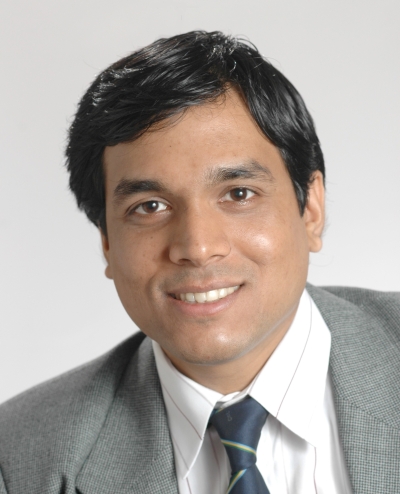
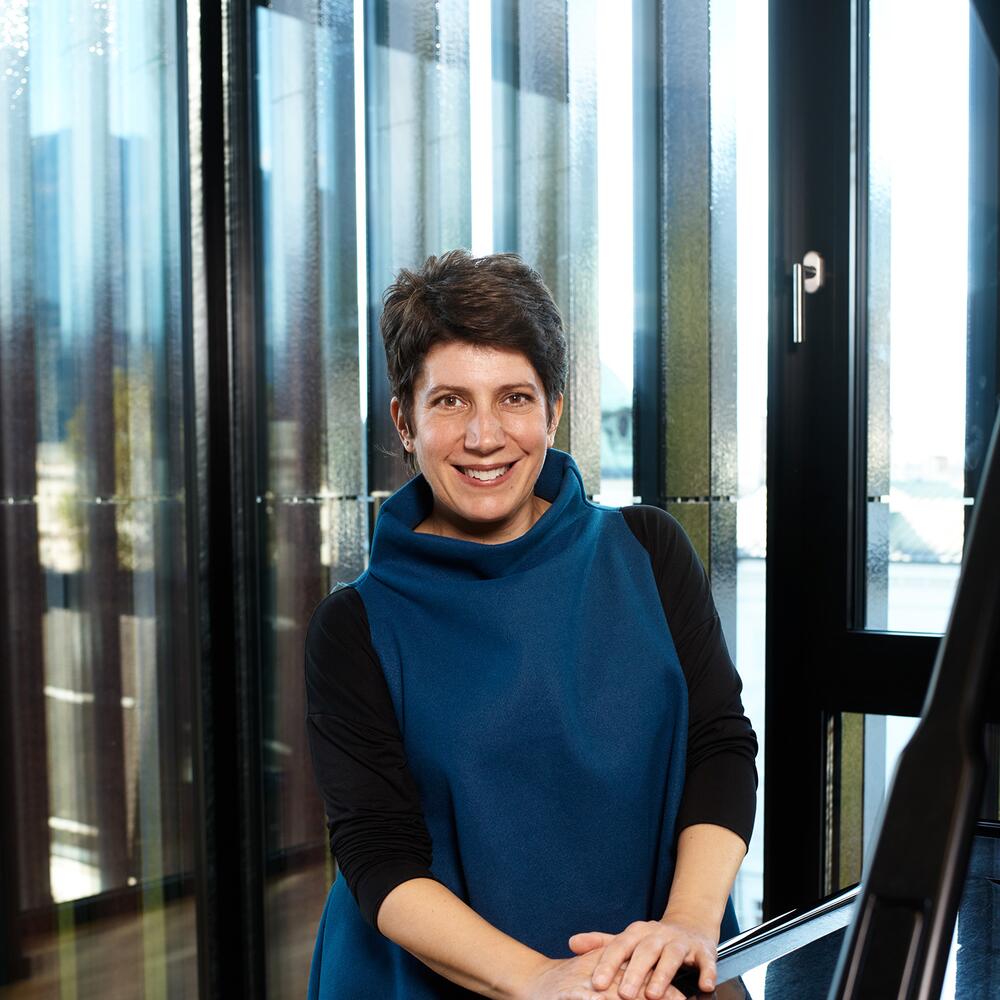
Sanjit A. Seshia is the Cadence Founders Chair Professor in the Department of Electrical Engineering and Computer Sciences at the University of California, Berkeley . He is affiliated with the Group in Logic and the Methodology of Science and participates in centers like the Industrial Cyber-Physical Systems Center , Berkeley AI Research , and the Simons Institute for the Theory of Computing . Research interests include formal methods for automated verification and synthesis of dependable systems, with applications to cyber-physical systems , AI-based autonomy , and computer security . His work spans SMT solving, model counting, syntax-guided synthesis, and algorithmic improvisation, with tools like UCLID5 , VerifAI , and Scenic for verifying autonomous systems and educational platforms like CPSGrader . Students and collaborators include notable researchers such as Dorsa Sadigh (Stanford), Daniel Fremont (UC Santa Cruz), and Hazem Torfah (Chalmers). He has co-founded startups like Decyphir and 20ⁿ Labs based on his research.
Bryan Pardo is a Professor of Computer Science at Northwestern University and head of the Interactive Audio Lab. He co-directs the Northwestern Center for Human Computer Interaction + Design and chairs the Computer Science Diversity Committee. He teaches courses in Deep Learning, Machine Learning, Generative Modeling, and Digital Music Instrument Design. PhD in Computer Science and Engineering, University of Michigan MMus in Jazz and Improvisation, University of Michigan MS in Computer Science, Ohio State University BMus in Jazz Composition, Ohio State University His research focuses on machine understanding and manipulation of sound, particularly in music and speech domains. Key areas include Machine Learning (e.g., automated gradient clipping), Signal Processing (e.g., Multi-scale Common-fate Transform), and Human Computer Interaction. Applications involve inclusive audio interfaces, audio search engines, source separation, natural language-controlled audio effects, privacy-preserving adversarial attacks on voice recognition, and music co-creation tools. Recent publications highlight advancements in neural watermarking (MaskMark), masked acoustic modeling (VampNet), and real-time adversarial privacy systems for speech. His lab's work has been applied in Adobe's AI-powered audio editor and Lexie B2 hearing aids. Scientific Awards: $1.8 million NSF Future of Work award $440K NSF grant for accessible music programming $200K Toyota grant $100K Sony grant TorchCrepe pitch tracker: 20 million+ downloads Bryan Pardo advises PhD student Max Morrison and collaborates with researchers like Patrick O'Reilly, Zeyu Jin, and Prem Seetharaman. His lab develops technologies for blind and visually impaired audio creators, including HaptEQ and Eyes-free tools.
Patrick Sturt is a Reader in Psychology at the University of Edinburgh's School of Philosophy, Psychology and Language Sciences. His research focuses on syntactic processing in language comprehension, computational models of incremental parsing, anaphor resolution, and eye movements in reading. With over 100 publications and more than 3,300 citations, he is a recognized expert in psycholinguistics and language processing. Dr. Sturt's research interests span multiple areas of language processing. He investigates how humans comprehend sentences in real-time, with particular focus on syntactic structures, agreement phenomena, and anaphoric reference. His work often employs eye-tracking methodologies to examine the moment-by-moment processing of linguistic information. He has made significant contributions to understanding how readers handle syntactic ambiguities, garden-path sentences, and the role of prediction in language comprehension. His recent publications demonstrate a strong focus on cross-linguistic studies, particularly examining language processing in Mandarin Chinese and Korean. Many of his studies investigate how syntactic and semantic information interact during comprehension, and how linguistic structures like honorifics, classifiers, and non-canonical word orders are processed. His work bridges theoretical linguistics with experimental psycholinguistics, providing empirical evidence for models of sentence processing. Dr. Sturt actively supervises PhD students including Carine Abraham, Wenjia Cai, Chiuchou Hao, Ruomeng Zhu, and Christy Gu. He teaches Psychology of Language 1 and 2 at the MSc level, as well as Data Analysis for Psychology in R for first-year undergraduates. His teaching reflects his research expertise, providing students with both theoretical knowledge and practical analytical skills. Based in Room G29 of the Psychology Building at 7 George Square, Edinburgh, Dr. Sturt maintains regular office hours on Tuesdays from 3-4pm, providing accessibility to students and colleagues. His email address is patrick.sturt@ed.ac.uk.
Professor Anne Keegan is a Full Professor of International Human Resource Management at University College Dublin (UCD), leading the HRM and Employment Relations Group within the School of Business. She previously held roles at the Amsterdam Business School and Erasmus University Rotterdam, and completed her PhD at Trinity College Dublin. Her research focuses on HRM in online labor platforms, gig economies, project-based organizations, and institutional/paradox theories. Education: Bachelor of Arts (BA), Trinity College Dublin Doctor of Philosophy (DPhil), Trinity College Dublin Research Interests: HRM in digital labor platforms and gig economies Institutional complexity and paradox theory applications HR practices in project-based organizations Career dynamics in non-traditional work environments Awards: EGOS Award in Honour of Max Boisot (2014) Van der Schroeff Award for Best Lecturer (2013) Professional Activities: Editorial Board roles for International Journal of Human Resource Management and International Journal of Project Management Committee memberships: UCD Academic Council, Faculty Promotions Committee, Widening Participation initiatives Keynote speaker at NEON Annual Conference (2019) Grants: UCD School Funded Research Account (2024-2027) Labs/Teams: Leading research on algorithmic management, platform ecosystems, and gig economy ethics through collaborative international projects.
Sageev Oore is an Associate Professor in the Faculty of Computer Science at Dalhousie University, a Research Faculty Member at the Vector Institute for Artificial Intelligence, and a Canada CIFAR AI Chair. He previously served as Associate Professor and Chairperson in the Department of Mathematics & Computer Science at Saint Mary’s University and spent 2016–2018 as a Visiting Research Scientist at Google Brain, working on the Magenta team. Faculty of Computer Science, Dalhousie University Vector Institute for Artificial Intelligence Google Brain (2016–2018) Saint Mary’s University (former) Sageev Oore's research centers on machine learning and deep learning, with a strong focus on creative applications in music, audio processing, and computational creativity. His work bridges the gap between technical innovation and artistic expression, developing systems that generate and interact with music using neural networks. He has made significant contributions to generative models for music, including the development of PerformanceRNN and other interactive systems. His recent publications highlight advancements in out-of-distribution detection (Gram-OOD), interactive music generation, and deep learning tools for creative domains. These works reflect a consistent trend toward building intelligent, user-centered systems that enhance human creativity through AI. Canada CIFAR AI Chair (2018) Best Paper Award, CVPR ISIC Workshop (2020) Outstanding Demonstration Award (Runner-up), NeurIPS (2020) Best Demonstration Award, AAAI (2017) Best Demonstration Award, NeurIPS (2016) Sageev Oore actively mentors graduate and undergraduate students, with well-funded research positions available for motivated candidates. His collaborations span academia and industry, including major projects with Google Brain and interdisciplinary work with artists. He leads research initiatives in AI-driven creativity and is deeply involved in the Canadian AI ecosystem through the Vector Institute and CIFAR. His work is supported by significant grants and affiliations, including the Canada CIFAR AI Chair program, which funds his research in foundational AI and its applications. He is also part of the Magenta project at Google, contributing to open-source tools for art and music generation. Sageev Oore leads a research group focused on deep learning for creative applications, with projects in music generation, audio synthesis, and human-AI interaction. His lab collaborates with musicians, artists, and healthcare researchers, fostering a transdisciplinary approach to AI innovation.
Daniel Fremont is an Associate Professor of Computer Science and Engineering at the University of California, Santa Cruz, where he conducts research at the intersection of formal methods and autonomous systems. His work focuses on developing mathematical techniques to improve the reliability of software, hardware, and cyber-physical systems through precise specification, formal verification, automatic synthesis, and principled testing approaches. Dr. Fremont's research interests center on applications of logic in computer science, particularly using automated reasoning to enhance system reliability. His work spans formal methods for cyber-physical systems (CPS), especially autonomous systems that incorporate machine learning. Key research areas include algorithmic improvisation for creating systems with controlled randomness, probabilistic programming through the Scenic language for environment modeling, and formal verification techniques applicable to safety-critical autonomous systems. His group has successfully applied these methods to autonomous vehicles, aircraft systems, and robotics, with significant contributions to both theoretical foundations and practical implementations. The publication record reveals a strong trajectory from theoretical foundations of control improvisation toward practical applications in autonomous systems verification. Early work established the theoretical framework of control improvisation, while recent publications focus on applying these techniques to real-world challenges in autonomous driving, aircraft systems, and AI-based autonomy. A consistent theme across his research is the integration of formal methods with machine learning to address the verification challenges posed by complex, learning-based systems operating in uncertain environments. Best Paper Award at IoTDI 2016 for 'Control Improvisation with Probabilistic Temporal Specifications' Dr. Fremont leads a research group focused on formal methods for autonomous systems, with significant contributions to the development of tools like Scenic (a probabilistic programming language for scenario specification) and VerifAI (a toolkit for formal design and analysis of AI-based systems). His work bridges theoretical computer science with practical engineering challenges in safety-critical autonomous systems, receiving funding from various sources supporting research at the intersection of formal methods and artificial intelligence. The group's approach combines theoretical algorithm development with practical implementation and testing, often collaborating with industry partners working on autonomous vehicle technology. The research group maintains active development of several open-source tools, including the Scenic language for scenario specification and VerifAI for formal analysis of AI systems. They have demonstrated applications across multiple domains including autonomous vehicles, aircraft systems, and robotics, with particular emphasis on simulation-based testing and verification approaches that can provide formal guarantees about system behavior.
Dr. Yolande E. Chan is the Dean and James McGill Professor at McGill University's Desautels Faculty of Management. She previously served as Associate Dean of Research and held the E. Marie Shantz Chair at Queen’s University’s Smith School of Business. Her academic career spans roles in research leadership, including Associate Vice-Principal (Research) at Queen’s and directorships in innovation centers. Chan’s expertise lies in digital strategy, business-IT alignment, and knowledge-driven innovation. She holds a PhD from Western University’s Ivey Business School, an M.Phil. from Oxford (as a Rhodes Scholar), and degrees in Electrical Engineering from MIT. Education: Ph.D. in Business Administration (MIS), Ivey Business School, Western University (1992) M.Phil. in Management Studies, University of Oxford (1984) S.M. & S.B. in Electrical Engineering & Computer Science, MIT (1982) Her research focuses on digital innovation, IT alignment, and strategic improvisation. Over 100 peer-reviewed articles appear in top journals like Journal of Strategic Information Systems and MIS Quarterly . Awards include the AIS LEO Award, Distinguished Cum Laude membership, and the James McGill Professorship. Chan’s work bridges theory and practice, emphasizing technology’s role in fostering agility and societal impact. Her leadership spans grants totaling millions, including SSHRC-funded projects on inclusive innovation and rural economic development. She co-edits the Journal of Strategic Information Systems and advocates for diversity and equity in academia. Chan’s career reflects a commitment to advancing both scholarly rigor and real-world business challenges.
Dr. John Hails is a Senior Lecturer and Reader in Music at Edinburgh Napier University , where he teaches aesthetics, music psychology, composition, and ethnomusicology. He holds a PhD in Music from Durham University (2008) and has trained under notable composers like Brian Ferneyhough and Richard Barrett. His research focuses on experimental composition, marginal musical practices, and interdisciplinary aesthetics. Educations: Bachelor’s and Master’s training at Durham University and University of Huddersfield PhD by Portfolio of Compositions (Durham University, 2008) Research Interests: John’s work explores unorthodox intonations, fixed media installations, and the intersection of composition with philosophy and ethnomusicology. He actively presents at international conferences on topics like post-structuralist critiques in music education and communal performance practices. Notable Works: His compositions have been performed by ensembles like the London Sinfonietta and broadcast on BBC Radio 3. Key pieces include enlightenment (microtonal trumpet and media) and Nine for ones in nine , reflecting his experimental approach. Awards & Grants: While no explicit awards are listed, his research is funded by Edinburgh Napier University. He is a core member of the Applied Music Research Centre . Supervision & Grants: He has supervised over 15 postgraduate projects, including PhDs on topics like Musical Cultures of Melanesia and Dialogical Music Systems . His supervisory roles span composition, ethnomusicology, and interdisciplinary studies. Labs/Teams: Active in the Applied Music Research Centre , focusing on creative practice and experimental music dissemination.
Alexander Refsum Jensenius is a Professor of Music Technology and Director of the RITMO Centre for Interdisciplinary Studies in Rhythm, Time and Motion at the University of Oslo. He also leads the fourMs Lab and co-founded the MishMash Centre for AI and Creativity. His work bridges musicology, psychology, and technology, focusing on embodied music cognition, human motion analysis, and creative applications of AI. Notably, he pioneered research on air guitar motion and human micromotion through projects like the Oslo Standstill Database . Educated at the University of Oslo (BA in Music and Mathematics, MA in Musicology) and Chalmers University of Technology (MSc in Applied IT), Jensenius holds a PhD in Music Technology from UiO. He has held visiting researcher roles at UC Berkeley, McGill University, and KTH. Leadership roles include Department of Musicology Head (2013–2016) and Steering Committee Chair for the International Conference on New Interfaces for Musical Expression (NIME, 2011–2022). Research interests span music-related body motion, AI in creative contexts, and open research practices. Key contributions include the Music Moves and Motion Capture MOOCs, the Musical Gestures Toolbox software, and monographs like Sound Actions and Sonic Design . His work emphasizes interdisciplinary collaboration, with projects addressing ventilation systems' acoustic properties and cell culture vibrational effects. Awards include the European Open Data Champion recognition. He advocates for open science and maintains extensive digital archives of research materials, emphasizing institutional web pages as critical research infrastructure.
Ajay Kapur serves as Associate Provost for Creative Technologies and Director of the Music Technology program (MTIID) at California Institute of the Arts. With an interdisciplinary background spanning computer science, electrical engineering, and music, he bridges technological innovation with artistic expression through leadership in academic programs and entrepreneurial ventures. His research centers on symbiotic human-machine interaction for artistic creation, particularly exploring computer improvisation with humans through Indian Classical music frameworks. This manifests in developing programmable mechatronic instruments, sensor-based interfaces, and AI-driven systems for musical expression. His work extends traditional techniques while creating new performance paradigms like the globally touring Machine Orchestra and KarmetiK Orchestra. Kapur's recent publications reveal evolving expertise from music robotics to blockchain applications, with significant focus on NFT systems, tokenization, and immersive environments. His scholarly output demonstrates consistent innovation at the intersection of artistic practice and emerging technologies. As an educator and entrepreneur, he has co-founded companies in edtech and AI while authoring foundational texts like Digitizing North Indian Music and Introduction to Programming for Musicians and Digital Artists . His performances at venues including LACMA, Singapore Arts Festival, and the 2010 Winter Olympics showcase practical applications of his research.
Isabel Gabbe , University Professor of Piano & Piano Didactics at Mozarteum University Salzburg's Innsbruck Department since 2016, is a German-French pianist and music educator with extensive international experience. She heads the Music Education Department and contributes to artistic higher education through her work with the European Piano Teachers Association (EPTA) and the Austrian Society for Music and Medicine (ÖGFMM). Studied with Hans Leygraf and Rainer Becker Certified music physiologist Founder of "Moments Musicaux" festival in France Active in teacher training across Europe and South America Her research focuses on music education , physiological piano teaching methods , and musicians' health . Isabel integrates creative approaches to piano instruction for children, emphasizing cross-cultural communication through music. Her recent work explores alternative keyboard techniques and inclusive pedagogy. Professor Gabbe's publications analyze piano didactics, including " Alles ist erlaubt, nur nicht Alles spielen! " on practical repertoire use and " Musizieren lernen? Ein Kinderspiel! " on playful learning approaches. She contributes to Schott Verlag's "Üben&Musizieren" series and Waxmann Verlag's music education publications. Scientific recognitions include: German Music Council Artist List (2000) EPTA Austria Vice Chair (2018–present) Deutsche Tonkünstlerverband Deputy Chair (2015–2023) Richard Wagner Association Stipend (2002) Aspen Music Festival Stipend (1995,1996) Isabel Gabbe actively mentors educators through workshops and masterclasses across Europe and South America, focusing on sustainable teaching practices and physiological approaches to piano instruction. She has participated in numerous festivals and serves on academic committees for music education curricula.
Boris Traue is a Full Professor of Social Work and Social Pedagogy at the Department of Education and Social Work, Faculty of Humanities, Education and Social Sciences, University of Luxembourg. He joined the university in February 2020 and serves as Director of the Bachelor en sciences sociales et éducatives program. His educational background includes a degree in sociology, philosophy, and psychology from Freie Universität Berlin (2002), a doctorate (Dr. phil) from Technische Universität Berlin (2008), and venia legendi for sociology from the same institution (2018). Traue's research centers on relational social theories , subjectivation processes , and visual studies , examining how institutions, technologies, and collective action shape individual and group agency. His methodological innovations in interpretative subjectivation analysis and visual discourse analysis bridge sociology, social work, and interdisciplinary studies, with particular focus on psychosocial interventions and amateur practices. Analysis of his 15 most recent publications (2022-2025) reveals three dominant thematic clusters: subjectivation theory development, visual methodology applications, and disability inclusion research. His work consistently integrates German and Anglophone academic traditions while addressing contemporary social challenges through empirical subjectivation research. Traue has secured significant research funding from major institutions including the German Research Foundation (DFG) and Luxembourg's FNR. Current projects include: PATH_CH-LUX (2023-2025, 1.5 MEUR): Comparative study of labor market pathways for youth with disabilities in Switzerland and Luxembourg SEaSons (2024-2026, 750,000 EUR): Sustainability, Environmental Knowledge and Social Imaginations of Climate Futures As co-editor of the Springer book series Studies in Subjectivation and board member of the sociology of knowledge section in the German Sociological Association (since 2021), Traue actively shapes academic discourse through collaborative international networks and editorial leadership.
Dr. John Kounios is Professor of Psychology at Drexel University and author of the bestselling book The Eureka Factor: Aha Moments, Creative Insight, and the Brain . A Fellow of the Association for Psychological Science and Psychonomic Society, he researches the cognitive neuroscience of insight, creativity, and problem solving. Research Focus: Kounios investigates neural predictors of insight solutions, cognitive differences between analytic and insight problem solving, and reward mechanisms in creative breakthroughs. His work identifies pre-problem neural activity patterns that predict solution approaches. Key Discoveries: Demonstrated that insight solutions are more likely correct than analytic solutions; identified neural precursors to 'aha' moments; revealed reward system activation during insight; showed positive mood facilitates insight while negative mood promotes analytical thinking. Publications: Recent work examines EEG predictors of problem-solving outcomes, flow states in creativity, individual differences in insight phenomenology, and brain-age estimation methods. Research featured in BBC documentaries, The New York Times, and Chicago's Museum of Science and Industry.
Christine Van Toorn is a Senior Lecturer at the University of New South Wales (UNSW) Business School, within the School of Information Systems and Technology Management. Her research focuses on the intersection of human-computer interaction, business analytics, and environmental sustainability, with an emphasis on how digital tools enable organizational ambidexterity and continuous innovation. Affiliation: University of New South Wales Academic Rank: Senior Lecturer Research Themes: Business analytics, digital transformation, gamification, knowledge management, and sustainable information systems Van Toorn's recent work explores the role of business analytics in balancing exploration and exploitation for sustainability, and the evolving competencies of Chief Information Officers (CIOs) in the post-pandemic era. She has also investigated the integration of United Nations Sustainability Development Goals (SDGs) into information systems curricula and the application of generative AI in educational knowledge management. Her publications span journals like Information Systems Journal , Behaviour and Information Technology , and Information and Management , alongside conference proceedings at PACIS and ECIS. Van Toorn serves on the UNSW Co-operative Scholarship Sponsor Steering Committee and is an Associate Member of the Australian Society of CPAs and ISACA (Information Systems Audit and Control Association).
Dr. Nunung Nurul Hidayah is an Associate Professor in Accounting at Southampton Business School , specializing in ethics, religion, and hybrid organizations within accounting and finance. She serves as a senior personal tutor for postgraduate accounting programs and contributes to the school's Ethics Committee . Her interdisciplinary work bridges Islamic finance, auditing practices, and organizational complexity. Education : PhD in Accounting (Aston Business School, funded by IRTI-IDB) Previous Institutions : Lecturer at Aston Business School; Lecturer and Head of Accounting Department at University of Al Azhar Indonesia Her research focuses on ethical governance , religious influence in organizations , and hybrid operational models , particularly in government audit work, philanthropic organizations during crises, transnational academia, and women's leadership challenges. Recent publications analyze emotion in auditing, sustainability assurance gaps, and spiritual dynamics in Islamic finance. Key research trends include: Emotional labor in public sector auditing Hybridity in microfinance and philanthropy Gender dynamics in corporate leadership Shariah compliance mechanisms Temporal structuring in commodity processing Quasi-judicial auditing technologies Scientific recognitions include: Best Researcher 2018 - Aston Business School Journal Business Ethics Best Paper Award (Apira Melbourne 2016) British Accounting Review Social Media Impact Award (2021) She supervises PhD students in business studies and teaches Business Research at undergraduate level, with prior doctoral-level instruction in financial accounting and research design. Her curriculum development spans Islamic finance, accounting frameworks, and IFRS implementation across three institutions.