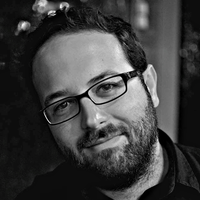
Sigrid Källblad Nordin is an Associate Professor at KTH Royal Institute of Technology, affiliated with the Department of Mathematics (Division of Probability, Mathematical Physics, and Statistics). Her research focuses on Mathematical Finance, Probability Theory, and Stochastic Analysis, with an emphasis on measure-valued processes, martingale optimal transport, and model uncertainty. She holds a DPhil from the University of Oxford (2014). Her work bridges theoretical advancements in stochastic control, optimization, and financial applications. Recent research includes Bayesian optimal adaptive control, robust option pricing, and dynamically consistent investment strategies under uncertainty. She teaches courses such as Financial Mathematics and Financial Derivatives, and supervises PhD students Linn Engström and Chaorui Wang. Publications span journals like Annals of Applied Probability , Finance and Stochastics , and SIAM Journal on Control and Optimization , reflecting contributions to optimal transport, stochastic processes, and financial modeling. She is currently hiring a new PhD student and welcomes inquiries about master thesis supervision.
Tobias Oechtering is a Professor at the Division of Information Science and Engineering within the School of Electrical Engineering and Computer Science at KTH Royal Institute of Technology. His research focuses on information theory, privacy-preserving technologies, statistical signal processing, machine learning, and smart grid systems. He has held academic positions at KTH since 2008, advancing from Post-Doctoral Researcher to Assistant Professor (2010–2013), Associate Professor (2013–2018), and Professor (2018-present). He has supervised over 20 PhD students and contributed to numerous postdoctoral programs. Research Interests: - Network information theory and physical-layer security - Privacy mechanisms with provable guarantees - Distributed statistical inference and sensor calibration - Reinforcement learning and privacy-aware machine learning - Smart grid privacy and energy management - Wireless communication algorithms and signal processing - Networked control systems and stability analysis He currently supervises 7 PhD students and hosts 3 postdocs. His work has led to over 150 peer-reviewed publications, with recent contributions in privacy-preserving smart grid strategies, adversarial inference control, and information-theoretic security. He has served as editor for IEEE Transactions on Information Forensics and Security and held leadership roles in KTH's Digitalisation Research Platform.
Powder Metallurgy (MH2100) and has expertise in computational materials science. His research emphasizes predictive modeling of material behavior, including precipitation kinetics, sintering processes, and coating interactions. Notable areas include phase field modeling of discontinuous precipitation, spinodal decomposition in Fe-Cr alloys, and high-entropy alloy design. His studies bridge experimental data with computational tools like the YAPFI phase-field framework. Key themes in his publications span cemented carbides, Co-based entropic alloys, and tool wear mechanisms. He combines CALPHAD thermodynamic modeling with first-principles calculations to address challenges in materials processing and corrosion resistance. His work often addresses industrial applications, such as optimizing machining tools and additive-manufactured superalloys.
Anna Gautier is an Assistant Professor in the Department of Computer Science at Chalmers University of Technology, affiliated with the Division of Data Science and AI. Previously, she was a Digital Futures Postdoctoral Fellow at KTH Royal Institute of Technology (2023–2025), focusing on mechanism design for multi-robot systems. Her research emphasizes planning under uncertainty, multi-agent systems, and human-robot interaction. She holds a PhD from the University of Oxford (2023), an MSc from the London School of Economics, and dual undergraduate degrees from Washington University in St. Louis. Education Background: PhD in Computer Science, University of Oxford (2023) MSc in Applied Mathematics, London School of Economics BA in Mathematics and BS in Computer Science, Washington University in St. Louis Research Interests: Dr. Gautier explores planning algorithms for multi-agent systems, particularly in uncertain environments. She designs mechanisms to coordinate robots and humans, leveraging game theory and formal methods. Her work addresses challenges like resource allocation, risk-aware decision-making, and trust in autonomous systems. Recent projects include contingency planning for autonomous vehicles and auction-based resource distribution. Professional Activities: She co-chairs the ECAI 2025 Demonstration Track and teaches the course Safe Robot Planning and Control at KTH. Her projects include collaborations with WASP-Nest (PerCorSo) and TECoSA on trustworthy autonomy. She actively publishes in top venues like AAMAS and AAAI. Labs and Teams: Affiliated with Chalmers' Data Science and AI division, she leads research in multi-agent systems and human-AI collaboration.
Morteza Haghir Chehreghani is a Professor of Artificial Intelligence and Machine Learning at the Data Science and AI Division of Chalmers University of Technology , Sweden. He leads the Machine Learning and Decision Making Lab and is affiliated with WASP , CHAIR , and ELLIS . Education : PhD in Computer Science (2014) from ETH Zurich under Prof. Dr. Joachim M. Buhmann Prior Roles : Staff Research Scientist at Naver Labs Europe (2014-2018) Research spans Interactive Machine Learning , Sequential Decision Making , Federated Learning , Efficient Deep Learning , and Graph-Based Learning . Key application areas include Transport , Autonomous Systems , Energy , Drug Discovery , and Computational Biology . Selected Publications (2020-2025) demonstrate expertise in Reinforcement Learning for drug design, Minimax Distance Measures for clustering, and Graph Neural Networks for trajectory analysis. Current work focuses on Combinatorial Bandits and Human-in-the-loop AI . Teaching includes graduate courses like Advanced Topics in Machine Learning (DAT441/DIT41), Algorithms for Machine Learning (TDA233/DIT382), and PhD-level Advanced Reinforcement Learning . He has also taught Statistical Methods for Data Science and Theoretical Foundations of ML . Patents include systems for Autonomous Vehicle Motion Control , K-NN Search via Minimax Distances , and Trip Prediction Algorithms . Collaborative projects involve Nature Communications (2022) and multiple ICML / CVPR publications.
Ebru Turanoglu Bekar is a Senior Lecturer at the Department of Industrial and Materials Science, Chalmers University of Technology, specializing in Smart Maintenance and Production Systems. She contributes to the Production Service Systems & Maintenance research group. Research Interests: Total Productive Maintenance (TPM), Artificial Intelligence applications in manufacturing, Multi-Criteria Decision Making, Performance Measurement systems Recent Focus: Development of data-driven algorithms for predictive maintenance, integration of digital twins in industrial contexts Key Projects: Factory SensAI (2025–2028) - Data integration for AI in manufacturing Trustworthy Predictive Maintenance TPdM (2022–2025)
Nikolce Murgovski is an Assistant Professor at Chalmers University of Technology, specializing in Mechatronics . He focuses on electric and hybrid vehicle energy management , autonomous driving systems , and optimization algorithms for powertrain design. His work bridges control theory , battery technology , and transport electrification . Current projects include CHARGE (2023–2026) for charging and trip planning , and EcoPilot (2022–2026) for energy-efficient autopilot development. Collaborates with institutions like Volvo Cars , Swedish Electromobility Centre , and VINNOVA on autonomous vehicle control and thermal energy systems . His recent publications emphasize convex optimization , eco-driving strategies , and collision avoidance in complex environments. He has contributed to tools like CONES for electromobility studies and has led research on hybrid powertrains and predictive energy management .
Mattias Brunström serves as Assistant Professor of Cardiology and Associate Professor of Epidemiology at Umeå University's Faculty of Medicine within the Department of Public Health and Clinical Medicine, Section of Cardiology. He is concurrently a resident physician at Norrlands University Hospital and holds leadership roles as chairman of Sweden's national hypertension working group and scientific secretary of the Swedish Society for Hypertension, Stroke and Vascular Medicine, with active participation in the European and International Societies of Hypertension. His academic foundation includes a 2018 PhD thesis examining blood pressure-lowering treatment effects across different blood pressure levels through systematic reviews and meta-analyses of randomized clinical trials. This doctoral work established his expertise in evidence-based cardiovascular therapeutics and epidemiological methodology. Dr. Brunström's research program centers on cardiovascular disease risk factors, with specialized focus on hypertension pathophysiology and aortic diseases. His group investigates how adolescent blood pressure levels predict future cardiovascular events, examining interactions with obesity, physical fitness, and diabetes to improve risk stratification. They also analyze differential effects of antihypertensive drug classes on cardiovascular outcomes and study risk factors for aortic dissection/rupture to optimize preventive surgical interventions. This work addresses critical gaps in managing the world's leading cause of death, where uncontrolled hypertension contributes to 10 million annual fatalities despite effective treatments. Analysis of his 2024-2025 publications reveals dominant themes in hypertension guideline development, treatment threshold controversies, and cardiovascular risk assessment. His work frequently challenges conventional approaches (e.g., questioning excessive treatment of 'elevated' blood pressure in elderly patients) while advancing evidence for lifestyle interventions and beta-blocker utility. Methodologically, his research leverages large cohort studies (including 1.4 million enlistee data), systematic reviews, and international collaborations through societies like ESH and ISH to translate epidemiological findings into clinical practice. Dr. Brunström leads multiple funded research initiatives including 'Remission of type 2 diabetes through eHealth' (2022-2028) and 'VIPviza' (2013-2027), directing a multidisciplinary team that bridges clinical cardiology, epidemiology, and public health. His advisory role extends to national guideline committees and international hypertension societies where he shapes clinical practice through evidence synthesis and position papers. Based at Norrlands University Hospital's Cardiology Section, his research group operates within Umeå University's strong cardiovascular research ecosystem, maintaining active collaborations with the Swedish National Diabetes Register and international consortia. Their work emphasizes real-world applicability, examining topics like bedtime dosing of antihypertensives and self-report diagnostic tools to overcome barriers in hypertension control where only 25% of affected individuals achieve target blood pressure levels.
Saleh Javadi is a Senior Lecturer at the Department of Mathematics and Natural Sciences at Blekinge Institute of Technology (BTH) in Karlskrona, Sweden. He is actively engaged in research and teaching within the field of systems engineering. His educational background includes: B.Sc. in Electrical-Control Engineering from Amirkabir University of Technology (2009) M.Sc. in Electrical, Electronic and Systems Engineering from The National University of Malaysia (2013) Ph.D. in Systems Engineering from Blekinge Institute of Technology (BTH) (2021) Saleh Javadi's research focuses on signal processing, machine learning, and computer vision , with applications spanning remote sensing, intelligent transportation systems, and AI-driven industrial optimization. His work bridges theoretical advancements with practical implementations, particularly in SAR imagery analysis, drone-based agricultural monitoring, and traffic surveillance systems. His recent publications demonstrate a strong focus on remote sensing technologies, particularly Synthetic Aperture Radar (SAR) image processing and analysis. There's a clear trend toward applying machine learning techniques to solve complex problems in aerial and satellite imagery, traffic monitoring, and agricultural applications. His research shows interdisciplinary connections between computer vision, signal processing, and practical engineering applications. Saleh Javadi has received significant recognition for his innovative work: Innovator of the Year award (SKAPA – Innovation Prize in Memory of Alfred Nobel) in Blekinge for innovative efforts in optimizing and reducing energy consumption in industries by using artificial intelligence ÅForsk Entrepreneur's prize at the Swedish Innovation Council Day – Swedish Incubators & Science Park's annual conference in May 2019 Dr. Javadi is involved in practical applications of his research through projects such as "Artificiell intelligens AI kan reducera ogräsfrön i utsäde" (ongoing) and "Bekämpa Renkavle med hjälp av drönare och Artificiell Intelligens (AI)" (completed). His work demonstrates a strong commitment to translating academic research into real-world solutions that address industrial and environmental challenges. His research appears to be conducted within a collaborative framework, working with colleagues on drone technology, SAR image analysis, and AI applications across multiple domains including agriculture, maritime monitoring, and transportation systems.
Gustav Henter is an Assistant Professor in Intelligent Systems at KTH Royal Institute of Technology, specializing in Machine Learning. He is affiliated with the Division of Speech, Music and Hearing (TMH) within the School of Electrical Engineering and Computer Science. His research focuses on deep generative models for applications like speech synthesis, 3D character animation, and human-computer interaction. He holds a Docent degree from KTH and has held post-doctoral positions at the University of Edinburgh and the National Institute of Informatics in Tokyo. Education: PhD in Electrical Engineering (KTH, 2013), MSc in Engineering Physics (KTH, 2007). He supervises doctoral students in areas like gesture synthesis and multimodal interaction. His work is supported by grants from the Wallenberg AI, Autonomous Systems, and Software Program (WASP) and South Korea's MOTIE. He co-founded Motorica AB to commercialize motion synthesis research. Awards include Best Paper Awards at ICMI 2020 and IVA 2020, and recognition for student theses. His research spans generative AI, perceptual evaluation, and robust statistical models. He organizes the GENEA Challenge and Workshop series for gesture generation benchmarking.
Erik Prytz is a Senior Associate Professor in Cognitive Science at the Department of Computer and Information Science (IDA) at Linköping University. His research focuses on applying human factors principles to improve safety-critical systems, particularly in emergency response domains such as first aid, disaster medicine, and prehospital care. He holds a PhD in Human Factors Psychology and has served in roles including Director of the Forum Securitatis graduate school and Program Chair for the Cognitive Science BSc program. Education: PhD in Human Factors Psychology (Old Dominion University, 2014), MSc in Cognitive Science (LiU, 2010). Research Interests: Simulation-based training, stress and mental workload, emergency responder teamwork, and human-system interaction in crisis scenarios. His work emphasizes interdisciplinary collaboration, combining cognitive science, computer science, and medicine to enhance emergency response systems. Recent projects explore driver behavior toward emergency vehicles, ad-hoc responder group dynamics, and optimal placement of bleeding control kits in public spaces. He contributes to initiatives like the Center for Advanced Research in Emergency Response (CARER) and the Forum Securitatis graduate school. Erik’s teaching includes courses on human factors, distributed cognition, and emergency response systems. He actively participates in curriculum development and quality assurance committees within the Faculty of Arts and Sciences.
Martin Norgren is a Professor at KTH Royal Institute of Technology, leading the Department of Electromagnetic Fusion Physics. His research focuses on electromagnetic inverse problems, including material characterization, biomedical imaging (e.g., brain current sources), environmental monitoring (e.g., snow and avalanche prediction), and smart grid technologies. He specializes in reconstructing object properties using electromagnetic measurements and has contributed to applications in healthcare, energy systems, and environmental science. His work involves advanced analytical and numerical methods such as mode-matching techniques, perturbation theory, and convex optimization. Notable projects include noncontact current measurement in power grids and transformer diagnostics using microwave radiation. Norgren teaches courses in electromagnetic field theory and electrical engineering design, emphasizing practical applications and interdisciplinary collaboration. Recent research trends highlight advancements in glide/twist symmetry-based metamaterial design, waveguide analysis, and inverse scattering techniques. His studies bridge fundamental physics with applied engineering, addressing challenges in energy infrastructure and medical diagnostics. As a department head, he oversees educational and research programs at KTH, fostering innovation in electromagnetism and fusion physics. His contributions to curriculum development include project-based courses integrating theory and hands-on design.
Jana Tumova is an Associate Professor at the Division of Robotics, Perception and Learning, KTH Royal Institute of Technology. Her research focuses on designing algorithms for safe, purposeful autonomous systems using formal methods to ensure rigorous specifications and guarantees. Applications span autonomous driving, UAV exploration, and network control. She teaches courses like Artificial Intelligence (DD2380) and leads the Robotics, Reading Group (FDD3316) . Her work emphasizes formal methods integration with AI, safety-critical control, and human-robot interaction. Notable research directions include risk-aware planning, belief space control, and contingency planning under uncertainty. She has published extensively on motion planning, robust control synthesis, and multi-agent systems. Key technical contributions include techniques like Belief Control Barrier Functions , Backward Underapproximate Reachability (BURNS) , and Transitional Grid Maps . She actively participates in interdisciplinary initiatives like the Control for Societal-Scale Challenges: Roadmap 2030 .
Zebo Peng is a Professor and Deputy Head of Department at Linköping University's Department of Computer and Information Science (IDA), leading the Software and Systems (SAS) division. His research focuses on embedded systems design, electronic design automation, SoC testing, and real-time systems with emphasis on fault tolerance and hardware/software co-design. He has contributed to projects like the ASTECC initiative, funded by the Swedish Foundation for Strategic Research, addressing adaptive software in edge-cloud continuum systems. Key research interests include cyber-physical systems security, time-sensitive networking (TSN), and optimization techniques using genetic algorithms. Recent work explores thermal-aware design for reliability, security-aware scheduling, and stability guarantees in control systems. His publications span journals like IEEE TPDS and ACM TECS, alongside conference contributions on topics like resource management and fault detection in distributed systems. Prof. Peng collaborates extensively within the SAS division, which bridges academic and industrial research in software engineering and computer systems. His team's projects address challenges in real-time systems, embedded security, and parallel computing architectures.
Georgios Andrikopoulos is an Assistant Professor at KTH Royal Institute of Technology's Department of Industrial and Environmental Management (ITM), affiliated with the Digital Futures Faculty. He serves as Co-Principal Investigator (Co-PI) on the 'Real-time exoskeleton control for human-in-the-loop optimization' project, focusing on advanced robotics and human-technology interaction. His research spans soft robotics, exoskeleton systems, and adaptive climbing robots, with applications in healthcare, aerospace, and education. Key projects include: "Connecting Bodies – Designing Shape-changing Wearables" (Postdoc Fellowship, 2023–2025) "Advancing real-time exoskeleton control for human-in-the-loop optimization" (Demonstrator Project) SEC scholar collaboration with Mohamed Elbadawi (May–June 2024) Research interests emphasize: Soft robotic actuators for safe human interaction Optimization of compliant mechanisms in robotics Vortex adhesion systems for autonomous inspection Design of child-friendly interactive robots His work integrates robotics with control systems, biomechanics, and human-centered design. Over 50 peer-reviewed articles demonstrate contributions to exoskeleton technology, climbing robot algorithms, and soft actuator modeling. He advises students like Laia Turmo Vidal (Postdoc) and Mohamed Elbadawi (SEC scholar). Affiliated with the cross-disciplinary Digital Futures initiative, he collaborates with Stockholm University and RISE Research Institutes to address societal challenges through digital innovation.