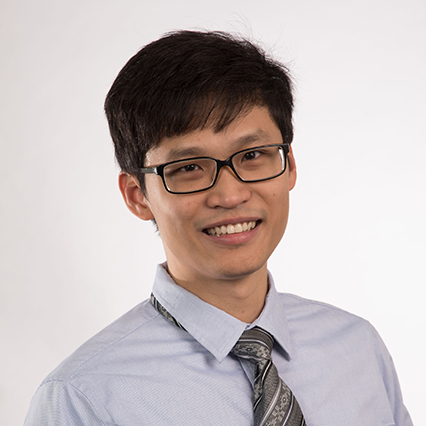
Dr. Maryam Ghahramani is a Senior Lecturer in AI & Robotics at the Faculty of Science & Technology, University of Canberra, Australia. She holds a BSc in Electrical Engineering from Shiraz University, Iran, and a PhD in Biometric Gait Analysis from the University of Wollongong, Australia. Biomedical Engineering Researcher Machine Learning Specialist Human Motion Analysis Expert Her research focuses on applying machine learning to human motion analysis for rehabilitation purposes, particularly in three key areas: Parkinson's Disease: Using fNIRS and machine learning for disease detection and motor function assessment Fall Prevention: Analyzing postural sway and risk of falls in older adults Spatial Disorientation: Studying balance in hypoxic aviation environments Recent publications demonstrate her work at the intersection of biomedical engineering, machine learning, and clinical rehabilitation. Current projects include: Young Onset Dementia Detection with 12-week Home-Based Exercise Programs Mild Hypoxia Analysis for Aviation Safety Balancing Mat Performance Evaluation
Dr. Rhiannon Firth is a Lecturer in Sociology of Education in the Department of Education, Practice and Society at the Institute of Education, University College London (UCL). She also serves as the Programme Leader for the MA in Sociology of Education. Her academic career spans interdisciplinary research at the intersection of Sociology, Education, and Politics, with a focus on utopian ideals and pedagogical practices of social and ecological movements. Dr. Firth's educational background includes: First Class BA (Hons) in Combined Studies (Politics, English Literature and Economic and Social History) from the University of Leicester ESRC-funded MA in Political Science (Distinction) from the University of Nottingham PhD in Political Sociology from the University of Nottingham Her research focuses on how grassroots social movements create knowledge and mobilize social change around global "wicked" problems including inequality, climate change, technological developments, and pandemics. She has conducted funded research with self-managed sustainable communities in the UK and USA, grassroots disaster relief movements including Occupy Sandy New York and COVID-19 Mutual Aid London, and organizations using automation technology in experimental ways. Dr. Firth's recent publications reflect her ongoing exploration of utopian and dystopian themes across multiple domains. Her work spans analyses of pandemic responses, ecological breakdown, industrial technology, and community organizing. A strong thread throughout her scholarship examines how prefigurative politics and mutual aid practices offer alternatives to mainstream approaches to social organization, particularly in times of crisis. Her research increasingly focuses on the intersection of technology, labor, and utopian thinking, particularly examining how automation and cybernetics might be reimagined through radical social movements. Among her significant recognitions: Senior Fellow of the Higher Education Academy (SFHEA), earned in 2017 ESRC funding for her MA studies Dr. Firth has secured research funding from multiple sources including ESRC, ISRF, EPSRC, HEFCE, local councils, and UCL Grand Challenges. She supervises MA dissertations annually and currently mentors one PhD student. Her professional activities include media engagement (such as appearing on BBC Radio 4's The Moral Maze), conference presentations, and serving as ECR Representative for the Utopian Studies Society of Europe. She is actively involved with research groups and networks focused on utopian studies, social movements, and critical pedagogy, contributing to the vibrant intellectual community around alternative futures and radical educational practices.
Helder Carvalho is an Associate Professor at the University of Minho's School of Engineering, Campus de Azurém, where he also serves as Director of the Department of Textile Engineering and Director of the Master's program in Textile and Accessories Product Design and Innovation. His academic career spans over three decades, with a focus on textile engineering and its intersection with electronics and automation systems. His educational background includes: PhD in Textile Engineering (2004) from University of Minho, School of Engineering MSc in Textile Engineering (1998) from University of Minho, School of Engineering BSc in Electrotechnical and Computer Engineering (1992) from University of Porto, Faculty of Engineering Professor Carvalho's research primarily focuses on smart textiles, textile sensors, and instrumentation systems for industrial sewing machines. His work bridges the gap between traditional textile manufacturing and modern electronics, creating innovative solutions for interactive textiles and wearable technology. He has particular expertise in developing flexible sensors that can be integrated into fabrics for applications ranging from sports performance monitoring to healthcare. His recent publications demonstrate a strong trend toward sports applications of smart textiles, with numerous papers on fencing apparel, karate body protectors, and general athletic performance monitoring. The research spans material science, sensor development, and user experience design, showing a comprehensive approach to creating functional and attractive smart textile products. Professor Carvalho has received recognition through research funding from major institutions: BE@T Bioeconomy Textile and Clothing (current) Greenauto - Green Innovation for the Automotive Industry (current) Factor ST+ (2021-2023) FAMEST (2017-2020) TSSIPRO (2016-2019) He has directed multiple academic programs including the Master's in Textile and Accessories Product Design and Innovation, and coordinated educational initiatives like the CET 'Fashion Commerce' program. His work at the Textile Science and Technology Centre demonstrates a commitment to translating research into practical applications across sports, healthcare, and industrial manufacturing sectors.
Professor Kiyotaka Iwasaki at Waseda University's Faculty of Science and Engineering is a leading figure in biomedical engineering with a focus on cardiovascular device development , tissue engineering , and regulatory science . His career spans over two decades at Waseda University, including roles as Associate Professor (2006-2014) and positions at Harvard Medical School's Laboratory for Tissue Engineering. Holding a Doctor of Engineering from Waseda, he serves on numerous international regulatory committees and has contributed to ISO/TC194 standards for medical devices. 1993-2002: Waseda University Education in Mechanical Engineering 2001-2004: Research Associate at Waseda University 2004: Research Scientist at Harvard Medical School 2018-Present: Professor at Waseda University His research interests include Non-clinical testing methodologies for medical devices Regulatory science frameworks Tissue engineering for ligament and cardiac applications Cardiovascular biomedical engineering His scientific contributions reveal through Development of decellularized tissue grafts for orthopaedic surgery Innovations in 3D cardiac tissue engineering using fibrin-based cell sheet stacking Pioneering bioresorbable stent technology with magnesium alloys Creation of biomechanical simulators for valvular disease modeling His awards span from the 2021 Japanese Ministerial Science Commendation 2020 JSME Standards Award 2018 ARIA Innovation Award 2001 ASAIO Fellowship While his publications demonstrate expertise in Vascular and cardiac device testing Bioresorbable stent evaluation Machine learning in medical device regulation Decellularized tissue applications
Christian Smith is an Associate Professor and Lecturer at the Department of Robotics, Perception and Learning at Kungliga Tekniska Högskolan (KTH Royal Institute of Technology). His research focuses on robotics and applications in human-centered environments like home environments, small workshops, and healthcare facilities, including the development of new robotic systems for research. Teaching Roles: Course Coordinator/Teacher/Examiner for courses such as Introduction to Robotics (DD2410), Research Project in Robotics (DD2411), and Java Programming for Python Programmers (DD1380) Research Themes: Human-Robot Interaction, Behavior Trees, Exoskeletons, Intent Recognition, and Multimodal Perception Awards: No specific scientific awards mentioned in the provided text His KTH profile highlights work on adaptive robotics systems and formalized control strategies. The research portfolio spans from theoretical studies on behavior tree programming to applied work in assistive technologies and teleoperation systems.
Jiefeng Sun serves as Assistant Professor in the Department of Aerospace and Mechanical Engineering within Arizona State University's School for Engineering of Matter, Transport and Energy. His research program centers on designing artificial-muscle-driven robots that replicate biological adaptivity through advanced modeling and control systems. His academic credentials include: Ph.D. in Robotics and Control from Colorado State University (2022) M.S. in Mechanical Engineering from Dalian University of Technology (2017) B.S. in Mechanical Engineering from Lanzhou University of Technology (2014) Dr. Sun's research integrates soft robotics, artificial muscles, and adaptive control to create morphologically intelligent systems. His work spans aerial robotics, wearable exoskeletons, and biomimetic locomotion, with emphasis on shape-changing mechanisms and energy-efficient actuation that enables robots to operate in unstructured environments. Analysis of his recent publications reveals dominant themes in twisted-and-coiled actuators, tensegrity structures, and physics-informed control methods. Key trends include variable-stiffness systems for wearable devices, data-efficient simulation techniques using Koopman operators, and bistable mechanisms for aerial grasping applications. His research excellence has been recognized through: Finalist for Best Student Paper Award at IEEE/RSJ IROS 2018 Reviewer of the Year 2021 for Smart Materials and Structures Journal 2022 DARPA Riser designation Dr. Sun actively recruits graduate students for robotics research and has secured significant funding including DARPA support. He teaches core courses including System Dynamics and Control I (MAE 318) while supervising thesis research and applied projects through MAE 599 and MAE 792. He directs the Sun Robotics Lab (https://sunroboticslab.github.io), which collaborates across biomechanics, materials science, and control theory to develop next-generation adaptive robotic systems with applications in healthcare, exploration, and human augmentation.
Professor Clinton Fookes is a faculty member at the Queensland University of Technology (QUT) within the School of Electrical Engineering & Robotics . His research focuses on leveraging computer vision and artificial intelligence to develop automated systems that understand, anticipate, and interact with human behaviors, with applications in medical diagnostics, autonomous vehicles, defense, and industrial efficiency . Research areas include AI adaptability, multimodal biosignal analysis, and human-machine interaction Collaborates with CSIRO Data61, Defence Science and Technology Group, Orica, Airbus, and Sentient Vision Systems Develops systems for human action detection, infrastructure monitoring, and stress response prediction His work addresses critical challenges in AI deployment, such as environmental adaptability and reducing diagnostic errors in medical and autonomous systems. Recent publications highlight trends in self-supervised learning, zero-shot knowledge transfer, multimodal integration , and 3D reconstruction for healthcare , while exploring ethical AI use in sectors like mining and defense . Professor Fookes emphasizes interdisciplinary collaboration, bridging engineering, medicine, and social sciences to advance AI systems capable of real-world impact. His research agenda includes improving AI memory capabilities and explainability for safer, more reliable automation.
Trenton R. Foster, M.D., is an Associate Professor of Surgery at Mayo Clinic College of Medicine, serving as a Consultant in the Division of Endocrine Surgery within the Department of Surgery. He holds multiple leadership positions including Associate Program Director for the General Surgery Residency Program and Associate Director of Student Clerkships Programs. Dr. Foster is also the Physician Lead for the Collaborative Endocrine Surgery Quality Improvement Program (CESQIP) and serves on several important committees including the Clinical Competency Committee and the Department of Surgery Equity, Inclusion, and Diversity Committee. Dr. Foster's research focuses on optimizing surgical management of endocrine disorders, with particular emphasis on determining appropriate surgical extent for thyroid cancer, improving preoperative localization for parathyroid disease, and refining diagnostic approaches for adrenal tumors. His work utilizes national and institutional databases to understand disease behavior and improve patient outcomes through evidence-based practice. Analysis of Dr. Foster's recent publications (2023-2025) reveals a strong focus on clinical outcomes research across the spectrum of endocrine surgery. His work addresses critical questions regarding optimal surgical approaches for thyroid, parathyroid, and adrenal conditions, with particular attention to minimally invasive techniques, long-term outcomes, and quality improvement initiatives. The research demonstrates expertise in analyzing complex surgical datasets to derive practical clinical insights that directly impact patient care. His scientific achievements include: 2025 Focused Practice Designation in Adult Complex Thyroid and Parathyroid Surgery from the American Board of Surgery 2019 Dennis Wasson, M.D. Award for Outstanding Graduating Chief Resident from Yale University Multiple research awards from 2015-2016 including the SVS Foundation Resident Research Prize and Department of Surgery Best Basic Science Research Award at Yale Golden Key National Honor Society membership during undergraduate studies Dr. Foster actively mentors residents and medical students through his roles in the General Surgery Residency Program and student clerkships. He collaborates extensively with colleagues in endocrinology, radiology, and pathology to provide comprehensive, multidisciplinary care for patients with endocrine disorders. His research directly informs clinical practice, leading to improved preoperative evaluation, optimized surgical approaches, and enhanced postoperative care protocols while maintaining safety and effectiveness.
John Valasek is a Professor in the Department of Aerospace Engineering at Texas A&M University, holding the Drs. L. Diane '88 and John E. Hurtado '91 Professorship. He directs the Vehicle Systems & Control Laboratory (VSCL) and serves as Site Director for the NSF Center for Autonomous Air Mobility and Sensing (CAAMS) and the FAA Center for General Aviation Research (PEGASAS). His research focuses on autonomous control systems, UAV navigation, and cybersecurity for aerospace vehicles. Valasek earned his Ph.D., M.S., and B.S. in Aerospace Engineering from the University of Kansas (1995) and California State Polytechnic University (1986). Education: Ph.D., Aerospace Engineering, University of Kansas - 1995 M.S., Aerospace Engineering, University of Kansas - 1990 B.S., Aerospace Engineering, California State Polytechnic University - 1986 Research Interests: Autonomous systems, nonlinear control, vision-based navigation, UAV control, bio-nano materials control, and aerospace systems engineering. Key Contributions: Over 100 invited lectures/seminars, leadership in NSF-funded research centers, and development of advanced control algorithms for aerospace systems. Notable publications include work on reinforcement learning for autonomous systems and real-time system identification for UAS. Awards: John Leland Atwood Award (2015) McElmurry Outstanding Teaching Award (2001, 2004, 2014) Engineering Hall of Fame inductee (2019) Advising & Grants: Advised over 60 graduate students, including recent NSF GRFP winner Evelyn Madewell. PI on multi-million-dollar grants, including the NSF CAAMS project and Air Force-funded research on autonomous systems. Labs & Teams: Directs the Vehicle Systems & Control Laboratory (VSCL), focusing on low-cost attritable aircraft technology and autonomy. Collaborates with industry partners like Stratolaunch and VectorNav through CAAMS initiatives.
Imraan Faruque is an Associate Professor in the Department of Mechanical and Aerospace Engineering at Oklahoma State University (OSU), part of the College of Engineering, Architecture and Technology (CEAT). His research focuses on biologically-inspired flight control systems, engineered autonomy for unmanned aerial vehicles (UAVs), and the integration of sensory feedback mechanisms in autonomous systems. Education: Faruque holds a Ph.D. and M.S. in Aerospace Engineering from the University of Maryland (2011 and 2010) and a B.S. in Aerospace Engineering from Virginia Tech (2006). Research Interests: His work emphasizes bio-inspired solutions for aerial autonomy, including swarm coordination, gust-aware flight control, and human-autonomy interaction. Key areas include unmanned systems design, visual feedback algorithms, and adaptive control strategies derived from insect flight dynamics. Awards: He has received notable accolades such as the ONR Young Investigator Award (2019), AIAA Hal Andrews Young Engineer/Scientist Award (2017), and multiple 'Best in Session' recognitions at major conferences. His team also secured 1st Place in the International Aerial Robotics Championship (2005). Publications: Faruque’s research spans topics like orbital debris management, swarm intelligence, and tornado sensing with UAVs. His work bridges biological principles and engineering, with applications in aerospace, robotics, and environmental monitoring.
Gijs Krijnen serves as a Professor at the University of Twente within the Faculty of Electrical Engineering, Mathematics and Computer Science, based in Room Carré 3435 with contact email gijs.krijnen@utwente.nl. His research spans advanced engineering domains including: Additive manufacturing 3D printed sensors & actuators Embedded sensing systems Parametric & nonlinear transduction mechanisms Bio-inspired control algorithms Wearable & soft robotics platforms Current initiatives involve Mission I.A.M., Wearable Robotics, IRE, and the RaM laboratory, driving innovation in robotic sensing and actuation. No scientific awards were documented in the source material. Advising activities and research funding details remain unspecified in the provided information. The RaM laboratory constitutes his primary research environment for developing integrated robotics and mechatronics solutions.
Maria Sharmina is a Professor in Energy and Sustainability at The University of Manchester’s School of Engineering, affiliated with the Tyndall Centre for Climate Change Research and Policy@Manchester. She holds roles including Co-Director of Policy@Manchester, UKRI Digital Security & Resilience Theme advisor, and Sustainable Robotics Committee member at BSI. Her work focuses on low-carbon business models, circular economy, and climate policy, with leadership in projects like the £6M UKRI BuildZero programme. Education: PhD in the Tyndall Centre, background in economics and statistics. She advises governments (e.g., UK Government Office for Science, BEIS) and has served on University Senate and Departmental Research Leadership roles. Research Interests: Energy systems transformation, food-energy-water nexus, emission scenarios, and policy design. She emphasizes sustainable innovation, net-zero housing, and plastics circularity. Key projects include analyzing hydrogen’s role in decarbonization, SME compliance with plastics policies, and financing smart local energy systems. Awards: 2024 Social Responsibility Medal and Making A Difference Award for contributions to social/environmental impact via entrepreneurship. Her work bridges academia and policy, with outputs including 79 research publications and 16 projects. Grants/Consultancy: Principal Investigator on BuildZero (UKRI £6M), funded studies on community energy finance, and consultancy with Oxfam, Manchester City Council, and the Co-operative Group. Labs/Teams: Lead researcher at Tyndall Manchester, collaborates across disciplines (e.g., Digital Futures Institute) to address sustainability challenges through systemic approaches.
Vincent Sitzmann is an Assistant Professor at the Massachusetts Institute of Technology (MIT), affiliated with the Computer Science and Artificial Intelligence Laboratory (CSAIL). He leads the Scene Representation Group and is part of the Visual Computing research community at CSAIL. His work focuses on advancing artificial intelligence's ability to perceive and interact with the physical world, particularly through neural fields, 3D scene representations, and robotics. His research bridges computer vision, machine learning, and robotics, aiming to create systems that emulate human perception and decision-making. He holds a dual role in the PI Core/Dual program at MIT and contributes to interdisciplinary efforts in AI & ML, Graphics & Vision, and Robotics. His recent projects include developing generative models for 3D avatars, robust camera pose estimation, and learning-based control for soft robots. He collaborates widely within MIT’s engineering ecosystem and has led initiatives such as the Collaborative Research grant on compositional implicit representations for 3D scene understanding (2022). His lab, the Scene Representation Group, emphasizes scalable 3D reconstruction, material estimation, and embodied AI. Notable technologies include Flowmap for camera calibration and Dittogym for soft robotics control. While no awards are explicitly listed, his work has been featured in top conferences like SIGGRAPH and IEEE Robotics.
Summary Associate Professor Mehrdad Arashpour is an internationally recognized researcher and educator in construction and civil infrastructure, focusing on automation and information technologies. He leads the ASCII Lab at Monash University's Department of Civil and Environmental Engineering. His academic roles include Head of Construction Engineering and membership in the CIB's Working Commission on Off-site Construction (W121) and Infrastructure Task Group (TG91). Education: Ph.D., RMIT University, Australia M.Sc., Grenoble University, France B.Sc., IU University, Iran Research Interests: Digital twins, computer vision, robotics, BIM integration, sustainable construction, and automation in construction processes. His work contributes to UN Sustainable Development Goals, particularly in sustainable cities and communities. Grants & Awards: Over $6M in grants from ARC, Austroads, and industry partnerships. Recognitions include Editor's Choice Paper (ASCE, 2019) and Outstanding Reviewer (Elsevier, 2016). Teaching: Courses like Risk Management in Engineering Projects and Infrastructure Research Project. Advises on PhD topics in computer vision, robotics, and BIM. Labs & Collaborations: ASCII Lab focuses on smart, sustainable solutions for construction. Collaborates with global researchers and organizations like SPARC Hub and Building 4.0 CRC.
Wenchao Li is an Assistant Professor in the Department of Electrical and Computer Engineering at Boston University, directing the Dependable Computing Laboratory. He holds a B.S., M.S., and Ph.D. in Electrical Engineering and Computer Sciences, along with a B.A. in Economics from UC Berkeley. His research focuses on dependable computing, applying formal verification, machine learning, and control theory to cyber-physical systems, electronic design automation, and AI safety. Key research interests include neural network verification, safe reinforcement learning, autonomous systems security, and resilient control strategies for connected vehicles. His work emphasizes provable safety guarantees and defense against adversarial attacks in critical infrastructure systems. Notable awards include the ACM Outstanding Ph.D. Dissertation Award and the Leon O. Chua Award. His lab investigates topics such as neural network repair, secure multi-robot coordination, and formal methods for autonomous systems. He advises students like Jiameng Fan and collaborates on projects funded by grants in AI safety and cyber-physical systems. Labs/Teams: Dependable Computing Laboratory Grants: Focus on formal verification, AI safety, and autonomous systems resilience