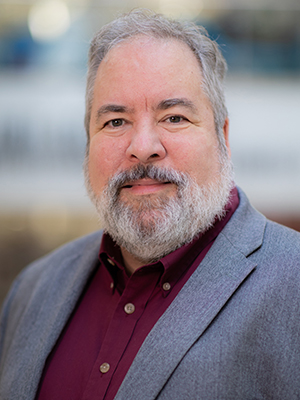
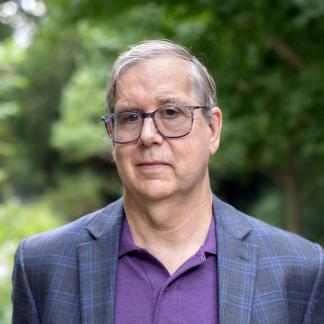
Michael King is a Professor of Petroleum Engineering and holds the LeSuer Chair in Reservoir Management at Texas A&M University. He is also affiliated with the Multidisciplinary Engineering program. His research focuses on 3D reservoir modeling, unconventional reservoir characterization, and advanced simulation techniques for flow dynamics. Education: Ph.D. in Physics (Syracuse University, 1980), M.S. in Physics (Syracuse University, 1977), B.S. in Physics and Mathematics (The Cooper Union, 1976). Research Interests: His work emphasizes reservoir upscaling, streamline-based simulation, pressure transient analysis, and geomechanical modeling for CO2 storage. Recent work explores machine learning integration with reservoir workflows and multiscale modeling for complex reservoirs. Publications: Over 100 peer-reviewed articles since 2005, with recent focus on fast marching methods, diffusive time of flight, and multi-scale simulation frameworks. Topical trends include unconventional reservoir analysis, CO2 sequestration, and shale gas production optimization. Awards: Distinguished SPE Member (2013), Foundation CMG Chair (2013–2019), Teaching Excellence Award (2014) Labs/Teams: Leads reservoir simulation research group focused on unconventional reservoir characterization and numerical method development Grants/Funding: Extensive funding history from industry partnerships and government grants for reservoir modeling R&D
Timothy J. Moore is the John and Penelope Biggs Distinguished Professor of Classics and Chair of the Classics Department at Washington University in St. Louis. He also serves as Affiliate Faculty in the Performing Arts Department and Comparative Literature. His research focuses on ancient music, Greek and Roman theatre, and Roman historiography, with recent projects including an online database of ancient drama meters and studies on musical theatre in antiquity. Moore has held prestigious fellowships such as the Mellon Foundation Fellowship and the Rome Prize from the American Academy in Rome. He has taught courses like Greek Mythology and actively engages in pedagogical innovation, including integrating music into classical language instruction. Education: PhD in Classics from the University of North Carolina at Chapel Hill. His publications include seminal works like Music in Roman Comedy and Roman Theatre , alongside edited volumes on Latin drama and Aristophanes. Moore’s work bridges ancient and modern performance studies, with notable contributions to understanding the role of music in Plautus and Terence’s plays. He has co-directed National Endowment for the Humanities summer institutes and received awards for teaching excellence. His interdisciplinary approach connects classical studies with contemporary theatre practices, including the analysis of American musical theatre and Japanese Kyogen comedy.
Dr. Matt McInnes is a Professor of Radiology and Epidemiology at the University of Ottawa, affiliated with the Faculty of Medicine. He holds cross-appointments in the School of Epidemiology and Public Health and serves as a Scientist at the Ottawa Hospital Research Institute (OHRI) in the Methodological and Implementation Research program. His expertise spans diagnostic imaging, particularly in liver cancer (HCC), and systematic reviews. He leads the international LI-RADS IPD collaborative and co-authored the PRISMA-DTA reporting guideline. Education: MD, FRCPC (Radiology), PhD in Clinical Epidemiology (University of Amsterdam, 2018). Research focuses on imaging diagnostic accuracy, with CIHR-funded work on LI-RADS for liver cancer diagnosis. Editorial roles include Deputy Editor of the Journal of Magnetic Resonance Imaging and CARJ , and Associate Editor of Radiology (evidence-based practice). Research interests include systematics reviews, evidence-based medicine, and liver imaging innovations. His group emphasizes open science and EDI principles, with projects documented on their Open Science Framework page.
David Brainard is the RRL Professor of Psychology at the University of Pennsylvania. He leads the Brainard Lab, which investigates human vision through experimental and computational approaches, focusing on how the visual system interprets object properties from light signals. His research integrates psychophysics, computational modeling, and machine learning to understand color perception, visual processing, and neural mechanisms. Education: BS in Physics from Harvard University; PhD in Psychology from Stanford University. Research interests include human vision, visual neuroscience, and computational modeling of visual processing. Specific areas: color appearance under varying illumination, object identification via color, and development of machine vision systems mimicking human performance. Recent work explores retinal physiology, chromatic aberration correction, and evolutionary constraints on color naming systems. Notable contributions include studies on retinal ganglion cell physiology in primates, image reconstruction frameworks, and quadratic models of visual cortex responses. Collaborations span neurobiology, optics, and cognitive science. Awards: None explicitly listed. Active advising of graduate students and postdocs including Callista Dyer, Semin Oh, and Raymond Warner. Labs/Teams: The Brainard Lab at Penn, with ongoing projects on retinal imaging, computational models of vision, and cross-disciplinary applications in machine learning.
Dr. Hai Shu is an Assistant Professor in the Department of Biostatistics at NYU's School of Global Public Health. He earned his Ph.D. in Biostatistics from the University of Michigan and B.S. from Harbin Institute of Technology. Previously, he was a Postdoctoral Fellow at MD Anderson Cancer Center. Education: Ph.D. in Biostatistics - University of Michigan B.S. in Information and Computational Science - Harbin Institute of Technology His research focuses on high-dimensional data analysis, machine/deep learning, and medical image applications in neurodegenerative diseases and oncology. He develops statistical methods for analyzing complex biomedical data from neuroimaging and genomics. His publications demonstrate consistent focus on developing novel statistical methods for medical imaging data, with increasing emphasis on deep learning approaches and multi-modal data integration in recent years. Awards: NYU GPH Goddard Award (2023) He mentors graduate students and serves as associate editor for Statistica Sinica and The American Statistician. His NIH-funded research includes studies on neuroimaging analysis and AI applications in healthcare. Leads research in medical image analysis and statistical learning, collaborating with neuroscience and oncology teams to develop computational tools for disease diagnosis and progression tracking.
Hans Martin Kjer is an Associate Professor in the Department of Applied Mathematics and Computer Science at the Technical University of Denmark (DTU), where he is affiliated with the UltraSound and Biomechanics group within the Visual Computing Center and the Center for Fast Ultrasound Imaging. His research bridges engineering and medical imaging, with a strong emphasis on developing and validating advanced ultrasound techniques for biomedical applications. Research Interests: His work focuses on super-resolution ultrasound imaging, microvascular analysis, 3D reconstruction of biological structures, and image registration. He applies computational methods to improve the resolution and accuracy of ultrasound, particularly in renal and lymph node vasculature imaging. His research contributes to the UN Sustainable Development Goals in health and well-being through innovative diagnostic tools. Publication Trends: Over the past several years, Kjer has consistently published in high-impact journals and conferences in biomedical engineering and imaging. His recent work emphasizes the validation of super-resolution ultrasound against micro-CT, realistic 3D blood flow simulation, and the application of AI in enhancing imaging resolution. These studies reflect a strong trend toward quantitative, reproducible, and clinically relevant imaging solutions. Scientific Contributions: While no specific awards are listed, his leadership in major research projects and frequent collaborations with leading experts in ultrasound (e.g., Jørgen Arendt Jensen) underscore his significant role in the field. Advising and Funding: Kjer serves as a supervisor and principal investigator in several funded research initiatives, including AI for Extreme Super-Resolution CT , 3DIM: 3D Imaging Center , and QIM: Center for Quantification of Imaging Data from Max IV . He mentors PhD students and collaborates across disciplines, contributing to both biomedical and materials science imaging projects. Laboratories and Teams: He is an integral member of the Center for Fast Ultrasound Imaging and the Visual Computing Center at DTU. These teams focus on cutting-edge ultrasound technologies, image processing algorithms, and multimodal imaging integration, positioning Kjer at the forefront of computational biomedical imaging in Denmark.
Hilda Deborah is a Senior Researcher at the Department of Computer Science (IDI Gjøvik), Norwegian University of Science and Technology (NTNU). Her research focuses on spectral imaging, mathematical morphology, and soft metrology for image processing, with current interests in texture perception, digital humanities, and public dissemination of imaging research through interaction design. Education: She holds a double PhD in Computer Science from NTNU (2016) and a PhD in Signal and Image Processing from Université de Poitiers (2016). Professional History: Marie Curie Postdoctoral Fellow (2018-2020) under the FRIPRO Mobility program, funded by the Research Council of Norway. She is currently part of NTNU's Outstanding Academic Fellow Programme 4.0 (2022-2026). Research Interests: Her work spans spectral imaging applications in cultural heritage, including pigment analysis, hyperspectral dataset development, and museum visitor experience studies using imaging data. She also explores interdisciplinary methods for digital humanities and public engagement. Awards: Marie Curie Postdoctoral Fellowship, FRIPRO Mobility Grant (2018-2022), and participation in the FRIPRO Toppforsk project (2019-2024). Grants: FRIPRO Mobility (2018-2022) and Toppforsk (2019-2024) grants from Norway's Research Council. Projects include metrological texture analysis and collaborations on Dead Sea Scrolls research. Labs/Teams: Member of the Colourlab at NTNU, focusing on imaging science and cultural heritage applications. Leads initiatives like the Hyperspectral Pigment Dataset and interactive visualization tools for cultural heritage data.
Anna Seigal is an Assistant Professor of Applied Mathematics at Harvard University's School of Engineering and Applied Sciences (SEAS), with an affiliation in the Department of Statistics. Her research focuses on applied algebraic geometry, tensors, multilinear algebra, and algebraic statistics, particularly in the context of data science. She explores algebraic approaches to data analysis, including matrix/tensor factorizations, parameter estimation, causal inference, and optimization, with applications to physical and biological systems. Her work is supported by the Sloan Foundation and Harvard's Dean’s Competitive Fund. Research Interests: Algebraic statistics, tensors and multilinear algebra, applied algebraic geometry, and the mathematics of data science. She investigates group symmetries in models, dimensionality reduction techniques, and machine learning algorithms. Current projects include causal disentanglement via cumulants and invariant theory applications to maximum likelihood estimation. Her academic contributions span theoretical advancements and interdisciplinary applications, such as genomic template analysis and COVID-19 molecular phenotyping. She collaborates with postdocs and students on research projects and teaches courses like Applied Math 210. Awards and Funding: Supported by the Alfred P. Sloan Foundation and Harvard's internal grants. No explicit named awards listed, but her research is institutionally recognized. Labs/Teams: Leads a research group focused on applied algebra and geometry in data science. Collaborates across departments in SEAS and the Statistics Department.
Juhwan Lee, PhD, is a Research Assistant Professor in the Department of Biomedical Engineering at the Case School of Engineering, Case Western Reserve University. His research focuses on developing AI-driven methodologies for coronary artery disease (CAD) assessment, particularly leveraging non-contrast CT calcium scoring and optical coherence tomography (OCT) imaging. He specializes in automated plaque characterization, stent analysis, and predictive modeling of cardiovascular outcomes using deep learning and finite element analysis. His technical innovations include automated OCT/CT feature extraction, image registration between OCT and CT, and AI-based risk stratification for high-risk plaques. Recent work emphasizes translating epicardial adipose tissue and calcification data from CT scans into clinical tools for MACE prediction and stent performance evaluation. Key publications (2020–2025) highlight advancements in OCT-based plaque segmentation, AI prediction of stent expansion, and computational analysis of calcified coronary lesions. His team’s OCTOPUS software for stent analysis is a notable contribution to clinical imaging. Despite significant contributions to cardiovascular AI, no scientific awards are explicitly mentioned in the provided texts. Teaching responsibilities are listed but not detailed.
Prof. Ralf Steinmetz is a Full Professor of Multimedia Communications at Technische Universität Darmstadt since 1996 and head of the Multimedia Communications Lab. His research focuses on adaptive multimedia systems, self-organizing networks, mobile/sensor networking, and educational technologies. He has held leadership roles at IBM's European Networking Center and Fraunhofer IPSI. His work spans cybersecurity, IoT, disaster communication systems, and industrial networking. Education : Dr.-Ing (PhD) in Electrical Engineering, TU Darmstadt (1986) Habilitation in Computer Science, Goethe University Frankfurt (1994) Research Interests : He pioneers innovations in networked multimedia systems , including fault-tolerant communication, aerial-ground disaster monitoring (e.g., CAMON system), and 5G/Industry 4.0 infrastructure. His work emphasizes resilience, adaptive protocols, and cyber-physical integration. Recent Work Trends : Publications from 2022-2025 highlight advancements in: Wireless communication protocols (ESP-NOW, LoRa) Cybersecurity (intrusion detection via machine learning) Disaster response networks (aerial-ground cooperation) Time-sensitive networking for industrial applications Key Contributions : Developed Nature 4.0 sensor systems for biodiversity monitoring Pioneered P4-programmable network hardware solutions (P4-CODEL, P4-BNG) Advanced UAV-based emergency communication frameworks
Mariela Morveli is a postdoctoral researcher in Artificial Intelligence at Umeå University's Department of Computing Science. She works within the Formal Methods for Trustworthy Hybrid Intelligence research group, focusing on argumentation frameworks, intelligent agents, and explainable AI. Education: Ph.D., Federal University of Technology of Parana (Brazil) M.Sc., Federal University of Rio de Janeiro (Brazil) B.Sc., National University of San Agustin of Arequipa (Peru) Her research spans argumentation theory, multi-agent systems, and explainable AI, with emphasis on goal reasoning, activity reasoning, and handling uncertainty through formal methods. She has developed frameworks like QuAD-V for transparent task delegation and explored probabilistic models for argumentation systems. Recent work trends show strong focus on contrastive explanations , gradual semantics , and hybrid reasoning mechanisms that integrate symbolic and probabilistic approaches. Her publications address challenges in human-agent interaction , trust modeling , and conflict resolution in dynamic environments. She contributes to the field through rule-based argumentation systems , rhetorical argument strength calculations , and neuro-symbolic architectures like SATyrus for constraint processing.
Dr. Milada (Millie) Walkova is an Associate Professor of English for Academic Purposes at the University of Leeds , affiliated with the School of Languages, Cultures and Societies and based in the Language Centre . She joined the university in 2018 and teaches on pre-sessional EAP courses and the online MA in Teaching English for Academic Purposes . She also holds a faculty position at the Technical University of Košice , Department of Languages. Her educational background includes: PhD in English Linguistics DELTA (Cambridge), with specialism in English for Academic Purposes MA in British and American Studies (thesis in EAP) PG Cert in English Language Teaching Higher Education Academy (HEA) Fellow Dr. Walkova’s research centers on linguistic approaches to academic writing , particularly in cross-cultural contexts. Her key interests include argument construction, self-mention, citation practices, and the teaching of academic vocabulary and transition markers. She advocates for evidence-based EAP pedagogy and has developed models such as the three-dimensional framework for self-mention. Her work often compares Slovak and English academic discourse, revealing cultural and linguistic differences in scholarly communication. Her recent scholarly output includes two edited books: Teaching Academic Writing for EAP (2024) and Linguistic Approaches in EAP: Expanding the Discourse (2024), both published by Bloomsbury. Her publications span high-impact journals such as English for Specific Purposes , Journal of English for Academic Purposes , and Discourse and Interaction . The articles show a consistent focus on empirical analysis of academic genres, EAP pedagogy, and contrastive rhetoric, with a strong trend toward practical applications in teaching and research writing support. She is actively involved in the academic community: Administrator, Critical Friend Network Initiative, BALEAP (2023–2025) Editorial Board Member: ESP Today (2023–), Ostrava Journal of English Philology (2021–), Language Scholar (2019–2023) Member, Pedagogic Research in the Arts (PRiA) working group Professional memberships: BALEAP, EATAW, AALL, ISSOTL Dr. Walkova supervises PhD students in linguistic aspects of academic writing and encourages scholarship in EAP. She leads module development in EAP and contributes to pedagogic research within the Faculty of Arts, Humanities and Cultures. Her work bridges theoretical linguistics and practical language teaching, aiming to enhance the academic success of non-native English speakers in global higher education.
John Stendahl, MD, PhD, is an Assistant Professor of Medicine in the Department of Internal Medicine at Yale School of Medicine, specializing in Cardiovascular Medicine. He is a key member of the Cardiomyopathy & Inherited Cardiovascular Disease Program and affiliated with the Yale Biomedical Imaging Institute and the Yale Translational Research Imaging Center (Y-TRIC). His work integrates clinical cardiology with advanced imaging and translational research. Assistant Professor of Medicine (Cardiovascular Medicine), Yale School of Medicine Member, Cardiomyopathy & Inherited Cardiovascular Disease Program Affiliated Faculty, Yale Biomedical Imaging Institute Member, Yale Translational Research Imaging Center (Y-TRIC) Dr. Stendahl holds an MD from the University of Minnesota (2011) and a PhD in Materials Science and Engineering from Northwestern University (2005), with undergraduate training also from the University of Minnesota. His interdisciplinary background enables a unique approach to cardiovascular diagnostics and therapeutics. MD, University of Minnesota, 2011 PhD, Materials Science and Engineering, Northwestern University, 2005 BS, Materials Science and Engineering, University of Minnesota, 1999 His research focuses on hypertrophic cardiomyopathy (HCM), cardiovascular imaging, and inherited heart diseases. He employs advanced techniques such as SPECT, PET, CT, and molecular imaging to improve diagnosis and management. His work includes genetic analysis, risk stratification, and clinical trials for novel therapies. He is particularly interested in sex-specific outcomes, genotype-phenotype correlations, and the long-term impact of interventions like septal reduction. The analysis of his recent publications reveals a strong emphasis on clinical and translational research in HCM. His work leverages large registries such as the Sarcomeric Human Cardiomyopathy Registry (SHARE) to investigate risk factors, disease progression, and treatment outcomes. There is a clear trend toward integrating genetic data with imaging and clinical phenotypes to enable precision medicine approaches in cardiomyopathy. Dr. Stendahl has been recognized for his research with a Career Development Award from the National Heart, Lung, and Blood Institute (NHLBI) in 2022. Career Development Award, NHLBI, 2022 He actively contributes to academic service, having served as a reviewer for journals including the Journal of Nuclear Medicine , American Heart Journal , Nanomedicine , and Journal of Applied Physiology . His collaborative research network includes prominent Yale investigators such as Albert Sinusas, James Duncan, and Lawrence Staib, reflecting a strong interdisciplinary approach. He is also a member of the Janeway Society, highlighting his role as a physician-scientist at Yale. Dr. Stendahl is affiliated with multiple research teams and centers focused on cardiovascular innovation, including the Yale Biomedical Imaging Institute and Y-TRIC, where he contributes to the development and application of cutting-edge imaging technologies for heart disease.
Soon Haeng KANG is an Associate Professor in the Department of Asian and North African Studies at Ca' Foscari University of Venice, where he has held a permanent position since 2018. His academic work centers on Korean and Italian linguistics, with a focus on syntax, morphology, and comparative analysis between the two languages. He is actively involved in teaching, research, and expanding Korean language education in Italy. PhD in General Linguistics, Ca' Foscari University of Venice (2007–2007) Master's Degree in Italian Linguistics, Hankuk University of Foreign Studies (2000–2003) Bachelor's Degree in Italian Studies, Hankuk University of Foreign Studies (1993–2000) Visiting Student, Ca' Foscari University of Venice (2001–2002) Dr. Kang's research focuses on the structural aspects of Korean and Italian languages, particularly in adjective syntax, genitive constructions, plural markers, and noun phrase organization. He employs comparative and contrastive methodologies to analyze grammatical phenomena across Korean and Italian, contributing to both theoretical linguistics and applied language teaching. His work bridges East Asian and European linguistic traditions. His recent publications show a strong trend in Korean linguistic theory and pedagogy, with major 2024 monographs on Korean morphology and the verbal system. He has also published extensively on the expansion of Korean language education in Italy and the adaptation of teaching methods during the pandemic. His articles span topics from syntactic movement in Italian to the educational implications of Korean grammar, reflecting a dual expertise in both languages. Dr. Kang has received research funding from the National Research Foundation of Korea for multiple projects related to Italian syntax and Korean-Italian contrastive analysis. These grants supported postdoctoral research and academic development activities in South Korea. Post-doctoral fellow, Hankuk University of Foreign Studies (2009–2010, 2012–2013) Contract Professor of Italian, Hankuk University of Foreign Studies (2007–2018) Contract Professor of Italian, Sejong University (2008–2012) Collaborator and linguistic expert, Ca' Foscari University (2003–2005) He has contributed to the development of Korean studies in Italy through curriculum design, vocabulary textbooks, and institutional leadership. His work helps shape the academic landscape for Korean language education in Europe, particularly in Italy.
Albert Gatt is a researcher at the University of Malta , with extensive contributions to Natural Language Generation (NLG) , Vision-and-Language (V&L) models , and evaluation practices in NLP . His work spans multimodal reasoning, data pruning efficiency, and reproducibility challenges in human evaluations. Key collaborations include studies on temporal grounding in image sequences (TempVS benchmark) and automated legal violation detection in cookie banners. Research highlights include bridging linguistic theory with computational models (e.g., VALSE benchmark for multimodal grounding) and improving generation quality through contrastive learning frameworks. Scientific awards are not explicitly mentioned in the provided texts. His work emphasizes rigor in automatic metric validation and cross-modal interpretability , particularly in multimodal model attention mechanisms and logical formula minimization for text generation.