Stefan Bechtold is a Full Professor of Intellectual Property at ETH Zurich since 2013 and Associate Vice President IP Policy (2023–2026). He is affiliated with the ETH AI Center and serves on global advisory boards including the Academic Advisory Board of the German Federal Ministry for Economic Affairs and Climate Action. His interdisciplinary research bridges law, economics, and computer science.
Elliott Ash is an Associate Professor of Law, Economics, and Data Science at ETH Zurich's Center for Law & Economics. He holds a Ph.D. in Economics and J.D. from Columbia University, a B.A. in Economics, Government, and Philosophy from the University of Texas at Austin, and an LL.M. in International Criminal Law from the University of Amsterdam. His research focuses on empirical legal studies using econometrics, NLP, and ML, examining topics like judicial behavior, legislative impact, and AI-driven governance. He has been funded by the ERC, Swiss NSF, and others. Research Interests: Elliott explores automation of legal decisions, text-as-data analysis in law, and the intersection of AI with legal systems. He develops tools like BallotBot and LePaRD to enhance legal transparency and public understanding. His work bridges law, economics, and computer science, with publications in top journals like the American Economic Journal and Review of Economics and Statistics . Teaching: Courses include Building a Robot Judge , Natural Language Processing for Law , and Big Data for Public Policy . He co-organizes the Zurich Workshop in AI+Economics and Monash-Warwick-Zurich Text-as-Data Workshops. Awards: European Research Council Starting Grant, Swiss National Science Foundation Grant, and multiple grants from U.S. and Swiss institutions. His work has been featured in NPR , VoxEU , and Georgetown Law Journal . Labs/Teams: Leads the Swiss AI Initiative's Human-AI Alignment team, collaborates with the CEPR on Political Economy research, and serves as an Economic Journal Associate Editor.
Adam B. Badawi is a Professor of Law at the University of California, Berkeley - School of Law, where he maintains an active research agenda at the intersection of law, finance, and corporate governance. His scholarly work has established him as a leading expert in contract law, M&A transactions, securities litigation, and ESG compliance. Professor Badawi's research interests span multiple dimensions of corporate law and legal theory. His work on contractual complexity, particularly in debt agreements and M&A transactions, has provided significant insights into how legal drafting affects economic outcomes. He has extensively examined the business judgment rule, board authority, and the role of courts in corporate governance. More recently, his research has expanded into ESG-related topics, analyzing how environmental, social, and governance considerations intersect with traditional corporate law frameworks. His methodological approach often combines legal analysis with empirical techniques, including text analysis of legal documents and event studies of litigation outcomes. Professor Badawi's scholarly output demonstrates consistent high-impact research across multiple domains of corporate law. His early work focused on foundational aspects of contract theory and interpretation, while his more recent publications reflect growing interest in ESG metrics, executive compensation structures tied to sustainability goals, and the evolving regulatory landscape. The trajectory of his research shows a progression from theoretical legal analysis toward increasingly empirical and interdisciplinary approaches that bridge law with finance and data science. Professor Badawi has collaborated with numerous scholars across different institutions, including Duke University, Stanford Law School, and the University of Chicago Law School, reflecting the interdisciplinary nature of his work and its relevance to multiple academic communities.
Anat R. Admati is the George G.C. Parker Professor of Finance and Economics at Stanford University Graduate School of Business, where she directs the Corporations and Society Initiative and serves as a senior fellow at Stanford Institute for Economic Policy Research. Her work spans corporate governance , banking regulation , and financial policy , emphasizing trustworthy institutions and systemic reform . Education: B.Sc. in Mathematics and Economics from Hebrew University Ph.D. in Economics from Yale University Honorary doctorate from University of Zurich Admati's research focuses on financial markets, corporate governance, and regulatory frameworks, with a particular emphasis on bank capital regulation and equity requirements . Her work critiques systemic risks in banking and advocates for transparency and accountability in financial systems. Recent publications highlight trends in corporate misconduct , capital adequacy , and financial contracting . Notably, her co-authored book The Bankers’ New Clothes and follow-up articles like The Parade of the Bankers’ New Clothes Continues (2024) systematically challenge banking industry claims and propose regulatory improvements. Scientific recognition includes: Named Time Magazine's 100 Most Influential People (2014) Included in Foreign Policy Magazine's 100 Global Thinkers (2014) Elected Fellow of the Econometric Society Admati has served on editorial boards, advisory committees (FDIC, CFTC), and as a visiting scholar at the International Monetary Fund. Her advocacy bridges academic rigor with real-world policy impact, particularly in financial regulation and corporate accountability .
David Basin is a Full Professor at the Department of Computer Science, ETH Zurich, and heads the Information Security Group. He has held academic positions since 2003, including roles at the University of Freiburg (1997–2002) and the Max-Planck-Institut für Informatik (1992–1997). His research focuses on Information Security, including methods and tools for secure systems, formal verification, and cryptographic protocols. He is Editor-in-Chief of the ACM Transactions on Privacy and Security and Springer's Information Security and Cryptography book series. Basin founded the Zurich Information Security Center (ZISC) in 2003 and led it until 2011. Education: B.Sc. in Mathematics (Reed College, 1984), Ph.D. (Cornell University, 1989), and Habilitation (University of Saarbrücken, 1996). Research interests span formal methods for security protocol verification, privacy-preserving systems, and cryptographic implementations. He has contributed to foundational work on security protocols, including the Tamarin verification framework. His work addresses real-world systems like payment protocols (EMV), DNS security, and database isolation guarantees. Awards: ACM Fellow (2018) for contributions to Information Security and Formal Methods, IEEE Fellow. He has organized numerous conferences, including IEEE S&P, Euro S&P, and ACM CCS. Labs/Teams: Leads the Information Security Group at ETH Zurich and co-founded Anapaya Systems, a startup focused on network security solutions. His team develops tools like VeriMon (formally verified monitoring) and Tamarin for protocol analysis.
Prof. Dr. Johannes Liebrecht holds the Chair of Legal History at the University of Zurich . His work spans legal history, comparative law, and normative frameworks across medieval and modern European contexts. He has contributed extensively to the Max-Planck Encyclopedia of European Private Law and other major legal history publications. Current Position: Professor of Legal History (since 2019) Previous Roles: Senior Research Fellow at Max-Planck-Institute (2013-2019), Research Associate at Max-Planck-Institute (2007-2013) Research Interests focus on: Medieval Legal Institutions: Feudal norms, canon law, and German-Spanish legal comparisons Modern Legal Developments: Liberal law post-French Revolution, consumer rights, and legal sociology Academic Methodology: Historical realism, normative comparison, and categorial shifts in legal scholarship Publication Trends reveal a focus on: 2024: Eugen Ehrlich's sociology of law and German-Spanish medieval comparative studies 2022-2024: European consumer law, legal emancipation, and historical realism 2015-2018: Heinrich Brunner's historiography and German legal education structures Scientific Awards : Hermann Conring Award (2014) Gerda Henkel Foundation PhD Scholarship (2004-2006) German National Academic Foundation Scholarship (1994-2000) Guest Lectureship at Tokyo University (2019) Centre for Advanced Study Oslo Fellow (2021/22)
Nina Reiser is an Associate Professor of Financial Markets Law at the University of St. Gallen (HSG), Vice Director at the Institute for Law and Economics HSG, and co-founder of the Center for Financial Services Innovation HSG. She also holds an Adjunct Professorship in Private and Commercial Law at the University of Zurich (UZH) since December 2023. Her research and practice focus on financial market law, corporate governance, and regulatory compliance. Research Interests: Nina's work bridges corporate law with decentralized finance (DeFi), blockchain technology, and banking sector governance. She explores digital governance frameworks, regulatory challenges for decentralized autonomous organizations (DAOs), and supervisory instruments for financial stability. Her publications address Swiss and international financial regulations, emphasizing interdisciplinary collaboration. Awards & Editorial Roles: While no specific awards are listed, she serves as General Editor of CapLaw since 2025 and was elected to the board of the Association for Quality Assurance in Financial Services (VQF) in 2024. Her editorial leadership highlights her influence in capital markets discourse. Advising & Collaborations: She advises doctoral student Michael Kallenberg and collaborates with colleagues like Seraina Grünewald and Valentin Egli. Her roles at HSG include organizing symposiums on topics such as 'Regulated activities on public blockchains' and 'TBTF & Financial Stability' at ETH Zurich. Labs & Teams: Nina leads at the Institute for Law and Economics HSG and co-founded the Center for Financial Services Innovation HSG. These institutes drive research on financial regulations and technological legal integration.
Ulrich G. Schroeter serves as Professor of Private Law at the Faculty of Law, University of Basel, Switzerland. His academic profile demonstrates significant expertise in private law with particular focus on international commercial transactions and contract law frameworks. Professor Schroeter's research centers on Private Law with specialized attention to international commercial law and contractual frameworks. His scholarly work prominently features the CISG (United Nations Convention on Contracts for the International Sale of Goods), evidenced by his involvement with the CISG online resource platform. His academic contributions span various dimensions of contract law, particularly examining cross-border applications and international commercial transactions within Swiss legal contexts. As a faculty member at one of Switzerland's leading law schools, Professor Schroeter participates in the academic ecosystem that includes doctoral supervision, research collaboration, and scholarly publication. The Faculty of Law at the University of Basel provides a robust environment for legal scholarship where Professor Schroeter maintains an active research profile.
Professor Christian Biener is a faculty member at the University of St. Gallen, affiliated with the School of Economics and Political Science and the Department of Economics. His research focuses on insurance economics, behavioral economics, and risk management, with particular emphasis on topics like cyber risk, microinsurance, health insurance design, and the societal impacts of emerging technologies such as chatbots and telematics. He holds a prominent role in academic and industry discourse through his extensive publication record and contributions to policy-relevant research. Biener’s work bridges theoretical economic analysis with practical applications, addressing challenges in global insurance markets, pandemic response strategies, and the interplay between technological innovation and human behavior. His research has explored how factors like microbiome composition influence economic decision-making, the ethical implications of contact-tracing apps, and the design of effective reinsurance strategies. He actively engages with industry trends, advising on future skills requirements in reinsurance and the balance between privacy and risk hedging in digital environments. His scholarly output spans over a decade, with recent trends emphasizing behavioral aspects of insurance decisions, the impact of global events on healthcare costs, and the transformational role of technology in insurance products. Biener’s articles consistently analyze both micro-level individual decision-making and macro-level market dynamics, offering insights that inform both academic theory and policy formation. While no formal awards are explicitly mentioned, his prolific publication record and institutional affiliation suggest significant recognition within the field. Biener’s work often incorporates experimental methodologies, such as randomized controlled trials, to empirically validate theoretical models. He collaborates across disciplines, integrating insights from psychology, computer science, and public health into his economic analyses. Biener’s current research agenda includes investigating the insurability of novel risks (e.g., cyber threats), optimizing microinsurance programs in emerging markets, and analyzing non-cognitive skills’ role in post-crisis economic recovery. He leads projects at the Institute for Economics (IVW) at HSG, contributing to both academic and applied research initiatives.
Prof. Samuel Maxwell Kern Alexander is a full Professor of International and European Financial Law and holds the Chair of Law and Finance at the University of Zurich's Faculty of Law. He leads the University of Zurich Competence Center for Sustainability: Finance, Law, Science and the Humanities, focusing on interdisciplinary research and teaching in sustainable finance. His roles include Co-Director of the Oxford Bank Governance Programme and participation in high-level EU supervisory initiatives. Research interests center on financial regulation, sustainable finance, banking law, and EU economic governance. Notable projects include analyzing ECB policy post-COVID-19, digital asset legal frameworks, and climate risk integration in banking regulation. He co-edited EU Sustainable Finance: Regulation, Supervision and Governance (2024) and frequently advises parliamentary committees like the UK House of Lords on financial regulatory priorities. Recent activities include keynote addresses at Madrid's EU Economic Governancy Colloquium (2025), testimony on regulatory objectives balancing (2024), and co-directing Oxford's 2023 Bank Governance Programme addressing post-SVB crisis challenges. His work bridges academic research with policy impact, emphasizing ethical banking governance and cross-border regulatory coherence. Prof. Alexander is a frequent commentator on Swiss banking crises, notably critiquing FINMA's handling of Credit Suisse (2023). He collaborates with institutions like the IMF, UNCTAD, and UBS on sustainable finance initiatives, and leads international conferences on topics like digital finance ethics and blended finance for urban development.
William J. Moon is an Associate Professor of Law at the University of Maryland Francis King Carey School of Law, where he conducts research and teaches in the areas of corporate law, international law, and international trade law. His scholarly work focuses on jurisdictional competition, tax havens, corporate governance, and the intersection of domestic and international legal systems. Professor Moon's research interests span several key areas: Corporate law and jurisdictional competition, particularly examining Delaware's position in global corporate law International investment law and the role of tax havens in shaping corporate governance Conflict of laws issues in transnational corporate litigation The intersection of corporate purpose, ESG considerations, and traditional shareholder wealth maximization International trade law, with particular attention to North Korea and the Kaesong Industrial Complex His extensive publication record demonstrates a consistent focus on how legal frameworks interact across jurisdictional boundaries, with particular attention to how tax havens and offshore jurisdictions influence corporate behavior and legal development. Moon's work often bridges theoretical legal analysis with practical implications for corporate governance and international regulatory cooperation. Professor Moon has received significant scholarly attention for his work, with his paper 'Delaware's New Competition' garnering over 1,500 downloads and multiple citations. His research has appeared in top law journals including Northwestern University Law Review, Michigan Law Review, and Virginia Journal of International Law. His scholarly impact is evident in his SSRN profile, which shows 16 papers with over 9,000 total downloads and 7 total citations, indicating substantial engagement from the academic and professional legal community.
Reinier Kraakman serves as the Ezra Ripley Thayer Professor of Law at Harvard Law School, Harvard University. A leading authority in corporate law and governance, he has influenced global company law reforms through consultancy with the Bank for International Settlements and advisory roles in Russia and Vietnam. His international engagement includes teaching summer programs in Germany and Japan and holding the Anton Philips Professorship at Tilburg University (2003-2004). His research spans business law, comparative company law, corporate governance, corporate takeovers, limited liability, shareholder-derivative suits, and third-party enforcement strategies. Kraakman's work emphasizes functional and comparative approaches to corporate legal structures across jurisdictions, examining how legal frameworks address agency problems and organizational evolution. Analysis of his publication record reveals consistent focus on foundational corporate law elements, historical development of business organizations, and post-crisis market regulation. His work bridges historical perspectives with contemporary governance challenges, particularly in emerging markets and financial regulatory contexts. Scientific awards and honors include: ECGI Research Associate (2006) Anton Philips Professor at the University of Tilburg (2003-2004) Kraakman co-authored the seminal 'The Anatomy of Corporate Law: A Comparative and Functional Approach' and has advised on corporate governance reforms internationally. His teaching portfolio includes specialized seminars on comparative corporate law for East Asia and Europe at Harvard Law School, contributing significantly to global legal education and policy development.
Luc Thévenoz is a full professor and Dean at the Faculty of Law, University of Geneva, where he also directs the Center for Banking and Financial Law. His academic and professional work focuses on the law of obligations, banking and financial markets law, and trusts and fiduciaries. He has held influential roles in Swiss financial regulation, including chairing the Swiss Takeover Commission and serving on the Swiss Federal Banking Commission. His research interests include financial regulation, private banking, intermediated securities, trust law, and corporate governance. He has contributed significantly to international harmonization efforts, notably the Geneva/UNIDROIT Convention on Intermediated Securities and the Hague Trusts Convention. He has also been instrumental in shaping Swiss legislation on financial services and fiduciary structures. The most recent articles reflect his ongoing engagement with Swiss financial law, particularly in areas such as trust regulation, investment damages, private banking, and the legal treatment of cryptocurrencies. His publications often combine doctrinal analysis with practical implications, bridging academic scholarship and regulatory practice. He frequently collaborates with other experts and contributes to annual reviews of Swiss banking law. Honorary Member of the Society of Trust and Estate Practitioners (STEP), 2007 Luc Thévenoz is deeply involved in academic leadership and continuing education. He founded the CAS in Compliance Management and co-directs the CAS in Financial Regulation at the Universities of Geneva and Bern. He regularly teaches at the University of Luxembourg and has been a visiting professor at Berkeley, Boston University, and Duke Law School. He co-organizes the annual Banking and Financial Law Day, which brings together around 350 practitioners. He is a member of the editorial board of the Swiss Journal of Business Law and Trust Law International and serves on the board of directors of Banque Mirabaud & Cie SA. His academic work is centered at the Center for Banking and Financial Law at the University of Geneva, where he leads research and educational initiatives in financial law. He has supervised numerous collaborative projects and publications, often involving teams of researchers and practitioners. His leadership extends to editorial boards and professional associations that shape the discourse on financial and trust law in civil law jurisdictions.
John Linarelli is Vice Dean and John E. Murray Faculty Scholar & Professor of Law at the University of Pittsburgh School of Law, where he has established himself as a leading scholar in international economic law, contract theory, and the intersection of law with emerging technologies. His academic career spans multiple decades with significant contributions to legal scholarship, particularly in areas bridging traditional legal theory with contemporary challenges. Professor Linarelli's research interests encompass a broad spectrum of legal disciplines with particular emphasis on International Economic Law , Contract Law , Commercial Law , and the rapidly evolving field of Artificial Intelligence and Law . His work demonstrates a consistent focus on theoretical foundations while addressing practical legal challenges in global commerce and digital transformation. His scholarship often explores philosophical dimensions of law, particularly examining concepts of justice, certainty, and pluralism in transnational contexts. His recent publications reveal a growing emphasis on the legal implications of artificial intelligence, particularly regarding contract formation and legal personhood, while maintaining his longstanding expertise in international trade, procurement law, and global justice frameworks. The trajectory of his work shows a sophisticated integration of traditional legal theory with cutting-edge technological challenges, positioning him at the forefront of contemporary legal scholarship. Among his notable achievements is the prestigious John E. Murray Faculty Scholar designation, recognizing his exceptional contributions to legal scholarship. His work has appeared in numerous prestigious law journals and edited volumes, demonstrating both breadth and depth across multiple legal disciplines. Professor Linarelli has also contributed significantly to collaborative scholarship, notably co-editing 'Global Justice and International Economic Law: Opportunities and Prospects' with colleagues from leading institutions. His research demonstrates a consistent commitment to examining how legal frameworks can promote justice in increasingly complex global economic systems, with particular attention to issues of inequality, access to credit, and systemic financial risk.
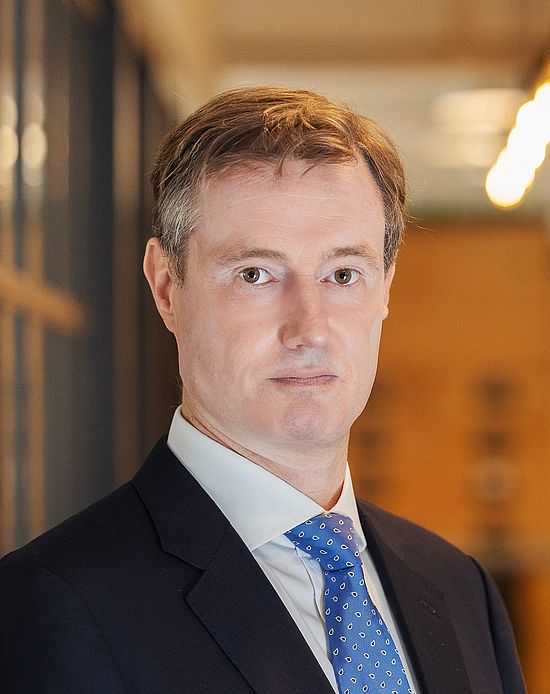
Pierre-Yves Marro is a Swiss and New York qualified attorney serving as Counsel at Quinn Emanuel Urquhart & Sullivan in Zurich while maintaining an active academic role as Privatdozent (Private lecturer) at Zurich University School of Law. He holds Venia Legendi for Public International Law and European Law, teaching courses on International Organizations and International Litigation. Marro is also a member of the Institute for International Law and Comparative Constitutional Law at Zurich University. His educational background includes a summa cum laude Dr. iur. (Ph.D. in Law) from Zurich University School of Law (awarded Prix Paul Guggenheim and Professor Walther Hug Prize), magna cum laude Lic. iur. from the same institution, and an LL.M. in International Legal Studies from NYU School of Law. He has been admitted to the New York Bar since 2011 and the Zurich Bar since 2013. Marro specializes in complex domestic and international proceedings, advising clients in cross-border multi-jurisdictional disputes and pre-litigation strategy. His research interests focus on international law, European law, state immunity, international organizations, and the intersection of public international law with domestic legal systems. His scholarly work demonstrates particular expertise in Swiss civil procedure, enforcement of claims, and the legal status of international organizations. His recent publications reveal a strong focus on Swiss legal frameworks, particularly the Swiss Civil Code and procedural law, while also addressing broader European and international legal contexts. The publications show consistent engagement with practical legal challenges in arbitration, state immunity, financial regulation, and cross-border dispute resolution, reflecting his dual practice in both academic and professional legal settings. Future Leader in Commercial Litigation by Who's Who Legal (2022, 2023, 2024) Rising Star in Commercial Arbitration by Euromoney's Expert Guides (2022) Key Lawyer by Legal 500 EMEA for Arbitration and Litigation (2024, 2025) Highly Recommended for Commercial Litigation by Leaders League Switzerland (2023, 2024) Marro regularly speaks at conferences on litigation and public international law topics and has served as a substitute professor at Zurich University. His professional activities include membership in the Swiss Bar Association, Zurich Bar Association, Swiss Arbitration Association, and Zurich Lawyers Association, demonstrating his active engagement with both academic and professional legal communities in Switzerland.









/photo/Marro_P_PRINT.jpg.jpg)