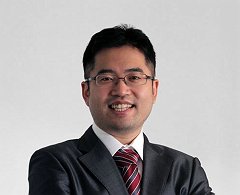
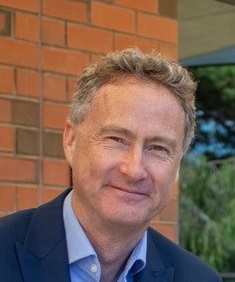
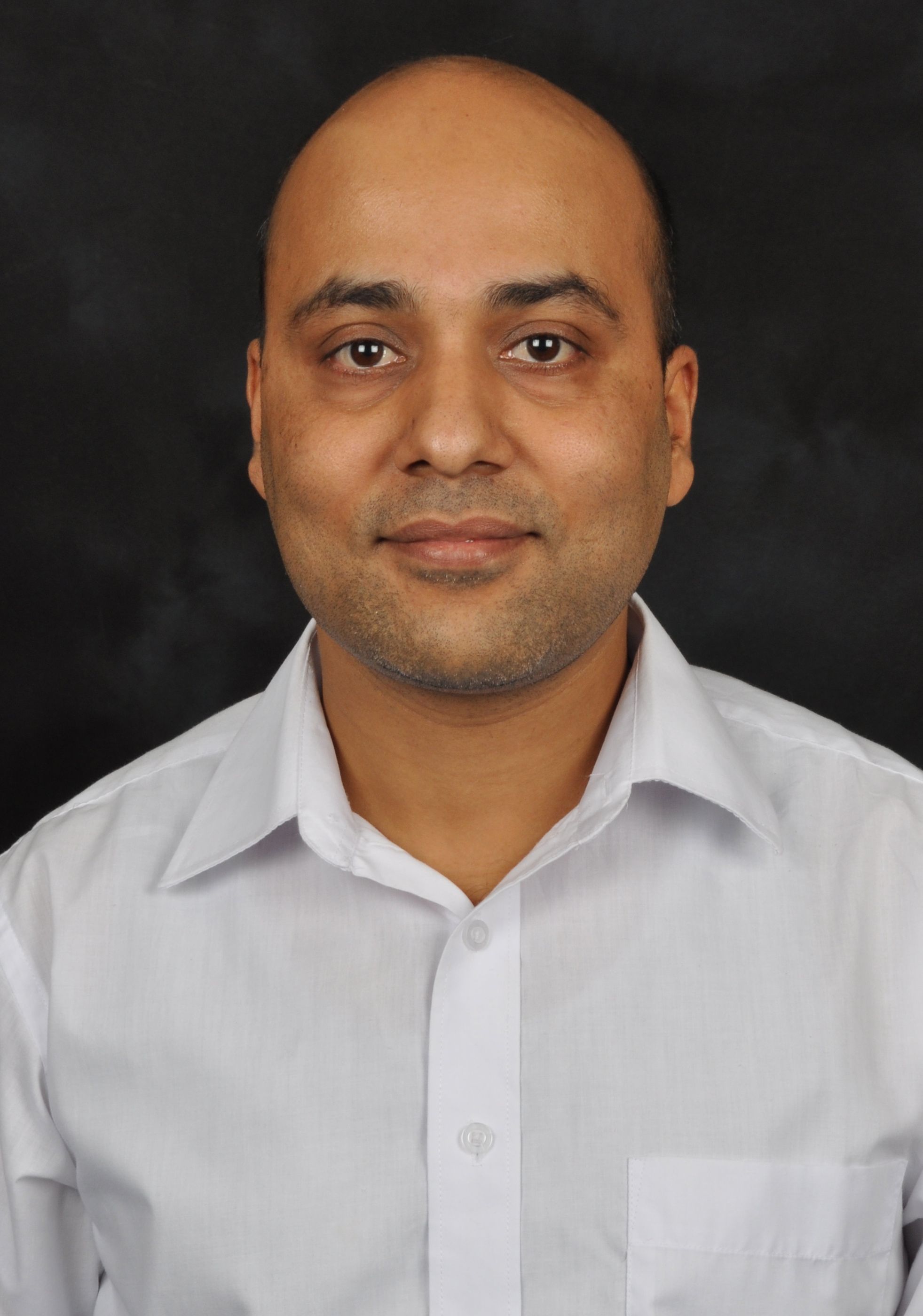
Colby Long is an Assistant Professor of Mathematics at The College of Wooster, with affiliations in Statistical and Data Sciences. He joined Wooster in Fall 2019 after a postdoctoral fellowship at the Mathematical Biosciences Institute (The Ohio State University) and a stint as a data scientist. His research spans algebraic geometry, algebraic statistics, and discrete mathematics, primarily applied to phylogenetics. He teaches courses such as Foundations of Advanced Mathematics and Applied Data Science. B.A., Mathematics, St. Mary’s College of Maryland (2008) M.S. and Ph.D., Mathematics, North Carolina State University (2013, 2016) His research focuses on developing algebraic methods to analyze phylogenetic networks and trees, with applications in genomic sequence analysis, coalescent theory, and agent-based modeling. Recent publications address identifiability of networks, rank conditions in hypothesis testing, and software tools like the Macaulay2 PhylogeneticTrees package. His 15 most recent publications highlight trends in phylogenetic algebraic geometry, tropical geometry, and computational biology, with specific subfields including network invariants, gene flow modeling, and Markov process analysis.
Professor Phil Newton is a distinguished academic in the Department of Medicine at Swansea University Medical School, Faculty of Medicine, Health and Life Science. He serves as a Professor specializing in Neuroscience and Medical Education, teaching across multiple programs including the MBBCh Graduate Entry Medicine, MSc Physicians Associates, and various undergraduate BSc courses in Medical Science. Additionally, he leads the evidence-based education component of the online MSc in Medical Education program. Education Background: PhD in Biochemistry and Molecular Biology, University of Leeds (2001) B.Sc in Biology, Aberystwyth University M.Sc in Medical Education, Cardiff University (2012) Joined Swansea University in 2009 after working at the University of California at San Francisco Professor Newton's research focuses primarily on educational neuroscience, academic integrity, and evidence-based medical education. His work critically examines the validity of learning styles theory, contract cheating in higher education, and the impact of technology on educational assessment. He has published extensively on the prevalence and prevention of academic misconduct, particularly in online examination environments. His research bridges neuroscience and educational practice, investigating how cognitive principles can inform better teaching methods in medical education. Professor Newton's publications demonstrate a clear evolution in focus toward the challenges posed by artificial intelligence in educational assessment, with numerous 2024-2025 publications examining ChatGPT's capabilities in medical examinations and strategies for maintaining academic integrity in the AI era. His work consistently applies pragmatic approaches to educational research, emphasizing practical applications over theoretical purity. As an educator, Professor Newton is actively involved in postgraduate supervision and curriculum development. He has contributed significantly to the design of assessment methods that evaluate higher-order learning while minimizing opportunities for academic misconduct. His teaching philosophy emphasizes evidence-based approaches to medical education, challenging persistent neuromyths in educational practice. Professor Newton maintains active research supervision, particularly in areas related to biomedical science education and point-of-care testing competencies. He collaborates extensively with colleagues across disciplines, as evidenced by his numerous co-authored publications spanning neuroscience, medical education, and academic integrity research.
Emma Anderson is an Assistant Professor at Northumbria University's Department of Computer and Information Sciences, specializing in Technology-Enhanced Learning Computational Linguistics Generative AI in Education Academic Integrity . She holds a Senior Fellow of the Higher Education Academy (HEA) credential and serves on the Women in Information Sciences and Computing (WISC) committee. Her research focuses on Student experiences in Computer Science AI-driven educational tools EdTech adoption challenges Academic integrity frameworks . She has mentored new staff through HEA fellowship applications and led program leadership initiatives. Recent publications analyze AI integration in upper-level courses Post-pandemic teaching adaptations EdTech disruption patterns Gender dynamics in academic induction , with affiliations spanning ACM, IEEE, and sustainability-focused educational networks. Scientific awards include Senior Fellow of the Higher Education Academy . She has collaborated with 24 Mendeley readers and 8 X users, focusing on educational technology implementation and assessment reforms.
Erik Lie is a Professor of Finance and the Amelia Tippie Chair in Finance at the Henry B. Tippie College of Business, University of Iowa, where he also serves as Department Executive Officer. His research centers on corporate finance and forensic economics, particularly in identifying corporate misconduct and executive compensation anomalies. PhD in Finance, Purdue University MBA, University of Oregon BS, University of Oregon His research interests include corporate governance, executive compensation, financial fraud detection, and risk management. He applies empirical and forensic methods to uncover patterns of misconduct in financial reporting and executive behavior. His recent publications span topics such as import competition and executive pay, trust in debt contracting, and corporate liquidity. Collectively, his work emphasizes the role of incentives, governance, and data patterns in detecting financial irregularities and shaping corporate policy. Amelia Tippie Chair in Finance Lie has advised on major financial investigations, including the stock option backdating scandal. His research often bridges academic rigor with real-world policy and enforcement impact. He is also the author of influential books such as Applied Corporate Risk and Liquidity Management and the forthcoming Catching Cheats: Everyday Forensics to Unmask Business Fraud , aimed at making forensic economics accessible to a broader audience. He leads research in forensic economics and contributes to public understanding of financial fraud through accessible writing and case studies.
Brenda M. Stoesz is a Research Lead in the Science of Teaching and Learning at the University of Manitoba's Centre for the Advancement of Teaching and Learning. Her work focuses on academic integrity, educational technologies, and policy analysis, with additional collaborations in autism research and workplace health safety for older adults. Education: B.Ed., B.Sc. (H), M.A., PhD Brenda's research spans multiple domains, including: Academic integrity frameworks and contract cheating prevention Educational technology integration (VR environments, AI, LMS design) Policy analysis across K-12 and higher education Autism spectrum disorder assessment methodologies Workplace health dynamics for aging populations Her publications highlight trends in academic integrity policy development, digital learning analytics, and cross-disciplinary collaborations. Brenda actively supports faculty research through grants like the Scholarship of Teaching and Learning Fund and WorkplaceNL Research Initiatives. Key awards include the University of Manitoba Major Outreach Award for academic integrity toolkit development. Scientific Awards: Scholarship of Teaching and Learning Fund ($25,000) (2020) WorkplaceNL Research Initiatives ($100,000) (2017) University of Manitoba Major Outreach Award ($5,516) (2016)
Sang Kil Cha is an Associate Professor at KAIST (Korea Advanced Institute of Science and Technology) where he holds positions in both the Graduate School of Information Security and the School of Computing. He serves as the director of the Cyber Security Research Center (CSRC) at KAIST and leads the SoftSec Lab. Dr. Cha received his Ph.D. and M.S. degrees from Carnegie Mellon University and his B.S. degree from Korea University. Current Position: Associate Professor, KAIST Leadership: Director of Cyber Security Research Center (CSRC) Laboratory: Head of SoftSec Lab Education: Ph.D. and M.S. from CMU, B.S. from Korea University Dr. Cha's research focuses on the intersection of computer security and software engineering, with particular emphasis on building and evaluating systems that can analyze programs. His work spans software security, software engineering, software systems, and program analysis. He has made significant contributions to binary code analysis, fuzzing techniques, and reverse engineering. His research has practical applications in vulnerability detection, malware analysis, and secure software development. His publication record demonstrates consistent high-impact contributions to the field, with numerous papers in top-tier security and software engineering conferences including IEEE S&P, USENIX Security, ISSTA, and ICSE. His recent work shows a continued focus on advancing fuzzing methodologies, binary analysis techniques, and security applications for blockchain technologies. Dr. Cha's research group has produced influential tools such as B2R2 (a binary analysis framework) and ofuzz (a fuzzing framework). ACM Distinguished Paper Award USENIX Distinguished Paper Award Best Paper Award NDSS Best Paper Award As an educator, Dr. Cha has taught courses including Binary Code Analysis and Secure Software Systems, Advanced Software Security, and Introduction to Information Security. His research group has mentored numerous students who have become co-authors on his publications. His work is supported by various research grants focused on software security and analysis techniques. The SoftSec Lab maintains active collaborations with both academic and industry partners in the security research community.
Nelly Liyanagamage is a Lecturer at the University of Wollongong's Faculty of Business and Law, holding a PhD in Leadership (2023) and a Bachelor of Science in Management Information Systems (University College Dublin, 2015). Her research focuses on Machiavellian leadership dynamics, organizational behavior, women's entrepreneurship, and emotions in work environments. Current research explores how Machiavellian traits manifest in corporate and political leadership, challenging traditional negative stereotypes through empirical studies. She has secured grants including the 2024 "Navigating Machiavellianism in Construction Projects" project and a pilot research grant. Her work bridges leadership ethics, gender studies, and emotional intelligence, with notable contributions to understanding dark leadership styles and their societal impacts. She has collaborated on studies addressing academic integrity and student well-being through methodological reviews. Her interdisciplinary approach reflects interests in both qualitative and quantitative research methodologies. Education: PhD in Leadership, University of Wollongong (2023) BSc (First Class Honours), Management Information Systems, University College Dublin (2015) Research Interests: Leadership studies, organizational behavior, emotions in workplaces, gender studies, and entrepreneurship. Her work critically examines the role of Machiavellianism in modern leadership, with recent focus on construction industry dynamics and women entrepreneurs in Sri Lanka. She investigates how 'dark' leadership traits can coexist with positive organizational outcomes. Funding: Secured two internal grants from University of Wollongong (2023-2024), supporting projects on Machiavellianism in construction leadership and exploratory research initiatives. Future Work: Expanding studies on responsible leadership frameworks, emotional labor in academia, and cross-cultural management practices. Current projects include analyzing the intersection of Machiavellianism with CSR in construction sectors.
Haimanti Bhattacharya is a Professor in the Department of Economics at the University of Utah, where she has held academic positions since 2008, progressing from Assistant Professor (2008–2015) to Associate Professor (2015–2023) before becoming a full Professor in 2023. She holds degrees from the University of Delhi (BA, MA, 1997–2000) and the University of Arizona (MS, MA, PhD in Economics, 2003–2007). Her research focuses on environment and resource economics, behavioral economics, and gender studies, with notable work on gender-based violence, climate justice, and experimental economics. Her work bridges theoretical and applied research, addressing issues such as public-space sexual harassment in South Asia, bargaining dynamics in markets, and the intersection of economic inequality and environmental sustainability. She has conducted field experiments in diverse contexts, including studies on social media’s role in intimate partner violence and the impact of caste hierarchies on market behaviors. Bhattacharya is fluent in English, Hindi, and Bengali. Her research has explored methodological challenges in measuring gender-based violence and its health impacts, as well as the ethical implications of AI in lie detection. She has contributed to policy discussions on climate justice, emphasizing equity in emissions reduction strategies. Her interdisciplinary approach integrates economics with public health, sociology, and environmental science.
Suraj Ajit is an Associate Professor in Computer Science at the University of Northampton, affiliated with the Technology Centre for Advanced and Smart Technologies within the School of Science and Technology. He leads the BSc (Hons)/HND Software Engineering program and teaches across undergraduate and postgraduate modules in software engineering and computing. He holds a PhD in Computing from the University of Aberdeen and a Bachelor’s in Computer Science and Engineering from Bangalore University. PhD in Computing, University of Aberdeen Bachelor’s in Computer Science and Engineering, Bangalore University His research focuses on model-based software engineering, ontology, semantic web, and pedagogical innovation in higher education, especially in assessment, feedback, and academic integrity. He leads research projects funded internally at Northampton, including investigations into contract cheating, inclusive assessment design, and assistive technologies for the visually impaired. His recent work combines machine learning with educational data to predict student performance and improve learning outcomes. His 15 most recent publications reveal a strong trend toward interdisciplinary research, bridging computer science with education and healthcare. Key themes include automated assessment systems, bounded grading scales, contract cheating detection, and applications of machine learning in cancer classification and virtual reality. His work has been published in journals such as IEEE Access , Procedia Computer Science , and Cogent Education , and presented at international conferences like EDULEARN. Fellow of the Higher Education Academy Principal Investigator on multiple research projects Active contributor to academic discourse through presentations and workshops Suraj supervises several research students, including Oyindamola Olajubu (model-based software engineering), Tom Butler (software quality metrics), and Naktal Edan (mobile health communication protocols). He has secured undergraduate research bursaries to advance automated marking systems and promote student engagement. His lab and team activities are centered around the Technology Centre for Advanced and Smart Technologies, where he collaborates on AI-driven educational tools and assistive technologies.
Professor Jon Yorke serves as Associate Deputy Vice-Chancellor (Academic) and Academic Registrar at Curtin University, where he has held leadership positions since joining in 2008. His administrative trajectory includes Director of Assessment and Quality Learning (2013-2016) and Interim Deputy Vice-Chancellor Academic (late 2021). As a Professor, he drives university-wide initiatives focused on student experience enhancement and teaching quality assurance. His educational credentials include a BSc (Hons), Postgraduate Diploma, Master of Education, and PhD. Additional professional development encompasses Graduate Membership of the Australian Institute of Company Directors (2022) and Fellowship of the Higher Education Academy. Yorke's research centers on academic integrity and assessment innovation , with particular expertise in contract cheating dynamics, technology-enhanced examination systems, and global academic standards. His work bridges policy analysis and practical implementation, emphasizing how technological affordances can strengthen academic quality while addressing emerging threats like extortion in cheating markets. Recent publications demonstrate increasing focus on the intersection of cybersecurity and academic misconduct. Analysis of his 15 most recent publications reveals a clear evolution from foundational assessment practices toward urgent contemporary challenges: contract cheating now dominates his research agenda (7 of 15 articles), with growing attention to blackmail/extortion risks and technological countermeasures. His work consistently adopts multi-institutional perspectives, often involving international collaborations across five continents. Yorke's scientific recognition includes: Cameron Prize for PhD research (2015) Routledge Class of 2011 (most downloaded paper) Excellence and Innovation in Teaching Award (2009) Teaching Fellowship from University of Plymouth (2007) Wilkinson Sword National Instructor Examination (1994) University of Plymouth Year Prize (1987) While specific PhD student supervision isn't documented, Yorke has secured significant research funding including AUD $150,000 for multi-institutional assessment innovation projects and AUD $2 million for the JISC SHELL initiative. His leadership extends to national policy development through roles with TEQSA and Universities Australia, plus international representation at the MIT Jameel World Education Lab. He cultivates sector-wide communities through conference leadership including the ATN Symposium on Authentic Assessment (2019) and multiple national forums on contract cheating. His work with the Tertiary Institutions Service Centre and CPA Australia demonstrates commitment to cross-institutional quality frameworks beyond Curtin's boundaries.
Prof. Dr. Manfred Königstein is a full professor in the Department of Applied Microeconomics at the University of Erfurt , affiliated with the Faculty of Economics, Law and Social Sciences . He serves as Director and Spokesperson for the Center for Empirical Research and Behavioral Sciences , leading experimental studies in principal-agent dynamics and behavioral economics. Key research areas: Game theory, Behavioral economics, Experimental economics Primary email: manfred.koenigstein@uni-erfurt.de ORCID: 0000-0002-3486-2907 His work focuses on experimental investigations of social preferences, contract design, and strategic behavior . Major research directions include: Analyzing fairness and equity in multi-agent games Investigating leadership emergence in investment games Examining bounded rationality in contracting Studying peer influence in decision-making Researching age discrimination in labor markets Developing classroom experiments for economic education Publication trends over 25 years reveal consistent focus on experimental economic theory, behavioral contract analysis, and game-theoretic modeling . Key methodologies combine controlled experiments with post-experiment questionnaires, often collaborating with institutions like Humboldt-Universität zu Berlin. As director of the Center for Empirical Research and Behavioral Sciences, he leads interdisciplinary teams exploring behavioral foundations of economic decision-making. His work informs contract theory, labor market policy, and experimental pedagogy, with applications in corporate governance and social policy design.
Dr. Michael Johannes Barz is an Associated Member at the Deutsches Forschungszentrum für Künstliche Intelligenz (DFKI) in Saarbrücken, Germany, where he conducts research within the Ubiquitous Media Technology Lab (UMTL). His work bridges human-computer interaction with artificial intelligence, focusing on gaze-based interaction, eye tracking, and interactive machine learning systems. Dr. Barz has established himself as a significant contributor to the field with over 50 publications spanning from 2015 to 2024. His research interests center on gaze-based interaction , mobile eye tracking , user modeling , and interactive machine learning , with recent work expanding into cognitive load measurement using digital pen technology and mixed reality applications for industrial training. Dr. Barz has developed influential tools like IMETA for eye tracking annotation and pEncode for visualizing pen signals, demonstrating his commitment to creating practical research methodologies. Dr. Barz's publication record shows consistent contributions to top-tier conferences including ACM ETRA, IEEE VR, and the International Conference on Intelligent User Interfaces. His 2022-2024 work reveals increasing focus on making AI systems more transparent and interactive, with publications on explaining machine learning model explanations and interactive deep learning frameworks. His research often involves interdisciplinary collaboration across computer science, cognitive science, and educational technology. Special recognition for an outstanding review at ACM ETRA 2020 Active conference reviewer for IJCAI, ACM IUI, KI, ACM ETRA, and IEEE VR Journal reviewer for Journal of Eye Movement Research Dr. Barz has contributed to teaching as an assistant for 'Intelligent User Interfaces' at TU Kaiserslautern and 'Artificial Intelligence' at Saarland University. His current research suggests strong engagement with both theoretical advancements in interactive machine learning and practical applications in educational and industrial contexts, particularly through the MASTER-XR project for mixed reality manufacturing training. The Ubiquitous Media Technology Lab provides the collaborative environment where Dr. Barz develops his innovative approaches to human-AI interaction.
Raj Sharma is a Senior Lecturer and Head of Course for Postgraduate Engineering at Central Queensland University's School of Engineering and Technology. A Chartered Professional Engineer in Civil Engineering, he specializes in water resources with expertise spanning hydrology, flood modeling, and climate change impacts. His educational background includes a PhD in Civil Engineering from Kyoto University, Japan; a Master in Water Resources Engineering from Tribhuvan University, Nepal; and a Graduate Certificate in Tertiary Education from CQUniversity Australia. Prior academic appointments include TU Bergakademie Freiberg (Germany), Kyoto University, and Tribhuvan University. Sharma's research integrates physical and numerical modeling of water-induced hazards, with significant focus on urban flood management and climate adaptation strategies. His work bridges engineering practice and educational innovation, particularly in developing remote design studio methodologies and addressing academic integrity challenges in technical disciplines. His publication trends reveal dual expertise: hydrological research (flood modeling, landslide mechanisms, climate impacts) and engineering education scholarship (assessment design, remote learning, academic integrity). This interdisciplinary approach addresses both technical water management challenges and pedagogical innovations in engineering education. Recipient of Humboldt Fellowship (2007-2009), Humboldt Foundation, Germany Recipient of International Doctoral Program Scholarship (2003-2006), Kyoto University, Japan As an accredited supervisor in Civil and Environmental Engineering, Sharma mentors research candidates while teaching core water engineering subjects including Hydraulics, Hydrology, and Advanced Water Engineering. His teaching portfolio spans undergraduate to honors levels, with recent coordination of engineering research projects and postgraduate technology courses. His industry experience informs practical curriculum development focused on real-world water management challenges.
Clare Singh is a Senior Lecturer in Medical Radiation Sciences at Charles Sturt University's Wagga Wagga campus. Specializing in Computed Tomography (CT) with over 25 years of clinical experience, she contributes to undergraduate and postgraduate radiography education. Clare also serves as a Faculty of Science and Health Academic Integrity Officer and has completed advanced clinical education certifications. Education: BSc(Hons) in Diagnostic Radiography from Kingston University, MHSc in Medical Imaging (CT Specialization) from the University of Sydney, and Graduate Certificates in Clinical Education and Learning & Teaching in Higher Education from Charles Sturt University. Research Interests: Clare's work spans CT education, patient safety, academic integrity, contrast safety, and interdisciplinary projects like CT scanning historical artifacts. Her recent publications explore AI integration in radiography training, soft skills in medical radiation science, and innovative educational strategies. Her 2025-2023 publications highlight trends in AI applications for healthcare education, soft skills development , non-destructive artifact analysis , and academic misconduct detection . Notable awards include 2024 Most Cited Article and Most Downloaded Article in Radiography. Scientific Awards: 2024 Most Cited Article - External award 2024 Most Downloaded Article - External award Contributions: Clare supervises peer review panels for journals like Radiography and Journal of Medical Imaging and Radiation Sciences , and has presented at conferences including ASMIRT. She advocates for evidence-informed teaching and narrative-based learning strategies.
Dr. Sarah Elaine Eaton is a Full Professor and Research Chair at the Werklund School of Education , University of Calgary, and an Honorary Associate Professor at Deakin University. Her work centers on academic ethics , with a focus on plagiarism, contract cheating, and integrity policies in higher education. Educational Background : PhD in Leadership, Policy and Governance, University of Calgary (2009) MA in Hispanic Literature, University of Calgary (1997) BA (Honours) in English Literature, Saint Mary's University (1992) Her research explores the intersection of artificial intelligence and academic integrity , ethical teaching practices, and equity in education. Recent projects include SSHRC-funded studies on AI’s impact on higher education and the University Partnership for the Prevention of Plagiarism (PUPP). Key trends in her publications include AI ethics , plagiarism detection technologies , and global academic integrity frameworks . Her work appears in journals like the International Journal for Educational Integrity and the Canadian Journal of Higher Education . Scientific Awards : National Research and Scholarship Award, CSSHE (2020) Outstanding Research Award, ENAI (2022) Teaching Excellence Award, Werklund School of Education (2015) Dr. Eaton has led multiple funded initiatives on academic integrity, including grants from SSHRC and the University of Calgary. She has been featured in global media outlets like CNN , CBC , and CTV , and serves as Editor-in-Chief of the International Journal for Educational Integrity .