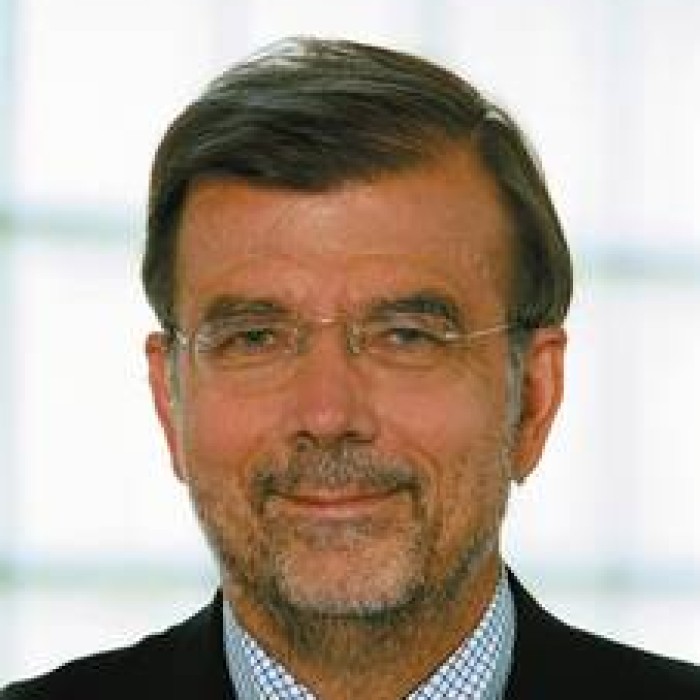
Alfred Kieser is a distinguished academic and EGOS Honorary Member (2012), renowned for pioneering work in organizational theory with a focus on historical institutionalism. As a Professor, he has contributed foundational research on organizational evolution through comparative historical studies of guilds, monasteries, and cross-national business practices. His methodologies emphasize inductive theory-building grounded in historical analysis. Key contributions include exploring how formal organizations replaced medieval guilds and analyzing national institutional differences through the Aston Program's cross-cultural research. He has held leadership roles in EGOS, including serving as Chair in 2000 and co-founding the journal Organization Studies . Kieser's work bridges historical, comparative, and theoretical approaches to understanding organizational practices across time and cultures. Research Focus : Historical institutionalism, comparative management, organizational evolution Methodological Innovation : Inductive theory-building through case comparisons Impact : Shaped EGOS's transnational intellectual community and organizational studies' disciplinary rigor His articles span historical case studies (e.g., guilds, monasteries) to cross-national organizational comparisons, consistently emphasizing institutional context and temporal dynamics.
Trang Vu is a Lecturer in the Department of Data Science & AI at Monash University's Faculty of Information Technology. Her research focuses on trustworthy NLP methods, cultural-aware machine translation, and efficient ML techniques like active and transfer learning. She holds a PhD in AI and Machine Learning from Monash University, awarded in 2022. Education: Doctoral of Philosophy (AI and Machine Learning) - Monash University (2022) Research Interests: Safe and trustworthy NLP methods for LLM alignment and hallucination mitigation Cultural-aware machine translation systems Efficient NLP techniques including active learning and semi-supervised methods Recent Projects: TMLGenAI (2023-2026): Developing safe and aligned foundation models Knowledge-Intensive Multimodal ASR research (2024) Collaborations: International collaborations in generative AI and multilingual NLP Team leader roles in multiple large-scale AI projects
Zhongguo Li is a Lecturer in Robotics, Control, Communication & AI at the University of Manchester. He holds a B.Eng. (2017) and Ph.D. (2021) in Electrical and Electronic Engineering from the University of Manchester. Prior to his current role, he was a Lecturer at University College London (2022-2023) and a Research Associate at Loughborough University (2020-2022). His research focuses on distributed control, optimization, and reinforcement learning, particularly in robotics and autonomous systems. Key areas include multi-agent coordination, networked systems, and applications in autonomous vehicles. He has authored over 40 papers in top journals/conferences and co-authored a book on Distributed Optimization and Learning (2024). Teaching responsibilities include courses such as Control Systems II, Nonlinear and Adaptive Control, and Embedded Systems Project. He serves as an Associate Editor for Drones and Autonomous Vehicles and Guest Editor for Machines and Frontiers in Control Engineering. Dr. Li actively mentors PhD students, offering guidance on funding opportunities and research projects in distributed algorithms, robotics, and control systems. His work aligns with UN Sustainable Development Goals related to innovation and infrastructure.
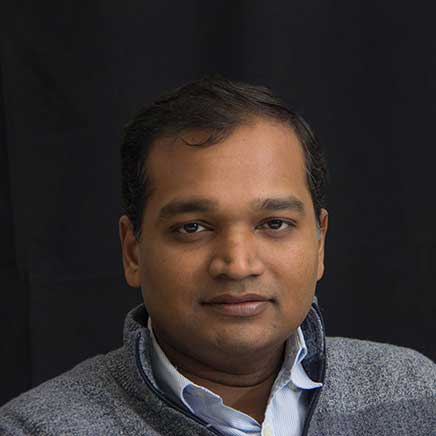
Dr. Raman Adaikkalavan is a Professor in the Department of Computer and Information Sciences at Indiana University South Bend (IUSB), and serves as Associate Vice Chancellor for Enrollment Management. He holds a Ph.D. in Computer Science and Engineering from the University of Texas at Arlington (2006), and has extensive academic leadership experience. His research focuses on information security (particularly IoT and Android), data streaming, and computer science education. Notable contributions include developing the IU Test web-based assessment tool and advancing secure data stream processing architectures. Education: B.E. (1999) from Bharathidasan University, M.S. and Ph.D. (2002/2006) from University of Texas at Arlington, with additional certificates in online teaching (2013). Research emphasizes practical applications like secure stream processing in cloud environments and improving pedagogical methods through active learning. His work has been supported by NSF grants and institutional funding. Awards include the IU Trustees' Teaching Award (2011) and recognition as a University Scholar (UT Arlington). He advises students on topics like secure data stream processing and software engineering. Collaborations include projects with Dr. Indrakshi Ray (Colorado State) and Dr. Sharma Chakravarthy (UT Arlington). His IU Test system aids in program assessment and accreditation reporting for ABET.
Robert Peharz is an Assistant Professor at Graz University of Technology, where he leads research at the Institute of Machine Learning and Neural Computation. His work focuses on probabilistic machine learning, with particular emphasis on tractable probabilistic models, causality, and neurosymbolic AI. Education and Career PhD from TU Graz (Austria) in 2015 Postdoc at Medical University of Graz Postdoc and Marie-Curie Individual Fellow at University of Cambridge (2017-2019) Assistant Professor at Eindhoven University of Technology (2019-2021) Current: Assistant Professor at Graz University of Technology Research Interests Peharz's research spans multiple areas of artificial intelligence with a focus on making probabilistic reasoning both theoretically sound and practically efficient. His work addresses fundamental challenges in tractable probabilistic inference and learning, probabilistic circuits as a unified framework for deep generative models, Bayesian causal inference, and neurosymbolic AI combining sub-symbolic and symbolic approaches. His research has applications in cybersecurity, healthcare, and energy systems. Research Projects VENTUS (2024-present): Physics-informed, probabilistic and causal machine learning for wind energy systems NEO DNA (2023-present): DNA-based data storage systems using computer vision and probabilistic ML VanillaFlow (2023-present): AI-guided development of novel vanillin-based molecules for redox flow batteries Bilateral AI : Cluster of Excellence focused on Broad AI combining sub-symbolic and symbolic AI approaches Awards and Recognition Finalist for TUG's Excellent Teaching Award (2023) for all 3 of his courses Marie-Curie Individual Fellow at University of Cambridge Academic Service Peharz is actively involved in the academic community through conference organization and reviewing: Area Chair: UAI (2022), ECML/PKDD (2022) Senior Committee Member: UAI (2021), IJCAI (2019, 2020) Reviewer for major conferences including ICML, NeurIPS, AAAI, IJCAI-ECAI Teaching and Mentorship Peharz supervises multiple PhD students working on diverse projects at the intersection of machine learning, causality, and neurosymbolic AI. His current advisees include Sepideh Adamiat, Irina Dobrianski, Johannes Exenberger, Giacomo Di Gobbi, Tim d'Hondt, Christian Toth, and Thomas Wedenig. Previous students include Alvaro Correia, Martin Trapp, and David Montalvan.
Dr. Janine Stockdale is a Senior Lecturer in the School of Nursing and Midwifery at Queen's University Belfast, affiliated with the Centre for Technological Innovation, Mental Health and Education (TIME). Her research focuses on maternal and child health, midwifery education, and healthcare simulation technologies. She supervises PhD students exploring topics like antenatal care for women with intellectual disabilities and maternity care practices in Saudi Arabia. Her academic career includes over two decades of research and teaching, with notable awards such as the Early Career Provost Teacher of the Year Award (2011) and the STAR Performance Award 2023. Dr. Stockdale collaborates internationally and leads projects on virtual reality in perinatal mental healthcare and immersive learning approaches in health education. She actively participates in academic activities, including invited talks on civility in healthcare and maternal care innovation. Her work emphasizes integrating technology and education to improve midwifery training and patient outcomes.
Dr. Peyman Badakhshan is a Researcher at the Chair of Information Systems and Business Process Management at the University of Münster. His expertise spans Business Process Management, Process Mining, and Industrial Engineering. Educational background includes a PhD in Business/Managerial Economics from Universität Liechtenstein, an MSc in Information Systems, and an M.Eng. in Industrial Engineering. Research focuses on operationalizing process analytics across domains like supply chain, healthcare, and manufacturing. Recent work develops frameworks for agile BPM and process mining tools, with applications in medical training, emergency services, and industrial process optimization. Publications demonstrate consistent innovation in mapping business process landscapes, developing diagnostic instruments, and creating large-scale datasets for academic use. Research integrates methodologies from decision analysis, fuzzy logic, and pattern recognition to solve complex operational challenges.
Stefano Nichele is a Professor at the Department of Computer Science and Communication, Østfold University College, Norway. He holds additional roles as Professor II at OsloMet and has served in leading academic positions since 2014. His research focuses on Artificial Life (ALife), Neuro-Inspired AI, and Machine Learning, with a particular emphasis on cellular automata, reservoir computing, and neuro-inspired substrates. Nichele co-directs the Østfold AI (ØAI) hub and is an active member of IEEE, ELLIS, and the Norwegian AI Research Consortium (NORA). He earned his PhD in Computer Science from NTNU (2015) and completed his MSc at the University of Insubria, Italy. His work bridges computational systems and biological substrates, exploring criticality in neural networks and quantum-evolutionary algorithm interactions. He has received prestigious awards, including the Young Research Talent grant (2019) and the Distinguished Early-Career Investigator award (2024). Nichele’s research spans theoretical and applied domains, with over 50 publications on cellular automata dynamics, neuro-inspired robotics, and AI ethics. His recent projects include studying in vitro neural networks for computational capacity assessment and developing frameworks for body-brain co-evolution in soft robotics. Education: PhD in Computer Science, NTNU (2015) MSc in Computer Science, University of Insubria (2009) Awards: Young Research Talent grant (2019) Distinguished Early-Career Investigator (2024) Grants & Roles: Co-director of the Østfold AI hub Board member of NORA (Norwegian AI Research Consortium) Labs & Collaborations: Focus on neuro-inspired AI systems and unconventional computing Partnerships with institutions like Simula Metropolitan and the International Society for Artificial Life (ISAL)
Dhammika Jayalath is an Associate Professor at Queensland University of Technology (QUT) in the School of Electrical Engineering & Robotics within the Faculty of Engineering. He has been with QUT since 2007, initially as a Senior Lecturer and later promoted to Associate Professor. Prior to joining QUT, he worked as a Senior Researcher at National ICT Australia Ltd and held a Fellowship at the Australian National University. His educational background includes a PhD in Wireless Communications from Monash University and a Graduate Certificate in Higher Education from QUT. He is a Senior Member of IEEE and active in multiple IEEE societies including Communications, Signal Processing, and Vehicular Technology. Research Interests: Dhammika's research focuses on Smart Systems with particular expertise in wireless communications and networking. His work spans Physical Layer Security, Massive MIMO Systems, Internet of Things, Optimum Resource Allocation, Cooperative communications, Cognitive radio, and Vehicular communications. He has made significant contributions to 5G New Radio, Chaotic Communications, Orthogonal Frequency Division Multiplexing (OFDM), and Space-Time Signal Processing. Publication Trends: His recent publications demonstrate a strong focus on 5G/6G networking technologies, physical layer security for IoT devices, and optimization of wireless communication systems. His work bridges theoretical communications theory with practical implementation challenges, particularly in vehicular networks, secure communications, and resource allocation for heterogeneous networks. The articles show increasing interdisciplinary work, combining machine learning techniques with traditional communications engineering approaches. Scientific Awards: 2007: Early Career Academic Recruitment and Development (ECARD) award from QUT 2009: Elevated to Senior Member Grade of IEEE 2000: IEEE travel grant Multiple scholarships during graduate studies at Monash University Supervision and Grants: Professor Jayalath has supervised numerous PhD students to completion with research topics including chaotic communication systems, resource allocation in heterogeneous networks, and vehicular communication systems. He has secured multiple research grants totaling over AU $300,000, including projects from ARC, QUT internal grants, and industry partnerships with Queensland Fire and Emergency Services. His current research includes physical layer security frameworks for IoT devices and optimization of massive MIMO systems for dense mobile networks. Laboratory and Team Work: He has been instrumental in establishing wireless communications research capabilities at QUT, including securing equipment grants for Software Defined Radio platforms. His work often involves interdisciplinary collaboration with researchers in signal processing, cybersecurity, and transportation systems.
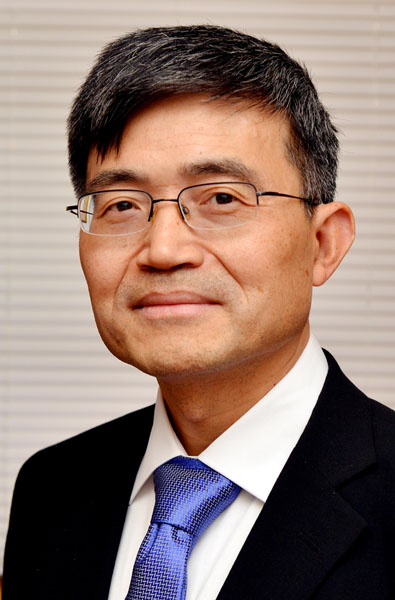
Dr. Zhong-Ping Jiang is a Professor in the Department of Electrical and Computer Engineering and an Affiliate Professor in the Department of Civil and Urban Engineering at the Tandon School of Engineering, New York University. He has been with NYU since 2007, previously serving as Associate Professor (2002-2007) and Assistant Professor (1999-2002) at Polytechnic University (now part of NYU). Dr. Jiang received his MSc degree in Statistics from the University of Paris XI in 1989 and his PhD degree in Automatic Control and Mathematics from the Ecole des Mines de Paris in 1993. He has maintained strong international collaborations with researchers across Europe throughout his career. Internationally recognized as a key contributor to nonlinear small-gain theory, Dr. Jiang is also well-known for his seminal work in robust adaptive dynamic programming and robust reinforcement learning for real-time safety-critical control applications. His research spans dynamical networks, nonlinear control theory, data-driven optimization, and reinforcement learning with applications to mechanical, information and biological systems. Dr. Jiang's publications have had significant impact in the field, with over 500 peer-reviewed journal and conference papers, more than 34,300 citations, and an h-index of 90 on Google Scholar. He has also published six research monographs since 2011. His notable awards and honors include: Election to European Academy of Sciences and Arts (2023) Stanford's Top 2% Most Highly Cited Scientists (2023) Election to Academia Europaea (2021) Highly Cited Researchers by Clarivate Analytics (2018) Fellow of Chinese Association of Automation (2017) Fellow of International Federation of Automatic Control (2013) Fellow of IEEE (2008) National Distinguished Professor, Chinese Ministry of Education (2009) Dr. Jiang serves as Deputy Editor-in-Chief for the IEEE/CAA Journal of Automatica Sinica and has held editorial positions for numerous prestigious journals including IEEE Transactions on Automatic Control. He has delivered more than 20 plenary, semi-plenary and keynote speeches at major international conferences and workshops.
Jason C. Woodworth is a researcher affiliated with the University of Louisiana at Lafayette, LA, USA. His work primarily focuses on Virtual Reality (VR) and Secure Data Search technologies. Through extensive collaborations, he has explored innovative applications of VR in education, emotion tracking, and cross-reality interfaces, while contributing to methods for secure semantic search over encrypted cloud data. Research Interests: VR for attention guidance, emotion recognition in immersive environments, collaborative VR tools, and secure search architectures. Publication Trends: His recent studies emphasize Visual Cues in VR for attention management, Transformer-based Emotion Recognition , and Time-Continuous Emotion Rating systems. Collaborations: Frequent co-authorship with Christoph W. Borst and Mohsen Amini Salehi, indicating strong partnerships in VR and cybersecurity domains. Contributions: Pioneering work in Teacher-Guided Educational VR , Avatar Redirection for cross-reality communication, and privacy-preserving Secure Semantic Search frameworks.
Prof. Dawn Hadley is a leading scholar in medieval archaeology and history, specializing in early medieval England, the Viking Age, and interdisciplinary research. She holds the Chair in Medieval Archaeology at the University of York, Department of Archaeology, and is a Fellow of the Society of Antiquaries of London. Her career includes roles at the University of Sheffield, including Professor of Medieval Archaeology, Head of Department, and Acting Vice President for Arts & Humanities. She leads the Tents to Towns project exploring the Viking Great Army's impact on England and co-authored The Viking Great Army and the Making of a Nation . Her work integrates historical, archaeological, and digital methods, including VR modeling of medieval sites like Sheffield Castle. Education: PhD and post-doctoral fellowship in History at the University of Birmingham; taught medieval history at the University of Leeds. Research interests include Viking settlement patterns, funerary practices, childhood in medieval and 19th-century contexts, and heritage-led urban regeneration. She has pioneered collaborations with computer scientists to digitize archaeological data and engage public audiences through projects like Stories in the Sky (Park Hill Flats) and Viking Virtual Reality . Her awards include the York Open Research Award (2021) and Excellence in Media Arts (2017). She has supervised over 30 PhD students, many now in academic and heritage roles. Key grants include funding from AHRC, UKRI, and the British Academy. Labs/Teams: Collaborates with the Centre for Medieval Studies at York, Dr. Gareth Perry, and Dr. Elizabeth Craig-Atkins. Active in editorial roles for journals like Medieval Archaeology and the Early Medieval Europe series.
Paul Siebert is a Reader in Computing Science at the University of Glasgow, specializing in computer vision and robotics. He leads the Computer Vision and Graphics research group and teaches Digital Image Processing and Computer Systems. His research focuses on 3D vision systems, biologically inspired vision, and cognitive robot vision, with applications in clinical and media domains. He has pioneered commercial 3D surface scanning technology and collaborated with clinical groups such as Glasgow Dental School. Affiliations: University of Glasgow (Computing Science Department) Roles: Reader, Group Leader (Computer Vision and Graphics) Research interests include active binocular robot vision, 2D/3D sensing, and visual perception for robotics. Notable projects include work on driver attention monitoring, virtual character creation, and clinical anatomical imaging. Siebert previously directed the 3D-MATIC Faraday Partnership and served as Chief Executive of the Turing Institute, developing commercial vision systems. Publications span over 140 works, emphasizing applications like rain removal algorithms, continual learning in robotics, and foveated imaging. His work integrates deep learning, biological vision models, and real-world robotics challenges. Awards and recognitions are not explicitly listed, but his contributions to 3D vision commercialization and robotics research highlight significant impact in the field.
Zhao Zhao is an Assistant Professor at the School of Computer Science, University of Guelph. Her work focuses on wearable systems, human-robot interaction, and gamification for health and education. She holds a PhD from Carleton University (2019) and completed a postdoctoral fellowship at the University of Toronto (2019–2023) before roles at McMaster University and her current position. Education includes a BSc in Computer Science from University of Electronic Science and Technology of China (2011), MSc from Carleton University (2014), and PhD in Electrical and Computer Engineering (2019). Research interests span physiological computing, AI-assisted creativity tools, and adaptive systems leveraging wearable sensors. Key research areas include: 1) Wearable-based gamification for health and education, 2) Emotion sensing via physiological signals, and 3) Human-robot interaction enhanced by wearable data. Her lab uses Empatica EmbracePlus wristbands and Emotiv EEG headsets to analyze real-time physiological responses in diverse interaction scenarios. Recent publications (2020–2025) emphasize personalized exergame systems, child-robot interaction studies, and AI linguistic competency analysis. She actively seeks graduate students and industry partnerships in wearable technology, education tech, and HRI.
Lu Xing is an Associate Professor in the Mechanical and Construction Engineering Department at Northumbria University. His research focuses on energy system modeling, sustainable energy storage, and AI-driven green energy solutions. He holds a PhD in Mechanical and Aerospace Engineering from Oklahoma State University, alongside master's and bachelor's degrees in related disciplines. Key roles include Principal Investigator for over £14 million in research projects funded by UK EPSRC, Innovate UK, and energy companies. He co-founded Continuous Power as Chief Scientist and advised the ICURe Programme. His work addresses UN Sustainable Development Goals, particularly energy transition and environmental sustainability. Research interests span PEM fuel cells, hydrogen integration, battery systems, and AI applications in energy optimization. He has published 70+ papers in top journals/conferences and delivered keynote speeches at events like the 29th CSCST-SCI Conference. He chairs sessions at international conferences such as EcoMat 2024. Current projects include optimizing building multi-energy systems with green hydrogen, improving fuel cell performance through novel cooling designs, and developing fault diagnosis models for HVAC systems using machine learning. Advising: Accepting PhD students for projects in energy system modeling, AI for green energy, and sustainable materials. Over 20 research projects demonstrate expertise in cross-sector collaboration (academia, industry, government). Labs/Teams: Leads Northumbria's Energy Systems Research Group, collaborating internationally on projects funded by the US Department of Energy and Oak Ridge National Laboratory.