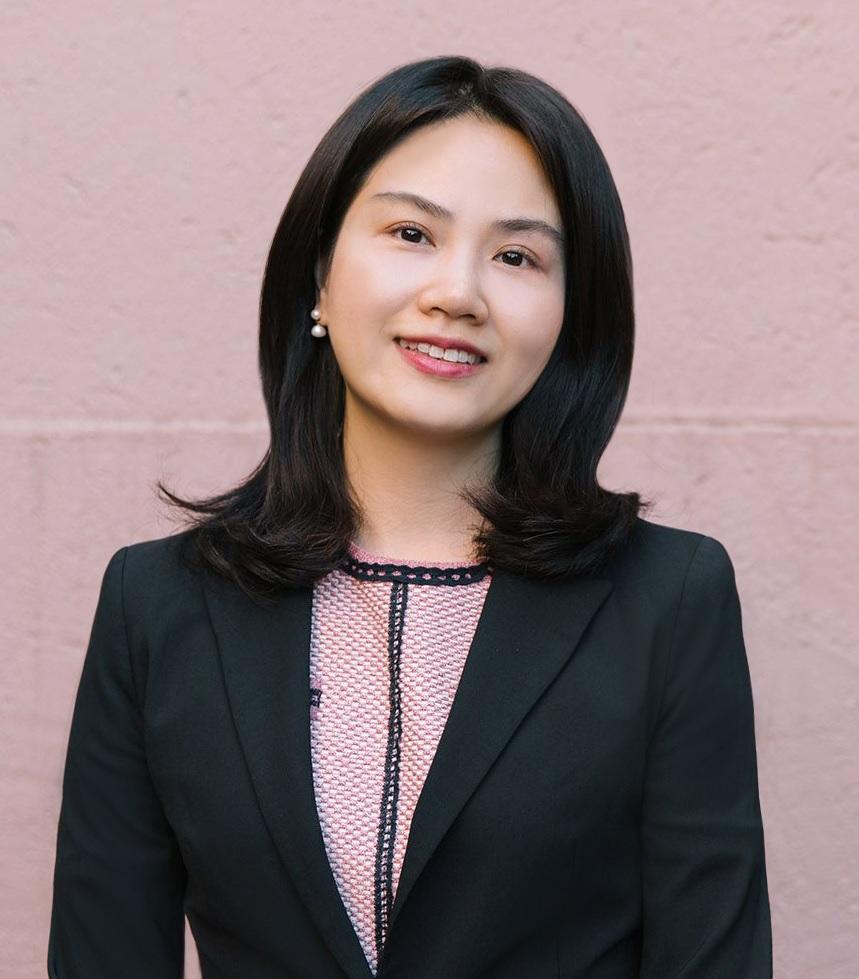
Ling Xiao is a Senior Lecturer in the Department of Accounting and Financial Management at Royal Holloway University of London , where she also serves as Senior Course Director for undergraduate programs. She is a Senior Fellow of the Higher Education Academy and contributes to editorial boards including the World Sustainability Development Journal . Research Interests: Her work spans empirical finance (focusing on time-series modeling of financial markets) and pedagogic research (developing transformative frameworks for inclusive education and sustainability integration). Projects include net-zero strategies for SMEs and inclusive case study methodologies. Awards: Best Emerging Paper Award (2022) Senior Fellowship of Higher Education Academy (2016) College Team Teaching Commendation (2023) Visiting Professor recognition (2017) Grants: Secured £20,000 for Made for Drink: Net-Zero Challenges for SMEs and £6,000 for inclusive pedagogy research. Professional Affiliations: British Accounting and Finance Association British Academy of Management China Energy Finance Network (FORE3ST member)
Suzy Thomas is a faculty member at the Kalmanovitz School of Education , Saint Mary's College of California. She has been actively involved in research and publications related to school counseling, action research, and legal/ethical issues in education since the early 2000s. Research Interests : Action research in school counseling, group counseling methodologies, legal/ethical frameworks for educators, Lasallian pedagogy, and creative self-care strategies for counselors. Publications : Focused on evidence-based practices in school counseling, reflective pedagogy, and integrating expressive arts into therapeutic settings. Awards : Recognized as one of California’s Top 20 Education Professors (2013), inducted into the H.B. McDaniel Hall of Fame (2013), and received the Faculty Service Award (2013). Her Lasallian Educator Symposium essay (2013) highlights her commitment to faith-based educational values. Service : Engaged in peer consultation groups, graduate student mentorship, and professional development initiatives for mid-career educators.
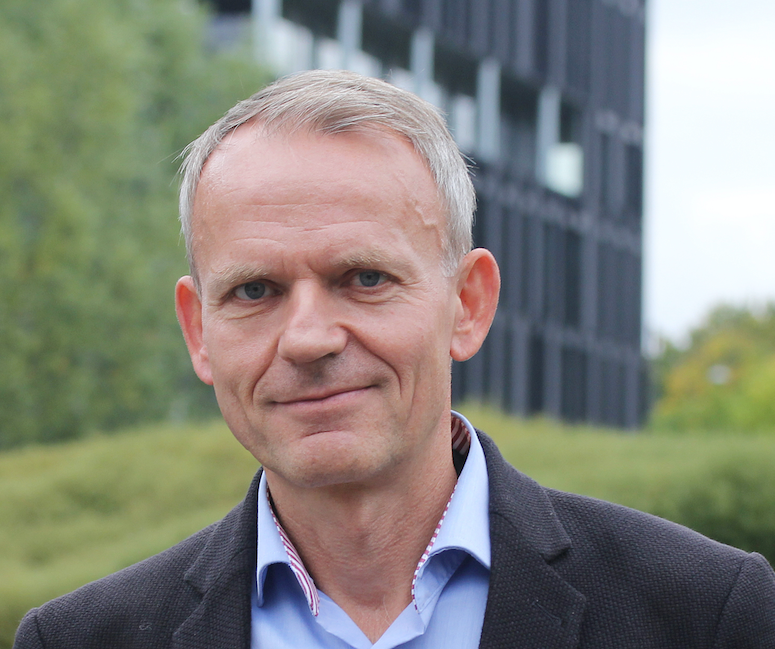
Dag Sjøberg is a Professor at the Department of Informatics (Ifi), University of Oslo . He also holds a part-time position at SINTEF Digital . His research focuses on empirical software engineering with emphasis on development processes , agile methodologies , technical debt , and programming skill assessment . Research Interests: Empirical methods (controlled experiments, case studies) Construct validity frameworks Agile and Lean practices Microservices architecture Software quality and maintainability Scientific Achievements: Led Simula Research Laboratory's Software Engineering department ranked #1 globally (2004-2008) Developed Guidelines for Construct Validity in software engineering research Extensive publication record in top venues like IEEE Transactions and Journal of Systems and Software Academic Background: Cand.scient. in Informatics (University of Oslo, 1987) PhD in Software Engineering (University of Glasgow, 1993) Professional Involvement: Co-founder and board member of three IT companies Former research director at Simula Research Laboratory (2001-2008) Current head of the Programming and Software Engineering research section at Ifi
Anna Lukina is an Assistant Professor in the Department of Intelligent Systems at Delft University of Technology's Faculty of Electrical Engineering, Mathematics and Computer Science. She leads the Sequential Uncertainty Monitoring and Interpretability (SUMI) Lab, focusing on improving safety and interpretability of artificial intelligence through formal methods with applications in engineering, transportation, health, and finance. Her research spans the critical intersection of formal verification and machine learning, particularly in developing techniques for runtime monitoring of neural networks, safety verification of decision-tree policies, and creating verifiable reinforcement learning systems. She has established strong international collaborations with researchers across the US, Europe, Japan, and Australia. Lukina's recent publications (2021-2025) demonstrate consistent output in top AI venues including AAAI, NeurIPS, and IJCAI, with a clear trajectory toward increasingly sophisticated verification techniques for complex AI systems. Her work shows strong emphasis on practical applications while maintaining theoretical rigor, particularly in creating methods that provide formal guarantees for black-box AI systems. As part of her service commitment, she leads initiatives promoting junior computer scientists from underrepresented communities, reflecting her dedication to diversity in the field as highlighted in her DerStandard interview "Warum so wenige Frauen Den Code knacken wollen" and university magazine Delta. She currently supervises multiple PhD researchers including Sterre Lutz, Daniël Vos, Aaron Berger, and Johannes Koch, along with numerous successful MSc graduates who have completed theses on topics ranging from anomaly detection to genetic programming for explainable AI.
Dr. Zoltán Kis serves as a Senior Lecturer (Associate Professor) in the School of Chemical, Materials and Biological Engineering at The University of Sheffield and holds an Honorary Lecturer position at Imperial College London's Department of Chemical Engineering. His research focuses on innovating disease-agnostic RNA vaccine and therapeutics manufacturing platforms through process digitalization and intensification. Dr. Kis earned his Ph.D. in Bioengineering from Imperial College London, complemented by an M.Sc. in Applied Biotechnology and a B.Eng. in Chemical with Biochemical Engineering. His interdisciplinary training bridges chemical engineering, biotechnology, and bioengineering disciplines. His research integrates experimental and computational methodologies to revolutionize mRNA production: Development of continuous enzymatic synthesis, purification, and LNP formulation processes Process intensification through novel unit operations and equipment design Digital twin deployment for real-time monitoring and control Techno-economic modeling to reduce production costs Quality by Digital Design framework implementation for regulatory compliance Analysis of recent publications reveals dominant trends in continuous bioprocessing and digital transformation of mRNA manufacturing. Key subfields include oligo-dT chromatography optimization, tangential flow filtration for mRNA purification, and digital twin applications for process control, with strong emphasis on pandemic-response capabilities and cost reduction strategies. Dr. Kis actively supervises PhD students in mRNA bioprocessing and teaches Biopharmaceutical Manufacturing (CPE336/CPE6043) and Introduction to Bioengineering (BIE103). His industry engagement includes advisory roles on Sanofi's mRNA CMC Board and Pfizer's mRNA Technology Advisory Board. He leads the RNA Manufacturing Innovation Team and has secured substantial research funding, including: £3.7 million CEPI grant for RNAbox platform (2024-2027) £7.6 million UK-SEA Vaccine Manufacturing Hub (2023-2028) £2 million Innovate UK project for automated RNA platform (2023-2025) Multi-million USD Wellcome Leap R3 grant for distributed RNA production His work demonstrates significant impact through industry partnerships, policy advisory roles including WHO mRNA Technology Transfer Hub consultancy, and leadership in advancing global vaccine manufacturing capabilities.
Anna Pellegrino is a Confirmed Associate Professor in the Department of Energy (DENERG) at the Polytechnic University of Turin, where she also serves as a Member of the FULL Interdepartmental Center - Future Urban Legacy Lab. Her academic career spans over three decades with continuous involvement in doctoral education since 2003 across various research programs including Architectural Heritage, Technological Innovation for the Built Environment, and Energy. Her research focuses on the intersection of lighting engineering, cultural heritage conservation, and sustainable building design. Key areas include daylighting systems, energy demand for lighting, light and human factors, lighting controls, and visual comfort assessment. Her work bridges technical building physics with cultural and human dimensions of the built environment, particularly addressing how lighting affects health, wellbeing, and heritage conservation. Analysis of her recent publications reveals a strong trend toward interdisciplinary research connecting environmental quality assessment with human health outcomes. Her work increasingly incorporates sensor technologies for monitoring indoor environmental quality while maintaining a consistent focus on lighting applications in both architectural heritage and contemporary sustainable design contexts. The research demonstrates progression from fundamental lighting technologies toward holistic building performance evaluation. Full Member - Illumination Engineering Society (IES), United States (2020-) Member of the Executive Committee - Italian Lighting Association AIDI, Italy (2018-) Full Member - Italian Technical Physics Association, Italy (2016-) Full Member - International Commission for Illumination (CIE), Austria (2010-) Full Member - Italian Lighting Association AIDI, Italy (1994-) Professor Pellegrino actively supervises doctoral students in Energy and Architectural Heritage programs while leading numerous research initiatives. Her grant portfolio includes competitive national research projects, European Union collaborations, and commercial consulting contracts with municipal governments and private sector clients. Current projects focus on biophilic lighting systems, public lighting optimization, and energy-efficient building retrofits. She also participates in significant collaborative agreements with municipal entities including the Municipality of Lagnasco and the City of Turin. She leads research activities within the TEBE Research Group (DENERG) and collaborates with the LAMSA Laboratory for Analysis and Modeling of Environmental Systems (DAD). Her team conducts field studies, develops monitoring methodologies, and creates practical solutions for lighting applications in heritage conservation and sustainable urban development. Current work emphasizes the relationship between lighting environments and human health outcomes in both interior and exterior contexts.
Dr. Teresa Bednarczyk is a full-time Professor at Maria Curie-Skłodowska University's Faculty of Economics , where she leads the Department of Insurance and Investment . She earned her PhD (1999) and habilitation (2012) in Economics from the same university, with both theses focusing on insurance , financial markets , and pension systems . Her work has been recognized with the National Bank of Poland Award for habilitation theses. ORCID ID: 0000-0002-9340-6864 Current consultation hours: On-site Tuesdays 9:30-11:00 in room 615, remote via Microsoft Teams Thursdays 13:00-14:30 Research focuses on insurance sector dynamics , pension system evolution , and financial market interdependencies . Recent publications examine peer-to-peer insurance models , retirement savings determinants , and systemic risk in reinsurance . Her work spans empirical studies and theoretical frameworks. Scientific contributions include 25 publications with 936 ministerial points. Key awards: National Bank of Poland Award (2014) Polish Academy of Sciences membership (since 2015) Scientific Advisory Committee to Financial Ombudsman (multiple terms) Serves as primary advisor to multiple award-winning theses, including Dr. Tomasz Pasierbowicz 's 2024 work on sharing economy insurance and Jakub Konstanciuk 's 2022 research on cyber risk in Poland .
Kyunghee Yoon is an Assistant Professor in the School of Business at Clark University, specializing in Auditing and Accounting Information Systems. She holds a Ph.D. in Accounting Information Systems (Rutgers University, 2016) and an M.S. in Statistics (Rutgers University, 2010). Her research focuses on audit data analytics, cybersecurity disclosures, remote work impacts on audit quality, and the integration of nonfinancial data (e.g., weather information) into auditing processes. She explores how emerging technologies and data-driven approaches enhance audit effectiveness and regulatory compliance. Recent work highlights machine learning applications for predicting fiscal distress, analyzing Twitter-based corporate disclosures, and evaluating advanced auditing systems. Her studies bridge traditional auditing practices with modern challenges like remote work dynamics and environmental sustainability. Key contributions include methodologies for classifying cybersecurity risk disclosures, assessing shareholder wealth effects of audit innovations, and understanding green IT adoption among internal auditors across countries. Her research is published in journals like Journal of Information Systems and Accounting Horizons . Dr. Yoon’s expertise spans academic and practical domains, addressing evolving demands in audit technology, regulatory frameworks, and cross-industry crises like the pandemic’s impact on sports organizations.
Anne Ryan Driscoll is a Collegiate Associate Professor in the Department of Statistics at Virginia Tech. She holds affiliations with the College of Science and has research interests in Statistical Process Control, Healthcare Surveillance, and Industrial Statistics. Her work emphasizes practical applications of statistical methods in quality control and biomedical analysis. Education includes a B.S. in Mathematics and Physics from Emory & Henry College (2006), followed by M.S. (2007) and Ph.D. (2011) in Statistics from Virginia Tech. She has received numerous awards for teaching excellence and departmental contributions, including the Jesse C. Arnold Award and Ellis R. Ott National Scholarship. Her professional memberships include the American Statistical Association and American Society for Quality. Dr. Driscoll serves as a referee for journals like the Journal of Quality Technology and contributed to the 2011 Quality and Productivity Research Conference. Recent publications focus on control chart methodologies, biomedical applications of statistics, and experimental design. Her research bridges theoretical statistical frameworks with real-world quality assurance and healthcare applications.
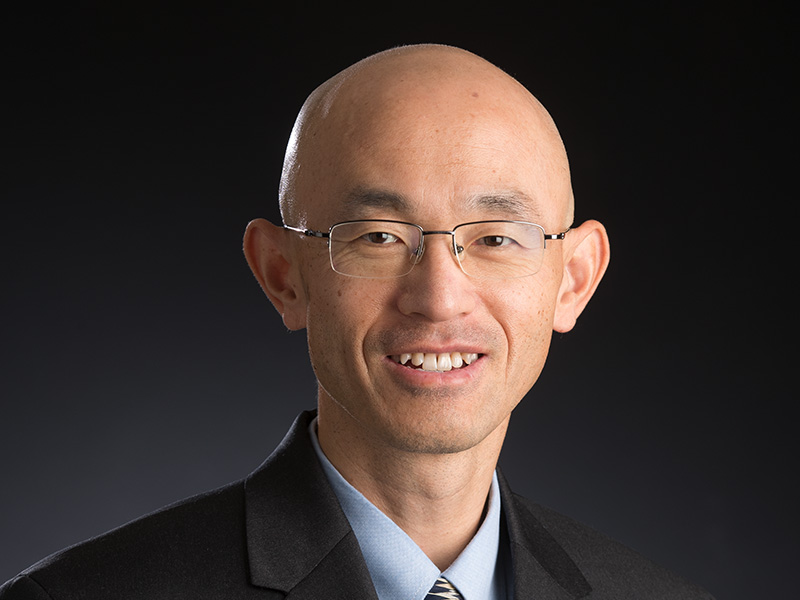
Dr. Tieming Liu is an Associate Professor in the School of Industrial Engineering and Management at Oklahoma State University , where he has served since 2005, first as Assistant Professor and then promoted to Associate Professor in 2011. His expertise bridges operations research, supply-chain coordination, healthcare analytics, renewable-energy policy, and production scheduling. Education Ph.D. in Transportation and Logistics, Massachusetts Institute of Technology, 2005 M.S. in Industrial Engineering and Management Science, Northwestern University, 2001 M.S. in Control Theory and Control Engineering, Tsinghua University, 2000 B.S. in Control Theory and Control Engineering, Tsinghua University, 1997 Research Interests Dr. Liu’s scholarship is organized around three pillars: Supply-Chain & Logistics: coordination contracts, inventory bounds, responsive pricing, channel rebates, and production flexibility under uncertainty. Healthcare Analytics: machine-learning models for diabetic retinopathy and sepsis risk prediction, clinical decision-support systems, and handling imbalanced EHR data. Energy & Sustainability: renewable portfolio standards, capacity coordination with renewable energy certificates, and incentive mechanisms for renewable and conventional generators. Recent methodological contributions include hidden Markov models for continuous mortality prediction, tree-augmented Bayesian networks for sepsis risk, and tensor-completion-driven convolutional networks for longitudinal medical data. Scientific Awards & Honors EJOR Reviewer Award, 2019 IEM Faculty Award, 2019 Halliburton Outstanding Faculty Award, OSU, 2014 Merrick Foundation Teaching Award, OSU, 2013 Riata/Koch Faculty Fellow, OSU, 2012 Lockheed Martin Teaching Award, OSU, 2011 Student Organization Faculty Advisor of the Year, OSU, 2010 Student Mentorship & Collaboration Dr. Liu has advised or co-advised a large cohort of doctoral and master’s students whose names appear as first or co-authors on his publications. His collaborative network spans MIT, Northwestern, IBM T. J. Watson Research Center, and multiple departments across OSU, fostering interdisciplinary projects that integrate operations research with real-world healthcare, transportation, and energy challenges. Laboratories & Teams He conducts research within the analytics and optimization laboratories of the School of Industrial Engineering and Management, directing projects funded by federal agencies and industry partners aimed at next-generation decision-support systems for healthcare providers, logistics operators, and energy market regulators.
Professor Mahdi Mahfouf holds a Chair in the School of Electrical and Electronic Engineering at the University of Sheffield. He has held academic roles since 1997, progressing from Lecturer to Professor in 2005. His research focuses on Fuzzy Logic, Control Systems, and their applications in biomedical and industrial contexts. Mahfouf leads the Intelligent Systems Research Laboratory and has contributed over 370 publications, including influential work on fuzzy modeling and predictive control. Education: Ing.Dipl. (Hons) in Control Systems MPhil in Control Systems (University of Sheffield, 1988) PhD in Control Systems (University of Sheffield, 1991) Research Interests: Fuzzy Logic applications, Artificial Intelligence, Neural Networks, Model-Based Predictive Control, Biomedical Engineering (e.g., ICU Decision Support Systems), and Manufacturing Systems (e.g., granulation processes, surface metrology). Key Achievements: Recipient of the IEE Hartree Premium Award (1992) and MEDIPEX Innovation Award. His work integrates fuzzy logic into real-time systems for aviation, healthcare, and robotics. Grants & Labs: Leads the Intelligent Systems Research Lab. Active in collaborative projects with industry (e.g., pharmaceuticals, aerospace). His research bridges theory and practice, emphasizing data-driven solutions for complex systems.
Matthew Wright, PhD, is the Kevin O'Sullivan Endowed Professor and Chair of Cybersecurity at Rochester Institute of Technology's Golisano College of Computing and Information Sciences. He holds a BS from Harvey Mudd College and MS/PhD from University of Massachusetts Amherst. Previously, he was a faculty member at UT Arlington (2005-2016). Dr. Wright's research spans privacy/anonymity systems, human factors in security, adversarial machine learning, deepfake detection, and malware analysis. His recent work explores AI-driven cybersecurity solutions and misinformation countermeasures. His publications demonstrate strong focus on Tor network security, deepfake robustness, and adaptive malware detection. He has received the NSF CAREER Award (2010) and ACM CHI Honorable Mention (2021). Current projects include DeFake (deepfake detection) and NSA-sponsored Generative AI in cybersecurity. He advises 7 PhD students and has graduated 9 PhD students, most now professors or industry leaders. Teaching includes Authentication and Security Models and Generative AI in Cybersecurity . He leads the CLARK research team and has secured $5.8M in external funding, including a $2.1M RIT Signature Interdisciplinary Research Award.
Dr. Tapabrata Chakraborty is a Principal Research Fellow at University College London (UCL) Cancer Institute and an Honorary Associate Professor in UCL's Department of Medical Physics and Biomedical Engineering. He serves as Lead Tutor for Information Engineering at the University of Oxford's Engineering Science Department and is a non-stipendiary Fellow of Linacre College, Oxford. As Theme Lead for the Alan Turing Institute's partnership with Roche, he drives advancements in transparent AI for precision healthcare. He is an invited expert on Responsible AI with the Global Partnership on AI (GPAI) and an Associate Editor for Springer Nature Computer Science . His research focuses on developing reliable AI systems for biomedicine, particularly leveraging multimodal data (imaging, clinicogenomics) in cancer research. He emphasizes explainable AI mechanisms, personalized uncertainty quantification, and ethical AI governance. His work has led to tools like 2dSpAn-Auto for spine analysis and frameworks like Pan-Ret for retinal disease detection. Education: PhD (details unspecified) Key Roles: Turing-Roche Partnership Lead, GPAI Advisor, HEA/IET Fellow His publications highlight breakthroughs in medical AI, including uncertainty quantification and multimodal data fusion. He advocates clinician-AI collaboration and policy-driven AI safety. Current projects include fair AI for skin lesion classification and drug discovery via synthetic data generation. Awards: HEA Fellowship, IET Fellowship Team Leadership: Oversees early-career researchers at Turing/UCL
Giulia Di Nunno is a Professor in the Department of Mathematics at the University of Oslo, specializing in stochastic analysis and its applications to finance and risk management. She also holds an adjunct professorship at the Norwegian School of Economics (NHH). Her research focuses on stochastic calculus, control theory, financial modeling, and energy finance, with a particular interest in dynamic risk measures. She has led major projects like the STORM initiative on time-space risk models and is involved in interdisciplinary research on sustainability and energy markets. Di Nunno has served as President of the Scientific Council of CIMPA and is an associate editor for several prestigious journals, including Finance and Stochastics and Stochastics . Her work bridges theoretical advancements with practical applications in finance and energy sectors. Education: PhD in Mathematical Statistics (University of Pavia, 2003), Degree in Mathematics (University of Milan, 1998). Research Groups: Risk and Stochastics, STORE (completed). Key Projects: SURE-AI (AI-driven risk modeling), Unruly Sustainability (interdisciplinary research), STORM (ToppForsk project). Editorial Roles: Associate Editor for Finance and Stochastics , DEAF , FMF , and others. Her publications emphasize stochastic processes, volatility modeling, and risk measurement, with recent contributions on time-changed dynamics and applications to energy finance. She actively contributes to the international academic community through research networks like AMaMeF and ModSimFIE.
Dr. Richard J Paulson is a Professor of Obstetrics & Gynecology and Chief of the Division of Reproductive Endocrinology and Infertility at the University of Southern California Keck School of Medicine. He is also the Director of USC Fertility and holds the Alia Tutor Chair in Reproductive Endocrinology. His roles include Vice Chair of Administrative Affairs in the Department of Obstetrics and Gynecology and Director of the Fellowship Program. His research focuses on reproductive aging, embryo implantation, and fertility preservation. Notable achievements include pioneering egg donation for women over 40 and 50, leading to landmark studies published in New England Journal of Medicine and Lancet . He has over 200 scientific publications and has been recognized with awards such as the Howard and Georgeanna Jones Lifetime Achievement Award and continuous inclusion in Best Doctors in America since 1994. His articles span topics like GnRH antagonists, IVF optimization, and gestational carrier outcomes. He advocates for evidence-based care and has contributed to advancements in IVF culture media and embryo transfer protocols. Dr. Paulson’s work emphasizes reducing healthcare disparities and improving access to fertility treatments. Dr. Paulson has mentored numerous fellows and shaped reproductive medicine through leadership roles, including past presidency of the American Society for Reproductive Medicine and editorship of F&S Reports . He collaborates with HRC Fertility and focuses on advancing reproductive technologies while addressing ethical challenges in the field.