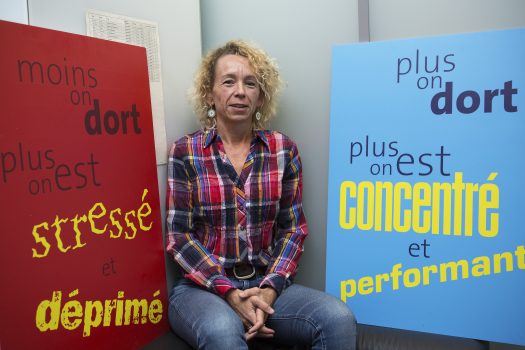
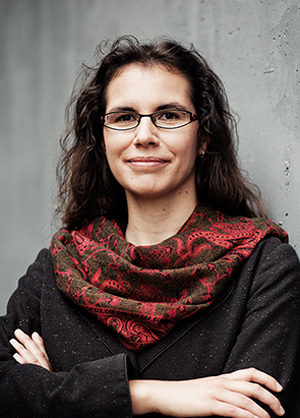
Prof. Sophie Schwartz is a leading neuroscientist at the University of Geneva , where she heads the Sleep & Cognition Lab within the Faculty of Medicine . Her research integrates neuroimaging (fMRI, hd-EEG, MEG) , behavioral testing , and computational modeling to unravel the neural mechanisms underlying memory consolidation , emotion processing , and dreaming during sleep, while also developing clinical interventions to enhance sleep in neurological and psychiatric disorders.
Paul Shankman is an Affiliate Professor in the Department of Critical Media Practices at the University of Colorado Boulder. A cultural anthropologist, he specializes in Samoa, Polynesia, ecological anthropology, political anthropology, and the history of anthropology, with a significant focus on the Mead-Freeman controversy. Ph.D., Harvard University (1973) B.A., University of California-Santa Barbara (1965) His research centers on Margaret Mead's work in American Samoa, the evolution of anthropological theory, and the interplay between culture, biology, and environment. He has also explored the Holocaust and 20th-century genocides through an anthropological lens in his courses. Recent publications address transnational migration, colonial regulation of sex, and globalization's effects on Pacific societies. Shankman is featured in a BBC documentary ( Tales from the Jungle: Margaret Mead ) and has contributed to debates on ethnographic accuracy and historical interpretation. As a primary instructor for ANTH 4580/JWST 4580: The Holocaust: An Anthropological Perspective , he examines genocide dynamics using anthropological frameworks. His fieldwork in Samoa spans since 1966, and he has analyzed topics like interethnic unions, political structures, and ecological challenges.
Riccardo Tommasini is an Associate Professor at INSA Lyon , a leading engineering institution in France. He leads the Stream Processing and Knowledge Graphs research within the DB Team at LIRIS laboratory under Professor Angela Bonifati. His academic journey began with a PhD in Computer Science from Politecnico di Milano under Emanuele Della Valle, with a dissertation titled Velocity on the Web to be published as a Springer book. Research Interests : Advancing stream processing for real-time data systems Extending knowledge graphs with dynamic data Designing graph databases for big data applications Creating query languages for heterogeneous data environments Building data engineering pipelines with Apache Airflow Enabling big graph processing in distributed settings Key Contributions : Developed Zodiac framework for Datalog reasoning under rule amendments (ICDE 2025) Co-authored foundational Streaming Linked Data book with Springer (2023) Created RSP4J API for RDF stream processing (ESWC 2021) Designed challenge-based learning curriculum for Data Engineering courses Scientific Recognition : Received ANR JCJC grant for POLYFLOW project (2024) Awarded Best Resource at ESWC 2021 Managed industrial collaborations with Neo4j, InfluxData, and Confluent Advising & Teaching : Supervises Mohamed Ragab (PhD candidate at University of Tartu) Course Leadership : Foundational Data Engineering course at INSA Lyon and University of Tartu Structured around Apache Airflow , Docker, and graph databases
Albena Kostadinova Yaneva is a Full Professor at the Department of Architecture and Design (DAD) at Politecnico di Torino, Italy. Her academic work bridges Political and Social Sciences with Architecture , focusing on the Sociology of Environment and Territory . She teaches courses such as Academic Writing: 5 Exercises in Style , Innovation Studies , and Architecture, Society and Territory A . Research Areas : Sociological analysis of architectural practices, digital technologies in design, actor-network theory applications, and material culture. Teaching Roles : Course Instructor for PhD and Master's programs, emphasizing critical design, environmental sustainability, and urban sociology. Her recent publications explore themes like the impact of Zoom technologies on architectural collaboration, performative school buildings, and the role of models in design processes. Collaborative works include studies on graphene research labs and the interplay between science and urban development. She supervises PhD student Rayna Elena Razmilic Triantafilo, whose research focuses on architectural discourse platforms. Though no scientific awards are explicitly listed, her work engages with interdisciplinary methodologies, blending architectural anthropology and digital humanities to analyze contemporary design challenges.
Louise Hunter is an Associate Lecturer at the Oxford School of Nursing and Midwifery, Oxford Brookes University, where she contributes to both undergraduate and postgraduate teaching in midwifery. She is actively involved in research, supervision, and professional development, with a strong focus on improving maternity care and the experiences of women and midwives. Education: PhD MA (Oxon) RM (Registered Midwife) Her research interests revolve around enhancing midwifery care through innovative models such as mindfulness training and group antenatal care. She has investigated mindfulness as a tool to improve workplace culture and support women during labor and early parenthood. Her work on the NIHR-funded REACH project explored group antenatal care, and she continues to research water birth feasibility, anemia in pregnancy, and equity in midwifery education. Her recent publications demonstrate a consistent focus on maternal and newborn health, midwifery education, and service user empowerment. Themes across her work include health equity, particularly for Black, Asian, and Minority Ethnic (BAME) students and birthing people, evidence-based practice, and the integration of psychological and social support into maternity care. Scientific Awards and Recognition: Fellow of the Higher Education Academy Louise Hunter is also a member of the Royal College of Midwives (RCM) and actively supervises research students, including Claire Litchfield, whose work examines water immersion in labor for obese women. She is involved in the Maternity Care (OxMater) research group and contributes to developing initiatives that involve service users in midwifery recruitment and training. Her work bridges clinical practice, education, and research, aiming to create more inclusive, effective, and compassionate maternity services.
Professor Charlotte Hanlon serves as Co-Director of the Centre for Global Mental Health and co-director of the World Health Organization Collaborating Centre for Mental Health Research and Training at King's College London's Institute of Psychiatry, Psychology & Neuroscience. Based in Ethiopia, she has maintained a continuous research and implementation presence in the country since her PhD work from 2004-2006 on perinatal mental health in rural settings, returning permanently in 2009. Her research expertise spans global mental health implementation science, with particular focus on developing, testing and implementing interventions for people with mental health conditions in low- and middle-income countries. Professor Hanlon has significant experience with psychological interventions, social/psychosocial approaches, service models, and system strengthening, with special attention to severe mental health conditions including psychoses and developmental disabilities. Her work consistently incorporates capacity strengthening as an integral component. She coordinates the PhD program for Mental Health Epidemiology at Addis Ababa University and serves on Ethiopia's technical working group for mental health scale-up. Analysis of her recent publications reveals a strong emphasis on context-specific implementation research, particularly in Ethiopia, with growing attention to developmental disabilities, caregiver support, and inclusive education. Her work bridges clinical interventions with health systems strengthening, demonstrating how context shapes effective mental health service delivery in resource-limited settings. The publications show increasing collaboration with African institutions and a focus on sustainable, locally adapted solutions. Commissioner on the Lancet Commission on Ending Stigma and Discrimination in Mental Health Co-lead (with Professor Ashok Malla) of the interventions, services and systems section of the Lancet Psychiatry Commission on Psychoses in Global Context Professor Hanlon leads multiple major research initiatives including HOPE (NIHR global health research group on homelessness and severe mental illness), SCOPE (Wellcome Trust-funded study of psychosis context in Ethiopia), PROMISE (improving detection and care for psychosis in Malawi), PRIZE (peer support intervention for psychosis in South Africa), and SPARK (WHO caregiver skills training for developmental disabilities). Her research approach emphasizes participatory methods, cultural adaptation, and building local research capacity across multiple African countries. She works closely with the Centre for Global Mental Health, which aims to address inequities by closing the care gap and reducing human rights abuses experienced by people living with mental, neurological and substance use conditions in low-resource settings. Her projects often involve collaboration between King's College London, Addis Ababa University, and other African institutions to develop sustainable mental health solutions.
Professor Vakur B. Erturk is a distinguished faculty member in the Department of Electrical and Electronics Engineering at Bilkent University's Faculty of Engineering. With a PhD from The Ohio-State University (2000), his academic journey spans over two decades of impactful research and teaching. His research focuses on advanced computational electromagnetics, specializing in closed-form Green's function representations, conformal antenna design, structural health monitoring systems, and metamaterial applications. His work bridges theoretical electromagnetics with practical engineering solutions, particularly in wireless sensing and high-frequency electromagnetic analysis. Professor Erturk's publication record demonstrates consistent innovation, with recent work emphasizing efficient computational methods like the multilevel fast multipole algorithm (MLFMA) for multiscale electromagnetic problems. His research shows strong continuity in antenna theory while expanding into metamaterial-inspired sensors and structural monitoring systems. Best master thesis award (1996) He actively mentors graduate students, with over 30 PhD and MSc graduates who have contributed significantly to fields including computational electromagnetics, antenna design, and wireless sensor development. His research group maintains strong collaborations with institutions like Middle East Technical University and researchers in metamaterials and structural health monitoring. Professor Erturk teaches core courses including Microwave Engineering, Antenna Engineering, and Computational Methods in Electromagnetics, shaping the next generation of electrical engineers through rigorous theoretical and practical instruction.
Cassia Hare is a Teaching Professor and Principal Clinical Pathologist at the University of Cambridge's Queen’s Veterinary School Hospital (QVSH). As the Director of Studies in Veterinary Medicine and a Veterinary School Clinical Supervisor at Emmanuel College, she integrates clinical practice, teaching, and research. Her expertise spans haematology , cytology , and diagnostic stewardship , focusing on optimizing diagnostic testing for clinical outcomes. MA VetMB (Cantab.) AFHEA (Advanced Higher Education Academy status) Diplomate of ACVP and ECVCP EBVS European Specialist & RCVS Recognised Specialist Research Highlights: Cassia specializes in diagnosing canine and feline lymphoma/leukaemia using flow cytometry and explores imaging flow cytometry as a novel tool. Her work also investigates haematology analyser data and infectious disease diagnosis in companion animals. She contributes to continuing professional development (CPD) for qualified veterinarians and trains interns/residents at QVSH. Scientific Awards: Diplomate of American College of Veterinary Pathologists (ACVP) Diplomate of European College of Veterinary Clinical Pathology (ECVCP) EBVS European Specialist in Veterinary Clinical Pathology RCVS Recognised Specialist in Veterinary Pathology (Clinical)
Darrell Ross is a Professor in Entomology at the School of Natural Resource Sciences , North Dakota State University . Previously, he held professorial roles at Oregon State University in the Department of Forest Ecosystems and Society and served as Director of the Richardson Hall Quarantine Facility from 2006–2019. His academic journey began with a PhD in Entomology from the University of Georgia (1990), an MS in Forest Ecology from Oregon State University (1985), and a BS in Forest Science from Pennsylvania State University (1981). PhD , Entomology, University of Georgia, 1990 MS , Forest Ecology, Oregon State University, 1985 BS , Forest Science, Pennsylvania State University, 1981 Dr. Ross specializes in forest entomology, focusing on bark beetle ecology, pheromone-based management strategies, and biological control of invasive species like the hemlock woolly adelgid. His work integrates chemical ecology with forest health assessment and ecological restoration. His research emphasizes pheromone applications (e.g., MCH) for bark beetle control, predator-prey dynamics in biological control of adelgids, and habitat manipulation for pest management. Recent studies address biodegradable pheromone formulations, predator phenology for invasive species control, and post-outbreak ecological impacts on pollinators. At Oregon State University, he directed the Richardson Hall Quarantine Facility, contributing to large-scale forest protection strategies. Current work at NDSU continues his legacy in integrating chemical signaling with forest ecosystem management.
Schea N Fissel, Ph.D., CCC-SLP, is an Associate Professor in the Department of Speech-Language Pathology at Midwestern University's College of Health Sciences, Glendale campus. She holds a Ph.D. from Kent State University (2018), an M.A. (2008), and B.S. (2006) from Western Michigan University. Her educational background includes: Ph.D., Kent State University, 2018 M.A., Western Michigan University, 2008 B.S., Western Michigan University, 2006 Dr. Fissel's research examines how attentional resources are dynamically recruited by complex visual stimuli like human faces and biological motion, with emphasis on neurodiverse populations. She investigates automatic attention processes in social communication and how these differ in autism spectrum disorder, focusing on autism, attention, and literacy dynamics. Her work applies complexity theory to understand information processing in social contexts. Her publications (2019-2025) reveal strong thematic continuity in autism research, attention mechanisms, and clinical education. Key trends include music's impact on attention, evidence-based practice critiques in autism services, second-language processing interactions, and reading comprehension in traumatic brain injury. The work consistently bridges cognitive theory with speech-language pathology applications. Dr. Fissel teaches core graduate courses including Child Language and Learning II/III (SLPPG 522/533) and Communication Disorders in Autism (SLPPG 623), alongside capstone sequences (SLPPG 505/506/606/607) and thesis supervision (SLPPG 670). Her teaching portfolio demonstrates active mentorship through evidence-based practice instruction and clinical research guidance, preparing students for professional practice in speech-language pathology.
Victoria Van Orden Martinez is a Researcher at Lund University's Department of History and Department of Arts and Cultural Studies, specializing in Holocaust studies, refugee experiences, and postwar knowledge production. Her work bridges history, migration studies, and gender studies, with a particular focus on how survivors of Nazi persecution who became refugees documented atrocities and shaped historical memory. She is affiliated with multiple research networks including NORAH (North European Center for Research on Antisemitism and the Holocaust), the Migrant Knowledge Network at the German Historical Institute, and the Nordic Jewish Studies Network. Education: Ph.D. in History from Linköping University (2024) Dissertation: 'Afterlives: Jewish and Non-Jewish Polish Survivors of Nazi Persecution in Sweden Documenting Nazi Atrocities, 1945-1946' Dr. Martinez's research centers on the intersection of Holocaust studies, gender, and refugee experiences, particularly focusing on how survivors became knowledge actors in documenting Nazi atrocities. Her work examines the Polish Research Institute in Lund (PIZ) archive, which was recently added to the UNESCO Memory of the World Register, analyzing how emotions functioned as vehicles of knowledge in survivor testimonies. She investigates how women survivors of Nazi persecution who were medical professionals navigated their careers after the war, and how displacement shaped historical memory and knowledge production. Her scholarly output reveals a consistent focus on the materiality of Holocaust memory, the psychological dimensions of testimony, and the epistemic value of emotions in historical documentation. Martinez's work demonstrates how refugee communities created knowledge networks that documented atrocities while simultaneously processing trauma, with particular attention to how gender shaped these experiences. Her research bridges European and American scholarly traditions, connecting Swedish archival materials with broader Holocaust studies. Scientific Awards: Nils Karlebys stiftelse för Skånsk Kultur och Historia, Stipendium (2025) As an editorial board member of Collections: A Journal for Museum and Archives Professionals and an Affiliated Non-residential Scholar at the USC Shoah Foundation, Martinez actively contributes to the development of methodologies for preserving and interpreting Holocaust testimony. Her work with the Ravensbrück archive at Lund University demonstrates her commitment to innovative approaches in historical research that center survivor experiences while examining the institutional frameworks that shape memory. She frequently presents at international conferences on topics ranging from Nazi concentration camps to refugee medical labor in postwar Sweden. Dr. Martinez is deeply embedded in collaborative research networks including the Migrant Knowledge Network at the German Historical Institute and the National Network for Holocaust Studies in Sweden. Her work with the Polish Research Institute in Lund (PIZ) archive has positioned her as a key scholar examining how displaced persons documented their experiences and contributed to historical knowledge production. Through her participation in multiple international research initiatives, she continues to expand our understanding of how trauma, displacement, and knowledge intersect in the aftermath of genocide.
Prof. Dr. Andrea Dreyer is a full-time Professor of Art and its Didactics at the Bauhaus University Weimar , where she has served since 2013. She is Vice Dean for Strategic Development within the Faculty of Art and Design and actively participates in academic governance, including roles in graduation committees, teacher training advisory boards, and curriculum commissions. Her research focuses on teacher professionalization, architectural pedagogy, and digital art education, emphasizing interdisciplinary approaches and qualitative social research methodologies. First and Second State Examination for Teaching at Grammar Schools in Art Education and Social Studies (1994–2000, 2004–2006) Andrea Dreyer’s publications span topics such as Bauhaus-inspired pedagogy, urban-rural spatial education, and digital integration in art teaching. She has led initiatives like DigiProSMK and Denkraum.Bauhaus , and her work often bridges art, architecture, and societal transformation. She has served as Dean of Studies and Vice-Rector for Studies and Teaching at Bauhaus University, advocating for phase-transcendent teacher networks and reflective professional practices. Her recent articles address participatory architectural psychology, interdisciplinary curriculum design, and digitalization in art education. Despite extensive committee involvement and editorial contributions, no specific scientific awards are highlighted in the provided texts. She mentors students and collaborators within the kunst:pädagogik | netz:werk platform and maintains active partnerships with institutions like the Thuringian Ministry of Education and Friedrich-Schiller University Jena.
Nicolay Gausel is a Professor of Psychology at the University of Stavanger , affiliated with the Faculty of Social Sciences and Department of Social Sciences. His research spans social psychology, emotion psychology, and cultural studies. Research areas include morality, self-critical emotions, psychological defense, and stigma. Collaborates across disciplines: business, neuroscience, criminology, philosophy, and climate work. Methodological expertise in confirmatory designs, qualitative/quantitative methods, and applied statistics. His work explores interpersonal dynamics of shame, moral emotions, and cross-cultural selfhood. Articles highlight interdisciplinary applications, from family therapy to global personhood models. Current projects address identity, stigma, and social justice issues.
Professor Jonathan Erichsen serves as Professor of Visual Neuroscience and Deputy Head of School within the School of Optometry and Vision Sciences at Cardiff University. With a distinguished career spanning several decades, he has established himself as a leading researcher in visual neuroscience and eye movement disorders. Professor Erichsen's research has evolved from early work on central near response pathways in the brain, including vergence and the pupillary light reflex, to a broader focus on eye movement disorders. His primary research interests include the control of visuomotor behavior, eye movement abnormalities in neurodegenerative conditions, and visual function assessment in individuals with nystagmus. He has pioneered innovative methodologies including stereotaxic surgery, immunohistochemistry, neural pathway tracing, and microstimulation in his investigations. His recent publications demonstrate a clear trend toward clinical applications of eye movement research, particularly in developing better assessment tools for visual function in nystagmus patients. The research spans from fundamental neuroanatomy to practical clinical tools, with significant contributions to understanding infantile nystagmus, Huntington's disease-related eye movement abnormalities, and visual function in children. His work increasingly integrates advanced eye tracking technologies with clinical applications. Professor Erichsen founded the Cardiff Research Unit for Nystagmus (RUN) approximately twenty years ago, establishing a large cohort of volunteers with infantile nystagmus to study how environmental factors like stress affect visual performance. More recently, he established the Eye Movement Experimental Research Group (EMERG) to expand research into eye movement abnormalities associated with neurodegenerative conditions including Huntington's disease, schizophrenia risk, and dystonia. His research has demonstrated that traditional measures of visual performance, such as visual acuity, are not significantly affected by changes in eye movements of individuals with nystagmus, suggesting the need for developing better outcome measures in clinical practice. Professor Erichsen remains actively involved in postgraduate supervision and continues to produce high-impact research in visual neuroscience.
John M. Henderson is a Distinguished Professor at the University of California, Davis , affiliated with the Visual Cognition Lab . He holds additional roles at the Center for Mind and Brain , Center for Vision Science , Center for Neuroscience , and Plasticity and Memory Program . As an editor for Collabra: Psychology and associate editor for Journal of Experimental Psychology: General , he contributes to open science and cognitive research dissemination. Ph.D. in Cognitive Psychology, University of Massachusetts, Amherst (1988) M.S. in Cognitive Psychology, University of Massachusetts, Amherst (1986) B.S. in Psychology, University of Massachusetts, Amherst (1983) Professor Henderson’s research investigates how visual information is acquired, recognized, and integrated into cognitive systems to guide behavior. His work combines scene perception , reading processes , and visual memory using eye tracking , fMRI , brain stimulation , and computational modeling . Recent studies explore semantic guidance of attention in natural scenes, neural correlates of fixation duration, and developmental attentional patterns. His 15 most recent publications (2023-2025) reflect a focus on semantic processing in visual cognition , scene perception , and computational modeling of attention . Topics include meaning-based attentional guidance, deep learning applications in scene analysis, and neural mechanisms of memory-guided eye movements. Collaborations span cognitive neuroscience, developmental psychology, and AI-driven scene understanding. Scientific honors include: Google Scholar Classics recognition (2017) for groundbreaking 2006 paper Fellow of the Association for Psychological Science, American Psychological Association, and Psychonomic Society Grants from the National Eye Institute and National Institute on Aging support his work on visual cognition and aging. His lab trains students in cognitive methods and interdisciplinary research, bridging psychology, neuroscience, and computational modeling.