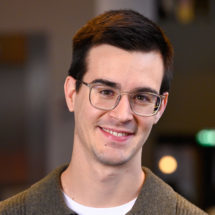
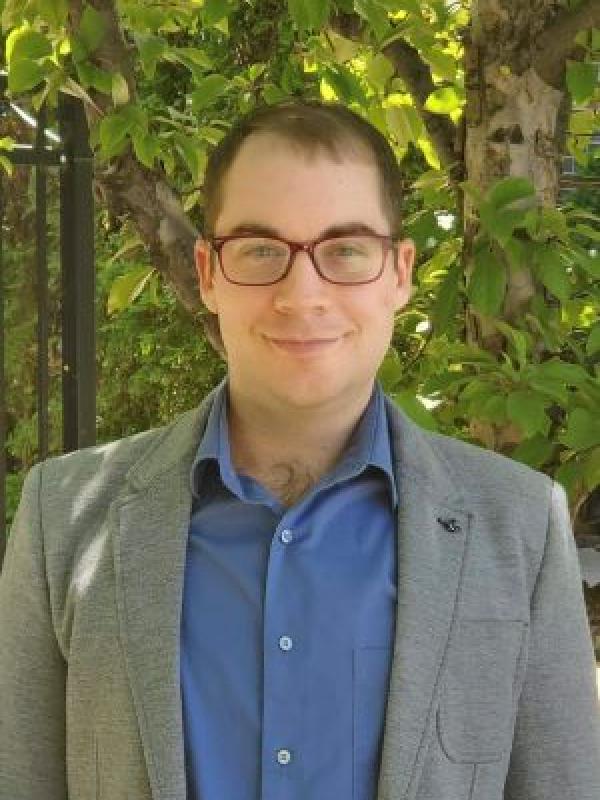
Philip Zachernuk is an Associate Professor in the Department of History at Dalhousie University, specializing in Modern African history with emphasis on intellectual traditions, slavery, colonialism, and educational systems. His scholarship bridges West African historical contexts with transnational Pan-African movements and diasporic engagements. His educational background includes a BA and MA from Dalhousie University and a PhD from the University of Toronto. Zachernuk's research examines how African intellectuals navigated colonial structures while redefining continental identity, particularly through education and print culture in Nigeria. His work challenges Eurocentric historical frameworks by centering African epistemological agency. Recent publications reveal sustained focus on Edward Wilmot Blyden's intellectual legacy, West African creolization processes, and the complexities of Pan-African cultural production. His scholarship demonstrates evolving engagement with animal studies, anonymity in colonial public spheres, and the economic dimensions of pre-independence Africa, reflecting interdisciplinary expansion within African historiography. Zachernuk teaches core courses including Slavery and Slaving in Global History, Rise and Fall of African Slavery, Wars and Revolts in 19th Century Africa, and Topics in African History (Nationalism & Independence), maintaining active office hours for student engagement in Winter 2025.
Dr. Asier Moneva is a Postdoctoral Researcher at the Netherlands Institute for the Study of Crime and Law Enforcement (NSCR) and The Hague University of Applied Sciences , specializing in cybercrime , environmental criminology , and situational crime prevention . His work focuses on offender decision-making in cyberspace, cybercrime victimization patterns, and the application of data science to crime analysis. Education : PhD in Criminology (2020), Master in Crime Analysis and Prevention (cum laude, 2017) from Miguel Hernández University. Current Role : Analyzing cybercrime patterns through environmental criminology frameworks and data science methodologies. Moneva's research examines longitudinal offending patterns in cybercrime, particularly through analyses of web defacement archives ( Zone-H data) and hacker behavior. His studies reveal extreme concentration of cybercrime among chronic offenders, with 2.9% of hackers responsible for 68.5% of defacements. He also investigates repeat victimization dynamics in digital environments and the effectiveness of warning banners as deterrents. Recent publications focus on ransomware payment decisions by SMEs, stolen data markets on Telegram, and the intersection of familial relationships with cybercrime involvement. His work combines quasi-experimental designs , crime scripting , and conjunctive analysis to develop prevention strategies.
Dr Wasim Ahmad is a Lecturer in Marketing at the Department of Marketing, Lancaster University Management School (LUMS), having joined the institution in January 2024. His prior academic appointments include Monash University, Florida State University, Teesside University, and Fujian University of Technology, where he conducted research, taught undergraduate/postgraduate modules, and led curriculum development. Education: Ph.D. in Marketing, University of International Business and Economics PostDoc, Florida State University Research Interests: Dr Ahmad investigates consumer behaviour with emphasis on negative emotions (brand hate, betrayal) and extreme responses to brands across cultural contexts. His work spans sustainability-oriented innovation in B2B firms, eco-brand strategy, and cross-cultural CSR implementation—particularly during crises like the pandemic. He employs quantitative methodologies including experimental designs and meta-analysis, frequently examining digital marketing phenomena such as virtual influencers, travel apps, and dark patterns in online interfaces. Publication Trends: His 2023-2025 output reveals concentrated research on brand hate consequences in B2B relationships, sustainability innovation linked to triple-bottom-line performance, and cross-cultural digital behaviour (e.g., social media addiction, travel app usage). Key journals include Journal of Business Research , Industrial Marketing Management , and Annals of Tourism Research , demonstrating interdisciplinary reach across marketing, sustainability, and tourism. Scientific Awards: No specific awards, prizes, or fellowships mentioned in source materials Advising and Grants: Dr Ahmad actively supervises PhD candidates in green marketing topics (product sustainability, eco-brand orientation) using quantitative approaches. He teaches core modules including International Marketing (MKTG101), Strategic Marketing (MKTG301), and Marketing Research (MKTG212). No grant funding details were provided in the directory. Labs and Teams: No dedicated research labs or teams specified in current affiliation Collaborative work evident in B2B sustainability studies with international co-authors
Lars Boje Mortensen is a Professor at the Department of Culture and Language, University of Southern Denmark. His work spans Latin literature, Nordic medieval studies, and the history of textual heritage, with a particular focus on classical reception in medieval Europe and the transformation of cultural knowledge through manuscript studies. Key Research Areas: Latin literature; Nordic medieval literature; Cultural heritage; Manuscript transmission; Historical periodization; Digital humanities applications Awards: Recipient of Dronning Margrethes Romerske Pris (2016), Fyns Stifttidendes Forskerpris (2014), Jarl Gallén Prize (2013), and Københavns Universitets guldmedalje (1985) His recent publications emphasize book historical perspectives, comparative analysis of medieval literatures, and the materiality of textual traditions. He co-edited A Companion to Saxo Grammaticus (2024), exploring Denmark's national epic through cross-cultural lenses. Active in public humanities, Mortensen contributes to the Mægtige Middelalder podcast, challenging traditional period labels like 'Middle Ages' in episodes such as Hvornår er middelalderen? (2025). His projects include CODICUM (2025-2031), examining medieval book networks, and AntCom (2023-2026), bridging classical heritage with modern citizen humanities.
Matt Denny is a Teaching Fellow in Film & Television Studies at the University of Warwick's Faculty of Arts, where he also serves as Widening Participation and Outreach Officer. He convenes core modules including Visual Cultures, Transnational Action Cinema, and Film Analysis and Methods for both undergraduate and postgraduate students, while acting as primary contact for SMLC Joint Honours students. He earned his First Class BA, MA for Research, and PhD (2016) all in Film and Television Studies from Warwick. His doctoral thesis examined film authorship and postmodern cinema, establishing foundations for his ongoing research trajectory. Denny's research centers on Film Theory with emphasis on authorship and representation, Contemporary Hollywood Cinema specializing in action genres, British Horror Cinema including folk horror and gothic traditions, and Film-Philosophy exploring post-structuralism and posthumanism. His work consistently examines intersections between genre conventions, philosophical frameworks, and contemporary socio-technological concerns. His 15 most recent publications reveal strong thematic continuity in folk horror studies, posthuman representations, and genre theory. Denny frequently analyzes how horror and science fiction reflect contemporary anxieties about technology, identity, and temporality, with recurring focus on folk horror's resurgence and AI's philosophical implications in cinema. Denny actively contributes to academic communities through memberships in The Fear Network, British Association of Film, Television and Screen Studies (BAFTSS), and International Gothic Association. His public engagement includes podcast appearances on Gender and AI, Eavesdropping at the Movies, and TRT World discussions about Scorsese and Marvel cinema. Though previously conducting research primarily in personal time without institutional funding, Denny now benefits from 10% research allocation under Warwick's new workload model. He has presented at numerous international conferences while maintaining significant teaching responsibilities across multiple course levels. Denny leads departmental outreach initiatives and collaborates with Warwick's Institute of Advanced Studies through The Fear Network. His interdisciplinary approach connects film studies with philosophy, gender studies, and emerging technologies through projects like the Genetics: Science and Society module with IATL.
Kimia Zamiri Azar serves as an Assistant Professor in the Department of Electrical and Computer Engineering at the University of Central Florida, focusing on hardware security and verification methodologies. Her research bridges theoretical formal methods with practical security implementations in semiconductor design and testing. Her educational background includes: Ph.D. in Electrical and Computer Engineering, George Mason University (2021) Postdoctoral Research, University of Florida Dr. Azar's research spans hardware security with emphasis on system-level verification, VLSI design-for-trust, and advanced IC testing. She pioneers techniques in logic locking, secure heterogeneous integration, and IC supply chain security, developing frameworks for authenticated encryption in Systems-in-Package and runtime security monitoring. Her work integrates formal verification with innovative testing methodologies to address hardware trust challenges across the semiconductor lifecycle. Analysis of her recent publications reveals two dominant trends: (1) Application of large language models (LLMs) to hardware design tasks including high-level synthesis code generation and RTL optimization, and (2) Advancement of secure heterogeneous integration techniques for System-in-Package architectures with focus on counterfeit prevention and split-test security protocols. These directions address critical gaps in hardware trustworthiness amid increasingly complex semiconductor supply chains. Her scientific contributions have earned significant recognition: Best Paper Award at ICCAD 2019 Best Paper Award at ISVLSI 2020 Best Paper Award at ICCAD 2020 Best Paper Award at IEEE DCAS 2020 Best Paper Award at HOST 2022 Best Paper Award at DATE 2023 Dr. Azar secures substantial research funding from premier agencies including NSF, SRC, DARPA, AFRL, DoD (NG), and Microsemi. Her grants support projects spanning hardware security validation frameworks, secure heterogeneous integration, and AI-augmented verification methodologies. She actively mentors students in her research group, guiding publications in top venues like IEEE D&T, IEEE TC, and DAC while fostering industry-academic collaborations. Her work directly impacts semiconductor security standards through patented innovations and open-source verification tools. As an active IEEE and ACM member, she contributes to community advancement through conference organization (HOST, DATE), journal editorial roles, and workshop leadership on hardware security standards. Her research group collaborates with semiconductor industry leaders to translate theoretical security frameworks into practical design-for-trust methodologies for next-generation integrated circuits.
Jian Liu is an Assistant Professor in the Min H. Kao Department of Electrical Engineering and Computer Science at the University of Tennessee, Knoxville. He leads the Mobile Sensing and Intelligence Security (MoSIS) Lab, focusing on robust AI, mobile security, computational sensing, and smart healthcare. His research has been published in top-tier venues like S&P/Oakland, CVPR, and IEEE journals, with over 6,400 citations. He holds seven U.S. patents, including two licensed to industry. Education: PhD in Electrical and Computer Engineering from Rutgers University (2019), ME and BE in Communication Engineering from Wuhan University of Technology (China). Research interests include trustworthy AI, federated learning, privacy-preserving technologies, and adversarial machine learning. His recent work includes HarmonyCloak (music copyright protection against generative AI), 3D facial authentication systems, and robust backdoor attack defenses. Notable awards include the University of Tennessee’s Professional Promise in Research Award (2025), Stanford’s World’s Top 2% Cited Scientists, and multiple best paper awards. He teaches Mobile and Embedded System Security (ECE 469/569) and has supervised projects funded by UT Grand Challenges grants. Labs/Teams: MoSIS Lab focuses on AI-driven security solutions, wearable sensing, and healthcare applications. Collaborations involve interdisciplinary projects with UT’s engineering and medical schools.
Jon Crowcroft is the Marconi Professor of Communications Systems in the Department of Computer Science and Technology at the University of Cambridge, and serves as the Chair of the Programme Committee at the Alan Turing Institute. He is also a Fellow of Wolfson College, Cambridge, and a visiting professor at the Department of Computing at Imperial College London. With a career spanning over three decades in computer networking research, Professor Crowcroft has made seminal contributions to the development of the Internet and continues to be highly active in cutting-edge research areas. His educational background includes: BA in Physics from Trinity College, University of Cambridge (1979) MSc in Computing from University College London (1981) PhD from University College London (1993) Professor Crowcroft's research spans multiple domains in computer networking and distributed systems. He has worked in Internet support for multimedia communications for over 30 years, with three main focus areas: scalable multicast routing, practical approaches to traffic management, and the design of deployable end-to-end protocols. His current research focuses on opportunistic communications, social networks, and techniques to scale infrastructure-free mobile systems. He is particularly known for his 'build and learn' paradigm for research and has recently been exploring decentralized digital identification systems, smart cities, and edge computing. His work often bridges theoretical foundations with practical implementations, emphasizing privacy-preserving approaches and sustainable network architectures. Professor Crowcroft has received numerous prestigious awards recognizing his contributions to the field, including: Election as Fellow of the Royal Society (2013) ACM SIGCOMM Award (2009) ACM Fellow (2002) Fellow of the Royal Academy of Engineering IEEE Fellow (2004) Chartered Fellow of the British Computer Society Throughout his career, Professor Crowcroft has advised numerous PhD students, including Mark Handley and Pan Hui, who have themselves become influential researchers in the networking community. He has authored several influential books that have been adopted internationally in academic courses, such as 'TCP/IP & Linux Protocol Implementation,' 'Internetworking Multimedia,' and 'Open Distributed Systems.' His research has been supported by various grants and collaborations with both academic institutions and industry partners, contributing to successful startup projects and influencing Internet standards. Professor Crowcroft is actively involved in several research initiatives, including serving on the Scientific Council of IMDEA Networks Institute since 2007 and the advisory board of the Max Planck Institute for Software Systems. He is also a director of the Matrix Foundation, which develops open network protocols. His current research group focuses on privacy-preserving analytics, decentralized systems, and the future of Internet architecture.
Jeremy W. Smith is an Assistant Professor of Music Theory at The Ohio State University. His research focuses on the analysis of electronic dance music (EDM), particularly the role of continuous processes such as glissandi, accelerations, and filter sweeps in shaping subgenre aesthetics and listener experience. He also explores video-game music through semiotic and hermeneutic frameworks. His teaching includes courses on popular music analysis and video-game music studies. Smith holds a PhD from the University of Minnesota (2019) and degrees from the University of Toronto, including a BM (2013), BEd (2013), and MA (2015). As a performer, he plays euphonium and trombone with local ensembles. Education: PhD, Music Theory, University of Minnesota, 2019 MA, Music Theory, University of Toronto, 2015 BM, Music, University of Toronto, 2013 BEd, Education, University of Toronto, 2013 Research Interests: Smith’s work examines how continuous processes in EDM contribute to structural and aesthetic functions, including orientation, ornamentation, and disorientation. He applies semiotic analysis to fan adaptations of video-game music, such as The Legend of Zelda: Majora’s Mask . His analyses address broader questions about music’s role in cultural and technological contexts. Publications: His recent articles explore EDM subgenres, breakdown aesthetics, and the technical creation of continuous processes via automation curves. While his work emphasizes EDM, it also intersects with pop music and game music studies, highlighting cross-disciplinary themes like authenticity in electronic music and listener engagement.
André Sant'Anna is an Assistant Professor of Philosophy at Underwood International College, Yonsei University in Seoul, South Korea. He earned his PhD from the University of Otago Department of Philosophy in 2018 and has held postdoctoral positions at the University of Geneva (Switzerland, 2023-2025), University of Cologne (Germany, 2022-2023), and Washington University in St. Louis (USA, 2020-2021). He currently serves as President of the Eurasian Memory Network (EMN) and is a member of the Steering Committee of the Philosophy of Memory Organization (PhOMO). Dr. Sant'Anna's research focuses on the philosophical intersections between memory, perception, imagination, and metacognition. His work examines the nature of episodic memory, particularly the phenomenology of remembering, the relationship between memory and imagination, and the role of metacognition in memory processes. He has made significant contributions to debates on the continuity versus discontinuity between memory and imagination, the nature of autonoetic consciousness, and the puzzle of alethic memory. His recent publications demonstrate a strong focus on developing metacognitive approaches to memory phenomena, challenging existing paradigms, and bridging philosophical analysis with empirical findings from cognitive science. His work has appeared in leading journals including Synthese , Philosophy and the Mind Sciences , and International Journal of Philosophical Studies . Dr. Sant'Anna has received recognition through editorial roles including PhilPapers Editorships on Theories of Memory. He has co-edited significant works like Current Controversies in Philosophy of Memory (2022) and is contributing to The Oxford Handbook of Philosophy of Memory (forthcoming). His collaborative research extends across international boundaries, with frequent co-authorship with prominent scholars including Kourken Michaelian, Denis Perrin, and César Schirmer dos Santos. His work has been translated into multiple languages, including Portuguese, making philosophical memory research accessible to broader academic communities.
Charlotta Krispinsson is a Senior Lecturer in Art History at Umeå University, Sweden. She specializes in 17th-century art and visual culture with a focus on copying practices, portraiture, and the use of prints in Northern Europe. Previously, she held positions at Södertörn University, Uppsala University, and completed a postdoctoral fellowship at Humboldt University in Berlin funded by the Swedish Research Council. Her educational background includes a PhD in Art History from Stockholm University (2016) with a dissertation on national portrait collections and late 19th- and early 20th-century art historical writings on early modern portraiture. She has also been a research fellow at the Rubenianum in Antwerp (2023). Krispinsson's research centers on how prints functioned as vehicles for artistic transmission in 17th-century Sweden and Norway, examining how painters like Gottfried Hendtzschel and Elias Fiigenschoug used prints after Rubens' designs for church commissions. Her work challenges traditional art historical narratives by highlighting the importance of copying practices rather than originality in peripheral European contexts. Her recent publications demonstrate a clear trajectory from her doctoral work on portrait collections toward increasingly specific studies of copying practices in Northern European art. She examines how prints after Rubens were used as templates for religious paintings in Norwegian churches, revealing how artistic production functioned in regions distant from major artistic centers. Postdoctoral Fellowship funded by Swedish Research Council (Vetenskapsrådet) Krispinsson has presented her research at numerous international conferences including NORDIK meetings across Scandinavia. She teaches art history at multiple Swedish universities and has been actively involved in conference organization, particularly sessions on pre-modern art histories of migration and exchange. Her current research continues to explore the widespread use of prints as models for painting in seventeenth-century Sweden.
Lanita Jacobs is a Professor at the University of Southern California , holding joint appointments in the Department of American Studies & Ethnicity and the Department of Anthropology . Her research focuses on language as a mediator of African American culture and identity , utilizing multi-sited ethnographies across hair care communities, hospitals, and standup comedy venues. She earned her Ph.D. in Linguistic Anthropology from the University of California, Los Angeles (1999) , preceded by an M.A. (1996) and B.A. (1993). Her scholarly work spans linguistic anthropology, discourse analysis, and cultural studies , examining topics such as race and humor , language and gender , anthropology of the body , and race, health, and disability . She has published extensively on these themes, including two monographs: From the Kitchen to the Parlor (2006) and Truth and Racial Authenticity in African American Standup Comedy (2022). Her research has been funded by prestigious grants such as the NIH R01 Continuation Grant and the Wenner-Gren Foundation Pre-Doctoral Grant . Jacobs has received numerous honors, including the Fight On Faculty Award (2010), USC Mellon Award for Excellence in Faculty Mentoring Undergraduates (2007-2008), and induction into the USC Chapter of Phi Kappa Phi (2018-2019). She mentors students across disciplines, including Mellon-Mays Scholars , McNair Scholars , and SOAR Scholars , emphasizing interdisciplinary research and cultural representation . Key research areas: Language and Identity in Diasporas , Race and Performance , Ethnographic Methodology Recent article trends: 2022 book on standup comedy, 2015-2006 work on disability narratives , cosmetology ethnography , and post-9/11 discourse
Dr. Boris Paschke serves as a Guest Associate Professor of New Testament at the Evangelische Theologische Faculteit Leuven . Holding a Ph.D. in New Testament Studies from ETF Leuven (2009), he has been actively engaged in theological education since 2001, teaching at ETF Leuven and in public secondary schools in Brussels. Ph.D. in New Testament Studies (ETF Leuven, 2009) Licentiaat in de godgeleerdheid (M.Th., ETF Leuven, 2004) M.A. in Biblical Studies (University of Gloucestershire, 2001) Paschke's research focuses on New Testament theology , apocryphal literature , and early Christian worship practices , particularly prayer to Jesus and the Holy Spirit. His work explores intertextuality (e.g., Song of Songs in Romans 3), historical contexts (Roman censorship, slavery), and theological intersections between Christianity and Islam. Recent publications highlight trends in liturgical theology (2024 analyses of 1 Timothy 1:12 and Peräa), prayer studies (2023 essays on Tertullian and 2 Timothy 1:18), and historical criticism (2016-2022 works on Semler, Acts of John, and Philemon). He participates in multiple academic societies, including the Society of Biblical Literature and the Association pour l’étude de la littérature apocryphe chrétienne , and has co-authored works on ancient speech impediments (2016, 2023).
Andre C. Willis serves as the Willard Prescott and Annie McClelland Smith Assistant Professor of Religious Studies at Brown University. His academic work bridges philosophy of religion, Enlightenment thought, and African American religious traditions. Willis has established himself as a significant scholar examining the intersections of hope, race, and democratic citizenship through both historical and contemporary lenses. Willis's research interests center on Enlightenment reflections on religion (particularly David Hume's work), African American religious thought, critical theory, and democratic citizenship as it relates to hope, recognition, and belonging. His scholarship develops a distinctive framework distinguishing between 'trivial hope' (market-driven, future-oriented aspirations) and 'deep hope' (a discipline of the present moment that confronts life's fundamental realities without delusion). This work connects Hume's philosophical contributions with African American religious traditions, particularly examining Martin Luther King Jr.'s theology of hope in contrast to more contemporary political approaches. His publications reveal consistent engagement with Hume's religious philosophy, race theory, and African American religious thought. Willis has authored the book Toward a Humean True Religion: Genuine Theism, Moderate Hope and Practical Morality (2015) and numerous articles exploring Hume's legacy regarding race, Obama's racial legacy, and dissident theo-politics. His recent work continues to develop his distinctive analysis of hope as a present-oriented discipline rather than future aspiration. At Brown, Willis teaches courses spanning Christianity and economic inequality, foundational texts in African American theology, David Hume and religion, religion and postmodernism, and Black and Brown religion in America. His teaching reflects his research interests, connecting philosophical inquiry with contemporary social and religious concerns.
Prof. Dr. Hilary Anne-Marie Mooney serves as Professor of Catholic Theology and Religious Education at the University of Education Weingarten, Germany, a position she has held since her 2009 appointment. Previously, she was appointed "außerplanmäßige Professorin" at Albert-Ludwigs-Universität Freiburg in 2006 and held visiting professorships at Weingarten (2007-2008). Her academic career spans multiple institutions including Boston College, Eberhard-Karls-Universität Tübingen, and Albert-Ludwigs-Universität Freiburg, where she conducted habilitation research from 1998-2000 and 2001-2005. Education: Bachelor of Arts in Philosophy, Ancient Greek and Latin, University College Dublin Baccalaureate in Divinity in Philosophy and Theology, Milltown Institute of Theology and Philosophy, Dublin Doctorate in Theology, Phil.-theol. Hochschule Sankt Georgen, Frankfurt am Main (1991) Habilitation in Dogmatics, History of Doctrine, and History of Theology, Albert-Ludwigs-Universität Freiburg (2003) Dr. Mooney's research centers on systematic theology and historical theology, with specialized expertise in ancient church history and medieval theology. She is internationally recognized for her groundbreaking work on Johannes Scottus Eriugena's theological framework, particularly regarding theophany and theological anthropology as demonstrated in her monograph Theophany: The Appearing of God According to the Writings of Johannes Scottus Eriugena (2009). Her scholarship consistently bridges patristic sources (especially Gregory of Nyssa) with contemporary theological challenges, exploring themes of imago Dei, eschatology, and mystical theology within early Christian thought. She maintains active dialogue with modern theologians including Hans Urs von Balthasar and Bernard Lonergan, examining intersections between theological aesthetics and anthropological foundations. Analysis of her 15 most recent publications reveals three dominant research trajectories: first, sustained engagement with Eriugena's thought across multiple dimensions including creation theology, wisdom literature, and sin theology; second, comparative studies of patristic writers (particularly Gregory of Nyssa) on eschatological themes and imago Dei concepts; third, contemporary applications of historical theology to issues of pluralism, tolerance, and scriptural interpretation. Her methodological approach consistently integrates historical-critical analysis with hermeneutical reflection, demonstrating how ancient theological frameworks address modern anthropological and ecclesiological questions. Scientific Awards: Lonergan Fellowship at Boston College (1990) DFG Habilitation Fellowship (1998-2000) Dr. Mooney has provided significant academic leadership through her service on the executive board of the German section of the European Society for Catholic Theology (2015-2023) and editorial roles including co-editing the series Ökumenische Religionspädagogik (2009-present). While specific grant details beyond her DFG fellowship are not enumerated, her sustained research output indicates continuous funding support. Her teaching encompasses systematic theology, historical theology, and religious education methodology, though specific student mentorship details are not provided in the source text. She maintains active international scholarly engagement through presentations at major conferences including the International Conference on Patristic Studies in Oxford and the Annual Lonergan Workshop at Boston College. Her collaborative work extends across European theological networks, particularly through her involvement with Pro Oriente publications and the European Society for Catholic Theology. Current research directions appear focused on integrating patristic anthropology with contemporary theological challenges, as evidenced by her 2024 publications addressing memoria, transformation, and biblical-doctrinal roots within modern theological frameworks.