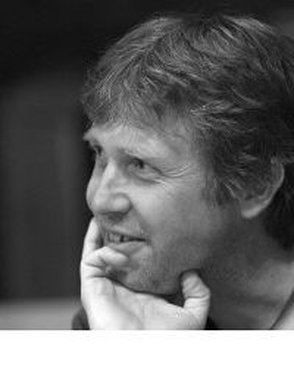
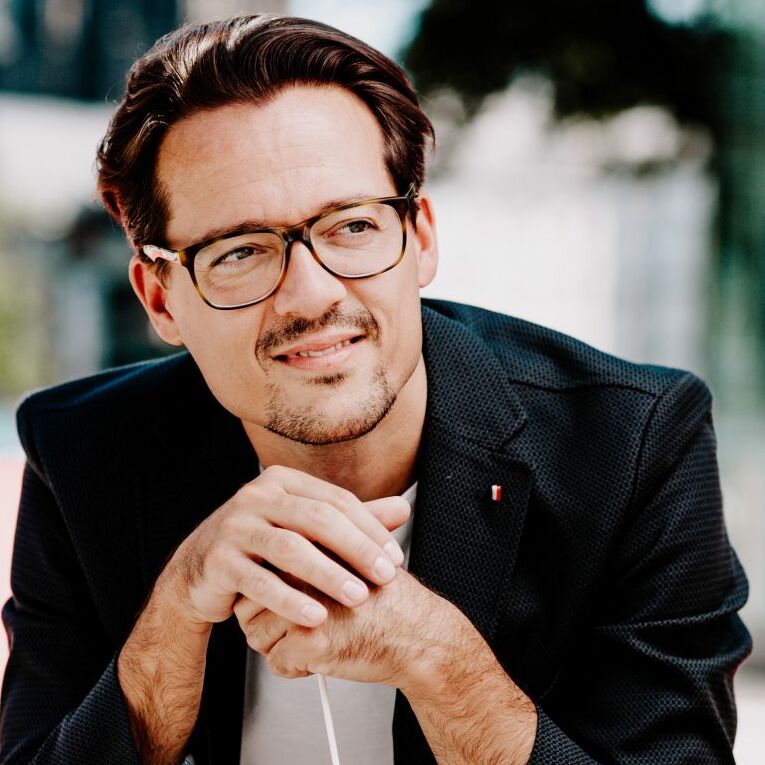
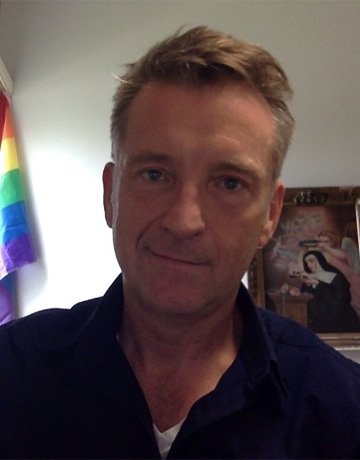
David Bergmüller is a Professor at the Music and Arts Private University of the City of Vienna since September 2023, previously holding a position at the Cologne University of Music and Dance. A virtuoso lutenist renowned for his "virtuoso lyricism" and "extraordinarily subtle and intoxicating playing", he combines historical performance practices with contemporary compositions. His research focuses on: Historical lute techniques Electronic-acoustic sound design Baroque chamber music collaborations Contemporary classical crossover innovations Music composition for historical instruments Recent trends in his work include experimental sound synthesis and genre fusion. He has received international acclaim through awards like the Franz Aumann Prize and Opus Klassik 2023. Active as a basso continuo player, he collaborates with ensembles including Collegium 1704 and Concentus Musicus.
Thilo Frank is a Lecturer in Church Music at the University of Music Würzburg, where he serves as Coordinator for the DVVLIO project (Digitization, Mediation, and Networking in the Teaching of International Organ Art), a third-party funded initiative focused on innovation in university teaching. He joined the institution on November 1, 2021. His educational background includes: Church Music (A-Diploma) at the Stuttgart State University of Music and Performing Arts under Prof. Werner Jacob Music Education with a major in piano under Prof. Patrick O'Byrne Master classes in organ with renowned musicians including Marie-Claire Alain, Daniel Roth, and Luigi Tagliavini Choir conducting courses with Martin Behrmann, Helmuth Franz, and Manfred Schreier Training in early musical education based on Edwin Gordon's learning theory Junior Music Course teacher training at the Yamaha Music Education School in Hamburg Thilo Frank's professional interests center around church music, with specializations in liturgy, hymnology, basso continuo, organ performance, registration practice, and church music worship practice. His work bridges historical organ traditions with contemporary digital approaches to music education and performance. He has made significant contributions to the preservation and interpretation of Southern German organ traditions, particularly through his work on the Fellbach organ and the International Organ Festival. His notable recognition includes: Cultural Prize of the large district town of Emmendingen (2002) Throughout his career, Frank has directed numerous musical ensembles and established comprehensive music education programs, including a singing school in Fellbach ranging from toddler singing to youth choirs. His DVVLIO project represents a significant grant-funded initiative focused on innovative approaches to organ music education in the digital age. Frank founded the Fellbach International Organ Festival (IOF) with the core theme 'The Lost Southern German Tonal Language' and developed a unique three-manual organ with 31 stops in the South German Baroque style. He also directed the Fellbach Choir and the 'Laudate' senior citizens' choir, demonstrating his commitment to music education across all age groups.
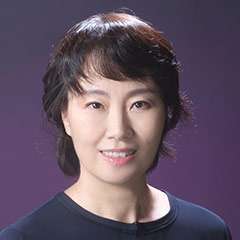
Sung-Hwa Park serves as an Adjunct Instructor in Keyboard Studies at the University of Southern California's Thornton School of Music, where she has been faculty since 2002. She currently directs the Functional Skills program for keyboard majors and has extensive international engagement including workshops at the University of Taipei, master classes across Chinese conservatories sponsored by Yamaha-China, and seminars at the Southern University of Science and Technology in Shenzhen. Her educational background includes: Bachelor's degree in Piano Performance from Yonsei University, Korea Doctor of Musical Arts (DMA) in Piano Performance from the University of Southern California specializing in classical repertoire and electronic music Park's research centers on piano pedagogy innovation, particularly in improvisation techniques and historical performance practices. She has developed specialized curricula for keyboard harmony and figured bass realization, bridging Baroque-era practices with contemporary class piano instruction. Her work emphasizes practical application through structured method books and scholarly realizations of early music repertoire. Her publications reveal a dual focus: pedagogical method books for modern piano improvisation and scholarly reconstructions of Bernardo Pasquini's basso continuo works. This combination demonstrates her unique integration of historical musicology with practical teaching methodologies, particularly in the underexplored area of keyboard continuo realization for modern pedagogy. As an educator, Park has directed multiple institutional programs including USC's Functional Skills curriculum and Seoul's Noah Arts Hall keyboard musicianship program. She has supervised teaching assistants, coordinated class piano programs across multiple universities, and conducted international master classes sponsored by Yamaha-China, significantly influencing piano pedagogy standards in Asia and the United States.
Michael Bawtree is a Lecturer in Conducting at the Royal Conservatoire of Scotland, specializing in orchestral, choral, and operatic performance. He holds leadership roles as Chorus Director of the Edinburgh Royal Choral Union, Music Director of the Glasgow Chamber Choir, and Artistic Director of the Edinburgh University Chamber Choir. His career spans international collaborations with orchestras such as the Royal Scottish National Orchestra, Scottish Chamber Orchestra, and London Philharmonic Choir, alongside engagements in opera, ballet, and festivals. He studied Music and Organ at Christ’s College, Cambridge, and conducting at the Royal Conservatoire of Scotland. Bawtree is a prominent advocate of contemporary music, having conducted world premieres of works by composers like Judith Bingham and Sir James MacMillan. His work includes innovative projects, such as a Mumbai-based choral initiative uniting children from diverse backgrounds, and guest artist roles at institutions like Vanderbilt University. Recent engagements include conducting at the Scottish Coronation of King Charles III (2023), and international tours across Europe, Australia, and the Americas. His expertise spans organ performance, continuo playing, and choral education, with a focus on fostering emerging talent through teaching and ensemble direction.
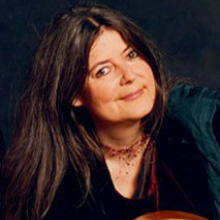
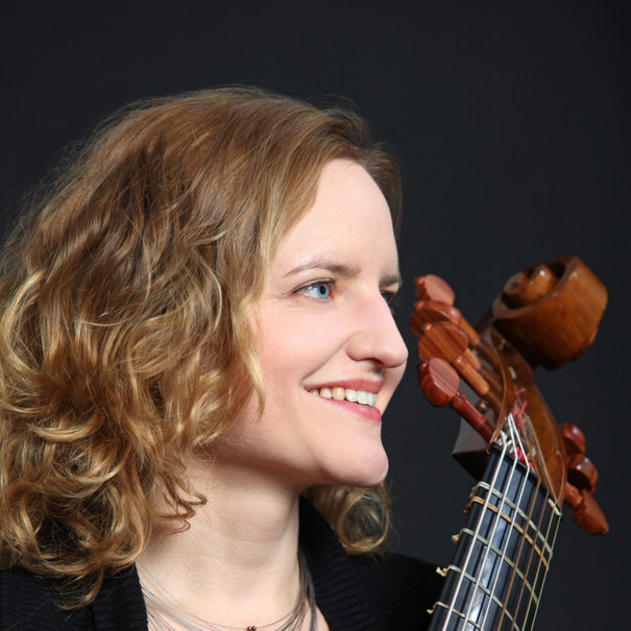
Susie Napper is a Course Instructor (Baroque Cello) at McGill University’s Schulich School of Music, concurrently teaching at the University of Montreal and the Royal Conservatory of Copenhagen. She holds a distinguished career as a cellist, gambist, and continuo player specializing in 17th- and 18th-century repertoire. Notable roles include principal cellist with groups like Stradivaria (France), Ensemble Caprice, and Les Boréades (Montreal), alongside founding the Philharmonia Baroque Orchestra and the Festival international Montréal Baroque (2001–present). Education: Juilliard School (New York), Paris Conservatoire Ensembles: Les Voix humaines (viol duo), Trinity Consort of Portland Performance History: Tours in Asia, Europe, Middle East, and beyond Her discography spans Harmonia Mundi, EMI, and ATMA labels, emphasizing two-viol repertoire. Awards include the 2002 Prix Opus (Québec) and 2011 Montreal Woman of Merit for the Arts.
Prof. Carsten Lohff is a Professor of Historical Keyboard Instruments at the University of the Arts Bremen since 2001. He holds diplomas in Harpsichord and Music Theory from the Hamburg University of Music and Theatre (1984–1990). His career includes teaching at the Universities of Nuremberg-Augsburg and Trossingen before his appointment at Bremen. He is renowned for his numerous CD recordings as a continuo player and soloist, collaborating with ensembles like Cantus Cölln and Le Concert Brisé. Notable recordings include La Barca d´Amore and Musique Transalpine . His performances emphasize historically informed Baroque music interpretation. Prof. Lohff regularly organizes student concerts and open events at the University of the Arts Bremen, such as the 2024 Studio Concert and the Fête de la Musique 2025 open day. His teaching focuses on advanced harpsichord techniques and performance practice.
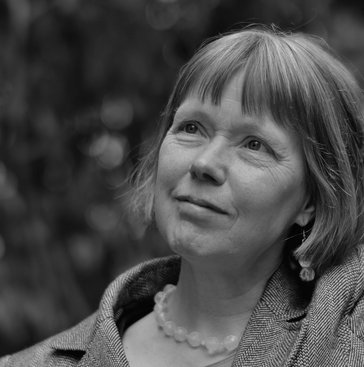
Ingelore Schubert is a faculty member at the Hochschule für Künste Bremen, teaching historical keyboard instruments and basso continuo since 1988. She specializes in early music performance, particularly on harpsichord and historical organs. Her career includes extensive concert tours across Europe and the former USSR with the Marais Consort, highlighted by residencies such as the 2007 'Zeitsprünge' festival in Bonn. Supported by the German Cultural Ministry’s touring program, her performances have been broadcast on major radio stations including BR, WDR, NDR, SWR, and SR. Education: Studied in Hamburg under Gisela Gumz and in Amsterdam under Ton Koopman, completing her concert diploma in 1983. Further masterclasses with Robert Kohnen, Jos van Immerseel, and Gustav Leonhardt enhanced her expertise. Her teaching focuses on historical instruments, continuo playing, and vocal coaching. The press praises her ability to make music 'speak' through her instrument, placing her among the leading interpreters of her field.
Marcos Krieger is Professor of Music and Program Director of GO Arts of Italy at Susquehanna University. His academic work focuses on Renaissance and Baroque keyboard music and historical performance practices. Research expertise includes: Renaissance/Baroque music from Spain, Italy, Germany Early music treatises Keyboard repertoire from Iberia Basso continuo historical practices Christian hymnology of the Xerente Tribe Portuguese lyrical diction Performance repertoire includes major instrumental and choral works by Bach, Schütz, and Monteverdi, with solo recitals across North/South America and Europe.
Frederick James (Freddie James) is an Associate Lecturer at the Lucerne School of Music (part of Lucerne School of Applied Sciences and Arts), where he leads an organ class. He serves as Hauptorganist at St. Maria zu Franziskanern parish in Lucerne. His roles combine teaching, performance, and historical music practice. Education: Choral training at Southwark Cathedral, London Organ studies with Jacques van Oortmerssen at Amsterdam Conservatory Master’s in Musicology from St John's College, University of Cambridge Further studies at Stuttgart State Academy of Music (with Ludger Lohmann, Jörg Halubek) and Schola Cantorum Basel (with Francesco Corti, Andrea Marcon, Tobias Lindner) Research & Performance Focus: Specializes in Baroque and Classical organ repertoire Expertise in historical performance practices and liturgical music Active as continuo performer with ensembles like Venice Baroque Orchestra and Luzerner Sinfonieorchester Awards: Recognized in prestigious organ competitions worldwide, including Innsbruck, Alkmaar, and Pistoia Artistic Activities: Solo recitals at landmarks like Westminster Abbey, King’s College Cambridge, and Grossmünster Zürich Regular collaborations with international orchestras and early music groups
Johannes Strobl serves as Lecturer and Study Coordinator for Bachelor programs in Classical Music Instrumental, Church Music, and Wind Music Direction at the Lucerne School of Music, part of the Lucerne University of Applied Sciences and Arts. He is affiliated with the Institute of Classical and Church Music. Education: Strobl studied at the Mozarteum University Salzburg under Heribert Metzger, earning concert and teaching diplomas in organ and Catholic church music. He further specialized in historical performance at the Schola Cantorum Basiliensis, studying organ, harpsichord, basso continuo, and improvisation. Additional studies include musicology and Romance languages at the University of Salzburg. Research Focus: His expertise encompasses historical performance practices, particularly Baroque and early music repertoires, with special emphasis on organ literature and choral conducting. Strobl researches performance traditions of sacred music in monastic contexts and multi-choral spatial compositions. Professional Activities: As artistic director of Cappella Murensis and concert series at Muri Abbey, he revitalizes historical performance traditions. His discography includes award-winning recordings of Bach, Rathgeber, and Gabrieli, recognized internationally for their scholarly reconstruction of historical performance contexts.
Florian Erdl is a freelance conductor and Professor of Conducting at the University of Music and Theatre Rostock, where he has served as interim professor since 2020 and assumed his current role in 2023. He holds significant experience as Principal Kapellmeister and Deputy General Music Director (GMD) at several theaters, including Stadttheater Pforzheim (where he also acted as provisional GMD), Schleswig-Holsteinisches Landestheater in Flensburg, and Graz Opera. Erdl has also served as Artistic and Musical Director of the Kammeroper Frankfurt for nearly a decade and currently oversees symphony concerts and opera productions at his academic institution. Erdl’s educational background includes studies in Orchestral Conducting and Accompaniment at the University of Music Franz Liszt in Weimar under Gunther Kahlert, Nicolas Pasquet, and Anthony Bramall. He further refined his skills through masterclasses with Bruno Weil in Munich. Additionally, he studied Directing at the Bavarian Theatre Academy Munich under Cornel Franz, and Music Theory under Stefan Rohringer and Ullrich Kaiser in Munich. His academic pursuits also encompassed Musicology and Philosophy. Erdl’s research and professional interests focus on orchestral conducting, opera direction, and music education. He is dedicated to fostering talent through collaborations with youth orchestras such as those in Schleswig-Holstein, Hessen, Mecklenburg-Vorpommern, and the Young Academy Rostock. His work bridges classical repertoire, contemporary performance practices, and pedagogical innovation in musical training. No scientific awards have been listed in the provided text. In his academic role, Erdl advises students in conducting and opera performance, though specific advisee names are not listed. Grants and funding details are not provided in the text. Erdl is actively involved with: the Kammeroper Frankfurt as its former director, Bayerische Symphonieorchester Munich (founded and conducted), Neurbrandenburger Philharmonie, Munich Symphony Orchestra, and collaborations with youth orchestras including the Young Academy Rostock (a program under Daniel Barenboim’s patronage).
Lea Rahel Bader is a Lecturer in Baroque Cello and Basso Continuo Practice at the Universität der Künste Berlin's Faculty of Music. She holds international acclaim as a performer of early and contemporary music, specializing in Baroque cello and viola da gamba. Her career began with the 'most promising baroque cellist' award at the 2012 Leipzig Bach Competition. Teaching: Baroque Cello, Basso Continuo for bass strings Affiliations: Ensemble United Berlin (Residence Ensemble at Konzerthaus Berlin), Lautten Compagney, Freiburger Barockorchester Research focuses on reviving neglected works like Domenico Lanzetti's cello concerto, and interpreting 20th/21st century compositions. Active in premiering new works through collaborations with composers like Helmut Oehring. Awards: Hanns-Eisler Prize, multiple competition victories Performance highlights include international festivals (Styriarte, York Early Music, Göttingen Händel Festival) and recordings with labels like Harmonia Mundi and Sony Music. Engages in interdisciplinary projects combining music with poetry and theater.
Carlos Goikoetxea Cancho is a Lecturer at the Mozarteum University Salzburg since 2019, teaching historical performance practice and early music. He holds additional roles as Professor of Fortepiano at the University of Music and Performing Arts Vienna since 2024. His expertise spans piano, fortepiano, and harpsichord, with performances as a soloist, chamber musician, continuo player, and Lied accompanist across Europe. He has won numerous competitions and contributed recordings for CDs, radio, TV, and documentaries. Education: Bachelor's in Piano (Salamanca) Studies under Imre Rohmann (piano), Wolfgang Brunner (fortepiano/harpsichord), and Reinhard Goebel (historical performance). Research & Performance: Specializes in early music and historical instruments, emphasizing Baroque and Classical repertoire. Active in ensemble leadership and interdisciplinary projects blending music and art. Awards: Multiple first prizes at competitions (specific names not listed). Advising & Grants: No explicit details provided in text. Labs/Teams: Engaged with Mozarteum's performance programs and collaborations with ensembles.
Mikayel Balyan is a Professor of Fortepiano at the Music and Arts University of the City of Vienna (MUK), a role he has held since 2014. He also serves as a lecturer for fortepiano at the University of Music and Performing Arts Vienna since April 2019. His expertise spans historical keyboard instruments, basso continuo, and aural training. Born in Yerevan, Armenia in 1981, he earned a concert diploma from the Basel Music Academy and advanced studies at Bremen and Hamburg universities. His research focuses on Baroque performance practices, historical improvisation, and early music interpretation. He has performed internationally with renowned ensembles and artists, including cellist Davit Melkonyan, resulting in acclaimed recordings with Sony Music/Deutsche Harmonia Mundi and upcoming releases on Vivat. Awards include the 2008 International Johann Heinrich Schmelzer Competition and the Bremen Music Festival's sponsorship prize. Balyan's pedagogical activities include master classes at the Salzburg Summer Academy and Winter Academies in Bremen. He is also an active composer, creating works in historical styles. His dual roles at Vienna’s leading music institutions underscore his contributions to both education and performance in early music.
Todd Michael Borgerding serves as an Associate Professor in the Department of Music, Theatre and Dance at Rhode Island College, teaching core music theory, sight singing, counterpoint, and historical literature courses including MUS 230-237, MUS 305, MUS 310, and MUS 360. His academic credentials include: Ph.D. in Musicology from the University of Michigan M.A. in Musicology from the University of Minnesota B.S. in Music Education from Minnesota State University, Mankato Dr. Borgerding's research centers on Renaissance and Baroque music with specialized expertise in gender/sexuality theory, Spanish and Latin American music traditions, and performance practices. His scholarly work critically examines intersections of music, rhetoric, sacred traditions, and identity in early modern Europe, particularly through analysis of liturgical contexts and cultural representations. His 1999-2006 publications reveal consistent thematic focus on Iberian musical traditions, with recurring exploration of homoeroticism in sacred spaces, rhetorical dimensions of vocal polyphony, and the cultural significance of choirboys. Key methodological approaches integrate historical musicology with gender theory and performance practice analysis. No scientific awards are documented in the available materials. The provided information contains no details regarding student advisement, doctoral supervision, or research grant funding.