Michael Winter is a Professor in the Department of Computer Science at Brock University, Canada. He holds a Habilitation from the University of the Federal Armed Forces, Munich (2002), a Ph.D. (Dr. rer. nat.) from the same institution (1998), and a Master of Computer Science (Dipl. Inform.) (1993). His research focuses on programming languages, semantics, program verification, relational methods, category theory, and fuzzy logic. He is the Managing Editor of the Journal on Relational Methods in Computer Science . Winter's academic roles include teaching courses such as COSC 2P05 (Programming Languages), COSC 3P91 (Advanced Object-Oriented Programming), and COSC 5P02 (Logic in Computer Science). He has advised numerous graduate and undergraduate students on topics including fuzzy relational analysis, program verification, and formal methods. His research contributions span over 100 publications in journals and conferences, emphasizing relational algebra, category theory, and their applications in computer science. His work integrates theoretical foundations with practical applications, such as developing tools like RelView for relational computation and exploring applications in ambient intelligence and data visualization. Winter collaborates internationally, contributing to conferences like RAMiCS and publishing in journals like Fuzzy Sets and Systems and Journal of Logical and Algebraic Methods in Programming .
Jonas Braasch is a Professor at Rensselaer Polytechnic Institute's School of Architecture and Associate Director for Research at the Experimental Media and Performing Arts Center (EMPAC). He teaches in the Graduate Program in Architectural Acoustics and leads research on collaborative virtual reality, binaural hearing, auditory modeling, and sensory substitution devices. His work has been funded by NSF, NSERC, and European agencies, and he holds dual PhDs in Electrical Engineering/Information Science and Musicology. His research integrates acoustic virtual reality systems, immersive museum soundscapes, telematic music, and assistive instrument design. Recent publications focus on networked immersive environments, spatial audio techniques, museum acoustics classification, and innovations in wind instrument design for accessibility. Publications emphasize the application of deep learning to acoustic prediction and multisensory integration.
Corrado Loglisci is an Assistant Professor at the Department of Computer Science, University of Bari Aldo Moro, Italy. His research focuses on Temporal Data Mining , Machine Learning , and Quantum Computing , with applications in bioinformatics, medical informatics, and cybersecurity. He earned his Ph.D. in Computer Science with a thesis on temporal projection in longitudinal data. Research Highlights : Temporal Learning, Textual Data Mining, Quantum-Classical Hybrid Systems Collaborations : IRSTEA Research Institute (France), Aristotle University of Thessaloniki (Greece) His publications address dynamic network analysis , emotion detection in social media , and quantum-enhanced classification . He contributes to program committees and journal editorial work, including a special issue on Mining Complex Patterns in the Journal of Intelligent Information Systems . Notable contributions include the jKarma framework for change detection and studies on concept drift robustness in intrusion detection systems. His work spans European/National research projects, leveraging machine learning for tasks like mobile crowd sensing trustworthiness prediction (2020) and investor behavior analysis (2023-2025).
Maristella Matera is a full professor at the Department of Electronics, Information and Bioengineering (College of Engineering) at Politecnico di Milano. She leads the Human-Centric Interactive Technology (HINT) lab and teaches courses on Human-Computer Interaction, Human-centered AI, and Interaction Design. Her research focuses on the intersection of Human-Computer Interaction and Model-driven Web Engineering , with emphasis on design methods, tools for Web application development, Web mashups, end-user development, context-awareness, and cooperative processes on the Web. Author of ~300 papers and four books Associate Editor, ACM Transactions on the Web Co-founder of SIGCHI Italy (ACM Special Interest Group on Human-Computer Interaction) Organizer of international events in Web Engineering and HCI
Tian Han is an Assistant Professor at the Department of Computer Science within the Charles V. Schaefer, Jr. School of Engineering and Science at Stevens Institute of Technology. His research focuses on artificial intelligence (AI) and machine learning, particularly in developing statistical learning methods for probabilistic models and building explainable, controllable AI systems. He holds a PhD in Statistics from UCLA (2019) and a degree in Computer Science from HKUST (2013). His research interests span unsupervised/semi-supervised learning, probabilistic generative modeling, explainable AI, and computer vision. Notable contributions include work on latent space energy-based models, hierarchical feature learning, and robust representation techniques. Han has served as an Area Chair/Senior Program Committee member at conferences like CVPR, NeurIPS, and AAAI. Education: PhD in Statistics, UCLA (2019) MSc/BS in Computer Science, HKUST (2013) His publications emphasize advancements in energy-based models, latent space hierarchies, and generative AI. Recent work includes enforcing sparsity in latent representations for robust AI systems (WACV 2024), molecule design via latent space modeling (UAI 2023), and context-aware health prediction (AAAI 2022). He received the NSF CAREER Award (2024) for his research. Han teaches courses on machine learning fundamentals, deep learning, and computing foundations at Stevens.
Pere Millán Marco is an Associate Professor in the Department of Computer Engineering and Mathematics (DEIM) at Universitat Rovira i Virgili (URV), Tarragona, Spain. He serves as coordinator for Non-permanent lecturers. His research focuses on computer communications, mobile/sensor networks, and IoT, with emphasis on quality prediction and performance optimization in wireless environments. Education: M.Sc. in Computer Engineering (Polytechnic University of Catalonia, 1992); PhD in Computer Engineering (URV, 2018). Research Interests : Specializes in mobile and sensor network architectures, underwater acoustic networks, real-time communication protocols, and low-cost hardware solutions for educational and environmental applications. His work integrates time series analysis, predictive modeling, and social behavior patterns to enhance network efficiency. Publications Trends : Recent work emphasizes IoT applications in environmental monitoring (e.g., deep aquifer pumping systems), optimization of underwater acoustic networks, and low-cost multicomputer systems for teaching. Consistently explores predictive techniques for network topology and quality-of-service improvements in ad hoc and community networks. Awards & Recognition : Holds a granted US patent related to location-based information systems. Advising & Infrastructure : Involved in DEIM's teaching laboratory development. Active in organizing international conferences like UCAmI and VISIGRAPP. Member of the CloudLab research group, advancing cloud and distributed computing solutions.
John Logan is an Associate Professor in the Department of Psychology at Carleton University, affiliated with the Faculty of Arts and Social Sciences. He holds a Ph.D. from Indiana University. His research focuses on spoken language perception, non-native speech perception, and word recognition in children. His work bridges cognitive psychology, forensic psychology, and linguistics, examining how personality traits like psychopathy influence speech perception and emotional processing. Dr. Logan's research explores the interplay between personality variables and speech perception mechanisms, particularly in contexts involving psychopathic traits, trauma, and non-native language acquisition. His recent studies investigate how psychopathy affects emotional recognition in spoken language and domestic abuse dynamics, while also analyzing disfluency patterns and vowel acoustics in speech production. His research has contributed to understanding deficits in prosodic perception among individuals with psychopathic characteristics and developing interventions to improve emotion recognition. He also studies cognitive constraints in acquiring non-native phonemes and employs neuroimaging techniques to explore decision-making processes in gambling scenarios. Though no specific awards or grants are listed, his extensive publication record reflects sustained contributions to speech perception, forensic psychology, and developmental cognitive science. Dr. Logan's work integrates experimental methods with computational analysis, addressing both theoretical and applied questions in language processing and mental health.
Jinghai Rao is a Researcher at Carnegie Mellon University's School of Computer and Information Science within the Institute for Software Research International. His work focuses on semantic web services, security policies, and logic-based programming. He holds a PhD in Computer Science from the Norwegian University of Science and Technology (NTNU) and has Master's and Bachelor's degrees from Renmin University of China. His research emphasizes web service composition, policy enforcement, and automated reasoning. Notable contributions include the use of linear logic for service composition and frameworks for interleaving policy reasoning with service discovery. He has received a best paper runners-up award at ICWS 2004. Rao has been actively involved in professional activities, serving on committees for workshops like ECWS'06 and SOT'06, and as a reviewer for conferences such as IJCAI'05 and ISWC'05. His work bridges theoretical foundations of semantic web services with practical applications in security and collaborative systems.
Markos Anastasopoulos is Associate Professor at the National and Kapodistrian University of Athens, specializing in optical/wireless networks and mobile computing. His research focuses on 5G/6G network convergence, intent-based management, and AI-driven optimization for telecommunications. Recent publications address THz-optical integration, federated learning in transport networks, and semantic-aware radio systems. Applied work includes intelligent asset management for railways and techno-economic analyses of network deployments. Recognized with best dissertation and best paper awards, his research bridges theoretical networking with industrial applications in transportation and cloud infrastructure.
Dong Chen is an Associate Professor in the Department of Computer Science at the Colorado School of Mines. His research focuses on building data-driven experimental systems in Cyber-Physical Systems (CPS), IoT, Embedded AI, and Embodied AI, with applications in smart devices, homes, cities, and renewable energy systems. He leads the Next Generation Cyber-Physical Systems Laboratory (CPSLab), emphasizing open-source systems and datasets. Dr. Chen holds PhDs in Electrical and Computer Engineering (2018, University of Massachusetts Amherst) and Computer Science (2014, Northeastern University). His work addresses security, privacy, sustainability, and efficiency in smart environments. Notable contributions include SolarFinder, SolarTrader, PrivacyGuard, and VoiceAttack, which tackle challenges in IoT privacy, energy trading, and adversarial attacks. He received the NSF CAREER Award (2023) and is a member of Sigma Xi, ACM, AAAI, and IEEE. His research spans system design, AI applications, and cross-cutting domains like solar energy modeling and edge computing. Current projects include AgileDART (edge stream processing) and SolarDetector (satellite-based PV array identification). Advising and collaborations: Dr. Chen seeks PhD and undergraduate students with strong CS/EE backgrounds. His lab focuses on CPS/IoT security, energy systems, and AI-driven solutions. He has published extensively on topics ranging from smart grid optimization to adversarial machine learning.
Yidi Wang is an Assistant Professor in the Department of Computer Science and Engineering at Santa Clara University (SCU). She holds a Ph.D. in Electrical and Computer Engineering from the University of California, Riverside (2023), and previously worked as a Postdoctoral Scholar at UCR (2023–2024). Her research focuses on real-time, embedded, and cyber-physical systems, particularly addressing challenges in GPU scheduling, energy efficiency, and batteryless device operation. She teaches courses such as Introduction to Embedded Systems and Operating Systems at SCU. Education: Ph.D. in Electrical and Computer Engineering, UC Riverside (2023) M.S. in Electrical and Computer Engineering, UC Riverside (2019) B.S. in Electrical Engineering, Huazhong University of Science and Technology (2018) Research Interests: Real-time scheduling for GPU-accelerated applications, energy-efficient computing, heterogeneous platforms, and reliable systems for intermittently powered devices. Her work spans system-level implementations and theoretical analysis, including novel scheduling algorithms and mathematical models for performance optimization. Awards: None explicitly listed in the provided texts. Advising & Grants: Currently mentoring 3 students (2 MS, 1 undergraduate) and recruiting PhD/MS candidates. She serves on technical committees for RTSS and RTAS conferences and has reviewed for journals like Transactions on Computers and Real-Time Systems. Labs/Teams: Leads research on GPU scheduling and batteryless systems, collaborating with industry and academic partners.
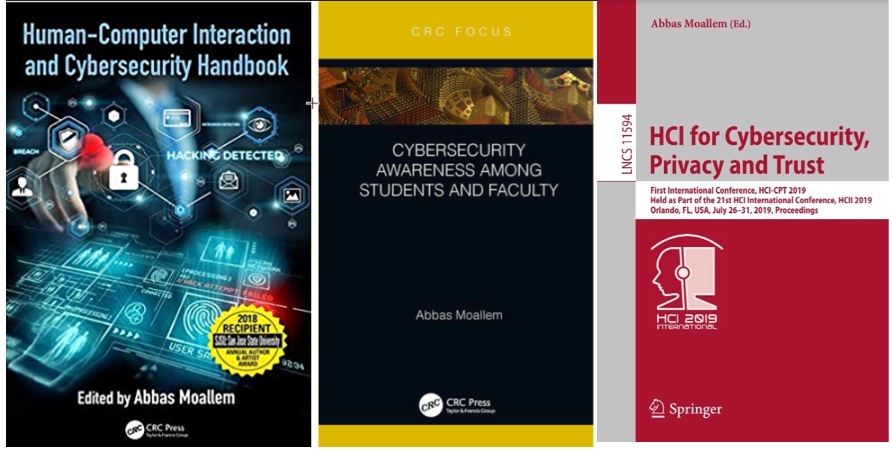
Dr. Abbas Moallem is an Adjunct Professor in the Industrial & Systems Engineering Department at San José State University's College of Engineering, where he teaches Human Computer Interaction, Cybersecurity, Information Visualization, and Human Factors. He also serves as executive director of UX Experts and holds an adjunct position at California State University, East Bay. His professional activities include significant leadership roles in major academic conferences. Education: Ph.D. in Ergonomics/Human Factors, University of Paris Nord (XIII), 1987 M.S. in Ergonomics/Human Factors, University of Paris Nord (XIII), 1982 M.S. in Biomechanics, University of Paris Val-de-Marne(XII), 1980 B.A., University of Tehran, 1978 With over 30 years of experience in human factors, ergonomics, and human-computer interaction, Dr. Moallem's research focuses on the critical intersection between human behavior and cybersecurity. His work examines how interface design, terminology, and user experience impact security outcomes, with particular attention to making security mechanisms more usable and understandable. He has pioneered research in cybersecurity awareness, particularly among students and faculty, and investigates how human factors contribute to both vulnerabilities and solutions in cybersecurity contexts. His research extends to smart systems, AI interfaces, and the human elements in emerging technologies. Dr. Moallem's publication record demonstrates a clear trajectory toward increasingly specialized work at the HCI-cybersecurity intersection. His recent articles and books focus on human factors analysis of cyberattacks, dashboard design for security visibility, terminology in security interfaces, and frameworks for understanding user behavior in security contexts. He has edited multiple conference proceedings specifically dedicated to HCI for Cybersecurity, Privacy, and Trust from 2019 through 2025, establishing this as a distinct and growing research domain. Professional Leadership: Communication and Exposition Chair of HCI International and Applied Human Factors and Ergonomics International conferences Program Chair of HCI-CPT: International Conference on HCI for Cybersecurity, Privacy, and Trust Track Chair of Human Factors in Cybersecurity at AHFEI conferences Editorial board member for multiple professional journals Dr. Moallem has translated his academic expertise into practical applications through his consultancy work. He has served as a senior engineering product manager and usability expert at NETGEAR, and as a UI Architect at PeopleSoft and Oracle Corporation. His industry experience spans over 11 years at companies including Tumbleweed and Axway, where he applied human factors principles to real-world technology products. He has consulted across diverse industries in Europe, Canada, and the USA, bridging the gap between academic research and practical implementation. His laboratory and team activities center around UX Experts, his consultancy organization, and the academic communities he helps lead through conference organization and editorial work. Through these channels, he fosters collaboration between researchers and practitioners working at the intersection of human factors and cybersecurity.
Min Chen is a Professor of Scientific Visualization at the University of Oxford, affiliated with the Department of Engineering Science and Pembroke College. He holds fellowships from the British Computer Society, European Computer Graphics Association, and Learned Society of Wales. His career spans over three decades, with previous roles at Swansea University (1984–2011) and current leadership in visualization research. His research focuses on visualization theory, video visualization, visual analytics, and interdisciplinary applications in fields like epidemiology and cybersecurity. He has authored over 200 publications and led projects such as RAMPVIS during the COVID-19 pandemic. Key roles include editor-in-chief of Computer Graphics Forum and associate editor of IEEE Transactions on Visualization and Computer Graphics. Education: BSc and PhD in relevant fields (details not explicitly stated in texts). Awards include the VGTC Visualization Lifetime Achievement Award (2024). His work emphasizes the theoretical underpinnings of visualization and practical tools for data intelligence.
Riku Ala-Laurinaho is a Researcher at Aalto University's Department of Energy and Mechanical Engineering, with a focus on Digital Twin technologies and Industrial Automation. He holds a Master's (2019) and Bachelor's (2018) in Engineering and Technology from Aalto University. His research interests span Digital Twins in industrial contexts, Cyber-Physical Systems, IoT applications, and data-centric systems. He explores semantic-enhanced industrial metaverse frameworks and collaborative design paradigms. Recent work emphasizes context-aware systems, torsional vibration analysis tools, and Human-Centric Manufacturing processes. His publications (16+), including high-impact articles in Journal of Manufacturing Systems and SoftwareX , reflect a focus on industrial innovation. METEX award (2020) Contributions to 5+ open-source datasets (e.g., OpenTorsion, A!ex autonomous car dataset) His advising includes 1 supervised thesis, with grant details pending.
Dr. Pamela Carreno-Medrano is a Lecturer and Early Career Research Representative in the Department of Electrical and Computer Systems Engineering at Monash University. Her research focuses on Human-Robot Interaction (HRI), robot learning, and socially assistive robotics. She holds a PhD in Information & Communication Sciences (Université de Bretagne-Sud), Master's in Computer Science (École Nationale d’Ingénieurs de Brest), and a Bachelor's in Computer Systems Engineering (Universidad EAFIT). Her work emphasizes human-centered design for intelligent systems, including adaptive navigation algorithms, human-robot collaboration models, and affective computing applications. She leads projects on long-term human-robot interaction and has contributed to interdisciplinary studies on robot ethics and public space integration. Dr. Carreno-Medrano also serves as an Adjunct Lecturer at Universidad EAFIT and collaborates internationally on sustainable aging technologies through the ARC Training Centre for Optimal Ageing. Current research themes include aligning task representations between humans and robots, modeling non-goal-driven human behaviors, and socially aware navigation strategies. She actively supervises postgraduate students in HRI, offering projects on interactive robot learning and embodied AI systems.