Bongwon Suh is a Professor in the Department of Computer Science at the Korea Advanced Institute of Science and Technology (KAIST), College of Computing. With a prolific publication record spanning over two decades, Suh has established himself as a leading researcher in Human-Computer Interaction, Social Computing, and Artificial Intelligence applications. His research interests focus on Human-Computer Interaction, Social Computing, Artificial Intelligence, Large Language Models, Information Visualization, Recommender Systems, Multi-Agent Systems, and Accessibility Technologies. Suh's work often explores the intersection of social dynamics and technological systems, examining how AI and interactive systems can enhance human experiences in diverse contexts including education, entertainment, communication, and accessibility. Recent publications (2023-2025) demonstrate a strong focus on Large Language Model applications, with significant contributions in social simulation for education, conversational AI systems, multi-agent coordination, and accessibility technologies. His work frequently appears in top-tier venues including CHI, CSCW, UIST, and SIGIR, reflecting the high impact of his research. Suh has collaborated extensively with researchers across KAIST and internationally, with frequent co-authors including Changhoon Oh, Kyusik Kim, Hyungwoo Song, and Jeongwoo Ryu. His research program consistently bridges theoretical insights with practical applications, particularly in developing systems that enhance human social experiences through technology.
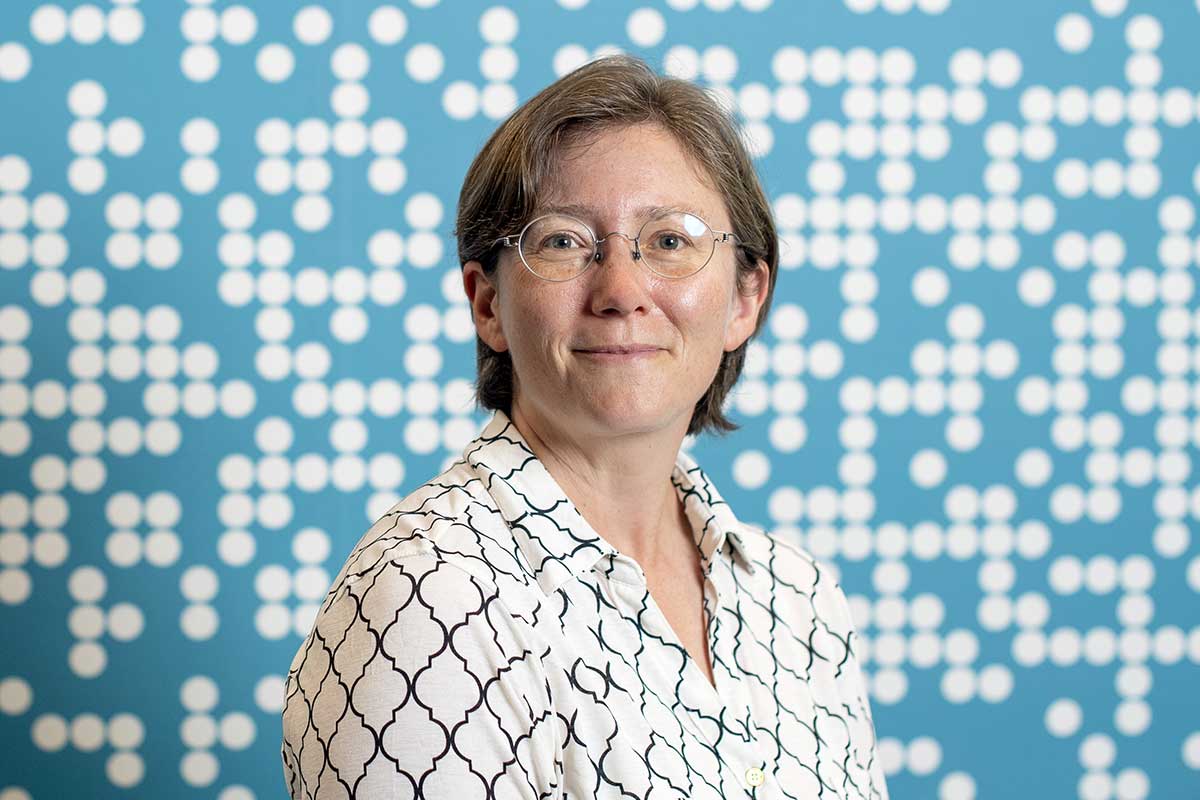
Melanie Tory is a Professor at Northeastern University's Khoury College of Computer Sciences, serving as Professor of the Practice and Director of Data Visualization. Her research focuses on data visualization and human-centered computing, with interdisciplinary applications in healthcare, energy systems, and natural language processing. Her recent work explores the intersection of machine learning and visualization in domains like cardiothoracic care and wind farm optimization. She also investigates conversational interfaces for data visualization, focusing on intent recognition and pragmatic language use in analytical workflows. Key projects include the HEART initiative for real-time medical analytics and schema design for dynamic visualizations. Melanie advises PhD students Carey Barry, Shani Spivak, and Timothy Yim, and contributes to visualization education through research faculty roles. She actively publishes in venues like IEEE PacificVis, addressing challenges in visual utility evaluation, vague command modifiers, and collaborative analysis.
Natasa Miskov-Zivanov is an Assistant Professor at the University of Pittsburgh where she leads the MeLoDy Lab (Mechanistic, Logical, and Dynamic Modeling). She holds a PhD in Electrical and Computer Engineering from Carnegie Mellon University and conducts interdisciplinary research at the intersection of computational methods and biological systems. Her education includes: PhD in Electrical and Computer Engineering, Carnegie Mellon University (2009) MS in Electrical and Computer Engineering, Carnegie Mellon University (2005) BS in Electrical Engineering and Computer Science, University of Novi Sad (2003) Her research focuses on developing computational frameworks and tools for biological systems modeling. Primary interests include: Automated knowledge extraction from biomedical literature Dynamic network modeling of cellular signaling pathways Development of standardized knowledge representation formats (BioRECIPE) Hybrid modeling approaches for complex biological systems Applications in cancer systems biology and immunology Her publications demonstrate consistent focus on computational biology methods development, with recent work emphasizing: Context-aware knowledge selection systems Automated model assembly from literature Biomedical text mining frameworks Hybrid multi-resolution modeling Standards for executable biological models She leads several funded research initiatives including DARPA's Big Mechanism program (AIMCancer W911NF-17-1-0135) and University of Pittsburgh-supported projects. Her lab develops open-source tools like CLARINET, ACCORDION, and VIOLIN that facilitate biological network modeling and knowledge extraction.
Marianne Turner is an Associate Professor in Bilingual Education and TESOL at Monash University's School of Curriculum Teaching & Inclusive Education. Her research focuses on developing socially equitable understandings of language and building capacity for multilingual approaches across educational settings. She has established significant collaborations with Victorian Department of Education and Catholic Education through funded research projects. Her primary research interests include: Translanguaging as a framework addressing social inequity Integration of EAL and content-based learning in English-speaking contexts Language teacher pre-service education and professional development Content and language integrated pedagogies (CLIL) Educating for diversity and inclusion through multilingual strategies Recent publications demonstrate a clear trajectory toward practical implementation of translanguaging in Australian classrooms, with emphasis on teacher development, digital multimodal approaches, and policy frameworks. Her work consistently bridges theoretical concepts like trans-semiotizing with classroom applications through projects involving Home Languages in English Classrooms and Plurilingual Pedagogy initiatives. Turner actively disseminates research through teacher associations (VicTESOL, MLTAV), government resources, and media engagement. Current projects include English as an Additional Language (EAL) pedagogy development for secondary classrooms (2025) and Home Languages in the English Classroom research (2021-2022). She has supervised PhD students focusing on translanguaging approaches but is currently not accepting new candidates. Her research contributes to UN Sustainable Development Goals through advancing educational equity and inclusive language practices.
Alexander Alexandrovich Kharlamov serves as a Professor at the National Research University Higher School of Economics (HSE), specifically within the Faculty of Computer Science and Department of Software Engineering. He joined HSE in 2015 and has accumulated 42 years of scientific and teaching experience. His academic profile includes prominent identifiers such as ORCID: 0000-0003-2942-5101, ResearcherID: E-3760-2014, and Scopus AuthorID: 57193909855. He maintains an office at the Pokrovsky Boulevard campus (AUK "Pokrovsky Boulevard", Pokrovsky blvd, 11, office S913) and serves as the Editor-in-chief of the journal "Speech Technologies" since 2008. Doctor of Technical Sciences (2010) from Moscow State Institute of Electronics and Mathematics Candidate of Technical Sciences (1983) from Moscow State Technical University named after N.E. Bauman Postgraduate study (1980) at Moscow State Technical University named after N.E. Bauman Mathematics degree (1976) from Lomonosov Moscow State University Thermal Physics degree (1970) from Moscow Power Engineering Institute Professor Kharlamov's research focuses primarily on neuroinformatics, with significant contributions to neural networks, semantic representations, and intelligent information systems. His work bridges computational approaches with cognitive modeling, exploring how semantic networks can be used for text analysis, speech recognition, and situation monitoring. His research interests span both theoretical foundations of neuroinformatics and practical applications in areas such as social media analysis, smart city development, and digital transformation. He has developed the TextAnalyst technology for automatic semantic analysis of text and has made significant contributions to understanding how humans process information through neural network models. His recent scholarly output demonstrates a clear trajectory toward multimodal systems, digital transformation in urban environments, and advanced semantic analysis techniques. The publications reveal a consistent focus on applying neuroinformatics principles to real-world problems, particularly in analyzing social dynamics through digital footprints, developing intelligent monitoring systems, and creating semantic frameworks for information processing. His work increasingly addresses contemporary challenges such as pandemic response, social stress analysis, and digital conflict zones, showing adaptability to emerging societal needs while maintaining theoretical rigor. Corresponding Member of the International Academy of Informatization (1994) Professor Kharlamov has secured significant research funding through grants from the Russian Foundation for Basic Research (No. 14-06-00363) and the Russian Humanitarian Science Foundation (No. 15-03-00860). His research leadership spans decades, with documented projects from 1996 to present, covering areas such as neural network modeling, speech recognition systems, semantic analysis technologies, and intelligent information systems. He has served as principal investigator for numerous projects, often collaborating with institutions like IITP RAS and Bauman Moscow State Technical University. His teaching portfolio includes advanced courses in neuroinformatics, neuromathematics, and neural network theory for both bachelor's and minor programs at HSE. As Editor-in-chief of the journal "Speech Technologies" since 2008, Professor Kharlamov has shaped discourse in his field while continuing his own research on semantic networks and neural modeling. His work on homogeneous semantic networks represents a significant contribution to the field, providing frameworks for text analysis, situation monitoring, and knowledge representation. The integration of his theoretical work on neural networks with practical applications in information systems demonstrates a career-long commitment to bridging theoretical computer science with real-world implementation challenges.
Maria Sameiro Faria Brandão Soares Carvalho is an Associate Professor at the Department of Production and Systems of the School of Engineering, University of Minho, Portugal. She serves as a Senior Researcher with PhD at the Centro ALGORITMI and was Associate Director of the ALGORITMI Research Centre from 2018 to 2024. She is an active member of both the Industrial and Engineering (IEM) R&D Group and the SLOTS (Supply chain, Logistics and Transportation Systems) R&D Lab. Educational Background: Graduated in Computer and Systems Engineering at the University of Minho, Portugal MSc degree in Transportation Planning and Engineering PhD degree in Transportation Planning from the University of Leeds, UK Dr. Carvalho's primary research interests focus on Logistics and Supply Chain Management, with specific emphasis on techniques and applications of Operations Research in transportation, logistics, and supply chain contexts. Her work spans theoretical frameworks, empirical studies, and practical applications across various industries including automotive, construction, healthcare, and manufacturing. She has developed decision support systems for supply chain optimization, risk management, and transportation planning, with particular attention to the impacts of globalization and pandemic disruptions on supply chain performance. Her publication record shows a consistent research trajectory with 105 publications spanning from 2007 to 2025. Her recent work demonstrates an evolution from traditional operations research methods toward integrating artificial intelligence and machine learning approaches. Key research themes include supply chain quality management 4.0, explainable AI for business decision-making, service-oriented supply chains, risk propagation in global networks, and sustainable logistics solutions. Her publications appear in high-impact journals across operations research, supply chain management, and transportation fields. Scientific Contributions: h-index of 16 81 publications (according to profile, though the list shows 105) 23 publications in Q1/Q2 journals 1157 total citations Dr. Carvalho has supervised a large number of MSc dissertations and doctoral theses throughout her career, demonstrating her commitment to mentoring the next generation of researchers. She has served on the Director Board of the Doctoral Program in Industrial and Systems Engineering and contributed to the AESI (Advanced Engineering Systems for Industry) PhD program. Her professional service includes reviewing more than twenty papers for scientific journals and conference proceedings, reflecting her active engagement with the academic community. Her research is conducted within the ALGORITMI Research Centre, where she leads the SLoTS R&D Lab focused on Supply chain, Logistics and Transportation Systems. This lab serves as a hub for interdisciplinary research that bridges theoretical operations research with practical industry applications, particularly in the automotive, construction, and healthcare sectors.
Toshihide Arimura is a Professor at the Faculty of Political Science and Economics, Waseda University, specializing in Environmental Economics, Climate Policy, and Carbon Pricing. His research bridges economic policy with environmental sustainability, focusing on emissions trading schemes, energy efficiency, and policy evaluation in both industrial and municipal contexts. He holds a Ph.D. in Economics from the University of Minnesota and has served in leadership roles such as President of the Society for Environmental Economics and Policy Studies (2022–2025). Alma Mater: University of Minnesota (Ph.D. in Economics), University of Tsukuba (M.S. in Environmental Science), University of Tokyo (B.A. in History of Science) Research Interests include Emissions Trading Schemes, Carbon Pricing, Climate Change Economics, Trade and the Environment, PM2.5 mitigation, and voluntary corporate environmental actions. He employs computable general equilibrium modeling, econometric analysis, and field experiments to assess policy impacts on energy consumption and economic performance. Article Trends (15 most recent) reveal a focus on carbon neutrality strategies (EU CBAM analysis), municipal green procurement (Tokyo case studies), household energy behavior (air conditioner rebound effects), and industrial policy evaluation (Tokyo ETS impact on manufacturing). His work often integrates economic modeling with empirical data to address climate challenges. Scientific Awards include: The Ichimura Prize in Science against Global Warming (2023) SEEPS Commentary Award (2021) Environmental Science Society Paper Award (2020) SEEPS Outstanding Publication Award (2018) SEEPS Young Achievement Award (2012) Committee Memberships span the Science Council of Japan (2023–), Tokyo Metropolitan Environment Council (2019–2025), and Central Environment Council (2010–2012), with expertise in carbon pricing and emissions trading. He has advised government bodies on environmental tax reforms and energy policy.
Raghav Sampangi is a Senior Instructor in the Faculty of Computer Science at Dalhousie University, where he teaches courses in web development, server-side scripting, and usable security and privacy. He is also a Faculty Associate at the Centre for Learning and Teaching and actively contributes to pedagogical innovation and inclusive academic practices. Education: PhD, Dalhousie University, Canada (2015) M.Tech, University of Mysore, India (2011) B.Engg, VTU, Belgaum, India (2007) Raghav's research focuses on usable security and privacy , context-aware authentication , and innovations in computer science education , particularly compassionate teaching, ungrading, and student support. He is deeply committed to equity, diversity, and inclusion in computing and advocates for mental health and belonging in academia. His recent publications center on security in resource-constrained systems, including IoT, RFID, and wireless body area networks, often using bio-inspired cryptographic techniques. The work demonstrates a strong trend toward lightweight, adaptive, and context-sensitive security solutions. Scientific Awards: The Srini Award for Teaching Excellence (2021, 2018) Best Paper Award at Q2SWinet 2014 Best Paper in General Conference Program at SoftCOM 2014 Dalhousie Impact Leadership Award (2014) Faculty Appreciation Award (2015) Parvathamma Subbaraya Gold Medal (University of Mysore) Raghav advises students through community outreach courses and research projects. He leads multiple educational initiatives, including ungrading research and first-year student support. He is co-lead of the D-LITE Belong Cluster and the Halifax Chapter of Canada Learning Code, and is a Cultural Competence in Computing (3C) Fellow at Duke University. His service includes advocacy with Dragonfly Mental Health and the READI Group, promoting compassionate and inclusive academia. He is actively involved in lab and team-based research on usable security and CS education, collaborating with industry, alumni, and students to revise curricula and develop inclusive learning environments.
Michael Minock is an Associate Professor in Computing Science at Umeå University. His research focuses on the intersection of AI and relational databases, particularly in natural language interfaces, semantic tractability, and knowledge representation. He has led significant projects such as the VR grant (2015-04953) and EU STREP SpaceBook (2011–2014). Minock also co-founded C-Phrase Technologies AB and teaches courses on databases and large language models. B.S. in Computer Science (Honors), University of Michigan Ph.D. in Computer Science, UCLA His research explores the logical foundations of database query languages, emphasizing higher-order logic in natural language interfaces. Recent work integrates LLMs into database management systems. Key publication trends include query containment analysis, cooperative question answering, and context-aware navigation systems. Subfields span natural language processing, spatial databases, and semantic reasoning. Scientific Awards: Pell Grants Michigan Competitive Scholarship DARPA AASERT Award Minock's teaching includes courses on database management and LLM applications in IT. He actively contributes to open-access publications and maintains a strong interdisciplinary focus across AI, logic, and real-world database challenges.
Laura Rodríguez García is a full Professor at the University of Leon in the Department of Biodiversity and Environmental Management , affiliated with the Faculty of Biological and Environmental Sciences . She specializes in Physical Anthropology and is a member of the Q-GEO Environmental Geology, Quaternary and Geodiversity research group. Her research focuses on: Hominin skeletal morphology (femora, tibiae, fibulae, clavicles) Biomechanical analysis of Middle Pleistocene human remains Evolutionary implications of bone volume and skeletal weight Dental microwear and isotope analysis for dietary reconstruction Neanderthal symbolic behavior and social complexity 3D geometric morphometrics in skeletal studies Recent publications highlight trends in: Neanderthal postcranial anatomy Human evolution in Iberia Technical innovations in skeletal maturity assessment Interdisciplinary collaborations across Europe Integration of archaeological and paleontological contexts Application of computational methods to bone analysis She collaborates with institutions like: University of Burgos Universidad Isabel I Complutense University of Madrid National Research Center on Human Evolution Melka Kunture (Ethiopia) expeditions Oldowan horizon studies
Dan Jones is an Associate Professor of Management at the University of Nevada, Reno, College of Business, where he also serves as Director of the Ph.D. in Business Administration Program. His research focuses on toxic personality traits, particularly the Dark Triad (Machiavellianism, narcissism, psychopathy) and Dark Tetrad (including sadism), examining their links to unethical behavior in organizational, cybersecurity, and criminal contexts. Ph.D., Personality and Social Psychology, University of British Columbia (2011) M.A., Social Psychology, University of Arizona (2005) B.S., Psychology, Richard Stockton College of New Jersey (2001) His work bridges psychology and business ethics, exploring deception strategies, moral disengagement, and organizational misbehavior. He has contributed to understanding how dark personalities influence financial misconduct, cyberattacks, and interpersonal aggression, with recent studies addressing phishing vulnerabilities and legal/illegal profit-seeking behaviors. His publications include analyses of the Dark Triad's role in cybersecurity, corporate crime, and relationship dynamics. He co-developed the Dark Triad Peer Assessment (D3PA) and investigates strategies to mitigate harmful behaviors through inoculation against moral disengagement and real-time phishing defenses. Dr. Jones advises Ph.D. candidates Edit Szabo and Sogol Mozafari. He leads the Dark Triad & Corporate Climate Lab , which studies personality-environment interactions. His research spans psychology, business ethics, criminology, and cybersecurity, with applications in organizational policy and security training.
Hugo Barbosa is an active faculty member in Informatics Engineering, affiliated with Lusófona University – Porto University Center and Porto Polytechnic (IPP). He teaches both theoretical and practical aspects of informatics and collaborates with the Social Innovation and Interactive Systems (SIIS) R&D unit at ISEP, focusing on applied research in interactive technologies for education and healthcare. Master’s in Informatics Engineering – Graphics and Multimedia Systems Bachelor’s in Informatics Engineering – Computers and Systems Professional Aptitude Certificate (CAP) PhD candidate in Informatics Engineering at FEUP (60 ECTS completed) Senior Member, Portuguese Engineers Association (OE) Hugo Barbosa's research lies at the intersection of technology and education, with a strong emphasis on serious games , virtual reality , and interactive simulation for training and rehabilitation. His work explores how adaptive digital environments can enhance learning, particularly in medical and engineering contexts, and investigates the integration of cybersecurity and network optimization in these systems. He focuses on user-centered design, aiming to create accessible and effective solutions for diverse populations, including the elderly and individuals with mobility or cognitive challenges. His publication record from 2009 to 2020 reveals a consistent trajectory in applied informatics, with a recent concentration on serious games for rehabilitation , cybersecurity in healthcare , and digital privacy . These works reflect a multidisciplinary approach, bridging computer science with health sciences and education. His research often addresses real-world challenges such as data protection in national health systems, adaptable therapeutic environments, and immersive training simulations. Hugo Barbosa has been recognized as a Senior Member of the Portuguese Engineers Association (OE), a professional distinction reflecting his contributions and expertise. While no additional awards are explicitly mentioned, his active participation in conferences and publications in research journals underscores his scholarly engagement. He is involved in research advising and project development through his work with SIIS at ISEP/IPP, though no named students are listed. His academic and professional activities suggest involvement in research grants and collaborative projects, particularly within R&D units focused on social innovation and interactive systems. His dual teaching role across institutions also indicates a broad educational impact. Hugo Barbosa is actively involved with the Social Innovation and Interactive Systems (SIIS) research unit at ISEP, Porto Polytechnic. This lab focuses on developing innovative interactive applications for social good, particularly in healthcare, education, and rehabilitation. His work there involves designing and evaluating multimedia and simulation-based tools that support learning and therapy, leveraging technologies like serious games and virtual environments.
Ryan Corey (he/him/his) is an Assistant Professor at the University of Illinois Chicago in the Department of Electrical and Computer Engineering, College of Engineering. His research focuses on audio and acoustic signal processing for human listening technologies such as hearing aids and augmented reality systems. Education: MS in Electrical and Computer Engineering from University of Illinois at Urbana-Champaign (2014), BSE in Electrical Engineering from Princeton University (2012) Teaching: Co-instructor for TE 401: Develop Breakthrough Projects, ranked as excellent by students multiple times Corey's research explores signal processing algorithms that combine audio signals from distributed microphone arrays to isolate desired sounds from background noise. His work has potential applications in hearing devices that can enhance specific speaker voices in crowded environments. He also investigates innovative prototyping approaches using unconventional microphone placements on wearable devices. His recent publications focus on advanced beamforming techniques, adaptive filtering methods, and sensor network applications in audio processing. These include topics such as random projections in beamforming, neural adaptive filters, and sound field interpolation using acoustic sensor networks. Scientific Honors: Best Student Paper Award at WASPAA 2019 Intelligence Community Postdoctoral Fellowship (2019) Microsoft Research Dissertation Grant (2018) National Science Foundation Graduate Research Fellowship (2013) Corey leads the Listening Technology Lab and collaborates with Professor Andrew Singer in the Augmented Listening Laboratory. He has mentored students in developing innovative listening technologies, including prototypes for hearing aids with improved directional audio capabilities and devices that modify sound environments for better hearing experiences.
Alessandro Fogli is a PhD Student at Imperial College London in the Department of Computing, affiliated with the Large-Scale Data & Systems (LSDS) Group . His research focuses on systems support for data analytics in cloud environments, including distributed systems, resource management, and query processing. Education PhD in Computer Science, 2019–Present, Imperial College London MSc in Computer Science, 2015–2017, Roma Tre University BSc in Computer Science, 2012–2015, Roma Tre University His research spans Distributed Systems , Databases , Data Analytics , and Modern Hardware . Recent work examines chiplet-based processor architectures and runtime mapping systems, with applications in performance optimization and hardware-aware query execution. Scientific Contributions Co-developed CHARM (2025), a runtime mapping system for chiplet heterogeneity Published in VLDB (2024) on OLAP processing for chiplet-based CPUs Contributed to HeatWave at Oracle Labs, improving query offloading to in-memory accelerators
Laura Gonzalez is a Professor of Research and Interdisciplinary Work at the Royal Conservatoire of Scotland and an Athenaeum Research Fellow. She serves as a summer faculty member, advisor, and supervisor for the MFA and PhD residency program at Transart Institute. Her work spans performance art, medical humanities, psychoanalysis, and embodied practices, with a particular focus on hysteria studies and breathwork. Her educational background includes: PhD in Cultural Communication and Computing Research Institute (C3RI), Art and Design Research Centre, Sheffield Hallam University (2005-2010) Postgraduate Certificate in Learning and Teaching in Art, Design and Communication (2004-2005) Master of Fine Art: Drawing, Wimbledon School of Art (2000-2001) Licenciada en Bellas Artes (BA equivalent), Universidad del Pais Vasco, Spain (1995-2000) Gonzalez's research explores the intersections of performance, psychoanalysis, and medical humanities, with particular emphasis on hysteria as a cultural and embodied phenomenon. Her work investigates how knowledge is produced through the body, especially through 'illegitimate forms of knowledge' such as intuition, magic, and oracles. She examines the relationship between breath, performance, and consciousness, developing practices that connect somatic awareness with artistic expression. Her research also engages with feminist theory, exploring how women's bodies have been historically pathologized while simultaneously serving as sites of resistance and creative transformation. Her recent publications reveal a consistent trajectory exploring embodiment, hysteria, and breath as artistic and scholarly concerns. She has increasingly focused on the medical humanities, examining historical medical texts and case histories through performance. Her work demonstrates a movement from theoretical analysis of seduction in art toward practical applications of breathwork and embodied knowledge in performance contexts. The interdisciplinary nature of her scholarship bridges art practice, psychoanalytic theory, and medical history. Her notable awards and recognitions include: Shortlisted for the Adrian Howells Award For Intimate Performance (2019) Athenaeum Award – Knowledge Exchange Route (2023) Glasgow Medical Humanities Network Foundation Award (2023) Athenaeum Award for research (2021) Multiple Research Development Funds from The Glasgow School of Art (2012-2016) AHRC Collaborative Doctoral Awards (2005, 2006, 2013) Gonzalez has supervised numerous doctoral students across institutions including the Royal Conservatoire of Scotland, Glasgow School of Art, and Transart Institute. Her supervision focuses on interdisciplinary projects at the intersection of performance, visual arts, and embodied research. She has secured significant grant funding for projects exploring the relationship between imitation and dance, breath practices, and hysteria studies. Her collaborative projects often involve partnerships with medical humanities scholars, performance practitioners, and community organizations. She is actively involved in several research collectives including The Workroom (since 2017), where she develops collaborative performance projects. She co-founded @TheGlasgowJam (2015-2018), creating space for multidisciplinary arts exploration. In 2021, she created the Scottish Breath Network, fostering interdisciplinary research on breathing practices. She also co-founded the Dialectical Materialist Book Group with Ian Macbeth, exploring Marxist theory through collective reading.