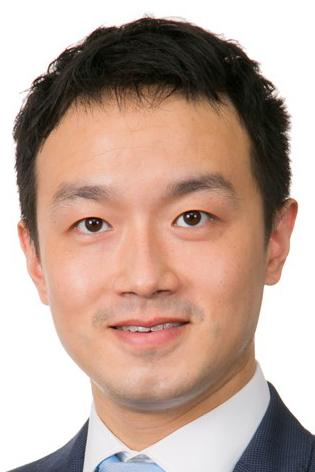
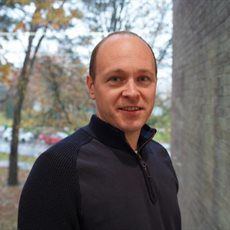
Dr. Halefom Abraha is an Assistant Professor at the International and European Law (IER) Department of Utrecht University's School of Law. He specializes in Digital Human Rights, focusing on privacy, data protection, AI regulation, and algorithmic management in labor markets. His research addresses cross-border data access for law enforcement and digital sovereignty. Abraha holds a joint PhD from the University of Malta and Edith Cowan University (Australia) for his thesis on 'Cross-Border Data Access for Law Enforcement Purposes,' which earned the 2021 Dean's Award for Academic Excellence. He completed postdoctoral research at the Bonavero Institute of Human Rights, University of Oxford (2021-2024), and has advised the European Parliament’s LIBE Committee. His expertise spans EU and international law, with notable fellowships including Marie Sklodowska-Curie ITN (2017-2020) and AFRINIC (2017). Abraha is affiliated with the Netherlands Institute of Human Rights (SIM) and RENFORCE, focusing on governance challenges in the digital society. His research areas include the Future of Work under digital transformation, Security in Open Societies, and Contesting Governance paradigms. Key publications address workplace data protection frameworks, algorithmic management regulation, and cross-border data governance. Abraha advocates for contextualized legal solutions balancing innovation with human rights protections.
Prof. Dr. Julia Metag is Professor for Communication Science at the Department of Communication, University of Münster, where she heads the chair on 'Forms and Processes of Public Communication.' Her research focuses on political communication, science communication, media effects, and online communication. She is actively involved in major research initiatives such as the 'Hot SciComm Lab' (funded by the Volkswagen Foundation) and 'Global Warming’s Five Germanys,' and has led significant projects including the 'Science Barometer Switzerland.' Julia Metag's research interests include science communication, political communication, media use, public trust in science, science-related populism, climate change communication, and digital media. She investigates how audiences engage with scientific information, the role of visuals and AI in science communication, and the impact of misinformation and conspiracy theories. Her work often employs survey, experimental, and content analysis methods to understand public perceptions and media effects. Her recent publications reflect a strong focus on trust in science, audience segmentation, science literacy in digital environments, and the multimodal nature of science communication. She frequently collaborates with scholars across Europe, particularly with Mike S. Schäfer and other colleagues in Switzerland and Germany. Scientific Awards and Memberships: Member of the Academia Europaea (The Academy of Europe) Member of the German Society for Journalism and Communication Studies (DGPuK) Member of the International Communication Association (ICA) Member of the European Communication Research and Education Association (ECREA) Member of the Center for Higher Education and Science Studies (CHESS), University of Zurich Editorial Board Member of Studies in Communication Sciences , Media and Communication , and Environmental Communication Advisory Board Member of the German 'Wissenschaftsbarometer' Julia Metag supervises student theses and leads collaborative research projects, often involving interdisciplinary teams. She has previously held academic positions at the University of Zurich and the University of Fribourg, and her work is widely published in top journals such as Public Understanding of Science , Science Communication , and Communication Research . She is also involved in public engagement through projects like 'Frag Sophie!' and 'Nachgefragt bei Sophie & Co,' which use creative formats to bridge science and society. She leads the 'Hot SciComm Lab,' which investigates science communication in highly contested, multimodal environments shaped by social media, AI, and deepfakes. Her leadership in research networks such as 'Cultures of Compromise' further demonstrates her interdisciplinary reach and academic influence.
Chen Zhi is an Assistant Professor in the Department of Analytics and Operations at the NUS Business School, National University of Singapore, where he has been employed since July 2020. His academic work focuses on operational challenges in innovation-driven value chains, with particular expertise in new product development, innovation sourcing, AI economics, and wisdom of crowds methodologies. Dr. Chen received his Ph.D. in Management (Decision Sciences) from INSEAD (2014-2020) and his B.E. with First Class Honors in Industrial and Systems Engineering from the National University of Singapore (2009-2013). During his academic journey, he completed an overseas exchange at the Georgia Institute of Technology and a research internship at École Polytechnique in France. Chen's research spans two primary streams. The first addresses R&D phase challenges in new products, examining how firms can optimally design supplier bases and informational policies to procure innovation from suppliers, with recent focus on policy impacts on AI-based product development such as autonomous vehicles. The second stream investigates demand forecasting for new products, exploring how to aggregate diverse expert insights into consensus forecasts and quantify underlying uncertainty through obtained forecasts. His publication record demonstrates a strong trajectory in top-tier operations and management journals, with recent work appearing in Management Science, Manufacturing & Service Operations Management, and International Journal of Forecasting. Chen's research shows increasing focus on AI development challenges, uncertainty quantification in forecasting, and strategic approaches to innovation sourcing in complex technological environments. At NUS Business School, Chen teaches Managerial Operations and Analytics for the MBA program and Decision Analytics Using Spreadsheets for undergraduate students. Previously at INSEAD, he taught tutorials for Uncertainty, Data and Judgment, and Production and Operations Management courses.
Jon Lindsay is an Associate Professor at the Sam Nunn School of International Affairs, part of the Ivan Allen College of Liberal Arts at Georgia Institute of Technology. His research focuses on cybersecurity, international relations, and military strategy, with an emphasis on cyber warfare, deterrence theory, and the impact of technological advancements like AI and quantum computing on global security. He explores topics such as cyber conflict dynamics, the role of deception in defense strategies, and the institutional challenges of military automation. His work often bridges theoretical frameworks from international relations with empirical analyses of modern cyber threats and geopolitical tensions. Notable contributions include studies on Stuxnet's implications for secret statecraft, the stability-instability paradox in cyberspace, and the strategic ambiguity of quantum computing. Lindsay has also engaged in policy debates on cross-domain deterrence and the evolving nature of intelligence operations in the digital age.
Dr. Dibyadyuti Roy is an Associate Professor in Cultural Studies, Media Studies, and Digital Humanities at the University of Leeds, within the School of Fine Art, History of Art and Cultural Studies. His work bridges data-driven research with humanistic inquiry, focusing on digital cultures in Majority World contexts. He co-founded India's first Digital Humanities collective, DHARTI, and led initiatives like the DHAI 2018 conference. Currently, he serves on the Executive Council of the British Association for South Asian Studies (BASAS) and affiliates with the Data & Society Research Institute. Programme Director for BA Cultural and Media Studies Steering Committee Member of PRiA (Pedagogic Research in the Arts) Research interests include algorithmic accountability, postcolonial masculinities, and science/technology studies. His research critiques technological narratives through postcolonial lenses, addressing issues like social media health promotion during India's pandemic, nuclear historiography, and digital divides. He has held prior faculty roles at IIM Indore and IIT Jodhpur. Roy has spearheaded initiatives like the DHARTI Twitter Conference and co-organized workshops on AI in the Global South. His work emphasizes ethical, decolonial, and intersectional approaches to digital humanities and technology studies.
Prof. Dr. Ulrich Rosar has held the Chair of Sociology II at the Institute of Social Sciences, Heinrich Heine University Düsseldorf , since 2010. He served as Dean of the Faculty of Philosophy at HHU Düsseldorf (2015–2019) and was re-elected as Deputy Spokesperson of the Düsseldorf Institute for Internet and Democracy (DIID) in December 2023. His academic work bridges political sociology , sociological inequality analysis , and empirical social research methods . Research Focus: Political sociology (candidate attractiveness, voting behavior, media influence); inequality analysis (implicit biases in electoral outcomes, structural disparities); empirical methods (ALLBUS data, longitudinal studies). Publications: Recent work examines physical attractiveness in elections (2005–2021 German federal elections), digital campaigning trends , and social media’s impact on electoral success (2023–2025). Earlier studies include ALLBUS data analysis (2020) and historical political discourse (2018).
Professor Peta Mitchell is a leading scholar in digital media and geographies at Queensland University of Technology (QUT), where she holds a Professorship in the School of Communication and the Digital Media Research Centre (DMRC). She leads the Urban Media and Digital Geographies Research Group and serves as Director of Research Training for QUT's Faculty of Creative Industries, Education, and Social Justice. In 2023, Professor Mitchell was appointed to serve a three-year term on the Australian Research Council's College of Experts, recognizing her significant contributions to research in digital media and geographies. Professor Mitchell earned her Doctor of Philosophy from the University of Queensland. Her academic journey has established her as a prominent voice in the interdisciplinary field bridging geography, media studies, and digital culture. She has received prestigious fellowships including a Vice Chancellor's Research Fellowship from QUT (2014-2018) and a visiting fellowship from the Institute for Advanced Studies in the Humanities at the University of Edinburgh (2009). Professor Mitchell's research explores the complex connections among space, place, society, and the digital. Her work focuses on digital and media geographies, everyday digital and data cultures, digital inclusion, and network contagion. She has made significant contributions to understanding how digital technologies reshape our relationship with space and place, particularly in urban environments. Her research examines how location-aware technologies influence social dynamics, cultural practices, and power relations, with particular attention to issues of inclusion, privacy, and justice in digital contexts. Professor Mitchell has investigated how digital media practices shape experiences of belonging, particularly among marginalized communities, and how geospatial data is produced, circulated, and contested in contemporary society. Her extensive publication record reveals a trajectory of increasingly interdisciplinary work that bridges humanities, social sciences, and spatial sciences. Recent publications show a growing focus on the intersection of digital technologies with environmental concerns, multispecies justice, and urban governance. Professor Mitchell's work has evolved to address emerging challenges related to generative AI, smart city technologies, and the ethical implications of location-aware applications. Her research consistently engages with questions of power, equity, and social justice in digital spaces, making significant contributions to both theoretical frameworks and practical applications in the field. Vice Chancellor's Research Fellowship, Queensland University of Technology (2014-2018) Faculty research fellowship, Centre for Critical and Cultural Studies, University of Queensland Visiting fellowship, Institute for Advanced Studies in the Humanities (IASH), University of Edinburgh (2009) Professor Mitchell has successfully supervised numerous doctoral students whose research explores diverse aspects of digital media and geographies. Her current and former students have investigated topics including smart urban governance, digital privacy, diaspora media practices, digital inclusion, and the cultural dimensions of location-based technologies. She has secured substantial research funding through competitive grants, including multiple ARC Discovery and Linkage Projects. Her current projects include "Generative AI and the Future of Academic Writing and Publishing" (2025-2028) and "Promoting Low-Income Parents' Digital Media Literacies" (2025-2028), demonstrating her ongoing commitment to addressing pressing contemporary issues at the intersection of technology, society, and space. As leader of the Urban Media and Digital Geographies Research Group within QUT's Digital Media Research Centre, Professor Mitchell fosters interdisciplinary collaboration among researchers examining how digital technologies reshape urban spaces and social relations. Her research group brings together scholars from geography, communication, design, computer science, and the humanities to investigate the spatial dimensions of digital culture. The group's work has particular relevance for understanding the implications of smart city technologies, location-aware applications, and digital inclusion initiatives in contemporary urban contexts.
Dr David Bailey is an Associate Professor in Politics at the University of Birmingham, affiliated with the Department of Political Science and International Studies (POLSIS) within the School of Government. His work focuses on the critical political economy of contemporary capitalism, with particular emphasis on protest movements, social resistance, and left-leaning political agency. Dr Bailey's educational background includes a PhD in Political Science from London and an MA in European Political and Economic Integration from Durham. His academic journey has positioned him as a leading scholar in critical political economy approaches to understanding resistance against neoliberalism. His research interests span comparative and critical political economy, examining how capitalism interacts with protest, dissent, social movements, collective action, and left parties. Dr Bailey explores how these dynamics impact political institutions and broader societal trends, particularly in the context of austerity and neoliberal governance. His work often takes a broadly Marxist perspective while engaging with contemporary challenges like climate activism, worker-led dissent, and resistance to AI-driven technological determinism. Dr Bailey's publication record reveals a consistent focus on resistance to neoliberalism across multiple domains - environmental politics, labor movements, social policy, and European integration. His work demonstrates how seemingly disparate forms of resistance connect to form broader challenges to dominant economic and political paradigms, with increasing attention to post-pandemic and digital age challenges. Dr Bailey serves in significant editorial roles that reflect his scholarly standing: Reviews editor for Capital and Class Member of the Executive Board of the Critical Political Economy Research Network (CPERN) of the European Sociological Association Convenor of the CSE/Capital and Class Midlands Member of the editorial board of Global Political Economy Dr Bailey actively supervises PhD and Master's students working on social movements, protest movements, left parties, and the critical political economy of contemporary capitalism. His research has been supported through various academic collaborations and publications that examine resistance to austerity and neoliberal governance across different national contexts. He is closely associated with several research groups at the University of Birmingham, particularly the Political Economy research group, European Studies research group, and Parties, Voters and Elections research group, contributing to a vibrant interdisciplinary research environment focused on critical approaches to political economy.
Hua Jonathan Ye serves as an Associate Professor in the Management Information Systems Division at the Michael F. Price College of Business, University of Oklahoma, following prior appointments at the University of Waterloo and the University of Auckland. He holds a Ph.D. in Information Systems from the National University of Singapore. His academic background includes: Ph.D. in Information Systems, National University of Singapore Ye's research centers on digital innovation ecosystems, with primary focus areas in crowdsourcing dynamics, generative AI applications, crowdfunding mechanisms, and digital business model innovation. He examines how online communities foster value co-creation through user participation, platform design, and novel incentive structures, particularly investigating performance outcomes in open innovation contexts. His publication record (2015-2025) demonstrates consistent output in premier journals including MIS Quarterly and Journal of Management Information Systems, with recent work analyzing medical crowdfunding behaviors, generative AI product valuation, and ambidexterity in innovation contests. This body of work reveals an evolving trajectory from mobile service innovation toward AI-driven platform economies. Professional recognition includes: Research Excellence Award (University of Auckland Business School, 2017) Best Conference Track Paper Award (ICIS Dublin, 2016) Social Media Revenue Opportunities research recognition (University of Waterloo, 2021) LSE Business Review feature for user innovation framework (2015) Ye serves as Associate Editor for Information Systems Frontiers and European Journal of Information Systems. The source material contains no details regarding student advising, research grants, or laboratory affiliations.
Thomas Poell is Senior Lecturer in the Department of Media Studies at the Faculty of Humanities, University of Amsterdam. His scholarly work sits at the intersection of digital media studies, platform studies, and political communication, with a focus on how digital platforms reshape public communication and cultural production. Poell's research interests primarily center on platformization processes and their societal implications. His influential work examines how digital platforms mediate public communication, with particular attention to protest movements, multilingual communication, and the transformation of cultural industries. He has made significant contributions to understanding the political economy of platforms, platform power dynamics, and the evolving relationship between platforms and public values. His methodological approach combines qualitative analysis of platform architectures with empirical studies of user practices across different cultural and linguistic contexts. Analysis of Poell's recent publications reveals a clear trajectory from studying social media's role in political movements to examining broader platformization processes. His work increasingly focuses on platform power across specialized domains including medical imaging, advertising ecosystems, and news industries. A consistent thread throughout his scholarship is examining how platform architectures shape communication practices and power relations, with growing attention to issues of visibility, governance, and equity in platformized environments. Poell has made significant contributions to the field through his co-authored book The Platform Society (2018), which established foundational concepts for understanding how digital platforms transform various sectors of society. He has also co-edited Global Cultures of Contestation (2017) and The Sage Handbook of Social Media (2018), demonstrating his leadership in synthesizing scholarly knowledge about digital media and platform dynamics. His influential article "Twitter as a multilingual space: The articulation of the Tunisian revolution" exemplifies his approach to studying platform-mediated communication during political upheavals. This work demonstrated how Twitter functioned as a global communication space during the Tunisian revolution, with different language communities articulating distinct accounts of the revolution while remaining interconnected through strategic language use by key activists.
Sylvie Delacroix is the Inaugural Jeff Price Chair in Digital Law and Director of the Centre for Data Futures at King's College London. She is also a Visiting Professor at Tohoku University, focusing on bridging theory and practice in ethics and public policy initiatives. Her research spans Data & machine ethics Ethical agency and habit Social sustainability of data ecosystems Participatory infrastructure for AI systems Uncertainty communication in LLMs Legal theory and digital law Recent publications address LLM interfaces as transitional spaces for democratic revival and sustainable data rivers in generative AI. Her work has attracted significant grant funding from the Patrick J. McGovern Foundation, Wellcome Trust, and Omidyar Network. Scientific awards include the Leverhulme Prize Peter Birks 2d Prize for Outstanding Legal Scholarship Montgomery Fellowship at Dartmouth College She supervises PhD research on large language models and uncertainty communication, as well as habit in ethical lives. Her policy contributions include advising the Law Society of England and Wales on algorithmic justice systems.
Michaela Pfadenhauer is a Professor of Sociology specializing in Knowledge and Culture at the Department of Sociology, Faculty of Social Sciences, University of Vienna. She serves as Vice Dean of the Faculty of Social Sciences for Research and Infrastructure since Fall 2020 and previously served as Head of the Institute of Sociology (2018-2020). Her academic career includes positions as University Professor for Sociology of Knowledge at Karlsruhe Institute of Technology (2007-2014) and various research roles at German universities. Dr. Pfadenhauer earned her doctorate summa cum laude from the University of Dortmund in 2002 and completed her Diploma in Political Science in 1994. She has held numerous guest professorships including at Keio University Tokyo, South Florida University, Exeter University, King's College London, and Boston University. Her research focuses on the sociology of knowledge, social constructivism, mediatization, and lifeworld analysis, with recent work examining science skepticism during the pandemic, social robotics, and knowledge cultures. She employs interpretive social research methods and has developed the LILI project examining lifeworlds of vaccine skeptics. Her work bridges theoretical sociology with contemporary societal challenges including digital transformation, climate change, and public health crises. Her recent publications demonstrate expertise across multiple domains including the social construction of sustainable reality, digital public spaces, choral communication, and institutional skepticism. Her work shows a consistent pattern of examining how knowledge is constructed, communicated, and contested across different social contexts and technological environments. Professor Pfadenhauer serves on the Permanent Commission of the Ombuds Office for Good Scientific Practice and evaluates for the European Commission's Marie-Skłodowska-Curie Individual Fellowships. She is also Chair of the Section on Sociology of Knowledge of the German Sociological Association and member of the core team of the Research Platform Mediatized Lifeworlds at the University of Vienna. She teaches courses on sociological theories, research practice with focus on communicative AI and artificial companionship, and realities of science. Her teaching emphasizes the connection between theoretical frameworks and contemporary social phenomena, particularly regarding digital transformation and knowledge production.
Hao Yang is an Assistant Professor in the Department of Civil and Systems Engineering at Johns Hopkins University, with dual affiliations at the Johns Hopkins Data Science and AI Institute and the Johns Hopkins Institute for Assured Autonomy. His research develops Trustworthy Machine Learning methods to enhance urban mobility systems, focusing on traffic safety, equity, and sustainability through ethical AI and human-machine cooperative systems. Yang earned dual bachelor's degrees in Electrical and Computer Engineering from Beijing University of Posts and Telecommunications and the University of London, followed by a Ph.D. in Civil Engineering (Transportation) from the University of Washington. His educational background bridges telecommunications, electrical engineering, and transportation systems. His research integrates spatio-temporal modeling, assured autonomous systems, and multimodal representation learning to address transportation equity and safety. Key projects include edge-AI-powered traffic surveillance, real-time crash identification, and cooperative signal assistance for vulnerable road users. His work emphasizes ethical AI deployment in cyber-physical infrastructure to create sustainable urban mobility solutions. Recent publications reveal a strategic shift toward large language models and multimodal AI for transportation challenges, with strong emphasis on explainability, reliability, and equity in traffic crash prediction, flow forecasting, and autonomous driving systems. This evolution demonstrates his commitment to adapting cutting-edge AI for real-world transportation problems. Yang's scientific contributions have earned significant recognition: Michael Kyte Outstanding Student of the Year Award (2022) High-Value Research Award from AASHTO (2022) Best Paper Award from TRB Information Systems Committee (2023) Best and Outstanding Dissertation Awards (2024) IEEE DTPI Outstanding Paper Award (2022) TRANSFOR22 Data Competition 2nd place (2022) ASCE Bridges Photo Contest First Place (2021) He actively mentors graduate researchers and seeks 2-3 PhD students for Fall 2025 to advance trustworthy AI in transportation. His research is supported by NSF, USDOT, and AASHTO grants including the Real-Time Truck Parking Information System project that received the High-Value Research Award. Current work focuses on edge-AI for traffic safety and multimodal data integration. Yang leads research within Johns Hopkins' Data Science and AI Institute and Institute for Assured Autonomy, collaborating with Transportation Research Board committees. His lab develops real-time perception systems using edge computing and representation learning, with active projects on non-motorized user safety and equitable traffic management for people with disabilities.
Tanel Alumäe is an Associate Professor of Speech Processing at Tallinn University of Technology's School of Information Technologies, Department of Software Science. With over 15 years of academic experience, he has held various research and teaching positions at the university since 2006, progressing from Research Fellow to Tenured Associate Professor. His work focuses on speech and language technologies with a particular emphasis on Estonian language applications. PhD in Information and Communication Technology (2006), Tallinn University of Technology Research Master's Degree in Informatics (2002), Tallinn Technical University MSc studies at Tallinn Technical University (1999-2002) and Universität Erlangen-Nürnberg, Germany (1999-2000) Diploma in Computer and Systems Engineering (1994-1999), Tallinn Technical University Alumäe's research spans automatic speech recognition, speaker recognition, natural language processing, and computational linguistics with a focus on Estonian language technology. His work addresses challenges in multilingual speech processing, deep learning applications for speech technologies, and developing practical systems for real-world applications including broadcast media processing and accessibility solutions. He has made significant contributions to low-resource language processing and specialized applications for children's speech and emotion recognition. His recent publications demonstrate a strong focus on cutting-edge speech processing techniques including deepfake detection, multi-speaker systems, speech-to-speech translation, and applying large language models to speech applications. The research shows a consistent pattern of addressing both theoretical challenges in speech processing and practical implementations for Estonian language technology. Award 'Keeletegu 2019' from the Ministry of Education and Research Award 'Keeletegu 2011' from Estonian Ministry of Education and Research 3rd award at the Tallinn University of Technology contest for applied scientific projects (2011) Boris Tamm stipend (2007) First prize at the national contest of students' scientific works (2007) Ustus Agur stipend of Estonian Information Technology and Telecommunications Association (2005) Alumäe has supervised postdoctoral researchers including Rena Nemoto (2012-2015) on pronunciation modeling for speech recognition. He serves in editorial and review capacities for major journals including Nature, Computer Speech & Language, and IEEE Transactions. His administrative roles include Secretary of the Northern European Association for Language Technology Board and membership on the Department of Software Science Council at TalTech. His research group at Tallinn University of Technology actively participates in international challenges (IWSLT, Interspeech, Odyssey) and collaborates with institutions worldwide. The team has developed open-source platforms for Estonian speech transcription and created systems for automatic closed captioning of Estonian broadcasts, demonstrating strong practical applications of their research.
Brooke Foucault Welles is a Professor in the College of Arts, Media and Design at Northeastern University, where she also serves as Interim Dean and Director of the Network Science PhD program. Her research focuses on how social networks and communication technologies shape power dynamics, particularly in contexts of marginalization and social justice. PhD in Media, Technology and Society from Northwestern University MS and BS in Communication from Cornell University Her research spans multiple domains including: Network science of AI and social systems Digital activism and social movement dynamics Health information and (mis)information flows Open source community structures Race/ethnicity in digital contexts Computational social science methodologies Recent publications focus on attention dynamics in social networks, hate speech protection mechanisms, and open-source software sustainability. Her work has been supported by grants from the NSF, NULab, and Chan Zuckerberg Initiative. Awards include: McGannon Book Award (2021) for #HashtagActivism Best Paper Honorable Mention at CSCW 2019 She leads the Communication Media and Marginalization Lab (CoMM Lab) which includes PhD students and postdocs from diverse disciplines. Her advising approach emphasizes interdisciplinary collaboration and methodological training in both quantitative and qualitative approaches.