Lars Ulander is a Professor at Chalmers University of Technology specializing in radar remote sensing. His research focuses on synthetic aperture radar (SAR) signal processing, particularly for applications in forest biomass mapping and ground imaging using VHF/UHF-band systems. He is a key proposer for ESA's BIOMASS satellite mission (launching 2025) and leads the BorealScat project, utilizing a 50-meter tower-based tomographic radar to study boreal forest dynamics. His work spans radar system development, SAR tomography techniques, and environmental monitoring of forests and sea surface currents. Current research areas include vegetation water content estimation, bistatic radar configurations, and optimization of SAR data processing algorithms for multi-temporal analysis. Recent publications demonstrate expertise in P-band/L-band SAR for biomass retrieval, passive radar systems, and interferometric techniques. His articles investigate radar backscatter sensitivity to forest structure, moisture parameters, and seasonal changes, while contributing to mission design frameworks like SLAINTE and SESAME.
Dr. Jonathan Bright is a Senior Research Fellow and Associate Professor at the Oxford Internet Institute, University of Oxford , specializing in computational approaches to the social and political sciences. His research explores how digital technologies reshape political participation and how new data sources enhance governmental decision-making. Research Interests: Focused on social media, political behavior, computational social science, and big data , Bright’s work addresses digital governance, algorithmic bureaucracy, and the dynamics of political fragmentation online. His empirical studies span open government data usage, crowdsourced geographical information, and the impact of neighborhood effects on data completeness. Scientific Contributions: Leading studies on algorithmic governance in UK local authorities (2020) Investigating geodemographic biases in crowdsourced platforms like OpenStreetMap (2018) Mapping political fragmentation in social media ecosystems (2018) Grants & Collaborations: Funded by UK taxpayers, ESRC, and Google, his work intersects with projects on vaccine misinformation, hate speech monitoring, and digital economies. Formerly held positions as Research Fellow and Research Associate at OII from 2013 to present.
Pranav Anand is a Professor in the Department of Linguistics at the University of California, Santa Cruz (UCSC). He currently serves as the Faculty Director of the Humanities Institute at UCSC since July 2023. His research focuses on the interplay between context, interpretation, and grammatical perspective, particularly in areas like de re/de se contrasts, evaluative predication, and indexical shift. He has contributed to studies on narrative structures, evidential restrictions, and the syntax-semantics interface in sluicing. Dr. Anand has taught a variety of courses including Ling 119: Narratives , Ling 231: Semantics A , and special topics like Invented Languages: From Elvish to Esperanto . His work bridges theoretical linguistics with computational methods, evidenced by collaborations in projects such as the Santa Cruz sluicing dataset and analyses of political discourse in online commentary. His research has been published in journals like Linguistics and Philosophy , Language , and Discourse and Society , with a focus on semantics, pragmatics, and narrative linguistics. He has also contributed to computational linguistics initiatives, including the development of annotated corpora for sentiment analysis and argumentation studies. Dr. Anand's academic contributions span both theoretical exploration and applied computational linguistics, reflecting his interdisciplinary approach to understanding language structure and usage.
Professor Winston Hsu is a distinguished faculty member in the Department of Computer Science and Information Engineering at National Taiwan University, where he has served as a full professor since 2015. He is the co-director of the Communications and Multimedia Laboratory (CMLab) and founder of the MiRA (Multimedia indexing, Retrieval, and Analysis) research group. Additionally, he serves as the Founding Director for NVIDIA AI Lab at NTU, the first such lab in Asia. Professor Hsu received his Ph.D. in Electrical Engineering from Columbia University in 2007 under the supervision of Professor Shih-Fu Chang. Prior to his academic career, he was a founding engineer and research manager at CyberLink Corp., now a public image/video software company. National Taiwan University (2007-Present): Professor (2015-Present), Assistant/Associate Professor (2007-2015) MobileDrive (2021-2024): CTO and Vice President (Joint Venture between Foxconn and Stellantis) IBM TJ Watson Research Center (2016-2017): Visiting Scientist Microsoft Research Redmond (2014): Visiting Researcher Columbia University (2007): Ph.D. in Electrical Engineering Professor Hsu's research focuses on machine learning, computer vision, large-scale image and video search and recognition, and embedded AI. His work spans from fundamental research in visual recognition to practical applications in automotive systems, medical imaging, and e-commerce. He has pioneered work in disguised face recognition, low-resolution face hallucination, 3D model search, and virtual try-on systems. His current research emphasizes Embodied AI, integrating perception, action, and learning technologies for applications in automotive and robotics domains. His research group has produced numerous influential publications, particularly in top computer vision and multimedia conferences like CVPR, where they won first place in the Disguised Face Recognition competition in 2018. Their work spans diverse application areas including security, medical diagnostics, automotive systems, and e-commerce solutions, demonstrating strong translation from academic research to real-world impact. IBM Research Pat Goldberg Memorial Best Paper Award (2018) First Place, IARPA Disguised Faces in the Wild Competition (CVPR 2018) Best Brave New Idea Paper Award, ACM Multimedia 2017 NVIDIA AI LAB Award (First in Asia, 2016) First Place, MSR-Bing Image Retrieval Challenge (2013) World's Top 2% Scientists (2023) Professor Hsu actively mentors students and researchers, with his group consistently recruiting PhD students, postdocs, and research assistants. He has successfully bridged academia and industry through multiple collaborations, including his role as CTO at MobileDrive (a joint venture between Foxconn and Stellantis) from 2021-2024. His research has been supported by significant industry partnerships with Microsoft, IBM, and NVIDIA, as well as government grants from Taiwan's Ministry of Science and Technology. His laboratory, the Communications and Multimedia Laboratory (CMLab), maintains strong industry connections and focuses on cutting-edge research in visual AI. The lab has produced numerous award-winning projects and maintains active collaborations with global technology companies, particularly in the automotive and consumer electronics sectors.
Professor Dorit Abusch is a faculty member in the Department of Linguistics and Philosophy at Cornell University's College of Arts & Sciences. Her research focuses on semantics, pragmatics, and their applications to visual narratives. She explores topics like tense semantics, presupposition triggering, modal logic, and the interplay between language and visual media. Current work extends linguistic methodologies to analyze art forms such as comics, cave paintings, and temple sculptures. Her research interests include formal semantics applied to visual narratives, dynamic semantics, possible world theory, and multimodal discourse representation. She investigates how visual elements like sequential art and pictorial sequences convey temporal progression, aspectual distinctions, and free perception constructions through semiotic frameworks. Recent presentations include talks on applying semantics to film and picturebooks at institutions like MIT and the University of Padua. Her publications emphasize cross-media analysis, with key works published in Linguistics & Philosophy and Sinn und Bedeutung . Abusch has received grants for projects studying visual narratives in Indian art and wall paintings of Rajasthan. These include a 2012-2013 Humanities Research Grant and a Cornell Institute for Social Sciences award. Her work bridges linguistics with philosophy and visual studies, offering innovative frameworks for understanding non-linguistic communication through formal semantic tools.
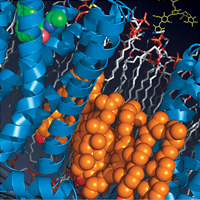
Vadim Cherezov, the Ester Dornsife Chair in Biological Sciences and Professor at the University of Southern California (USC), leads groundbreaking research in membrane protein structure and function. Affiliated with the Bridge Institute, Department of Chemistry, and Michelson Center for Convergent Bioscience, his work focuses on GPCRs, ion channels, and transporters—critical targets for drug discovery. His team leverages advanced techniques like Lipidic Cubic Phase (LCP) and Serial Femtosecond Crystallography (SFX) at XFEL facilities to solve high-resolution structures under physiological conditions. Institutional Affiliations: Bridge Institute, USC Michelson Center, Department of Chemistry, Department of Pharmacology and Pharmaceutical Sciences. Key Collaborations: Katritch Lab, Kuhn Lab, NIH, European XFEL. His research explores the role of lipids in modulating GPCR function, addressing diseases like Alzheimer’s, diabetes, and cancer. By solving the structure of the A 2A adenosine receptor via sulfur SAD phasing at XFEL, Cherezov’s lab demonstrated de novo phasing without heavy atoms. This breakthrough enables structural studies of previously intractable membrane proteins. Scientific Awards & Grants: NIH R01 GM108635, U54 GM094618, U54 GM094599, R01 GM095583 Science Signaling Breakthroughs of the Year (2014) Cherezov mentors a dynamic team, including postdocs (e.g., Dong-Gyun Kim), graduate students (e.g., Behnaz Davoudinasab), and alumni (e.g., Benjamin Stauch at Eli Lilly, Nairie Michaelian at Genentech). His lab’s publications span Nature , Science , and Cell , with recent work on Science Advances (2025) addressing ABEL-FRET for GPCR dynamics.
Seth Lewis Gilbert is a Professor and Head of the Department of Computer Science at the National University of Singapore (NUS), within the School of Computing . He holds the Dean's Chair Associate Professor title and focuses on algorithms for large-scale distributed systems , emphasizing scalability and fault-tolerance . His work spans wireless networks , contention resolution , dynamic networks , and blockchain protocols . Ph.D. in Computer Science, MIT (2007) M.S. in Computer Science, MIT (2003) B.S. in Electrical Engineering & Mathematics, Yale University (1999) His research explores trusted coordination in systems with untrusted and unreliable participants, addressing challenges like Byzantine agreement , load balancing , and contention resolution . He has pioneered formal frameworks for accountability in distributed protocols and developed novel algorithms for asynchronous task allocation . Recent publications include work on consensus protocols , leader election , and contention resolution , reflecting his focus on dynamic network environments . His research has earned recognition at venues like DISC, ICDCS, and CCS. Scientific Awards & Honors : Young Researcher Award (NUS, 2014) Faculty Teaching Excellence Award (2013/14, 2014/15, 2015/16) School of Computing Teaching Excellence Honour Roll (2016-2021) Best Paper Awards at DISC (2023, 2022), ICDCS (2022), IPDPS (2022) Best Student Paper Award at DISC (2022) He serves on the Steering Committee for DISC as Treasurer and has chaired program committees for DISC, OPODIS, and SPAA. His work bridges foundational algorithmic theory with practical applications in blockchains and dynamic networked systems .
Prof Kulwant Singh is a Professor of Strategy and Policy at the NUS Business School, National University of Singapore. His research focuses on strategy, management, organizational behavior, applied economics, and business systems in regional and global contexts. He holds a permanent academic appointment since January 2022. Teaching philosophy emphasizes contextualizing content for Singapore/Asia-Pacific business environments through case studies and combining theoretical frameworks with practical applications. He prioritizes interactive seminars to enhance student engagement and theoretical understanding in strategy education. Research interests include corporate diversification strategies, political ties' impact, alliance portfolio management, institutional transitions, and innovation dynamics in emerging markets. His work bridges universal strategic theories with Asia-specific business practices. Award-winning contributions include developing teaching materials for regional business contexts and advancing understanding of strategic competition in complex environments. Active in academic leadership through conference organization and editorial roles in strategy research.
Raquel Fernández is Full Professor of Computational Linguistics and Dialogue Systems at the University of Amsterdam, where she leads the Dialogue Modelling Group at the Institute for Logic, Language & Computation (ILLC). As Vice-Director for Research at ILLC and a Fellow of the ELLIS Society, she bridges computational linguistics, cognitive science, and artificial intelligence through her research on language use in multimodal and conversational contexts. PhD in Computational Linguistics from King's College London Prior research positions at University of Potsdam and Stanford University's CSLI Her work explores how cognitive constraints, social interaction, and perception shape language use, with a focus on: Visually-grounded language processing Multimodal dialogue modeling Model uncertainty and calibration Language grounding in multimodal data Language learning and semantic change Dialogue reference resolution Recent publications analyze multimodal reasoning limitations, cross-lingual knowledge consistency, and uncertainty modeling in dialogue systems. She has received multiple accolades including an ERC Consolidator Grant , NWO VENI/VIDI/Aspasia fellowships , and EMNLP/GenBench awards . Outstanding Paper Award (EMNLP 2023) Best Data Award (GenBench Workshop 2023) ELLIS Society Fellow ERC Consolidator Grant #819455 recipient NWO VENI/VIDI/Aspasia awardee As a leader in academic service, she serves on the SIGDAT Executive Committee and chairs multiple conference committees. Her lab develops models for multimodal dialogue, visual storytelling, and grounded language understanding.
Margarita Boenig-Liptsin is a tenure-track Assistant Professor of Ethics, Technology and Society at ETH Zurich's Department of Humanities, Social and Political Sciences, a position she has held since September 2022. Trained in Science, Technology and Society with dual PhDs from Harvard University (History of Science) and Université Paris-Sorbonne (Philosophy), she brings interdisciplinary expertise to examining the relationship between technology, power, democracy, and ethics. Her research spans several interconnected areas focusing on transformations to human identity and citizenship in relation to information technologies across time and cultures. She investigates the social and political aspects of digital technologies, identity and selfhood in technological societies, ethics of technology, and comparative cultures of innovation. Her work uniquely bridges historical analysis with contemporary ethical concerns, examining how concepts like human dignity evolve alongside technological developments from punch cards to AI governance frameworks. Her recent publications (2023-2025) reveal a strong focus on AI ethics, data justice, and the philosophical implications of algorithmic systems. These works demonstrate her consistent interest in how technology shapes democratic processes, citizenship, and ethical frameworks. Her research shows progression from historical studies of computer literacy programs to contemporary analyses of generative AI's impact on knowledge production and everyday ethics. Her scientific recognition includes: NSF funding for her collaborative project on Silicon Valley's innovation imaginary Mozilla Foundation Responsible Computer Science Challenge grant (2018-2021) Academic Data Science Alliance support (2020-2022) Sorbonne Université's Paris IAS Chair on 'Major Changes' (2021-2022) At ETH Zurich, she leads research and teaching initiatives that build connections between engineering and social sciences. Previously at UC Berkeley, she directed the Human Contexts and Ethics Program, developing the Human Contexts and Ethics component for data science education. Her work consistently emphasizes translating social science theory for diverse audiences and connecting scholarly work to community needs in Zurich, Switzerland, and Europe. She teaches courses including 'Artificial Intelligence and Human Values' and 'Research in Ethics, Technology and Society' for the Fall 2025 semester.
Witold J. Henisz serves as Vice Dean and Faculty Director of the Impact, Value, and Sustainable Business Initiative at The Wharton School, University of Pennsylvania, holding the Deloitte & Touche Professorship in Management. His research centers on political and social risk identification, ESG impact materiality, and corporate diplomacy frameworks that transform stakeholder relationships into strategic assets. His educational background includes a Ph.D. in Business and Public Policy from UC Berkeley's Haas School and an M.A. in International Relations from Johns Hopkins SAIS. Henisz has served as Departmental Editor at Journal of International Business Studies and Associate Editor at Strategic Management Journal , reflecting his scholarly influence. Research interests converge on geopolitical risk quantification, stakeholder engagement optimization, and sustainable business model innovation. His work demonstrates how political hazards materially impact firm valuation and how corporate diplomacy can mitigate conflict through strategic stakeholder alignment. Recent publications leverage massive media datasets (4+ billion articles) to model populism dynamics, indigenous land conflicts, and ESG-credit risk linkages. Award highlights include the Aspen Institute Ideas Worth Teaching Award (2020), Iron Prof recognition (2019), and Academy of International Business Fellowship. His geostrategy framework Geostrategy by Design (2024) provides executives with actionable methods for navigating geopolitical volatility. Aspen Institute Ideas Worth Teaching Award (2020) Iron Prof recognition (2019) Academy of International Business Fellow (2014-present) Multiple Wharton Excellence in Teaching Awards (2006-2021) Industry Studies Association Best Paper Award (2019) Henisz consults through PRIMA LLC for multinational firms (Rio Tinto, Shell), financial institutions (Eaton Vance, World Bank), and NGOs. His executive education programs train leaders in ESG integration and geopolitical risk management, while his KEROVKA crisis simulation develops real-time strategic response capabilities. Media frequently cites his expertise on ESG controversies, with 50+ major publications featuring his analysis since 2022 including Financial Times , Bloomberg , and Wall Street Journal .
Prof. Waldemar Kolanus leads the Molecular Immunology and Cell Biology department at the University of Bonn's Life & Medical Sciences Institute (LIMES) . His research bridges immunoregulation , stem cell dynamics , and metabolic stress responses in immune cells. Unit 2 member at LIMES Principal investigator in SFB 704 and ImmunoSensation Cluster Leads a multidisciplinary lab with postdocs, PhD students, and technical staff His work focuses on intracellular signaling pathways connecting immune activation to tissue homeostasis, particularly through: Cytohesin proteins in integrin-mediated adhesion and migration TRIM71 in stem cell regulation and congenital hydrocephalus High-salt environments affecting macrophage function Publication trends show expertise in immune cell migration , genetic models , and chemical inhibition , with frequent use of mice and zebrafish for in vivo studies. Key articles explore: TRIM71's dual role in auditory development and germ cell maintenance Cytohesin family's Golgi regulation and insulin signaling Ruxolitinib's off-target migration inhibition of dendritic cells Contact details: Address: LIMES Institute, Carl-Troll-Straße 31, Bonn Email: kolanus.sekretariat@uni-bonn.de Phone: +49 228 73-62788
Ira Kemelmacher-Shlizerman is a Full Professor of Computer Science at the Paul G. Allen School of Computer Science & Engineering at the University of Washington and Director of the UW Reality Lab. She also serves as a Principal Scientist at Google, where she leads the Shopping Gen AI visuals teams focusing on Virtual Try-On, 3D, and product videos. Her research spans computer vision, computer graphics, and Generative AI, with particular contributions to virtual try-on technology, 3D modeling, and augmented reality applications. Professor Kemelmacher-Shlizerman's research interests focus on Generative AI applications in visual computing. Her work bridges the gap between theoretical computer vision and practical applications, particularly in e-commerce and virtual reality. She has made significant contributions to virtual try-on technology, 3D editing with generative models, and AI applications for shopping experiences. Her research combines deep learning with traditional computer vision techniques to solve challenging problems in image and video synthesis. Her recent publications demonstrate a strong trend toward Generative AI applications for visual shopping experiences, virtual try-on technology, and 3D content creation. The work spans multiple top conferences including CVPR, SIGGRAPH, and ICCV, with a focus on practical applications of computer vision and graphics. Her research has evolved from foundational work in face reconstruction and aging to current applications in virtual shopping and 3D content generation. Google faculty award Madrona prize GeekWire Innovation of the Year Award Covers of CACM and SIGGRAPH Best student paper honorable mention at CVPR'21 Best demo runner up MobiSys'22 Senior member of IEEE Distinguished Member of ACM Professor Kemelmacher-Shlizerman has successfully tech-transferred multiple research projects to industry. She founded Dreambit, a startup acquired by Meta, and previously built and launched the Face Movies feature at Google. She currently leads Google's Shopping Gen AI visuals teams, focusing on 10x improvements to shopping journeys. Her UW Reality Lab serves as a hub for AR/VR research with industry partnerships. She has mentored numerous PhD students who have become researchers in both academia and industry, with several publications featuring student co-authors receiving recognition at top conferences. Professor Kemelmacher-Shlizerman leads the Graphics and Imaging Laboratory (GRAIL) and the UW Reality Lab, which focuses on augmented and virtual reality research with industry partnerships including Google. The labs work on cutting-edge projects in virtual try-on, 3D modeling, and immersive experiences, bridging academic research with real-world applications.
Benjamin Mako Hill is an Associate Professor in the University of Washington Department of Communication and an Adjunct Associate Professor in Human-Centered Design & Engineering , the Paul G. Allen School of Computer Science & Engineering , and the Information School at UW. He is a Faculty Associate at the Berkman Klein Center for Internet and Society at Harvard University and a Fellow at the Center for Information Technology Policy at Princeton University during the 2023–2024 academic year. Educational Background : PhD in an interdepartmental program at Massachusetts Institute of Technology (MIT) , involving the MIT Sloan School of Management and the MIT Media Lab , advised by Eric von Hippel, Yochai Benkler, Tom Malone, and Mitch Resnick. MS in Media Arts and Sciences from MIT. B.A. in Technological and Legal History from Hampshire College . Research Interests span peer production, online communities, collective action, cooperation, learning, and computer-mediated communication. His work explores how communication and information technologies shape social outcomes in collaborative environments like Wikipedia and Linux, focusing on governance, moderation, anonymity, and educational platforms such as Scratch. Article Trends : His publications analyze peer production dynamics, privacy in open collaboration, and computational thinking in youth. Topics include underproduction in open source software, algorithmic fairness, taboo knowledge production, and legitimate peripheral participation in online communities. Methodologies combine big data, quasi-experimental, and comparative analyses. Scientific Awards : Dordick Award for Best Dissertation (2013). CHI '22 Best Paper Honorable Mention (2022). CSCW '18 Best Paper Honorable Mention (2018). CHI '17 Best Paper Honorable Mention (2017). CSCW '13 Best Paper Award (2013). CHI '11 Best Paper Honorable Mention (2011). Advising and Grants : He co-founded the Community Data Science Collective and collaborates with researchers like Aaron Shaw. Grants include multiple National Science Foundation awards for studies on digital knowledge commons, anonymous participation, and collaborative success, as well as a Sloan Foundation grant for modeling underproduction in peer production. Labs and Teams : He leads the Community Data Science Collective , an interdisciplinary research group studying online communities, and contributes to open-source projects like Debian and Ubuntu . He actively edits Wikimedia projects and participates in the Cascadia Wikimedians User Group .
Dr. Feng Cheng is a Senior Researcher and head of the IT Security Engineering (Sec-Eng) Team at the Hasso Plattner Institute (HPI), Germany, and serves as the Representative of the Chair "Internet Technologies and Systems" at the Digital Engineering Faculty, University of Potsdam. He holds a PhD from the University of Potsdam, an MEng from Beijing University of Technology, and a BEng from Beijing University of Aeronautics and Astronautics. His research is centered on data-driven security engineering, security analytics, network security, cloud security, firewall, IDS/IPS, attack modeling, and penetration testing. Dr. Cheng's research interests span a broad range of cybersecurity domains, with a strong emphasis on security analytics , data-driven threat detection , cloud and network security , and authentication . His work integrates advanced data engineering and machine learning techniques to enhance security operations, including intrusion detection, threat intelligence, and security information and event management (SIEM). Key application areas include IoT security, mobile security, and web security. The recent publications of Dr. Cheng and his team reflect a significant trend towards leveraging big data analytics , machine learning , and graph-based methods for cybersecurity. Their work focuses on developing frameworks for blockchain-based public key infrastructures, advanced SIEM analytics, malware detection using NLP, and chaos engineering for cloud security. This demonstrates a strong commitment to creating practical, scalable, and intelligent solutions for modern security challenges in complex, distributed environments. Dr. Cheng is actively involved in the academic community as a member of ACM and IEEE, a program committee member for numerous international conferences, and an organizer of workshops on cloud computing and cybersecurity. He has also served on editorial boards for international journals. He supervises a large group of PhD, master's, and bachelor's students, guiding research on topics such as security analytics, cyber threat intelligence, digital credentials, and behavioral authentication. He leads the Sec-Eng team, which conducts research on a diverse portfolio including the Security Analytics Lab, HPI-VDB (vulnerability database), Lock-Keeper (physical separation technology), and the Security Lab Generator for scenario-driven security training.