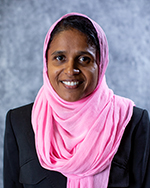
Sheheeda Mariam Manakkadu is an Associate Professor in the Department of Computer Science at Southern Illinois University Carbondale. She teaches graduate courses in Data Structures, Object-Oriented Programming, Data Mining, Text Mining, and Cloud Architecture, along with undergraduate courses in Operating Systems and Data Analytics. Ph.D., Computer Engineering M.E., Biomedical Engineering Her research spans robotics, data analytics, and parallel computing. Key areas include adaptive control of robotic manipulators, big data processing via MapReduce, IoT resource allocation, and computational bioinformatics for protein networks. Recent publications focus on neuro-sliding mode control, cloud architecture, and scalable recommender systems. She actively participates in academic service as a committee member for graduate courses and the IEEE Erie Section. Her work integrates machine learning, optimization algorithms, and distributed systems across diverse domains.
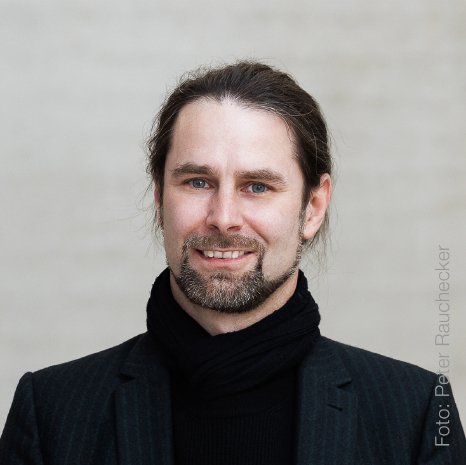
Rainer Böhme is a Professor at the University of Münster, Germany. His research focuses on cyber security, cryptography, steganography, digital forensics, and blockchain technology. He has made significant contributions to understanding cyber risk quantification, central bank digital currencies (CBDCs), and the socio-technical challenges in cryptocurrency systems. Key areas of research include steganalysis (analysis of hidden data in digital media), forensic techniques for neural network inference pipelines, and the economic implications of cyber insurance. He actively contributes to conferences like the Financial Cryptography Workshops (FC) and the Workshop on Information Hiding and Multimedia Security (IH). Böhme's work bridges theory and practice, addressing real-world issues such as privacy in CBDCs, adversarial attacks on AI systems, and the role of law enforcement in cryptocurrency markets. His recent studies explore the security implications of image orientation in JPEG files and the detection of privileged parties in blockchain transactions. He has collaborated with institutions like the University of Vienna and ETH Zurich, and his research has been published in top-tier venues such as IEEE Transactions on Information Forensics and Security and the ACM Conference on Computer and Communications Security (CCS).
Nora McDonald is an Assistant Professor in the Department of Information Sciences and Technology at George Mason University. She holds a PhD in Information Science from Drexel University and a BS in English from Cornell University. Her research focuses on digital privacy, ethical technology design, and the societal impacts of emerging technologies like AI. She investigates privacy practices in dynamic surveillance environments, particularly for marginalized populations, and examines how data relations shaped by social media algorithms influence identity and societal norms. Her work has been published in top venues including ACM CHI and CSCW, earning multiple Best Paper awards. She is actively involved in designing curricula addressing AI ethics and generative AI policy in higher education. Currently, she leads a National Science Foundation-funded study on privacy ecosystems and collaborates on projects like equitable community internet access during crises. Research interests span artificial intelligence, machine learning, cybersecurity, and human-centered computing. Notable projects include studies on post-Roe reproductive privacy challenges, neurodivergent identity verification systems, and Gen Z's interaction with AI technologies. She teaches courses on human-computer interaction (HCI) and technology ethics, mentoring students pursuing PhDs in privacy and health informatics. Awards: Best Paper Awards at ACM CHI and CSCW Grants: NSF SaTC grant for privacy ecosystems research Labs/Teams: Leads George Mason's Privacy & Health Informatics Initiative
Dr. Shervin Shirmohammadi is a Professor at the University of Ottawa's Faculty of Engineering, specifically within the School of Electrical Engineering and Computer Science. With an impressive h-index of 41 and over 6,800 citations across 473 publications, his research has made significant contributions to the fields of computer vision, biomedical instrumentation, and health monitoring systems. His academic journey spans over two decades, beginning with work on communication architectures for virtual environments in 2001 and evolving toward practical healthcare applications. Dr. Shirmohammadi's research interests center on Computer Vision , Image Processing , and Embedded Systems with a strong focus on healthcare applications including nutrition monitoring, mental health assessment, and driver safety systems. His most influential work examines computer vision applications for health monitoring, particularly food calorie measurement systems that use smartphone cameras to analyze nutritional content. His research has evolved to include EEG-based systems for ADHD detection and serious games for autism therapy, demonstrating a consistent trajectory toward practical healthcare solutions using advanced instrumentation techniques. Dr. Shirmohammadi maintains active collaborations with researchers including A. Yassine (118 joint publications), D. Ahmed, Ali Asghar Nazari Shirehjini, and B. Hariri. His publications appear primarily in IEEE Transactions on Instrumentation and Measurement, reflecting his strong connection to the instrumentation and measurement community.
Şule Alıcı is an Associate Professor in the Department of Basic Education, Faculty of Education, at Kırşehir Ahi Evran University , Turkey. Since 2022 she has held the rank of Doçent (Associate Professor) on a full-time basis, and since 2022 she also serves as Deputy Director of the University Research & Application Centre. Previously she was Assistant Professor (Dr. Öğretim Üyesi) at the same university (2022-2025) and Research Assistant at Middle East Technical University (2007-2018) and Queensland University of Technology (2017). Education PhD in Preschool Education, Middle East Technical University, Institute of Social Sciences, 2013-2018 MA in Preschool Education (Thesis), Middle East Technical University, Institute of Social Sciences, 2009-2013 BA in Mathematics & Science Education, Gazi University, Gazi Faculty of Education, 2002-2007 Research Focus Dr Alıcı’s scholarship lies at the intersection of early childhood education , education for sustainability , creative drama , and media literacy . She explores how preschool teachers can be empowered to integrate sustainability principles into daily practice, how creative drama can be harnessed to enhance children’s environmental awareness, and how critical media literacy can be used as a transformative tool in teacher professional development. Her work spans curriculum development, teacher education reform, and cross-cultural comparative analyses. Her recent publications reveal a consistent trajectory toward re-orienting early childhood teacher education for sustainability . Using mixed-methods and case-study designs, she investigates teacher candidates’ experiences during practicum, the role of forest schools and outdoor learning, and generational changes in traditional children’s play. Collectively, these studies highlight systemic challenges and innovative pathways for embedding sustainability and creativity within Turkish and international ECE contexts. Awards & Recognition TÜBİTAK Publication Incentive Award (2023) OMEP Special Achievement Commendation – Education for Sustainable Development (2017) National Publication Incentive Award (2011) Projects & Grants Dr Alıcı has led or co-investigated five funded projects, including ReNCitReScArCe (2024, UN & EU supported), Dijital Dünyada Siber Kimlik Farkındalığı (TÜBA-TÜBİTAK 2021-2022), and Müzede Yeşeren Umutlar (Ministry of Development, 2019). These initiatives engage pre-service teachers, school counsellors, rural women, and museum visitors in sustainability and digital citizenship education. Professional Service & Leadership She is Vice-Chair of the Transnational Dialogues in Research in Early Childhood Education for Sustainability network and of the EECERA Sustainability SIG , an active member of AERA, EECERA, OMEP and TEMA, and has organised several international conferences and special journal issues.
FH-Prof. Mag. Dr. Tassilo Pellegrini is a Professor at the University of Applied Sciences St. Pölten , leading the Institute for Innovation Systems within the Department of Digital Business and Innovation . His work bridges semantic technologies with digital business strategies. Education : Business Economics, Communication Studies, Political Science Research Focus : Semantic Web, Linked Data, Digital Media Economics, Network Neutrality, Data Licensing His publications highlight trends in Semantic Metadata for news production, Linked Data Integration , and Cloud-based Business Models under network neutrality constraints. Recent work explores thesaurus-driven knowledge organization and the economic implications of Big Data. Scientific Awards : Best Paper Award at I-Semantics 2012 Key Projects : ECO-TCO (Digital Data for Sustainability), Corporate Semantic Web initiatives Contact: tassilo.pellegrini@fhstp.ac.at
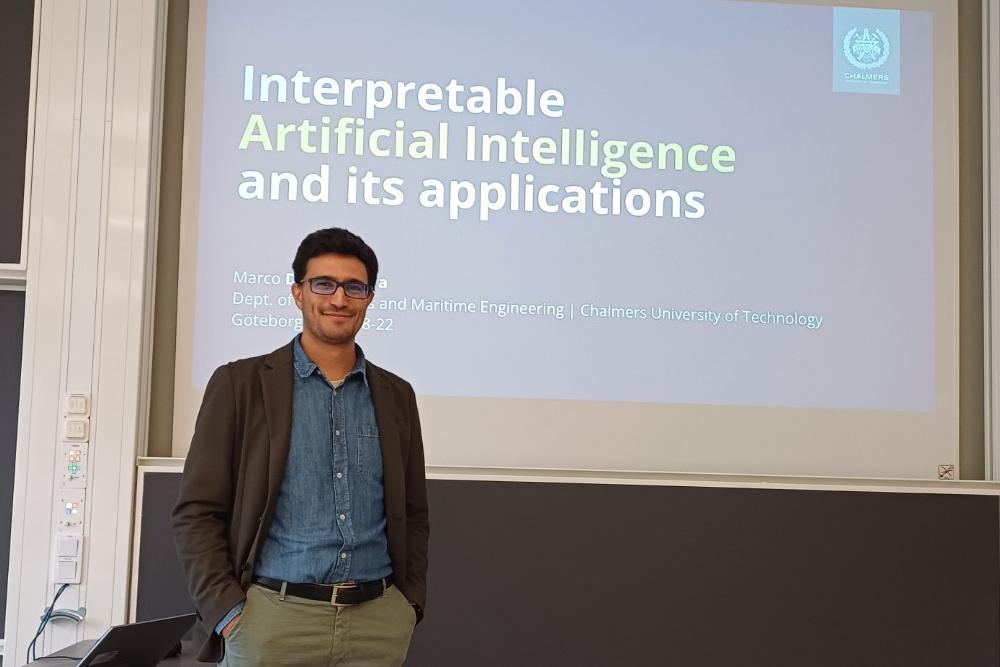
Marco L. Della Vedova is a Senior Lecturer in Applied Artificial Intelligence at Chalmers University of Technology, Sweden. He works in the Vehicle Engineering and Autonomous Systems division within the Department of Mechanics and Maritime Sciences, as part of Prof. Mattias Wahde's research group. Since 2025, he has served as Director of the Data Science and AI master's programme (MPDSC) at Chalmers, where he teaches courses including Introduction to Artificial Intelligence and Digitalization in Sports. Dr. Della Vedova earned his academic foundation at the University of Pavia, Italy, where he completed his BSc (2006), MSc (2009), and PhD (2013) in Computer Engineering. His doctoral research focused on "Real-Time Physical Systems and Electric Load Scheduling" under Prof. Tullio Facchinetti. During his PhD studies, he spent a year at U.C. Berkeley hosted by Prof. Francesco Borrelli at the Model Based Predictive and Distributed Control Lab. His research spans multiple AI domains with a strong emphasis on interpretability. Dr. Della Vedova develops interpretable methods for conversational AI, naturalness evaluation of forests using canopy height models, and geospatial applications. His work bridges theoretical AI with practical societal benefits, particularly in environmental monitoring, transportation systems, and orienteering. He has previously contributed to cloud computing, hate speech detection, and cyber-physical energy systems, demonstrating his interdisciplinary approach to AI research. Dr. Della Vedova's publication record reveals a consistent trajectory of impactful research across multiple domains of artificial intelligence. His recent work shows a strong focus on interpretability in AI systems, with significant contributions to natural language processing, geospatial analysis, and causal inference. The research demonstrates both theoretical depth and practical applications, particularly in environmental monitoring and social media analysis. His methodology often combines traditional machine learning approaches with novel interpretability techniques, creating bridges between complex AI systems and human understanding. Dr. Della Vedova has received several prestigious recognitions for his work: Best PhD thesis award from the Order of the Engineers of Bergamo (2013) Italian champion of Il Cervellone (2012) Top Italian performer in IEEEXtreme 6.0 programming competition (148th overall globally, 2012) Premio Arturo Schena award from Fondazione Credito Valtellinese (2010) With over 50 students supervised through bachelor's and master's theses, Dr. Della Vedova has established himself as a dedicated mentor in the AI community. His current PhD students include Minerva Suvanto working on interpretable NLP and Vivien Lacorre developing AI for railway infrastructure inspection. His supervision spans diverse topics from forest naturalness evaluation to hate speech detection and transportation optimization. Beyond formal supervision, he actively contributes to educational initiatives including serving as Director of Chalmers' Data Science and AI master's program and developing innovative teaching methods that connect theoretical concepts with real-world applications. Dr. Della Vedova is deeply embedded in both academic and professional communities. He leads the Applied Artificial Intelligence research group at Chalmers while maintaining strong connections with European research networks through projects like the ERASMUS+ EUrienteering initiative. His interdisciplinary approach is reflected in collaborations across computer science, environmental science, and social sciences. Notably, he applies his AI expertise to orienteering both as a researcher developing localization methods and as a licensed Event Advisor for the International Orienteering Federation, demonstrating how his professional and personal interests converge in innovative ways.
Dr Michael Callaghan is a Lecturer in the Department of Management and Marketing at Deakin Business School, Faculty of Business and Law, Deakin University. He is based at the Warrnambool Campus and holds a PhD (by prior publication) from Deakin, recognized as the first such award in the Faculty. His research and teaching focus on business ethics, corporate social responsibility, marketing, and management. Education: PhD, Deakin University Bachelor of Business, University of Southern Queensland Bachelor of Business (Honours), University of Southern Queensland Diploma in Export Management, Australian Institute of Export Diploma in Market Research, Market Research Society of Australia His research interests include corporate ethics, trust in online exchange, advertising, relationship marketing, and consumer behavior. His work has been widely published in journals such as the Journal of World Business and Journal of Business Ethics , with a strong emphasis on cross-cultural and longitudinal studies of corporate codes of ethics. His 15 most recent articles reveal a consistent focus on ethical structures in organizations, particularly across Australia, Canada, Sweden, and the UK. Themes include code quality, implementation, cross-sector comparisons, and ethical engagement over time. His work bridges marketing and ethics, often analyzing how ethical frameworks influence organizational behavior and consumer trust. Scientific Awards and Recognitions: 2019 Management Department Teaching and Learning Award (Inaugural Winner) 2018 Outstanding Reviewer, Emerald Literati Network Outstanding Paper Award, 2016, for work on B2B e-marketing orientation PhD thesis nominated for Emerald/EFMD Outstanding Doctoral Research Awards (2017) He has served as Unit Chair for multiple marketing units and taught over 15 courses across management and marketing. He is a Certified Practising Marketer (CPM), Fellow of the Academy of Marketing Science (FAMS), and Fellow of the Australian Marketing Institute (FAMI). He was involved in a contract research project with Insurance Australia Limited on SME customer behavior. No formal lab or research team is mentioned, but he collaborates frequently with researchers like Wood, Svensson, and Valos.
Dr. Sam S. Ramanujan is Professor of Computer Information Systems and Analytics at the University of Central Missouri , affiliated with the Harmon College of Business and Professional Studies . He teaches advanced object-oriented programming and software engineering courses, combining over two decades of academic expertise with substantial industry experience in complex system deployment. Doctor of Philosophy in Information Systems (University of Houston, 1995) MBA in CIS and Quantitative Analysis (University of Arkansas, 1989) PGDM in Information Systems (XLRI Institute of Management Studies, 1987) Bachelor of Arts (Hons) in Economics (University of Delhi, 1985) His research spans big data architecture , visual analytics , healthcare IT , and legal aspects of technology . He has published extensively on topics including software maintenance, e-commerce trust models, and cloud-based healthcare systems, with a focus on bridging technical and legal challenges in digital environments. Dr. Ramanujan's academic work shows a consistent focus on software engineering (1995–2017), healthcare IT (2004–2017), and legal-compliance frameworks (2000–2017). His publications demonstrate interdisciplinary expertise in merging technical systems with regulatory requirements . Best Paper Award , Journal of American Academy of Business, Cambridge (2006) He has contributed to pedagogical advancements in distributed computing curricula and collaborates with scholars like S. Kesh and S. Nerur. His industry experience informs real-world applications of his research in software maintenance and offshore operations.
Ryan Scrivens is an Associate Professor at the School of Criminal Justice, Michigan State University, and holds cross-appointments as Associate Director at Simon Fraser University's International CyberCrime Research Centre and Research Fellow at VOX-Pol Network of Excellence (Ireland). His problem-oriented research combines computational methods with qualitative insights to study right-wing extremism, hate crime, and cyber-terrorist activities. PhD in Criminology (2017), Simon Fraser University MA in Criminology (2011), Ontario Tech University BA in Criminology (2009), Ontario Tech University His research integrates advanced quantitative methods and machine learning with in-depth interviews to analyze: online radicalization pathways , right-wing extremist forum dynamics , and CVE program evaluation . Recent work examines incel subcultures on Reddit, hate speech during global crises, and desistance modeling for extremists. His publications span journals like Terrorism and Political Violence and Social Media + Society , with forthcoming volumes on Former Extremists (Oxford) and Right-Wing Extremism (Palgrave). Funded by Public Safety Canada and the Canadian Network for Research on Terrorism, Security and Society, he advises law enforcement agencies and tech companies internationally. Early Career Impact Award (2022), American Society of Criminology As editorial board member for Terrorism and Political Violence and Perspectives on Terrorism , Scrivens bridges academic rigor with practitioner needs through 60+ publications and policy engagement.
Prof. Dr.-Ing. Katrin Temmen is a full Professor at Paderborn University where she serves as Section Owner of Teaching Technology in the Department of Electrical Engineering and Information Technology within the Faculty of Computer Science, Electrical Engineering and Mathematics . She also holds the position of Dean of Students for the same faculty, underscoring her pivotal role in shaping engineering education and student affairs. Her research is anchored in two key areas: Transformation and Education and Sustainable Materials, Processes and Products . These themes converge in her work on digital teaching technologies, augmented reality for learning, open educational resources (OER), and sustainable vocational training concepts. She explores how emerging technologies—especially 5G and mixed-reality environments—can transform engineering curricula and teacher professional development. Across her recent publications (2024–2025), Prof. Temmen investigates: systematic development of multimedia OER for electrical engineering, meta-analyses of augmented reality in education, design of digital student laboratories for teacher training, and comparative studies on self-efficacy among future technical teachers. These works collectively highlight a trajectory toward immersive, sustainable, and scalable educational innovations. Teaching portfolio: She teaches over twenty courses spanning technical writing, mechatronics and manufacturing labs, didactic project seminars, philosophy & ethics of technology, and vocational teacher preparation programs . Her courses emphasize reflective practice, project-based learning, and the integration of digital tools in engineering pedagogy. Contact information: Email: katrin.temmen@uni-paderborn.de Phone: +49 5251 60-3004 Office: Pohlweg 47-49, Room P1.6.09.2, 33098 Paderborn, Germany Office hours: by appointment
Anna Kende is a University Professor at Eötvös Loránd University, serving as Director of the Institute of Psychology and Head of the Department of Social Psychology. She actively contributes to academic governance as a member of both the Faculty Honors Committee and Faculty Council. Her research centers on the psychology of intergroup relations, with specialized expertise in social change processes, prejudice reduction mechanisms, and collective action dynamics. A defining focus of her work examines anti-Gypsyism and the social inclusion challenges faced by Roma communities across Europe, integrating both theoretical frameworks and applied interventions. Her research methodology frequently employs large-scale international collaborations spanning dozens of countries. Analysis of her 15 most recent publications (2025) reveals three dominant research trajectories: pandemic-induced shifts in intergroup relations (particularly migration attitudes), cross-cultural analyses of allyship motivations for marginalized groups (LGBTQ+ and Roma), and context-dependent interventions for reducing structural prejudice. Her work consistently utilizes multinational datasets and addresses contemporary societal challenges through psychological lenses. Professor Kende has secured substantial funding from European Union programs and other international organizations for numerous research projects. She leads the Social Groups and Media Research Workshop, which investigates group dynamics, media influences on social attitudes, and psychological mechanisms of social change. Her work bridges academic research with real-world applications in prejudice reduction and social cohesion.
Dr. Melanie Morrison is a Professor in the Department of Psychology and Health Studies at the University of Saskatchewan's College of Arts and Science. Her research focuses on stereotyping, prejudice, and discrimination toward marginalized groups, with emphasis on social class, gender identity, and sexual orientation. She leads the Saskatchewan Equity, Equality, and Diversity (SEED) Lab, investigating the psychophysiological and behavioral manifestations of bias, particularly among dominant group members. Education: BA (Honours, Distinction) from the University of Victoria, MSc in Experimental Psychology from the University of Northern British Columbia, and PhD in Experimental Psychology from the University of Ottawa. Research interests include intersectional microaggressions, LGBTQ+ rights, food security, and the application of big data and machine learning to social justice issues. She employs mixed-methods approaches, including surveys, experiments, and content analysis. Teaching areas: Social Psychology, Stereotyping & Discrimination, Psychometrics, and Social Justice. She collaborates with students on projects addressing prejudice reduction and systemic inequities. Labs/Teams: SEED Lab focuses on marginalized groups' experiences, including Indigenous peoples, sexual minorities, and women. Current projects explore media framing of LGBTQ+ violence and the affordability of local food systems.
Professor Wei Shi is a faculty member at the School of Computer Science, Carleton University. His research focuses on distributed computing, cloud networks, algorithm design for sensor/actuator systems, big data analytics, and data privacy. Notable projects include federated learning optimizations, blockchain-enabled edge intelligence for IoT/vehicle networks, and AI-driven cybersecurity solutions. His work addresses challenges in dynamic resource allocation, anomaly detection, and privacy-preserving techniques. Research Interests: Distributed Computing: Optimizing federated learning and client selection algorithms for wireless networks. Blockchain & Edge Intelligence: Developing decentralized systems for IoT and vehicular networks using AI large models. Security & Privacy: Innovating methods to detect AI-generated content, combat cyber-physical attacks, and protect user data privacy. Publications: Recent works emphasize federated learning applications, blockchain integration with edge computing, and cybersecurity for vehicular/IoT ecosystems. Key themes include energy-efficient algorithms, dynamic resource allocation, and intrusion detection in constrained environments. Email: wei.shi@carleton.ca
Dr. Carla Bonina is Associate Professor in Entrepreneurship and Innovation at the University of Surrey Business School , with affiliations to multiple research centers including the Surrey Centre for the Digital Economy , Surrey Institute for People-Centred AI , and Latin American Open Data Initiative (ILDA). Her work bridges technology, policy, and sustainable development with a focus on Latin America. PhD in Management - London School of Economics and Political Science MSc in Public Administration - Centro de Investigación y Docencia Económicas (CIDE), Mexico City BSc in Economics - University of Buenos Aires, Argentina Research explores digital platform governance in international development, AI policy frameworks, and open data ecosystems in Latin America. She investigates how digital transformation intersects with social innovation and equitable development . Recent work analyzes data justice mechanisms and algorithmic bias in public service delivery. Key contributions include comparative OGD platform studies across Buenos Aires, Mexico City, and Montevideo. Her DIODE network research examines digital economies in developing countries. As co-PI for Audio Commons Initiative , she pioneered open audio content frameworks for creative industries. Mid-Career Researcher of the Year (Surrey Business School, 2021) Impact Award for digital government work (University of Surrey, 2020) Fellow, Surrey Institute for People-Centred AI Principal Researcher, ILDA Active in digital policy advisory for World Bank, OECD, and IDRC. Coordinates Por Mi Barrio urban governance case studies and contributes to UNESCO Open Science frameworks. Recent Surrey Speaks podcast (2023) discusses AI's role in social inequality dynamics.