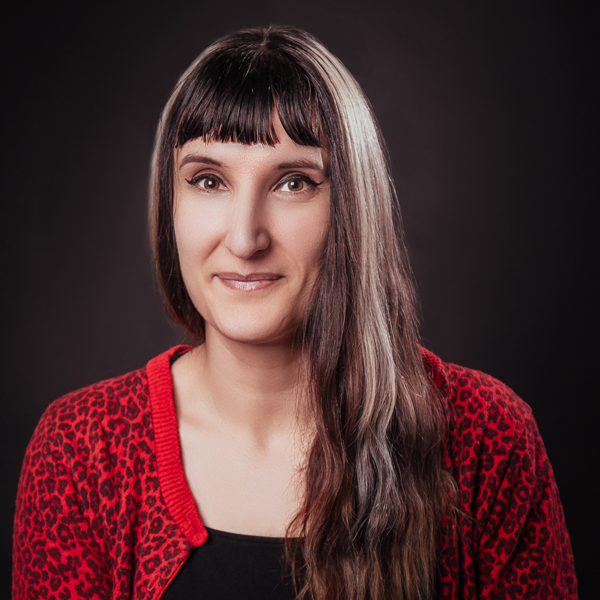
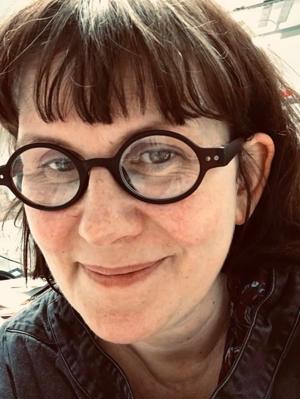
Professor Owen Davies is a faculty member at the University of Hertfordshire , affiliated with the History Department at the School of Creative Arts . His research spans witchcraft , magic , supernatural beliefs , and folklore , with a focus on interdisciplinary approaches integrating archaeology, anthropology, and biomedical studies. Key research areas : Witchcraft, Domestic Magic, Medical History, Electrification, Public History. Recent projects : AHRC-funded 'StoryMachine', Leverhulme 'Inner Lives', Wellcome Trust 'Harnessing the Power of the Criminal Corpse', and a new AHRC 3-year study on witch bottles. Selected publications : America Bewitched (2013), The Oxford Illustrated History of Witchcraft and Magic (2017), Troubled by Faith (2023). Awards : Funded by AHRC, Wellcome Trust, and Leverhulme Trust. Collaborates with institutions like Museum of London Archaeology and University of Essex. Leads community engagement via the Heritage Hub and 'Electric Generations' exhibition.
Dr. Philippa Carter is University Assistant Professor in the History of Medicine and Health before 1800 at the University of Cambridge's Department of History and Philosophy of Science. She serves as an Affiliated Lecturer in the Faculty of History and is a Fellow and Director of Studies at Sidney Sussex College. Additionally, she manages the MPhil in Health, Medicine and Society program. Her educational background focuses on early modern European history with specialization in medical and intellectual history. Her research spans a wide range of interests including: Early understandings of mental and physical illness Bodies and embodiment in historical contexts Mind/body relations in premodern thought Disability and visible difference Disease categorization and diagnosis across historical periods Boundaries between natural philosophy, magic, and religion Sciences of the psyche Dr. Carter's scholarly work examines premodern Aristotelian understandings of 'nature,' particularly in the processes of 'generation' and 'corruption.' Her research bridges cultural history, medical history, gender studies, and the history of science, with particular attention to how historical societies conceptualized bodily experience and mental states. She has published significant work on childbirth and madness, gender and witchcraft, and is currently completing a monograph on madness, brain disease, and the soul in early modern England. Her recent publications demonstrate a consistent focus on the intersection of gender, medicine, and social history in early modern contexts. The articles reveal trends toward examining marginalized historical experiences, particularly women's health and mental states, while connecting historical medical concepts to contemporary understandings. Among her notable scholarly contributions: 'Childbirth, "Madness", and Bodies in History' (History Workshop Journal, 2021) 'Work, Gender and Witchcraft in Early Modern England' (Gender & History, 2023) "Madness Embodied" (forthcoming in The Bloomsbury Cultural History of Madness) Dr. Carter teaches on Early Science and Medicine at the Department of HPS, Part I History Tripos Outline Paper 4 ('Early Modern Britain'), and Part II, Paper 11 ('Early Medicine'). She serves as Associate Editor for the digital humanities project 'Reading Early Medicine' and is actively involved with Cambridge Reproduction research initiatives. Her work contributes significantly to interdisciplinary approaches to historical medical understanding, connecting past and present perspectives on reproductive health, mental illness, and bodily experience.
Karl Bell is an Associate Professor in Cultural and Social History at the University of Portsmouth, specializing in supernatural and environmental history, folklore, and Victorian popular culture. He joined in 2007 after teaching at the University of East Anglia. Co-director, Centre for Port Cities and Maritime Cultures Co-Principal Investigator, 'From Sail to Steam, Carbon to Green' (Lloyd’s Register-funded, 2025-2031) Former director, Supernatural Cities project (2016-2022) Education: PhD in History, University of East Anglia (2007) MA in Modern History, Birkbeck College, University of London (2001) BA Hons in Modern History, Anglia Ruskin University (1992) His research explores the relationship between modernity, enchantment, and the Gothic, with a focus on coastal environments, psychogeography, and the revival of folklore in contemporary culture. He has authored books like the award-winning The Legend of Spring-heeled Jack and The Magical Imagination . Recent publications examine maritime haunting, urban Gothic mindscapes, and the evolution of supernatural narratives. His work bridges historical analysis with literary and cultural studies, emphasizing affective landscapes and storytelling. Scientific Awards: Outstanding PhD Supervisor Award, University of Portsmouth (2017) He has secured AHRC funding for 'Lost Voices: Spiritualism in the First World War' (2017) and leads the Lloyd’s Register-funded 'From Sail to Steam' project (2025-2031). As founder of Portsmouth Darkfest (2016-2021), he fostered academic-creative collaborations and developed the Portsmyth app. He teaches undergraduate and postgraduate courses, including the MA Victorian Gothic distance learning program, and serves on editorial boards of Revenant and Coastal Studies and Society .
Dr. Maggie Webster is a Senior Lecturer in Education and Religion at Edge Hill University since 2005, specializing in Religious Education and the study of contemporary witchcraft and paganisms. She holds a PhD from the University of Wales Trinity Saint David titled Becoming Witch: Creating and Confirming Faith Traditions within Social Networking Spaces , which explores digital-age religious identity formation. Education Background: PhD in Paganisms (2013–2021) MA in Religious Education (University College London, 1998–2001) B.ED in Theology and Religious Studies with QTS (University of Chester, 1995) Research Interests: Focus on witchcraft, digital ethnography, religious identities online, and alternative spiritualities. Active in academic conferences (e.g., Brno, Salzburg, Athens) and has published three books: Teaching Primary Religious Education (2010), Creative Activities for EAL Pupils (2011), and Teaching the Primary Foundation Subjects (2015). Professional Roles: Current Course Lead for BA Religion and Secondary Religious Education with QTS. External Examiner at University of Central Lancashire (2021–2024) and York St John University (2019–2024). Key Contributions: Monograph forthcoming on her PhD work (2025), and articles analyzing witchcraft in media and education. Advocates for accurate representation of religious practices in public discourse.
Carolina A. Sanz de la Fuente is a fifth-year PhD candidate in Ethics and Practical Theology at the University of Edinburgh's School of Divinity, holding the academic rank of Tutor for undergraduate courses including Ethics and Society and Popular Religion, Women and Witchcraft in Early Modern Europe. Previously, she served as a Lecturer at Tecnológico de Monterrey for Transhumanism, Ethics and Technology and Applied Ethics modules. Her academic credentials feature an MPhil in Philosophy, Cum Laude, from Universidad Iberoamericana, Mexico City (2016-2018) and a BA in Humanities and Social Sciences, Magna Cum Laude, from Tecnológico de Monterrey (2007-2011). Her research critically examines the intersection of ethics, philosophy, and theology with emerging technologies, focusing on transhumanism's ethical dilemmas, GNR revolutions (Genetics, Nanotechnology, Robotics), and human-machine relationships through frameworks like radical orthodoxy. This work bridges theological traditions with contemporary technological challenges. Conference presentations consistently analyze transhumanist narratives across artificial intelligence and singularity discourse, revealing tensions between technological utopianism and theological anthropology while advancing technomoral futures scholarship. Key recognitions include: School of Divinity Scholarship Award (University of Edinburgh) CONACYT Scholarship (Mexican National Science and Technology Council) Funding supports her PhD research and project contributions as Website Developer for the Centre for Theology and Public Issues and Centre for Technomoral Futures. She serves as PhD Affiliate at the Centre for Technomoral Futures and previously co-organized the Scholars at the Peripheries conference at St. Andrews.
Dr Stephen Butler is a Lecturer in English (Modern Fiction) at the School of Arts & Humanities , Ulster University, Coleraine campus. His research spans modern fiction, folk horror, witchcraft studies, and Freudian theory, with a focus on interdisciplinary applications in digital humanities and cultural critique. Affiliation: Ulster University, Faculty of Arts, Humanities & Social Sciences Contact: s.butler@ulster.ac.uk | +442870124539 His research explores intersections between contemporary British/Irish crime fiction and globalization, the psychological dimensions of Banville’s work, and folk horror motifs in digital media like The Witcher 3 . Projects include a creative collaboration on the 1711 Islandmagee witch trials. Recent publications analyze speculative fiction’s role in decolonization discourse, the legacy of Alan Moore and William Burroughs in subverting genre norms, and the Wiley-Blackwell Companion to Contemporary British and Irish Literature as an editorial co-editor. Activities include organizing the 'Books Beyond Boundaries' conference (2022) and a collaborative screening/Q&A event for 'The Witch Film' (2022). His work aligns with UN SDGs in cultural preservation and critical discourse.
University of the Highlands and IslandsUnited Kingdom
Dr. Ragnhild Ljosland is a sociolinguist and lecturer at the University of the Highlands and Islands (UHI), affiliated with the Archaeology Institute and Language Sciences Institute at Orkney College. She specializes in Orkney and Shetland dialects, runology, and Norse cultural heritage. Her research explores linguistic shifts, historical discourse, and the interplay between language and identity in the Northern Isles. Education: PhD in Sociolinguistics, Norwegian University of Science and Technology (NTNU), 2008 Cand. Philol. (Master’s equivalent) in Scandinavian Studies Research Interests: Discursive construction of cultural identity Norn to Scots language transition Runic inscriptions and modern rune use Scots language revitalization Orkney witchcraft trials narratives Publications & Media: Over 30 peer-reviewed articles, books, and chapters, including works on Orkney dialect grammar, modern rune carving, and historical linguistics. Featured in documentaries like Mystic Britain: The Monster of Maeshowe and media appearances on Scandinavian heritage. Awards: 2017 Highlands and Islands Student Association Award for Best Research Supervisor. Roles: Module leader for MLitt courses on Orkney dialects, runology, and Norse Studies Editorial board member, Scottish Language journal External examiner, University of Stavanger Labs/Teams: Collaborates on projects like the AHRC-funded Orkney and Shetland Dialect Corpus and community heritage initiatives.
Jonathan Durrant is a Senior Lecturer at the University of South Wales, affiliated with the Faculty of Business and Creative Industries and the Humanities Research and Innovation Group. He holds a BA (Hons) in History, an MA in Women's History, and a PhD. His research focuses on gender, witchcraft, and masculinity in early modern Europe, with a particular emphasis on England and Germany. He explores themes such as witchcraft trials, social dynamics, and the representation of history in modern media. Recent work includes studies on magistrates in witchcraft cases, imagery of witches in art, and gender roles in Baroque Germany. He leads the History Research Wales project on research impact and early career development, funded by Vitae. He supervises postgraduate research on early modern history and its contemporary cultural representations. His publications span peer-reviewed articles and chapters, addressing topics like witchcraft stereotypes, masculinity in warfare, and the intersection of history with film, TV, and heritage sites. He advocates for interdisciplinary approaches to historical scholarship.
Professor Charlotte Baker is a Professor of French and Critical Disability Studies at Lancaster University's School of Global Affairs. Her work focuses on Francophone African literature, disability studies, and the intersection of albinism with sociocultural narratives. She teaches courses on contemporary France, Francophone voices, and dictatorship representations. Her research explores postcolonial identities, necropolitical violence in Guinean literature, and the representation of albinism in African contexts. Key projects include studies on disability inclusion in Sierra Leone, healthcare equity, and advocacy against witchcraft-related harm. She has received awards for research impact and international engagement. Research Groups: African Studies Group, Multilingual Creativities, Poetics of Resistance Current Projects: Enhancing Educational Inclusion for Persons with Albinism (PWA), Demystifying Albinism in Malawi, Implementing UN Resolution 47/8 Her publications analyze body politics, postcolonial travel narratives, and the literary depiction of power structures. She actively collaborates with global organizations to address human rights issues linked to disability and witchcraft accusations.
Professor Nicola Ring is a leading academic in respiratory healthcare delivery at Edinburgh Napier University's School of Health and Social Care . With over £500k in competitive funding, she specializes in respiratory nursing education, patient self-management strategies, and digital health innovations. Ring's work spans from contemporary pulmonary rehabilitation frameworks to historical analyses of early nursing practices through Scottish witchcraft records. Key Projects: Developing CPD toolkits for ID/disabled populations, exploring antimicrobial prescribing, and creating digital smoking cessation programs Awards: Respiratory Researcher of the Year (2022) Her research focuses on: respiratory nursing curriculum, health literacy, eHealth/mHealth applications, integrated care models, and historical discrimination in healthcare. Ring has supervised over 30 MSc students and currently leads 5 PhD projects through ENU studentships. She chairs international symposia and contributes to clinical guidelines for the British Thoracic Society. Scientific Contributions include: 12+ peer-reviewed articles in top respiratory journals, development of the Academic Respiratory Research Alliance, and pioneering studies on frontline nurse well-being during the COVID-19 pandemic published in BMJ Open Respiratory Research and The Conversation.
Dr Katherine Farrimond is an Associate Professor in Media and Cultural Studies at the University of Sussex's School of Media, Arts and Humanities. She joined Sussex as a Lecturer in 2015 and holds a PhD in English Literature from Newcastle University (2012). Her research focuses on gender, sexuality, and genre in contemporary popular culture, with particular attention to film/TV analysis, gothic/horror genres, feminist theory, and retro aesthetics. She is co-managing editor of REFRAME and serves on the Feminist Theory Journal advisory board. Education: PhD (Newcastle, 2012), MA in Modern and Contemporary Studies (Newcastle), BA in English Literature (Newcastle). She previously worked as a part-time tutor at Newcastle and visiting lecturer at Northumbria University before joining Sussex. Her research explores intersections of nostalgia, bisexuality representation, and feminist critiques of genre tropes. Recent work examines the femme fatale archetype in fashion/beauty media and the digital ephemera of consumer culture. Key publications include The Contemporary Femme Fatale: Gender, Genre and American Cinema (2017) and articles on horror fandom, noir cinema, and gendered violence in film. She currently supervises PhD students researching queer nostalgia, witch narratives, domestic noir, and animated national identity. Previously advised successful theses on fan activism, cinematic witchcraft, and virginity narratives. Her editorial work bridges academia and public discourse through feminist media criticism. Roles include Director of Student Wellbeing for her school (2024/25), reflecting her commitment to educational equity alongside scholarly innovation.
Professor Catherine Spooner holds a Chair in Literature and Culture at Lancaster University, specializing in Gothic studies and fashion theory. She serves as co-editor of The Cambridge History of the Gothic Volume 3 and has curated exhibitions at the Victoria & Albert Museum and British Library. Her research examines: Gothic subcultures and fashion aesthetics Literary representations of costume and identity Post-millennial 'Happy Gothic' in popular culture Cultural afterlife of the Lancashire witches Recent award-winning work includes 'Post-Millennial Gothic' (Allan Lloyd Smith Prize 2019) analyzing Gothic's evolution in Tim Burton films and Twilight series. Her current monograph explores Gothic, whiteness and fashion from Marie Antoinette to contemporary politics. She teaches modules on Fashion on Film and Gothic literature, and supervises PhDs on Gothic media and costume studies. As co-President of the International Gothic Association (2013-2017), she organized global conferences on Gothic futures.
Dr. Diane A. Rodgers is a Senior Lecturer in Media, Arts, and Communication at Sheffield Hallam University, affiliated with the Department of Media Arts and Communication within the College of Social Sciences and Arts. She is a co-founder of the Centre for Contemporary Legend (CCL) research group and a member of the CCMS steering committee. Her academic work focuses on folklore and folk horror in 1970s British film and television, particularly exploring how hauntological and supernatural themes shape media narratives and cultural perceptions. Rodgers has contributed to projects such as the AHRC-funded National Folklore Survey and co-edited The Legacy of The X-Files (2023). She teaches courses like Alternative Media and Storytelling in Film & Television , emphasizing critical analysis and theoretical frameworks. Education: PhD in Folk Horror and Hauntology in 1970s British Media (Sheffield Hallam University). Research Interests: Folklore representation, folk horror subgenres, supernatural in media, children’s TV, and cult media analysis. Rodgers’ research bridges academic and public engagement, promoting folklore studies through collaborations with museums, conferences, and creative projects. She has presented at international events like the Perspectives on Contemporary Legend Conference and contributed to documentaries, podcasts, and public lectures. Her current projects include a monograph on WYRD TV: Folklore, Folk Horror and Television for BFI Publishing.
Dr. Louise Fenton is a Senior Lecturer in Contextual Studies at the School of Art, University of Wolverhampton. With a PhD in Representations of Vodou from the University of Warwick (2010), her academic career spans teaching, research, and professional engagement in cultural and visual studies. Education: PhD (University of Warwick), MA Illustration (University of Wolverhampton), BA Visual Communication (Wolverhampton Polytechnic) Research Focus: Visual and literary representations of marginalized cultures, including Haitian Vodou, New Orleans Voodoo, seventeenth-century Icelandic Witchcraft, and Zombies in horror cinema (1930-1969) Her publications analyze material culture in magical practices, cinematic horror archetypes, and anti-Vodou campaigns. She supervises three MA Research and six PhD students while coordinating contextual studies across the School of Art. Professional memberships include Societas Magica, British Association of American Studies, and Association of Illustrators. Recent grants include the Museum of Witchcraft Collaboration (2015) and Headstart Big Lottery Fund (2018).
Desdemona McCannon is a Principal Lecturer in Illustration at the School of Arts within the University of Worcester's Institute of Arts and Humanities. She specializes in teaching illustration, curating exhibitions/conferences, and practicing as an illustrator. Her work emphasizes illustration's role in translating complex ideas into visual narratives. Education: MA Sequential Illustration (University of Brighton, 1997) BA Illustration (Liverpool John Moores University, 1993) BA English Literature (University of Bristol, 1991) Research focuses on: Print culture & self-publishing Interdisciplinary visual literacy Folk art practices Illustration's therapeutic applications Mid-20th century women designers DIY educational methods Professional activities include advocating for participatory illustration practices and exploring connections between witchcraft traditions and contemporary design. No specific grants or labs are mentioned in available materials.