Ricki O'Rawe is a Senior Lecturer at Queen's University Belfast's School of Arts, English and Languages. He specializes in Hispanic literature, art, and cultural studies, with a focus on Argentine literature, surrealism, and decolonial aesthetics. His research intersects themes of spirituality, political aesthetics, and identity in Latin American contexts. PhD Supervision Areas: Argentine Literature, The Fantastic in Art, Hispanic Surrealism, Religion & Art, Decolonial Approaches Current Research Project: 'Women and Religion in the Hispanic World' (2019–present) He actively engages in academic networks such as the International Society for the Study of Surrealism and organizes conferences like the Society for Latin American Studies Annual Conference (2023). His work has been recognized with the AHSS Faculty Research Initiatives Fund Award (2017). Key contributions include analyses of Samanta Schweblin's political narratives, Borges' poetry, and Remedios Varo's feminist surrealist art. He also explores coloniality in contemporary art through writings on the Turner Prize and pandemic-era religious imagery in Hispanic art.
Derek Duncan serves as Professor of Italian at the University of St Andrews' School of Modern Languages, specializing in Italian Cultural Studies. Previously holding a professorship at the University of Bristol, he directs the Italian Centre for Contemporary Art and contributes significantly to transnational humanities research. His educational background includes French and Italian studies at Aberdeen University followed by doctoral work at Edinburgh. Duncan's research centers on intersections of sexuality/gender and race/ethnicity in modern Italian culture through queer and critical race theory frameworks, with notable courses including 'Black Italians,' 'Fascist Italy,' and 'Cultures of Migration.' Analysis of his recent publications reveals consistent focus on Mediterranean migration narratives, transnational identity formation, and creative humanities methodologies. His work frequently connects historical events like the Arandora Star sinking with contemporary migration crises, emphasizing transcolonial continuities. Leverhulme Major Research Fellowship (2019-2022) Multiple AHRC-funded projects including Transnationalizing Modern Languages Founding editor of Liverpool University Press series: Transnational Italian Cultures and Transnational Modern Languages Duncan actively supervises research and collaborates with artists like Davide D'Elia on projects such as Tiepido Cool. His work with the Centre for Poetic Innovation demonstrates commitment to bridging academic research and artistic practice, while his global challenges project in Namibia reflects international engagement. Current research examines Mediterranean migration through the lens of the Arandora Star disaster and its contemporary resonances.
Christiane Kruse is a Professor of Art History and Visual Cultures at the Muthesius University of Art and Design Kiel since 2011. She serves as the Managing Director of the Institute for Art, Design, Media (IKDM) since 2014 and previously held the Equal Opportunities Officer role until 2020. Education: Doctorate (Dr. phil.) at LMU Munich (1994) Habilitation at University of Konstanz (2002) with Venia Legendi Studies in Art History, Modern German Literature, and Medieval Studies (1983–1989) Research Interests span art history, visual cultures, image anthropology, media theory, and cultural studies. Her work explores the intersection of art, technology, and identity, with a focus on iconoclasm, gender representation, and sustainability in design. She investigates how visual media shape historical memory and contemporary discourse. Recent Publications address topics like contemporary iconoclasm, eco-art practices, and the role of masks in global visual cultures. Her edited works trace historical dialogues between art and science, religious imagery, and interdisciplinary approaches to image-making. Scientific Awards: Research Fellowship from Herzog August Library Wolfenbüttel (2007) Fellow at the Wissenschaftskolleg zu Berlin (2010–2011) Other Roles include Visiting Professorships at Humboldt University Berlin (2013/14) and University of Karlsruhe (2004/05), Acting Professorships at TU Dresden and Braunschweig University of Fine Arts, and contributions to curatorial projects like documenta 13.
Simona Kumpė is a Lecturer at Vytautas Magnus University, specifically affiliated with the Faculty of Humanities and the Department of Cultural Studies. She has been actively involved in academic work since at least 2017, contributing to the Centre for Asian Studies and the Department of Cultural Studies. Her work primarily focuses on East Asian cultures, with special attention to Japanese and Korean studies. Dr. Kumpė's research interests span across several areas of East Asian cultural studies. Her primary focus appears to be on Japanese culture, particularly examining social structures, media representations, and historical contexts. She has supervised numerous bachelor's theses exploring topics such as Japanese anime, manga, visual novels, and societal issues in Japan and Korea. Her work demonstrates a strong interdisciplinary approach, bridging cultural studies, media analysis, and social sciences. Her recent publications show a consistent focus on Japanese cultural phenomena, particularly examining how social hierarchies, power dynamics, and cultural norms are represented in various media forms. There's a clear pattern of analyzing contemporary Japanese society through popular culture, with special attention to how these representations travel across cultural boundaries to Lithuania and Europe. Many of her supervised theses employ comparative and cross-cultural methodologies. Dr. Kumpė has supervised a significant number of bachelor's students, guiding them through research on diverse aspects of East Asian cultures. Her students have produced work examining Japanese social structures, Korean literature reception in Lithuania, historical connections between Lithuania and Japan, and representations of various social issues in Japanese media. Her supervision appears to encourage both theoretical analysis and empirical research methods.
Stefan Trinks is an Assistant Professor at the Institute for Art and Visual History of Humboldt University of Berlin , where he has held teaching and research positions since 2007. He serves as sub-head of the Collaborative Research Center 'Transformations of Antiquity' and contributes to the Cluster of Excellence 'Image – Knowledge – Design.' Academic Affiliation: Humboldt University of Berlin Research Focus: Medieval art, Classical Antiquity reception, Political iconography, and Contemporary art analysis Key Projects: Adolph Goldschmidt Center for Romanesque Sculpture, Image Act and Embodiment Research Group His research explores intersections of medieval sculpture and architecture with modern visual culture, particularly examining the continuity of antiquity in Iberian Peninsula art (5th–13th centuries). Publications address topics like chryselephantine technique, tactile theology, and pop culture iconography. Selected 2018 publications reveal trends in analyzing medieval color symbolism, music video aesthetics, and Laocoön reception. Earlier works focus on Santiago de Compostela as a tactile theater, Sheela-na-gig iconography, and vestimentary symbolism during the Investiture Controversy. Scientific Award: 2012 International Romanesque Research Prize Editorial Contributions: Atlases of Knowledge (2016), Intuition and Institution Coursebook (2012) Public Engagement: Interviews with ARD-Digitalradio and Deutschlandradio on art history topics
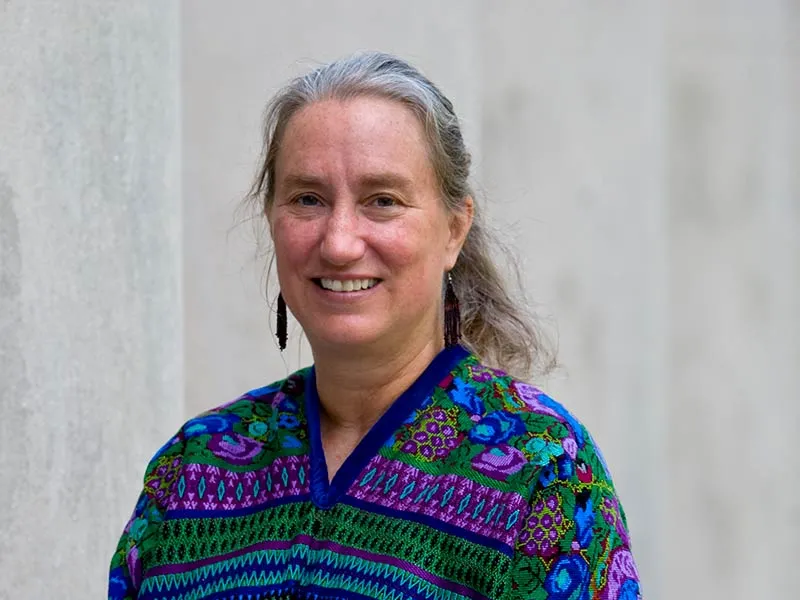
Judith Maxwell is Professor of Anthropology at Tulane University, specializing in linguistic anthropology with primary focus on Mayan languages (Kaqchikel, Chuj, Nahuatl) and discourse analysis. Her work bridges theoretical linguistics and applied language revitalization, particularly through the Tunica-Biloxi language project since 2010. Education PhD in Anthropology, University of Chicago (1982) Research Focus : Maxwell investigates discourse structures in Mayan languages regarding artistry canon, cultural constructs, coherence mechanisms, and societal relationships. Her colonial manuscript analysis explores language change in Kaqchikel/Nahuatl, while contemporary work examines bilingual education, language shift, and gender performance across English and Indigenous varieties. She pioneered the revival of Tunica language through community-academic collaboration. Publication Trends : Recent works (2014-2024) demonstrate consistent focus on Mayan language documentation ( Kaqchikel chronicles , Chuj Narratives ), revitalization pedagogy ( Maja'il Kaqchikel ), and sociopolitical dimensions of language ( Mayan Languages and Guatemala Law ). Key themes include decolonizing methodologies, Indigenous knowledge systems, and practical applications for endangered language communities. Advising & Grants : Maxwell leads the Tunica-Biloxi Language Revitalization Project training Tulane students in documentation techniques. Her collaborative model integrates tribal knowledge with academic research, securing sustained community engagement despite specific grant details being unreported. Research Teams : Directs the Tunica-Biloxi collaborative team comprising Tulane students, tribal scholars, and native speakers, developing e-learning tools like the Q'anil Kaqchikel lessons filmed in Guatemala with native instructors.
Vinay Lal is Professor of History and Asian American Studies at the University of California, Los Angeles (UCLA), where he has been teaching since Fall 1993. He holds a joint appointment in the Department of History and the Asian American Studies Department. Born in Delhi and raised across multiple countries including India, Indonesia, Japan, and the United States, Lal brings a global perspective to his scholarship and teaching. His educational journey began at Johns Hopkins University, where he earned both his B.A. (1982) and M.A. (1982) from the Humanities Center with concentrations in literature, history, and philosophy. He then studied film in Australia and India on a Thomas J. Watson Fellowship before pursuing his Ph.D. at the University of Chicago's Department of South Asian Languages and Civilizations, which he completed with Distinction in 1992. His dissertation, 'Committees of Inquiry and Discourses of 'Law and Order' in Twentieth-Century British India', received the Marc Galler Award for the best dissertation in the Division of the Humanities at the University of Chicago. Lal's research spans an extraordinary breadth of intellectual interests, with primary focus on Indian history, historiography, public and popular culture in India, the Indian diaspora, colonialism, human rights, American politics, the architecture of nonviolence, Gandhi studies, and the global politics of knowledge systems. His work consistently challenges conventional disciplinary boundaries, engaging with topics ranging from the politics of religion and ethnicity in South Asia to the moral and political thought of Mohandas Gandhi, from the partition of India to the intersection of history and popular cinema. His scholarship reflects a deep commitment to decolonizing knowledge systems and exploring alternative epistemologies from the Global South. His publications reveal a scholar deeply engaged with both historical analysis and contemporary political issues. The 15 most recent articles demonstrate his consistent focus on South Asian politics, historical memory, nonviolence, and the politics of knowledge. His writing spans academic journals, major newspapers, and public intellectual platforms, with a distinctive voice that bridges scholarly rigor and public accessibility. His work on Gandhi, colonialism, and contemporary Indian politics forms a particularly strong thread throughout his recent publications. Fellow of the World Academy of Art and Science (elected February 2000) William R. Kenan Fellow, Society of Fellows in the Humanities, Columbia University (1992-93) Senior Fellowship from the American Institute of Indian Studies National Endowment for the Humanities Fellowship for University Teachers Fellowship from the Society for the Promotion of Science/Japan Area Studies Center Listed among the '101 Most Dangerous Professors in America' in David Horowitz's book Fulbright-Nehru Fellowship for Academic and Professional Excellence Fellow at the Stellenbosch Institute for Advanced Study (STIAS), South Africa (2024) Oxford University Press India Academic (Humanities) Delegate (2022-2028) As a dedicated mentor, Lal has supervised numerous PhD students who have gone on to prominent academic careers at institutions including CSU-Sacramento, UNC-Charlotte, O.P. Jindal University, UC Irvine, and the University of Pittsburgh. His teaching portfolio at UCLA is exceptionally broad, encompassing undergraduate courses on Indian Civilization, British India, contemporary South Asia, and world history, along with graduate seminars on Indian politics and religion, historiography of modern India, nationalism and colonialism, Indian cinema, and postcolonial theory. His lecture courses are available in their entirety on his academic YouTube channel, which has garnered over 3 million views and 36,000 subscribers. Lal has also served as University of California's Director of the Education Abroad Program in India and as Professor of History at the University of Delhi during 2010-11. Lal is a founding member of the Backwaters Collective on Metaphysics and Politics (2010-2020), which met annually in Kerala, and was associated with Multiversity, a group of scholars focused on decolonizing Western knowledge systems. His current work includes a four-book project titled 'The Genocide and Hope Quartet: Studies in the Architecture of Oppression and the Redemptive Possibilities of Nonviolence', examining Dandi, Auschwitz, Hiroshima, and Robben Island. He maintains an active public intellectual presence through his blog 'LAL SALAAM' and his academic YouTube channel, making scholarly content accessible to wider audiences.
Susana Morris is an Associate Professor at the School of Literature, Media, and Communication within the Ivan Allen College of Liberal Arts at Georgia Institute of Technology. She holds a Ph.D. in English with a Certificate in Women's Studies from Emory University and a B.A. in English from Mount Holyoke College. Her research focuses on Black Feminism, Afrofuturism, and African American literature. She explores the intersections of race, gender, and technology in contemporary cultural production, with particular emphasis on digital media's role in feminist discourse. Morris's publications demonstrate consistent engagement with Afrofuturism, feminist theory, and cultural studies. Recent work shows increased focus on musicology and Southern cultural studies, particularly examining hip-hop's cultural significance. Her scholarship maintains strong connections between literary analysis and social justice frameworks. Awards and honors include: PULSE Community Building Award from Harvard Black Law Student Association (2017) DILAC Fellowship at Georgia Tech (2017) Dream Defender recognition from Planned Parenthood Action Fund (2015) Outstanding Teaching & Research Award from Auburn University (2011) Morris co-founded the Crunk Feminist Collective, a platform for feminist discourse, and serves as series editor for New Suns: Race, Gender, and Sexuality in the Speculative at Ohio State University Press.
Candace Mixon is affiliated with Occidental College and contributes to academic discourse in Religious Studies and Film Studies through publications in the Journal of Religion & Film . Her research focuses on: Teaching against Islamophobia via visual media Gender dynamics in Muslim cinema Cultural representations in religious contexts Intersections of theology and film Key publications include analyses of the Riz Test, gender in Muslim films, and theological dialogues in cinema. Her work emphasizes critical pedagogy and societal norm deconstruction through visual culture.
Dr. Sonia Rammer is a Professor at the University of Arts in Poznań, serving as Head of the Art Studio in an Intercultural Perspective at the Faculty of Artistic Education and Curating. She also holds significant administrative positions including Vice-Dean of the Faculty and Member of the Scientific Council. Her work uniquely bridges artistic practice with psychological insights, creating an interdisciplinary approach to art creation and education. Dr. Rammer's educational background demonstrates her dual expertise in both psychology and fine arts. She completed psychology studies at Adam Mickiewicz University (2003-2010), specializing in clinical psychology, alongside concurrent studies in painting and art education at the Academy of Fine Arts in Poznań. She earned her habilitation degree in visual arts and art conservation in 2019. Her research interests focus on the psychological dimensions of creativity, cross-cultural artistic exchange, and posthumanist perspectives. Rammer critically examines anthropocentric views through works that explore interspecies relationships and the fluid boundaries between human and non-human entities. Her art often emerges from international residencies in extreme environments like Greenland, Nepal, and Iceland, where she engages with local cultures and ecological contexts. Her recent artistic output shows a consistent exploration of Arctic themes, cultural translation, and identity transformation. The 'Woman Who Thought She Was a Dog' series (2022-2024) from her Greenland residency exemplifies her approach, using minimalist video installations to provoke reflection on species boundaries and human exceptionalism. Her work spans performance, video, photography, and installation, often incorporating cross-cultural misunderstandings as conceptual frameworks. As an educator since 2011, Rammer teaches psychology and psychology of creativity while mentoring students through her studio practice. Her leadership roles include chairing the Faculty Recruitment Committee and serving on the University Senate, demonstrating her commitment to academic development. Dr. Rammer maintains active international collaborations through prestigious residencies including Arctic Culture Lab (Greenland), Marpha Foundation (Nepal), and Baer Art Center (Iceland). She also collaborates with the Faculty of Geographical and Geological Sciences of Adam Mickiewicz University on artistic research in Spitsbergen, reflecting her commitment to interdisciplinary work.
Professor Frits van Oostrom is a distinguished academic at Utrecht University , specializing in Medieval Studies within the Faculty of Humanities . His research spans Dutch literature, cultural identity, and historical canon formation. Primary email: f.vanoostrom@uu.nl Website: www.fritsvanoostrom.nl Research Focus : Van Oostrom's work explores the intersection of medieval literature and national identity , with significant contributions to understanding 14th-century Dutch texts and their cultural context. He has led projects like the Dutch Cultural Canon and created digital platforms such as www.entoen.nu and www.literatuurgeschiedenis.nl . Scientific Awards : NIAS Fellowship (2005) Secondary Activities include chairing the Programmabureau Geesteswetenschappen , co-curating the Festival Oude Muziek , and advising organizations like Genootschap Onze Taal and the Academie Gouden Ganzenveer .
Kyoko Iwaki is a Senior Lecturer at the Department of Literature of the University of Antwerp, with a focus on Japanese theatre, performance studies, and post-catastrophe narratives. She actively engages in collaborative research and holds internal governance roles, including membership in the Departmental Council for Literature and the Education Committee for the Educational Master in Languages. Her research explores Japanese contemporary theatre's intersections with ethics, digital performance, and nuclear trauma. Key themes include collaborative methodologies, liminality, and the philosophical implications of post-Fukushima art. Her work spans classical adaptations, avant-garde practices, and interdisciplinary approaches to performance. Recent publications analyze experimental Japanese theatre (Okada Toshiki, Sankai Juku), post-disaster memory, and the politics of digital pandemic spaces. She contributes to global discourse through interviews with practitioners and critiques of institutional frameworks in theatre and academia.
Juan Manuel Bartolomé Bartolomé is a Professor in the Department of History at the Faculty of Philosophy and Letters, University of León, Spain. His academic work focuses on Modern History, particularly the social and economic structures of León province during the 18th and 19th centuries. He is affiliated with the research group INDETEHI/HISMECON TEMAS HISTÓRICOS/HISTORIA Y MEMORIA CONTEMPORÁNEA, which specializes in contemporary historical topics and memory studies. Education: Doctorate from University of León (1995) Thesis: "Señores cosecheros, hidalgos y campesinos en el Bierzo leonés análisis estructural y dinámica socioeconómica en el siglo XVIII" Supervised by Dr. Laureano M. Rubio Pérez Bartolomé Bartolomé's research centers on social and economic history of early modern Spain, particularly León province. His work examines living conditions across social classes, consumption patterns, material culture, property ownership, and inheritance practices. He analyzes how wealth levels influenced daily life, domestic spaces, clothing, and social mobility during the transition from the Ancien Régime to modern economic structures. His methodological approach involves correlating material culture with levels of patrimonial wealth, revealing how economic standing shaped social expressions. His publication record demonstrates consistent focus on material culture and social stratification in 18th-19th century León. Bartolomé Bartolomé analyzes how different social groups - peasants, bourgeoisie, nobility, and clergy - expressed their status through consumption and domestic arrangements. His research shows the gradual incorporation of new goods and practices into daily life, with strong connections to wealth levels and social aspirations. The temporal scope of his work (1700-1850) captures significant economic and social transformations in the region. While no specific awards are documented in the available information, his extensive publication record indicates significant scholarly contributions to the field of Spanish social history. His work appears in numerous academic publications and conference proceedings, demonstrating recognition within the historical research community. As a Professor at the University of León, Bartolomé Bartolomé has likely supervised numerous graduate students and participated in academic mentorship, though specific students aren't listed in the available information. His research has been supported by academic funding that enabled extensive archival work with notarial records, particularly property inventories, which form the empirical foundation of his scholarship. He is actively affiliated with the research group INDETEHI/HISMECON TEMAS HISTÓRICOS/HISTORIA Y MEMORIA CONTEMPORÁNEA, which facilitates collaborative historical research at the University of León. This group provides institutional support for his investigations into historical topics and contemporary memory, allowing for interdisciplinary approaches to historical analysis.
Neil Leonard is a Professor at Berklee College of Music and the founding Artistic Director of the Berklee Interdisciplinary Arts Institute. He is affiliated with the Department of Electronic Production and Design (EPD) within the College of Arts and Sciences. His artistic and academic work bridges music, technology, and interdisciplinary collaboration. Ph.D. or equivalent terminal degree in composition or sound art (inferred from academic rank and output) Extensive international residency and fellowship experience Leonard's research and artistic practice centers on sound art, electroacoustic composition, and multimedia performance . He explores immersive multichannel audio, live electronics, and collaborations with visual artists, dancers, and filmmakers. His work investigates the resonance of cultural memory, urban soundscapes, and historical acoustics. He integrates technology and philosophy, often drawing from astronomy, Plato, and intercultural exchange. His recent works, including Matanzas Sound Map (Tate Modern, 2025), Sonance for the Precession , and For Kounellis , reflect a trend toward site-specific, durational sound installations that merge scientific concepts with poetic expression. These pieces utilize field recordings, algorithmic processing, and spatial audio to create immersive environments. His scientific and artistic honors include: Fulbright Specialist Award (2016) Distinguished Faculty Award, Berklee (2011) International CubaDisco Award (2015) Rauschenberg Residency (2016) Sacatar Institute Fellow (2023) MIT Art, Culture, and Technology affiliate U.S. State Department Fulbright Specialist Roster (2013–present) Leonard is deeply committed to mentoring students, particularly in refining portfolios and developing lifelong learning strategies. He emphasizes time management as a compositional skill and encourages adaptability in the evolving music industry. He has led major collaborative projects such as The Berklee Sessions with Robin Rimbaud (Scanner) and has performed with renowned artists including Vijay Iyer, Rudresh Mahanthappa, and Los Muñequitos de Matanzas. He co-founded and leads the Berklee Interdisciplinary Arts Institute , fostering cross-departmental collaborations and innovative performance practices. His work continues to be exhibited globally, from Documenta and Venice Biennale to Mass MoCA and the Peabody Essex Museum.
Michael Evans is a Senior Lecturer in Painting and Programme Leader for Fine Art Painting and Drawing at the University of Northampton, where he has been teaching since 1996. He holds a BA (Hons) in Fine Art from Coventry University and completed a practice-based PhD in 2012 on contemporary abstract painting and spiritual experience. He is an active artist and scholar, supervising PhD students and contributing to journals and edited volumes. Bachelor of Arts (Hons) in Fine Art, Coventry University (1984–1987) PhD in Fine Art (Practice-Based), University of Northampton (awarded 2012) Michael Evans' research is deeply rooted in the intersection of abstract painting, spirituality, and contemporary philosophical inquiry. His work explores apophatic modes of thought, the numinous, and transcendental abstraction within a secular context, while also examining how digital technologies influence contemporary painting practices. He investigates how painting can evoke spiritual or transcendent experiences even in non-religious settings, drawing on traditions of negative theology and Jungian psychology. His recent scholarly and artistic output demonstrates a consistent engagement with themes of emptiness, selfhood, otherness, and the metaphysical dimensions of artistic practice. Publications and exhibitions reflect a trajectory focused on the experiential and contemplative aspects of art, particularly how abstraction can serve as a conduit for spiritual or psychological insight. His work often bridges theory and practice, emphasizing process-based approaches and reflective inquiry. Michael Evans has contributed to significant publications such as the International Journal of Religion and Spirituality in Society and the International Journal of Jungian Studies , as well as edited volumes like Contemplations of the Spiritual in Art and Digital, Painting . His exhibitions, including at the Royal College of Art and Northampton Museum & Art Gallery, highlight his commitment to public engagement and artistic innovation. Contributing author to Contemplations of the Spiritual in Art and Photography Published in International Journal of Religion and Spirituality in Society Published in International Journal of Jungian Studies Exhibitions at Royal College of Art, Northampton Museum & Art Gallery, and North East Wales Institute Michael Evans supervises PhD candidates in Fine Art, including Francis Blore, Nour Zantah, and Natasha Toms, whose projects explore drawing, violence in art, and Baroque imagery. He has not received any explicitly mentioned grants, but his sustained research activity and public exhibitions indicate ongoing institutional and academic support. His leadership in the Fine Art programme underscores his role in shaping contemporary art education. He is actively involved in curatorial and collaborative projects, such as the Material Matters exhibition at Northampton Museum and Art Gallery and the Viewfinder digital art project. These initiatives reflect his engagement with interdisciplinary practices, digital media, and community outreach, positioning him at the forefront of contemporary art discourse.