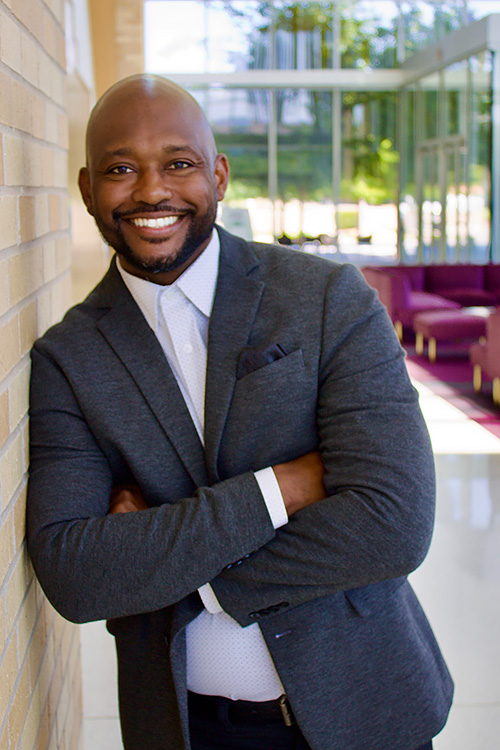
Brandon J. Manning, Ph.D. is an Associate Professor in the Department of English at Texas Christian University's AddRan College of Liberal Arts . His work critically examines intersections of African American literature, gender and sexuality studies, and popular culture through the lens of satire and humor analysis.
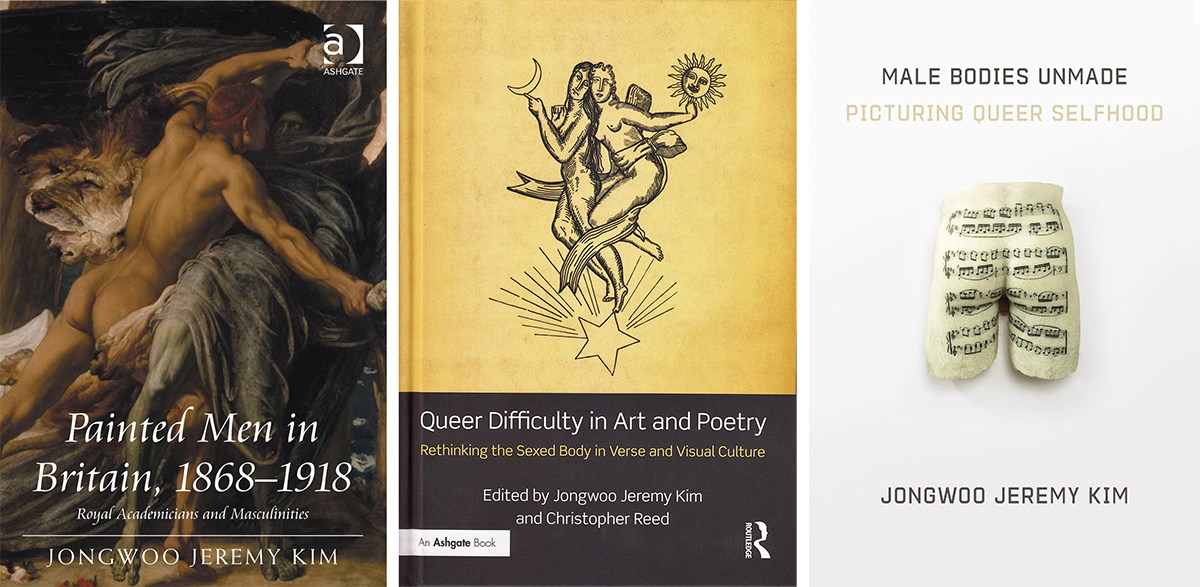
Jongwoo Jeremy Kim is an Associate Professor of Art History & Theory at Carnegie Mellon University's School of Art, specializing in queer critiques of modern and contemporary art. His research deconstructs canonical narratives through lenses of queer theory, colonialism, and gender studies. Currently on research leave until fall 2025, he explores intersections of art, sexuality, and identity in global contexts. Kim’s work bridges historical analysis with contemporary discourse, examining artists like Francis Bacon, David Hockney, and Andrew Ahn. His research has been supported by major institutions including the Clark Art Institute and the Paul Mellon Centre. Notable publications include Male Bodies Unmade: Picturing Queer Selfhood (2025) and Painted Men in Britain (2017). His academic contributions span exhibitions catalogs, peer-reviewed essays, and critical reviews. Awards include the prestigious Clark Art Institute Fellowship. Kim’s teaching and research emphasize interdisciplinary approaches to queer art history, challenging Eurocentric and heteronormative frameworks. Key themes in his work include queer selfhood, colonial sexual exploitation, and the incoherence of traditional male bodily representations. He critiques Western art historiography through postcolonial and queer perspectives, advocating for inclusive narratives in art scholarship.
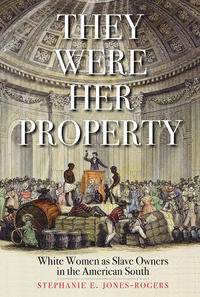
Stephanie E. Jones-Rogers is an Associate Professor in the Department of History at the University of California, Berkeley, and a Chancellor's Professor of History (2024-2027). She serves as Director of the African and African-American History Writer's Workshop, which she founded in 2021 to support interdisciplinary research on African-descended peoples. PhD in History from Rutgers University (2012) MA in US History from Rutgers University (2007) BA in Psychology from Rutgers University (2003) Her research focuses on gender and American slavery, colonial and 19th-century legal/economic history, and the intersection of women's roles with systems of bondage. She is currently working on two books: Women of the Trade (W.W. Norton, 2024) reinterpreting the British Atlantic slave trade through women's roles, and Women, American Slavery, and the Law (W.W. Norton, 2024) examining gender's influence on slave/property law evolution. Her publications span journal articles, book chapters, and digital essays that explore white women's economic investments in slavery, enslaved women's labor, and legal frameworks enabling bondage. Articles demonstrate expertise in gendered economic roles, matrilineal descent laws, and post-slavery policy impacts. Lapidus Center Harriet Tubman Prize (2020) Julia Cherry Spruill Prize (2020) Charles S. Sydnor Award (2020) Los Angeles Times Book Prize in History (2019) She mentors graduate students in African-American history, slavery law, and women's history. Her website and Berkeley Blog contain additional scholarship and commentary.
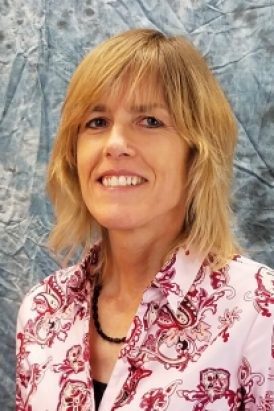
Cara Wallis is an Associate Professor of Communication & Media at the University of Michigan's International Institute (LSA). She holds affiliations with the Lieberthal-Rogel Center for Chinese Studies and the Department of Communication & Media. Her work intersects mobile/social media, China studies, intersectional feminism, and critical technology studies. She focuses on marginalized groups like China's rural and internal migrant populations. Education: PhD in Communication from the University of Southern California (2008-?). Research interests include: digital marginalization, technology & power dynamics, gender equity in technology access, and media's role in social change. She examines how identity axes like class, gender, and geography shape technology use. Recent articles explore themes like pandemic-era mobile media, digital activism in China, and reproductive health discourse. Her work bridges critical theory with empirical studies of technology's societal impacts. No scientific awards listed. Advising/grants: No specific grants or advisees mentioned in texts. Affiliated with the International Institute's interdisciplinary research programs. Labs/Teams: Engaged with transnational research networks studying digital marginalization and China's media ecology.
Vance Byrd is an Associate Professor of Germanic Languages and Literatures at the University of Pennsylvania , with a secondary appointment in History of Art. He serves as Special Advisor in the Office of the Vice Provost for Faculty (2024–2025) and is completing an Ivy+ Mellon Leadership Fellowship. Education: Ph.D., M.A. University of Pennsylvania B.A., University of Georgia Research Interests: Byrd’s work focuses on late-eighteenth- and nineteenth-century German literature , visual and print culture , media history , and commemoration . He engages with race, gender, and sexuality studies , environmental humanities , and the history of books and periodicals . His scholarship examines how panoramic media, illustrated journals, and printed materials shaped cultural memory and identity. Scientific Awards: New Directions Fellowship, Andrew W. Mellon Foundation (2019) Residential Fellow, National Humanities Center (2021–2022) Getty Scholar, Getty Research Institute (2021–2022) Ivy+ Mellon Leadership Fellow (2024–2025) Grants and Affiliations: His research has been supported by grants from the National Endowment for the Humanities, Fulbright Commission, and the Quadrangle Historical Research Foundation. He serves on editorial boards for Monatshefte , The German Quarterly , and the Signale book series, and participates in international academic networks like the Berlin Program for Advanced German and European Studies.
Rose-Anne Gush is an Assistant Professor at the IZK Institute for Contemporary Art, TU Graz. She is an art historian, theorist, and educator with a focus on political aesthetics, transnational surrealism, and critical engagements with capitalism and gender. Academic Affiliations: TU Graz (IZK), University of Leeds, University College London, University of Applied Arts Vienna Key Research Areas: Political Aesthetics, Global Art, Extractive Capitalism, Feminist Theory, Trauma and Memory Her research explores how art navigates the spatial and temporal dimensions of capitalist modernity, with projects like The Work of Art in the Age of the Planetary Mine (2025) and collaborations with Philipp Sattler on lithium extraction. Her articles in FKW , Third Text , and Performance Research interrogate intersections of body, violence, and historical memory. Scientific awards include the Juliane and Franz Roh Post-Doctoral Fellowship (2020) and a DFK Paris Research Grant (2021). Her teaching spans universities in Europe and the UK, including Slade School of Fine Art and University of Leeds.
Neda Maghbouleh serves as Associate Professor of Sociology at the University of Toronto Mississauga (UTM), holding a cross-appointment to the graduate department at St. George campus. She holds the prestigious Canada Research Chair in Migration, Race, and Identity and received the Ontario Early Researcher Award. As Principal Investigator of the RISE (Refugee Integration, Stress, and Equity) Team, she leads a major SSHRC Insight Grant (2018-2023) examining refugee settlement experiences in Canada. Her research critically investigates racialization processes among Middle Eastern, North African, and South Asian populations in North America, challenging the Black-White racial binary. She specializes in refugee integration dynamics, Iranian diaspora identity formation, and gendered migration experiences. Her methodological approach combines critical race theory with feminist and qualitative frameworks, particularly in refugee motherhood studies and digital activism among Muslim-American youth. Analysis of her publications reveals evolving thematic focus from Iranian-American identity politics (2009-2017) to contemporary refugee integration challenges. Her work consistently examines how structural inequalities manifest in everyday interactions, with increasing emphasis on Syrian refugee experiences in Canada since 2018. Key contributions include reframing MENA racial categorization and developing trauma-informed frameworks for refugee settlement. Her scientific recognition includes: Canada Research Chair in Migration, Race, and Identity Ontario Early Researcher Award Through the RISE Team, Maghbouleh directs community-engaged research on refugee health equity, collaborating with scholars like Melissa Milkie and Ito Peng. Her SSHRC grant supports interdisciplinary investigation of Syrian mothers' settlement stressors and resilience factors, informing Canadian integration policies. Current projects emphasize participatory methodologies that center refugee voices in knowledge production. She leads the RISE research collective, an interdisciplinary team developing evidence-based interventions for refugee health equity through mixed-methods investigation of settlement challenges and community support systems.
Benjamin D. Piekut is a Professor in the Department of Music at Cornell University, New York. His academic journey includes a Ph.D. in historical musicology from Columbia University, M.A. in composition from Mills College, and B.A. in music and philosophy from Hampshire College. Research Focus: Music and performance after 1950, critical improvisation studies, sound art, and intersections of music with race/gender politics Key Publications: Experimentalism Otherwise (2011), Henry Cow: The World Is a Problem (2019), and The Oxford Handbook of Critical Improvisation Studies (2016) Recognitions: Whiting Foundation Fellow, MIT Press '50 Most Influential Articles' selection, and funding from NEH and Arts and Humanities Research Council Editorial Roles: Co-editor of Oxford Handbook, editor of Tomorrow is the Question, and special issues for Contemporary Music Review and Third Text Contemporary Engagement: Curatorial advisory board member at Blank Forms (NYC), contributor to Flash Art and Texte zur Kunst His recent work explores the 'vernacular avant-garde' concept, analyzing experimental music's relationship with commercial institutions and mass audiences. Research spans from 1960s New York avant-garde to 1970s European experimental rock band Henry Cow. Current projects include sound art preservation challenges and media-specific music analysis.
Uri McMillan is an Associate Professor in the Department of English at the University of California, Los Angeles (UCLA), with his office located in Kaplan 210. A cultural historian specializing in the intersections of performance studies, black cultural studies, queer theory, and contemporary art, he contributes significantly to critical discourse through scholarly publications and public engagement. He earned his Ph.D. from Yale University in 2009, establishing the foundation for his interdisciplinary research trajectory. McMillan's research centers on black feminist art and performance, avatars, objecthood, and the representation of Black women across historical and contemporary contexts. His work critically examines how race, gender, and sexuality are constructed through artistic practices, with particular attention to embodiment, memory, and resistance. He explores the aesthetics of marginalized identities through frameworks that bridge cultural history and theoretical innovation. His publications reveal a cohesive scholarly trajectory focused on Black performance art, digital media, hip-hop, and 19th-century performance cultures. Key themes include the political dimensions of camp aesthetics, the materiality of racialized bodies, and the genealogies of Black feminist artistic practices. His work consistently connects historical performance traditions to contemporary artistic interventions. His exceptional contributions have been recognized with three major awards in 2016: William Sanders Scarborough Prize (MLA) Barnard Hewitt Award (ASTR) Errol Hill Award (ASTR) Research support includes prestigious fellowships from the Ford Foundation and Woodrow Wilson Foundation. McMillan actively bridges academia and art institutions through lectures at MoMA PS1 and the Hammer Museum, and contributions to the Studio Museum of Harlem's exhibition catalogues. While specific advisees aren't listed, his faculty position entails graduate mentorship within UCLA's English Department. His professional website (urimcmillan.com) provides access to his complete scholarly output.
Dr Rehana Ahmed is a Reader in Postcolonial and Contemporary Literature at Queen Mary University of London's School of English and Drama. She holds a BA from Oxford, MA from Sussex, and PhD from Nottingham Trent. Previously, she worked at Teesside University and contributed to the AHRC-funded 'Making Britain' project at The Open University. She co-leads the AHRC-funded 'Remaking Britain' project with Bristol University, exploring South Asian connections from the 1830s. Her research focuses on British Muslim/Asian literature, multiculturalism, and diaspora history. She co-edits Wasafiri , Journal of Commonwealth Literature , and the Multicultural Textualities book series. Her teaching includes courses on postcolonial and global literatures, such as ESH285 and ESH6086. Current research explores solidarity in British South Asian writing and the historical South Asian diaspora. She supervises PhD projects on topics like the Wasafiri archive and race in post-millennial fiction. Public engagement includes curation of literary festivals, database projects on South Asian history, and decolonizing cultural initiatives.
Professor Stuart Green is a full-time faculty member at the University of Leeds, serving as Professor of Spanish and Popular Culture in the School of Languages, Cultures and Societies. He has been with the university since 2005, progressing from Teaching Fellow to Professor in 2024. His academic work bridges Spanish cultural studies, race, media, and transnational identity. Education: PhD in Hispanic Studies, University of Sheffield (2006) MA in Hispanic Studies, University of Sheffield (2002) BA in Spanish and History of Art, University College London His research centers on Spanish popular culture, particularly how Afro-Spaniards use music to articulate identity, resist exclusion, and connect with the global African diaspora. He critically engages with Paul Gilroy’s concept of the 'black Atlantic' from a Hispanic perspective. His work also spans racial representation in Spanish film, television, and theatre, including blackface performance and the careers of migrant-origin artists like Minke Wang and Santiago Zannou. He has contributed to studies on theatre publicity, cinematic techniques in theatre, and right-wing political discourse in post-war Spanish theatre. Stuart Green is co-convenor of the European Popular Musics Research Group and has co-edited a book on European singer-songwriters and a special issue of the Journal of European Popular Culture. With Prof. Duncan Wheeler, he has analyzed music festivals such as Live at Leeds. His pedagogical contributions include translating José Luis Alonso’s play La estanquera de Vallecas into English as The Granny and the Heist , supplemented with extensive teaching resources for A-level, IB, and undergraduate education. Professional Memberships and Editorial Roles: Member, Association of Hispanists of Great Britain and Ireland Member, Editorial Board, Estreno: Cuadernos del Teatro Español Contemporaneo Editor, Neuróptica: Estudios sobre el Cómic Member, Editorial Board, New Cinemas: Journal of Contemporary Film He teaches across all levels of undergraduate Spanish programs, focusing on peninsular culture including theatre, film, novel, poetry, and painting, while also contributing to transnational modules. He emphasizes the use of target language in classroom instruction. He welcomes PhD research inquiries and is actively engaged in research supervision and academic leadership.
Daphna Motro is an Associate Professor in the Department of Management and Entrepreneurship at Hofstra University's School of Business. She holds a PhD in Management & Organizations from the University of Arizona and a BA in Cognitive Science with highest distinction from the University of Virginia. Her academic work bridges behavioral science, organizational behavior, and ethics. PhD, Management & Organizations – University of Arizona BA, Cognitive Science (Highest Distinction) – University of Virginia Dr. Motro’s research centers on emotions in organizational contexts, particularly how emotional experiences and expressions affect motivation, leadership, ethical behavior, and performance evaluations. She investigates how demographic factors such as gender and race shape emotional dynamics in the workplace. Her methodological approach incorporates modern technologies like eye-tracking and facial recognition software to capture subtle emotional responses. Her recent publications span top journals including the Journal of Applied Psychology , Journal of Business Ethics , and Journal of Experimental Social Psychology . The themes across her work reveal a strong focus on behavioral ethics, emotional regulation, bias in evaluation, and affective influences on decision-making. Her research has been featured in high-impact outlets such as Harvard Business Review and MIT Sloan Management Review , indicating broad relevance beyond academia. Dr. Motro teaches graduate and undergraduate courses such as Organizational Behavior and Compliance, Ethics, and Sustainability. She emphasizes interactive, research-informed pedagogy to engage students in contemporary organizational challenges. While no specific scientific awards or student advisees are listed in the profile, her publication record and media presence reflect a growing influence in the field of organizational behavior and behavioral ethics. She is actively involved in research and teaching, with no indication of retirement or emeritus status. Her office is located in Leo A. Guthart Hall, and she can be contacted via the university’s email system.
Chisu Teresa Ko is Associate Professor and Department Chair of Modern Languages at Ursinus College. She holds a Ph.D. from Columbia University and teaches Spanish language courses at all levels alongside Latin American Studies courses in English, including SPAN 201 (Conversation and Composition), SPAN 340 (Racial Discourses in Argentina), LAS 200 (Introduction to Latin American Studies), and interdisciplinary offerings like CIE 200 (Common Intellectual Experience). Her research specializes in 19th- and 20th-century Latin American literary and cultural studies, with emphases on: Race, ethnicity, and multicultural identity formation Historical and contemporary racial discourses in Argentina Asian diaspora communities in Latin America Afro-Argentine cultural production Criollo Popular Theater traditions Her scholarship—including the forthcoming book Argentina: Race in a Raceless Nation —consistently examines intersections of national identity, racial representation, and transnational connections, with recent work expanding into Afro-Argentine historical documentation and Korean-Argentine cinematic narratives. Awards and fellowships include: 2020 ACLS Fellowship (American Council of Learned Societies) 2021 UMBC Inclusion Imperative Visiting Faculty Fellowship
Adrienne Brown is an Associate Professor in the Department of English at the University of Chicago, specializing in Race, Diaspora and Indigeneity. Teaching since 2011, she also serves as Faculty Director of Arts + Public Life, a South Side Chicago initiative fostering neighborhood vibrancy through arts and community engagement. Her educational background includes: Ph.D., Princeton University, 2011 Professor Brown's research centers on Critical Race Studies, African American Literature, and Urban Studies, with a focus on the twentieth century. She examines how architecture and spatial environments shape racial perception, drawing on Harlem and Chicago Renaissances, Modernism, and Post-45 literature. Her interdisciplinary approach integrates cultural studies, visual culture, sound studies, and the history of property to analyze the racial sensorium in American cultural production. Her publications reveal a trajectory from skyscrapers ( The Black Skyscraper , 2017) to mass homeownership ( The Residential is Racial , 2024), investigating how built environments mediate race. Articles like "Appraisal Narratives" and "The Architecture of Racial Phenomena" dissect midcentury racial dynamics in urban spaces. She employs literary and bureaucratic archives to trace race's evolving definition, value, and perception, contributing to fields of American Studies, Critical Race Theory, and Architectural History. Awards: Modernist Studies Association’s 2018 First Book Prize for The Black Skyscraper While specific graduate students are unlisted, Brown has mentored through her courses and co-edited volumes. Her leadership in Arts + Public Life suggests significant community grants, though detailed funding sources are not specified in the provided text. As Faculty Director of Arts + Public Life, she spearheads a dynamic hub on Chicago's South Side that cultivates neighborhood vibrancy through arts programming, community partnerships, and public space activation.
Tarsis Brito is an IRD Fellow at the Department of International Relations at the London School of Economics and Political Science (LSE). Originally from Teresina, Brazil, he holds a BA in International Relations from the University of Brasilia (UnB), an MSc (distinction) and PhD in International Relations from LSE. His editorial roles include Co-Editor and Associate Editor of Millennium: Journal of International Studies (vols. 50-51) and Coordinator of the Doing International Political Sociology PhD Series (2022-23). He specializes in critical theoretical approaches to international security, borders, migration, and colonialism. His education path reflects a deep engagement with critical theory: BA: International Relations (University of Brasilia) MSc: International Relations Theory (LSE, distinction) PhD: International Relations (LSE) Research interests span International Relations Theory, Security Studies, Border and Migration Studies, Postcolonialism, Race and Empire, International Political Sociology, Gender Studies, Political Geography, and Posthumanism. His work interrogates the colonial and racial underpinnings of modern border regimes, particularly in Europe, arguing that contemporary security practices are afterlives of colonial violence. He advocates for interdisciplinary dialogue between postcolonialism, race studies, and new materialism. His recent articles collectively address themes such as racialized border policing, the colonial genealogies of security methods, and theoretical frameworks linking materialism and postcolonialism. Earlier works explore sovereignty, hauntology, and feminist undecidabilities in global policy contexts. Brito has no explicitly listed scientific awards but his doctoral work was noted as award-winning. His advising record is not detailed here, though he teaches advanced courses at LSE including International Security (BSc), Critical Perspectives in IR (MSc), and Global Applications (MSc). He is affiliated with the Theory/Area/History Research Cluster at LSE. No specific lab or team affiliations are mentioned, but his research engages with comparative analyses of migration security in Britain, Australia, and the Global South/Global North divide.