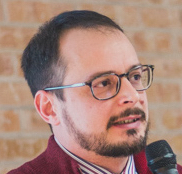
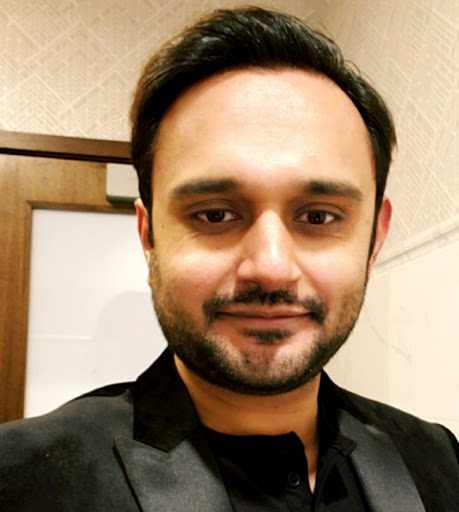
Suryadipta Majumdar is an Associate Professor at the Concordia Institute for Information Systems Engineering (CIISE), part of Concordia University. His primary research interests focus on Cloud Computing Security and Privacy, Internet of Things (IoT) Security and Privacy, and Software-Defined Network (SDN) Security. He has contributed extensively to proactive security measures in containerized systems and Kubernetes environments, alongside developing tools like ACE-WARP and PerfSPEC to address real-time threats. In terms of education, he holds a PhD in a relevant field, though specific details about his academic background (e.g., institutions, thesis topics) are not explicitly mentioned in the provided text. His work bridges theoretical cybersecurity frameworks with practical implementations, emphasizing automated translation, differential privacy, and compliance auditing across cloud and IoT ecosystems. Majumdar’s research trends highlight a focus on layered security analysis, anomaly detection in IoT networks, and mitigating vulnerabilities in network functions virtualization (NFV). He has explored topics such as resilient in-band OpenFlow networks, runtime security policy enforcement in OpenStack, and privacy-preserving network data anonymization via tools like SegGuard. His recent publications reflect collaboration with international conferences and workshops, including contributions to Digital Forensics and Applied Cryptography. No scientific awards are explicitly mentioned in the text. His advising activities and grant history remain unlisted, though he has developed notable security frameworks and tools. He is affiliated with CIISE and likely contributes to its research initiatives in emerging technologies like 5G and edge-core environments.
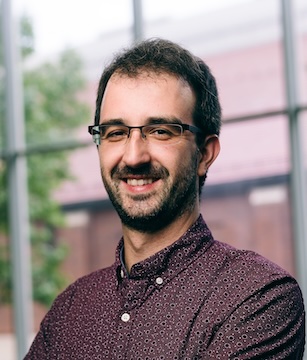
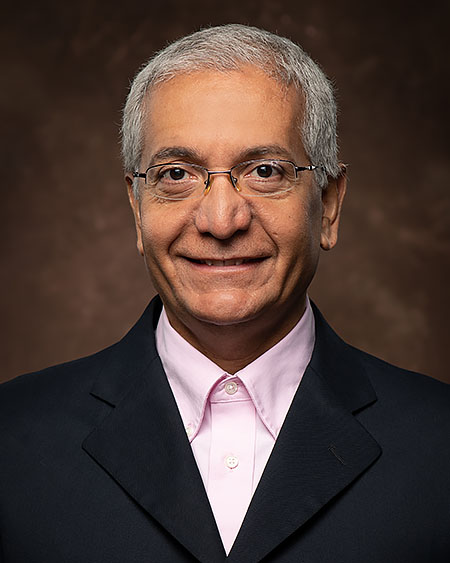
Prof. Rocco OLIVETO is a Full Professor at the University of Molise, affiliated with the School of Biosciences and Territory. His research spans software engineering, artificial intelligence, cybersecurity, and healthcare technology. He focuses on empirical studies of developer practices, AI-driven code analysis, vulnerability detection in smart contracts, and human-centric computing. His work also addresses challenges in game development, mobile app optimization, and wearable health monitoring systems. Notable research areas include code readability assessment, machine learning applications in healthcare diagnostics, and the effectiveness of AI tools like GitHub Copilot. He has contributed to projects like QualAI (continuous quality improvement for AI systems) and 2Vita-B (cognitive and physical rehabilitation systems). His empirical studies often bridge academic research with real-world developer workflows, emphasizing practical applicability. Prof. Oliveto's recent work explores topics such as automated gameplay analysis for game debugging, detection of engagement issues in video games, and robust methods for identifying security vulnerabilities. He has also investigated Dockerfile quality, developer frustration metrics, and the ethical implications of AI in administrative document simplification.
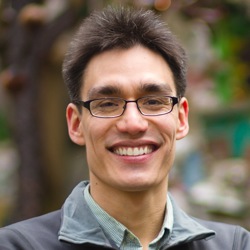
Pedro Fonseca is an Assistant Professor at the Department of Computer Science, Purdue University. He leads the Reliable and Secure Systems Lab, focusing on building reliable and secure core software systems such as operating systems, hypervisors, and distributed systems. His research has been recognized with awards including the NSF CAREER Award and Google Faculty Research Awards. Before Purdue, he completed a postdoc at the University of Washington, working with Arvind Krishnamurthy, Hank Levy, and Xi Wang. He earned his PhD from MPI-SWS and the University of Saarland under Rodrigo Rodrigues. His academic contributions span over 30 peer-reviewed publications in top-tier conferences like SOSP, OSDI, EuroSys, and ASPLOS. He teaches courses including CS503 (Operating Systems), CS592 (Reliable and Secure Systems), and CS408 (Software Testing). He actively serves on program committees for major systems conferences including SOSP, OSDI, EuroSys, and ASPLOS.
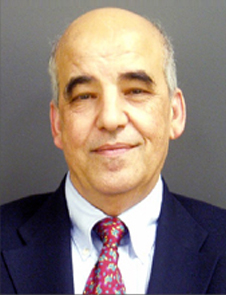
Adlen Ksentini is a Professor at EURECOM, a leading graduate school and research center in Sophia Antipolis, France, specializing in digital science and communication systems. His extensive research focuses on next-generation mobile networks (5G/6G), network management, and the integration of artificial intelligence with telecommunications infrastructure. Dr. Ksentini actively contributes to major EU research initiatives including 6G-BRICKS and AC3, serving as a key researcher and project leader in the development of future network architectures. Dr. Ksentini's research interests center around network slicing, intent-based networking, edge computing, and the application of machine learning to network management problems. His work bridges theoretical advancements with practical implementations in 5G/6G systems, with particular emphasis on zero-touch network management, energy efficiency optimization, quality of service assurance, and the integration of large language models with network operations. His research has significantly contributed to the development of O-RAN (Open Radio Access Network) frameworks and the evolution of network automation. His recent publication trends reveal a strategic shift toward AI-native network architectures, with increasing focus on integrating large language models (LLMs) with network management systems. His work demonstrates a clear progression from traditional network management approaches to more autonomous, AI-powered systems capable of intent-based configuration, self-optimization, and predictive maintenance. The publications show strong emphasis on practical implementations within the 6G research ecosystem, addressing critical challenges in network slicing, resource allocation, and energy efficiency. As a research supervisor, Dr. Ksentini mentors several PhD students including Abdelkader Mekrache, Karim Boutiba, Bouziane Brik, and Houda Hafi, who frequently appear as co-authors on his publications. His research is primarily funded through major EU research projects such as 6G-BRICKS (Building Reusable Testbed Infrastructures for Cloud-to-Device Breakthrough Technologies) and AC3 (which focuses on Cloud Edge Continuum). Dr. Ksentini is actively involved with the 6G-BRICKS project consortium and the AC3 project team, where he contributes to developing next-generation network architectures that integrate communication, computing, and sensing capabilities. His work within these projects focuses on creating reusable testbed infrastructures and addressing security and trust management challenges in the cloud-edge continuum.
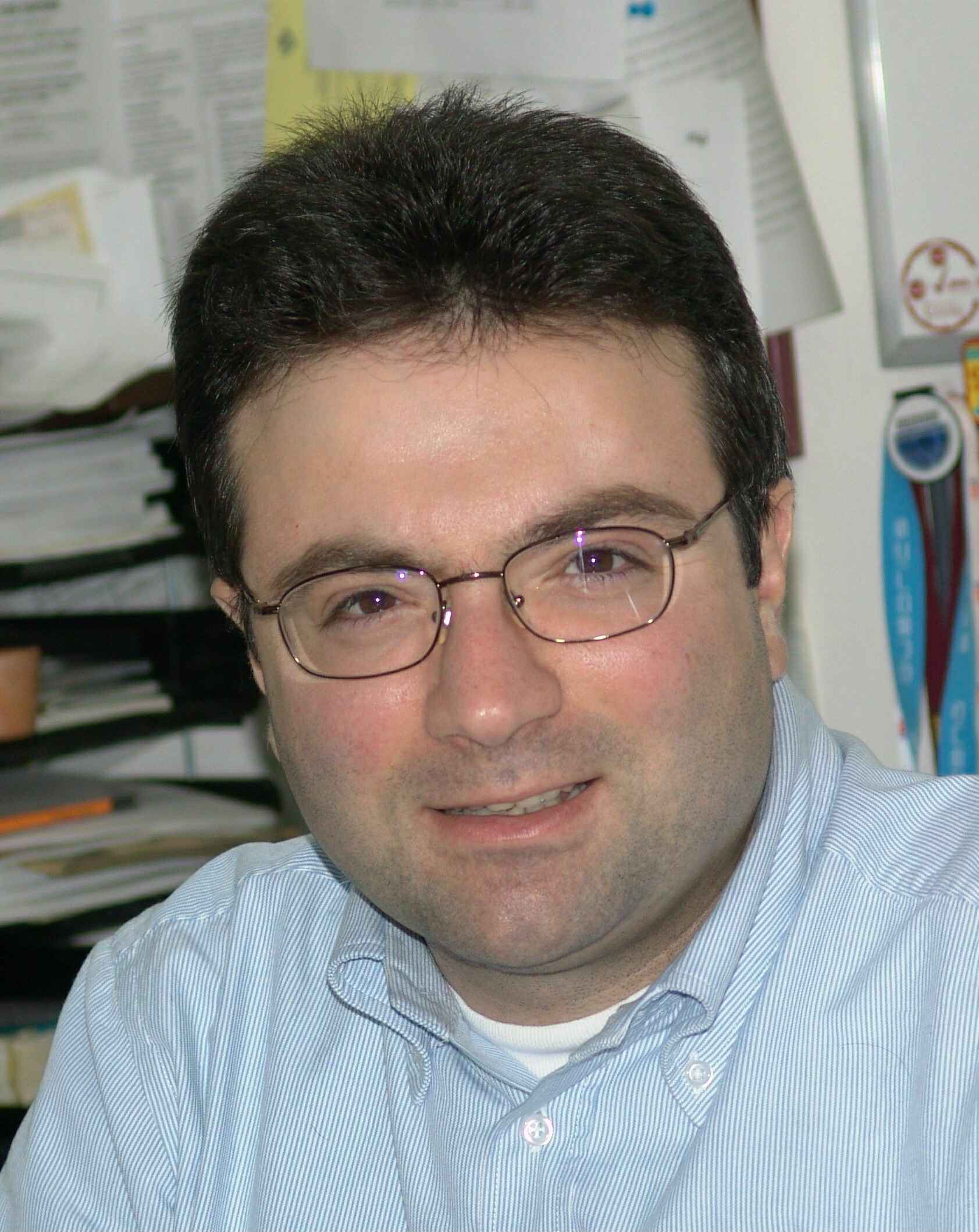
Joseph Devietti is an Associate Professor in the Department of Computer & Information Science at the University of Pennsylvania. His research focuses on improving programmability and performance of multiprocessor systems through architectural and programming model innovations. He actively advises PhD students and has supervised numerous graduates now employed at leading tech companies and academic institutions. Education: PhD (2012), MS (2009) in Computer Science and Engineering from University of Washington; BSE (2006) in Computer Science and BA (2006) in English from University of Pennsylvania. Employment: Associate Professor (2020–present), Assistant Professor (2013–2020) at University of Pennsylvania; Principal Scientist & Co-founder at Cloudseal, Inc. (2018–2020). Devietti’s research spans computer architecture, parallel programming, and deterministic execution. Key areas include cache/memory optimization (prefetching, false sharing repair), GPU programming models (race detection, block-size independence), and hardware-software co-design for concurrency safety. His recent work addresses dynamic runtime prefetch tuning (RPG 2 ), online code layout optimization (OCOLOS), and intelligent BTB prefetching (Twig) for data center applications. His publications from 2024–2017 reveal trends in instruction/cache optimization (2024–2020), GPU determinism (2018–2017), and race detection (2018–2016). Awards include the 2024 Penn Engineering Ford Motor Company Award, Radhia Cousot Best Paper (2018), and IEEE Micro Top Picks recognition (2023, 2009, 2008). Scientific Awards : 2024 Penn Engineering Ford Motor Company Award Radhia Cousot Young Researcher Best Paper Award (SAS 2018) IEEE Micro Top Picks (2023, 2009, 2008) Intel Early Career Faculty Honor Program (2013) Intel Ph.D. Fellowship (2011) Advising : Supervised 15+ PhD/Master’s students with placements at Google, Microsoft, Amazon, NYU, and the United States Naval Academy. Collaborations : Works with industry leaders (NVIDIA, Facebook) and academic institutions (University of Washington, Penn).
Jaechun No is a Professor at the Department of Computer Science and Engineering, College of Engineering, Sejong University. With a Ph.D. from Syracuse University (1999), he previously served as a Researcher at Argonne National Laboratory (1999-2001) and Hewlett Packard HPDC Laboratory (2001-2003) before joining Sejong University in 2003. Education: B.S., Ewha Womans University (1985) M.S., Western Illinois University (1993) Ph.D., Syracuse University (1999) His research focuses on Cloud/Edge computing , NVMe SSD technologies , and large-scale distributed/parallel storage systems . Key achievements include optimizing KVM/QEMU and Docker I/O virtualization, developing machine learning-based server failure prediction systems, and advancing NVMe/NAND flash memory I/O caching mechanisms for hybrid file systems. Recent publications highlight his work on virtualized I/O performance control (L-DTC, 2025), GPU Direct I/O classification (e-CLAS, 2024), Kubernetes resource provisioning (2024), and virtual storage resource redistribution (vThrot, 2024). These reflect trends in virtualization optimization, machine learning integration, and distributed resource management. Jaechun No's research has been cited extensively, with 148 Scopus h-index and over 8,000 citations. His collaborations span multiple countries and institutions, focusing on I/O virtualization, storage technologies, and distributed computing environments. Professional Affiliations: Current Professor at Sejong University (2003-present) Researcher at Argonne National Laboratory (1999-2001) Researcher at Hewlett Packard HPDC Laboratory (2001-2003)
Professor Ahmed Karmouch is a faculty member at the University of Ottawa's School of Electrical Engineering and Computer Science. He holds a Ph.D. and specializes in advanced networking research, including Network Slicing, Software Defined Networks (SDN), Named Data Networking (NDN), and Cloud Computing. His IMAGINE Lab focuses on developing innovative solutions for autonomic and cognitive networks, emphasizing programmable data planes and in-network computing. Research Interests: Network Slicing Software Defined Networking Named Data Networking Programmable Data Plane Intelligence In-Network Computing Ambient Intelligence & IoT Publications reflect a focus on SDN, NDN, and cloud infrastructure optimization. His work often bridges theory and practical implementation, addressing challenges in network efficiency, reliability, and scalability. Supervised over 30 graduate students, contributing to advancements in edge computing, virtual networks, and autonomic systems. Labs/Teams: Leads the IMAGINE Lab, dedicated to research in mobile autonomic networks, context-aware systems, and future broadband infrastructure. Projects include WiMAX security, policy-based overlay networks, and semantic resource discovery.
Walter Szeliga is a Professor and Department Chair at Central Washington University. He holds a Ph.D. from the University of Colorado (2010). His research focuses on seismology, GPS, and InSAR technologies, with emphasis on earthquake early warning systems, crustal deformation monitoring, and natural hazards mitigation. Dr. Szeliga leads efforts in integrating real-time geodetic data streams for disaster response and has contributed to the development of ShakeAlert® systems. His work spans global geophysical networks, ionospheric perturbations, and paleotsunami studies. Key research interests include: Real-time GNSS applications for seismic monitoring Crustal deformation analysis using InSAR and GPS Earthquake source characterization through multi-method approaches Historical seismotectonic reconstructions Disaster forecasting and early warning system optimization Recent studies highlight advancements in trapping atmospheric lee waves detection via GNSS, volcanic plume dynamics during the 2022 Tonga eruption, and long-term paleotsunami records in Chile. His work bridges geophysical instrumentation with computational modeling to address critical questions in tectonic processes and hazard assessment. Scientific contributions include 50+ peer-reviewed articles on topics ranging from Cascadia subduction zone dynamics to global navigation satellite system innovations. His research has implications for civil infrastructure resilience, space weather impacts, and international geohazard collaboration frameworks.
Rohan Tabish is an Assistant Professor in the Department of Computer Science at the University of Illinois at Urbana-Champaign (UIUC), specializing in real-time systems, embedded systems, and cybersecurity. His work focuses on developing predictable and secure software frameworks for multi-core and heterogeneous architectures. Education: Ph.D. in Computer Science and Engineering Master's in Computer Science and Engineering B.Sc. in Electrical Engineering with Telecommunications specialization Research Interests: Real-Time Task Scheduling Fault Tolerance in Embedded Systems Inter-Core Communication Frameworks Memory Bandwidth Management Cyber-Physical Systems Scratchpad-Centric Operating Systems Awards: Outstanding Paper & Best Paper Award (RTSS 2020) Outstanding Paper & Best Student Paper Award (RTSS 2020) Best Presentation Award (RTAS 2016) Nominated for Best Paper Award (ECRTS 2019) Teaching: CS 431: Embedded Systems (Instructor, 2015-2018) CS 424: Real-Time Systems (Instructor, 2019) CS 438: Communication Networks (TA, 2019) Labs/Teams: Active member of the Real-Time Systems Lab (RTSL) at UIUC, focusing on safety-critical embedded systems and real-time software frameworks.
Tuomas Aura is a Professor at the Department of Computer Science , Aalto University , and a member of the Helsinki Institute for Information Technology (HIIT) and the Helsinki-Aalto Institute for Cybersecurity (HAIC) . His expertise spans information security , privacy , pervasive computing , and communications . Research Trends: His recent work focuses on securing Kubernetes clusters , TLS identity binding , SIM provisioning protocols , and IoT authentication , with a strong emphasis on network security and cryptographic protocols . Key sub-fields include microservice connectivity , threat modeling , and EAP-based authentication . Publications: His 2025 work on Kubernetes misconfigurations and TLS identity binding addresses critical cloud and protocol vulnerabilities. Earlier studies (2024-2020) explore SIM transparency, HTTP/2 security, and formal verification of device-pairing flaws, reflecting a consistent focus on IoT security and network protocols .
Eric Gamess is an Associate Professor in the Department of Mathematical, Computing, and Information Sciences at Jacksonville State University (JSU), Alabama. He holds a Ph.D. in Computer Science from the Central University of Venezuela (2000), an M.Sc. in Industrial Computing from INSA Toulouse (1989), and an Engineering Degree in Automatics, Computer Science, and Electronics from the same institution (1989). His academic career spans roles at universities in South America and the U.S., including Universidad del Valle (Colombia) and the University of Puerto Rico. Dr. Gamess specializes in network performance evaluation, cybersecurity, vehicular networking, and IoT. He has authored over 80 publications, edited 27 conference proceedings, and directs the Venezuelan Journal of Computing. His leadership roles include Vice-President of the Venezuelan Society of Computing and steering committee member of the ACM Southeast Conference. At JSU, he leads the Center of Academic Excellence in Cyber Defense Education (CAE-CD) and coordinates the Master of Science in Computer Systems and Software Design (CSSD) program. His research emphasizes network simulation, IPv6, and embedded systems performance (e.g., Raspberry Pi). Recent work explores containerization technologies, MQTT resilience, and IoT protocol optimizations. He teaches courses ranging from programming fundamentals to advanced cybersecurity and networking.
Dr. Benjamin Evans is an Assistant Professor in Computer Science & AI (Informatics) at the University of Sussex , affiliated with the School of Engineering and Informatics . His research integrates computational neuroscience and artificial intelligence, focusing on biologically inspired neural networks. Current Position: Assistant Professor, Department of Informatics, University of Sussex Previous Roles: Research Associate at University of Bristol, University of Exeter, Imperial College London, and University of Oxford Education: DPhil in Computational Neuroscience (University of Oxford), MSc in Intelligent Systems (UCL), BA in Experimental Psychology (Oxford) His research centers on how neural systems self-organize to produce intelligent behavior, studied through both biological and computational modeling. He investigates spiking neural networks , convolutional neural networks , and the role of biological constraints in enhancing AI robustness and human-like perception. He is particularly interested in how spike-based information processing contributes to adaptive cognition in noisy environments. His recent publications reveal a strong trend in evaluating deep neural networks as models of human vision, questioning their biological plausibility while proposing bio-inspired improvements. He also works on optogenetics simulation (e.g., PyRhO platform), developmental biology modeling , and reproducible data science through containerization tools like Docker. His scientific contributions have been recognized through publications in high-impact journals such as Nature Communications , PLoS Computational Biology , and Behavioral and Brain Sciences . EPSRC Grant: "Exploring the multiple loci of learning and computation in simple artificial neural networks" (2023–2024) EPSRC Grant: "Using ant biology and natural environments to enhance models of vision and robot navigation" (2022–2026) Dr. Evans actively contributes to open science through GitHub repositories (e.g., PyRhO, DPE, BioNet) and promotes reproducible research. He has no listed advisees in the provided data, but leads funded research projects involving junior researchers. He is a core member of the Informatics research group at Sussex, contributing to both AI and neuroscience domains.
Simone Ferlin is an Adjunct Senior Lecturer at Karlstad University working with 5G and Internet evolution. She completed her PhD in computer science in 2017 at the Simula Research Lab and Universitetet i Oslo under the supervision of Dr. Ozgu Alay and Prof. Michael Welzl. Her PhD dissertation focused on increasing robustness in multipath transport with MPTCP. Dr. Ferlin's educational background includes a PhD in Computer Science from the Simula Research Lab and Universitetet i Oslo (2017). Her doctoral research centered on enhancing robustness in multipath transport protocols, specifically focusing on MPTCP (Multipath TCP). She also completed undergraduate work that contributed to a book project with Prof. Friedrich Oehme on electronics and circuit technology. Dr. Ferlin's research spans multiple domains at the intersection of networking, systems, and performance engineering. Her primary interests include network and system measurements, performance analysis, security, and congestion control. She investigates how networks like the Internet evolve, examining technology development, adoption patterns, and their impacts on various entities. Additionally, she explores ways to harmonize security and privacy while making them more usable and assessable. Her work particularly focuses on transport layer and multipath transport protocols, examining their performance and security aspects. She also investigates application and transport layer performance, automation, and monitoring. Her research extends to network programming in both Linux kernel and user space, mobile broadband networks from 2G to 5G, and their intersection with the Internet. She is deeply engaged in observability, distributed and system performance monitoring, and automation. Analysis of Dr. Ferlin's recent publications reveals a strong focus on next-generation networking technologies. Her work spans multiple domains including 5G/6G networks, transport protocols (particularly QUIC and MPTCP), network virtualization, container orchestration, and the application of machine learning to networking problems. She has increasingly incorporated large language models into network configuration and automation research. Her publications demonstrate a consistent emphasis on performance measurement, optimization, and security across diverse networking environments from the edge to the cloud. Dr. Ferlin has received notable recognition for her research contributions: Best paper award at IEEE ICIN'21 for 'Learning-based Incast Performance Inference in Software-Defined Data Centers' Applied Networking Research Prize (ANRP)'25 winner for 'NetConfEval: Can LLMs Facilitate Network Configuration?' Dr. Ferlin is actively involved in mentoring the next generation of networking researchers. She has co-supervised numerous Master's and PhD students across multiple institutions including Karlstad University, KTH, TU Berlin, University of Oslo, and universities in Brazil. Her students have worked on diverse topics including NAT64 performance comparison, system tracing visualization, network observability, ML applications to multipath transport, FEC integration with QUIC, high-performance networking for 5G, congestion control, shared bottleneck detection, multipath IoT applications, and container runtime performance. She is also involved in several significant research projects including Vinnova's SEMLA (Securing Enterprises via Machine-Learning-based Automation), Horizon Europe's CODECO (Cognitive Decentralised Edge Cloud Orchestration), and the Knowledge Foundation of Sweden's DRIVE (Data-driven Latency-Sensitive Mobile Services for a Digitized Society). Dr. Ferlin serves as Workshop Chair for ACM SIGCOMM '25, is a member of the ACM/IRTF Applied Networking Research Workshop (ANRW) steering committee, and co-chairs the Internet Congestion Control Research Group (ICCRG) at the IRTF. She previously served as Associate Technical Editor for IEEE Communications Magazine and has been active on numerous program committees for major networking conferences including SIGCOMM, CoNEXT, IMC, and PAM.
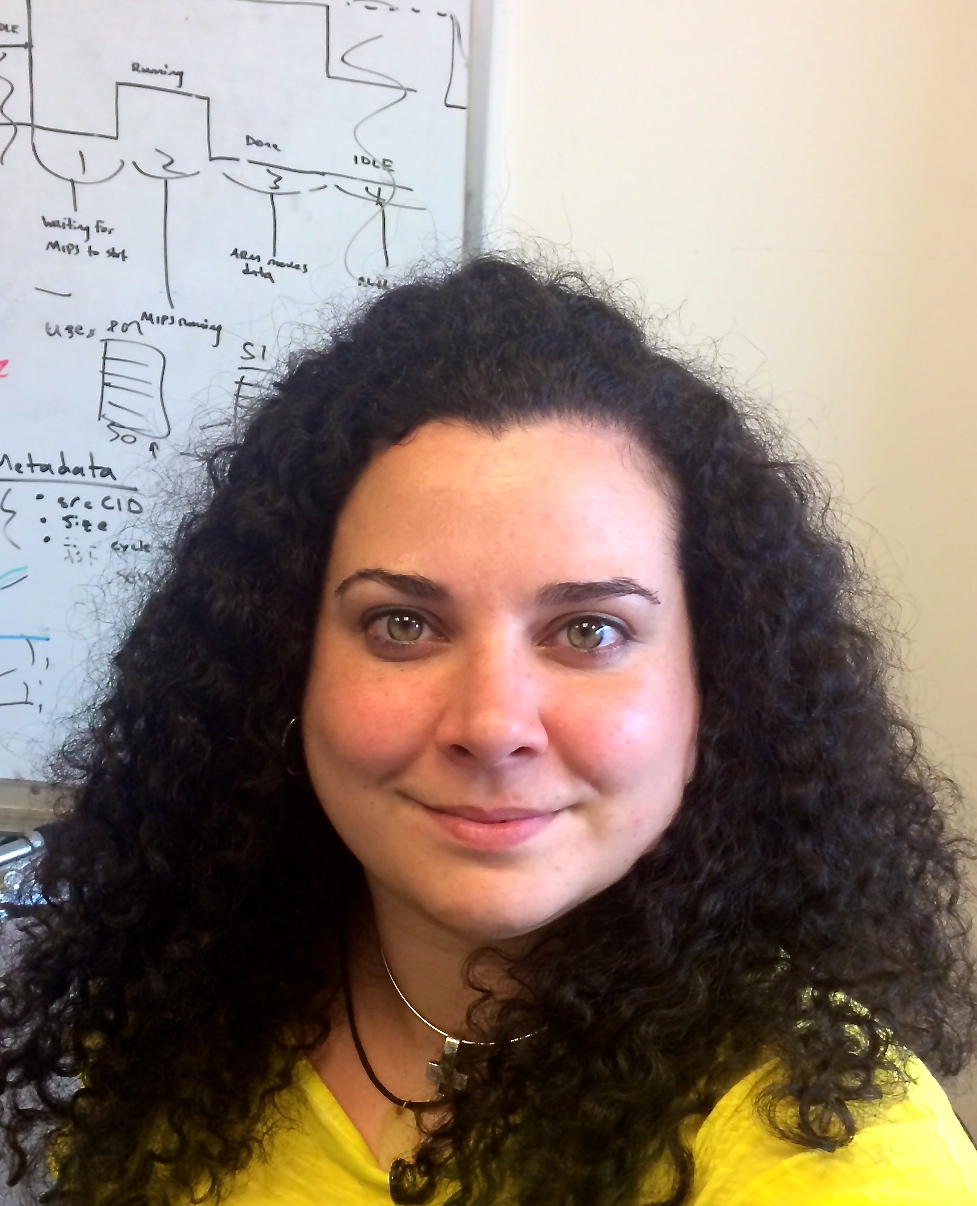
Christina Delimitrou is an Assistant Professor in the Electrical and Computer Engineering Department at Cornell University, where she leads the SAIL research group and is a member of the Computer Systems Laboratory (CSL). She holds the John and Norma Balen Sesquicentennial Faculty Fellowship and will join MIT EECS and CSAIL as a professor starting September 2022. Dr. Delimitrou earned her Ph.D. and M.S. in Electrical Engineering from Stanford University, working with Christos Kozyrakis, and completed her undergraduate studies at the National Technical University of Athens. Her research focuses on computer architecture and systems, particularly on improving resource efficiency in large-scale datacenters through QoS-aware scheduling, resource management techniques, efficient server architectures, distributed performance debugging, and cloud security. Her publication record demonstrates consistent high-impact research in datacenter systems, with recurring themes in microservices architecture, machine learning for systems, and QoS-aware resource management. Her work bridges theoretical computer architecture with practical cloud computing challenges, resulting in multiple IEEE Micro TopPicks awards and best paper recognitions at major architecture conferences. Dr. Delimitrou has received numerous prestigious awards including: Sloan Research Fellowship in Computer Science NSF CAREER Award Microsoft Research Faculty Fellowship Intel Rising Star Award 2020 IEEE TCCA Young Computer Architect Award Multiple Google Faculty Research Awards Facebook Faculty Research Award Cornell Excellence in Research and Teaching Awards She actively mentors PhD, MS, and undergraduate students in the SAIL research group, focusing on cloud computing and computer architecture. Her research has been supported by significant grants from NSF, Google, Microsoft, Facebook, and Intel. She teaches ECE5710: Datacenter Computing at Cornell, exploring hardware, systems software, and distributed systems technology in modern datacenters. The SAIL research group develops innovative solutions for cloud infrastructure challenges, spanning from hardware acceleration to machine learning-driven resource management, with strong emphasis on practical implementation and real-world impact.
Nectarios Koziris is a Professor at the Department of Computer Science , National Technical University of Athens (NTUA) , and former Dean of the School of Electrical and Computer Engineering . His research focuses on Parallel and Distributed Systems , Computer Architecture , and Cloud Computing . Key Research Themes: Compiler-OS-Architecture Interaction, Datacenter Hyperconvergence, Sparse Matrix Optimization, Quantum Computing, FPGA Virtualization Leadership: Founder of ~okeanos (Europe's largest public Cloud IaaS), Co-founder of GFOSS , Member of IEEE Computer Society Greece, Advisor to Arrikto Inc. His work has led to over 180 publications with 5800+ citations (h-index 33) , including two Best Paper Awards (IPDPS 2001, CCGRID 2013) and Intel Recognition (2015). He has supervised 12 PhD students and participated in 15+ EU projects as coordinator or consortium partner. Scientific Leadership: Program Co-Chair for Europar 2012 , Organizer for IPDPS , ICPP , SC conferences, and active member in Cloud Computing Expert Groups for the European Commission.