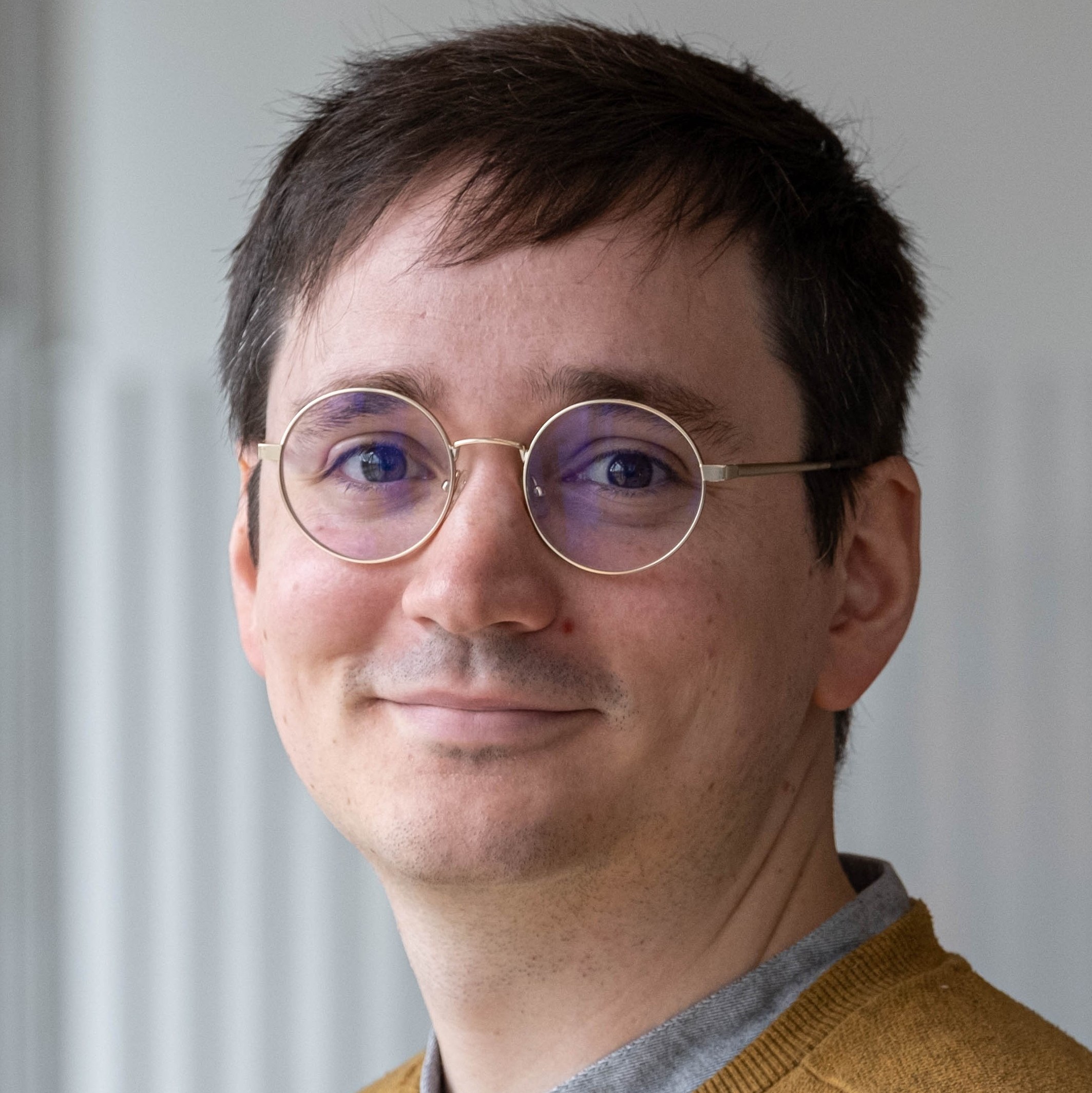
Merlijn Sebrechts is a postdoctoral researcher and policy officer at Ghent University's Faculty of Engineering and Architecture, Department of Information Technology (EA05). His work focuses on cloud-native technologies, edge computing, and secure system design. Research areas include Kubernetes, WebAssembly, and confidential computing He teaches computer science courses in the Information Engineering Technology program Expertise spans trusted execution environments, software supply chain security, and cloud orchestration His recent publications analyze edge computing security, lightweight virtualization, and intent-based resource management. Key contributions include decentralized orchestration frameworks and benchmarks for cloud performance. Merlijn maintains strong ties to open-source ecosystems through involvement with Kubernetes, Docker, and the Ubuntu community.
Giovanni Vigna is a Professor in the Department of Computer Science at the University of California, Santa Barbara (UCSB) and Director of the NSF AI Institute for Agent-based Cyber Threat Intelligence and Operation (ACTION). He is also the co-founder and former CTO of Lastline, Inc., now part of Broadcom. His research focuses on cybersecurity, including malware analysis, vulnerability assessment, and applications of AI to security challenges. He holds a Ph.D. from Politecnico di Milano. Education: Ph.D. in Electronic Engineering, Politecnico di Milano, Italy, 1998 M.S. (with honors) in Electronic Engineering, Politecnico di Milano, Italy, 1994 Research Interests: Malware Analysis & Detection Web and Mobile Security Cyber Threat Intelligence AI-driven Security Solutions Botnet Tracking & Analysis Awards: IEEE Fellow ACM Fellow Leadership & Initiatives: Organizer of the iCTF (International Capture The Flag) hacking competition Founder of the Shellphish security research group Director of the UCSB Security Lab (iSeclab) Labs & Teams: Leads the Threat Analysis Unit at Broadcom's ANS division and collaborates with industry partners like VMware.
Djob Mvondo is an Associate Professor at the University of Rennes 1, France, affiliated with the IRISA laboratory and the WIDE Team. He previously held a postdoctoral position at the University of Edinburgh, focusing on virtualization and cloud computing under Antonio Barbalace. His Ph.D. from the University of Grenoble Alpes (2020) explored resilience and sizing in virtualized environments under Prof. Noel De Palma and Prof. Alain Tchana. His research interests span virtualization, cloud computing, and operating systems. Notable achievements include the 2021 ASF and GDR RSD Thesis Prize for his dissertation. He advises two Ph.D. students and collaborates with institutions like Inria and Blacknut. Recent grants include a 300K€ French National Research Agency award (2023) and a 40K€ Rennes Metropole grant for heterogeneous CPU architectures. Teaching includes courses on cloud security, network security in IoT, and ACM programming at ENS Lyon. Active in the academic community, he serves on program committees for conferences such as Eurosys, Middleware, and DSN. He organizes hackathons and contributes to open-source projects like Unikraft. His work addresses challenges in distributed systems, hypervisor optimization, and cloud resilience.
Rohan Basu Roy is an Assistant Professor (tenure-track) at the University of Utah, affiliated with the Kahlert School of Computing and the SCI Institute. His research focuses on optimizing parallel and distributed computing systems, including cloud, serverless, and HPC environments, with an emphasis on sustainability and cost-effectiveness. He holds a Ph.D. in Computer Engineering from Northeastern University, advised by Prof. Devesh Tiwari. Affiliations: University of Utah (Kahlert School of Computing), SCI Institute. His research interests include scheduling algorithms, energy efficiency, and environmental sustainability in computing systems. He has pioneered open-source tools like GreenMix and ECOLIFE , widely adopted in the systems research community. Awards: ACM-IEEE CS George Michael Memorial HPC Fellowship (2023), MLCommons ML and Systems Rising Star (2023), Northeastern University Excellence in Research Award (2023). Rohan has served as a program committee member for top-tier conferences (ASPLOS, HPCA, SC) and co-chaired tracks such as AI/ML for Systems at HiPC 2025. He has also delivered invited talks at Google Brain and ParslFest 2023.
Samuel Kounev is a Professor and Chairholder of the Chair of Software Engineering (Computer Science II) at the University of Würzburg's Department of Computer Science. He has held leadership roles, including Faculty Dean (2019-2021) and Head of the Department of Computer Science (2016-2017). His research focuses on software engineering, performance engineering, and autonomic computing, with contributions to cloud computing, cybersecurity, and machine learning. He actively participates in international conferences, including co-chairing the ACM/SPEC International Conference on Performance Engineering (ICPE) and leading initiatives like the DFG Research Unit SOS and bidt Consortium Project ROOT. His work emphasizes real-time systems, benchmarking, and interdisciplinary applications in earth observation and healthcare. Education: Not explicitly listed in provided text. Research Interests: Software Engineering, Performance Engineering, Autonomic Computing, Cloud Computing, Cybersecurity, Machine Learning, High-Performance Computing. His recent articles explore topics like homomorphic encryption, time series forecasting, and AI in healthcare. He is an editorial board member of journals like Elsevier's Performance Evaluation and co-founder of the ICPE and ACSOS conferences. Awards and recognitions are listed on separate pages, but his leadership roles and extensive conference involvement highlight his academic impact.
Manuel Alejandro Pajuelo González is a researcher at the Universitat Politècnica de Catalunya (UPC), affiliated with the Department of Computer Architecture and the School of Computer Science. His research focuses on Performance measurement Operating systems Virtualization Thread assignment in multithreaded processors Recent publications show strong trends in RISC-V architectures, cybersecurity, and performance optimization. Key themes include Hardware virtualization Intrusion detection frameworks Statistical thread assignment approaches Spin-lock overhead analysis Scientific awards include BDigital Global Congress 15ª Edició Computación de Altas Prestaciones VI HiPEAC Paper Award He participated in multiple competitive R&D projects, including the DRAC project focused on RISC-V accelerators for next-generation computing.
Josep Lluís Berral García is an Associate Professor in the Department of Computer Architecture at the Barcelona School of Informatics (FIB), Polytechnic University of Catalonia · BarcelonaTech (UPC). He is actively engaged in teaching and research, with a strong focus on Artificial Intelligence, Cloud Computing, and sustainable computing practices. He leads innovative educational initiatives and is affiliated with the CROMAI research group and the Barcelona Supercomputing Center (BSC-CNS). Research Interests: Artificial Intelligence and Deep Learning Cloud and High-Performance Computing Resource Orchestration and Management Sustainable and Ethical AI AI Education and Pedagogy His recent research and teaching projects center on integrating sustainability and ethical responsibility into AI education, using active learning methodologies. The trend in his work shows a consistent focus on optimizing computing resources through AI, particularly in cloud and HPC environments, with increasing emphasis on environmental impact and responsible innovation. Scientific Awards: UPC Award for Quality in University Teaching 2025 (Teaching Initiative for Newly Recruited Professors) Advising and Grants: While specific students are not listed, his leadership in competitive R&D+i projects and innovation initiatives indicates active supervision and grant-funded research. His involvement in multiple competitive and non-competitive R&D projects demonstrates sustained funding and research leadership. Labs and Teams: He is a key member of the CROMAI (Computing Resources Orchestration and Management for AI) research group at UPC and maintains a strong collaborative link with the Barcelona Supercomputing Center (BSC-CNS), leveraging the MareNostrum supercomputing infrastructure for AI and systems research.
Dan Carrere serves as a Senior Lecturer in Cybersecurity within the Department of Computer Science at the University of Oregon's School of Computer and Data Sciences. With 34 years of industry experience and 24 years of teaching expertise, he specializes in cybersecurity systems, Unix environments, and network infrastructure. He holds multiple leadership roles including Program Advisor for the Cybersecurity Degree, Club Advisor for UOsec.org, and Program Director for UO Cybersecurity Camps (2024-2025) as part of NWCyberCamp.org and GenCyber initiatives. His research and teaching interests focus on: Cybersecurity systems, network infrastructure, and Cloud/MultiCloud security Unix systems including BSD (FreeBSD, OpenBSD), Illumos (SmartOS, OmniOS), and Linux (Debian, Ubuntu, RH) Optical networking and WDM technologies ZFS filesystem storage solutions Virtualization platforms (bhyve, KVM, Xen) and containerization (Zones, Jails) Systems performance optimization Carrere actively develops cybersecurity education through HECC-funded high school outreach (NICE program), asynchronous learning options for CS 102, and the UO TSOC (Training Security Operations Center) for hands-on student training. He serves on the UO CS Undergraduate Education Committee and leads accreditation efforts for NSA CAE-R designation of the CS PhD program. As a pioneer in open-source communities, he co-founded early BSD/Linux user groups and served on boards of organizations like BSDFund and LinuxFund. His current initiatives include expanding UOsec resources, preparing summer cybersecurity camps, and enhancing ISP security infrastructure through practical student training.
Timo Saarinen is a Visiting Professor at Aalto University's Department of Neuroscience and Biomedical Engineering since 2003. His research bridges neuroscience and biomedical engineering, focusing on cortical dynamics, speech perception, and cognitive-motor integration. Education: Master of Psychology (University of Helsinki, 2015) Research Interests Speech rhythm and cortical entrainment Magnetoencephalography (MEG) applications Brain network connectivity in cognitive tasks Motor cortex dynamics in speech and handwriting Recent publications emphasize AI-driven dementia risk estimation, neural synchrony in naturalistic speech, and motor control mechanisms. His earlier work (2000s) explored IT investment consistency and e-commerce business models. 2015 Scientific Award He has collaborated internationally, with affiliations in Finland, Spain, and Belgium, and contributed to 12 peer-reviewed publications since 2003.
Mª Carmen Carrión Espinosa is a Full Professor at the University of Castilla-La Mancha (UCLM) with a career spanning over 25 years. She teaches Computer Architecture in undergraduate and postgraduate programs and coordinates the bilingual Computer Engineering degree, which holds the Euro-Inf Bachelor quality award. Her research focuses on Fog computing, blockchain integration, and distributed systems management. University of Castilla-La Mancha - Full Professor (Computer Architecture) University of Cantabria - PhD in Physical Sciences Her research explores low-cost Fog infrastructures, container-based virtualization, and secure distributed architectures. Recent work includes federated learning on constrained devices and Kubernetes scheduling innovations. She has supervised 5 PhD and 15 Master's theses and contributed to 25 JCR-indexed publications. Key research trends include: Blockchain for fault-tolerant IoT systems Hybrid cloud-Fog resource orchestration Energy-efficient scheduling algorithms Educational technology innovations Scientific Awards: Extraordinary Degree Prize (1992) Euro-Inf Bachelor Quality Certification Active IEEE membership She leads the High Performance Networks and Architectures research group and has participated in 24 major projects, including CONSOLIDER-INGENIO 2010 as Task Leader. Her work bridges technical innovation with pedagogical excellence in cloud computing education.
Prof. Dr. Michael Goedicke is a faculty member at the University of Duisburg-Essen , holding the Professorship for Practical Informatics / Specification of Software Systems since 1994. His academic career spans over three decades with continuous contributions to software engineering and educational technology.
Prof. Dr.-Ing. Piotr Wojciech Dabrowski is a faculty member at HTW Berlin - University of Applied Sciences , affiliated with the Department 4: Computer Science, Communication and Business . His academic rank is Professor, and he serves as a University Lecturer and Deputy Chair of the Examination Board for multiple programs. His research focuses on: Development of reproducible genome sequencing data pipelines using Nextflow Comparative algorithm analysis for evidence-based bioinformatics Machine learning applications in genome sequence identification Container/microservice architectures for federal budget systems Documentation systems for penetration tests in IT security Contact: Piotr.Dabrowski@HTW-Berlin.de . Office hours available in-person or online.
Long Wen is a Lecturer at the Technical University of Munich within the Department of Computer Science, affiliated with the Chair for Robotics, Artificial Intelligence and Real-time Systems led by Prof. Alois Knoll. He teaches the Masterseminar on Human-Robot Interaction (IN2107, IN4718) for the Winter semester 2024/25 and maintains an active research profile in robotics and AI. Office: 5607.03.054, Boltzmannstr. 3(5607)/III, 85748 Garching bei München Contact: long.wen@tum.de | +49 (89) 289 - 18112 His research concentrates on Robotics, Artificial Intelligence, and Real-time Systems with specific expertise in safety-critical control for mobile robots, autonomous driving architectures, and virtualization for software-defined vehicles. Wen investigates human-robot interaction paradigms, cloud/fog computing for robotics applications, and anomaly detection in industrial processes, emphasizing real-time performance and adaptive control in dynamic environments. Analysis of Wen's 10 publications (2023-2025) reveals a cohesive research trajectory focused on deploying AI-driven solutions in safety-critical robotics systems. Key trends include meta-learning for obstacle navigation, containerized microservice architectures for autonomous vehicles, and Gaussian process applications in uncertain control models. His work bridges theoretical control theory with practical implementations in ROS 2 frameworks and automotive virtualization. Scientific awards: No awards or fellowships were documented in the source material. Wen collaborates extensively with Prof. Alois Knoll's research group on grant-funded projects related to autonomous systems, though specific funding sources and student supervision details remain undisclosed in the provided text. He contributes to the Robotics, AI and Real-time Systems laboratory at TUM, where his team develops containerized architectures for autonomous driving software and evaluates virtualization technologies for software-defined vehicles, with recent work presented at ICRA, IROS, and IEEE conferences.
Karsten Siller is an Associate Professor at the University of Virginia's School of Data Science. He previously served as an Assistant Professor in the Department of Biology (College of Arts & Sciences) and held the role of Associate Director for Research Computing User Services. His work bridges data science with biology, focusing on scalable, reproducible data workflows and computational methods. Ph.D., Biology , University of Tübingen, Germany Dipl. Biol., Biology , University of Tübingen, Germany His research interests include: Building reproducible and resilient, scalable data analysis workflows for diverse computing environments. Developing user-friendly, extensible interfaces for modular data pipelines with integrated visualization. Advancing open-source software and computational tools for biology and image analysis. Key trends in his publications show expertise in: Fluorescence Lifetime Imaging (FLIM) for cellular metabolism studies. High-performance computing (HPC) for data pipeline management. Mechanistic insights into cell division and neurodegenerative processes via imaging and computational modeling.
Ella Peltonen is an Assistant Professor at the M3S research unit, University of Oulu, Finland. She joined the Ubicomp Oulu research centre and 6Genesis research programme in November 2018. Prior to this position, she was a postdoctoral researcher at the Insight Centre for Data Analytics in Cork, Ireland. She completed her PhD in the Nodes group at the University of Helsinki, Finland, working on the Carat project of collaborative energy diagnostics for mobile devices. Her educational background includes: PhD in Computer Science, University of Helsinki, Finland (Carat project on collaborative energy diagnostics) Ella Peltonen's research focuses on ubiquitous computing, large-scale data analysis, and applied machine learning. Her work particularly emphasizes everyday sensing and mobile and wearable devices. She aims to apply machine learning algorithms to large, complex data in real-time systems, with a focus on distributed machine learning and data analysis of smart devices. Her research spans various applications including energy consumption monitoring of mobile devices, wearable technology for measuring physiological signals, and exploring future sensing technologies. Peltonen has expressed interest in how future devices might sense human states, become smarter, and provide greater benefits, potentially through innovations like augmented reality glasses or subcutaneous chips. Analysis of her recent publications shows a strong focus on edge computing, vehicular networks, and sustainable computing systems. Her work bridges the gap between theoretical machine learning approaches and practical applications in transportation, healthcare, and environmental monitoring. Many of her papers address challenges in distributed systems, real-time data processing, and privacy-preserving techniques for edge intelligence. Her notable scientific awards include: Nominated to the list of 10 Rising Stars in Networking and Communications by N2 Women 2017 Selected as one of 50 Finnish Researchers by the Finnish Union of University Researchers and Teachers Nokia Scholarship 2015 and 2016 Jorma Ollila Grant 2018 Young Teacher of the Year 2012 Young Researcher of the Year 2015 Peltonen is actively involved in teaching and mentoring, with a teaching philosophy focused on supporting students' independent learning rather than lecturing from above. She enjoys guiding small groups where she can discuss topics together with students and get to know them personally. As a researcher, she describes herself as precise, detail-oriented, and committed to verifying the correctness of her work carefully. She values the combination of mathematical work with experimental work and creativity in technology, noting that research tasks are diverse and can apply different types of methodology. She is part of international research collaborations with several major universities worldwide, as required by Finnish Academy funding. Peltonen is also an advocate for diversity in technology fields, noting that technology is used by all kinds of people from various backgrounds, yet the producers of technology lack diversity. She has highlighted the importance of encouraging more women to pursue technology careers from an early age.