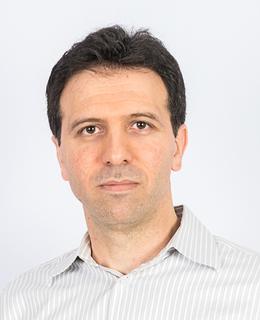
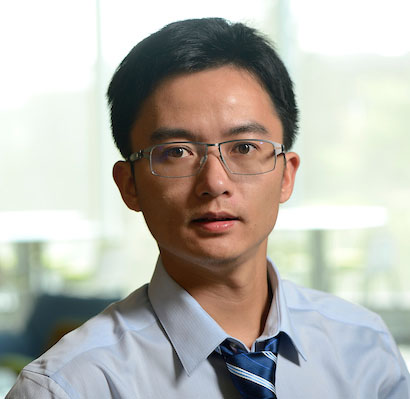
Xing Gao is an Assistant Professor at the University of Delaware, affiliated with the Department of Computer and Information Sciences and jointly with the Department of Electrical and Computer Engineering. His office is located at 316B FinTech Innovation Hub on the STAR Campus. He holds a PhD from the College of William and Mary (2018) and a BS from Beijing Institute of Technology (2011). Research Interests: Cybersecurity in Software Supply Chain, Web 3, High-Performance Computing, Large Language Models, with a focus on Security, Cloud Computing, and Mobile Computing. Education: PhD | 2018 | College of William and Mary BS | 2011 | Beijing Institute of Technology His recent work explores cybersecurity vulnerabilities in cloud gaming services (CCS'22), container registries (USENIX-SEC'22), and software supply chains, with specialized attention to GPU cache attacks (USENIX-SEC'24) and Ethereum smart contracts (WWW'24). His research spans theoretical and applied aspects of system security, including CI/CD pipelines (CCS'24), SDN backdoors (INFOCOM'23), and hardware-level threats (ACSAC'21). Scientific Awards NSF CAREER Award (2024) NSF CRII Award (2020) NDSS Distinguished Poster Award (2016) He serves as Registration Chair for ACM/IEEE Symposium on Edge Computing (2023) and Publicity Co-Chair for IEEE Conference on Communications and Network Security (2022). He is actively involved as TPC Member in multiple top-tier conferences including USENIX Security (2026,2025), CCS (2026,2025,2024), and IEEE DSN (2024). He has also reviewed for journals like IEEE Transactions on Dependable and Secure Computing. Labs & Teams X-Lab at the University of Delaware, a research group focused on cybersecurity in emerging technologies.
Peter Druschel is a Professor and founding Director of the Max Planck Institute for Software Systems (MPI-SWS) in Saarbrücken, Germany. He holds adjunct professorships at Saarland University and the University of Maryland. His research focuses on distributed systems, operating systems, and privacy-preserving technologies. He earned his Ph.D. from the University of Arizona in 1994 and has held roles at Rice University since 1994, including Professor of Computer Science (2002–2005). Education: Ph.D. in Computer Science, University of Arizona (1994) Research Interests: Distributed systems, operating systems, network security, accountable computing, and privacy technologies. Current projects include privacy compliance in data systems (Thoth), secure communication (EbN), and privacy-aware image capture (I-Pic). Awards: SIGOPS Mark Weiser Award (2008) NSF CAREER Award (1995) Member of Academia Europaea and German Academy of Sciences Leopoldina Grants & Leadership: Leads the ERC Synergy Project imPACT, chairs the Max Planck Society’s Chemistry, Physics, and Technology Section, and collaborates with institutions like Cornell and Google. Advises on policy issues related to technology and privacy. Labs/Teams: Distributed Systems Group at MPI-SWS, collaborations with Microsoft Research and MIT. Current team includes students and postdocs working on privacy, security, and distributed systems.
Umakishore Ramachandran is a Professor in the School of Computer Science within the College of Computing at Georgia Institute of Technology. His research spans edge computing, distributed systems, and real-time video analytics, with significant contributions to fog computing infrastructure, mobile systems, and sensor networks. Over a prolific 38-year career, he has authored 142 publications with major contributions in 2022-2025. His research interests focus on bridging the gap between cloud and edge computing, with pioneering work in video analytics systems like EVA and MicroEdge. He investigates resource optimization for latency-sensitive applications, developing novel approaches for load shedding, data management, and container runtime efficiency at the network edge. His work addresses fundamental challenges in distributed camera networks, autonomous vehicle systems, and real-time stream processing. Ramachandran's recent publications reveal a strong emphasis on practical edge computing solutions, with 75% of his 2021-2025 work focusing on video analytics and infrastructure optimization. His research shows increasing collaboration with industry partners while maintaining academic rigor, with publications appearing in top venues like SIGMOD, Middleware, and DEBS. The work consistently addresses real-world constraints of resource-constrained edge environments. Ramachandran has mentored numerous researchers who have become principal investigators on edge computing projects, with notable collaborators including Harshit Gupta, Enrique Saurez, and Zhuangdi Xu appearing as first authors on multiple papers. His work has received significant grant support for projects related to mobile fog computing and distributed video analytics. He leads research in the Edge Computing Laboratory at Georgia Tech, focusing on the development of practical frameworks for real-world deployment of edge infrastructure. Current projects include eCAV for connected autonomous vehicles and MicroEdge for multi-tenant camera processing systems.
Xiaojiang Du is the Anson Wood Burchard Endowed Professor at Stevens Institute of Technology, directing research in IoT security, AI security, and wireless networks. An IEEE Fellow and ACM Distinguished Member, he leads NSF-funded projects on secure IoT systems and cross-platform security vulnerabilities. Education PhD in Electrical Engineering, University of Maryland MS in Electrical Engineering, Tsinghua University BE in Electrical Engineering, Tsinghua University Research Focus: Develops security frameworks for IoT ecosystems and adversarial machine learning, with recent breakthroughs in smart home security anomaly detection. Honors: IEEE Fellow, ACM Distinguished Member, multiple best paper awards at IEEE conferences. Graduated PhD students hold faculty positions at UNC Charlotte, UL Lafayette, and ShanXi University. Professional Service: IEEE ComSoc Distinguished Lecturer, Associate Editor for IEEE Transactions, and General Co-Chair for IEEE/ACM IWQoS 2023. Secured $9M+ in research funding from NSF, NSA, and DOD.
Ping Yang is a Professor and Associate Director for Research and Graduate Programs in the School of Computing at Binghamton University (SUNY). She holds a Ph.D. in Computer Science from Stony Brook University, an ME from the Chinese Academy of Sciences, and a BS from Zhongshan University. Her research focuses on cybersecurity, AI-based security, virtual machine security, privacy policy analysis, and formal methods. She directs the Center for Information Assurance and Cybersecurity and coordinates cybersecurity programs at both undergraduate and graduate levels. Education: BS in Computer Science, Zhongshan University ME in Computer Science, Chinese Academy of Sciences MS and PhD in Computer Science, State University of New York at Stony Brook Research Interests: Dr. Yang's work spans information and systems security, security in virtualized computing, access control mechanisms, privacy policies, and formal methods for security verification. Her projects include blockchain-based provenance storage, real-time anomaly detection in workflows, and privacy-preserving virtual machine migration. She has led NSF-funded initiatives on security in cloud environments and scientific workflows. Awards: Not explicitly listed in the provided materials. Advising & Grants: Advised over 30 PhD/Master’s students and contributed to grants including NSF Scholarship for Service and GenCyber programs. Her team develops tools like RBAC-PAT for access control analysis. Labs/Teams: Leads the Center for Information Assurance and Cybersecurity and collaborates on projects involving secure data workflows and blockchain applications in scientific research.
Helen Xu is an Assistant Professor at Georgia Tech's School of Computational Science and Engineering (College of Computing). She holds a Ph.D. from MIT (2022) under Charles E. Leiserson and was a Grace Hopper Postdoctoral Fellow at Lawrence Berkeley National Lab (2022). Her research focuses on parallel algorithms, cache-efficient data structures, and high-performance computing. Xu has interned at Microsoft Research, NVIDIA Research, and Sandia National Laboratories, and her work has been supported by prestigious fellowships including the National Physical Sciences Consortium and Chateaubriand awards. **Education**: Ph.D., Computer Science, MIT, 2022 Postdoctoral Research, Lawrence Berkeley National Lab (2022) **Research Interests**: Parallel and cache-friendly algorithms Dynamic graph and data structure optimization Algorithm performance engineering Sparse matrix/tensor operations **Awards**: Grace Hopper Postdoctoral Scholar (2022), Best Artifact Award (PPoPP 2024), National Physical Sciences Consortium Fellowship, Chateaubriand Fellowship. **Advising & Teaching**: Advises PhD/M.S. students in parallel computing and high-performance systems. Teaches courses like CSE 6220 (Introduction to HPC) and CSE 6230 (HPC Tools). Supervised MIT M.Eng. projects on BP-Trees and parallel prefix sums. **Labs/Teams**: Active in Georgia Tech's High-Performance Computing community, collaborating with researchers like Aydın Buluç and Prashant Pandey on graph containers and dynamic data structures.
Professor Ryan Ko is a leading academic in Cyber Security at the University of Queensland (UQ), serving as Chair and Director of the UQ Cyber Research Centre, Director of Research at the School of Electrical Engineering and Computer Science, and a member of UQ's Academic Board. He holds a BEng (Computer Engineering) and PhD from Nanyang Technological University, Singapore. His research focuses on data provenance, industrial control systems (ICS) security, privacy-preserving technologies, and AI-driven cybersecurity solutions. Ko has pioneered initiatives such as the UQ Cyber Centre, interdisciplinary cybersecurity education programs (MCyber, PGDipCyber), and the Oceania Cybersecurity Challenge. He has attracted over AUD 20 million in competitive grants as lead investigator, including the NZ$12.2M STRATUS project. Ko’s work spans industry and policy, including advisory roles with INTERPOL, governments, and NGOs. He has authored over 100 publications, contributed to ISO standards (e.g., ISO/IEC 21878), and co-founded cybersecurity startups. Awards include Fellowships from the Australian Computer Society and Queensland Academy of Arts and Sciences, and the CSA Ron Knode Service Award. Education: Bachelor of Engineering (Computer Engineering) (Hons.), Nanyang Technological University (2005) PhD in Computer Science, Nanyang Technological University (2011) Awards: Fellow, Australian Computer Society (2016) Fellow, Queensland Academy of Arts and Sciences (2020) Young Professional Award, Singapore Government (2018) Grants & Leadership: AUD 20M+ lead investigator grants; NZ$12.2M STRATUS project (2014–2018) Established UQ Cyber Centre (2019) and NZ’s first cybersecurity graduate program (2012) His research emphasizes returning data control to users, with applications in agriculture, energy, and critical infrastructure. Ko’s contributions include patents, open-source tools (e.g., Kali Linux), and frameworks like TrustCloud for cloud accountability.
Matteo Bolner is a Post-Doctoral Research Fellow at the University of Bologna's Department of Agricultural and Food Sciences, specializing in livestock genomics and metabolomics. He holds a PhD in Agricultural and Food Sciences (defended March 2025) and an International Master in Bioinformatics from the University of Bologna. His research integrates genomic and metabolomic data to improve livestock sustainability, particularly in pig production systems. Key focuses include identifying metabolic pathways influencing production traits, analyzing pig viromes for disease outbreaks, and leveraging big data for One Health applications. His educational background includes a Biological Sciences degree (2018) and a bioinformatics master's (2021). He interned at CINECA's SCAI department, focusing on HPC software containerization. Current affiliations include membership in the Animal and Food Genomics group, where he explores genomic solutions for breed conservation and sustainable production. Research trends in his articles emphasize multi-omics integration to understand pig metabolism, stress responses, and breed-specific adaptations. He also applies genomics to authenticate food products and enhance conservation strategies for endangered livestock breeds like the Mora Romagnola pig. His work bridges animal science, computational biology, and agricultural sustainability. Notable contributions include developing genomic tools for honey bee population analysis and creating a catalog of mitochondrial insertions in pig genomes. Future directions involve advancing metabolomics-based precision livestock farming and applying big data analytics to livestock One Health challenges.
Marco Caccamo is a Professor at the Technical University of Munich (TUM) , holding the Chair of Cyber-Physical Systems in Production Engineering within the Faculty of Mechanical Engineering. He is also a Principal Investigator and Professor at the Department of Computer Science, with courtesy appointments in Electrical and Computer Engineering, Coordinated Science Lab (CSL), and Aerospace Engineering at the University of Illinois at Urbana-Champaign (UIUC). His research spans Embedded Systems , Real-Time Systems , and Cyber-Physical Systems (CPS) , focusing on resource management, reinforcement learning architectures, and 6D pose recognition for robotics. University of Pisa (B.Sc., 1997) Scuola Superiore Sant'Anna (Ph.D., 2002) Research highlights include predictable resource management on heterogeneous platforms, security frameworks for AI-based controllers , and UAV testbed development . His work integrates deep learning and real-time constraints in industrial applications like avionics, farming, and automotive systems. His 15 most recent publications emphasize cache optimization , memory bandwidth regulation , and reinforcement learning for CPS , with a focus on multi-core processors and DNN inference . Awards include the IEEE Fellow (2018), Alexander von Humboldt Professorship (2018), and multiple Best Paper Awards at RTSS, RTNS, and RTAS. NSF CAREER Award (2003) IEEE Fellow (2018) Alexander von Humboldt Professorship (2018) Best Paper Awards (RTSS 2024, RTNS 2023, ECRTS 2019) He has advised numerous Ph.D. students and postdocs, with a track record in UAV development and industrial collaborations . His lab, the Real-Time and Embedded System Laboratory , focuses on real-time OS and predictable computing .
Jason Dahlstrom is an Adjunct Assistant Professor of Engineering at Dartmouth College's Thayer School of Engineering and Owner of Web Sensing LLC. His research focuses on embedded systems security, computer architecture optimization, and engineering education innovations. He holds a BS in computer engineering (University of New Hampshire, 2006), MS in biomedical engineering (Dartmouth, 2008), and PhD in embedded system security (Dartmouth, 2015). His work emphasizes cybersecurity for critical infrastructure, particularly in vehicle systems and military communication networks. Key contributions include real-time binary analysis frameworks, FPGA-integrated security monitors, and tactical network interface controllers. He has authored patents related to data security appliances and distributed sensing systems. Recent publications explore vehicle system hardening, cross-domain container security, and hardware-assisted monitoring. His research bridges theoretical computer architecture with practical embedded system implementations, addressing modern threats in connected devices and defense applications.
Dimitris Mitropoulos is an Assistant Professor at the National and Kapodistrian University of Athens (NKUA) in the Department of Business Administration, where he teaches courses on Distributed Ledger Technologies, Data Security and Privacy, Algorithms and Business Analytics, and Introduction to Programming. He also serves as Head of the Reliability Engineering Directorate at the National Infrastructures for Research and Technology (GRNET), Greece's national research and education network organization. Previously, he was a Postdoctoral Researcher in the Computer Science Department at Columbia University. Dr. Mitropoulos received his Ph.D. degree in Secure Software Development Technologies from the Athens University of Economics and Business (AUEB) in 2014. His doctoral research was supported by the Heracleitus II Scholarship, co-financed by the European Union and Greek national funds. He is a member of prestigious professional organizations including ACM, IEEE, and USENIX. Dr. Mitropoulos conducts pioneering research at the intersection of software engineering and cybersecurity, with particular expertise in secure software development, vulnerability analysis, and blockchain security. His work spans multiple dimensions of software security including code injection attacks, infrastructure as code security, smart contract analysis, and dependency management in software ecosystems. His research methodology combines static and dynamic analysis techniques with empirical studies of real-world software systems, particularly focusing on Java, Python, and Solidity ecosystems. His recent work has made significant contributions to understanding security vulnerabilities in modern software development practices and infrastructure management. Dr. Mitropoulos has received numerous prestigious awards for his research contributions, including the Research Excellence Award from NKUA (2025), Distinguished Paper and Artifact Awards at PLDI '22, Best Data Showcase Award at MSR 2018, and multiple postdoctoral research funding scholarships. His work on "Finding typing compiler bugs" was recognized with both Distinguished Paper and Artifact Awards at PLDI '22, highlighting the significance and reproducibility of his research. He has also received recognition for his service to the academic community, including a Certificate of Appreciation from ESEC/FSE '21 for his contributions to conference organization. Dr. Mitropoulos has been actively involved in securing research funding and leading significant research projects. He currently serves as Principal Investigator for the SecOPERA project (2023-Today), funded by the European Commission under Horizon Europe. Previously, he contributed to several major EU and US-funded projects including eSSIF-Lab (2019-2022), FASTEN (2019-2022), PRIViLEDGE (2018-2021), CERTCOOP (2017-2020), PANORAMIX (2016-2019), and TREDISEC (2016-2018). His research has been supported by diverse funding sources including the European Commission's Horizon 2020 program, the National Science Foundation, and the Defense Advanced Research Projects Agency (DARPA). Dr. Mitropoulos plays an active role in the international research community through various leadership positions. He serves on program committees for top-tier conferences including OOPSLA (2026), ICSE (2026), ESEC/FSE (2025), and ISSTA (2025). He has previously served as Workshop Co-Chair for ISSTA 2025 and Student Volunteer Chair for ESEC/FSE 2021. His contributions to mentoring the next generation of researchers include serving as a mentor for the ICSE Student Mentoring Workshop (2022) and supervising Google Summer of Code projects (2017).
George Kesidis is a Professor in Computer Science and Engineering and Electrical Engineering at Penn State University. His research spans deep learning security, virtual reality optimization, and cloud computing. College of Engineering (Penn State University) Research Focus: Backdoor Attacks, DNN Robustness, Edge Caching Active in NSF and U.S. Navy-funded projects (2022-2026) His work addresses backdoor data poisoning , test-time evasion attacks , and DNN overfitting mitigation . He develops techniques like activation clipping, perturbation analysis, and statistical defense models. Recent projects include edge caching systems for VR and security-driven AI frameworks. Key article trends reveal expertise in adversarial deep learning, immersive media delivery, and cloud resource optimization. Current grants focus on multi-user VR, GPU scheduling, and serverless-cloud hybrid architectures. He collaborates extensively with researchers like David J. Miller and Xinyu Li, particularly on cloud-based adversarial defense mechanisms and VR streaming benchmarks.
Majid Ghaderi is a Professor in the Department of Computer Science at the University of Calgary, Faculty of Science. His expertise spans network algorithms, secure communication, and machine learning applications in network control. He holds a Ph.D. in Computer Science from the University of Waterloo (2006), and M.Sc. and B.Sc. degrees in Software Engineering from Sharif University of Technology (2001 and 1999). Education: Ph.D. Computer Science, University of Waterloo, 2006 M.Sc. Software Engineering, Sharif University of Technology, 2001 B.Sc. Software Engineering, Sharif University of Technology, 1999 Research Interests: Dr. Ghaderi focuses on optimizing network algorithms, securing communication in distributed systems, and leveraging machine learning for network control. His work addresses challenges such as secure wireless protocols, SDN-based network management, and efficient resource allocation in data centers. He explores proactive traffic scheduling and anomaly detection in critical infrastructures like industrial control systems and vehicular networks. Publications Trends: His recent work emphasizes covert communication in heterogeneous networks, adaptive federated learning in edge environments, and low-overhead diagnostic systems for cloud networks. He also investigates cybersecurity defenses against hardware vulnerabilities and dynamic threat landscapes. Awards: Best in-session Presentation Award, IEEE INFOCOM 2018 Municipal Excellence Award, Government of Alberta 2018 Faculty of Science Excellence in Teaching Award 2012 Advising & Grants: While no specific advisees are listed, his research has been supported by grants focusing on network security, edge computing, and IoT applications. He teaches CPSC 441 (Computer Networks) and maintains an active lab focused on network systems and cybersecurity. Labs & Teams: His research group collaborates on projects involving software-defined networks, vehicular communication, and industrial IoT security. The team develops open-source tools for network monitoring and anomaly detection.
Ryan P. Huang is an Associate Professor in the Computer Science & Engineering department at the University of Michigan, College of Engineering, where he leads the Order Lab. Previously, he was an Assistant Professor at Johns Hopkins CS department from 2017 to 2022. His research focuses on computer systems, particularly operating systems and distributed systems, with emphasis on reliability, efficiency, and defensibility across cloud data centers and mobile devices. Dr. Huang's research interests center on pushing the boundaries of cloud systems availability and observability. His work addresses critical challenges such as gray failures and partial failures in distributed systems, developing principled techniques for failure detection and localization. His research spans multiple thrusts including Panorama for enhanced observability, Watchdog for runtime checking, OmegaGen for partial failure localization, and Narya for predictive failure mitigation. He also investigates energy-efficient mobile systems and system misconfiguration prevention. His recent publications demonstrate a strong trend toward addressing silent failures in distributed systems, with multiple papers accepted to top-tier conferences including SOSP and OSDI in 2025. His work bridges theoretical principles with practical system implementations, focusing on real-world challenges in cloud infrastructure and distributed computing environments. NSF CAREER award recipient Multiple Best Paper Awards (OmegaGen, Argus, LeaseOS) CRA Outstanding Undergraduate Researcher Award honorable mentions for advisees Dennis Ritchie doctoral dissertation award honorable mention Dr. Huang actively mentors PhD students including Yuzhuo Jing, Wanning He, Yuxuan Jiang, and others. His lab has produced graduates who have gone on to faculty positions at institutions like University of Virginia and Boston University. He serves on program committees for major systems conferences including SOSP, OSDI, and NSDI, contributing significantly to the academic community. The Order Lab maintains active research collaborations and regularly publishes in top-tier venues, with multiple papers accepted to SOSP and OSDI in 2025.
Ada Gavrilovska is a Professor at Georgia Tech's School of Computer Science under the College of Computing. Her work focuses on systems software for emerging technologies, including hybrid memory systems, edge computing, and cloud infrastructure. She leads projects in the PRISM Center and ADA Center , with funding from NSF, DoE, SRC, and industry leaders like Cisco and VMware. Education: PhD in Computer Science, Georgia Tech (2004) Research Interests: Designing systems for new hardware and applications, including edge computing, heterogeneous memory management, and LEO satellite platforms. Her work bridges low-level OS mechanisms with high-level distributed systems challenges. Recent Publications highlight trends in LEO satellite resource scheduling Edge-based ML preprocessing Hybrid memory OS abstractions Disaggregated graph analytics Compiler-assisted performance optimization Scientific Awards: Best paper, NFV World Congress (2016) Spotlight paper, IEEE Transactions on Cloud Computing (2014) ISCA-50 25-year retrospective (2023) Advising & Grants: Ada has mentored over 15 PhD students and 10 MS students, with research supported by NSF, DoE, SRC, and industry grants. She serves as PI in the SRC/DARPA PRISM Center.