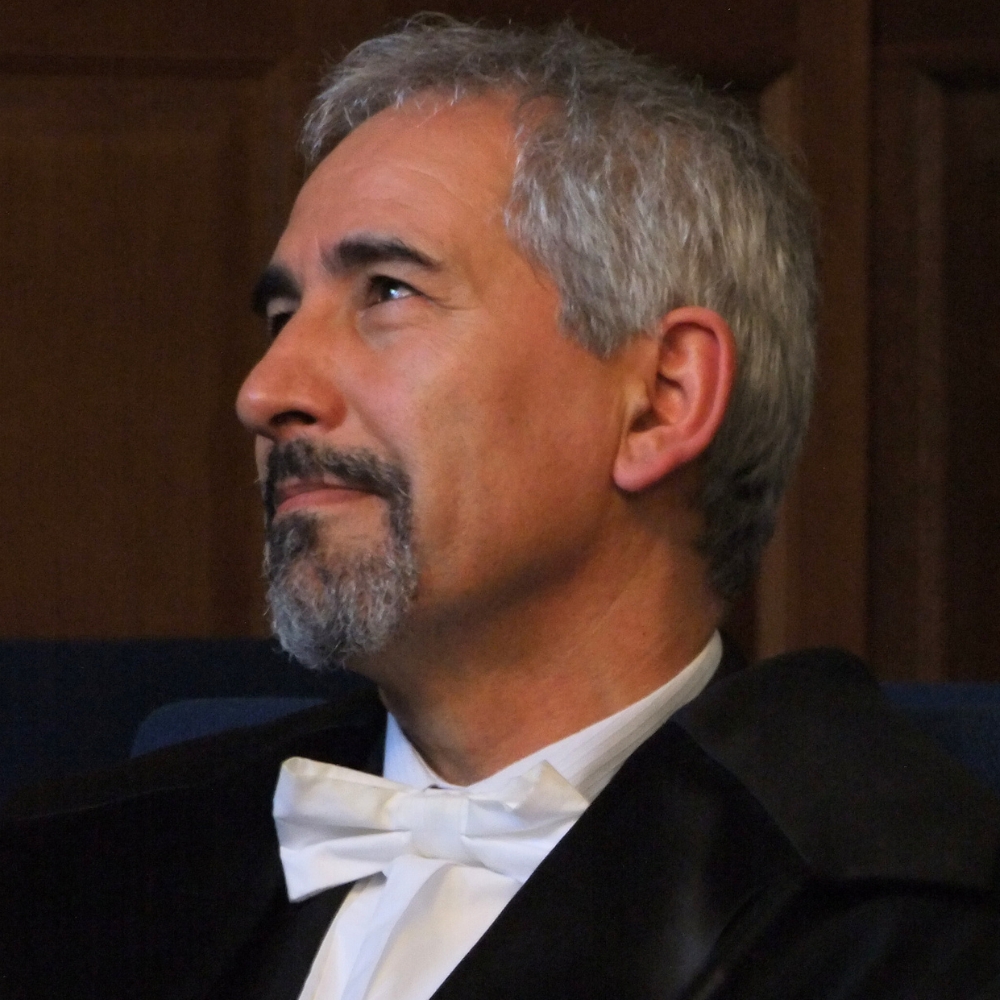
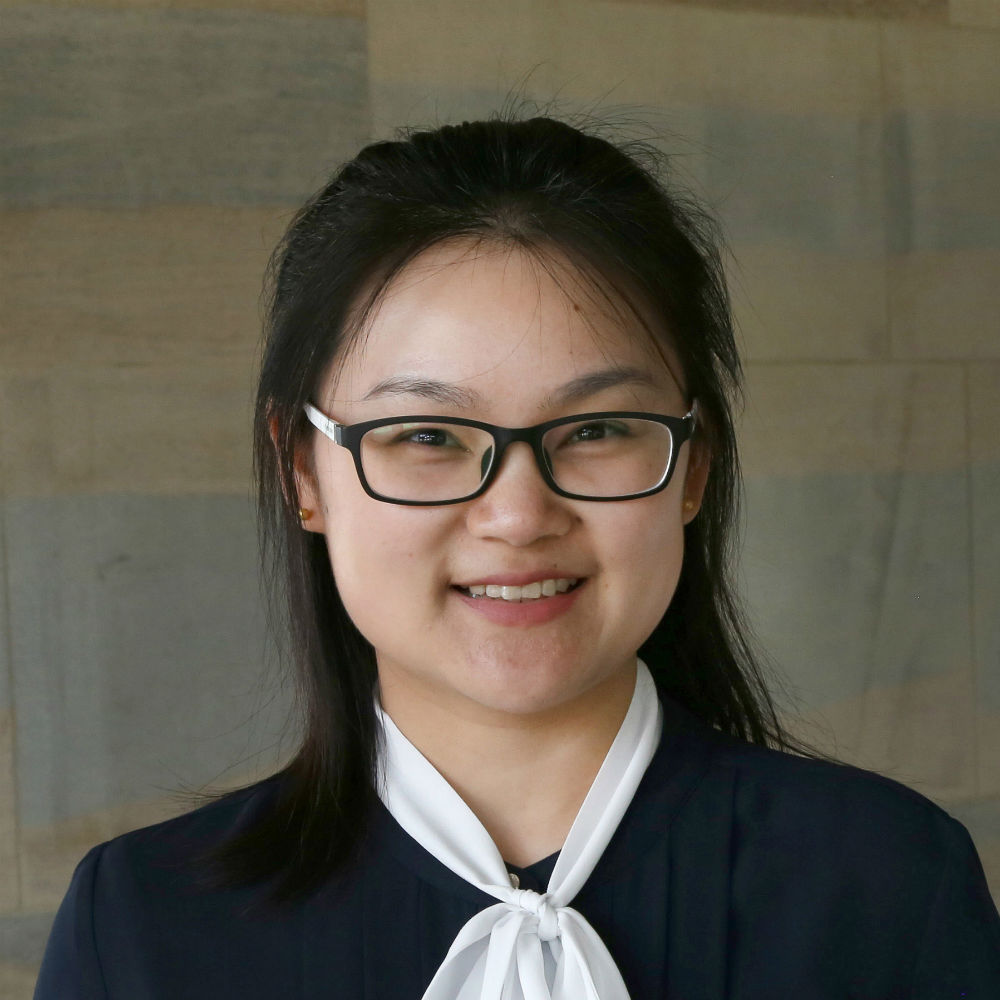
Eugen Borcoci serves as a Full Professor in the Department of Telecommunications at the National University of Science and Technology Politehnica Bucharest. With an extensive publication record spanning networking technologies, he has established himself as a significant contributor to the field of telecommunications research. His work bridges theoretical networking concepts with practical implementations, particularly in next-generation network architectures. Professor Borcoci's research interests focus on advanced networking paradigms including Software Defined Networking (SDN), Network Function Virtualization (NFV), and 5G/6G network architectures. He has pioneered work in network slicing technologies, particularly for vehicular communications and Internet of Vehicles applications. His research demonstrates a consistent emphasis on practical implementations and validation of theoretical networking concepts through experimental frameworks and open-source platforms. His recent publication trajectory (2021-2025) reveals a strong focus on Open Source MANO for network automation, SDN controller optimization across different network topologies, and specialized applications of network slicing for electric vehicle infrastructure and vehicular communications. This work demonstrates a clear progression from theoretical networking concepts to practical deployment scenarios with industry relevance. Professor Borcoci actively collaborates with international researchers, particularly with Marius Vochin, Frank Y. Li, and Andra Ciobanu, indicating strong international research connections. His work appears primarily in networking conferences and journals focused on telecommunications infrastructure and next-generation network architectures.
Abdellah Salhi is a Professor at the School of Mathematics, Statistics and Actuarial Science (SMSAS) at the University of Essex. His academic qualifications include a PhD from Aston University and a BSc from the University of Constantine. He specializes in optimization, metaheuristics, and operations research, with applications in logistics, port operations, and mathematical modeling. His research addresses complex problems such as container port scheduling, vehicle routing, and numerical solutions for biological systems. Salhi's work spans optimization algorithms like the Plant Propagation Algorithm, Genetic Algorithms, and hybrid methods for solving real-world challenges. His articles focus on multi-objective optimization, logistics efficiency, and algorithmic advancements. He has supervised numerous PhD students, contributing to academic and industrial research. While grants and funding sections are listed, specific details are not provided in the text. No dedicated labs or teams are mentioned, though collaborations are implied through his extensive publication record.
Professor Xinan Yang is a faculty member at the University of Essex, affiliated with the School of Mathematics, Statistics and Actuarial Science. He holds a PhD in Optimization from the University of Edinburgh (2011), an MSc in Operational Research (with distinction) from the same university (2007), and a BSc in Applied Mathematics from Fudan University (2006). His research focuses on optimization, logistics, and operations research, with applications in energy systems, drone/robot-assisted delivery, and stochastic programming. Prior to Essex, he worked as a Senior Research Associate at Lancaster University Management School. Research interests include combinatorial optimization, metaheuristic algorithms, and their applications in transportation, energy management, and healthcare logistics. His recent work explores AI-driven solutions for surgery scheduling and dynamic routing in last-mile delivery systems. He also contributes to energy systems modeling, particularly in integrating renewable energy sources. Publications highlight advancements in collaborative caching, container terminal operations, and volcano eruption algorithms for optimization. His academic support hours follow an open-door policy, and he is based at STEM 5.17 on the Colchester Campus.
Irina Harris is a Senior Lecturer in Logistics and Operations Modelling at the Cardiff Business School , Cardiff University, and serves as Deputy Section Head for Research, Innovation, and Engagement within the Logistics and Operations Management Section. Her career bridges computer science and logistics, focusing on sustainable network design, multi-objective optimization, and technological trends in supply chains. PhD in Computer Science (2011) - Multi-Objective Optimization for Green Logistics BSc (First Class) in Computer Science, Cardiff University Her research explores strategic and tactical logistics network design through economic and environmental lenses, emphasizing green logistics and reverse supply chains . She specializes in heuristics , evolutionary algorithms , and multi-criteria decision-making tools , often collaborating with industry partners to address real-world challenges. Her recent publications highlight electric vehicle adoption trends using agent-based modeling and machine learning , collaborative strategies in SME logistics , and carbon mitigation in multimodal transport . While no scientific awards are documented, her work frequently addresses sustainability in public procurement, supply chain resilience, and climate change adaptation. Contact: HarrisI1@cardiff.ac.uk
Jésica De Armas is an Associate Professor at the Department of Economics and Business, Universitat Pompeu Fabra (UPF) in Barcelona, Spain. She holds a prestigious Ramon y Cajal Fellowship from the Spanish Ministry of Science and Innovation, recognizing her outstanding research contributions. Her academic career spans multiple institutions, with previous postdoctoral positions at the Open University of Catalonia (UOC) and the University of La Laguna (ULL). PhD in Computing (Cum Laude) from University of La Laguna (2012) Computer Engineering degree with special award for best academic record Ramon y Cajal Fellowship recipient (2022) PhD Extraordinary Award from University of La Laguna (2012) PhD Award from Spanish Association of Artificial Intelligence (AEPIA) (2014) Her research focuses on developing and applying optimization techniques to solve complex real-world problems. She specializes in combinatorial optimization, metaheuristics, and machine learning approaches applied to logistics, transportation, and health care systems. Her work bridges theoretical advancements with practical implementations, particularly in vehicle routing, scheduling, and resource allocation problems. She has established herself as a leading researcher in optimization for social good, with significant contributions to humanitarian logistics and health care delivery systems. Dr. De Armas's publications reveal a strong trajectory in operations research with applications spanning multiple domains. Her research shows a clear evolution from theoretical optimization methods toward increasingly complex real-world applications, particularly in health care and social services. Her most recent work demonstrates a sophisticated integration of simulation, machine learning, and optimization techniques to address challenges in refugee resettlement, home care services, and public infrastructure planning. The consistent publication in high-impact journals reflects her growing influence in the field of operations research. Ramon y Cajal Fellowship (2022) Best Paper Award from Energies (2019) Luis Azcárraga Award from ENAIRE Foundation (2017) PhD Award from Spanish Association of Artificial Intelligence (2014) PhD Extraordinary Award from University of La Laguna (2012) HPC-Europa2 Fellowship (2011) Dr. De Armas has successfully secured multiple competitive research grants and has advised numerous students across various academic levels. She has served as Principal Investigator for projects including REASON (2024-2027) on optimizing health care delivery in rural areas, and previously led the EPHoCaS project (2020-2022) focused on sustainable home care services for the elderly. Her advising portfolio includes three PhD students to completion and numerous master's and undergraduate thesis students, demonstrating her commitment to mentoring the next generation of researchers. Her research has led to tangible industry applications, particularly in vehicle routing optimization where her algorithms have been implemented by companies as key business tools. Dr. De Armas maintains an active international research network with collaborations spanning institutions in Edinburgh, Nottingham, Cosenza, Boulder, Hamburg, and Montreal. Her work on the ROAR-NET research network demonstrates her leadership in advancing optimization algorithms research across European institutions. She has also contributed significantly to the academic community through conference organization, including the International Conference on Computational Logistics (ICCL2022) and the Metaheuristics International Conference (MIC 2017).
Shaun Belward is a Senior Lecturer at James Cook University, with a focus on mathematics education and quantitative skills development across disciplines. His research spans applied mathematics, fluid dynamics, and pedagogical innovation. Key Research Areas: Mathematics education, curriculum design for STEM, interdisciplinary collaboration in quantitative skill development, and fluid dynamics modeling. Educational Impact: Led initiatives to improve graduate learning outcomes in mathematics, developed cross-institutional curricula for life sciences, and explored peer group learning strategies. Applied Mathematics: Contributed to solving complex fluid dynamics problems, including supercritical flow over topography, atmospheric interfacial waves, and oil spill containment models using series solutions. Notable Trends: Recent work emphasizes dynamic vehicle routing optimization (2024), while earlier studies focused on bridging vocational and tertiary education pathways (2005-2015) and foundational mathematical misconceptions (2011). Collaborations: Partnered with educators like Kelly Matthews, Leanne Rylands, and Carmel Coady to address challenges in undergraduate science education.
Dr. Elnaz Irannezhad (also known as "Elli") is a Senior Lecturer at the School of Civil and Environmental Engineering, University of New South Wales (UNSW Sydney). She leads research at the Research Centre for Integrated Transport Innovation and bridges transport engineering with blockchain technology, automated vehicles, and decarbonisation. PhD in Civil Engineering from the University of Queensland (2014-2017) Postdoctoral Research Fellow at UQ Business School (2017-2020) Principal Engineer at Australian Road Research Board (2020-2022) Her research spans cross-disciplinary domains including: Behavioral and agent-based freight transport modelling Logistics 4.0 and blockchain applications Automated heavy vehicles and hydrogen fuel cell technology Smart supply chains and IoT integration Circular economy in logistics Decision support systems for transport networks Recent publications focus on blockchain platforms like LogisitcChain for supply chain optimization, machine learning for GPS-based truck behavior analysis, and behavioral econometric studies of maritime transport demand. She also contributes to human rights discourse as Associate of UNSW's Australian Human Rights Institute and Equity, Diversity, and Inclusion (EDI) Officer for the School of Civil Engineering. Teaching activities include: CVEN9421: Transport Logistics Engineering ENGG1400: Infrastructure Systems Engineering CVEN3402: Transport Engineering and Environmental Sustainability She co-leads the JINA Program for refugee background female students and co-chairs the virtual Bridging Transport Researchers (BTR) conference to reduce academic travel emissions.
Marius Hadry is a doctoral researcher at the Chair of Software Engineering (Computer Science II) at the University of Würzburg, under the supervision of Prof. Samuel Kounev. He is affiliated with the Department of Computer Science within the Faculty of Mathematics and Computer Science. His research focuses on Self-aware Computing Systems , Sel-adaptive Systems , IoT and Cyber-physical Systems , Industry 4.0 , Platooning , and Intelligent Transportation Systems . Marius holds a Master's (2021) and Bachelor's (2019) in Computer Science from the University of Würzburg. Education: Master of Computer Science (2019-2021), Bachelor of Computer Science (2016-2019), both at the University of Würzburg. His work emphasizes practical applications of adaptive systems in transportation and logistics. Recent research explores traffic forecasting models, failure prediction in HDDs, and performance analysis of microservices. Marius actively contributes to international conferences like MASCOTS, SEAMS, UCC, and ICPE. Teaching activities include supervising Bachelor/Master theses, coordinating software architecture lectures, and organizing seminars on software engineering. He has also taught operating systems and contributes to academic initiatives like the Secure Software Systems Group.
Prof. Dong Li is a Professor of Operational Research at Lancaster University Management School (LUMS). He previously held academic roles at Loughborough Business School and the University of York, alongside industry experience at Avis Budget Group and Intel Corp. His research focuses on Revenue Management, Reinforcement Learning, and Resource Allocation, with methodological expertise in Markov Decision Processes and Stochastic Programming. Education: BEng/MEng in Mechanical Engineering (Xi’an Jiaotong University), MEng in Industrial Engineering (National University of Singapore), and PhD in Management Science (Lancaster University). Research Interests include: Revenue Management & Dynamic Pricing in Sharing Economies Discrete Choice Modelling Healthcare Operations Management Reinforcement Learning and Approximate Dynamic Programming He leads the STOR-i Doctoral Training Centre and serves as Associate Editor of Computational Management Science . Notable grants include a UKRI/EPSRC-funded project on medical resource rationing during public health emergencies (2020–2022). External Roles: External examiner at Strathclyde University (2020–present) and Xi’an Jiaotong Liverpool University (2020–2024). Research Groups: Centre for Transport & Logistics (CENTRAL), Health Systems Optimisation, and STOR-i.
Marko Durasevic is affiliated with the University of Zagreb's Faculty of Electrical Engineering and Computing. His primary research focuses on optimization algorithms, scheduling theory, and applications of genetic programming in solving complex combinatorial problems such as container relocation and dynamic machine scheduling. He collaborates extensively with researchers like Domagoj Jakobovic and Stjepan Picek, producing influential work at venues like GECCO, EuroGP, and EvoApplications. His research interests span automated heuristic design, cryptographic Boolean function optimization, and metaheuristic-based solutions for real-world logistics challenges. Durasevic has contributed to the development of ensemble methods for dispatching rules and energy-efficient heuristic systems, with a strong emphasis on practical applications in operations research and artificial intelligence. Notable contributions include the use of genetic programming for designing relocation policies in container terminals and evolving Boolean functions with cryptographic properties. His work frequently intersects with evolutionary computation frameworks, emphasizing both theoretical advancements and real-world problem-solving.
Dr. Lynn Hulse is a Senior Research Fellow in Human Behaviour at the University of Greenwich's School of Computing and Mathematical Sciences. She joined the university's Fire Safety Engineering Group (FSEG) in 2005, focusing on understanding human responses to threats like fires, wildfires, and autonomous vehicle interactions. Her work integrates cognitive psychology, forensic science, and engineering to improve safety protocols. Educated at the University of Aberdeen (PhD in Psychology) and Simon Fraser University (Visiting Scholar), she brings expertise in forensic road collision investigation and justice system reforms. Her research collaborations include fire services in Italy, Corsica, and the UK, emphasizing practical applications of behavioral models in emergency scenarios. Key research areas include evacuation modeling, post-traumatic stress in emergency responders, and cultural differences in disaster responses. Her publications analyze behavioral aspects of wildfires, construction safety, and autonomous vehicle interactions. She contributes to national guidance on emergency preparedness and has pioneered methodologies for collecting survivor testimonies in high-risk environments. Lynn's interdisciplinary approach bridges academic research with real-world safety innovations, addressing both technical and human factors in crisis situations.
Jose Manuel Belenguer Ribera is a full-time Professor in the Department of Statistics and Operations Research at the University of Valencia. He is a member of the OPTIMATH research group, focusing on optimization and mathematical modelling. His academic career is centered on operations research and combinatorial optimization. His research interests include: Operations Research Mathematical Programming Combinatorial Optimization Vehicle Routing Problems Capacitated Arc Routing Logistics Optimization His publications span from 1990 to 2023, with a strong focus on exact and heuristic methods for routing and scheduling problems. Key contributions include branch-and-cut algorithms, cutting plane methods, and bounds for capacitated and mixed arc routing problems. His recent work extends into port logistics, particularly yard crane scheduling in container terminals. Notable collaborative work includes joint publications with Enrique Benavent, Christian Prins, and Caroline Prodhon. His research has been published in leading journals such as Computers & Operations Research , European Journal of Operational Research , and Operations Research . He earned his PhD from the University of Valencia in 1990 with a thesis on the polyhedron of capacitated arc routing problems, establishing a strong foundation in polyhedral combinatorics.
Dr. Nan Zhao serves as Senior Lecturer in Electrical Engineering at Lancaster University's School of Engineering, UK, since 2022. Previously, he held positions as Assistant Professor at University College Dublin (2018-2022) and Sessional Lecturer at McMaster University (2017-2018), where he earned his PhD in Electrical Engineering in 2017. His research spans electrical power engineering with core focus areas including energy storage systems , renewable integration (solar, wind, wave), electric machines , and EV powertrain systems . Current projects involve AI-driven ocean energy arrays and high-performance wave energy conversion systems. His publication record demonstrates deep engagement with power system stability challenges in renewable-dense grids, particularly through virtual synchronous generators and transportable storage solutions. Key editorial activities include contributions to Electronics Letters and IET Renewable Power Generation . His research group actively recruits PhD students and postdocs, with Renqi Guo currently listed as a PhD student. Primary research collaborations occur through the Energy TALOS group. Notable scientific contributions include: Hybrid synchronous condenser-virtual generator systems for microgrid stability (2025) Statistical deadband estimation for transportable energy storage (2025) Novel wave energy conversion grid integration techniques (2024) Dr. Zhao maintains active industry engagement through research on practical grid integration challenges, with recent work addressing frequency response services, curtailment reduction, and cyber-physical grid resilience. His lab focuses on translating theoretical power electronics advances into deployable renewable energy solutions.
Alan Erera is the Manhattan Associates/Dabbiere Chair and Professor at the H. Milton Stewart School of Industrial and Systems Engineering at Georgia Tech. He serves as Associate Chair for Research, Faculty Director for the M.S. in Supply Chain Engineering program, Co-Director for Global Transportation in the Supply Chain & Logistics Institute , and Co-Executive Director of the Georgia Tech Panama Logistics Innovation & Research Center . Education : Ph.D., Industrial Engineering & Operations Research (2000), University of California, Berkeley M.S., Industrial Engineering & Operations Research (1996), UC Berkeley B.S.Eng., Civil Engineering & Operations Research, Summa Cum Laude (1993), Princeton University Research Focus : Transportation and logistics systems planning under uncertainty, with emphasis on dynamic vehicle routing for same-day distribution, resilient food supply chains, service network design for freight carriers, container fleet management, and real-time operational control. His work combines stochastic/robust optimization with applications in urban delivery, shared mobility, and supply chain security. Scientific Contributions : Developed dynamic dispatch wave frameworks for same-day delivery Created robust network design models for food supply chains Innovated container fleet management techniques for global shipping Pioneered truckload linehaul optimization Advanced real-time routing algorithms Awards & Honors : INFORMS Transportation Science Dissertation Prize Winner Dwight D. Eisenhower Transportation Fellow NSF/USDOT/DHS Research Grant Recipient Berkeley Fellowship for Graduate Study W. Mack Angas Prize at Princeton Methodological Trends : Combines dynamic programming, stochastic optimization, and machine learning for logistics challenges. Key article themes show progression from fundamental network design (2002-2014) to modern AI-enhanced approaches (2023-2025) in urban delivery and real-time systems.
Professor Zbigniew Kalbarczyk is affiliated with the Illinois Advanced Research Center at Singapore (Illinois ARCS), part of the University of Illinois. His research focuses on designing and validating reliable and secure computing systems, with an emphasis on software middleware (ARMOR), operating system-level error recovery (Reliability Microkernel, RMK), hardware reliability support (Reliability and Security Engine, RSE), and formal verification frameworks (SymPLFIED). He holds a Ph.D. in Computer Science from the Bulgarian Academy of Sciences (1992), and two M.S. degrees in Electronic Engineering (Technical University of Sofia, 1984) and Mechanical Engineering (Technical University of Warsaw, 1981). His research interests span fault injection techniques (NFTAPE), GPU resilience, autonomous system safety, and cybersecurity in industrial control systems. Recent work includes projects on hierarchical autoscaling for large language models (Chiron), power-aware DL serving (µ-Serve), and security testbeds for supercomputing infrastructure. He explores SLOs in resource-constrained environments and Kubernetes failure mitigation. His methodologies combine experimental validation with formal analysis to address both accidental errors and malicious attacks. Key contributions include frameworks like ARMOR middleware, Reliability Microkernel, and Symbolic Program-Level Fault Injection (SymPLFIED). His articles highlight trends in resilient AI/HPC systems, energy-efficient computing, and secure embedded systems (e.g., ARM TrustZone for PLCs). Current work addresses challenges in smart grid cybersecurity, machine learning-driven malware detection, and safety-critical fault mitigation in autonomous vehicles. No scientific awards are explicitly mentioned in the provided texts. Research grants and collaborations are inferred through project descriptions but not explicitly detailed. He is part of the Illinois ARCS team, collaborating on interdisciplinary projects involving hardware-software co-design and cybersecurity solutions for industrial and cloud systems.