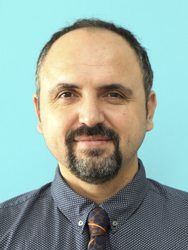
Prof. Dr. Kevin Tierney is a Full Professor for Decision and Operation Technologies at Bielefeld University's Faculty of Business Administration and Economics. He also serves at the Department of Management Science & Business Analytics and is affiliated with the Bielefeld Center for Data Science (BiCDaS) and Center for Uncertainty Studies (CeUS). Chair of Business Administration, Decision and Operation Technologies Member of BIGSEM Graduate School PhD (2013) - IT University of Copenhagen Sc.M. (2010) & BS (2008) - Brown & RIT Research Interests His work focuses on: Learning to Optimize: Using deep reinforcement learning to automate solution heuristics for complex problems like routing and scheduling. Optimization under Uncertainty: Developing models that incorporate probabilistic elements for decision-making in unpredictable environments. Efficient Maritime Logistics: Specializing in container shipping, terminal operations, and fleet routing with real-world constraints. Recent publications demonstrate expertise in algorithm configuration, constraint programming, and machine learning applications to logistics challenges. Scientific Recognition Distinguished Paper Award - European Conference on Artificial Intelligence (2020) Projects & Grants Principal Investigator in projects: Self-learning methods with Deep Reinforcement Learning (DFG 2026) itsowl-MOVE (Land NRW 2024) AIPlan4EU Meta-planning engine (EU H2020 2023) Academic Leadership Module responsible for: Quantitative Business Administration Data Science Production and Operations Management
Prof. Dongping Song is a Professor of Supply Chain Management at the University of Liverpool's Management School. His academic journey includes studies and affiliations with Nankai University, Zhejiang University, Newcastle University, Imperial College London, and Plymouth University. Education and academic background Senior Member of IEEE Associate Editor roles Grants from EPSRC, ESRC, Royal Society, British Council, and European Commission His research focuses on integrating data analytics , mathematical modeling , and machine learning to enhance supply chain , maritime logistics , and transportation systems . Recent work emphasizes container shipping optimization , disruption management , and maritime decarbonization . Recent publications span topics such as port operations , automated terminal strategies , and emission reduction in logistics , applying simulation-based tools and stochastic dynamic programming . He has secured funding from key UK and European research councils, contributing to maritime transport advancements. Collaborations include researchers from institutions like Liverpool John Moores University, Durham University, and others.
Anna Sciomachen is a Full Professor in the Department of Economics at the University of Genoa, serving as Assignments Coordinator for the PhD program and holding key institutional roles including membership on the Board of Directors of the Italian Center of Excellence for Logistics, Transport, and Infrastructure (CIELI) and the Department Board. Her research expertise centers on Operations Research applications in logistics and transportation systems, with specialized focus on maritime economics, port terminal optimization, and sustainable supply chain modeling. She develops advanced simulation techniques and optimization frameworks for urban logistics networks, multimodal transport coordination, and dry port integration within marine terminal systems. Recent publications (2024-2025) demonstrate consistent innovation in transportation planning, featuring dry port concepts for urban networks, multi-warehouse optimization under dynamic order conditions, and multimodal sustainable logistics cooperation models. Her work integrates intelligent data fusion with supply chain simulation to address container shipment challenges and port terminal operations, reflecting strong industry relevance in maritime and transport economics. As PhD program Assignments Coordinator, Professor Sciomachen oversees doctoral research in economics and logistics. Her leadership in CIELI positions her at the forefront of national initiatives advancing logistics infrastructure and transport solutions through collaborative academic-industry partnerships.
Dr. Alper KILIÇ is a Professor at Bandırma Onyedi Eylül University 's Maritime Faculty and has held academic roles since 2006, including Assistant Professor (2014-), Associate Professor (2018-), and Professor (2023-). He previously served at Istanbul Technical University's Department of Marine Engineering as a Research Assistant (2006-2012). His primary affiliation is with the Department of Maritime Business Administration , focusing on Marine Machinery Management Engineering and Maritime Safety in his administrative and academic roles.
Yingqian Zhang is an Associate Professor in the Information Systems group at the Industrial Engineering and Innovation Sciences department of Eindhoven University of Technology (TU/e). She is affiliated with the Eindhoven Artificial Intelligence Systems Institute (EAISI), specifically with the EAISI High Tech Systems and EAISI Foundational groups. Her research focuses on applying Artificial Intelligence to solve complex decision-making problems across various domains including logistics, transportation, manufacturing, and e-commerce. Dr. Zhang received her PhD in Computer Science from the University of Manchester, UK. Prior to joining TU/e, she served as an Assistant Professor in the Econometrics Institute at Erasmus University Rotterdam and as a postdoc researcher in the Algorithmics group at TU Delft. She was also a visiting professor at the Institute for Advanced Computer Studies at University of Maryland, College Park, USA. Her research expertise lies at the intersection of Artificial Intelligence and optimization, with particular focus on machine learning, deep reinforcement learning, and trustworthy data-driven optimization. Dr. Zhang develops socially aware algorithms that can optimize decisions in data-rich environments. Her work bridges the gap between theoretical AI advancements and practical applications in industrial settings, addressing real-world challenges through innovative algorithmic solutions. She is particularly interested in how AI can support human decision-making while maintaining transparency and trustworthiness. Dr. Zhang's recent publications reveal a strong trend toward applying graph neural networks and reinforcement learning to complex scheduling and optimization problems. Her work demonstrates increasing sophistication in handling stochastic elements in decision-making processes, with applications spanning healthcare diagnostics, logistics, transportation, and manufacturing. She has made significant contributions to the field of neural combinatorial optimization, particularly for job shop scheduling problems and vehicle routing. Dr. Zhang has received several prestigious awards recognizing her contributions to the field: Winner of the MLVRP2023 GECCO competition (2023) Best Paper Award from Omega-International Journal of Management Science (2017) Best Industrial Paper Award (2020) Best Student Paper Award (2019) Best Student Paper Award of ICAART 2022 (2022) As a dedicated mentor, Dr. Zhang supervises numerous PhD students including Mohsen Abbaspour Onari, Abdo Abouelrous, Luca Begnardi, Xia Jiang, Chengpeng Hu, Minshuo Li, Robbert Reijnen, Jesse van Remmerden, Bart von Meijenfeldt, Ya Song, and Igor Smit. Her research is supported by various grants, including the LEO (Learning and Explaining Optimization) project co-funded by Holland High Tech | TKI HSTM via the PPP allowance scheme for public-private partnerships. Dr. Zhang actively contributes to the academic community as the Chair of the Benelux Association for Artificial Intelligence (BNVKI) and as a member of the Technical Board for the European Big Data Value Association (BDVA). She serves as an associate editor for the "Annals of Mathematics and Artificial Intelligence" journal and participates in the technical Program Committee for major AI conferences such as IJCAI, AAAI, AAMAS, and ECAI. She is also on the executive committee of the Data Science meets Optimisation (DSO) working group of EURO to promote collaboration between AI and Operations Research communities.
Eduardo Anibal Lalla is an Associate Professor at the Digital Society Institute and Industrial Engineering & Business Information Systems. His research focuses on applying artificial intelligence and optimization techniques to logistics and transportation challenges, particularly in maritime and urban logistics. He has published extensively on topics such as vehicle routing, metaheuristics, and mathematical programming, contributing to advancements in intelligent transport systems and container logistics. Research Trends : Over the past decade, his work has emphasized optimization algorithms for multi-depot vehicle routing collaborative berth allocation models matheuristics for dynamic scheduling AI-driven decoupling strategies in inter-terminal transport robot stations integration in logistics networks Scientific Awards : Best algorithm in Generalized Continuous Optimization Contest (2016) EURO Excellence in Practice Finalist/Runner-up (2021) Extraordinary doctoral distinction (2017)
Professor Jürgen Wilhelm Böse is a Professor of Logistics at the Faculty of Commerce and Social Work, Ostfalia University of Applied Sciences, Suderburg Campus. He has held this position since 2018 and is responsible for teaching and research in logistics, particularly focusing on port terminal planning and operations. His office is located in Building C, Room 106.2, Suderburg. Professor Böse's academic journey began with studies in Industrial Engineering at the Technical University of Braunschweig (1991-1997), followed by research assistant work at the same institution (1997-2002). He then gained industry experience as Branch Manager at LOGIS.NET (2003-2005) and Senior Consultant at HPC Hamburg Port Consulting (2005-2010), before returning to academia as Senior Engineer at the Institute for Maritime Logistics, Hamburg University of Technology (2010-2018). His research focuses on planning complex logistics systems, particularly seaport container terminals. His work encompasses developing initial system solutions based on business experience and spreadsheet calculations, using discrete event-oriented simulation for validation and optimization, and coupling simulation tools with Artificial Intelligence for automated system optimization. This approach typically yields qualitatively better results at significantly lower costs compared to manual expert use of these tools. His research interests include: Planning of complex logistics systems, especially seaport container terminals Discrete event-oriented simulation for logistics optimization Integration of production and logistics systems in value creation networks Artificial Intelligence applications in logistics and port operations Truck arrival forecasting and resource planning at logistics nodes Sustainable port operations and green terminal planning Professor Böse has made significant contributions to the field through his publications, most notably as editor of the 'Handbook of Terminal Planning' (Springer, 2nd edition 2020). His work spans numerous journal articles, conference papers, and research project reports focused on port logistics, terminal planning, and simulation applications. He has received research funding for projects including: Lkw-Wartezeitprognose für logistische Knoten (Truck Wait Time Forecasting for Logistics Nodes) IMOTRIS (Intermodal Transport Routing Information System) ISETEC II (Location Systems in Port Handling) NETRALOG (Bio-analog algorithms for horizontal transport control) As an educator, Professor Böse teaches regular courses in Project Management, Supply Chain Management, Transport Management, and Warehousing. He also offers specialized courses on logistics simulation and quantitative methods. In addition to his teaching duties, he serves in several administrative roles including as Research Commissioner and Internationalization Commissioner for Faculty H.
John Milligan serves as Assistant Professor in the Department of Chemistry within Thomas Jefferson University's College of Life Sciences. His research program centers on blue LED-driven photoredox catalysis for developing mild and efficient synthetic methodologies in organic chemistry. His educational background includes a Postdoctoral Scholar position at the University of Pennsylvania (2019), a PhD from the University of Pittsburgh (2018), and a BS from Allegheny College (2012). Milligan's primary research focuses on radical/polar crossover reactions to synthesize nitrogen heterocycles from unsaturated substrates, with particular emphasis on developing novel cyclopropanation strategies and heterocyclic frameworks. His group maintains an active intramural collaboration with Jefferson design experts to create 3D-printed devices for organic chemistry applications, bridging synthetic methodology with laboratory innovation. This work positions him at the intersection of photoredox catalysis, radical chemistry, and practical chemical tool development. Analysis of his publication record reveals three dominant research streams: (1) photoredox-mediated radical/polar crossover reactions for complex heterocycle synthesis, (2) development of strained molecule reagents (particularly bicyclobutanes), and (3) chemical education innovations including green laboratory experiments and pandemic-era remote teaching methodologies. His work demonstrates consistent methodology development within organic synthesis while addressing practical educational challenges. Scientific awards: No awards or fellowships were documented in the provided materials. Regarding academic mentorship, the source materials contain no explicit listings of current or former advisees. His educational publications suggest active curriculum development, particularly in laboratory safety and remote teaching adaptations, though specific grant funding details remain unreported. The intramural design collaboration indicates cross-disciplinary engagement beyond traditional chemistry boundaries. Milligan leads a research group actively developing 3D-printed laboratory apparatus through collaboration with Jefferson's design experts, demonstrating commitment to practical innovation in synthetic chemistry infrastructure. This initiative complements his fundamental research in photoredox catalysis and strained molecule chemistry.
Prof. Dr. Eng. Stoyo Todorov is a distinguished Professor and Head of the Department of Railways at the Faculty of Transport Engineering, University of Architecture, Civil Engineering and Geodesy (UACEG) in Sofia, Bulgaria. With over three decades of academic and professional experience, he has served in various leadership roles including Dean of the Faculty of Transport Engineering (2008-2016) and Vice-Rector for European Integration and International Cooperation (2016-2023). His expertise spans railway infrastructure design, construction, and operation, with significant contributions to Bulgaria's railway development projects. Current Position: Professor and Head of Department of Railways Previous Leadership Roles: Dean of Faculty of Transport Engineering, Vice-Rector for European Integration Professional Recognition: Gold badge 'Prof. Asen Zlatarov', multiple 'Teacher of the Year' awards Prof. Todorov completed his Master's degree in Civil Engineer in Transport Construction – Railway Construction at the Higher Institute of Architecture and Civil Engineering (VIAS) from 1982-1987. He earned his Doctor of Science in 1999 from UACEG with a dissertation on 'Research of the Longitudinal Profile of Railway Lines at High Speeds' in specialty 02.15.11 'Design, Construction and Maintenance of Railways and Facilities'. His research focuses on railway infrastructure design and construction , with particular emphasis on railway lines, tram systems, metro construction, railway superstructure, stations, and operations. Prof. Todorov has pioneered research in high-speed railway profiles, railway safety, intermodal transport systems, and vibration analysis from urban rail transport. His work bridges theoretical engineering principles with practical applications in Bulgaria's railway infrastructure development. The recent publications reveal a strong focus on intermodal transport optimization , vibration analysis from urban rail systems , and advanced railway safety measures . His most recent work applies mathematical modeling to optimize intermodal terminal locations along railway lines, demonstrating a sophisticated integration of train dynamics with infrastructure planning. The research shows increasing attention to environmental impacts of railway systems and sustainable transport solutions. Gold badge 'Prof. Asen Zlatarov' from the Federation of NTS in Bulgaria (2009) Student award 'Shaman of the Year' from 'The Pathfinders' - CHAOS (2011) Multiple 'Teacher of the Year for FTS' awards from CHAOS (2012-2014) Prof. Todorov has supervised numerous research projects and served as expert in national and EU-funded initiatives. He has managed significant projects under Operational Programs 'Human Resources Development' and 'Transport', including the 'Career Growth and Qualification Enhancement of Academic Staff at UACEG' and 'Development of Standards and Procedures for Quality Management at UACEG'. His leadership extends to international collaborations through Socrates-Erasmus programs and dual degree programs with Vienna University of Technology. As President of Technical Committee 70 'Railway Transport' at the Bulgarian Institute for Standardization since 2010, Prof. Todorov plays a pivotal role in shaping railway standards in Bulgaria. His involvement in major infrastructure projects including the Sofia Metro development, the Plovdiv-Svilengrad railway electrification, and the Struma Motorway railway relocation demonstrates his integration of academic expertise with national infrastructure development.
Prof. Darina Nitova serves as Director of the Center for Career Development and Postgraduate Qualification at the University of Architecture, Civil Engineering and Geodesy (UACEG), Faculty of Transport Engineering, Department of Railways. Her academic career spans nearly three decades with progressive appointments from assistant to full professor. Education: Civil Engineer in Transport Construction (Railway Profile), Master's Degree (1989-1994), Higher Institute of Architecture and Civil Engineering Doctor of Science (2001-2006), University of Architecture, Civil Engineering and Geodesy, dissertation on 'Optimization of Track Development at High-Speed Stations' Her research focuses on high-speed railway systems , with particular expertise in railway superstructure design, station operations, and intermodal terminal optimization. She has pioneered methodologies for track layout optimization under high-speed conditions and developed innovative approaches for railway safety in extreme weather conditions. Her work bridges theoretical engineering principles with practical infrastructure solutions, emphasizing sustainability and operational efficiency in Balkan transport corridors. Her 62+ publications reveal consistent specialization in railway infrastructure modernization, with increasing focus on intermodal integration since 2012. Recent works address Horizon Europe priorities including EU Green Deal compliance, container terminal automation, and cultural heritage integration in railway development. Key trends show evolution from track engineering fundamentals to holistic transport system integration. Professional Engagement: National Contact Person for Horizon Europe (2022-present) Chairman of 'Transport Construction' Section, Chamber of Engineers (2020-present) Member of Sofia Municipality Territorial Planning Council (2021-present) Coordinator of EU-funded student practice programs (2009-2015) She actively leads international collaborations through UEEIV and Bulgarian Transport Council, directing research projects on railway modernization including the Sofia-Plovdiv corridor. Her leadership extends to academic administration through UACEG's career development center and curriculum development for railway engineering education.