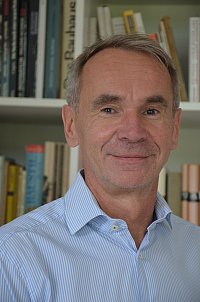
Lagoudis Ioannis is an Associate Professor at the Department of Maritime Studies, University of Piraeus, specializing in maritime management and business administration. His research focuses on Human resource practices in shipping Digitalization challenges Environmental regulation compliance Fuel price risk management Port competitiveness . Recent publications highlight trends in Maritime logistics and digital transformation (2022-2024) Supply chain analysis for shipyards (2016) Carbon emissions in transportation (2015) . His work combines theoretical frameworks with practical case studies.
Sandra Stein is a Lecturer at the Technische Universität Wien within the College of Mechanical Engineering and Operations Sciences , affiliated with the Department of Logistics and Quality Management . She also serves as an external Postdoctoral Researcher and holds leadership roles at the Center for Sustainable Production and Logistics (Fraunhofer Austria Research GmbH) since 2013. Academic Director, eMBA Mobility Transformation (2021-2025) Board Member, Logistics Research Austria (since 2020) Expert Evaluator, Horizon Europe and Horizon2020 Research Interests include Physical Internet , Collaborative Logistics Networks , Sustainable Transport Systems , and Inland Waterway Transport . Her work focuses on: Green and Resilient Freight Networks Modal Shift Optimization Dynamic Transport Capacity Planning Intermodal Integration Shared Logistics and Data Utilization Scientific Awards include summa cum laude and cum laude distinctions for her academic achievements. She has contributed to major transport conferences like TRA2018 and IPIC 2019, and her work spans practical projects with organizations like Horizon Europe and the Austrian Ministry for Transport, Innovation, and Technology.
Constantinos Chlomoudis is a Professor in the Department of Maritime Studies at the University of Piraeus. His research focuses on port management, environmental sustainability, and maritime policy. He has authored numerous articles addressing port concession frameworks, risk assessment methodologies, and the intersection of environmental policies with port operations. His work frequently examines Greek ports as case studies, though his research spans global maritime challenges. Chlomoudis is actively involved in academic leadership, teaching courses like 'Economic Analysis of Port Management Policies.' University: University of Piraeus School: School of Maritime and Industrial Studies Department: Department of Maritime Studies Research interests include regulatory frameworks for port concessions, environmental management systems, and the economic implications of port operations. He has contributed to discussions on short-sea shipping dynamics, innovation in container shipping, and the role of ports in global supply chains. His recent work emphasizes sustainability, safety, and governance in maritime contexts. Publications highlight empirical studies on Greek port infrastructure, risk assessment in container terminals, and comparative analyses of port policies across regions. Articles often blend theoretical models with real-world data, providing actionable insights for policymakers and industry stakeholders. Email: chlom@unipi.gr | Contact: +30 210 4142548
Dr. Jean-Paul Rodrigue is Professor at Texas A&M University at Galveston's Department of Maritime Business Administration. He holds a PhD in Transport Geography from the University of Montreal and is a leading expert in maritime transportation systems. His research focuses on: Global container shipping networks Port terminal infrastructure development Supply chain resilience Transport geography His work analyzes how global freight distribution systems evolve and respond to disruptions. Dr. Rodrigue's publications examine port regionalization, terminal automation, and the impact of digitalization on maritime logistics. He has received prestigious awards including the Edward L. Ullman Award for contributions to transport geography. He directs the Maritime Business Administration program and mentors graduate students researching maritime supply chains, port governance, and global trade patterns.
Dr. Shengda Zhu is an Honorary Associate at the Institute of Transport and Logistics Studies (ITLS), University of Sydney Business School. He earned his PhD in 2020 from ITLS, focusing on vertical integration between container shipping lines and terminal operators. His research spans maritime transport, city logistics, sustainable transport, and emerging technologies in transport, emphasizing economic methodologies. His research explores socio-economic impacts of shipping routes like the Northwest Passage, system dynamics in global trade lanes, and co-modality strategies for urban logistics. He has also studied the viability of ship recycling in coal ports and the application of emerging technologies in container terminals. Dr. Zhu’s work bridges theoretical economic frameworks with practical transport challenges, addressing issues such as port expansion implications, pandemic-driven supply chain disruptions, and infrastructure resilience in urban settings. His findings aim to inform policy decisions and enhance operational efficiency in maritime and urban logistics sectors.
Professor Ying Xie is a leading academic at Cranfield University's School of Management, holding the position of Professor of Supply Chain Analytics. Her work bridges engineering, data science, and business management across diverse sectors including maritime logistics, healthcare, and disaster response. Her educational background includes a BEng, MSc, and PhD in Management Science from Coventry University. Key research interests focus on supply chain digitalization and decarbonization , renewable energy supply chain configuration , and AI applications in operational resilience . Her work consistently integrates machine learning with real-world business challenges, particularly in port management and sustainability. Recent publications reveal strong trends in maritime decarbonization (25%), AI-driven supply chain optimization (30%), and healthcare systems resilience (20%). Her research increasingly addresses climate adaptation through circular economy models and clean energy transitions. Principal Fellow of the Higher Education Academy (HEA) Expert reviewer for UKRI MRC, British Academy, and EU Horizon Professor Xie has supervised numerous PhD completions and secured two dedicated scholarships for port management and digital twin research. Her £20m+ grant portfolio includes major projects with EPSRC (£7.6m Net Zero Aviation CDT), Innovate UK (£174k Sustainability Platform), and EU Horizon (£5m MEDiate disaster management). She actively collaborates with the Port of Dover, Ocado Technology, and NHS England. She leads the Co-Innovation Group in the UK National Clean Maritime Research Hub and directs academic activities for the EPSRC Centre for Doctoral Training in Net Zero Aviation, shaping national maritime strategy through the Department for Transport's 'UK Ports the Future' report.
Junkai HE serves as an Assistant Professor in the Operations, Supply Chain and Information Management department at KEDGE Business School and is affiliated with the CESIT research center since September 2024. He earned his PhD in mathematics and computer science from Paris-Saclay University (France) in 2020, following which he conducted postdoctoral research at IRT SystemX and Télécom SudParis. His research specializes in decision making under uncertainty through advanced modeling and algorithm design , with primary applications in supply chain management , remanufacturing , and maintenance optimization . Key methodologies include stochastic programming, multi-objective optimization, and predictive maintenance modeling for complex industrial systems. Analysis of his 2019-2024 publications reveals a consistent trajectory in applying operations research to sustainable industrial practices. His work increasingly focuses on uncertainty integration in disassembly line balancing and remanufacturing systems, while maintaining strong foundations in classical scheduling problems for manufacturing and logistics. Publications predominantly appear in top-tier journals like the International Journal of Production Economics and Computers & Operations Research. He teaches core operations management courses including operations research, production planning, and logistics, demonstrating active educational engagement. His research at CESIT likely involves industry collaborations addressing real-world supply chain challenges, though specific grant details are unmentioned. As a CESIT researcher, he contributes to KEDGE's industrial technology research initiatives, bridging theoretical optimization methods with practical applications in manufacturing and logistics systems. Current work appears oriented toward sustainable supply chain innovations and digital transformation of maintenance practices.
Yafeng Yin is Professor of Civil and Environmental Engineering and Professor of Industrial and Operations Engineering at the University of Michigan, College of Engineering, where he serves as Donald Malloure Department Chair of Civil and Environmental Engineering and holds the Donald Cleveland Collegiate Professorship in Engineering. His educational background includes: PhD in Civil Engineering from University of Tokyo (2002) ME in Civil Engineering from Tsinghua University (1996) BE in Environmental Engineering from Tsinghua University (1994) BE in Structural Engineering from Tsinghua University (1994) Dr. Yin's research centers on developing sustainable and economically efficient transportation systems through analysis, modeling, design, and optimization. He investigates how emerging technologies—including connected/automated vehicles, electric vehicles, drones, and mobile sensing—impact transportation demand and supply. His work extends to interdependencies between transportation, power, and communications networks in urban infrastructure systems. Key focus areas include mobility services, ride-sourcing markets, traffic management, and integration of artificial intelligence in transportation. His recent publications (2023-2025) demonstrate a pronounced shift toward leveraging large language models and agent-based frameworks for transportation analysis, with significant emphasis on on-demand mobility services (ride-sourcing, food delivery), traffic control with connected vehicles, and economic implications of emerging technologies. The research spans theoretical foundations in game theory and optimization to practical applications in urban settings. As director of the Lab for Innovative Mobility Systems, Dr. Yin leads interdisciplinary research developing solutions that enhance transportation efficiency, reliability, safety, and service diversity through technological integration. His work bridges theoretical modeling with real-world implementation challenges in evolving transportation ecosystems.
Chew Ek Peng is an Associate Professor and Deputy Head at the Institute of Operations Research and Analytics (IORA), part of the National University of Singapore’s Smart Nation Research Cluster. His research focuses on optimizing port logistics, maritime transportation systems, and inventory management through advanced simulation techniques and data-driven methodologies. His work spans critical areas such as automated port operations, simulation-optimization frameworks, and stochastic systems analysis. Notably, he develops solutions for challenges like AGV scheduling, container relocation problems, and intermodal terminal design. His research integrates machine learning (e.g., hybrid neural networks) with traditional operations research methods. Recent publications highlight contributions to electric vehicle sustainability in carsharing systems, multi-agent reinforcement learning for AGV recharging, and facility location under random utility models. His work emphasizes practical applications in smart logistics, disaster response optimization, and supply chain resilience. Chew Ek Peng collaborates on projects like digital twin validation frameworks and modular simulation pipelines for residential energy modeling. His research has been applied to real-world scenarios such as Singapore’s construction demand forecasting and pandemic impact analyses using modified SEIR models.
Hugh Durrant-Whyte is a Professor at the University of Sydney and Director of the Centre for Translational Data Science. He holds a BSc (Eng) from the University of London, an MSE, and a PhD from the University of Pennsylvania. Previously, he served as CEO of National ICT Australia (NICTA) and Director of the Australian Centre for Field Robotics (ACFR). His research focuses on robotics, autonomous systems, and data fusion, with over 350 publications and four successful startups. Education: BSc (Eng) in Engineering, University of London MSE in Robotics, University of Pennsylvania PhD in Robotics, University of Pennsylvania Affiliations: Director, Centre for Translational Data Science Former CEO, NICTA (2010-2014) Former Director, ACFR (1995-2010) His research interests span robotics, autonomous systems, and sensor networks. Notable contributions include foundational work on SLAM (Simultaneous Localization and Mapping) and decentralized data fusion. He has pioneered applications in mining automation, autonomous vehicles, and environmental modeling. His work emphasizes practical real-world systems, with projects like autonomous straddle carriers for container terminals and terrain mapping for mining operations. Awards & Honors: NSW Scientist of the Year (2010) Fellow of the Royal Society (FRS), Australian Academy of Science (FAA), and IEEE (FIEEE) Recipient of multiple IEEE Best Paper awards Grants & Labs: Leadership in securing multi-million-dollar grants for robotics and data science initiatives Centre for Translational Data Science: Focuses on translating data science into real-world impact He advises on numerous government and industry projects, bridging academic research with industrial applications. His research teams have developed influential algorithms for autonomous navigation and multi-agent systems.
Dr. Murat Aymelek is a Lecturer at the School of Business and Law, University of Brighton, specializing in maritime logistics, operations management, and supply chain management. With an interdisciplinary background spanning marine engineering and supply chain disciplines, he has worked internationally in Turkey, Ireland, and the UK. His current research focuses on maritime AI (autonomous shipping) and port decarbonization, employing both qualitative and quantitative methods to address industrial challenges. His educational background includes a PhD in Naval Architecture, Ocean and Marine Engineering from the University of Strathclyde (2016), an MSc in Marine Transport with Management from Newcastle University (2012), and dual Master's and Bachelor's degrees in Maritime Transport and Management Engineering from Istanbul University (2011 and 2009). Murat's research interests center on maritime and port management, freight transport, supply chain management, and decision-making. He is actively engaged in intermodal transport, autonomous ships, shipping digitalization, energy efficiency, and port sustainability. His work combines rigorous methodologies to tackle contemporary issues in the shipping and port sectors, with a strong emphasis on sustainability and technological innovation. Analysis of his recent publications reveals a strong trend towards sustainable maritime practices, particularly in port decarbonization and autonomous shipping. His work frequently employs multi-criteria decision-making models and data-driven approaches to address complex operational challenges in ports and shipping, reflecting the industry's urgent need for greener and smarter solutions. His scientific recognition includes: Fellow of Advance HE (The Higher Education Academy, UK) Murat is actively involved in research projects, including the Iberian Lighting KTP project (2024-2026) as Co-Investigator, focusing on strategic marketing and branding capabilities. He also serves as an External Examiner for Supply Chain Management at the University of Bedfordshire and is an Associate Member of the Socioeconomic Marine Research Unit at the University of Galway. He supervises postgraduate research in maritime transport, logistics, and supply chain management, and contributes to the UK Government's Help to Grow programme. He is a member of the Digital Innovation and Transformation Research Excellence Group and the Advanced Engineering Centre at the University of Brighton, fostering interdisciplinary collaboration on digital and sustainable solutions for the maritime sector.
Robert Dell is the Chair Professor in the Department of Industrial and Systems Engineering at the University at Buffalo, School of Engineering and Applied Sciences. He also serves as Managing Director of the Collaborative Institute for Multisource Information Fusion. His research spans optimization, production scheduling, supply chain design, and professional sports analytics. Recent publications highlight his work in military logistics (aircraft maintenance planning, amphibious group routing), integer programming (web session reconstruction, pallet loading), and defense infrastructure optimization. His methodologies integrate machine learning, combinatorial optimization, and geospatial modeling. Scientific achievements include the IFORS Prize Finalist (2012) .
Christian Bierwirth is a Professor of Business Administration, specializing in Production and Logistics, at the Faculty of Law, Economics and Business, Martin Luther University Halle-Wittenberg. He holds the Chair of Production and Logistics and has been in this role since 2003. His academic journey includes a PhD (1992) and Habilitation (1999) in Logistics from the University of Bremen, and prior teaching roles at TU Dresden, University Rennes I, and as Acting Professor in Halle-Wittenberg (2002-2003). Education: Mathematics and Philosophy (1981-1988) at Heidelberg University Key Research Areas: Scheduling Algorithms, Port Logistics, Vehicle Routing, Optimization, Production Management Current Contact: christian.bierwirth@wiwi.uni-halle.de | Office: Room 312, Große Steinstraße 73, Halle (Saale) His research focuses on operational optimization in logistics systems, including container terminal operations , green transportation , and job shop scheduling . Recent work addresses environmental sustainability through emission-minimizing routing and eco-labeling of freight services. He pioneered GRASP and genetic algorithm applications in dynamic manufacturing environments. Publications span maritime logistics (berth allocation, crane scheduling), intermodal transport networks, and supply chain design under constraints. Notable contributions include integrated planning frameworks for production-distribution networks and synchronization models for logistics vehicles. Since joining Halle-Wittenberg, he has led teaching and research initiatives in logistics, contributing to national and international academic discourse through publications and conference participation.
Jing Zhao is a Professor at Beijing Institute of Technology's School of Automation, Department of Computer Science, with an extensive publication record spanning artificial intelligence, computer vision, medical imaging, and robotics. Their interdisciplinary research bridges theoretical computer science with practical applications in healthcare, agriculture, and engineering. Research interests focus on cutting-edge AI methodologies including deep learning architectures, neural rendering techniques, and multimodal systems. Notable work includes advancements in 3D reconstruction (Gaussian Splatting), medical image analysis for cancer diagnosis, and novel approaches to EEG-based emotion recognition. The research demonstrates strong interdisciplinary connections between computer science and domain-specific applications. Recent publications reveal a consistent trend toward practical AI implementations across diverse fields. Jing Zhao's work shows expertise in adapting theoretical machine learning concepts to solve real-world problems in medical diagnostics, agricultural monitoring, and robotics. The research portfolio demonstrates particular strength in developing novel neural network architectures for specialized applications. As a corresponding author on numerous high-impact publications, Jing Zhao appears to lead a productive research group with collaborations spanning multiple institutions and disciplines. The publication record indicates significant contributions to both theoretical computer science and applied AI solutions across various domains.
Prof. Dr. Stefan Voß is a Professor at the Institute of Information Systems within the Hamburg Business School (HBS) at the University of Hamburg. He serves on the HBS Dean's Office and focuses on logistics optimization, metaheuristics, and sustainable port operations. His work integrates AI, machine learning, and operations research to address challenges in transportation, supply chain management, and public infrastructure. Research Interests: Dr. Voß specializes in: Metaheuristic algorithms (e.g., fixed set search, GRASP, VNS) Optimization of port and maritime logistics (berth allocation, quay crane scheduling) AI applications in transportation (predictive analytics, emotion recognition) Sustainable operations (green port infrastructure, EV charging networks) Public transport efficiency (bus scheduling, delay prediction) Publications: Recent work emphasizes AI-driven logistics, robust optimization under uncertainty, and digital twin applications in ports. His 2025 studies explore domain-generalized emotion recognition and dynamic seaport automation. 2024 articles highlight multi-objective scheduling, EV fleet optimization, and sustainable container storage. Labs/Teams: Leads research at the Institute of Information Systems, collaborating on port sustainability projects (e.g., Port of Hamburg) and digital innovation in logistics systems.