Alfred L. Martin Jr. is an Associate Professor and Department Chair of Cinematic Arts at the University of Miami. His work bridges media industry studies with audience/fandom studies, focusing on intersections of race, gender, and sexuality in film and television. He holds editorial board positions at Communication, Culture, and Critique , QED: A Journal of Queer Worldmaking , and others. His research explores Black fandom practices, queer representation in comedy, and the cultural politics of Black media production. Key publications include The Generic Closet: Black Gayness and the Black-Cast Sitcom (2021), On the Black Hand Side: Black Fandom and Cultural Politics (2025), and edited volumes like (2024). Current projects include a co-authored monograph on Tongues Untied and a cultural history of The Wiz . As a former ballet dancer, Martin teaches ballet and choreographs nationally. He serves on the Board of Console-ing Passions, a feminist media studies collective. His work has been featured in New York Times , USA Today , and NPR’s Marketplace .
John Ousterhout is the Leonard Bosack and Sandy K. Lerner Professor of Engineering and Professor of Computer Science at Stanford University. He also holds a courtesy position in Electrical Engineering. His research focuses on infrastructure for software systems, including distributed systems, operating systems, storage systems, development frameworks, and programming languages. He is renowned for creating the Tcl scripting language and pioneering work in distributed operating systems and file systems. Education: Ousterhout earned a BS in Physics from Yale University (1975) and a PhD in Computer Science from Carnegie Mellon University (1980). He spent 14 years at UC Berkeley before moving to industry, founding Scriptics and Electric Cloud. He returned to academia at Stanford in 2010. Research Interests: Current projects emphasize granular computing—optimizing datacenter task execution at microsecond scales. This includes innovations in thread management, network communication, and logging systems. His past work includes RAMCloud (a low-latency storage system) and foundational contributions to distributed systems and file systems like Sawmill and Zebra. Scientific Awards: He is a member of the National Academy of Engineering and has received prestigious honors such as the ACM Software System Award, ACM Grace Murray Hopper Award, NSF Presidential Young Investigator Award, and U.C. Berkeley’s Distinguished Teaching Award. Industry Impact: As a serial entrepreneur, he co-founded Scriptics (Tcl/Tk) and Electric Cloud. His work on Tcl revolutionized scripting in software development and web frameworks. He has also contributed to AJAX-driven web components and program build architectures.
Aiman S Soliman serves as a Research Assistant Professor in Urban and Regional Planning and Senior Research Scientist at the National Center for Supercomputing Applications (NCSA) at the University of Illinois Urbana-Champaign, with additional affiliation at the Center for Digital Agriculture. His interdisciplinary work integrates geospatial data science, machine learning, and high-performance computing to address complex challenges in environmental monitoring, public health, and urban systems. His research spans Geospatial Data Science and GeoAI with specific applications in Pan-Arctic permafrost monitoring using satellite imagery, machine learning-driven poverty assessment among displaced populations, and epidemiological modeling of neighborhood violence impacts on lung cancer progression. Key methodologies include feature detection algorithms, human mobility analysis, and habitat suitability modeling for vector-borne diseases, demonstrating strong technical expertise in handling large-scale geospatial datasets. Recent publications reveal a consistent trend in applying machine learning to interdisciplinary problems: from permafrost feature detection in extreme environments to modeling Zika virus epidemics through human mobility patterns and neighborhood violence effects on tumor biology. This work bridges computer science with environmental science and public health, emphasizing actionable solutions for sustainability and health equity. Dr. Soliman actively collaborates through NCSA and the Center for Digital Agriculture, leveraging supercomputing infrastructure for large-scale geospatial analysis. His dataset on US building coverage distribution supports urban sustainability research, while media coverage of his neighborhood violence and lung cancer study demonstrates real-world impact through 8 news outlets and social media engagement.
Katherine Walsh serves as a Professor in the Social Work Department at Westfield State University, where she joined the MSW program faculty after 18 years as a Professor at Springfield College School of Social Work. She maintains active clinical practice in Northampton since 1990, specializing in individual, family, couple, and group therapy within healthcare contexts including Dana Farber Cancer Institute. Her research focuses on psychosocial oncology and hospice/palliative care, with significant contributions to grief/loss theory, cancer survivorship, and therapeutic adventure interventions. Recent publications analyze oncology social work competencies, adolescent survivorship needs, and experiential education models, demonstrating consistent specialization in clinical applications for vulnerable populations across the cancer continuum. Walsh has led substantial research initiatives including NCI-funded surveys on evidence-based practice (2007), evaluations of therapeutic adventure programs for foster care teens (2007), and American Cancer Society projects serving diverse families (2009). Her advisory roles include President of the Association of Oncology Social Work, testimony for the President's Cancer Panel, and board positions with Hospice of Hampshire County, American Cancer Society, and Cancer Connection. Teaching methodology integrates clinical practice through experiential learning activities like ropes courses, community service projects including DCF spring adventure camps, and program evaluations. She co-produced the award-winning educational video "CANCER: A FAMILY JOURNAL" (1981) and developed multimedia resources including the "Cancer Survival Toolbox" for the Lance Armstrong Foundation.
Joanna Renshaw is a Reader (equivalent to Associate Professor) in Civil and Environmental Engineering at the University of Strathclyde's Faculty of Engineering, where she has been employed since April 2014. A microbiologist and radiochemist by training, she works at the interface of microbiology, analytical chemistry, and radiochemistry with primary expertise in microbial interactions with radionuclides and metals. Her research focuses on understanding how microorganisms affect radionuclide chemistry and transport in the environment, with applications in nuclear waste treatment and environmental remediation. Key research areas include microbial transformations of metals, interactions of silver nanoparticles with bacterial biofilms, petroleum contaminant remediation, and development of novel methods for limiting radionuclide migration. Her work contributes significantly to UN Sustainable Development Goals related to environmental protection and clean energy. Renshaw's publication record shows consistent research output in high-impact journals, with recent work emphasizing cementitious waste forms for nuclear applications, hydroxyapatite barrier technologies, and fungal-based uranium remediation. Her research demonstrates strong interdisciplinary connections between environmental engineering, microbiology, and nuclear chemistry. Scientific Awards: BBC Radio Scotland Brainwaves Programme 'Beyond the Bomb' (2019) Renshaw actively secures major research funding through projects like PANAMA (Plasma Accelerators for Nuclear Applications), VisNET (Virtual in situ networking), and STEM Equals. She collaborates extensively with the Low Level Waste Repository Ltd (LLWR) on cement substitutes for radioactive waste encapsulation and participates in EPSRC Inclusion Matters initiatives. Her work bridges fundamental science with practical nuclear waste management solutions. Her laboratory research focuses on developing sustainable materials for nuclear waste encapsulation and microbial-based remediation strategies, contributing to safer nuclear decommissioning practices and environmental protection.
Benigno Antonio Rodríguez Gómez is a Professor in the Department of Industrial Engineering at the University of A Coruña, with a focus on Systems and Automation Engineering. He teaches across multiple programs including Naval Engineering, Marine Technologies, and Occupational Risk Prevention, with extensive experience in maritime-related disciplines. College: Escola Técnica Superior de Náutica e Máquinas Research: Cyber Science and Technology group Teaching: Automation, Control Systems, Ergonomics, Energy Efficiency His research bridges automation systems with ergonomic risk prevention , particularly in maritime environments. Recent work explores remote monitoring in refrigerated containers, photovoltaic water pumping systems, and ergonomic risk assessment in non-office work settings. Articles demonstrate expertise in control algorithms , maritime technology , and sustainable engineering applications. Publications span journals like Applied Sciences , Journal of Radiological Protection , and Solar Energy , with interdisciplinary collaboration in maritime, electrical, and ergonomic fields. He supervises final degree projects and master's theses, with notable contributions to maritime ergonomics and energy systems. Grants include national and regional funding from Spain's Ministry of Science, National Institute of Cybersecurity, and Xunta de Galicia. Labs and teams include the Cyber Science and Technology Research Group, collaborating with institutions like Universidade da Coruña and Universidad de Vigo. His work impacts occupational risk prevention, maritime engineering, and renewable energy integration.
Amanda Starc is an Associate Professor of Strategy at Kellogg School of Management , Northwestern University , and a Faculty Research Fellow at the National Bureau of Economic Research (NBER) . Her research sits at the intersection of industrial organization and health economics , focusing on health insurance pricing, consumer demand dynamics, and market mechanisms in healthcare. Education: BA in Economics (Case Western Reserve University), PhD in Business Economics (Harvard University) Dr. Starc's research explores: Health insurance coverage and pricing models Information asymmetry in insurance markets Effectiveness of competitive bidding in Medicare Impact of provider network restrictions on costs Regulatory effects on generic drug competition Her recent publications analyze anesthesia rollups, Medicare Part B reimbursement, and multidimensional screening in insurance menus. She has received grants for research on Medicare Advantage and provider network mortality effects. Scientific award: Faculty Research Fellow, NBER
Dr. Elnaz Irannezhad (also known as "Elli") is a Senior Lecturer at the School of Civil and Environmental Engineering, University of New South Wales (UNSW Sydney). She leads research at the Research Centre for Integrated Transport Innovation and bridges transport engineering with blockchain technology, automated vehicles, and decarbonisation. PhD in Civil Engineering from the University of Queensland (2014-2017) Postdoctoral Research Fellow at UQ Business School (2017-2020) Principal Engineer at Australian Road Research Board (2020-2022) Her research spans cross-disciplinary domains including: Behavioral and agent-based freight transport modelling Logistics 4.0 and blockchain applications Automated heavy vehicles and hydrogen fuel cell technology Smart supply chains and IoT integration Circular economy in logistics Decision support systems for transport networks Recent publications focus on blockchain platforms like LogisitcChain for supply chain optimization, machine learning for GPS-based truck behavior analysis, and behavioral econometric studies of maritime transport demand. She also contributes to human rights discourse as Associate of UNSW's Australian Human Rights Institute and Equity, Diversity, and Inclusion (EDI) Officer for the School of Civil Engineering. Teaching activities include: CVEN9421: Transport Logistics Engineering ENGG1400: Infrastructure Systems Engineering CVEN3402: Transport Engineering and Environmental Sustainability She co-leads the JINA Program for refugee background female students and co-chairs the virtual Bridging Transport Researchers (BTR) conference to reduce academic travel emissions.
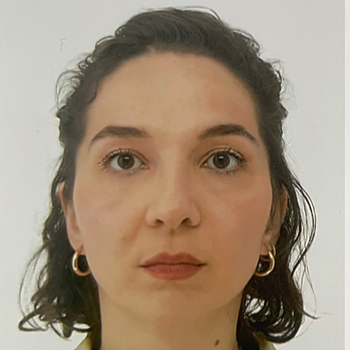
Deniz Ünal is a Lecturer in BA Fine Art at Goldsmiths, University of London, where she teaches in the Department of Art. Previously, she has held teaching positions at Slade School of Fine Art (UCL), HFBK University of Fine Arts in Hamburg, and AKV St Joost University in the Netherlands. Her academic background combines fine art practice with literary studies, reflecting her interdisciplinary approach to creative work. MFA Fine Art, Piet Zwart Institute, Rotterdam (2012) BA Fine Art, London Metropolitan University (2005-2008) BA English Literature and Media Studies, Sussex University (2001-2004) Ünal's research explores the intersections of performance, pedagogy, and therapeutic practices through queer, decolonial, and feminist lenses. Her work critically examines questions of intimacy, desire, and control within contemporary social structures. Working across performance, moving image, installation, soft sculpture, and textiles, she creates immersive experiences that challenge conventional boundaries between audience and performer, public and private, and the physical and digital. Her practice often incorporates participatory elements that invite viewers to engage with complex emotional and political landscapes through embodied experience. Analysis of Ünal's recent projects reveals consistent engagement with themes of relationality, materiality, and spatial politics. Her work frequently employs everyday objects transformed into sites of political and emotional significance, creating what might be described as 'soft resistance' through textile and sculptural interventions. The trajectory of her practice shows increasing sophistication in blending digital and physical realms, particularly evident in her online performance works during the pandemic period. Her projects often function as research laboratories for exploring alternative social formations and intimate connections within constrained contemporary conditions. While specific scientific awards are not documented in the available materials, Ünal's work has been consistently presented at significant contemporary art venues across Europe, including Camden Art Centre, Overgaden Institute of Contemporary Art, and Kunstraum London. Her practice has developed through numerous residencies at institutions such as Kingsley Hall, Bijlmarair, and Kunsthuis SYB, which have provided crucial spaces for experimentation and development. As an educator, Ünal brings her practice-based research directly into the classroom, creating learning environments that mirror the experimental and participatory nature of her artistic work. Her teaching spans multiple prestigious institutions in London and Europe, reflecting her standing within contemporary art education. She has also contributed to publications including Almanac Quarterly, Petunia Magazine, and TOHAVEANDTOHOLD, further extending her influence beyond the studio and classroom into critical discourse. Ünal maintains active studio practice through ongoing projects like 'It Was Over Long Before Last Night' (2021-2025), which continues her investigation into performance and film research. Her work often emerges from collaborative networks and collectives, reflecting her commitment to community-based artistic production. The Edible Amulet Ingestion Ceremony exemplifies her interest in creating ritualistic social spaces that blend food, performance, and intimate exchange.
Ricardo Ungo is a Clinical Assistant Professor in the Department of Information Technology & Decision Sciences at Old Dominion University's Strome College of Business. His expertise spans maritime economics, cybersecurity, supply chain management, and public-private partnerships. Ph.D. in Economics (2003) and M.A. in Economics (2002) from Vanderbilt University Active in maritime cybersecurity research with recent 2024 publications on AI-driven risk management Recipient of the 2012 Best Paper Award and 2011 Martín Sgut Award from the International Association of Maritime Economists Lead multiple funded projects including the $300,000 Hampton Roads Regional Apprenticeship Hub (2024-2028) His research focuses on maritime logistics clusters, canal economics, and digital supply chain ecosystems. Recent grants include projects on maritime cybersecurity ($5,000, 2024) and supply chain visibility ($5,000, 2024). Publications demonstrate sustained engagement with Panama Canal dynamics and evolving applications of AI/ML in maritime operations. Contact: rungo@odu.edu
GRIGORE (ICHIM) RAMONA, Ph.D. is a Lecturer at the Department of Trade, Economic Integration and Business Administration within the School of Domestic and International Business, Banking and Finance at the Romanian American University (RAU), concurrently serving as Vice Dean of the School. Her academic career demonstrates sustained engagement in EU-Romania economic integration and policy analysis. Education Bachelor's degree from the School of Domestic and International Business, Banking and Finance at Romanian American University (2006) Master's degree in International Transactions at Bucharest University of Economic Studies (2008) Ph.D. in Economics and International Business (2012) Research Interests Her core scholarly focus spans European integration , competition policies , business ethics , and leadership . She critically examines EU regulatory adoption in Romania, particularly competition law adaptation post-accession and ethical leadership frameworks in corporate environments. Her work bridges theoretical economic models with practical policy implementation challenges. Publication Trends Between 2010-2016, her research consistently analyzed Romania's economic alignment with EU frameworks using specialized quantitative methods. The publications reveal three thematic clusters: sustainable growth strategies affecting labor markets (2016), multiannual financial framework impacts (2014), and competition policy effectiveness during crises (2010-2013). All works demonstrate methodological rigor in policy evaluation within transitional economies. Scientific Awards No scientific awards were listed in the source materials Advising and Grants The provided text contains no information about graduate student supervision or research grant acquisitions. Her administrative role as Vice Dean suggests leadership responsibilities within the School structure, but teaching-focused duties are not detailed. Research Groups No dedicated laboratories, research teams, or collaborative groups beyond her departmental affiliation were specified in the materials.
Katherine St. John is a Professor in the Department of Computer Science at Hunter College of the City University of New York (CUNY). She holds joint appointments with the doctoral faculty in Anthropology and Computer Science at CUNY's Graduate Center and serves as a Research Associate at the American Museum of Natural History in the divisions of Invertebrate Zoology and NYCEP. Her research focuses on the intersection of biology, computing, and mathematics, specializing in: Phylogenetic tree reconstruction and visualization Rotation distance of ordered trees Random structures and algorithms Computational biology and discrete mathematics Her publications demonstrate consistent focus on phylogenetic methods, tree comparison algorithms, and computational biology. Recent work emphasizes tree space geometry, dissimilarity metrics, and optimization techniques for evolutionary analysis. She has secured substantial research funding including multiple NSF grants (00-96080/99-73874, ITR 01-21651, MRI 02-15942, UBM 03-37561, SEI 05-13660, 09-20920, 11-16921, REU 14-61094, 18-13575) and a Simons Collaboration Grant (2014-2022). Dr. St. John actively mentors undergraduate and graduate researchers through programs like the Treespace Research Experience for Undergraduates. She supervises student teams investigating phylogenetic networks, tree comparison, and algorithm design.
Jeffrey G Gardner is a Professor in the Department of Biological Sciences at the University of Maryland, Baltimore County (UMBC), where he conducts research and teaches within the College of Natural and Mathematical Sciences. His office is located in Room 480 of the Biological Sciences Building. His research interests lie in the areas of molecular biology and genetics, with a focus on genome stability, DNA repair mechanisms, and cellular responses to DNA damage. These fields are central to understanding fundamental biological processes and have implications for cancer biology and genetic disorders. The trends in his research, though not detailed in recent publications in the provided text, align with modern molecular life sciences, emphasizing biochemical pathways and genetic regulation networks involved in maintaining genomic integrity. Molecular Biology Genetics Cell Biology DNA Repair Genome Stability Biochemistry Dr. Gardner has not listed any scientific awards in the provided information. There is no public mention of funded grants or advising roles in the current data, though his lab website (gardlab.umbc.edu) may contain further details. He is associated with the Gardner Lab at UMBC, which likely involves undergraduate and graduate researchers focused on experimental approaches in molecular biology and genetics. The lab appears to be active in promoting research training and scientific inquiry within the department.
Octavian Adrian Postolache is a Full Professor at ISCTE - Instituto Universitário de Lisboa, Department of Information Science and Technology (ISTA). He is also an Integrated Researcher and Coordinator of the Instrumentation and Measurements Group at the Institute of Telecommunications – IUL (IT). His research spans smart sensors, IoT, biomedical applications, and embedded AI, with strong focus on healthcare and environmental monitoring. Aggregation, Electrical and Computer Engineering, Instituto Superior Técnico (2015–2016) PhD, Electrical Engineering and Computers – Metrology and Instrumentation, Iasi Technical University, Romania (1993–1999) Integrated Master’s, Electrical Engineering and Computers, Technical University of Iasi, Romania (1987–1992) His research interests include smart sensors for IoT, wireless sensor networks, applied computational intelligence, virtual and augmented reality for physiotherapy, ambient assisted living, and precision agriculture. He leads cutting-edge work in intelligent sensing systems, particularly in healthcare and industrial automation. His publications reveal a strong trend in AI-enhanced sensor systems, smart ports, and stress/disease monitoring using physiological data. He has been recognized as one of the top 2% most-cited scientists globally by Stanford University and Elsevier. He was listed among IEEE Transactions on Instrumentation and Measurement’s best reviewers. He is a Senior Member of IEEE and has held leadership roles in IEEE IMS TC-13 and as IEEE IMS Portugal Chair. Postolache has supervised over 20 PhD and nearly 50 MSc students, reflecting his significant role in academic mentorship. His research is supported by extensive collaborations and active projects in digital twins, smart farming, maritime automation, and healthcare IoT. He leads the Instrumentation and Measurements Group at IT-Lisbon, a key team in sensor and measurement innovation.
Robert Abramovitch is an Associate Professor in the Department of Microbiology, Genetics, & Immunology and the BioMolecular Science Gateway at Michigan State University. His research focuses on understanding how Mycobacterium tuberculosis adapts to intracellular environments, particularly within macrophages, to develop novel drug therapies. Education: B.Sc. (2000, University of British Columbia), Ph.D. (2006, Cornell University), Postdoctoral studies (2007–2011, Cornell University). Research Interests: My lab investigates the mechanisms of M. tuberculosis adaptation to acidic pH, carbon nutrient sources, and other host-derived cues. We utilize genetic, genomic, and biochemical approaches to identify targets for drug discovery. Key projects include characterizing the PhoPR-aprABC pathway and developing high-throughput screening platforms for inhibitors of bacterial survival mechanisms. Recent Research Trends: Our work highlights pH-driven adaptation as a critical survival strategy, with recent findings linking PhoPR signaling to virulence attenuation. We also explore the role of central carbon metabolism in bacterial persistence and the translational potential of synthetic reporter systems for drug screening. Grants & Awards: Not explicitly listed, but research is funded by NIH grants focused on tuberculosis pathogenesis and drug development. Lab & Collaborations: The Abramovitch Lab collaborates with institutions on drug discovery initiatives, including the development of whole-cell assays targeting validated pathways. Future work aims to expand studies on hypoxia and host immune interactions.