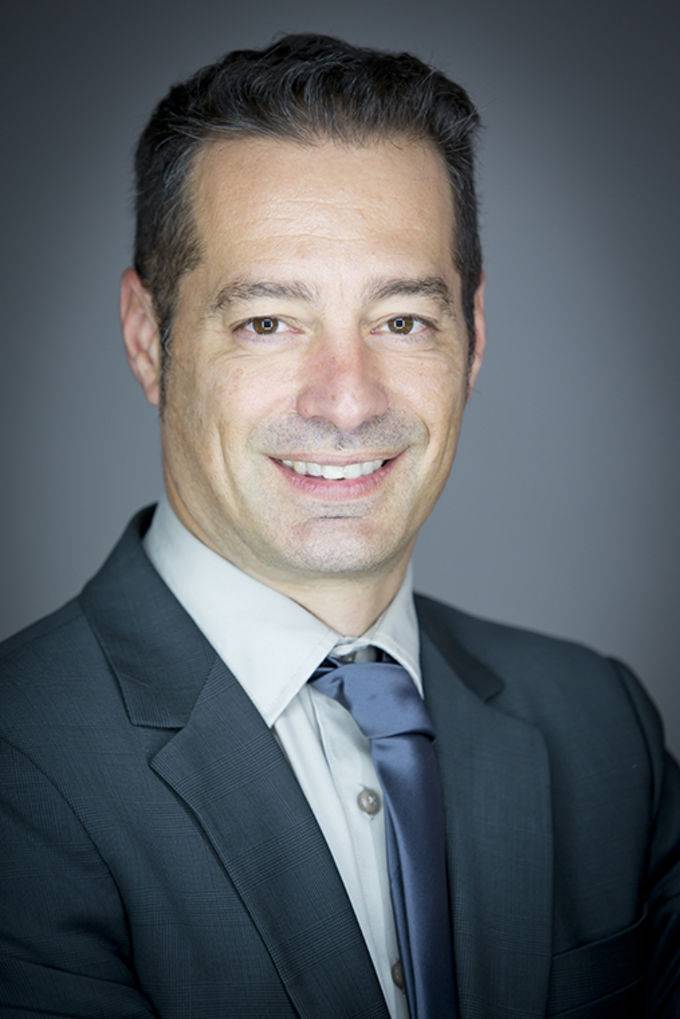
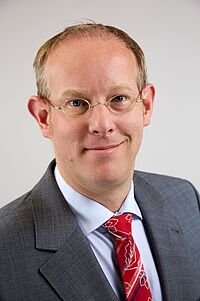
Eduardo Anibal Lalla is an Associate Professor at the Digital Society Institute and Industrial Engineering & Business Information Systems. His research focuses on applying artificial intelligence and optimization techniques to logistics and transportation challenges, particularly in maritime and urban logistics. He has published extensively on topics such as vehicle routing, metaheuristics, and mathematical programming, contributing to advancements in intelligent transport systems and container logistics. Research Trends : Over the past decade, his work has emphasized optimization algorithms for multi-depot vehicle routing collaborative berth allocation models matheuristics for dynamic scheduling AI-driven decoupling strategies in inter-terminal transport robot stations integration in logistics networks Scientific Awards : Best algorithm in Generalized Continuous Optimization Contest (2016) EURO Excellence in Practice Finalist/Runner-up (2021) Extraordinary doctoral distinction (2017)
José Remesal Rodríguez (born June 27, 1948, in Lora del Río, Sevilla) is Professor of Ancient History at the University of Barcelona since 1988, affiliated with the Department of Prehistory, Ancient History and Archaeology. His academic career began with research grants at the Instituto Rodrigo Caro in Madrid (1973-75) and the Spanish School of History and Archaeology in Rome (1976). Professor Remesal Rodríguez has established himself as a leading authority on Roman economic history, with particular expertise in amphora studies, Roman trade networks, and the distribution of food products throughout the Empire. His research has centered on the analysis of Dressel 20 amphorae containing Baetican olive oil, which has revolutionized understanding of interprovincial trade patterns. His scholarly output demonstrates remarkable consistency and depth, with significant publications spanning from the 1980s to the present. Recent works like Heinrich Dressel y el Testaccio (2022) and Arqueología y Téchne (2022) showcase his continued research productivity and evolving methodological approaches. His publications reveal a progression from detailed cataloging of archaeological materials to increasingly sophisticated theoretical frameworks for understanding Roman economic integration. Roman Trade Networks and Economic Integration Amphora Studies (particularly Dressel 20) Roman Military Supply Systems Economic Relations between Roman Provinces Historiography of Roman Archaeology Ancient Food Economies Professor Remesal Rodríguez has made significant contributions to collaborative research projects, most notably the EPNet project (ERC Advanced Grant), where he applied formal methods to investigate Roman economic networks. His work on the 'Timbres Amphoriques' project has produced comprehensive catalogs of amphora stamps that serve as essential references for researchers worldwide. His research has demonstrated how the Roman Empire developed sophisticated administrative systems that enabled long-distance trade across vast territories, fundamentally reshaping understanding of ancient economic integration. His work with CEIPAC has produced detailed analyses of amphora distributions, particularly the extensive study of materials from Colonia Ulpia Traiana (Xanten), revealing patterns of Mediterranean-Germania trade relations. Professor Remesal Rodríguez's scholarship bridges traditional archaeological analysis with innovative quantitative approaches, making significant contributions to ongoing debates about the nature of the Roman economy.
Professor Jürgen Wilhelm Böse is a Professor of Logistics at the Faculty of Commerce and Social Work, Ostfalia University of Applied Sciences, Suderburg Campus. He has held this position since 2018 and is responsible for teaching and research in logistics, particularly focusing on port terminal planning and operations. His office is located in Building C, Room 106.2, Suderburg. Professor Böse's academic journey began with studies in Industrial Engineering at the Technical University of Braunschweig (1991-1997), followed by research assistant work at the same institution (1997-2002). He then gained industry experience as Branch Manager at LOGIS.NET (2003-2005) and Senior Consultant at HPC Hamburg Port Consulting (2005-2010), before returning to academia as Senior Engineer at the Institute for Maritime Logistics, Hamburg University of Technology (2010-2018). His research focuses on planning complex logistics systems, particularly seaport container terminals. His work encompasses developing initial system solutions based on business experience and spreadsheet calculations, using discrete event-oriented simulation for validation and optimization, and coupling simulation tools with Artificial Intelligence for automated system optimization. This approach typically yields qualitatively better results at significantly lower costs compared to manual expert use of these tools. His research interests include: Planning of complex logistics systems, especially seaport container terminals Discrete event-oriented simulation for logistics optimization Integration of production and logistics systems in value creation networks Artificial Intelligence applications in logistics and port operations Truck arrival forecasting and resource planning at logistics nodes Sustainable port operations and green terminal planning Professor Böse has made significant contributions to the field through his publications, most notably as editor of the 'Handbook of Terminal Planning' (Springer, 2nd edition 2020). His work spans numerous journal articles, conference papers, and research project reports focused on port logistics, terminal planning, and simulation applications. He has received research funding for projects including: Lkw-Wartezeitprognose für logistische Knoten (Truck Wait Time Forecasting for Logistics Nodes) IMOTRIS (Intermodal Transport Routing Information System) ISETEC II (Location Systems in Port Handling) NETRALOG (Bio-analog algorithms for horizontal transport control) As an educator, Professor Böse teaches regular courses in Project Management, Supply Chain Management, Transport Management, and Warehousing. He also offers specialized courses on logistics simulation and quantitative methods. In addition to his teaching duties, he serves in several administrative roles including as Research Commissioner and Internationalization Commissioner for Faculty H.
Laurent FEDI is an Associate Professor at KEDGE Business School, where he has been a faculty member since 2007. He holds a doctorate in Maritime Law and a Habilitation (HDR) in legal sciences from Aix-Marseille University. Previously, he worked in the maritime industry as a ship brokerage professional. His research spans: Maritime law, safety, and environmental protection Risk management in Arctic shipping routes Port governance reforms and liner industry competition Supply chain innovation and international trade regulations He currently leads projects on air pollution from ships, the IMO Polar Code, and container shipping alliances. No awards or student advisees are mentioned in the source material.
Julien Lépine is an Associate Professor in the Department of Operations and Decision Systems at Université Laval's Faculty of Business Administration. His research integrates mechanical engineering and sustainability, focusing on: Road transport dynamics and vehicle efficiency Advanced packaging solutions for logistics and food security Hydrogen energy systems and decarbonization technologies Experimental methods for friction and material testing He holds a Ph.D. in Mechanical Engineering from Victoria University, complemented by Master's and Bachelor's degrees from the University of Sherbrooke. Recent publications demonstrate strong emphasis on sustainable transport, including hydrogen fuel production, pavement-vehicle interactions, and policy analysis for electric vehicle adoption. He actively supervises graduate students and contributes to governmental research projects, such as those for Quebec's Ministry of Transport.
Professor Roberto Palacin is a faculty member at Newcastle University specializing in transport engineering. His research spans rail systems, sustainable transport, maritime logistics, and data-driven infrastructure optimization, with consistent publication output from 2022 to 2025. His primary research interests focus on decarbonizing transport networks through innovative engineering solutions. Key areas include rail performance analysis using tools like Time Signal at Red (TSAR), electric vehicle charging infrastructure optimization, maritime emissions reduction, and air quality policy interventions. He employs interdisciplinary approaches combining simulation modeling, machine learning, and multi-objective optimization to address complex transport challenges. Analysis of his 14 publications (2022-2025) reveals a strong emphasis on practical applications for sustainable mobility. Recurring themes include the integration of data analytics in rail operations, development of resilient maritime logistics frameworks, and cross-sectoral collaboration for safety and emissions reduction. His work consistently targets real-world implementation of decarbonization strategies across transport modes.
Prof. Dr. Eng. Stoyo Todorov is a distinguished Professor and Head of the Department of Railways at the Faculty of Transport Engineering, University of Architecture, Civil Engineering and Geodesy (UACEG) in Sofia, Bulgaria. With over three decades of academic and professional experience, he has served in various leadership roles including Dean of the Faculty of Transport Engineering (2008-2016) and Vice-Rector for European Integration and International Cooperation (2016-2023). His expertise spans railway infrastructure design, construction, and operation, with significant contributions to Bulgaria's railway development projects. Current Position: Professor and Head of Department of Railways Previous Leadership Roles: Dean of Faculty of Transport Engineering, Vice-Rector for European Integration Professional Recognition: Gold badge 'Prof. Asen Zlatarov', multiple 'Teacher of the Year' awards Prof. Todorov completed his Master's degree in Civil Engineer in Transport Construction – Railway Construction at the Higher Institute of Architecture and Civil Engineering (VIAS) from 1982-1987. He earned his Doctor of Science in 1999 from UACEG with a dissertation on 'Research of the Longitudinal Profile of Railway Lines at High Speeds' in specialty 02.15.11 'Design, Construction and Maintenance of Railways and Facilities'. His research focuses on railway infrastructure design and construction , with particular emphasis on railway lines, tram systems, metro construction, railway superstructure, stations, and operations. Prof. Todorov has pioneered research in high-speed railway profiles, railway safety, intermodal transport systems, and vibration analysis from urban rail transport. His work bridges theoretical engineering principles with practical applications in Bulgaria's railway infrastructure development. The recent publications reveal a strong focus on intermodal transport optimization , vibration analysis from urban rail systems , and advanced railway safety measures . His most recent work applies mathematical modeling to optimize intermodal terminal locations along railway lines, demonstrating a sophisticated integration of train dynamics with infrastructure planning. The research shows increasing attention to environmental impacts of railway systems and sustainable transport solutions. Gold badge 'Prof. Asen Zlatarov' from the Federation of NTS in Bulgaria (2009) Student award 'Shaman of the Year' from 'The Pathfinders' - CHAOS (2011) Multiple 'Teacher of the Year for FTS' awards from CHAOS (2012-2014) Prof. Todorov has supervised numerous research projects and served as expert in national and EU-funded initiatives. He has managed significant projects under Operational Programs 'Human Resources Development' and 'Transport', including the 'Career Growth and Qualification Enhancement of Academic Staff at UACEG' and 'Development of Standards and Procedures for Quality Management at UACEG'. His leadership extends to international collaborations through Socrates-Erasmus programs and dual degree programs with Vienna University of Technology. As President of Technical Committee 70 'Railway Transport' at the Bulgarian Institute for Standardization since 2010, Prof. Todorov plays a pivotal role in shaping railway standards in Bulgaria. His involvement in major infrastructure projects including the Sofia Metro development, the Plovdiv-Svilengrad railway electrification, and the Struma Motorway railway relocation demonstrates his integration of academic expertise with national infrastructure development.
Prof. Darina Nitova serves as Director of the Center for Career Development and Postgraduate Qualification at the University of Architecture, Civil Engineering and Geodesy (UACEG), Faculty of Transport Engineering, Department of Railways. Her academic career spans nearly three decades with progressive appointments from assistant to full professor. Education: Civil Engineer in Transport Construction (Railway Profile), Master's Degree (1989-1994), Higher Institute of Architecture and Civil Engineering Doctor of Science (2001-2006), University of Architecture, Civil Engineering and Geodesy, dissertation on 'Optimization of Track Development at High-Speed Stations' Her research focuses on high-speed railway systems , with particular expertise in railway superstructure design, station operations, and intermodal terminal optimization. She has pioneered methodologies for track layout optimization under high-speed conditions and developed innovative approaches for railway safety in extreme weather conditions. Her work bridges theoretical engineering principles with practical infrastructure solutions, emphasizing sustainability and operational efficiency in Balkan transport corridors. Her 62+ publications reveal consistent specialization in railway infrastructure modernization, with increasing focus on intermodal integration since 2012. Recent works address Horizon Europe priorities including EU Green Deal compliance, container terminal automation, and cultural heritage integration in railway development. Key trends show evolution from track engineering fundamentals to holistic transport system integration. Professional Engagement: National Contact Person for Horizon Europe (2022-present) Chairman of 'Transport Construction' Section, Chamber of Engineers (2020-present) Member of Sofia Municipality Territorial Planning Council (2021-present) Coordinator of EU-funded student practice programs (2009-2015) She actively leads international collaborations through UEEIV and Bulgarian Transport Council, directing research projects on railway modernization including the Sofia-Plovdiv corridor. Her leadership extends to academic administration through UACEG's career development center and curriculum development for railway engineering education.
Dr. Georgios Kokosalakis serves as Assistant Professor at the School of Business and Economics, American College of Greece (ACG), and Executive Director of the Center of Excellence in Logistics, Shipping and Transportation (CoELST). He maintains dual academic roles as Senior Research Associate at University of Patras' Civil Engineering Department and Educational Counselor at MIT, while also directing industry ventures through Proteus Marine Ltd. His academic credentials include: Science Doctorate in Civil and Environmental Engineering, MIT (2006) Master of Science in Civil and Environmental Engineering, MIT (2000) Diploma in Civil Engineering (Structural Division), National Technical University of Athens (1998) Dr. Kokosalakis' research centers on Maritime Systems and Environmental Protection, with emphasis on operational efficiency, energy conservation, and emissions control in shipping logistics. His interdisciplinary approach integrates large data analytics, systems modeling, and sensor technology to develop practical solutions for sustainable maritime operations while addressing environmental pollution challenges. Recent publications (2019-2021) reveal dual research trajectories: maritime-focused work on energy efficiency impacts on container ship valuation, regulatory responses in shipping, and pandemic effects on second-hand markets; and civil engineering contributions to water distribution network optimization through probabilistic modeling of minimum night flow and real losses. This cross-disciplinary pattern demonstrates his ability to transfer methodologies between maritime and infrastructure domains. His scientific recognition includes: Schoettler Fellowship Award from MIT (2002-2003) Technical Chamber of Greece Best Thesis Award (1998) Exceptional Student Performance Awards (1995-1997) Active grant funding supports his research through projects with Athens Water Supply Company (2021), Greece's Center for Renewable Energy Sources (2020), and Hellenic Foundation for Research Innovation (2019). His industry experience as a shipowner and Proteus Marine Ltd Director provides practical grounding for academic work, though specific student supervision details aren't documented in available materials. The Center of Excellence in Logistics, Shipping and Transportation (CoELST) functions as his primary research ecosystem, facilitating collaborations between ACG, University of Patras, MIT, and maritime industry partners to advance sustainable transportation solutions through integrated engineering and business perspectives.
Ulrika Eriksson serves as a Lecturer at KTH Royal Institute of Technology within the Division of Health Informatics and Logistics. Her contact information includes email uleri@kth.se and telephone 08 790 97 13, reflecting her active role in the institution's academic structure. Her research expertise centers on the integration of information systems and logistical frameworks in healthcare environments, specifically: Health Informatics Healthcare Logistics Medical Informatics No scientific awards were documented in the source material. Furthermore, the provided text contains no details regarding student supervision, research grants, laboratory affiliations, or collaborative teams.
Professor Kai Sparke is a faculty member at Geisenheim University, holding the Professorship for Horticultural Economics within the Department of Fresh Produce Logistics. His work bridges economic theory with practical applications in horticulture, focusing on consumer behavior, sustainability, and digital transformation in the sector. Dr. Sparke's research interests center on understanding consumer behavior in horticultural markets, developing sustainable business models for private gardens, and optimizing packaging solutions for fresh produce. His work explores how digital technologies can enhance sustainability in urban gardening and how economic factors influence consumer choices in plant purchasing. He investigates the relationship between green spaces and human wellbeing, particularly examining how private gardens contribute to urban sustainability. Analysis of his recent publications reveals a strong focus on sustainability challenges in horticulture, with particular attention to consumer perceptions of eco-friendly practices. His research spans from packaging innovations for potted herbs to understanding how digital tools can improve garden sustainability. A recurring theme is the intersection of economic viability and environmental responsibility in horticultural businesses. Professor Sparke leads significant research projects including 'The Sustainability Contribution of Private Gardens to Cities' and 'Packaging Potted Herbs Sustainably,' both funded by the Federal Office for Agriculture and Food. His work has practical applications for nursery businesses, retailers, and garden owners seeking more sustainable practices. He regularly presents at international conferences on topics ranging from automation in greenhouse operations to sustainable use of ornamental plants. His research connects academic insights with industry needs, making him a key contributor to advancing sustainable practices in horticulture.