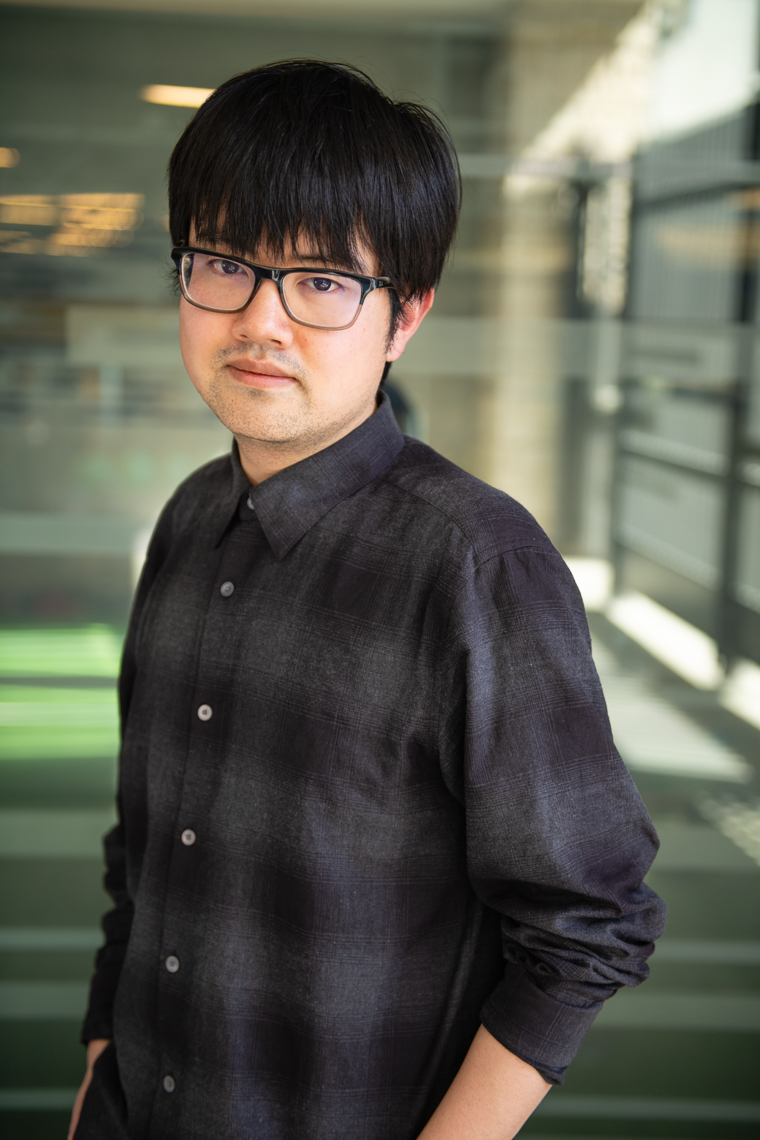
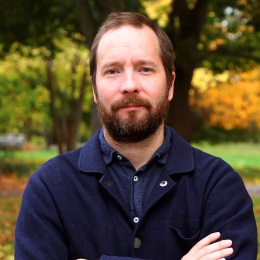
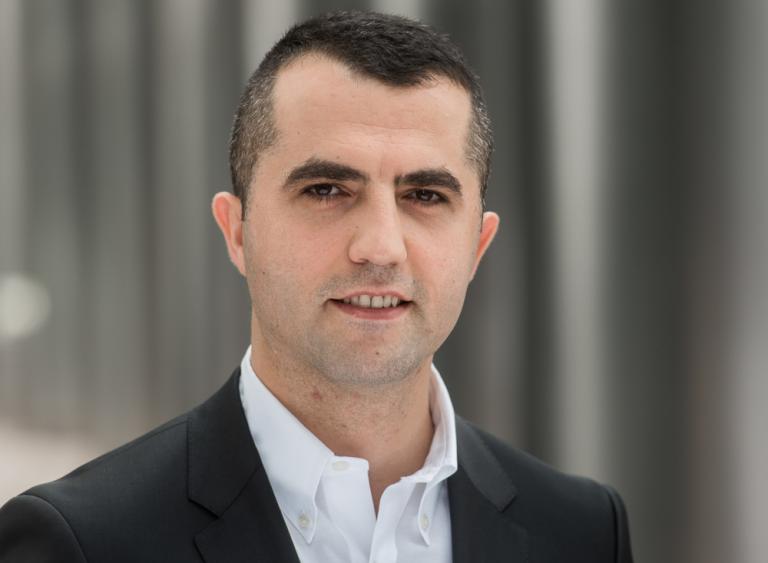
Chen Lian is an Assistant Professor in the Department of Economics at UC Berkeley. Holding a PhD from MIT, their research bridges macroeconomics, behavioral economics, and finance, with a focus on bounded rationality, monetary theory, and macro-finance interactions. Education: PhD in Economics, MIT Chen’s work explores how incomplete information and behavioral biases shape macroeconomic outcomes. Key themes include inflation effects on households, fiscal-monetary policy interactions, and financial stress dynamics. They employ heterogeneous-agent models and analyze how micro-level shocks propagate through the economy. Their publications and working papers address topics like credit cycles, demand shock propagation, and the psychological underpinnings of economic decisions. Papers such as Low Interest Rates and Risk Taking (2019) and Confidence and the Propagation of Demand Shocks (2022) highlight their interdisciplinary approach.
Tae-Ho Lee is an Associate Professor in the Department of Psychology at Virginia Tech, with affiliated appointments in the School of Neuroscience and Translational Biology, Medicine, and Health. His research focuses on affective and cognitive neural development across the lifespan, neurodegeneration, and family-based neural dynamics. PhD in Brain and Cognitive Science, University of Southern California M.A. in Clinical Psychology, Korea University B.A. in Psychology, Korea University Dr. Lee’s work explores brain connectome dynamics, dyadic neural concordance in families, and age-related attentional control. He employs neuroimaging techniques to study how familial and environmental factors shape emotional and cognitive outcomes in adolescents and older adults. Recent publications highlight trends in longitudinal studies , parent-child neural similarity , and functional connectivity in emotion regulation . Key areas include autism spectrum disorder, substance misuse risk, and the role of socioeconomic factors in brain development. Rising Star , Association for Psychological Science (2020) Dr. Lee is not currently accepting students and leads the Affective Neurodynamics and Development (AND) Lab at Virginia Tech.
Dr. Louise Alexander is an Associate Professor in Mental Health Nursing at Deakin University's School of Nursing & Midwifery (Faculty of Health). She holds prior academic roles including Senior Lecturer (ACU, 2018–2023) and Lecturer positions (ACU and Holmesglen Institute). Her research focuses on mental health nursing workforce sustainability, stigma reduction, simulation-based education, and curriculum development. Key interests include nurse resilience, pandemic impacts on healthcare workers, and improving student attitudes towards mental illness. Education: PhD from Deakin University; GCHE qualification Certifications: University of Melbourne's Emerging Leaders & Management Program (2021–2022) Teaching: Leads courses in forensic mental health, therapeutic communication, and health promotion Research Highlights: Recent work examines pandemic trauma among nurses, alcohol consumption trends post-COVID, and leadership's role in workforce retention. Her studies emphasize qualitative methods and integrative reviews to address systemic challenges in mental health nursing education and practice. Awards/Grants: No explicit awards listed; research supported by institutional collaborations. Active in developing transition-to-practice programs and evaluating simulation-based training efficacy. Labs/Teams: Collaborates with interdisciplinary teams on mental health workforce resilience and stigma reduction initiatives. Engages in national and international nursing education networks.
Peter Nilsson is a Professor of Economics at the Institute for International Economic Studies (IIES) , Stockholm University. He also holds a guest professorship at Linnaeus University and serves as a research fellow at IFAU , Uppsala Center for Labor Studies , CESifo , and CEPR . Previously, he was a postdoctoral fellow at Stanford University and obtained his PhD from Uppsala University (2010). Research Focus: His work bridges Labor Economics , Health Economics , and Environmental Economics , analyzing how early-life exposures (alcohol, lead), workplace dynamics, and policy interventions (unemployment insurance, congestion pricing) shape long-term socioeconomic outcomes. Key themes include Environmental Health Impacts on Cognition and Crime Labor Market Responses to Insurance Policies Peer Effects in Workplace Behavior Policy Design for Social Equity Scientific Awards: Nilsson has been recognized through research fellowships at leading institutions and editorial roles, including Associate Editor at The Economic Journal since 2021. His work has been featured in American Economic Review , Journal of Political Economy , and NBER platforms. Key Contributions: He provided testimony for Connecticut’s HB-5045 to reduce childhood lead exposure and contributed to Sweden’s Corona Commission report on pandemic responses. His empirical methods combine natural experiments with administrative datasets to identify causal relationships in health, labor, and environmental economics.
Allan Larsen is a Professor and Deputy Head of Division at the Department of Technology, Management and Economics (DTU Management) at the Technical University of Denmark. He heads the Operations and Supply Chain Management Section. His academic background includes an MSc in Applied Mathematics and a PhD in Operations Research, both from DTU. He teaches courses in Operations Management and Simulation at both undergraduate and graduate levels. Research Focus: His work applies operations research methodologies to complex planning problems in supply chain management, logistics, healthcare operations, and public transport. Key areas include urban freight transport, healthcare supply chains, and optimization of public transport resources like crew and fleets. Collaborations with industries, especially in freight transport, have been extensive. He previously co-directed the Transport DTU research center and co-chaired Denmark’s Transport Innovation Network. Education: MSc in Applied Mathematics (1989–1995), PhD in Operations Research (1997–1999), both from DTU. Recognition: Recipient of the Hedorf’s transportpris award in 2022 for contributions to transport research. Research Projects: Supervises multiple PhD students (e.g., on electric freight transport, healthcare resource optimization, and Industry 4.0 applications). Active in projects like 'Pioneering Electric Heavy-Duty Freight Transport' and 'Resource optimization in healthcare.' Labs/Teams: Leads the Operations and Supply Chain Management research group and collaborates in initiatives like the Transport Innovation Network, focusing on sustainable transport solutions.
Danielle T. Cooper is an Associate Professor at the University of New Haven , affiliated with the Henry C. Lee College of Criminal Justice and Forensic Sciences and the Criminal Justice Department . She also serves as the Director of Research for the Tow Youth Justice Institute and Chair of the Criminal Justice Undergraduate Committee . Education Ph.D. in Criminology, Law, & Society, University of Florida, 2015 M.A. in Criminology, Law, & Society, University of Florida, 2011 B.S. in Justice Systems, Truman State University, 2009 Dr. Cooper’s research focuses on youths and young adults , juvenile justice policy reform , sex offender registration policies , and police-community dynamics . Her work emphasizes restorative justice , systemic equity , and prevention strategies for marginalized communities. Recent publications explore diversion programs , economic impacts of sex offender registries , and media narratives in criminal justice . Her awards highlight contributions to diversity, equity, and inclusion , as well as leadership development . Scientific Awards 2019 Faculty of the Year Award 2021 MO-KAN-NE TRIO Achiever Alumni Award 2021 Faculty Excellence in DEI 2022 Martin Luther King, Jr. Vision Faculty Award 2024 RAND Pardee Fellowship She has secured grants for diversionary services and youth-police relations , and her media commentary addresses youth violence , census participation , and social justice .
Cecilie Schou Andreassen is a Professor at the Department of Clinical Psychology, University of Bergen . She specializes in behavioral addictions , including workaholism, social media addiction, and substance use interactions. Email: cecilie.andreassen@uib.no Visitor Address: Alrek Health Cluster, Årstadveien 17, 5009 Bergen Research Focus: Andreassen's work examines the psychosocial antecedents of addictive behaviors, with emphasis on personality traits , workplace dynamics , and digital platform interactions . Her research spans cross-cultural validation studies and longitudinal health outcomes related to technology and substance misuse. Article Trends (2017-2022): Analyzing 15 recent publications reveals a consistent focus on addiction scale validation , social media epidemiology , and workaholism's health impacts . Key themes include measurement invariance , digital-chemical addiction comorbidity , and psychological withdrawal mechanisms . Scientific Contributions: Co-developer of Bergen Work Addiction Scale Creator of Bergen-Yale Sex Addiction Scale Leadership in behavioral addiction epidemiology Recipient of Norwegian Research Council grants Advising & Collaborations: While no direct advisees are listed, Andreassen collaborates extensively with international researchers in work psychology , social media studies , and public health . Her work involves partnerships with Nottingham Trent University , Yale University , and National Competence Service for Sleep Disorders . Labs & Teams: Affiliated with the Department of Clinical Psychology and previously with the Department of Social Psychology at University of Bergen, she contributes to national health registry studies and cross-occupational research on addiction patterns.
Sergio Moreno Gil is a Professor in the Department of Economics and Business Management at Universidad de Las Palmas de Gran Canaria (ULPGC), Spain. He is affiliated with the GIR TIDES research group (Economy, Environment, Sustainability and Tourism) and the Institute of Tourism and Sustainable Economic Development. His academic work focuses on tourism economics, marketing, and sustainability within the Social and Legal Sciences branch. Dr. Moreno Gil's research interests span across multiple dimensions of contemporary tourism. His primary focus areas include sustainable tourism development, destination marketing, sharing economy platforms in tourism, and consumer behavior analysis. He has made significant contributions to understanding tourism in the Canary Islands, particularly through his work with the Canary Islands Tourism Observatory. His research integrates traditional tourism studies with emerging fields like neurotourism and biometric analysis of tourist experiences. His publication record shows a clear trend toward addressing contemporary challenges in tourism. Recent works focus on sustainability in mass tourism destinations, the impact of sharing economy platforms, gastronomic tourism marketing, and collaborative tourism networks. His research demonstrates a strong methodological diversity, employing bibliometric analysis, social network analysis, and empirical studies of tourist behavior. Dr. Moreno Gil has been actively involved in the Canary Islands Tourism Observatory, contributing to annual reports on tourism sustainability in the region. His collaborative work spans across the Ibero-American region, with numerous co-authorships reflecting international research networks in tourism studies.
Armin Falk is a Professor of Economics at the University of Bonn, leading the BonnEconLab since 2004 and co-founding the briq Institute on Behavior & Inequality. He holds affiliations with the IZA, DIW, CEPR, and Max-Planck-Institut. His research focuses on behavioral economics, exploring how social preferences like fairness and trust influence decision-making, and investigates early childhood development's role in inequality. Falk has received prestigious awards, including the Leibniz Prize and Yrjö Jahnsson Award. His work combines lab experiments, field studies, and representative data analysis. Education includes a PhD in Economics from the University of Zurich after studies in Economics, Philosophy, and History at the University of Cologne. Key research highlights include global climate action support studies (Nature Climate Change, 2024), socioeconomic disparities in child development (JPE, 2021), and global economic preferences surveys (QJE, 2018). He co-authored the book *Warum es so schwer ist, ein guter Mensch zu sein* to popularize behavioral economics. Awards include recognition for contributions to behavioral and development economics. Mentoring programs like *Balu und Du* aim to reduce educational inequality. His work bridges academic research with public discourse through media contributions and policy engagement.
Professor Andrew Chadwick is a leading scholar in political communication and digital media studies at Loughborough University, where he directs the Online Civic Culture Centre (O3C). He holds a BSocSc from Birmingham, MSc and PhD from the London School of Economics. His research focuses on hybrid media systems, disinformation dynamics, and digital politics. Key contributions include conceptualizing hybrid media events and analyzing misinformation in personal messaging platforms. His work has been recognized with prestigious awards, including the APSA Best Book Award. He supervises numerous PhD students exploring topics like social media influence, public opinion, and digital disinformation. Current projects include the Leverhulme-funded Everyday Misinformation Project examining numerical disinformation on messaging apps. His media engagements span BBC Radio 4 to The Washington Post. Research highlights include studies on misinformation warnings' ineffectiveness, vaccine hesitancy, and the role of celebrities in political representation. O3C serves as a hub for interdisciplinary research on digital civic culture. Chadwick’s academic leadership includes roles in editorial boards for top journals and international conference keynotes.
Dr. Kenan Arifoglu is an Associate Professor at the UCL School of Management. He previously held a postdoctoral position at the Ross Business School, University of Michigan (2008–2012). His education includes a PhD in Industrial Engineering and Management Sciences from Northwestern University (2012), two MSc degrees from Northwestern University (2008) and Koç University (2007), and a BSc from Koç University (2005). His research focuses on behavioral motivations in healthcare, supply chains, pricing, and entrepreneurial operations. Key projects include analyzing inefficiencies in flu vaccine supply chains and developing frameworks for high-growth startups. His work bridges operations management with practical challenges in healthcare, retail, and entrepreneurship. Recent publications address topics such as luxury brand licensing dynamics, incentive programs in healthcare systems, and the theoretical foundations of lean startup methodologies. These contributions span disciplines like marketing, operations research, and public health, emphasizing cross-sectoral applications. Dr. Arifoglu’s advising and grant activities are not detailed here. He is affiliated with the UCL School of Management and actively contributes to academic discourse through his research and teaching roles.
Daniel Adelman is the Charles I. Clough, Jr. Professor of Operations Management at the University of Chicago Booth School of Business. He joined the faculty in 1997 after completing his PhD in industrial engineering and operations research at Georgia Tech. Adelman is a leading expert in Business Analytics and Management Analytics, helping companies deploy data and decision analysis to build world-class strategic and tactical management capabilities. Adelman received his PhD in industrial engineering and operations research in 1997, along with a bachelor's degree in industrial engineering and a master's degree in operations research, all from the School of Industrial and Systems Engineering at the Georgia Institute of Technology. Daniel Adelman's research focuses on applying analytical models to solve complex business problems across multiple industries. He has worked with firms from diverse sectors including internet services, chemical distribution, airlines, third party logistics, fiber-optics manufacturing, semiconductor manufacturing, oil, and healthcare. His research integrates real-world data with analytical models to bring structure and discipline to decision and control processes, enabling firms to achieve higher profits with lower risk. Adelman's recent work has concentrated heavily on healthcare analytics, where he leads the Healthcare Analytics Laboratory at Chicago Booth. This lab works with teams of doctoral and MBA students on projects with major healthcare institutions to optimize clinical, operational, and financial outcomes. His research spans foundational operations research including approximate dynamic programming, inventory theory/supply chain management, and revenue management/pricing optimization, as well as examining the linkage between operational performance metrics and financial performance of firms. Adelman's publications show a clear trend toward increasing focus on healthcare applications while maintaining strong theoretical foundations in operations research. His earlier work focused more on general operations management problems like inventory control and supply chain optimization, while his recent publications demonstrate a strategic shift toward healthcare analytics, particularly examining surgical team dynamics, hospital performance metrics, and resource allocation during public health emergencies like the COVID-19 pandemic. George B. Dantzig Prize (1998) for the best dissertation in operations research and management sciences that is innovative and relevant to practice Adelman regularly advises doctoral and MBA students through the Healthcare Analytics Laboratory at Chicago Booth. He has served as Associate Editor for Management Science, currently serves as Associate Editor for Manufacturing and Service Operations Management, and is the Area Editor for Operations and Supply Chain at Operations Research. His industry collaborations include significant projects with Akamai on internet pricing, with GE Global Research Labs on the electricity smart grid, with BP on gasoline supply contract portfolio optimization, and with Symantec on software release planning. Adelman leads the Healthcare Analytics Laboratory at Chicago Booth, which brings together interdisciplinary teams of doctoral and MBA students to work on a portfolio of projects with major healthcare institutions. The lab focuses on optimizing clinical, operational, and financial outcomes through advanced analytics and decision modeling.
Jordi Galí is a Professor at the Department of Economics and Business at Universitat Pompeu Fabra (UPF), a Senior Researcher at the Center for Research in International Economics (CREI), and a Research Professor at the Barcelona School of Economics (BSE). He holds a PhD from MIT and has played a central role in shaping modern macroeconomic theory, particularly the New Keynesian framework used by central banks worldwide. Education: PhD in Economics, Massachusetts Institute of Technology (MIT), 1989 Master in International Management, ESADE, 1985 Bachelor in Economics, Universitat Pompeu Fabra, 1994 His research focuses on macroeconomic theory, monetary economics, and macroeconometrics. He is best known for his work on the New Keynesian Phillips Curve, optimal monetary policy rules, and the role of technology and expectations in business cycles. His influential book, Monetary Policy, Inflation and the Business Cycle , is a standard reference in graduate programs globally. The most recent articles highlight a continued focus on critical issues in modern macroeconomics: the implications of a low natural rate of interest (r*), the effectiveness of monetary policy at the zero lower bound, the role of wage and price flexibility, and the interaction between fiscal and monetary policy. His work increasingly integrates heterogeneity, financial frictions, and experimental methods, reflecting the evolving frontiers of the field. Scientific Awards: BBVA Foundation Frontiers of Knowledge Award (2025) Yrjo Jahnsson Award (2005) Premi Rei Jaume I d'Economia (2004) Premio Nacional de Investigación “Pascual Madoz” (2022) Three ERC Advanced Grants Foreign Honorary Member, American Economic Association (2020) Galí has advised numerous central banks, including the ECB, Federal Reserve, and Banque de France. He has held leadership roles as President of the European Economic Association (2012), co-editor of the Journal of the European Economic Association , and co-director of the CEPR International Macroeconomics Programme. He is a Research Fellow at CEPR, a Research Associate at NBER, and a Fellow of the Econometric Society. He has also been actively involved in public policy debates in Spain and Europe, particularly on issues of productivity, labor market reform, and fiscal policy. His research program continues to explore the design of stabilization policies in open and currency union economies.
Sean Foley is a Professor of Applied Finance at Macquarie University, specializing in Fintech, Cryptocurrencies, Trading, and Market Design. He leads the Decentralized Assets division at the Digital Finance Cooperative Research Centre (DFCRC), bridging academia, industry, and government. His research focuses on blockchain applications like automated market makers, DeFi protocols, and stablecoins. Education: PhD in Finance from the University of Sydney (2014), focusing on 'The Impact of Regulation on Market Quality'. Research Interests: Decentralized finance (DeFi) systems Cryptocurrency market dynamics and regulation Market microstructure and liquidity provision Energy market crises and policy Regulatory frameworks for financial markets Key Projects: Leading the DFCRC's Industrial PhD Scholarships (2021–2031), mentoring students like Arvind Rangarajan and Juuso Artturi Itkonen. Research on Australia's National Electricity Market (NEM) suspension and energy policy. Awards: Best Paper Award at the Cryptocurrency Conference (2019) Philip Brown Prize for Best Australian Paper (2021) Exceptional Research Prize (2019) Advising & Grants: Supervised over 10 PhD students through DFCRC scholarships. Secured $181 million for the Digital Finance CRC. Lead applicant in the Gunns Ltd shareholder class action. Labs/Teams: Head of Decentralized Assets at DFCRC, collaborating on policy and technology. Co-researcher on 'Electricity Markets in Crisis' and cryptocurrency illicit use studies.
Kora DeBeck is a Distinguished Professor of Substance Use and Drug Policy in the School of Public Policy at Simon Fraser University, a CIHR Applied Public Health Chair, and Dorothy Killam Fellow. She is also a Research Scientist with the BC Centre on Substance Use and Principal Investigator of the At-Risk Youth Study (ARYS), a longitudinal cohort tracking over 1,200 street-involved youth. Her research focuses on substance use policy, health services for marginalized populations, and the structural drivers of drug-related harms. She has published over 200 peer-reviewed articles challenging ineffective drug enforcement models and advocating for policy reforms. Recent publications analyze trends in opioid use, harm reduction during the COVID-19 pandemic, drug decriminalization, and youth-focused interventions. Her work consistently addresses social inequities through data-driven approaches to the toxic drug crisis. CIHR Applied Public Health Chair Dorothy Killam Fellow Michael Smith Health Research BC Scholar Award Distinguished SFU Professorship She has secured over $50 million in research funding, including $21M as principal investigator for ARYS. Her lab collaborates with healthcare providers, community organizations, and policymakers to translate research into practice.