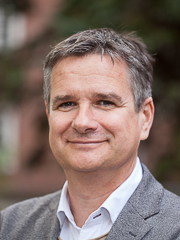
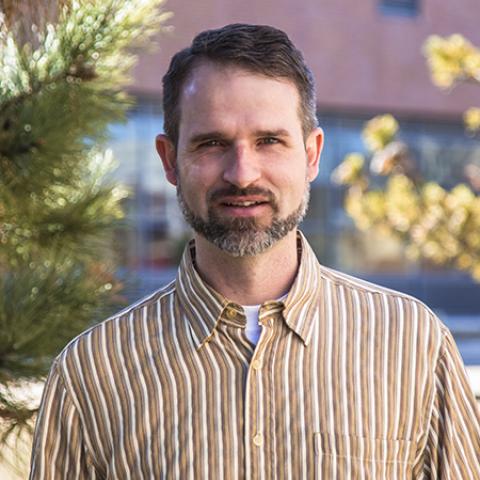
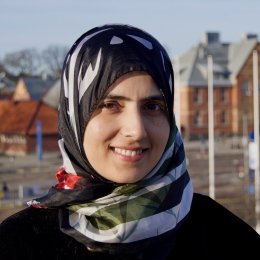
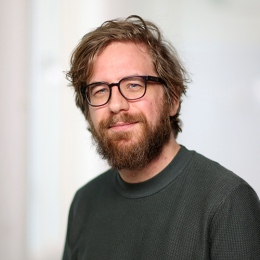
Armin Rott is a Professor of Economics, specializing in Media Economics, at the University of Hamburg since 2010. He serves as Academic Director at the Hamburg Media School (HMS), overseeing curriculum development and didactic concepts for MBA programs in Media Management. His career spans roles at Dortmund University, Bauhaus-Universität Weimar, and HMS, with a focus on media economics and strategic leadership. Education: Diploma in Economics (University of Bayreuth, 1996); PhD in Economics (summa cum laude, University of Dortmund, 2002). Research interests center on media economics, competition dynamics in media sectors, and strategic leadership. His work analyzes advertising-financed media, audience demand, and the political economy of competition. Publications examine topics like audience-demand dependencies, bestseller success drivers, and football broadcast economics. Key article themes include media market competition, demand aggregation, and experimental economics teaching methods. His scholarly output spans empirical studies on television markets, advertising-audience dynamics, and strategic management in media industries. At HMS, Rott drives academic initiatives and curriculum innovation for media management programs. He collaborates with institutions like Dortmund University and Bauhaus-Universität Weimar, contributing to media economics discourse.
Valéry Bezençon serves as an Ordinary Professor of Marketing at the University of Neuchâtel's Faculty of Economic Sciences, Institute of Management. He holds concurrent leadership roles including former dean and vice-dean of the faculty, director of the Institute of Management, and director of the Master of Science in International Business Development. Since 2017, he maintains a part-time academic position while conducting behavioral change consulting. His educational credentials include a PhD in Management from the University of Neuchâtel and a Master of Science from École Polytechnique Fédérale de Lausanne (EPFL). Prior to academia, he worked as a management consultant at McKinsey & Company. Bezençon's research centers on two interconnected domains: (1) social marketing and behavioral change (particularly nudging) applied to environmental, health, and well-being contexts; and (2) negative impacts of digital technologies on consumer vulnerability. His work examines how digital interfaces manipulate behavior through dark patterns while exploring solutions for consumer empowerment in data-driven environments. Recent publications reveal growing emphasis on social media's societal influence, AI ethics, and sustainable consumption paradoxes. Analysis of his 15 most recent publications (2022-2025) shows escalating focus on digital behavioral interventions, with 60% examining social media/AI impacts on consumer values and vulnerability. Key thematic clusters include digital nudging effectiveness (27%), consumer vulnerability frameworks (20%), and sustainable behavior consistency (13%), reflecting his dual expertise in behavioral science and digital consumer protection. No scientific awards or fellowships were documented in the source material. Bezençon directs the Certificate of Advanced Studies (CAS) in Social Marketing and Nudges while supervising doctoral students in the Health, Medicine, and Society program. His research is funded by three major Swiss National Science Foundation (SNSF) grants: FNS 100013_210123 (2023-2026): CHF 499,986 for pandemic communication analysis FNS CR00I5_235976 (2025-2029): CHF 842,080 for consumer empowerment against online dark patterns FNS 100013L_232040 (2026-2028): CHF 600,000 for digital platform consumer relationships He leads the Institute of Management and develops practical applications through continuous education programs on behavior change for well-being and productivity, bridging academic research with public policy implementation in behavioral insights.
Peter Mcintyre serves as an Associate Professor in the Department of Ecology and Evolutionary Biology at Cornell University's College of Arts and Sciences. He holds the Dwight Webster Sesquicentennial Faculty Fellowship and is affiliated with the Institute for African Development as a Core Faculty member and the Southeast Asia Program as a Faculty Associate. His educational background includes a B.A. in Biology from Harvard University (1998) and a Ph.D. in Ecology & Evolutionary Biology from Cornell University (2006). Mcintyre is an aquatic conservation ecologist whose research focuses on developing management approaches that balance human interests with protecting biodiversity. His work spans multiple continents, with field studies conducted in New York, the Great Lakes, East Africa, Southeast Asia, and Hawaii. His academic interests encompass Biogeochemistry and Ecosystem Science, Community Ecology and Population Biology, Evolutionary Patterns and Processes, Organismal Biology, and Sustainability, Environment and Conservation. Key research themes include fisheries, food webs, climate change, ecological stoichiometry, global biodiversity, conservation planning, river networks, and life history and migration. His recent publications reveal a consistent focus on freshwater ecosystem conservation, with particular attention to global patterns of biodiversity, climate change impacts on aquatic systems, fisheries management, and conservation planning. His work increasingly integrates molecular techniques like eDNA with traditional ecological methods, while maintaining a strong emphasis on practical conservation applications across diverse global contexts from the Amazon to Hawaiian streams. Dwight Webster Sesquicentennial Faculty Fellow Mcintyre leads the McIntyre Lab, which addresses ecology and conservation in rivers and lakes worldwide, with special focus on the organism-ecosystem interface. His lab studies how animals affect ecosystem productivity and nutrient dynamics, with particular emphasis on freshwater fisheries in the Adirondack Mountains and developing nations. His students and postdocs have received significant recognition including NSERC graduate research fellowships and Doctoral Dissertation Improvement Grants. The lab's work spans multiple major research projects including the Adirondack Fisheries Research Program, Lake Tanganyika Ecosystem Project, Great Lakes connectivity initiatives, and conservation of Native Stream Gobies in the Hawaiian Archipelago. The McIntyre Lab maintains active research sites across the globe, from the Adirondacks to Lake Tanganyika in East Africa, with particular strength in studying the connections between organismal biology and ecosystem processes in freshwater environments. Their work consistently bridges fundamental ecological questions with practical conservation applications, making significant contributions to both scientific understanding and on-the-ground management of freshwater resources.
Markus Wissen is a Professor of Social Sciences with a focus on socio-ecological transformation processes at the Berlin School of Economics and Law (HWR Berlin) since October 2012. Previously, he held research and teaching positions at various research institutes and universities, most recently at the Institute of Political Science at the University of Vienna. Research Focus: Socio-ecological transformation of production and consumption patterns Crisis and transformation of societal relations with nature Climate crisis and democracy Ecological class politics Imperial mode of living His work critically examines the intersections of capitalism, ecology, and social inequality, particularly through the lens of the "imperial mode of living"—a concept he has developed extensively with collaborator Ulrich Brand. This framework analyzes how Western lifestyles are based on the disproportionate appropriation of nature and labor power from the Global South. Recent Publications: Wissen's recent publications span books, journal articles, and policy papers. Notable works include "Imperial Mode of Living. Everyday Life and the Ecological Crisis of Capitalism" (2021, co-authored with Ulrich Brand) and "The Climate Crisis and the Question of Democracy" (2020). His research often explores the ecological contradictions of capitalist accumulation and the potential for ecological class politics as a transformative force. Contact Information: Email: markus.wissen@hwr-berlin.de Office: Campus Schöneberg, Haus B, Room B 2.53 Badensche Straße 50-51, 10825 Berlin
Auriba Raza is a researcher at the Department of Psychology , Stockholm University , working within the Division for Epidemiology at the Stress Research Institute . She holds a PhD in Environmental Epidemiology from Karolinska Institutet and completed postdoctoral training at both Stockholm University and Karolinska Institutet . Her research focuses on the impact of environmental factors on mental health and health behaviors, particularly examining how climate change , daylight exposure , and workplace/home environments affect the Swedish and Finnish working populations. She specializes in register-based data analysis and longitudinal survey research . Current project: Climate change effects on mental health in Scandinavia (funded by FORMAS ). Prior project: Environmental characteristics of home/workplace locations and their health behavior associations (funded by FORTE ). Her work involves collaborations with Finnish Institute for Health and Welfare , Swedish Meteorological and Hydrological Institute , and Finnish Meteorological Institute . She has published extensively on topics including climate change and mental health , workplace environment impact on health behaviors , and environmental determinants of physical activity .
Henrik Fürst is a Senior Lecturer at the Department of Education , Stockholm University. He serves in the research groups for History of Education and Sociology of Education and Adult Learning , with a focus on educational systems' evolution and adult learning across formal/informal settings. His work examines intersections between careers, valuation, and education in arts, sports, and politics. 2023 Docent in sociology (Uppsala University) and education (Stockholm University) PhD in sociology (Uppsala University, 2017) Postdoctoral researcher in sociology (Uppsala University, 2019-2022) funded by Swedish Research Council His research explores: Creative career sustainability patterns (literary/artistic/sports domains) Valuation mechanisms in cultural reception and talent identification Nordic cultural cooperation dynamics Temporal organization of creative work Cultural significance of folk high schools Economic sociology of creative industries Contact: henrik.furst@edu.su.se | Office: Room 2432, Frescativägen 54, Stockholm University
Minh-Ha T. Pham is Professor of Media Studies in the Department of Humanities and Media Studies at Pratt Institute's School of Liberal Arts & Sciences. Her work bridges academic research and public discourse, with publications appearing in both scholarly journals and mainstream media outlets like The New York Times , The Atlantic , and The New Republic . Her research investigates the intersection of gender, race, and labor under global and digital capitalism, with particular focus on the fashion industry. She examines racial and gender patterns in fashion work, social media's influence on fashion ethics, intellectual property, cultural appropriation, and the global fashion supply chain. Her scholarship challenges conventional frameworks for understanding fashion copying, arguing that concepts like 'cultural appropriation' often obscure deeper colonial legacies and racial power dynamics. Pham's publications reveal a consistent trajectory examining how digital platforms and global capitalism reshape fashion labor, particularly for ethnic women. Her work moves from analyzing Asian fashion bloggers as racialized laborers to investigating how social media users become de facto enforcers of Western fashion property norms. She consistently connects contemporary fashion phenomena to historical patterns of racial capitalism, demonstrating how 'ethical' fashion initiatives often reinforce rather than challenge systemic inequalities. As an engaged public intellectual, Pham has presented her work at numerous institutions including Stanford University, NYU, and the Smithsonian, and has been featured in major media outlets worldwide. Her digital project Of Another Fashion creates an alternative archive of U.S. women of color's fashion histories, challenging traditional museum displays and fashion scholarship.
Professor Ufuk Karadavut serves at Karabük University Faculty of Medicine, Department of Basic Medical Sciences, where he holds the position of Professor and currently serves as Vice Dean. Previously, he was Dean of the Faculty of Medicine from 2021-2022 and has held multiple leadership roles including Head of Department since 2020. With an extensive publication record of 493 works and significant contributions to both medical and agricultural statistics, his career spans multiple Turkish universities including Ahi Evran University and Bingöl University. PhD, Selçuk University, Institute of Science (2001-2005) Bachelor's Degree, Ankara University, Faculty of Agriculture, Department of Animal Science (1987-1991) Professor Karadavut's research spans biostatistics, medical informatics, and agricultural statistics, with particular expertise in statistical experimental design. His work bridges healthcare applications (medical informatics, clinical data analysis) with agricultural science (crop breeding, animal husbandry). He has developed statistical methodologies applicable across diverse fields, from analyzing palliative care outcomes to optimizing chickpea breeding programs for drought tolerance. His research demonstrates a consistent pattern of applying advanced statistical techniques to solve practical problems in both medical and agricultural contexts. Analysis of his recent publications reveals a strong focus on applying statistical methodologies to address contemporary challenges. In medical informatics, he examines healthcare quality, medical education, and pandemic impacts. In agricultural science, his work centers on crop improvement (particularly chickpeas and other legumes) and animal breeding. His statistical approaches include multivariate analysis, QTL mapping, growth modeling, and machine learning techniques, demonstrating methodological versatility across disciplinary boundaries. While specific awards aren't detailed in the available information, his h-index of 11 (UNIS) and 8 (WoS), along with 583 total citations, indicate significant scholarly impact. His research has attracted funding from major Turkish research bodies including TÜBİTAK and university-supported projects. Professor Karadavut has supervised 13 theses across multiple institutions and taught diverse courses ranging from medical bioinformatics to agricultural statistics. His research portfolio includes 31 projects, with recent work focusing on climate change adaptation in livestock, medical informatics applications, and advanced statistical methodologies for agricultural research. He has collaborated extensively with researchers across multiple Turkish institutions, demonstrating strong interdisciplinary networking capabilities.
Krasimir Hristakiev is a Senior Lecturer at the Department of Romance Languages within the University of Veliko Tarnovo. His academic career spans over two decades, focusing on literature and theater studies with a particular emphasis on French and Bulgarian cultural intersections. Primary Affiliations: University of Veliko Tarnovo (Department of Romance Languages) Research Themes: French literature (Molière, Rabelais), Bulgarian literary theory, theater and visual studies, intertextuality, and philosophical discourse. His publications analyze the dialogue between classical and modern literary forms, with recurring themes of madness, labor, and cultural identity. Notable works include studies on Giuseppe Tornatore's cinema, Bakhtinian theory in Bulgarian contexts, and the adaptation of Molière's plays in regional festivals. Recent articles explore the blurring lines between theater and digital media , focusing on structural differences and audience engagement in virtual performances. His bibliography reflects a deep engagement with philological rigor and comparative cultural analysis. Key trends in his work include the reception of French classics in Bulgaria, stylistic evolution in literature, and the metaphorical representation of labor and death in contemporary narratives. He contributes regularly to journals like Visual Studies and Proglas .
Holger Schwarz is an Associate Professor (Apl. Professor) at the Institute for Parallel and Distributed Systems (IPVS) within the Faculty of Computer Science, Electrical Engineering and Information Technology at the University of Stuttgart. He serves as Head of the Infrastructure Department and is actively involved in research and teaching in the areas of data management, database systems, and data analytics. Professor Schwarz earned his doctorate (Dr. rer. nat.) from the University of Stuttgart in 2003 with a dissertation on "Integration of Data Mining and Online Analytical Processing." He later completed his habilitation (Dr. rer. nat. habil.), qualifying him as a university professor in Germany. His primary research interests focus on data management systems , particularly in the domains of data lakes, lakehouses, enterprise data platforms, and metadata management. Professor Schwarz investigates how to design efficient and scalable data architectures that support modern analytical workloads while addressing challenges in data integration, governance, and democratization. His work bridges theoretical database concepts with practical industrial applications, as evidenced by numerous collaborations with industry partners. Professor Schwarz's recent publications demonstrate a clear trend toward enterprise data management solutions, particularly focusing on data lakehouse architectures, enterprise data marketplaces, and advanced clustering techniques. His research shows a consistent pattern of addressing real-world data management challenges through innovative architectural patterns and algorithmic improvements, with strong emphasis on practical industrial implementation. Professor Schwarz supervises numerous research projects including MetaMan (metadata management in complex data landscapes), DLArchitecture (design of comprehensive data lake architecture), INTERACT (interactive rapid analytic concepts), and VALID-Partition (improving prediction quality using domain knowledge). He also coordinates the University of Stuttgart's projects within the Software Campus initiative and serves as Managing Director of the Technology Partnership Lab and as a Member of the Board of Directors of the Industrial Data Lab. His teaching portfolio includes courses on Advanced Information Management, Database Systems, and Data Science projects across multiple semesters, demonstrating his commitment to educating the next generation of data management professionals.
Kerem Yavuz Arslanlı is an Associate Professor at Istanbul Technical University's Faculty of Architecture, Department of Urban and Regional Planning. He has held various academic roles since 2002, including Deputy Head of Department (2020-2022) and Education Coordinator. His international collaborations include positions at the University of Alicante, Cass Business School, and institutions in Switzerland, Germany, and Romania. Education: PhD in Urban and Regional Planning from Istanbul Technical University (2004), MA in Real Estate Development (2001) Research interests span Urban Economics , Disaster Risk Management , Real Estate Finance , and Post-Disaster Reconstruction . His work focuses on seismic risk scenarios , impact chain analysis , and low-carbon real estate investments , often leveraging spatial statistics and social big data . Recent publication trends highlight applications of impact chains for systemic risk assessment, tokenization in real estate, and sustainability factors in consumer behavior. His 2025 Journal of Risk Research paper addresses Istanbul's seismic risk modeling, while 2024 works explore post-earthquake housing affordability and low-carbon investments . Scientific awards include: 1st Prize, Meles Stream National Urban Design Competition (2020) AREUEA Doctoral Session Prize (2009) Advising encompasses 18 theses on topics like real estate tokenization , smart contracts , and post-disaster urban planning . He has led projects including Energy Demand Modeling for Post-Disaster Settlements and Impact Chain Analysis of Kahramanmaraş Earthquakes .
Anne Hannusch is an Associate Professor (tenure-track) of Economics at the University of Bonn. She is affiliated with the Collaborative Research Center Transregio 224 and serves as a research affiliate at both CEPR and IZA. Her academic focus lies at the intersection of macroeconomics, family economics, and economic growth. Education: Ph.D. in Economics from Emory University, with research visits at the University of Pennsylvania, Federal Reserve Bank of Atlanta, and European Central Bank. Research Interests: Her work explores how family dynamics (e.g., cohabitation, childcare, time-use allocation) interact with macroeconomic outcomes like economic growth, income inequality, and labor market trends. She also investigates the political economy of protective labor laws for women and the fiscal impact of family-related tax policies. Publications: Recent articles address fertility trends, gender equity, maternal labor supply, and time-use patterns, often in collaboration with leading economists like Michèle Tertilt and Matthias Doepke. Her work appears in discussion papers and VoxEU columns. Scientific Awards: CEPR Research Affiliate IZA Research Affiliate (since May 2023) Advising & Collaboration: Co-authored studies with prominent researchers and institutions, contributing to debates on family economics, women's rights, and growth models. She is actively involved in the CRC TR224 consortium.
Cajsa Bartusch Kätting is a Senior Lecturer at Uppsala University's Department of Civil Engineering and Industrial Engineering within the Faculty of Science and Technology, and a Researcher at the Institute for Research on Conflicts of Goals in Sustainable Social Transition. As leader of the Uppsala Smart Energy Research Group (USER), she investigates electricity consumer and prosumer roles in smart grid development, focusing on demand response, decentralized generation, and sustainable energy transitions through industry-academic collaborations with partners including Ellevio and STUNS Energi. Her research centers on demand flexibility and consumer behavior in energy systems, examining how dynamic pricing, feedback mechanisms, and IT services influence residential and commercial electricity consumption. She integrates social psychology with engineering to design interventions for sustainable energy use, particularly studying gender differences in tariff understanding, prosumer integration challenges, and the impact of occupancy patterns on consumption. Analysis of her 15 most recent publications reveals increasing focus on behavioral aspects of smart grids, with empirical studies on dual-price signal confusion, microgrid optimization, and pandemic-driven consumption shifts. Her work consistently addresses the human dimension of energy transitions, moving beyond technical solutions to examine cognitive processes and social barriers in demand response adoption. Bartusch has secured significant funding from the Swedish Energy Agency and Familjen Kamprads stiftelse for projects like Användarnas roll i implementeringen av smarta elnät (2019-2024) and Holistiska affärsmodeller för prosumenter (2015-2018), often collaborating with municipalities and energy companies to translate research into practical solutions for grid congestion and renewable integration. She leads the USER research group which conducts applied interdisciplinary work combining engineering, psychology, and social sciences. The group's projects with partners like Uppsala Municipality and KTH focus on real-world implementation of demand response programs, prosumer business models, and microgrid optimization in multi-dwelling buildings, directly addressing Sweden's energy transition challenges.
Assoc. Prof. Dr. Umut Asan is an active faculty member in the Department of Industrial Engineering at Istanbul Technical University (ITU), Faculty of Management. He holds the academic rank of Associate Professor and has been affiliated with ITU since 1999, progressing from Research Assistant to his current role. He earned his PhD from Technische Universität Berlin and holds a Master’s and Bachelor’s from ITU in Engineering Management and Industrial Engineering, respectively. PhD: Technische Universität Berlin (2003–2009) MSc: Istanbul Technical University, Engineering Management (1999–2001) BSc: Istanbul Technical University, Industrial Engineering (1995–1999) Dr. Asan's research lies at the intersection of decision science and industrial systems, with a strong emphasis on Multi-Criteria Decision Making (MCDM) , Fuzzy Cognitive Mapping , Scenario Planning , and Digital Twins . His work applies advanced modeling techniques such as Bayesian networks and fuzzy logic to solve complex problems in supply chain resilience, urban mobility, technology adoption, and organizational behavior. His recent publications (2023–2025) reveal a consistent trend toward integrating artificial intelligence and data-driven methods into decision support systems. Topics include electric vehicle adoption in urban logistics, digital twin frameworks for manufacturing, risk analysis in forestry and rail systems, and consumer behavior in digital platforms. These works demonstrate interdisciplinary applications across engineering, business, and social sciences, often using fuzzy and probabilistic models to handle uncertainty. Dr. Asan is actively involved in research leadership, having served as Vice Dean (2018–2023) and currently supervising numerous graduate theses. He is the principal investigator of funded projects, including BAP grants on qualitative cross-impact analysis and consumer cognitive models. Principal Investigator, "A New Approach to Qualitative Cross-Impact Analysis" (BAP Project, 2016–2020) Principal Investigator, "A New Approach to Consumer Causal Chain Models" (BAP Project, 2022–2024) He is a member of several international academic societies, including the International Society on MCDM, ENBIS, and EURO, reflecting his active engagement in the global operations research community. His research has been published in journals such as IEEE Access, European Journal of Forest Engineering, and Decision Science Letters, with a growing citation impact (Scopus h-index: 13). Dr. Asan advises a large cohort of graduate students, both at the Master’s and PhD levels, in areas ranging from risk modeling to digital transformation. His lab or research group focuses on decision support systems and cognitive modeling, supervising theses on FMEA, Bayesian networks, and digital twins. Future work appears to be directed toward enhancing predictive capabilities in industrial and societal systems through hybrid AI models.
Ivano Malavolta is an Associate Professor in Software Engineering at the University of Urbino , focusing on energy-efficient software, software architecture, and model-driven engineering (MDE). His research bridges robotics, mobile systems, and sustainability, emphasizing empirical methods and industrial applicability. Key Research Areas: Energy-efficient software, microservices, robotics systems, collaborative modeling, mobile application performance. Affiliations: Department of Software Engineering, University of Urbino. His recent publications highlight empirical studies on energy consumption patterns in robotics, mobile apps, and AI systems. He has contributed to frameworks like the Green Software Measurement Model (GSMM) and tools for architectural technical debt analysis. Notably, he has co-authored 15+ peer-reviewed articles in venues such as Journal of Systems and Software , Information and Software Technology , and ACM/IEEE conferences . His work often involves cross-platform comparisons (e.g., Electron vs. Web, Pandas vs. Polars) and systematic mappings of software engineering practices.