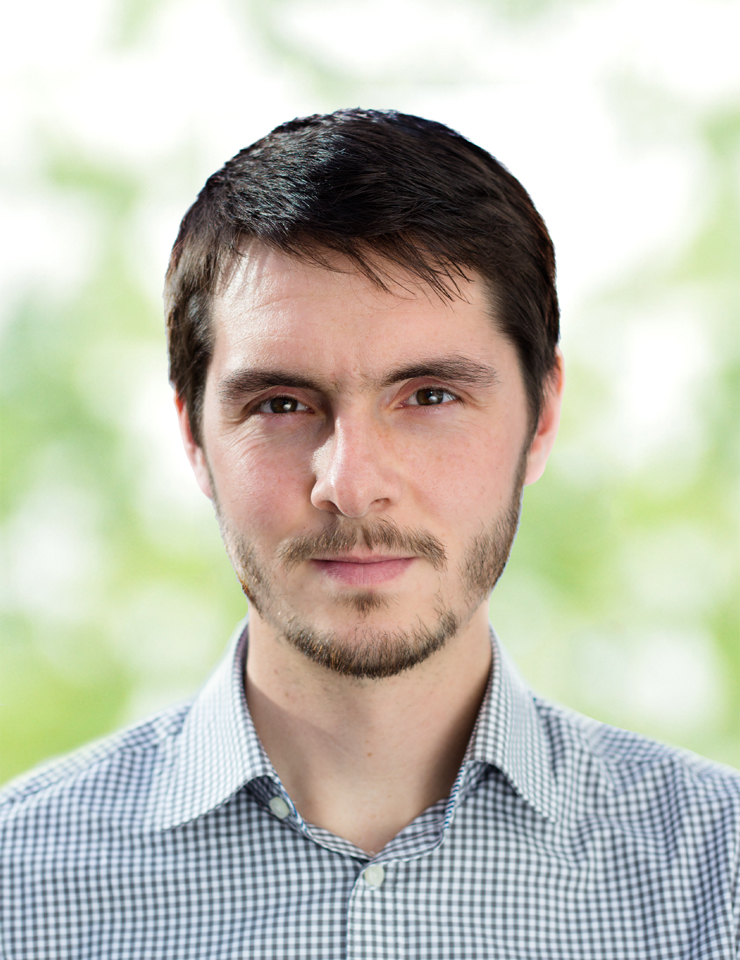
Prof. Federica Pascucci is an Associate Professor in the Management Department at the Polytechnic University of Marche. Specializing in Business Economics and Management (ECON-07/A), her research focuses on digital transformation, innovation strategies, and entrepreneurial ecosystems. She has held office hours in the Management Department’s faculty office since 2025. Her work explores topics such as blockchain applications in civic tech, servitization trends, and SME internationalization strategies. Key areas of investigation include the role of knowledge-based capabilities in managing innovation paradoxes and the impact of digital technologies on marketing and business models. Recent studies highlight her contributions to understanding blockchain’s potential in urban governance, customer involvement in smart product development, and the behavioral drivers of Bitcoin mining activities. She has published over 50 peer-reviewed articles since 2004, with a focus on SME competitiveness, export strategies, and digital transformation challenges faced by small enterprises. No scientific awards are listed, though her extensive publication record reflects sustained academic engagement. She advises students through her teaching activities but no formal advisee list is provided.
Paola Castellani is an Assistant Professor at the University of Verona's Department of Economics and Business Management, specializing in Management (ECON-07/A). Her research focuses on corporate communication, social entrepreneurship, SME strategies, heritage management, and sustainable development. She holds a Ph.D. in Economics and Business Management from the University of Naples Parthenope (2007). She served as a member of the editorial board of Sinergie Italian Journal of Management since 2001 and contributed to the University of Verona's Communication Office (2001–2007), organizing high-profile events like the VII World Conference for Total Quality Management (2002) and the 20 Excellence in Services International Conference (2017). She also coordinated the UniCinema project (2003–2007), fostering student engagement with film culture. Her research explores topics such as digital ecosystems in tourism, heritage preservation in corporate museums, and quality management practices in SMEs. She has been recognized with 'Best Paper' awards at international conferences and has published widely in management journals. Her work emphasizes the intersection of cultural heritage, innovation, and sustainable business practices. Recent publications investigate lab-grown meat consumer behavior, partner selection strategies for SMEs, and accessibility in tourism through digital ecosystems. She has also examined the role of museums in fostering visitor satisfaction and word-of-mouth promotion.
Donald J. Boudreaux is a Professor of Economics at George Mason University (GMU), where he has held various leadership roles, including Chairman of the Department of Economics (2001–2009). He also served as Director of the Center for the Study of Public Choice and has affiliations with institutions like the Foundation for Economic Education. His research focuses on international trade, antitrust law, law and economics, public choice theory, and globalization. Boudreaux holds a PhD in Economics from Auburn University (1986) and a JD from the University of Virginia (1992). He has authored works such as Globalization (2008) and co-hosts the blog Cafe Hayek . His teaching emphasizes clarity in economic concepts and their application to public policy debates. Key areas of scholarly contribution include critiques of protectionism, analysis of trade deficits, and advocacy for free-market principles. Boudreaux has supervised numerous graduate students, guiding research on topics ranging from proprietary cities to the political economy of climate change. Education: PhD in Economics, Auburn University, 1986 JD, University of Virginia School of Law, 1992 Affiliations: George Mason University Foundation for Economic Education (Past President) Cafe Hayek (Co-Host) Boudreaux’s academic outreach includes lectures globally and contributions to outlets like The Wall Street Journal and Regulation . His work bridges theoretical economics with practical policy analysis, emphasizing the importance of clear communication for public understanding.
Sven Hoffmann is a Researcher at the Department of Business Information Systems and New Media within the Faculty of Information Systems and New Media at the University of Siegen. He has been working at the university since 2016 and is currently involved in the EU- and NRW-funded project Cyberrüsten 4.0, where he leads the preliminary development of a cyber-physical system to support machine operators during the complex process of machine setup. His work bridges academic research with practical industrial applications. Hoffmann completed his studies in Mechanical Engineering at the University of Siegen. After graduation, he worked at a medium-sized company as a process developer before returning to academia. This industry experience informs his practical approach to research problems in manufacturing contexts. Hoffmann's research focuses on the industrial application of mobile computing, particularly in the areas of augmented reality and cyber-physical production systems. His work examines how digital technologies can support knowledge and expertise sharing in manufacturing contexts, with special attention to industrial setup processes. He investigates how augmented reality can bridge spatial and temporal distances between experts and non-experts, enhance autonomy, and facilitate cooperation in production environments. His research combines ethnographic studies with design case studies to develop practical AR-based solutions for complex manufacturing challenges, with an increasing focus on knowledge management and workplace integration. Hoffmann's publication record demonstrates a consistent progression from technical implementations of AR systems to examining their broader social and organizational impacts in manufacturing settings. His recent work shows a growing emphasis on integrating emerging technologies like large language models with AR systems to address complex knowledge management challenges in industrial contexts, particularly around standards compliance and workplace training. Hoffmann collaborates extensively with researchers across multiple institutions, particularly with Thomas Ludwig, Volker Wulf, and other colleagues at the University of Siegen. He has secured funding for research projects including Cyberrüsten 4.0 and has contributed to numerous collaborative research initiatives in the field of human-computer interaction for industrial applications. He is actively involved in the PRAXLABS research group and contributes to the development of the Fab Lab Siegen, where practical applications of his research can be tested and demonstrated in real-world settings. His work represents an important bridge between theoretical human-computer interaction research and practical industrial applications, with a strong emphasis on user-centered design and real-world validation.
Dennis Kirschsieper is a Researcher at the University of Siegen's Faculty III (IT for the Ageing Society), affiliated with the Chair of Information Systems led by Prof. Claudia Müller. His work focuses on participatory design, digital media's societal impact, and aging populations' technological integration. He holds an M.Sc. in Sociology and has extensive experience in academic research across multiple German and international institutions. Education: 2003–2010: Sociology studies (minor in Philosophy/Psychology) at University of Duisburg-Essen 2011–2012: Lecturer at University of Würzburg 2012–2017: Research Assistant at University of Duisburg-Essen Key Projects: BEATA Project (Employment Relations as Social Exchange) CroGa Project (Crowdfunding as Gift Exchange) SFB 1187 Subproject A05 (Media of Cooperation) Research Interests: Kirschsieper’s work bridges sociology and technology, emphasizing participatory design with vulnerable groups, digital literacy among older adults, and ethical crowdfunding practices. Recent studies include community-based platforms for aging societies and ICT’s role in grassroots initiatives. Publications Overview: His 2024 work on utopian design spaces and 2023 papers on care-driven digital platforms highlight his focus on technology’s societal role. He also explores crowdfunding dynamics and participatory methodologies in aging contexts. Labs/Teams: Collaborates with Prof. Claudia Müller’s team on age-tech solutions and participatory research frameworks. Engaged in multi-national EU-funded projects like JPI MYBL.
Courtney Cothren is an Associate Teaching Professor in the Marketing Department at the University of Missouri's Robert J. Trulaske, Sr. College of Business. She holds an EdD in Educational Leadership from the University of Missouri (2022), an MBA from Stephens College (2008), and a BS in Fashion Marketing/Management from Stephens College (2000). Her professional background includes retail consulting and roles as a buyer and merchandise planner in menswear. Cothren specializes in experiential learning and retail marketing education, teaching undergraduate courses like Consumer Behavior, Retail Marketing, and Procurement Processes, as well as Advanced Marketing Management in the execMBA program. Her research focuses on collaborative learning methods and internship program evaluation, evidenced by publications such as the Market Day Simulation study and internship assessment work. She has received multiple teaching awards, including the Raymond F. and Mary A. O'Brien Teaching Award (2019), and has taught at both the University of Missouri and Stephens College. Her work bridges academic theory with practical retail and procurement strategies.
Dr. Gerrit De Waal is an Assistant Professor at Bond Business School, Bond University, specializing in Innovation Management and Frugal Innovation . He holds a PhD in Innovation Management from the University of Canterbury and has extensive industry experience in engineering. De Waal actively supervises PhD students and collaborates with the Center for Frugal Innovation at Hamburg University of Technology. Doctor of Philosophy in Innovation Management, University of Canterbury Master of Business Leadership, University of South Africa Master of Science in Physics, Potchefstroom University His research focuses on Corporate Entrepreneurship , Innovation Management , and Frugal Innovation , particularly examining how organizations can re-engineer premium products into sustainable, affordable solutions. Recent publications explore organizational resilience in war economies and systematic ecosystem analysis using patent data. De Waal has supervised PhD student Anton De Waal and contributed to entrepreneurship education frameworks. His work addresses practical implementations of innovation strategies in SMEs and corporate sustainability challenges.
Xiang Fang serves as Associate Dean of Faculty and Associate Professor of Business Analytics at the University of Colorado Denver Business School. Her research spans supply chain management, healthcare analytics, and game theory, with publications in journals like Production and Operations Management and Decision Sciences . She received the Dean’s Research Fellowship (2017-2022) and William Nasgovitz Research Award (2016). Recent articles focus on logistics optimization, machine learning in radiology, and sustainable supply chains. Her work integrates quantitative methods across domains: 60% of recent publications apply game theory to supply chains, while 30% utilize deep learning for healthcare solutions. Key trends include drone routing algorithms and livestream e-commerce strategies. Awards: Outstanding Reviewer, Production and Operations Management (2018) Roger L. Fitzsimonds Scholarly Achievement Award (2013) Izzet Sahin Research Award (2010)
David Foord is Associate Professor in the Faculty of Management at the University of New Brunswick and inaugural Wilson-McKenna Fellow in Digital Sustainability. His research examines innovation processes, entrepreneurship education, and historical evolution of government-business relations in energy and industrial sectors. Foord's current work focuses on digital sustainability, developing frameworks that integrate environmental, social, and governance considerations into technology deployment. He teaches innovation and entrepreneurship courses while designing curriculum on digital ESG. Honors include multiple teaching awards and research excellence recognitions for contributions to management education and historical scholarship.
Professor Janice Denegri-Knott is a Professor in Consumer Culture & Behaviour at Bournemouth University, where she has been researching and publishing since 2001. She serves as Head of the Promotional Cultures and Communication Research Centre and is Associate Editor for Marketing Theory while co-editing the Journal of Promotional Communications. Her work has been published in top-tier journals including European Journal of Marketing, Journal of Marketing Management, and Journal of Consumer Culture. Her research focuses on digital consumption phenomena, particularly examining digital possessions, ownership practices, and how digital devices transform consumer behavior. She has developed significant theoretical frameworks around digital virtual consumption, with her work on MP3 technology revealing the power dynamics in digital commodification. Her recent projects explore digital consumption objects, particularly MP3 as an object of consumption, and digital devices and distributed consumption, examining how software-human hybrids transform desire construction and consumer practices across ownership, meal preparation, and decision-making. The trajectory of her research shows an evolution from early work on digital games and eBay consumption to more complex analyses of digital possession, affordance theory, and platformized consumption. Her publications consistently bridge marketing theory with cultural studies perspectives, offering critical insights into how digital technologies reshape consumer culture and behavior. Recent work increasingly addresses ethical dimensions of digital consumption, including sustainable practices and critical pedagogies. Best Paper prize from Consumption, Market and Culture for paper on Digital Virtual Consumption (2011) Editor's Choice List for paper on ownership and possession (Journal of Marketing Management, 2016) Top 10 most downloaded papers in Consumption, Markets & Culture (2011, 2014) "Mapping Consumer Power" selected for New Directions in Critical Marketing Studies (European Journal of Marketing, 2013) Professor Denegri-Knott actively involves students in her research, emphasizing their contribution to knowledge generation. Her current grants include Mapping the Full Scope of Consumer Engagement on Social Media (European Commission, 2024), Digital Advertising Metrics for Good (ESRC, 2024), and Realising the potential for academic publishing among Vietnamese media scholars (British Academy, 2023). She has consulted for major media brands including ITV and Hearst on digital content strategy. As Director of the Promotional Cultures and Communication Centre, she leads a research team exploring the intersections of promotional cultures, digital media, and consumer behavior, with particular expertise in Latin American contexts as evidenced by her work on Chicha culture.
Kalipso Karantinou serves as Associate Professor of Marketing at Athens University of Economics and Business (AUEB), holding appointments in the Department of Marketing and Communication within the School of Business. She maintains active teaching responsibilities across undergraduate, postgraduate, and doctoral programs while leading significant research initiatives including an EU-funded project on Managing Digital Transformation. Her academic credentials include: BSc in Communication and Mass Media (valedictorian), National and Kapodistrian University of Athens Masters in Marketing, University of Manchester Postgraduate Certificate of Academic Practice, University of Manchester PhD in Marketing, University of Manchester Dr. Karantinou's research investigates consumer behavior through multiple lenses including services marketing, tourism, and digital transformation. She examines how servicescapes (physical and virtual environments), economic austerity, and neuromarketing techniques shape customer experiences. Her work bridges marketing theory with psychological and socioeconomic perspectives, particularly regarding consumer resilience during crises and the impact of digital innovation on service delivery. Analysis of her 15 most recent publications (2018-2025) reveals three dominant trajectories: (1) austerity-driven consumer adaptation and resilience strategies across European markets, (2) servicescape dynamics in tourism/hospitality contexts using complexity theory, and (3) innovative methodological applications including EEG neuroscience and video-ethnography. Her 2025 complexity theory paper extends foundational servicescape research into nonlinear consumer response modeling. She has received multiple teaching excellence awards and research recognition, including service as Greece's representative to the European Marketing Academy Executive Committee (2013-2019). Her current EU-funded project on digital transformation exemplifies her leadership in connecting academic research with industry applications. Dr. Karantinou actively supervises students at all academic levels while directing a robust research team focused on digital transformation and consumer behavior. Her professional engagement extends to executive training programs for business leaders, translating academic insights into practical business solutions through collaborations with industry partners.
Dr. Michael J. A. Wohl is a Professor of Psychology at Carleton University, located in the Department of Psychology within the Faculty of Arts and Social Sciences. His research focuses on two primary areas: conflict resolution and disordered gambling. In conflict resolution, he examines interpersonal and intergroup harm, exploring emotions like guilt and angst, and their impact on health and reconciliation. His work on disordered gambling investigates cognitive and contextual factors influencing addiction, treatment barriers, and behavioral change strategies. He directs the Betterment Labs, which oversee the Conflict Resolution Lab and Gambling Lab, emphasizing evidence-based interventions and policy advocacy. Dr. Wohl holds a Ph.D. from the University of Alberta (2003). His research has been funded by organizations such as the Social Sciences and Humanities Research Council of Canada, Ontario Problem Gambling Research Centre, and the Canadian Foundation for Innovation. He has authored numerous articles in journals like Peace and Conflict Studies , Journal of Gambling Studies , and Substance Use & Misuse , addressing topics from racial demographic shifts to responsible gambling tools. His work bridges psychological theory with practical applications in public health and policy. His recent publications highlight innovations in gambling policy (e.g., monetary limit efficacy) and the role of nostalgia in behavioral change. Collaborations with industry and government bodies ensure his research informs real-world solutions for addiction and conflict mitigation. Dr. Wohl’s contributions extend to interdisciplinary initiatives like the GREaT Hub, promoting knowledge translation in behavioral science.
Timothy P. Munyon is the Ergen Professor in Business and Janet & Jeff Davis Faculty Fellow at the University of Tennessee, Knoxville's Haslam College of Business. He co-founded Red Castle Human Capital, a workforce analytics consultancy, and currently serves as co-director of the Consortium for Social Enterprise Effectiveness. His academic roles include core faculty membership in graduate programs and teaching in organizational behavior and human resource management. With 21 doctoral dissertations supported, he emphasizes doctoral mentorship. Education: PhD in Management (Florida State University, 2009), M.S. in Aviation Administration (Middle Tennessee State, 2004), MBA (Middle Tennessee State, 2002), and B.S. in Economics (Liberty University, 1999). Research focuses on employee, entrepreneurial, and executive behavior, with publications in top journals like Academy of Management Review and Journal of Management. His work explores organizational politics, knowledge sharing, and entrepreneurial stress. He holds editorial board roles for 6+ journals and previously edited Journal of Occupational and Organizational Psychology. Recent awards include 2024 Bank of America Leadership Award and 2023 Professional MBA Faculty Award. His international engagement includes keynote speaking at Brazilian ENEGEP (2018) and visiting scholar roles at University of Haifa. Media appearances address modern work trends like the 4-day workweek. Advising and grants: 21 doctoral committee participations. Lab affiliations include Global Supply Chain Institute and Consortium for Social Enterprise Effectiveness.
Robert van der Veen is Research Fellow at Oxford Brookes Business School, specializing in tourism marketing and hospitality management. His research examines destination branding, tourist behavior, and service quality using advanced statistical modeling approaches. Current projects investigate sensory experiences in place attachment, employability impacts of international education, and occupational stress in hospitality sectors. Research employs structural equation modeling to analyze complex relationships in tourism systems. Publications focus on destination image formation, cross-cultural tourism patterns, and service quality metrics. Recent work emphasizes collaborative learning and generational differences in travel behavior. Supervises PhD students in tourism marketing and consumer behavior. Secured multiple research grants for tourism studies including from the Royal Hobart Hospital Research Foundation and UniSA.
Prof. Dr. Heiko Bergmann serves as Interim Chair of Management of Small- and Medium-Sized Enterprises (KMU-HSG) at the University of St. Gallen. His research focuses on entrepreneurial processes, startup ecosystems, and the integration of AI in early-stage ventures. Bergmann investigates factors influencing venture creation, founder psychology, and SME resilience during economic crises. His work spans entrepreneurship education, social ventures, and financial strategies for SMEs. Recent publications analyze AI adoption in startups, gender dynamics in academic entrepreneurship, and mission-driven business models. Bergmann emphasizes practical insights for enhancing SME competitiveness in global markets.