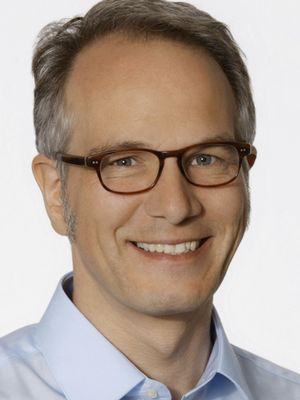
Bernhard J. Berger is a Lecturer in the Department of Computer Engineering at the Institute of Embedded Systems, Hamburg University of Technology (TUHH). His research focuses on software security, static code analysis, machine learning, optimization, and research data management. He has held significant roles such as Program Committee member for ICPC 2025 and MSR 2025, and has received awards including the Best Reviewer Award (ICPC 2023) and Best Engineering Paper Award (SCAM 2019). His work spans interdisciplinary applications including maritime systems security, GPU-accelerated AI, and evolutionary algorithms. Recent studies emphasize AI-driven security tools (e.g., ML-SAST) and domain-specific language approaches to optimization (EvoAl). He has contributed to over 30 peer-reviewed publications, with notable work in IEEE Transactions on Software Engineering and Science of Computer Programming. Berger collaborates closely with industry through DAAD review committees and serves on artifact evaluation boards for ISSTA and ARES conferences. Education: Doctoral Thesis (2022), Diploma in Computer Science (2007) Key Projects: ArchSec tool suite, Threat Modeling Frameworks, Bauhaus static analysis methodology Lab Affiliation: Embedded Systems Design Group His advisory roles include Deputy of TUHH's Election Verification Committee and Session Chair at IEEE Congress on Evolutionary Computation 2023. Current research trends integrate machine learning with static analysis for automated vulnerability detection, while also exploring explainable AI techniques for neural network optimization.
Prof. Nicolas Perkowski is a Professor in the Department of Mathematics at Freie Universität Berlin, specializing in Stochastic Analysis and Probability Theory. He holds roles such as Vice Spokesperson of DFG CRC/TRR 388 (since 2024) and Chair of the Master of Mathematics Examination Board. His research focuses on stochastic partial differential equations (SPDEs), rough paths, and applications in mathematical physics. Notable contributions include work on singular SPDEs, fractional processes, and the KPZ equation. Perkowski has authored/co-authored numerous publications in top journals like the Annals of Probability and Communications in Mathematical Physics, and he serves as an associate editor for several journals. His institutional responsibilities include leadership in research collaborations and academic governance. Education: PhD and diploma in stochastic population models (details not explicitly provided in text). Research Interests: Stochastic Analysis, Probability Theory, SPDEs, Mathematical Physics, Nonlinear Filtering. Recent Articles: Focus on fractional processes, SPDEs with singular terminal conditions, and stochastic sewing lemmas. His work bridges theoretical probability with applications in physics and engineering, with a strong emphasis on rigorous mathematical frameworks for complex stochastic systems.
Joel David Hamkins is the O’Hara Professor of Logic at the University of Notre Dame, with significant affiliations to logic and philosophy research communities in China and Japan. His work bridges set theory, computability, and philosophy of mathematics, focusing on foundational questions about infinity, truth, and mathematical existence. Key Research Areas : Set theory, potentialism, continuum hypothesis, surreal numbers, forcing, large cardinals, definability, halting problem history Recent Talks : Kobe University (2025), Notre Dame HPS Colloquium (2025), Fudan University seminars (2025), Peking University conference (2025) Scientific Contributions : 2024 arXiv paper on halting problem attribution, ongoing work on bi-interpretation of surreal arithmetic with ZFC, analysis of transitive submodel principles Awards & Recognitions : William Reinhardt Memorial Lecture (2025), former JSPS Fellowship at Kobe University Hamkins’ work reveals deep connections between technical set theory and philosophical inquiry, particularly through his modal logic approach to potentialism and analysis of truth nonabsoluteness. His 2024 paper with Theodor Nenu re-examines Turing’s legacy, while his technical collaborations with researchers from Fudan University and Oxford advance foundational mathematics.
Tibor Szabó is a Professor in the Combinatorics and Graph Theory group at the Department of Mathematics, Freie Universität Berlin. He holds a PhD from The Ohio State University, advised by Ákos Seress. Prior to his current position, he held roles at McGill University, ETH Zürich, the Institute for Advanced Study (Princeton), and the University of Illinois (UIUC) as a J.L. Doob Research Assistant Professor. Research Interests: His work focuses on combinatorics and combinatorial optimization, including extremal problems, random structures and algorithms, pseudorandom graphs, positional games, and the combinatorics of linear programming. He explores tools from algebra, probability theory, and topology applied to combinatorics. Teaching: He teaches courses such as Algorithmic Combinatorics, Extremal Combinatorics, and runs the Combinatorics Seminar. His lecture notes include works on positional games and explicit constructions in extremal combinatorics. Students & Postdocs: Notable PhD advisees include Yamaan Attwa, Silas Rathke, Simona Boyadzhiyska, and Patrick Morris. Postdoctoral fellows include Olaf Parczyk and Anurag Bishnoi. His research has involved collaborations with over 50 co-authors. Funding & Grants: Supported by grants from the Swiss National Science Foundation (SNF) and German Research Foundation (DFG), focusing on topics like positional games and extremal graph theory.
Professor Tobias Nipkow is a leading researcher in formal methods and interactive theorem proving at the Technical University of Munich (TUM), affiliated with the School of Computation, Information and Technology and the Department of Computer Science. He is a core developer of the Isabelle proof assistant and leads the Theorem Proving Group. His work has profoundly influenced program verification, semantics, and formalized mathematics. University: Technical University of Munich School: School of Computation, Information and Technology Department: Department of Computer Science Research Group: Theorem Proving Group Key Projects: Isabelle, Archive of Formal Proofs, Concrete Semantics His research focuses on formal verification, higher-order logic, semantics of programming languages, and verified algorithms. He has pioneered the formalization of textbook algorithms, data structures like B+-trees and quadtrees, and logical systems. His work bridges theoretical foundations with practical tools for software correctness. The most recent publications show a strong trend in verifying classical algorithms (e.g., Gale-Shapley, Earley parser), data structures (B+-trees, deques), and decision procedures, primarily using Isabelle/HOL. His contributions span foundational logic, program analysis, and educational approaches to formal methods. Best Paper Award at CADE 28 (2021) Tobias Nipkow has made extensive contributions to advising and collaborative research, co-authoring with numerous researchers and students. He has secured support for large-scale formalization efforts and contributed to major projects like the Flyspeck proof of the Kepler conjecture. His work is supported by ongoing development of the Isabelle framework and the Archive of Formal Proofs. He leads the Theorem Proving Group at TUM, which is central to the development and application of Isabelle. The group fosters international collaboration, contributes to the Archive of Formal Proofs, and advances research in automated reasoning, semantics, and verified systems.
Prof. Dr. Martin Hils is a Professor of Mathematical Logic at the University of Münster's Faculty of Mathematics and Computer Science, affiliated with the Institut für Mathematische Logik und Grundlagenforschung. His expertise lies in model theory and set theory, focusing on geometric stability, simplicity theory, valued fields with automorphisms, and Hrushovski amalgamation. Education: Habilitation in Mathematics (2013, Université Paris Diderot) PhD in Mathematics (2006, Université Paris 7 and Lyon 1) Master (DEA) in Logic and Computer Science (2002, Paris 7) Diploma in Mathematics with Philosophy (2001, University of Bonn) Research Interests: Model theory of valued fields, geometric stability/simplicity theories, Hrushovski amalgamation techniques, and applications to algebraic geometry and differential fields. His work bridges abstract model theory with concrete mathematical structures. Recent Research Trends: Focus on non-archimedean geometry, separably closed valued fields, Lang-Weil estimates in difference fields, and definable retraction principles. His articles explore topics like Ax-Kochen-Ershov principles, domination monoids in valued fields, and beautiful pairs in unstable theories. Grants & Projects: Lead investigator in DFG Cluster of Excellence EXC 2044 (Groups, Model Theory and Sets) Principal investigator in 'Model Theory of Valued Fields with Endomorphism' (DFG 2022-2025) GeoMod project (geometric/combinatorial configurations in model theory, DFG 2020-2024) Contributor to SFB 878 (model theory of valued fields and definable groups) Teaching & Supervision: Current courses include Model Theory of Pseudofinite Fields and Logic Foundations. Supervised PhD students include Pierre Touchard (2020) and Rémi Jaoui (2017). Jointly supervises Simone Ramello and Zixuan Zhu. Editorial Work: Editor-in-chief of Model Theory journal. Authored textbook A First Journey through Logic (AMS 2019).
Ulrich Schroeders is a Professor of Psychological Diagnostics at the University of Kassel, where he has been employed since October 2017. His work focuses on developing and validating psychological assessment tools, with particular expertise in cognitive diagnostics and educational measurement. He teaches various programs for approximately 500 students annually and serves as a supervisor for teacher training students preparing for their oral state examinations in Pedagogy/Psychology. Dr. Schroeders earned his PhD from Humboldt University of Berlin in 2010 with a dissertation titled "Measurement of Cognitive Abilities Using Modern Technologies: Artifacts, Equivalence, and New Constructs." Prior to that, he completed his Diploma in Psychology at Julius-Maximilians-University Würzburg in 2004 with a thesis on diagnosing dyscalculia in first-grade students. His research spans several key areas in psychological assessment. He specializes in technology-based competency diagnostics, developing innovative methods for measuring cognitive abilities and school competencies. A significant portion of his work involves applying Machine Learning and metaheuristics to psychometric problems, particularly in structural equation modeling. His methodological expertise includes advancing techniques in Local Structural Equation Modeling (LSEM) and Meta-Analytic Structural Equation Modeling (MASEM), with applications across educational and clinical psychology contexts. Analysis of Dr. Schroeders' recent publications reveals a strong focus on computational approaches to psychological assessment. His work frequently employs optimization algorithms like Ant Colony Optimization and Bee Swarm Optimization to address challenges in test construction and validation. There's a clear trajectory toward game-based and technology-enhanced assessment methods, as seen in studies using Mastermind and Wordle as assessment tools. His research also demonstrates growing interest in applying machine learning to predict behavioral outcomes, including juvenile delinquency, suicide risk, and psychotherapy outcomes. Dr. Schroeders has secured significant research funding, including projects funded by the German Research Foundation (DFG) and the Hector Foundation. His current projects include "Facing the Replication Crisis in Machine Learning Modeling" (2025-2027) and "PINGUIN: Potenzialidentifikation IN der GrUndschule" (2024-2027), which focuses on identifying elementary students' initial competencies. He leads the development of the BEFKI assessment system (Berliner Test zur Erfassung fluider und kristalliner Intelligenz), which includes versions for different age groups (5-7, 8-10, and 11+). His methodological toolbox includes specialized approaches for test construction and validation, particularly focusing on optimization algorithms applied to psychological measurement problems.
Prof. Dr. rer. nat. habil. Detlef Hauke Mache is a full Professor of Mathematics and Applied Mathematics at the TH Georg Agricola University of Applied Sciences in Bochum, Germany, within the Faculty of Electrical Engineering, Information Technology, and Industrial Engineering. Since 2003, he has held the chair for Applied Mathematics with a focus on Constructive Approximation. Education: Diploma in Mathematics and Computer Science, University of Dortmund (1988) Doctoral degree (Dr. rer. nat.) in Mathematics, University of Dortmund (1991) Habilitation (Dr. habil.) in Mathematics, University of Dortmund (1997) Research Interests: Prof. Mache's research spans Constructive Approximation Theory , emphasizing the development and analysis of approximation methods. He explores Radial Basis Function (RBF) Networks and their applications in neural networks and fuzzy logic. His work integrates theoretical foundations with practical algorithms, particularly in numerical analysis and approximation techniques. Key areas include: Neural Networks and Fuzzy Logic Systems Quasi-Interpolation Methods Orthogonal Polynomial Expansions Integral Transforms and Convolution Structures Publications and Editorial Contributions: Prof. Mache has authored over 30 peer-reviewed papers and edited several volumes in approximation theory. His research trends indicate a focus on advancing approximation methods through theoretical insights and practical applications in neural networks and computational intelligence. Scientific Awards and Honors: While no specific awards are listed, his extensive editorial roles and habilitation qualification signify recognition in his field. Teaching and Advising: He teaches courses in Higher Mathematics, Applied Mathematics, Differential Equations, and Numerical Analysis. While no specific students are named, his long-standing academic positions suggest significant contributions to graduate education. Laboratories and Teams: As a professor in the Faculty of Electrical Engineering and Information Technology, he likely collaborates with interdisciplinary teams, though no specific labs are mentioned.
Marie-Christine Düker is an Assistant Professor in the Department of Statistics and Data Science at Friedrich-Alexander University (Germany). Her research focuses on high-dimensional statistics, time series analysis, functional data analysis, and extreme value theory with applications in economics, psychology, chemistry, and ecology. Previously, she was a postdoctoral associate at Cornell University's Department of Statistics and Data Science under David Matteson. She earned her PhD in Mathematics from Ruhr-University Bochum under Herold Dehling and spent part of her doctoral studies at the University of North Carolina at Chapel Hill with Vladas Pipiras. Current Position: Assistant Professor, Department of Statistics and Data Science, Friedrich-Alexander University Previous Academic Affiliation: Postdoctoral Associate, Cornell University Education: PhD in Mathematics, Ruhr-University Bochum; Part-time research at University of North Carolina Research Interests: Her work spans high-dimensional time series under long-range dependence and nonstationarity, discrete data modeling, nonlinear dynamics, dimension reduction, and change-point analysis. Applications include econometrics, neuroscience, chemical data analysis, and ecological forecasting. Recent Publications: Her 2025-2024 work covers Hilbert space-valued linear processes, kernel estimation for nonlinear dynamics, confidence interval approximations, and latent Gaussian count time series. Earlier papers address simultaneous diagonalization, long-run variance matrices, and transition rate estimation challenges. Contact: marie.dueker@fau.de
Marc Toussaint is Full Professor leading the Learning & Intelligent Systems Lab at TU Berlin's EECS Faculty. His research integrates machine learning, optimization, and AI reasoning to solve fundamental robotics problems like physical reasoning and human-robot interaction. He holds a physics diploma from University of Cologne and PhD from Ruhr-Universität Bochum. Key research themes include: Task-motion planning integration Reinforcement learning for robotics Physical simulation and control Probabilistic inference methods Recent publications focus on efficient kinodynamic planning, belief space planning under uncertainty, and neural policy learning. He develops open-source robotic tools like the 'robotic python package' used in academic courses worldwide. Toussaint collaborates with Amazon Robotics and MIT CSAIL, and has held positions at Max Planck Institute and University of Stuttgart.
Daniel Robertz is a University Professor of Algebra and Number Theory at RWTH Aachen University, Germany, with his office located at Pontdriesch 14/16, Room 102 in Aachen. He actively participates in several academic seminars including the Joint Algebra Seminar at RWTH Aachen University, the Kolchin Seminar in Differential Algebra (online/New York), and the Diff.-Equations and Singularities Seminar (online). Professor Robertz's research spans multiple mathematical disciplines with primary focus on Differential Algebra , Difference Algebra , Computer Algebra , Discrete Geometry , Simplicial Surfaces , Group Theory , Invariant Theory , and Algebraic Systems Theory . He has developed several influential Maple packages including Janet , Involutive , JanetOre , LDA , and OreModules that have advanced computational methods in algebraic analysis of differential systems. His scholarly output demonstrates a consistent focus on algorithmic approaches to differential equations with increasing interdisciplinary applications, particularly in structural engineering through discrete geometry and origami-inspired designs for carbon-reinforced concrete structures. This research trajectory shows how abstract mathematical concepts can solve practical engineering problems, especially in sustainable construction materials development. Editorial Board of Mathematics in Computer Science Special Issue in Honor of Vladimir Gerdt (2022) Applications of Computer Algebra (ACA 2017, Jerusalem) (2019) Professor Robertz has organized numerous international workshops on computational differential and difference algebra and maintains active research collaborations across mathematics, engineering, and materials science disciplines. His work on algebraic methods for structural design involves partnerships with researchers in civil engineering, architectural design, and materials science. He leads research activities in the Chair of Algebra and Number Theory at RWTH Aachen, where his team develops computational methods for algebraic analysis of differential systems. His group maintains strong international connections with research communities in computer algebra, differential algebra, and mathematical engineering applications.
Matthias Baitsch serves as Professor of Construction Informatics and Numerical Methods in the Department of Civil and Environmental Engineering at Bochum University of Applied Sciences, where he concurrently heads the BIM Institute. His academic trajectory includes research assistant and senior engineer roles at Ruhr-University Bochum (2000-2009), academic coordination at the Vietnamese-German University (2009-2012), and an acting professorship at the University of Kassel (2012-2014). His educational foundation comprises: Civil Engineering studies at the University of Dortmund (1991-1997) under the interdisciplinary "Dortmund Model" Doctorate from Ruhr-University Bochum (2003) on geometric imperfection-based optimization of compressive beam structures Professor Baitsch's research integrates computational mechanics with civil engineering practice, specializing in construction informatics, numerical optimization, and high-order finite element methods. His work pioneers distributed optimization frameworks, structural health monitoring for wind energy infrastructure, and BIM-based construction informatics. Key methodological contributions include hp-FEM implementations, parallel optimization algorithms, and mobile structural analysis tools. Analysis of his recent publications reveals three dominant research trajectories: (1) Advanced numerical methods for structural optimization under uncertainty, (2) Health monitoring-driven lifetime prediction for wind turbine systems, and (3) Computational modeling of tunnel environments using viscoacoustic inversion techniques. These threads demonstrate consistent focus on robust numerical implementations and real-world civil engineering applications. As Head of the BIM Institute, he leads institutional efforts in digital construction technologies, fostering industry-academia collaboration on building information modeling standards and applications. His teaching portfolio spans foundational mathematics, numerical methods, and computer science for civil engineering students, emphasizing practical computational skills.
Victoria von Flemming is a tenured Professor of Medieval and Modern Art History at the Hochschule für Bildende Künste Braunschweig (HBK Braunschweig) since 2005. She previously held visiting professorships at Humboldt University in Berlin and other institutions. Her academic journey began with studies in art history, Romance studies, German studies, sociology, and philosophy at Christian-Albrechts-Universität in Kiel, followed by doctoral research at Freie Universität Berlin where she graduated summa cum laude in 1991 with her dissertation "Arma amoris. Sprachbild und Bildsprache der Liebe." Her research spans multiple interconnected domains with particular emphasis on Vanitas symbolism across historical periods, the presence of the past in contemporary visual culture , and theoretical frameworks including interpictoriality and repetition theory . She has developed significant expertise in analyzing how historical motifs like Vanitas reappear in contemporary artistic practices, creating bridges between medieval, early modern, and current visual cultures. Her work frequently examines gender construction and postcolonial perspectives within art historical frameworks. Analysis of her recent publications reveals a consistent focus on Vanitas motifs across different media and historical periods. She has developed a sophisticated theoretical approach connecting repetition theory with Vanitas symbolism, examining how motifs recur across centuries while adapting to contemporary contexts. Her research demonstrates particular strength in interdisciplinary approaches, connecting art history with literary studies, philosophy, and cultural theory. The thematic clusters in her work include Baroque-modern-postmodern relationships, photographic dispositives, archival practices, and still life studies. Doctoral scholarship at Max Planck Institute for Art History (Bibliotheca Hertziana), Rome (1987-1990) Postdoctoral fellowship at Max Planck Institute for Art History (Bibliotheca Hertziana), Rome (1992-1993) Scholarship from Berlin Senate to promote young female researchers (1991) DAAD research grant for studies in Turin, Bologna, Paris, and London (1987) Professor von Flemming has successfully secured substantial third-party funding for research projects and young academics. She co-led the DFG Research Training Group 1843 "The Photographic Device" (2012-2019), securing approximately €2 million in funding for this interdisciplinary collaboration between art history, media studies, design, and fine arts. She also directed the "Vanitas in Contemporary Art" project funded by the Fritz Thyssen Foundation (2019-2022) in cooperation with Prof. Dr. Claudia Benthien. Additionally, through the Pro*Niedersachsen program, she raised funds to create a catalog of the Herzog August Bibliothek Wolfenbüttel's painting collection. She leads the subprojects "Still Lifes/Still Lifes" and "Archiving" within the DFG Research Training Group framework, demonstrating her leadership in interdisciplinary research teams focused on visual culture and historical representation. Her work with the Herzog August Bibliothek Wolfenbüttel shows her commitment to preserving and interpreting historical collections through contemporary theoretical lenses.
Federico Vigolo is a Junior Professor in pure mathematics at the University of Göttingen's Mathematical Institute and a Principal Investigator of RTG 2491 - Fourier Analysis and Spectral Theory. He also serves as one of the Equal Opportunities Officers (Gleichstellungsbeauftragte) of the Mathematical Institute. His work bridges several areas of mathematics including coarse geometry, operator algebras, and geometric group theory. Dr. Vigolo completed his PhD at the University of Oxford in 2018 with a thesis titled "Geometry of actions, expanders and warped cones". His academic journey has led him to become a prominent researcher in coarse geometry and its interactions with other mathematical fields. His primary research focuses on Coarse Geometry and its rich interactions with operator algebras, index theory, and group theory. Specific topics he has extensively worked on include Roe algebras, Expander Graphs, coarse Baum–Connes conjecture, actions on metric and measure spaces, and CAT(0) and Hyperbolic Cube Complexes. His work often explores the connections between large-scale geometric properties and algebraic structures, with significant contributions to understanding coarse groups and warped cones. An analysis of his publication record reveals a strong focus on the intersection of coarse geometry with operator algebras and group theory. His work consistently explores how coarse geometric properties manifest in algebraic structures like Roe algebras, and how these connections can be used to prove rigidity results or construct counterexamples to important conjectures. A notable trend is his development of frameworks that unify previously disparate concepts in coarse geometry, such as his work on coarse geometric modules and rigidity frameworks for Roe-like algebras. His 2023 monograph "An Invitation to Coarse Groups" represents a foundational contribution to this emerging field. Professional Activities Organizer of the "Autumn School on Large Scale Geometry" (2023, Göttingen) Organizer of the "Random walks and related random topics" workshop (2022, Göttingen) Organizer of the YMC*A conference (2021, Münster) Organizer of the "Interactions between expanders, groups and operator algebras" mini-workshop (2021, Münster) Dr. Vigolo actively supervises students, with Christos Kitsios currently pursuing a PhD under his guidance. He welcomes bachelor's and master's students interested in topics related to coarse geometry, geometric group theory, group actions on measure spaces, and operator algebras. He teaches a variety of courses including "Analytische Geometrie und Lineare Algebra," "Introduction to algebraic topology," and specialized seminars on topics like "Gender and Mathematics" and "topological K-theory." His research has led to significant contributions in multiple areas, particularly in developing the theory of coarse groups and exploring the connections between coarse geometry and C*-algebras. His work on warped cones and asymptotic expanders has provided new counterexamples to the coarse Baum-Connes conjecture and advanced our understanding of coarse geometric invariants.
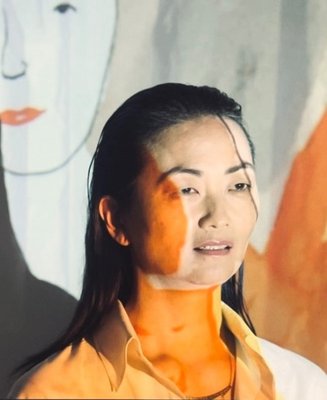
Sara Sejin Chang (also known as Sara van der Heide) is a Korean-Dutch artist born in 1977 in Busan, South Korea, who currently serves as Interim Professor administering the Chair of Spatial Concepts at the University of Braunschweig (HBK) for the 2024-2025 academic year, replacing Candice Breitz. Based in Berlin, Chang creates shamanic film installations that combine film, historical research, rituals, drawings, texts, and sound compositions to challenge Eurocentric thinking, racialization, and persistent colonial narratives. Her work has been exhibited internationally at major venues including Moderna Museet Stockholm, Kunstinstituut Melly Rotterdam, Centraal Museum Utrecht, and ARGOS Brussels, and she has participated in significant biennials such as the Berlin Biennale, Dhaka Art Summit, and Busan Biennale. Chang's research interests focus on the intersection of Korean shamanism and contemporary art practice as a means of healing colonial trauma, particularly examining transnational adoption narratives between Korea and the Netherlands. Her work critically engages with the historical relationship between these two countries, including the participation of 3,418 Dutch soldiers in the Korean War (1950-1953) and the subsequent adoption industry that saw approximately 40,000 people adopted from the Global South to the Netherlands. She interrogates Eurocentric systems of categorization, racialization, and their penetration into all levels of contemporary Western society, proposing what she terms 'meta-cosmic and inclusive approaches to modernity' that transform conventional understandings of value and time. Through her practice, Chang seeks to repair historical ruptures, particularly those affecting diasporic communities, and create spaces for ancestral reconnection. Chang's artistic output demonstrates a consistent trajectory toward using shamanic practices as frameworks for decolonial critique and healing. Her recent major work Dismemberment (2024) employs the Korean Ssitgimgut ritual tradition to symbolically heal 'sick Europe' through a dismemberment and cleansing process, while Four Months, Four Million Light Years (2020) addresses colonial narratives behind transnational adoption through a shamanic healing journey across time and space. These works, along with her long-term project The Mother Mountain Institute , form a cohesive body of work that challenges the normalization of racialization within European society while proposing alternative knowledge systems rooted in Korean shamanic traditions. Scientific Awards: Theodora Niemeijer Prize (2023) - the largest Dutch Art Prize Berlin Artistic Research Grant Fellowship (2022-2023) Jeanne Oostingprize for 'Claim to Universality; Colour Theory Exercise 1-12' Chang's practice extends beyond traditional academic advising, functioning instead through collaborative research frameworks and institutional critique. Her work has been supported by significant grants including the Mondriaan Fund and the Berliner Programm Künstlerische Forschung. She operates through what she terms 'the Mother Mountain Institute,' a conceptual framework that connects her artistic practice with shamanic knowledge systems and decolonial theory. This institute serves as both a research platform and a metaphorical space for healing colonial ruptures, particularly those affecting transnationally adopted individuals. Chang's work consistently challenges the 'whiteness of contemporary art spaces' in European cities, using these spaces themselves as metaphors for the colonial structures they inhabit while simultaneously transforming them into sites of ritual and healing.