Claire Bowern is Professor of Linguistics at Yale University specializing in historical linguistics, language documentation, and Australian Indigenous languages. Her research employs computational phylogenetics to study language evolution and supports language revitalization through digital archives and fieldwork methodologies. Recent publications address: Phylogenetic signal in lexical evolution across language families Digital infrastructure for endangered language documentation (FLEx software analysis) Decolonizing linguistics pedagogy and research practices Her work consistently integrates linguistic, anthropological, and computational approaches to analyze language diversity and change. She contributes to global databases including Grambank and D-PLACE, examining links between linguistic, cultural, and environmental patterns.
Alin Coman is a Professor at Princeton University 's School of Public and International Affairs, leading the Cognition in Collectives Lab . His research explores how cognition emerges and evolves within social contexts, focusing on collective memory, belief dynamics, and emotion regulation through interactions. Education: Ph.D. from the New School for Social Research Research Focus: Integrating laboratory experiments, field studies, social network analysis, and agent-based simulations, his work demonstrates how macro-level phenomena like collective memories and synchronized beliefs arise from micro-level cognitive processes. Key themes include memory convergence, belief propagation in networks, and socially triggered prediction errors. Article Trends: His recent publications address vicarious memory frameworks, emotion regulation contagion, moral narratives, political belief change, pandemic-related belief dynamics, and the role of social norms in cognitive processes. Methodologies often involve network science and experimental paradigms. Advising: Mentors graduate researchers including Ari Dyckovsky, Gracielle Li, and Naomi Vaida. Lab: The Cognition in Collectives Lab employs a social-interactionist approach to study emergent psychological phenomena across groups and networks.
Małgorzata K. Citko-DuPlantis is an Assistant Professor of Japanese Literature and Culture at the University of Tennessee’s Department of World Languages and Cultures, within the College of Arts and Sciences. She holds a Ph.D. from the University of Hawaiʻi at Mānoa, alongside M.A. and B.A. degrees from Polish institutions (Collegium Civitas and University of Warsaw). Her research interrogates the instability of premodern knowledge systems, focusing on the Man’yōshū’s evolving cultural significance across medieval and modern eras. She challenges the canonical fixation on a single manuscript of this foundational poetry collection, arguing its role as a malleable cultural construct. Her work spans interdisciplinary areas including digital humanities, medieval Japanese poetry reception, and contemporary pop-media depictions of premodern Japan. Citko-DuPlantis has authored/co-authored monographs and peer-reviewed articles in English, Polish, and Japanese, with notable works like Clashes of Dragons and Dragonflies (2012) and her forthcoming monograph Embracing Instability: Imagining “Man’yoshū” in Medieval and Modern Japan . She has been awarded grants from the Japan Foundation, Fulbright, and MEXT, and has presented at major conferences such as the Association for Asian Studies and MLA. Her research awards reflect sustained scholarly impact, complemented by multilingual competence in languages including Arabic, Chinese, French, German, Hebrew, Italian, Japanese, Korean, Portuguese, Russian, and Spanish. Citko-DuPlantis actively engages with both academic and public spheres, bridging historical textual analysis with modern cultural phenomena.
Volker Benkert serves as Associate Professor in Arizona State University's School of Historical, Philosophical and Religious Studies, with additional affiliations at the Center for the Study of Religion and Conflict, Melikian Center, Jewish Studies program, and Osher Lifelong Learning Institute. Education: Dr. Phil., University of Potsdam Staatsexam, University of Bonn Studies in History and English at Universities of Edinburgh, St. Petersburg, and Fribourg Research Focus: Benkert investigates regime change impacts on biographies in 20th century Germany through biographical interviews and discourse analysis. His work examines transmission of apologetic historical narratives across generations, focusing on German-Jewish relations, Holocaust representation, and generational identity formation. Key methodologies include comparative genocide pedagogy and media memory studies , with publications spanning German reunification impacts and DDR generational studies. Publication Trends: Recent output (2013-2022) reveals three dominant strands: 1) Comparative genocide education (collaborative works on Holocaust/Rwanda pedagogy), 2) German generational history (particularly the "last DDR generation" born circa 1970), and 3) Critical analysis of Holocaust representation in German media. His edited volumes consistently explore memory politics through generational lenses. Scientific Awards: No awards documented in provided materials. Advising & Grants: Mentored seven Honors Theses and 35+ honors contracts at ASU, plus two Master's theses. Secured collaborative funding through Arizona Holocaust Education Initiative and partnerships with USC Shoah Foundation, United States Holocaust Memorial Museum, and Anti-Defamation League for genocide education workshops. Research Teams: Co-organizes International Comparative Genocide Symposium and Terrortimes, Terrorscapes conference series. Leads ASU's Holocaust education initiatives with Jason Bruner and Lauren Harris, developing digital tools for comparative genocide teaching.
Hakan Karateke is the Kanuni Süleyman Professor for Ottoman and Modern Turkish Studies at the University of Chicago, affiliated with the Department of Near Eastern Languages and Civilizations. He has taught at UChicago since 2009 and serves as Admissions Chair. His research focuses on Ottoman cultural history, philology, and the evolution of Turkish language and historiography. Ph.D., University of Bamberg (1998) His methodological expertise bridges philology and historical analysis, emphasizing textual interpretation and contextual reconstruction. He is currently working on a monograph about 19th-century Ottoman historiography and a multi-year project tracing the cultural history of the Ottoman Turkish language. Recent publications include analyses of Evliya Çelebi’s travel account construction, Ottoman anti-Judaism discourse, and protocol evolution. He co-edits two major academic series: 'Ottoman and Turkish Studies' (Academic Studies Press) and 'The Ottoman Empire and its Heritage' (Brill). His courses cover Ottoman cultural history, language studies, and Near Eastern empires. Research themes span: Ottoman historiography transformation Language perception shifts Inter-ethnic relations Manuscript analysis Political rhetoric Ceremonial studies
Ana Ros Matturro is an Associate Professor in the Department of Romance Languages and Literatures at Binghamton University, where she has been a faculty member since 2008. She also holds a Courtesy Title with the Translation Research and Instruction Program (TRIP). Her academic work focuses on the Southern Cone of Latin America, particularly examining how collective memory of dictatorial pasts has been formed and transmitted across generations. Dr. Ros Matturro's educational background includes: Ph.D. in Romance Languages and Literatures from the University of Michigan, Ann Arbor (2008) B.A. in Literary Studies from the College of Humanities and Education, University of Uruguay, Montevideo (2000) B.A. in Secondary Education Literature Teaching from Instituto de Profesores Artigas, Montevideo, Uruguay (1999) Her research centers on post-dictatorial societies in Latin America, with particular emphasis on the construction and transmission of collective memory, civil-military relations, and individual responsibility in oppressive systems. She examines how obedience and resistance function in both authoritarian and democratic contexts, analyzing the complex ways in which historical trauma shapes contemporary social relations. Her work bridges literature, cinema, political science, and memory studies to provide nuanced understandings of how societies process and learn from traumatic pasts. Dr. Ros Matturro's scholarly output reveals a consistent focus on how artistic and cultural productions contribute to collective memory formation in post-dictatorship contexts. Her work increasingly examines perpetrator perspectives and the complexities of complicity, showing how these elements shape transitional justice processes. Rather than focusing solely on victims' narratives, her research explores the gray areas of political participation and the ways ordinary citizens navigate authoritarian regimes. Her notable recognitions include: Provost's Individual Development Award from Binghamton University (2024, 2015) College Finish Line Grant from Binghamton University for advancing her second book project (2022) Harpur Dean's Conference Funds for co-organizing the symposium "The Military Industrial Complex in the Americas" at John Jay College of Criminal Justice (2020) Fellowship at the Institute for Advanced Studies in the Humanities (2011, 2010) In 2022, Dr. Ros founded GIMUR, a collaborative research group of female academics from different countries and disciplines who study the formation and transmission of collective memory in Uruguay. Her work has been supported by multiple grants that have enabled her to advance her research on civil-military relations in post-dictatorship Chile and Uruguay, as well as to organize academic symposia that bring together scholars from across the Americas to examine the legacy of authoritarian regimes. Dr. Ros Matturro maintains active scholarly relationships with researchers across Latin America, the United States, and Europe who are examining similar phenomena in other post-conflict contexts. Her interdisciplinary approach creates comparative frameworks that deepen our understanding of how memory functions across different cultural and political landscapes, with particular attention to the connections between historical analysis and contemporary social issues.
Deidre Shauna Lynch is a distinguished Professor of Literature at Harvard University, holding the titles of Harvard College Professor and Ernest Bernbaum Professor of Literature. Her primary affiliation is with the Department of English within the Faculty of Arts and Sciences (FAS). She is deeply committed to supporting first-generation Harvard students, drawing from her own background as a first-generation college graduate. Dr. Lynch earned her B.A. (Hons.) from the University of British Columbia in 1983 and both A.M. and Ph.D. degrees from Stanford University in 1992. Her research focuses on 18th-century and Romantic-period British literature and culture, with particular emphasis on the theory and history of the novel, Gothic literature, Enlightenment studies, book history, and affect theory. She also explores the institutional history of English studies, examining how literary education and canon formation shape cultural narratives. Her work consistently engages with the material and cultural dimensions of literature. Recent articles highlight themes like fragmented reading practices, the role of women in literary genius discourses, and the interplay between texts and historical contexts. She has contributed to major projects such as the Norton Anthology of English Literature and edited annotated editions of Jane Austen’s works. Her awards reflect her teaching excellence and scholarly impact at Harvard. Scientific Awards: Harvard College Professor Ernest Bernbaum Professor of Literature In advising, Lynch prioritizes mentorship across undergraduate and graduate levels, emphasizing inclusivity and access to literary knowledge. She has not listed specific grants in the provided text, but her editorial leadership and institutional roles suggest significant contributions to academic infrastructure. Her research often intersects with historical archives, print culture, and the social dimensions of reading, though no lab affiliations are explicitly mentioned.
Jennifer Johnson-Hanks serves as Professor and Executive Dean of the College of Letters & Science at the University of California, Berkeley, holding a joint appointment in the Departments of Sociology and Demography. She currently chairs the Berkeley Division of the Academic Senate, demonstrating significant administrative leadership within the university structure while maintaining active scholarly contributions to demographic theory and methodology. Her educational background includes: BA in Anthropology from University of California, Berkeley MA in Anthropology from Northwestern University PhD in Anthropology from Northwestern University Johnson-Hanks' research examines the intersection of cultural anthropology and demography, with particular focus on how intentions shape family formation and fertility decisions in contexts of uncertainty. Her work integrates ethnographic evidence with demographic analysis to explore life course transitions, especially in sub-Saharan Africa where she has conducted extensive fieldwork on educated women's motherhood timing. Central to her scholarship is the critique of methodological individualism in demographic research, emphasizing how material and schematic structures influence vital events. Analysis of her 2015-2022 publications reveals persistent thematic threads: methodological innovation in measuring intentions, the social construction of statistical norms, and the cultural embeddedness of demographic behavior. Her work consistently challenges assumptions about preference stability while developing frameworks like 'conjunctural action' to integrate social theory with demographic analysis. Regional expertise in African demographic systems informs broader theoretical contributions about how uncertainty shapes life decisions across diverse contexts. While specific advising relationships and grant funding details aren't documented in available sources, Johnson-Hanks' leadership roles and theoretical contributions indicate significant institutional influence. Her directorship of the College of Letters & Science positions her at the nexus of academic administration and demographic scholarship, where she shapes both research agendas and educational infrastructure.
Carmen Moreno-Nuño is a Professor of Hispanic Studies at the University of Kentucky. Her research focuses on contemporary Spanish literature, cultural studies, and the intersection of visual arts with historical memory. She holds a BA in Philosophy from the Universidad de Granada (1992) and a PhD from the University of Minnesota (2000). Education: BA, Universidad de Granada (1992); PhD, University of Minnesota (2000) Her work explores themes such as the Spanish Civil War, trauma studies, myth studies, and information manipulation. She analyzes cultural artifacts like films, comics, and photography to interrogate historical narratives and their socio-political implications. Recent projects include studies on disinformation in Spanish media, comparative pedagogical approaches to teaching contentious histories, and the representation of apocalypse in cinema. Her publications include co-edited volumes like The Graphic Past: Comic and History in 21st-Century Spain (2023) and Haciendo Memoria (2019). She has presented at institutions such as the University at Buffalo and the University of Paris 8, and serves on editorial boards for Revista de ALCES XXI and the Diálogos Peninsulares series.
University of North Carolina at Chapel HillUnited States
Ruth von Bernuth is a Professor of German Education specializing in German and Yiddish literature and culture from the fifteenth through eighteenth centuries, with particular expertise in sixteenth-century texts, Jewish carnivalesque traditions, and Yiddish biblical adaptations. Her educational background includes a PhD in Medieval and Early Modern German Literature from Humboldt-Universität zu Berlin. Dr. von Bernuth's research centers on natural folly in early modern German literature, Jewish folk narratives (especially the Chelm tales), and the transmission of biblical literature in Yiddish. She examines how cultural constructs of mental disability evolved from medieval marvels to modern clinical frameworks, while exploring the intersection of Jewish humor and religious identity in pre-modern Europe. Her publications reveal consistent thematic threads: the adaptation of religious texts in Yiddish vernacular, the evolution of Jewish folk traditions across Eastern Europe, and the literary representation of folly as social commentary. Key methodological approaches include manuscript analysis, comparative folklore studies, and cultural history frameworks. Scientific recognition includes: Yad Hanadiv Visiting Fellowship in Jewish Studies (Rothschild Foundation, Israel) (2012-13) Vivian Lefsky Hort Memorial Fellowship (YIVO Institute for Jewish Research) (2012-13) Alfried Krupp Junior Fellowship (Wisssenschaftskolleg in Greifswald, Germany) (2013) Mercator Fellow of the Research Training Group 'Religious Knowledge in Pre-modern Europe' at the University of Tübingen (2017-present) While specific advising details are unreported, her fellowships indicate substantial research leadership. She contributes to the University of Tübingen's Research Training Group on pre-modern religious knowledge systems and teaches courses including JWST 297: Yiddish Literature and the Bible and GERM/RELI 227: Luther and the Bible. Her current academic engagement includes directing editorial projects on Jewish material culture and examining Yiddish Bible translations within their historical contexts.
Xiaoze Xie serves as the Paul L. & Phyllis Wattis Professor of Art at Stanford University within the Department of Art & Art History under the School of Humanities and Sciences. An internationally recognized artist, he maintains a studio practice deeply engaged with political and cultural memory. His academic journey includes a Master of Fine Arts from the Central Academy of Arts & Design in Beijing and the University of North Texas, complemented by a Bachelor of Engineering in Architecture from Tsinghua University. Research interests center on contemporary political art, particularly examining archival practices, library systems, and institutional memory through painting, drawing, and video installations. His notable series include Theater of Power analyzing political iconography, Library projects documenting knowledge institutions, and Tracing Banned Books in China confronting censorship. His work consistently explores the intersection of personal memory and collective history within Chinese cultural contexts. Critical reception highlights his contributions through reviews in The New York Times , Art in America , and ARTnews . His artistic output reveals persistent engagement with temporal fragmentation, archival materiality, and political documentation across media. Recent exhibitions at major biennales demonstrate evolving focus on urban transformation and post-pandemic cultural memory. Asia Game Changer West Award (2022) Academic Award in Painting, Nanjing International Art Festival (2016) Joan Mitchell Foundation Painters and Sculptors Grant (2013) Pollock-Krasner Foundation Grant (2003) Dallas Museum of Art Artist Award Phoenix Art Museum Artist Award Xie's artistic practice functions as scholarly research, generating significant discourse through permanent collections at major institutions including Baltimore Museum of Art, Denver Art Museum, and Museum of Fine Arts Houston. His GSA Art-in-Architecture Commission for the US Courthouse in Davenport, Iowa demonstrates public art engagement. Current projects continue his exploration of cultural memory through the Reinventing the Library Cave in Dunhuang initiative, connecting historical preservation with contemporary practice.
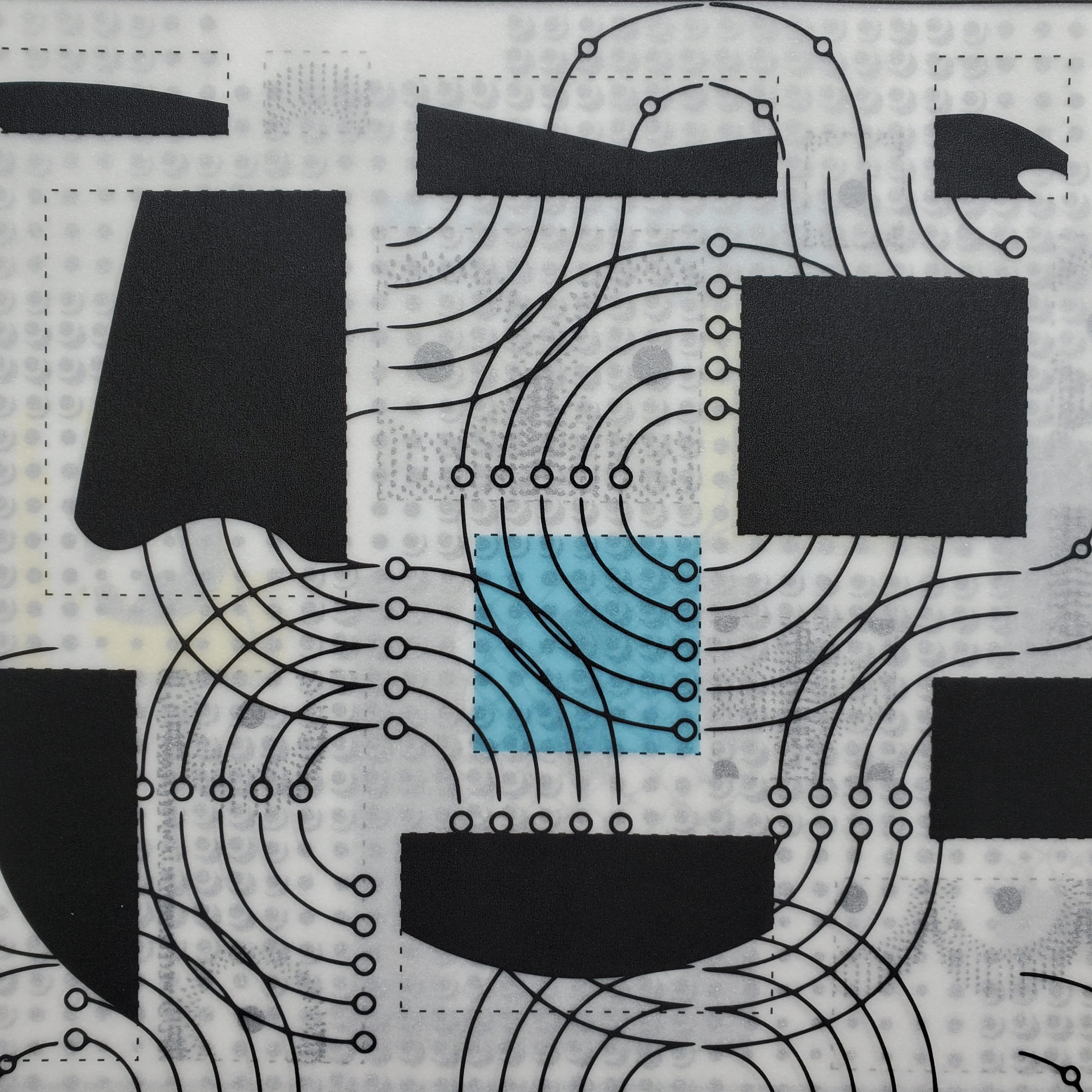
Veronica Graham is a new media artist and printmaker serving as Lecturer in Stanford University's Department of Art & Art History. Based in Oakland and Portland, she founded the design studio Most Ancient in 2010, specializing in experimental comics and exploration games. Her interdisciplinary practice bridges digital media and analog print publishing through poetic world-building that confronts contemporary environmental and social challenges. Her research centers on virtual reality narratives, climate-focused printmaking, and surrealist comics that explore internalized fictions. Key projects include the VR experience Diatribes (2024), examining fears about global warming through a haunted house framework, and the Global Warming Agitprop Posters series (2020-present) using phosphorescent materials to visualize ecological instability. She employs techniques like Wang tile systems for pattern generation and split fountain printing to stretch technical boundaries. 2025 Writer-in-Residence, Writing Space, Chicago 2024 IndieCade Impact Award Nominee for Diatribes 2022 Oculus Launch Pad Grant Recipient 2019 Best American Comics Notable Comics selection 2017 Artist’s Book Residency Grant, Women’s Studio Workshop Graham’s work appears in MoMA, NYPL, and SFMOMA collections. Her VR projects have been presented at Kala Art Institute, Printed Matter (NYC), and Sónar+D. As an educator, she lectures on virtual reality at Stanford and has conducted workshops at institutions including Tufts University and UC Berkeley. Her studio Most Ancient functions as both creative laboratory and publishing platform, supporting collaborative projects like Real Milk (2023) which examines agricultural automation through translucent book design.
Maria Mavroudi is a Professor in the Department of History at the University of California, Berkeley, specializing in Byzantine and Islamic cultural and intellectual exchanges. Her research spans Byzantium and the Arabs, bilingualism in the Middle Ages, Byzantine and Islamic science, and the survival of Byzantine culture post-1453. Education: PhD in Byzantine Studies, Harvard University (1998) MA in Byzantine Literature, Harvard University (1992) BA in Philology, University of Thessaloniki (1990) Her work focuses on cross-cultural transmission, particularly scientific and literary texts between Byzantium and the Islamic world. Recent publications analyze medieval translations, dream interpretation practices, and historiographical debates. Key article trends include: comparative studies of Byzantine and Islamic science, analysis of textual transmission mechanisms, and critiques of cultural identity constructions in historiography. Scientific Awards: MacArthur Fellowship (2004-2009) Wolfgang Fritz Volbach Fellowship (2022) Townsend Center for the Humanities Fellowship (2004-2005) Israel Institute for Advanced Studies Fellowship (2021) Wissenschaftskolleg zu Berlin Fellowship (2016-17) Hellman Family Faculty Fund (2004) Regents' Junior Faculty Fellowship (2004) Dumbarton Oaks Fellowships (2000-2001, 2001-2002) Whiting Fellowship (1995-1996) Humboldt Foundation Fellowship (2007, deferred) She has contributed to public debates on cultural heritage preservation, notably participating in discussions about the Thessaloniki Metro archaeological discoveries and the Hagia Sophia conversion.
Charles B. Stone is an Associate Professor in the Psychology Department at John Jay College of Criminal Justice (CUNY) and Director of the Doctoral Training Program in Psychology & Law at John Jay College and the CUNY Graduate Center. He holds a Ph.D. in Cognitive Science from Macquarie University (2011) and completed postdoctoral fellowships at the Université catholique de Louvain in Belgium (2010–2013). Dr. Stone specializes in cognitive science, examining how autobiographical and collective memories are shaped through social interactions, including jury deliberations, intergenerational transmission, and social media influences. Education: B.A. Sociology, Western Washington University (2004) M.A. Psychology, The New School for Social Research (2007) Ph.D. Cognitive Science, Macquarie University (2011) Postdoctoral Fellowships: Université catholique de Louvain (2010–2013) Research Focus: Memory formation and maintenance Collective memory dynamics Social media’s role in memory Jury decision-making processes Awards: 2020–2021: Distinguished Faculty Service to Students Award 2019–2020: Outstanding Scholarly Mentor Award 2017: Visiting Research Fellowship (Australia) Grants: CUNY Collaborative Incentive Grant (CIRG): Examining prejudice and dehumanization in judicial systems PSC-CUNY grants (3): 9/11 memory transmission, jury perceptions, and race in police shooting trials Dr. Stone mentors students across MA and PhD programs and serves as an Associate Editor for Applied Cognitive Psychology . His work bridges cognitive science with legal and forensic applications, emphasizing societal impacts of memory and communication.
Liang Cai is the Ruth and Paul Idzik Associate Professor in Digital Scholarship at the University of Notre Dame, Department of History. She specializes in Chinese political, legal, and intellectual history of the Qin-Han dynasties (221 BCE–23 CE), with additional expertise in Confucianism, digital humanities, and social network analysis. Her research leverages archaeologically excavated manuscripts and computational methods to reevaluate foundational narratives of Chinese civilization. Ph.D., Cornell University Dr. Cai's work interrogates the interplay between law and morality in early Chinese empires, focusing on convict labor systems and their political implications. She explores how utopian ideals and amnesty policies eroded legal frameworks, leading to Confucian skepticism toward law. Her digital humanities project constructs structured biographical databases of early Chinese officials. Recent publications analyze corrective justice's absence in Han legal systems, Confucian virtue's role in governance, and the hermeneutics of omen-based political theology. Her scholarship bridges traditional historiography with computational analysis. Scientific Awards: 2014 Academic Award for Excellence (Chinese Historians in the United States) 2015 Best First Book in the History of Religions finalist (American Academy of Religion) Dr. Cai collaborates with computer scientists to model bureaucratic networks in early China. Her research has been supported by grants enabling manuscript digitization and network visualization projects.