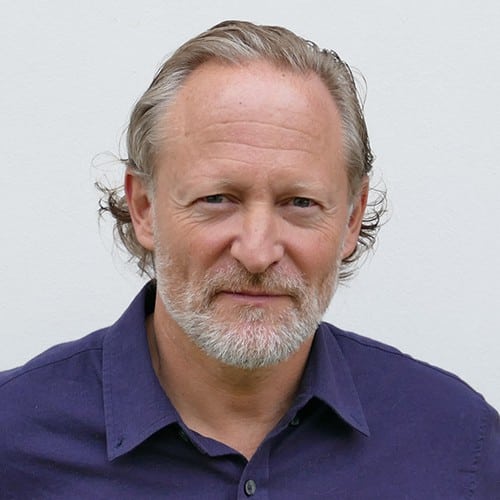
Anders Damgaard is an Associate Professor and Head of BSc studies at the Department of Environmental and Resource Engineering (DTU Sustain), Technical University of Denmark. His research focuses on environmental assessment methodologies, particularly Life Cycle Assessment (LCA), and their application to waste management systems, resource recovery, and policy development. He leads the development of LCA models like EASEWASTE/EASETECH and collaborates with institutions such as the Danish EPA and Nordic Council of Ministers. Key research areas include carbon footprints of waste treatment, textile waste composition, and additive impacts in plastics recycling. Education: Not explicitly stated in provided texts. Research Interests: Waste management optimization, circular economy frameworks, sustainable technologies, and policy-driven environmental assessments. His recent publications address topics such as carbon footprints of sewage sludge treatments, Nordic textile waste composition, and challenges in plastic additive inclusion in LCA studies. He supervises PhD students in projects involving lifecycle modeling, construction waste recycling, and consumer practices in circular economies. As part of DTU Sustain, he contributes to interdisciplinary teams advancing sustainable resource management and policy solutions.
Desmond Elliott is an Associate Professor in the Natural Language Processing section at the Department of Computer Science, University of Copenhagen (UCPH). His research focuses on multimodal and multilingual models with specific emphasis on vision-language integration and tokenization-free NLP approaches. He teaches Bachelor and Master's level courses including Advanced Topics in Natural Language Processing (since 2019), Grundlæggende Data Science (since 2023), and previously Data Science (2021-2023). His research interests center on building and understanding multimodal and multilingual models , particularly exploring vision and language interactions through billion-parameter systems. Current work investigates cultural representation disparities in vision-language models, parameter-efficient captioning, and multimodal distributional semantics across diverse domains including food culture and medical imaging. His methodology emphasizes real-world applicability in non-English contexts and ethical considerations in multimodal systems. Elliott's recent publications (2025) demonstrate leadership in multimodal NLP, with significant contributions to vision-language pretraining, multilingual evaluation frameworks, and clinical NLP applications. His work spans theoretical advancements in model architectures and practical implementations addressing challenges in low-resource languages and domain adaptation. Best Long Paper Award at EMNLP 2021 Best Poster Award at COLING 2019 As an active educator, Elliott contributes to courses on Fair and Transparent Machine Learning and previously taught Information Retrieval. His research collaborations span international institutions with particular focus on European and non-English language contexts, reflecting UCPH's recognition as Europe's #1 institution for HCI research over the past decade.
Morten Birkved is a Professor at the Department of Green Technology, University of Southern Denmark, and Head of SDU Life Cycle Engineering. He leads the SDU Climate Cluster and actively contributes to research on Life Cycle Assessment (LCA) , Circular Economy , and Environmental Sustainability . His work spans cross-disciplinary collaborations in Denmark and internationally. Education: M.Sc. in Environmental Chemistry, PhD in Sustainable Development His research interests focus on integrating LCA with circular economy principles, analyzing environmental impacts of construction materials, and developing sustainable solutions for agriculture and energy systems. Recent projects include microbial protein production, green fuels in shipping, and biorefineries for organic waste valorization. Recent publications highlight 2025 advancements in: Eco-design strategies for buildings Hybrid wastewater treatment systems Carbon-storing asphalt pavements Comparative LCA of housing typologies These studies emphasize Denmark as a case study region and leverage both parametric and probabilistic modeling approaches. Scientific Awards Recipient of SCC Fast Track Prize (2025) Teaching & Supervision Supervised PhD research on circular agriculture and plastic circularity Lectured on chemical processes and environmental impacts since 2019 Labs & Projects Coordinates EU-funded initiatives like FLAVOURFERM (plant-based fermentation) and AgriLoop (circular agriculture) Develops microbial platforms for waste-to-protein conversion Advances biostimulants for sustainable agriculture
Sara Shafiee is a Senior Researcher at the Department of Civil and Mechanical Engineering , Technical University of Denmark (DTU) . She specializes in product configuration systems, manufacturing engineering, and AI-driven innovation. Her work bridges technical systems with organizational agility, emphasizing sustainability and customer-centric design. External Roles: Founder & CEO of DivERS (Jan 2021–) External Lecturer at Copenhagen Business School (2022–2024) Senior Business Consultant at Haldor Topsoe AS (2017–2019) Research Focus: Her work addresses challenges in product configuration systems, generative AI applications, and sustainable construction. Key themes include: Optimal product design through recommendation systems Agile methodologies in knowledge-intensive development Environmental impact monitoring via configurators Publications Trends (2023–2025): Recent work explores AI-driven manufacturing optimization, consumer-centric innovation strategies, and the integration of environmental monitoring into design systems. High-impact areas include generative AI applications (13K+ downloads) and modular construction configurators. Awards: Agnes & Betzy Award (2025) Nordic Women in Tech Leadership Award (2022) Best Digital Startup (Venture Cup Denmark, 2021) Innovation Fund Denmark Role Model (2018) Advising & Grants: Supervised PhD projects on recommendation systems and configurator design. Lead PI of the RECODE project (DFF Grant DKK 10M+, 2024–2027) focusing on deep learning for engineer-to-order systems. Labs & Teams: Core member of DTU’s Design and Manufacturing Systems group, collaborating with industry partners like Haldor Topsoe and DivERS to develop scalable configurator solutions.
David Krakauer is President and William H. Miller Professor of Complex Systems at the Santa Fe Institute (SFI), a leading center for interdisciplinary research in complex adaptive systems. He leads SFI’s scientific vision and contributes actively to research on the evolution of intelligence, information processing, and problem-solving matter across biological and cultural domains. Research Interests: David’s work explores how life and intelligence emerge and evolve, focusing on the mechanisms of memory, communication, and computation in genetic, neural, social, and cultural systems. His research integrates mathematical modeling, computational frameworks, and empirical data to understand collective intelligence, niche construction, and the thermodynamic and evolutionary foundations of cognition. He investigates deep questions about the relationship between physical laws and information processing in living systems. Recent Research Trends: His recent publications analyze optimal learning rates in ecological niches, the outsourcing of memory through environmental modification, and theoretical visions for the future of complexity science. These works collectively emphasize the role of information efficiency, metabolic constraints, and collective computation in adaptive systems. Scientific Awards: Wired Magazine Smart List 2012 - One of 50 people who will change the world Entrepreneur Magazine Visionary Leader 2016 - Advancing global research and business Advising and Grants: While specific students are not listed, Krakauer has mentored numerous researchers through SFI programs, workshops, and collaborative projects. He has led major interdisciplinary initiatives, including those on the origins of life, AI and cognition, and complexity in law and regulation. His leadership in founding the Wisconsin Institute for Discovery and directing collective computation research indicates substantial grant acquisition and team leadership. Labs and Teams: He co-directed the Center for Complexity and Collective Computation at the University of Wisconsin–Madison and founded the Wisconsin Institute for Discovery. At SFI, he leads the Science Steering Committee and Science Board, shaping the institute’s research agenda through collaborative working groups and long-term projects in complexity science.
Christian Koch is a Professor and Head of Section at the University of Southern Denmark (SDU) Civil and Architectural Engineering, Department of Technology and Innovation, where he leads research on construction industry dynamics, climate change mitigation, and digital transformation. His work bridges institutional theory with practical challenges in sustainable development and organizational innovation. SDU Climate Cluster EU SAND Project Participant Creative Construction Conference Chair Research interests include circular economy implementation, blockchain in construction logistics, lean construction methodologies, and AI applications for safety analysis. His studies focus on institutional entrepreneurship, interorganizational networks, and policy impacts on construction practices, particularly in Denmark and Sweden. Recent article trends analyze machine learning for accident report analysis, blockchain-enabled resource marketization, and climate-resilient infrastructure. Notable awards include the Taylor and Francis Best Theoretical Paper (2025), SCC Fast Track Award (2024), and CME Best Paper on Societal Challenges (2022). Scientific awards include: Taylor and Francis Best Theoretical Paper (2025) SCC Fast Track November 2024 CME Best Paper Transformative Impact (2022) Best Paper Creative Construction Conference (2025) He actively participates in public discourse through media engagements on construction safety, climate adaptation, and sustainable sand extraction for green transitions.
Anders Haug serves as Associate Professor at the Department of Business and Sustainability (DBS) within the University of Southern Denmark's Kolding campus. Having joined the university in 2008 as Assistant Professor in the Department of Entrepreneurship and Relationship Management before transitioning to his current role in 2010, his academic career spans over 15 years of research and teaching in operations, supply chain, and digital transformation contexts. His work bridges theoretical rigor with practical industry applications, particularly in engineer-to-order manufacturing and logistics sectors. Education: PhD in communication, representation and automation of design knowledge (2005-2007) Haug's research centers on information and knowledge management systems, with deep expertise in data quality frameworks, knowledge-based configuration, and digitalization of business processes. His fingerprint reveals distinctive contributions to product configuration systems, digital twin applications, and supply chain resilience—particularly examining how configurators transform warehouse services, manufacturing processes, and product-service ecosystems. Recent work increasingly addresses sustainability through green dynamic capabilities frameworks and life cycle assessment tools, maintaining strong empirical grounding via case studies in Danish manufacturing. Analysis of his 2024-2025 publications shows converging trends: digital technologies (configurators, digital twins) are examined through operational performance lenses while addressing sustainability imperatives. These works span operations management, information systems, and strategic management disciplines but consistently prioritize practical implementation frameworks for manufacturing SMEs. The research demonstrates methodological diversity—from conceptual modeling to empirical case studies—with strong industry relevance in logistics, engineering-to-order contexts, and manufacturing digitization. Scientific Awards: Top read paper in Business 2017/18 (Wiley) (2019) Haug has supervised 34 teaching courses between 2018-2024 covering business information systems, digitalization projects, and supply chain management. His academic service includes extensive peer reviewing for conferences like NOFOMA and DRS, plus organizational roles in Nordic business research networks. While specific grant details aren't provided, his 175+ research outputs and industry collaborations (evidenced by consultant work since 2006) indicate substantial research funding engagement. Media contributions on 3D printing and business process efficiency demonstrate effective knowledge transfer to practitioners. Though no dedicated research lab is specified, Haug's extensive co-authorship network—including collaborations on projects like digital twin implementation and configurator development—reveals embeddedness in multiple research collectives. His industry-facing approach manifests through case studies with logistics providers, manufacturer partnerships, and practical frameworks for warehouse service design and supply chain resilience.
Niels Henrik Mortensen is a Professor and Head of Section in the Department of Civil and Mechanical Engineering at the Technical University of Denmark (DTU). His research focuses on engineering design and manufacturing systems, with emphasis on product architecture, modularization, maintenance performance, and AI-driven design solutions. He leads initiatives in engineer-to-order systems, lifecycle costing, and digital transformation in manufacturing. Key research interests include optimizing product architectures for modular systems, enhancing maintenance strategies through data analytics, and applying AI to improve CAD design reuse. His work aligns with UN Sustainable Development Goals related to innovation and infrastructure, and sustainable energy systems. Supervisor for 5 active PhD projects focused on modular architectures, logistics services, and configuration systems Published 175+ peer-reviewed articles, including work on AI-based maintenance frameworks and configurator development Recipient of industry collaboration projects with offshore energy and manufacturing sectors Notable contributions include frameworks for maintenance performance diagnostics and adaptable configuration models. His team operates through MEK and CONSTRUCT research groups at DTU.
Asmus Skar Christiansen is an Associate Professor in Pavement Engineering at the Department of Environmental and Resource Engineering, Technical University of Denmark (DTU Sustain). He serves as Head of Study for the Nordic Master in Cold Climate Engineering programme and lectures on pavement engineering, Arctic road construction, and foundation design. His academic career at DTU spans from Postdoc researcher (2017-2019) to Assistant Professor (2020-2023) and current Associate Professor position since 2023. His research centers on pavement technology and geotechnics with specialization in: Development of advanced testing and modeling techniques for pavements Integration of modern sensing technologies in civil infrastructure Computational mechanics for soil-structure interaction Sustainable materials for cold climate engineering Recent work demonstrates a clear shift toward IoT-enabled monitoring systems and data-driven pavement assessment, with 80% of 2023-2025 publications focusing on sensor integration and machine learning applications. Notable scientific contributions include: Creation of open-source datasets (LiRA-CD, RIVA) for road condition modeling Development of thermomechanical models for heated pavements Innovations in waste soil reuse for infrastructure He actively supervises PhD candidates across multiple projects including GREENPIPE (self-sensing pipe systems) and urban pavement analysis, while maintaining industry consultancy through COWI A/S collaborations. Christiansen also contributes to sustainable infrastructure through DTU's alignment with UN SDG 9 (Industry, Innovation, and Infrastructure) and SDG 11 (Sustainable Cities).
Pernille Erland Jensen is an Associate Professor in the Department of Environmental and Resource Engineering at the Technical University of Denmark (DTU), specializing in Materials & Durability. Her research focuses on electrodialytic upgrading of waste streams and environmental engineering solutions for Arctic communities, particularly in wastewater management and contaminated site remediation. PhD, Technical University of Denmark (2000–2006) M.Sc., Technical University of Denmark (1992–2000) M.S., University of California, Los Angeles (1997–1998) Education in University Teaching at DTU (2007–2008) Her primary research interests include electrodialysis, heavy metal recovery from waste materials, sustainable waste valorization, and climate-resilient sanitation systems in Arctic regions. She contributes significantly to UN Sustainable Development Goals through her work on environmental sustainability and clean water solutions. Recent publications highlight her expertise in microplastic pollution in Greenlandic wastewater, metal recovery from mine tailings via electrodialysis, and the integration of waste materials into cementitious binders. Her work spans environmental science, materials engineering, and Arctic environmental resilience. Scientific Awards: Annual DTU Award for developing Teaching and Learning (2017) She actively supervises PhD students and leads multiple large-scale research projects, including ArcticSewlution and CLIMAREST, focusing on climate adaptation, permafrost thaw, and marine restoration in the Arctic. Her leadership roles as Principal Investigator reflect strong grant acquisition and project management capabilities. She is also engaged in knowledge dissemination through invited and keynote talks at international conferences. Dr. Jensen is part of research networks focused on Arctic environmental challenges and contributes to policy-relevant reports, such as those for the Nordic Council of Ministers. Her lab and collaborative teams work on interdisciplinary solutions bridging environmental engineering, materials science, and climate resilience.
Jette Ernst is an Associate Professor at Roskilde University's Department of Social Sciences and Business, specializing in organizational sociology and management studies. Her research focuses on the social and cultural dimensions of organizational change, particularly in healthcare settings, addressing topics like digitalization, robotics, professional identity, and power dynamics. She holds a PhD and multiple advanced degrees in business and communication studies. Education: PhD, Cand.Negot, Master of Science in Business (Language and Culture with English specialization). Research interests emphasize how automation and organizational restructuring impact healthcare work, employee responses, and professional boundaries. She employs qualitative methods including ethnography and discourse analysis, drawing on Bourdieu's practice theory and framing theory. Key themes include robotization in hospitals, merger processes, and performance management. Notable projects include leading the Independent Research Fund Denmark-funded 'Robot technology in hospitals' (2023-2026) and Helsefonden's 'Human and robot exchanges in Danish hospitals' (2020-2022). Recent publications explore temporal strategies in automation and labor dynamics in automated healthcare systems. Awards: Best Developmental Paper Award (2024), EGOS 'That's Interesting' Award (2017), Emerald/EFMD Doctoral Research Award (2018) Teaching: Courses in organization theory, leadership, HRM, and research methodology Supervision: Active mentor for academic theses at all levels Labs/Teams: Crossroads of Care and Social Reproduction (CARE) research group
Muhammad Usman Hanif is an Assistant Professor at the Department of Technology and Innovation within the Faculty of Engineering at the University of Southern Denmark (SDU). His research focuses on structural health monitoring , concrete durability , and damage assessment in civil engineering systems. Research Highlights Advanced signal processing for bridge damage detection Acoustic Emission techniques in CFRP-concrete debonding Machine learning applications in concrete durability prediction Augmented Reality integration with bridge monitoring systems Recent Publications (2023-2025) 2025: Machine learning in concrete durability 2024: Novel ΔT mapping for debonding detection 2023: FBG sensors in CFRP retrofitted beams 2022: MEMS accelerometers for damage assessment Teaching Activities Finite Element Method (2025) Non-linear Finite Element Method (2025) Advanced Finite Element Analysis (2024)
Eva Boxenbaum is a Professor in the Department of Organization at Copenhagen Business School (CBS), Denmark, with significant contributions to organizational theory and institutional work. Her research intersects with United Nations Sustainable Development Goals through studies of organizational identity, hybrid forms, and sustainability. Her primary research focuses on organizational identity construction in professional contexts like management consulting, institutional work in experimental spaces, and the role of visual imagery in micro-foundations of institutions. Recent work explores hybrid organizational forms and the impact of large language models on organization theory, employing qualitative process-oriented methodologies. Analysis of her recent publications reveals a strong trajectory toward technology-organization interactions (particularly AI) while maintaining core expertise in identity work and institutional theory. Her scholarship consistently addresses how professionals navigate ambiguity in rapidly changing organizational landscapes. Professor Boxenbaum actively disseminates knowledge through 18 recorded academic activities including keynote lectures on category formation and hybrid organizational forms. She has supervised at least one graduate student and engaged extensively with public discourse through 24 media appearances covering topics from regional healthcare disparities to leadership in social housing projects.
Anna Rogers is an Associate Professor of Data Science at the IT-University of Copenhagen , affiliated with the NLPnorth research group. Her work focuses on Natural Language Processing (NLP) , Artificial Intelligence , and Large Language Models (LLMs) , with a particular emphasis on ethical data use, peer review innovation, and transformer model analysis. She leads projects addressing AI transparency, medical QA hallucinations, and generative AI applications. Her research explores topics including: LLM behavior and evaluation Data governance in NLP Peer review systems optimization Transformer model robustness Medical AI applications Key Projects : PlagAIrism : Tracking LLM training data origins Pioneer Centre for AI : Pre-registered replication studies TinyGPT : Efficient NLP models AIInterviewer : Large-scale qualitative data collection Publications span ACL , EMNLP , and specialized NLP workshops, addressing topics from BERT analysis to AI content farms.
Dimitris Chrysostomou is an Associate Professor in the Department of Materials and Production at Aalborg University, Denmark. He leads the Robotics & Automation Group and directs the AI:Cybernetics Lab. His work focuses on developing safe, intuitive robotic systems for industrial and social contexts, emphasizing human-robot interaction (HRI), AI ethics, and collaborative robotics. Chrysostomou has over 15 years of research experience, funded by EU frameworks and national grants, with over 70 peer-reviewed publications. Education: PhD in Robot Vision (2013) and Diploma in Production Engineering (2006) from Democritus University of Thrace. He coordinates courses in robotics and manufacturing technology, emphasizing problem-based learning models. Administrative roles include heading the Robotics and Automation Group and the Aalborg Robotics Challenge steering committee. Research interests span AI-driven robotics, ethical implications of robot behavior, and HRI evaluation methodologies. Key projects include SAPIENT (2025-2027) for robotic intelligence and RIACT (2024-2025) on collaborative robot technology. Editor-in-Chief of *Industrial Robot* journal, IEEE Senior Member, and leader in euRobotics standardization initiatives. Notable contributions include virtual assistants for industrial robots, trust evaluation frameworks in HRI, and energy-based approaches for collaborative robotics. Active in conference organization, editorial roles, and industry collaborations, including co-founding AI startups.