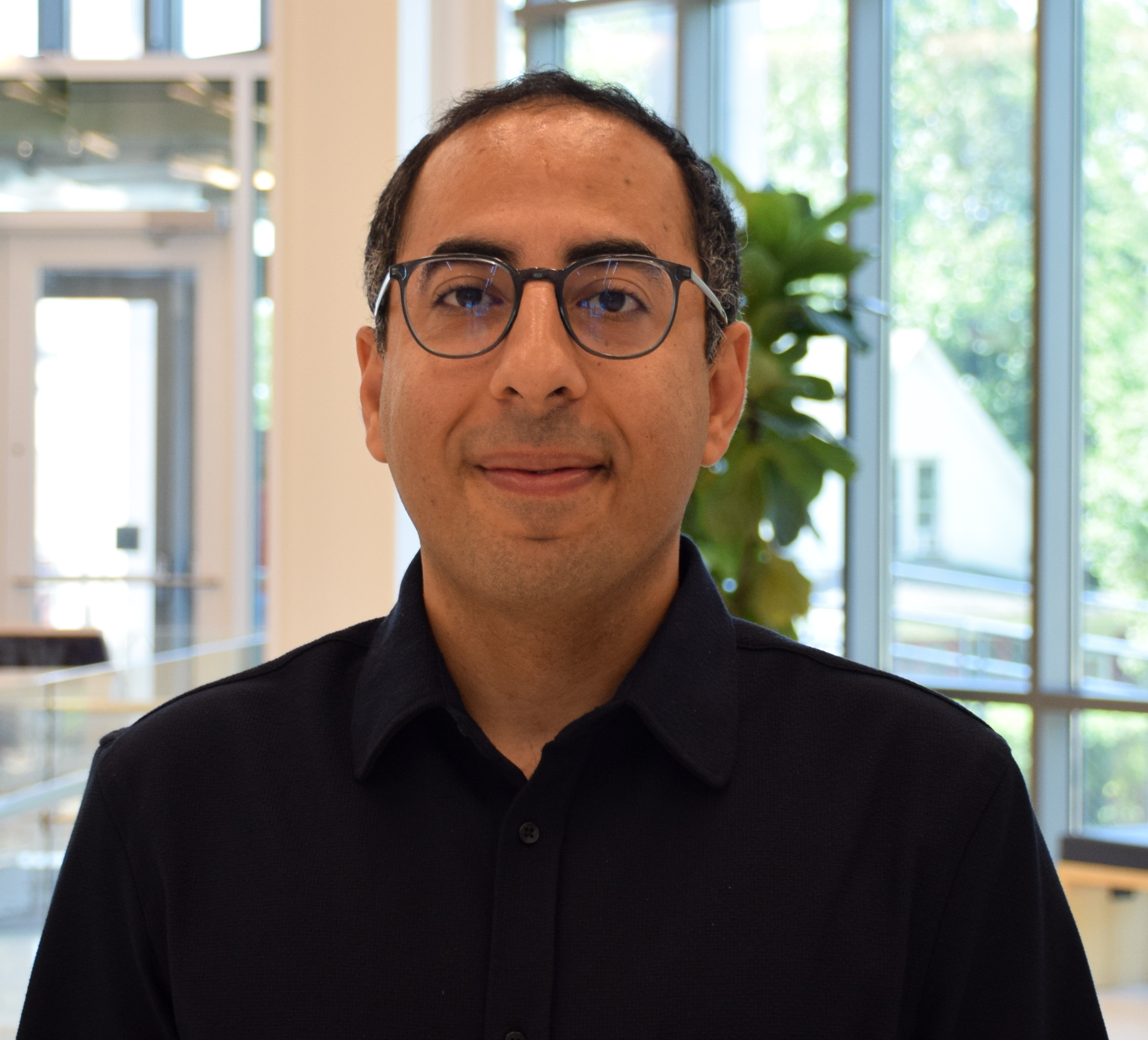
Juanita Duque-Rosero is a Research Assistant Professor at Boston University, specializing in computational number theory and arithmetic geometry. She collaborates with Jennifer Balakrishnan on explicit Chabauty methods and triangular modular curves. Her research focuses on rational points on curves, modular curves, and p-adic heights. Education: PhD from Dartmouth College (2023, advised by John Voight), Masters from Colorado State University (2019, advised by Rachel Pries), and undergraduate degree from Universidad de los Andes. Research interests include arithmetic properties of curves, geometric quadratic Chabauty, and computational aspects of modular forms. She has contributed to databases of Hilbert modular surfaces and studies of Artin-Schreier curves. Her recent articles explore invariants of curves, p-adic heights, and geometric methods in number theory. Talks include presentations at CIRM, IPAM, and Texas A&M. Teaching includes courses like Modern Algebra and Graph Theory at Boston University, and calculus courses at Dartmouth and Colorado State. She mentors students in algebraic geometry and number theory through directed reading programs. She advocates for equitable mathematics education through Federico Ardila’s axioms and participates in outreach activities. A creative hobby is mathematical origami, leading a club at Colorado State University.
Rosemary Fisher is a Senior Lecturer in Entrepreneurship and Innovation at Swinburne University of Technology's School of Business, Law and Entrepreneurship. She holds a PhD from Swinburne and multiple advanced degrees in business and arts disciplines. Her career spans academic leadership roles including Head of Commerce at Box Hill Institute and Course Director for the Master of Entrepreneurship at Swinburne. Fisher combines teaching with impactful research in entrepreneurship education, higher education pedagogy, and innovative teaching strategies like flipped learning. Education: PhD, Swinburne University of Technology MBA, University of Melbourne Master of Business (Professional Accounting), Victoria University Bachelor of Arts, Canberra College of Advanced Education Research Interests: Focuses on pedagogical innovations such as flipped learning's impact on student outcomes, entrepreneurial resilience, and strategies to enhance teacher status. Active in curriculum design for entrepreneurship programs and digital education solutions. Current projects explore AI's role in business education and EFL teaching methodologies. Awards: 2017 Faculty Teaching Excellence Award Academy of Management Distinguished Reviewer (2012, 2014) 2011 Outstanding PhD Thesis Award Grants & Projects: Lead researcher on initiatives addressing teacher retention, aged care feedback systems, and migrant business training. Recent grants include "$60K for AI in Entrepreneurial Education" and "$45K for EFL Flipped Learning Research". Professional Engagement: Editorial Board member for Active Learning in Higher Education and Journal of Effective Teaching . Serves on international committees for entrepreneurship education and pedagogical innovation. Active in policy development for social entrepreneurship and educational technology adoption.
Patrick T. Brandt is a Professor of Political Science, Public Policy, and Political Economy at the University of Texas at Dallas , affiliated with the School of Economic, Political and Policy Sciences . His work integrates advanced statistical methods with political science, focusing on time series analysis, machine learning, and Bayesian modeling to study political dynamics. His research spans international relations , political economy , terrorist targeting , and conflict forecasting . He specializes in developing novel models for event count time series, including the Bayesian Poisson Vector Autoregression and MS-BVAR packages for R. His NSF-funded projects focus on event data generation and real-time conflict forecasting. Recent publications emphasize domain-specific language models (ConfliBERT variants), graph neural networks for conflict prediction, and machine translation challenges in political text analysis. He maintains the OpenEvent Data Repository and develops software like MSBVAR and PESTS for academic use. Scientific Awards : Robert H. Durr Award for Best Methodology Paper, Midwest Political Science Association (2006)
Steffen Sagave is an Associate Professor in the Department of Mathematics at Radboud University. His research focuses on algebraic topology, particularly homotopy theory, with interests in K-theory, higher category theory, and derived algebraic geometry. He holds a Habilitation in Mathematics from the University of Bonn (2013) and a PhD from the University of Bonn (2006), supervised by Stefan Schwede. Previously, he has held roles including Visiting Professor at the University of Wuppertal (2014-2015) and postdoctoral positions at the University of Münster (2008-2009) and the University of Oslo (2006-2008). He is a core member of the Algebraic Topology group at Radboud University, leading research on topics such as logarithmic structures in homotopy theory. Collaborative grants include the Dutch NWO-funded 'Symmetry on the interface of topology and higher algebra' (2025-2031), and he co-organizes the European Autumn School in Topology (2025). His teaching includes advanced courses like Topology and Algebraic Topology 2, alongside supervision of PhD students in areas like algebraic topology and homotopy theory. Scientific activities include organizing conferences, maintaining a YouTube channel with recorded talks, and publishing widely in top-tier journals. His research group is part of the Geometry and Quantum Theory (GQT) cluster, fostering interdisciplinary collaborations in topology and algebra.
Dr. Parichehr Salimifard is an Assistant Professor at Oregon State University's School of Civil and Construction Engineering, holding the Culbertson Faculty Scholar position. She serves as Faculty Advisor for the OSU ASHRAE Student Branch and leads the Sustainable, Healthy, and Resilient Building Lab, focusing on the intersection of building science, environmental health, and climate resilience. Her educational background includes a Postdoctoral Fellowship at Harvard University's School of Public Health, a Ph.D. and M.Sc. in Architectural Engineering (Mechanical Option) from Penn State with a Computational Science minor, and a B.Sc. in Mechanical Engineering from Persian Gulf University. Dr. Salimifard's research centers on indoor environmental quality and its connections to public health, with emphasis on: Aerosol dynamics (transport, deposition, resuspension) for wildfire smoke and pandemic exposure mitigation Health and climate co-benefits of building energy efficiency through the CoBE project Wildfire smoke preparedness in schools/daycares for vulnerable populations Building electrification impacts on air quality and emissions Her recent publications reveal a trend toward spatially and temporally explicit modeling of emissions reductions, using tools like CoBE to quantify health co-benefits of building energy conservation across US states and EU countries, with growing focus on water-energy nexus and grid integration. Her scientific recognition includes: Culbertson Faculty Scholar award Dr. Salimifard secures research funding from the EPA, NIEHS's OSU ASPIRE Center, ASHRAE, industry partners, and foundations. She mentors the OSU ASHRAE Student Branch and collaborates with Harvard/Boston University on the CoBE project, which develops modules for climate policy analysis and water savings optimization. Her Sustainable, Healthy, and Resilient Building Lab drives projects including Wildfire Smoke Preparedness in Buildings, Indoor Aerosol Resuspension Dynamics, and Building-to-Grid Integration, directly addressing climate resilience challenges through building science innovation.
Helen Vidgen is a Professor in Public Health at the School of Public Health, Faculty of Health, Queensland University of Technology (QUT). Her research focuses on food literacy, childhood obesity prevention, and nutrition education, with significant contributions to public health policy and program implementation. She has led projects evaluating school meal programs, childhood obesity management services like PEACH™, and food literacy interventions across diverse populations. Her work emphasizes socio-ecological barriers to nutrition education, policy development, and the translation of evidence-based practices into community settings. Dr. Vidgen has authored over 100 peer-reviewed articles and edited books, including Food Literacy: Key Concepts for Health and Education (2016), which establishes foundational frameworks for food literacy research. She collaborates with government agencies, non-profits, and healthcare professionals to address systemic challenges in obesity prevention and food system reforms. Recent contributions include analyzing the role of school-provided meals in obesity prevention, evaluating father’s roles in family food practices, and advancing measurement tools like the IFLQ-19 food literacy questionnaire. Her research bridges theory and practice, informing policy initiatives on nutrition education, food regulation, and equitable health outcomes.
Avery Olson is an Associate Professor in the Department of Educational Leadership within the College of Education at California State University, Long Beach (CSULB). She serves as Program Coordinator for the Student Development in Higher Education program and is actively involved in teaching, research, and academic leadership. Her office is located in AS 225, and she can be reached at avery.olson@csulb.edu or by phone at 562.985.2537. Education: Ph.D., Education – Higher Education and Organizational Change, University of California, Los Angeles M.A., Education – Higher Education and Organizational Change, University of California, Los Angeles M.S., Counseling – Student Development in Higher Education, California State University, Long Beach Avery Olson’s research is deeply rooted in social justice, equity, and inclusion in higher education. Her work explores the experiences of marginalized populations, particularly first-generation college and graduate students, student parents, and welfare-to-work community college students. She investigates how poverty, race, gender, and class intersect to shape student development, academic identity, and epistemological growth. Her scholarship emphasizes critical qualitative methodologies and frameworks such as the phenomenological variant of ecological systems theory and community cultural wealth, aiming to inform more equitable advising, counseling, and institutional practices. Her recent publications (2011–2024) reveal a sustained commitment to understanding student belonging, advising effectiveness, and identity development, especially among systematically excluded groups. The articles span journals like the Journal of First-Generation Student Success , Review of Higher Education , and Journal of College Student Development , as well as influential edited volumes. Collectively, they highlight themes of resilience, structural inequality, and the transformative potential of culturally responsive, trauma-informed support systems in higher education. Scientific Awards: No awards listed in the provided text. Avery Olson is actively engaged in mentoring and scholarly collaboration, frequently co-authoring with researchers such as Jennifer E. Pizzolato, Laura Sterk, and Mario P. Johnston-Guerrero. While formal advisees are not listed, her role as Program Coordinator and faculty member suggests significant involvement in student development and academic guidance. She has contributed to major research projects focused on CalWORKs students, academic motivation, and advising practices, though specific grant funding is not detailed in the text. Labs, Teams, and Research Groups: No formal lab or research center is mentioned in the text. She is affiliated with research networks focused on student affairs, advising (NACADA), and first-generation student success (NASPA).
Dr. Joanna Macalik is a Lecturer in the Department of Marketing Management at Wrocław University of Economics. Her academic work focuses on the intersection of marketing theory and practical applications across multiple domains including personal branding, museum marketing, and regional branding. Dr. Macalik's research interests span several interconnected domains of modern marketing. She has made significant contributions to understanding personal branding, particularly among startup leaders and young professionals. Her work examines how individuals construct and leverage their personal brands to enhance business performance and career advancement. Additionally, she has conducted extensive research on museum marketing, investigating how cultural institutions communicate with their audiences and contribute to regional branding efforts. Her studies on influencer marketing, particularly during the COVID-19 pandemic, demonstrate her ability to address timely and relevant marketing challenges. Analysis of Dr. Macalik's publication record reveals a clear trajectory of research focused on branding across different contexts. Her work consistently bridges theoretical marketing concepts with practical applications, often using empirical research methods. The publications show a progression from traditional marketing communication topics toward more contemporary digital and social media applications. Notably, her research frequently employs case study methodologies, with a particular focus on the Wroclaw region in Poland, suggesting strong local engagement alongside broader theoretical contributions. Dr. Macalik has advised numerous students and contributed to various research projects, though specific details about her mentoring activities are not widely publicized. Her work has likely contributed to curriculum development in marketing communication, personal branding, and digital marketing within her department.
Laurent Matthey is an Associate Professor at the University of Geneva's Department of Geography and Environment since 2014. He directs the Urban Planning orientation of the joint UNIGE-HES-SO Master's in Territorial Development and co-directs the UNIGE-EPFL MAS in Urban Planning. His work bridges ethnography and literary studies, examining political issues in urban narrative production through sensitive registers and attentional regimes. Current affiliations: CRESSON team (UMR AAU) since 2023 Active in EspaceSuisse committee and RAMAU network management Research focuses on epistemology of urban planning knowledge , organized into two streams: Planning discourses and narrative studies Ethnography of urban projects His research-creation explores intersections between: Communication and urban planning Fiction and urban planning Narrative and sensitive methods Urban social quality Current projects include "Participez! Neighborhood makers" (FNS Division 1 funding) and completed works like "The narrative making of the city" (FNS-COST 18126) and "Developing housing cooperatives in Greater Geneva" (Interreg V France-Switzerland). He has supervised doctoral students in Geneva, including Hugo Campi ("Flowers to Convince"), Nicole Peccoud ("Social emergency in Geneva"), and Morgane Rudaz ("Feminist collages"). Key scientific contributions appear in GeoHumanities , Planning Theory , and Social Inclusion , with recent emphasis on: AI's role in urban narrative (2024) Decolonial planning approaches (2023) Affective urbanism (2018) Teaching encompasses: Urban geography and ecology (T206059 BGEO) Research-creation seminar (T416007 MDT) Creative methods in metropolitan foresight Professional engagements include urban quality studies for Geneva's Urban Planning Office and Lausanne's Roads Department. He has co-authored foundational texts on Swiss urbanism with Christophe Mager and David Gaillard, exploring topics like "Urbanism fictionnel" (2011) and "Being an urban planner" (2016).
Prof. Dr.-Ing. Jana Bochert is a faculty member at the Faculty of Sustainable Infrastructure at Technische Hochschule Ingolstadt , specializing in Construction Informatics , Construction Mechanics , and Foundations of Civil Engineering . She focuses on seismic analysis, soil-structure interaction, and structural dynamics, particularly for critical infrastructure like nuclear power plants. Email: Jana.Bochert@thi.de Phone: +49 841 9348-2393 Office: Room CN115 Research Interests Her research centers on: Seismic soil-structure interaction Wave propagation in soil under dynamic loads Development of computational methods for structural analysis Dynamic response of nuclear power plant foundations Impact of transportation and demolition on soil vibrations Finite element modeling of civil structures Publications & Research Trends Her work spans 2008–2021 , with a focus on: Seismic safety protocols for nuclear infrastructure Time-domain modeling of soil dynamics Comparison of simulation methods (2D vs 3D) Acoustic and vibration analysis in urban environments Integration of soil nonlinearities into structural design Dynamic load effects from trains and demolition
H. Scott Asay is an Associate Professor of Accounting at the Tippie College of Business, University of Iowa, where he holds the Tippie Children Professorship in Accounting and serves as Director of the RSM Institute of Accounting Education and Research. He received his PhD and MS from Cornell University's Samuel Curtis Johnson Graduate School of Management. Research Interests: His research focuses on financial accounting, disclosure practices, and the judgment and decision-making processes of managers and investors. He investigates how narrative disclosures, presentation formats, and information environments influence financial reporting and investor behavior. His work often employs experimental methods to test behavioral theories in accounting contexts. The recent publications of H. Scott Asay span top journals such as The Accounting Review , Journal of Accounting and Economics , and Journal of Management Accounting Research . The articles reflect a consistent theme in behavioral accounting, with strong emphasis on disclosure format, investor cognition, managerial communication, and information asymmetry. Key trends include the psychological effects of numerical precision, platform design on investor perception, and strategic use of language in financial reporting. Scientific Awards & Honors: Outstanding Reviewer Award - Contemporary Accounting Research, 2024 Midyear Meeting Connecting to Practice Award - American Accounting Association, FARS, 2024 ABO Outstanding Service Award - American Accounting Association, 2021 David and Lois Gardner Faculty Award for Mid-Career Excellence - Tippie College of Business, 2020 Doctoral Fellowship - Deloitte Foundation, 2012 Advising and Service: While no formal advisees are listed, he frequently collaborates with junior researchers and PhD students. He has held significant editorial roles, serving on the boards of Contemporary Accounting Research , The Accounting Review , and Journal of Financial Reporting , indicating strong engagement with the academic community and mentorship through peer review. Labs and Research Centers: As Director of the RSM Institute of Accounting Education and Research, he leads initiatives focused on advancing accounting education and supporting empirical and experimental research in accounting. This role underscores his commitment to academic development and institutional leadership in the accounting discipline.
Mohsen Heidari is an Assistant Professor in the Department of Computer Science at Indiana University, Bloomington. He is affiliated with the IU Quantum Science and Engineering Center (QSEc) and the NSF Center for Science of Information (CSoI). He previously held positions as a Visiting Assistant Professor at Purdue University and as a Postdoctoral Research Associate at CSoI. Ph.D. in Electrical Engineering (2019) and M.Sc. in Applied Mathematics (2017) from the University of Michigan His research focuses span quantum computing, theoretical machine learning, and information theory. Key themes include: Quantum algorithm design and sample complexity Fourier-based learning frameworks Quantum-classical duality in learning problems Information-theoretic approaches to biological systems Article trends show a strong emphasis on quantum-classical learning intersections (6/15 papers), Fourier analysis applications (5/15), and information-theoretic foundations (12/15). Notable venues include NeurIPS, IEEE Transactions, and ISIT. He directs research involving: Quantum Neural Network development Quantum measurement simulation Quantum data compression techniques Quantum algorithm implementation constraints
Yakov B. Pesin is a Distinguished Professor in the Department of Mathematics at the Pennsylvania State University, within the Eberly College of Science. He is also the Director of the Anatole Katok Center for Dynamical Systems and Geometry, a leading research hub in dynamical systems. He holds a tenured, full-time faculty position and is actively engaged in research and academic leadership. B.S./M.S. in Mathematics, Moscow State University (1970) Ph.D. in Mathematics, Gorky State University (1979) Pesin's research is centered on dynamical systems , with profound contributions to nonuniform hyperbolicity theory (known as Pesin Theory), partial hyperbolicity , ergodic theory , dimension theory , and mathematical physics . His work underpins the mathematical understanding of deterministic chaos, particularly through the Pesin entropy formula , which links entropy to Lyapunov exponents. He has also made seminal advances in the study of SRB measures, geodesic flows, and coupled map lattices. The trends in his recent publications (2016–2023) reveal a sustained focus on extending thermodynamic formalism to non-uniformly hyperbolic and partially hyperbolic systems, constructing SRB measures via geometric methods, analyzing equilibrium states , and exploring multifractal and dimensional properties of invariant measures. His collaborations span leading figures in the field, and his work appears in top-tier journals such as Annals of Mathematics , Communications in Mathematical Physics , and Ergodic Theory and Dynamical Systems . Pesin has received numerous honors, including: Fellow of the American Mathematical Society (Inaugural Class, 2012) Member of Academia Europaea (2019) Member of the American Academy of Arts and Sciences (2023) Michael Brin Prize in Dynamical Systems He has advised many PhD students and contributed significantly to mathematical education through the MASS program at Penn State. While specific student names are not listed in the provided texts, his role as a thesis advisor is explicitly mentioned. Pesin has also been invited to deliver distinguished lectures worldwide, including at SIAM and AMS meetings and the Bernoulli Lecture series. His research is supported by long-standing academic and collaborative networks rather than specific grant details mentioned here. He leads the Anatole Katok Center, which fosters interdisciplinary research in dynamics and geometry.
Roberta Spallone is a Full Professor in the Department of Architecture and Design (DAD) at Politecnico di Torino, where she conducts research and teaches in architectural representation, digital modeling, and cultural heritage. Her work bridges historical architectural theory with cutting-edge digital technologies like AR, VR, and AI. Research Interests: Her research focuses on 3D and reconstructive modeling, augmented and virtual reality (AR/VR) for cultural heritage, descriptive geometry, history of architectural representation, and the study of architectural treatises—especially those on military engineering. She explores digital technologies for the survey, representation, and communication of cultural heritage, with a strong emphasis on geometric analysis and historical accuracy. The trends in her recent publications reflect a consistent focus on the digital interpretation of early modern military architecture, particularly through parametric modeling and geometric analysis of treatises by figures like Guarini. She applies AR and VR to enhance accessibility and storytelling in museum and urban heritage contexts, emphasizing inclusive and sustainable cultural tourism. Scientific Awards: Best paper award, Italian Union for Drawing - UID (2021) Best Paper, 40th International Conference of Teachers of Representation Disciplines UID (2018) Best paper, FORTMED Conference 2015 (Historical Research) UID Silver Plaque (1997) PhD 1st prize ex aequo, Italian Design Union (1997) Advising and Grants: She supervises PhD students including Enrico Pupi and Fabrizio Natta. She leads the national PRIN research project INFORTREAT and multiple applied research contracts involving AR/VR for heritage sites like Palazzo Carignano and Mirafiori Castle. She is the Scientific Responsible for collaborative agreements with Fondazione Torino Musei and the Regional Directorate of Museums in Piedmont. Labs, Teams, and Collaborations: She is a key member of the scientific committees of FORTMED, UID, and Nexus Architecture and Mathematics. She serves on editorial boards for journals such as Nexus Network Journal and Diseñar Con... , and has guest-edited special issues. She frequently collaborates with researchers across Europe on projects linking architecture, mathematics, and digital heritage.
Ana Costa is an Invited Assistant Professor at the Faculty of Philosophy and Social Sciences, Universidade Católica Portuguesa, where she actively contributes to research through the Centre for Philosophical and Humanistic Studies (CEFH). Her work is interdisciplinary, bridging psychology, education, and human development, with a strong focus on emotional intelligence, adolescent well-being, and academic outcomes. Faculty of Philosophy and Social Sciences, Universidade Católica Portuguesa Researcher, Centre for Philosophical and Humanistic Studies (CEFH), 2020–2025 Her research interests center on emotional intelligence, subjective well-being, psychometrics, and educational psychology. She investigates how traits like emotional intelligence, mindset, and cultural orientation (individualism vs. collectivism) influence academic achievement and personal development during adolescence. Her methodological approaches include longitudinal analysis, cluster analysis, and systematic reviews, often using self-report data from secondary school students. The recent body of her publications reveals a consistent focus on the psychological and educational dimensions of adolescence. Key themes include the developmental trajectories of emotional intelligence, the determinants of academic success, and the relationship between education and happiness. Her work also explores teacher well-being in Portuguese schools abroad, showing a broad interest in educational systems and stakeholder well-being. Emotional Intelligence Subjective Well-Being Academic Achievement Adolescent Development Psychometrics Longitudinal Analysis Mindset Research Teacher Well-Being Cultural Psychology Educational Policy Ana Costa is actively engaged in collaborative research, frequently co-authoring with scholars such as Luísa Faria, Paula C. Dias, and others within the CEFH network. She has not received any explicitly mentioned scientific awards, but her work is published in peer-reviewed journals and academic encyclopedias. She advises or mentors students indirectly through project participation, though no direct advisees are listed. She is involved in a major research project on adolescence, psychology, and education, contributing to systematic reviews and empirical studies. She is affiliated with the Centre for Philosophical and Humanistic Studies (CEFH), a research center fostering interdisciplinary inquiry into philosophical, psychological, and social aspects of human life. The center supports a vibrant community of researchers, students, and faculty, promoting collaborative and impactful scholarship.