Dr. Yinghe Qi is a Professor in the Department of Experimental Fluid Dynamics at ETH Zürich, Switzerland. His research focuses on multiphase flows, turbulence, and free-surface dynamics, with applications in aerospace, marine engineering, and computational fluid dynamics. He has contributed extensively to understanding bubble dynamics, flow instabilities, and turbulence modulation through experimental and phenomenological studies. Research Interests: Dr. Qi’s work addresses complex phenomena in multiphase flow instabilities free-surface turbulence deformable bubble dynamics supersonic jet interactions vortex-induced fragmentation machine learning in fluid dynamics Recent Publications: His recent studies (2023–2025) explore multiscale bubble deformation, free-surface turbulence structure, and supersonic jet-plume interactions. Key themes include turbulent fragmentation, vortex-bubble coupling, and novel computational methodologies. Laboratory Affiliations: He collaborates with the Coletti Group, Jenny Group, and Supponen Group at ETH Zürich, advancing experimental and computational techniques in fluid dynamics.
Dr. Francesca Delogu is a Scientific Associate at Saarland University's Department of Linguistics and Language Technology. Her research focuses on the cognitive and neural bases of online language understanding, particularly expectation-based mechanisms, event/script knowledge, pragmatic inferences, and reference processes. Specializes in ERP (Event-Related Potentials) and eye tracking methodologies Collaborates extensively with Prof. Matthew W. Crocker and Dr. Herbert Brouwer Her work examines how extra-linguistic knowledge influences semantic integration and lexical retrieval, with applications in computational linguistics and language technology. She has taught courses on experimental methods in psycholinguistic research since 2012. Key research trends include the functional dissociation of ERP components (N400/P600) in language comprehension, rational redundancy in referential expressions, and the role of discourse context in expectation generation. Her publications span journals like Language, Cognition and Neuroscience , Cognitive Science , and Brain Research .
José António Ferreira Machado is a Full Professor at the Nova School of Business and Economics, Universidade Nova de Lisboa. He currently serves as Vice-Rector of the university and previously held director roles at the Nova School of Business and Economics (2005-2015) and Angola Business School (2010-2015). His academic career includes consultancy at the Bank of Portugal (1992-2015) and teaching Econometrics, Statistics, and Macroeconomics. Research Interests: Machado's work focuses on Econometrics, Quantile Regression, Wage Distributions, Firm Size Analysis, and Macroeconomic Modeling. His most cited paper (2005) introduced counterfactual decomposition methods for wage distribution analysis. Recent publications examine quantile regression extensions, trade margins, and moment-based statistical inference. His research spans both theoretical and applied economics, with collaborations including J. M.C. Santos Silva and Roger Koenker.
Mohsen Heidari is an Assistant Professor in the Department of Computer Science at Indiana University, Bloomington. He is affiliated with the IU Quantum Science and Engineering Center (QSEc) and the NSF Center for Science of Information (CSoI). He previously held positions as a Visiting Assistant Professor at Purdue University and as a Postdoctoral Research Associate at CSoI. Ph.D. in Electrical Engineering (2019) and M.Sc. in Applied Mathematics (2017) from the University of Michigan His research focuses span quantum computing, theoretical machine learning, and information theory. Key themes include: Quantum algorithm design and sample complexity Fourier-based learning frameworks Quantum-classical duality in learning problems Information-theoretic approaches to biological systems Article trends show a strong emphasis on quantum-classical learning intersections (6/15 papers), Fourier analysis applications (5/15), and information-theoretic foundations (12/15). Notable venues include NeurIPS, IEEE Transactions, and ISIT. He directs research involving: Quantum Neural Network development Quantum measurement simulation Quantum data compression techniques Quantum algorithm implementation constraints
Michael Molloy is a Professor in the Department of Computer Science at the University of Toronto, with a cross-appointment to the Department of Computer and Mathematical Sciences at the University of Toronto Scarborough (UTSC). He teaches courses in Discrete Mathematics and the Probabilistic Method, including CSC/MAT A67 and CSC2427/MAT1500 . Research Focus: Graph Theory, Probabilistic Methods, Random Graphs, Constraint Satisfaction Problems, and Markov Chain analysis. His work includes foundational contributions to graph coloring, such as adaptable/conflict coloring and correspondence coloring, and exploring phase transitions in random graphs. He has supervised numerous graduate students, including Lora Hrisch, Jurgen Aliaj, and Hamed Hatami, advancing combinatorial and algorithmic research. Recent publications analyze random graph processes, the freezing threshold for k-colorings, and the resolution complexity of constraint satisfaction problems. These studies intersect theoretical computer science, combinatorics, and probabilistic modeling, often revealing deep structural insights through rigorous mathematical proofs.
Prof. Vahid Jamali is an Assistant Professor and Head of the Resilient Communication Systems Group at the Technical University of Darmstadt, Germany. His research focuses on resilient communications, 6G wireless systems, bio-inspired molecular communication, and reconfigurable intelligent surfaces (RIS). He holds a Doctoral Degree from Friedrich-Alexander-Universität Erlangen-Nürnberg (FAU), Germany, and has served as a postdoctoral researcher at Princeton University and FAU. Education PhD in Communication Systems, FAU (2019) Visiting Researcher at Stanford University (2017) Research Assistant at FAU's Institute for Digital Communications (2013-2019) Research Interests Resilient Networks : Emergency networks, RIS-based systems, and resilience-by-design architectures. Wireless Innovations : 6G technologies, holographic MIMO, and joint communication-sensing systems. Bio-inspired Systems : Molecular communication modeling using biological principles like diffusion and chemical reactions. Recent Work Trends His 2024-2025 publications emphasize RIS optimization (e.g., temperature-aware phase shifts, fast beam switching) and molecular communication (e.g., Poisson channel identification, bio-inspired receiver designs). Emerging themes include AoI-based RIS reconfiguration and integrated sensing-communication-powering (ISCAP) for IoT. Lab Activities He leads the Resilient Communication Systems Group, exploring cutting-edge RIS hardware (e.g., liquid crystal implementations) and theoretical foundations for future wireless systems.
Tommy Löfstedt is an Associate Professor at Umeå University , affiliated with the Department of Computing Science and the Department of Mathematics and Mathematical Statistics. His research focuses on machine learning , computer vision , and medical image analysis , with applications in life sciences, radiation therapy, and biomedical imaging. He leads multiple research projects, including AI-driven delineation in radiation therapy, quantitative MRI for radiotherapy, and machine learning for plant nutrient uptake. Current research emphasizes structured regularization methods to improve model interpretability and robustness. Key applications include medical image segmentation , Alzheimer's classification , and uncertainty estimation in MRI . Recent publications highlight his work on morphological regularization , adversarial attack mitigation , and multi-task learning in medical imaging contexts. His projects span 2022–2026 with funding for pediatric oncology automation and gynecological cancer staging. Affiliated with both computing and mathematical departments, he bridges algorithm development with applied mathematical frameworks in medical and life science domains.
Martin Gross is an Associate Professor (Akademischer Rat auf Lebenszeit) for Political Systems and European Integration at the Geschwister Scholl Institute of Political Science, Ludwig Maximilian University of Munich. Previously, he served as Professor for Comparative Political Science (pro tempore, 2020-2021) and Professor for Political Systems and European Integration (pro tempore, 2019-2020 and 2023) at the same institution. He was also an External Fellow of the Mannheim Centre for European Social Research (MZES) at the University of Mannheim from 2017-2019. His educational background includes: PhD in Political Science from Friedrich Schiller University Jena (2015) Master of Arts in History and Politics of the 20th Century from Friedrich Schiller University Jena (2008-2010) Bachelor of Arts in Political and Administrative Science from University of Konstanz (2005-2008) Habilitation on 'Dynamic party competition in European multi-level systems' from Ludwig Maximilian University of Munich (2022) Martin Gross's research focuses on party competition, coalition politics, and policy outputs in multi-level systems; local politics; EU Cohesion policy; political representation and responsiveness; and text analysis. His work examines how political parties behave across different governmental levels, with particular attention to German local politics. He has conducted extensive research on coalition formation, especially between the CDU and Greens in German cities, and has investigated patterns of political representation at the municipal level. His recent publications demonstrate a strong empirical focus on local politics, coalition formation, and representation in multi-level systems. His methodological approach combines quantitative text analysis with traditional political science methods to examine party manifestos, coalition agreements, and parliamentary questions. His work has been published in top political science journals including West European Politics, Party Politics, and Regional & Federal Studies. Martin Gross has received recognition for his work, including an award for the best dissertation in political science in 2015 at the Friedrich Schiller University Jena. His dissertation on coalition formation processes was published with Springer VS. He currently leads multiple research projects funded by the German Research Council (DFG) and the LMU Innovation Fund, focusing on intra-party conflict regulation, independent local lists, and the politicization of sports. Together with Michael Jankowski, he leads 'The Local Manifesto Project (LMP),' a resource for analyzing local party competition through computational text analysis methods. He has taught numerous courses at LMU Munich on comparative politics, local politics, coalition governments, and European integration.
Xuan Zhang is an Associate Professor at the Department of Information and Communication Technology, University of Agder. His research focuses on Tsetlin Machines, learning automata, and their applications in machine learning, computer vision, and hyperspectral imaging. Research Trends: Zhang’s recent work includes developing interpretable machine learning models (e.g., Tsetlin Machines), optimizing convolutional architectures for image processing, and applying automata theory to solve multi-armed bandit problems and channel selection in cognitive networks. His field spans theoretical analysis and practical implementations in AI, remote sensing, and health informatics. Scientific Contributions Co-developed advanced Tsetlin Machine variants for XOR/NOT operator convergence, disease forecasting, and image restoration Published in journals like IEEE Transactions on Pattern Analysis and Machine Intelligence , Information Sciences , and Applied Intelligence Explored Bayesian pursuit algorithms, hierarchical learning automata, and particle swarm optimization techniques Contact: xuan.zhang@uia.no
Jamie Pleune is a Research Associate Professor at the University of Utah S.J. Quinney College of Law and a member of the Law & Policy Program in the Wallace Stegner Center for Land, Resources and the Environment . Her expertise lies in Environmental Law , with a focus on public lands management , climate change mitigation , and permitting reform . She has served on the Bureau of Land Management Public Lands Rule Advisory Committee and testified before the U.S. House Committee on Natural Resources . Education : JD from University of Utah (2007), LLM from Georgetown University (2013), BA in Political Science from Colorado College (2000) Jamie's research spans NEPA implementation , ecosystem resilience , and mining regulation . Her 13 peer-reviewed publications and congressional testimony emphasize evidence-based permitting reforms and climate-conscious land management . Key collaborators include Professor John Ruple and Professor Robert Keiter . Scientific Awards include: Edith Bramhall Award for Outstanding Scholarship in Political Science Order of the Coif Khazeni Memorial Fellowship Robert W. Swenson Fellowship Stephen Traynor Legal Writing Award She previously served as Associate Clinical Professor (2011-2015) and private practice attorney at Richards, Brandt, Miller, Nelson. After a 2016 sabbatical to earn her commercial helicopter license, she returned to academia. She currently serves on the Kalamazoo Aviation Museum board.
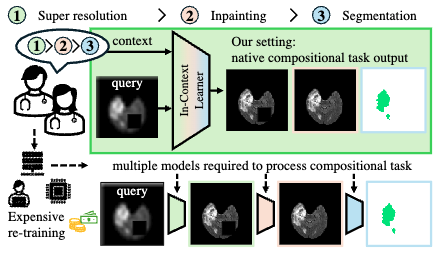
Prof. Dr. Erik Rodner is a faculty member at the University of Applied Sciences Berlin (HTW Berlin), where he serves as a Professor for Machine Learning and Data Science. He also contributes to the School of Engineering Sciences - Technology and Life. His research spans computer vision, machine learning, and biomedical applications, with a focus on learning with limited data, robust visual recognition models, and medical image analysis. He has developed innovative methods for medical diagnostics, industrial classification, and anomaly detection. Recent publications (2025-2016) highlight his expertise in visual in-context learning, semi-weakly segmentation, and active learning frameworks. He has collaborated with institutions such as ZEISS Group, Friedrich Schiller University Jena, and UC Berkeley. Scientific Awards: Award for Excellent Teaching (2023)
Wei Gao is an Associate Professor at the Swanson School of Engineering, University of Pittsburgh. His research focuses on the design, deployment, analysis and measurement of on-device AI architectures and algorithms on mobile, embedded and networked systems. He has strong interests in unveiling analytical principles underneath practical AI deployment problems, and designing systems based on these principles. The developed AI and system solutions are widely applied to various application scenarios, including Internet of Things, edge computing and smart health. Dr. Gao received his PhD from Pennsylvania State University in 2012 and his B.E. from the University of Science and Technology of China in 2005. Dr. Gao's research spans across Cyber-Physical Systems , Infrastructure Security , High Performance Computing , and the Distributed Governance of Information . His work particularly emphasizes on-device AI architectures and algorithms for mobile and embedded systems. He explores how to deploy AI efficiently on resource-constrained devices, with applications in Internet of Things, edge computing, and smart health. His research aims to bridge theoretical principles with practical system implementations, focusing on creating efficient, secure, and reliable AI solutions for real-world deployment scenarios. His recent work has increasingly focused on bringing Large Language Models to edge devices while maintaining performance and security. Analysis of Dr. Gao's recent publications (2021-2025) reveals a strong focus on on-device AI, particularly around Large Language Models for resource-constrained environments. His work addresses critical challenges including model personalization, security against illegal adaptation, sparse activation techniques, and physics-grounded generation. Much of his research targets making AI more efficient, secure, and practical for deployment on edge devices with limited computational resources, while also exploring applications in health monitoring and power systems. Dr. Gao has received significant recognition for his research, including: NSF Faculty Early Career Development (CAREER) Award (2016) Dr. Gao mentors numerous graduate students who contribute to his research in mobile computing, embedded systems, and on-device AI. His research has been supported by various grants, most notably the NSF CAREER award, enabling his team to explore innovative approaches to mobile and embedded AI systems. His lab investigates how to optimize AI for resource-constrained environments while maintaining performance and security, with particular focus on balancing computational efficiency with model accuracy. Dr. Gao leads a research group focused on mobile and embedded AI systems, with particular emphasis on making AI practical for deployment on everyday devices. His team explores novel techniques for model compression, efficient inference, and secure deployment of AI models on edge devices, with applications ranging from health monitoring to smart infrastructure.
Panagiotis Papapetrou is a Professor of Data Science and Deputy Head of Department at the Department of Computer and Systems Science , Stockholm University (since 2017). He also serves as Head of the Data Science Research Group and holds an Adjunct Professor position at Aalto University (Finland). As a Board Member of the Swedish Association for Artificial Intelligence (SAIS) , he contributes to shaping AI research directions in Sweden. Research Pillars: Algorithmic data mining, interpretable machine learning, time series classification, and health informatics Key Projects: AI for societal fairness, digital twins for smart buildings, EXTREMUM for explainable medical AI, and e-learning personalization Teaching Legacy: Developed courses in Data Mining (HT2013-2022), Machine Learning (VT2022-2024), and Health Informatics (VT2018-2021) His work focuses on interpretable AI for healthcare applications, particularly through counterfactual explanations for time series classification and forecasting. This includes developing methods like Glacier for constrained counterfactuals and Ijuice for k-justified explanations. His research also explores multimodal clustering of sepsis patient records and federated learning approaches for ICU mortality prediction. Recent scientific contributions include: CounterFair (2024): Group fairness analysis via counterfactual burden metrics M-ClustEHR (2024): Multimodal clustering for electronic health records COMET (2024): Constraint-based glucose forecasting explanations Temporal pattern mining (2024-2025): Enhanced forecasting models through decomposition Z-Time (2024): Interpretable multivariate time series classification His editorial leadership includes: Action Editor at Machine Learning Journal (since 2024) Action Editor at Data Mining and Knowledge Discovery (since 2018) Guest Editorial Board for ECML/PKDD Journal Track (2014-2019)
Christian A Parkinson is an Assistant Professor at Michigan State University , affiliated with the Departments of Mathematics and Computational Mathematics, Science and Engineering. His research spans mathematical modeling, computational methods, and interdisciplinary applications in epidemiology, control theory, and differential geometry. Research Interests : Mathematical epidemiology, path planning algorithms, reaction-diffusion systems, stochastic modeling, differential geometry, and network science. Email : chparkin@msu.edu His recent publications focus on: Hamilton-Jacobi equations for optimal path planning in multi-agent systems Reaction-diffusion models for epidemics with human behavior Differential geometry approaches to hyperbolic surfaces Network models for disease-opinion coevolution Environmental crime modeling using level sets He teaches MTH 890: Readings in Mathematics , emphasizing advanced computational and theoretical frameworks.
Akash Srivastava is a Research Scientist and Principal Investigator (PI) at the MIT-IBM Watson AI Lab in Cambridge, MA, and Chief Architect of Large Language Model Alignment at IBM Research. His work focuses on generative modeling , Bayesian inference , and machine learning for constrained engineering design . He previously conducted PhD research at the University of Edinburgh under Dr. Charles Sutton and Dr. Michael U. Gutmann on variational inference for generative models using deep learning. His research spans Neuro-Symbolic AI , Language Model Alignment , and Synthetic Data Generation , with applications in 3D modeling , urban logistics , and material science . Recent publications highlight advancements in diffusion models , continual learning , and privacy-preserving data synthesis . As a PI, he collaborates with MIT faculty like Prof. Faez Ahmed and Prof. Rafael Gomez-Bombarelli on projects such as generative modeling for mechanical systems , synthetic data in decision-making , and greener delivery networks . He has received funding through a DARPA grant for machine common sense research.