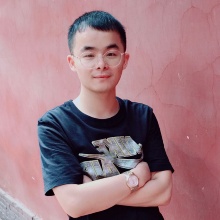
Bo Xiong is a researcher at the University of Stuttgart in the Analytic Computing group. His research focuses on machine learning and knowledge graphs , with a particular emphasis on geometric embeddings and hyperbolic neural networks. His research interests include: Knowledge graph embeddings Hyperbolic and pseudo-Riemannian geometry in AI Temporal knowledge graph reasoning Structured multi-label prediction Recent publications highlight his work on geometric relational embeddings, complex query answering, and temporal fact reasoning using advanced manifold-based techniques.
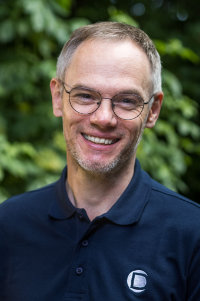
Torsten Schaub is a Professor at the Institute of Computer Science , University of Potsdam. His research focuses on Answer Set Programming (ASP) , constraint solving, temporal reasoning, and combinatorial optimization, with applications in multi-agent pathfinding, product configuration, and course timetabling. Key contributions include ASP-based tools for industrial-scale optimization problems, metric temporal logic implementations, and frameworks for dynamic equilibrium logic. Recent work explores efficient design space exploration, stream reasoning, and multi-shot ASP solving for complex domains. His publications emphasize hybrid ASP systems , integrating constraints and temporal logic, with co-authors across Europe and Asia. He actively develops tools like clingo and Clingraph for practical ASP applications in logistics, bioinformatics, and robotics. The articles reveal a trend toward multi-agent systems (e.g., pathfinding algorithms) and temporal extensions in ASP, combining formal logic with real-world problem-solving. Sub-fields include constraint satisfaction, logical abduction, and declarative modeling for optimization tasks.
Joachim Baumeister is a Professor at the Chair of Computer Science VI - Artificial Intelligence and Knowledge Systems within the Institute of Computer Science at the University of Würzburg's Faculty of Mathematics and Computer Science. While his primary employment since September 2010 has been at denkbares GmbH, a company specializing in knowledge-based systems, he continues to regularly give lectures at the university. His research focuses on Semantic Information Systems, Knowledge Graphs, Deep Learning applications, Natural Language Processing, and Knowledge-based Configuration for Industry 4.0. Professor Baumeister's work bridges theoretical AI research with practical industry applications, particularly in knowledge-based configuration systems and semantic technologies. His recent publications (2020-2024) reveal a strong emphasis on product configuration systems, semantic knowledge representation, regulatory document processing, and knowledge-based systems. His research has evolved from foundational work on semantic wikis and knowledge engineering to more recent applications involving deep learning and large language models, demonstrating adaptability to emerging technologies while maintaining focus on practical knowledge representation problems. Professor Baumeister's work demonstrates significant contributions to case-based reasoning, knowledge configuration, and semantic technologies, with applications spanning regulatory compliance, industrial configuration systems, and document processing. His current research areas include: Semantic Information Systems and Knowledge Graphs Deep Learning for Image Recognition and Language Understanding Knowledge-based Configuration for Industry 4.0 Natural Language Processing Intelligent Personal Assistants and Chat Bots Though specific students aren't listed in the provided information, Professor Baumeister actively invites students to contact him regarding projects, bachelor theses, and master theses in his areas of expertise. His work at denkbares GmbH focuses on the design, implementation, and evolution of knowledge-based systems and semantic information systems.
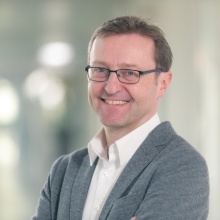
Dietmar Seipel is a Professor at the University of Würzburg, affiliated with the Department of Computer Science within the Faculty of Mathematics and Computer Science. He has held this position since November 1995, establishing a distinguished academic career spanning over 25 years with significant contributions to logic-based computer science. Professor Seipel's research focuses on Logic Programming and Deductive Databases, with substantial expertise in Knowledge Engineering and Artificial Intelligence. His scholarly work bridges theoretical foundations with practical applications, particularly in rule-based systems, knowledge representation, and declarative programming paradigms. He has consistently advanced the field through both theoretical developments and practical implementations, creating tools that enable more effective knowledge management and reasoning systems. His publication trajectory demonstrates a clear evolution from foundational work in disjunctive logic programming to contemporary applications in knowledge representation and semantic technologies. Recent research shows continued innovation in integrating logic programming with modern programming languages and systems, including Python and JavaScript implementations. His work spans theoretical contributions to practical tool development, with applications across diverse domains including space systems, medical informatics, and business process management. Professor Seipel has made extensive contributions to the academic literature, with publications appearing consistently from the 1980s through to the present. His work has influenced both theoretical developments in logic programming and practical applications in knowledge-based systems. He has been actively involved in academic community building through conference organization, particularly for events related to declarative programming and knowledge management.
Wotao Yin is a Professor of Mathematics at the University of California, Los Angeles, with a distinguished research career spanning over two decades in optimization theory and its applications. His work bridges theoretical mathematics with practical applications in machine learning, image processing, and signal analysis. As a leading researcher in optimization algorithms, he has made significant contributions to the development of methods like ADMM (Alternating Direction Method of Multipliers), proximal algorithms, and decentralized optimization techniques. Department: Department of Mathematics School: College of Letters and Science University: University of California, Los Angeles Yin's research focuses on developing efficient algorithms for large-scale optimization problems, with particular expertise in convex and nonconvex optimization, distributed and decentralized optimization, and mathematical foundations of machine learning. His work has profound implications for image reconstruction, signal processing, and modern machine learning systems. He has pioneered methods for handling sparse data, non-smooth objectives, and constrained optimization problems that arise in real-world applications. An analysis of his recent publications reveals a strong trend toward addressing optimization challenges in machine learning, particularly in federated learning, attention mechanisms, and nonconvex problem structures. His work demonstrates a consistent pattern of bridging theoretical optimization with practical machine learning applications, developing algorithms that balance computational efficiency with theoretical guarantees. Recent papers show increasing focus on heterogeneous data settings, large language model optimization, and fundamental limitations of optimization methods in complex learning scenarios. Throughout his career, Professor Yin has mentored numerous PhD students and postdoctoral researchers who have gone on to successful careers in academia and industry. His collaborative network spans multiple institutions worldwide, with particularly strong connections to researchers in China and across the United States. His work has been supported by various funding agencies recognizing the fundamental importance of optimization theory for advancing computational science. Professor Yin leads a vibrant research group focused on mathematical optimization and its applications, where students and collaborators work on cutting-edge problems at the intersection of mathematics, computer science, and engineering. The group maintains strong connections with both theoretical and applied research communities, participating in major conferences across optimization, machine learning, and computational mathematics.
Dr. Carl Corea is a postdoctoral researcher at the University of Koblenz-Landau, Germany, affiliated with the Process Science Group within the Department of Computer Science. He holds a PhD in Computer Science (with distinction, 2020) and has served in roles such as Acting Professor of Business Information Systems (2023/24) at Justus Liebig University Giessen and Visiting Researcher at SAP Signavio. His research bridges business informatics and theoretical computer science, focusing on process mining, declarative process specifications, and decision modeling (DMN). He actively contributes to academic leadership roles, including memberships on doctoral committees, examination boards, and interdisciplinary research centers at the University of Koblenz. Corea's research interests include business process management, artificial intelligence applications in processes, and inconsistency measurement in business rules and process models. He has delivered courses on AI in Accounting, Project Management, and Business Process Management at multiple institutions. His work has been recognized with awards such as the Best Paper Award at WI 2019 and the Debeka Innovationspreis for research projects like 'Predictive Process Monitoring'. He serves on the program committees of major conferences in AI and business process management, including KR, AAAI, BPM, and ECAI. His publications span topics like declarative process modeling, DMN verification, and carbon-aware process execution. Corea also chairs Minitracks at events like HICSS and oversees conference organization for tracks such as Business Process Technology. Education: PhD in Computer Science (2020, with distinction) Awards: Multiple research and teaching awards, including nominations for early-career recognition Administration: Member of doctoral committees, academic boards, and interdisciplinary research centers Grants: DAAD Fellowship for international conference participation (2020)
Mario Alviano is a Professor at the University of Calabria's Department of Computer Engineering, Modeling, Electronics and Systems (DIMES) in Rende, Italy. With a prolific publication record spanning from 2008 to 2025, he has established himself as a leading researcher in Answer Set Programming (ASP), logic programming, and knowledge representation. His work bridges theoretical foundations with practical applications across diverse domains including cybersecurity, environmental monitoring, and explainable AI. Alviano's research focuses on advancing the theoretical understanding and practical applications of Answer Set Programming. His key contributions include developing ASP Chef, a visualization and development framework for ASP; advancing theoretical foundations of conditional reasoning and typicality in weighted knowledge bases; and creating bridges between neural networks and symbolic AI through preferential interpretations. His recent work explores temporal extensions to conditional logics, applications of ASP to digital twin visualization, and tools for improving explainability in AI systems. Alviano's publications consistently appear in top-tier venues including ICLP, LPNMR, JELIA, and Theory and Practice of Logic Programming. His research demonstrates strong trends toward practical applications of theoretical advances, with increasing focus on explainability, visualization, and real-world problem solving. The recent surge in publications (26 in 2024 alone) indicates significant ongoing research activity and leadership in the field. His work increasingly integrates ASP with other AI paradigms, particularly neural networks, to create more interpretable and robust AI systems. Alviano has made substantial contributions to the development of tools and frameworks that lower barriers to entry for ASP, most notably ASP Chef which provides visualization capabilities for complex logic programs. His work on Hashcash Tree demonstrates applications to security problems, while his research on marketplace logistics shows practical business applications of declarative programming. His collaborative network is extensive, with frequent co-authorship with researchers including Wolfgang Faber, Nicola Leone, Francesco Ricca, Carmine Dodaro, Laura Giordano, and Daniele Theseider Dupré, reflecting strong connections across European AI research institutions. Alviano has also organized workshops including multiple editions of Datalog 2.0, demonstrating leadership in the logic programming community.
Dr. Yuliya Lierler is a Professor in the Department of Computer Science at the University of Nebraska Omaha's College of Information Science & Technology. She has been a faculty member since 2012, reaching the rank of full professor, and was appointed to the Cheryl Prewett Diamond Professorship in 2020. Her work focuses on artificial intelligence, particularly in knowledge representation, automated reasoning, and declarative problem solving. PhD in Computer Science (University of Texas at Austin, 2010) Dr. Lierler's research bridges logic programming with practical AI applications, including natural language understanding, constraint satisfaction, and SMT-based solvers. She is a co-director of the NLPKR lab and has authored over 70 peer-reviewed publications in venues like Artificial Intelligence Journal and AAAI. Her contributions include open-access textbooks and tools like text2alm for semantic information extraction. Her recent publications explore advancements in answer set programming (ASP) semantics, automated reasoning frameworks, and hybrid knowledge representation systems. She has served as program co-chair for major conferences like ICLP (2022) and PADL (2017), and received awards such as the IS&T Outstanding Research Award (2024). Dr. Lierler also mentors students and leads initiatives in teaching innovation through online education and professional development programs. Mentor of the Year Award, Aksarben Foundation (2025) IS&T Outstanding Research and Creativity Award (2024) Best Student Paper Award (with Amelia Harrison, 2016) Dr. Lierler contributes to academic service through leadership roles in international conferences and program committees. Her lab, NLPKR, focuses on integrating natural language processing with formal logic, while her teaching emphasizes formal methods and AI foundations.
Dominik Rusovac is a Research Associate at Technische Universität Dresden's International Center for Computational Logic within the Faculty of Computer Science. His research focuses on answer set programming, knowledge representation, and computational logic, particularly developing methods for efficient navigation and querying of solution spaces in logical systems. Core research investigates computational complexity of answer set navigation, incremental counting algorithms, and visual tools for exploring argumentation frameworks. Recent work includes IASCAR for anytime refinement in answer set counting and NEXAS for visualization of argument solution spaces. Publications demonstrate specialization in binary decision diagram applications for abstract dialectical frameworks, complexity analysis of logic-based queries, and extensions to quantitative reasoning paradigms. Collaborations extend to multi-agent systems and social choice theory applications. Joined the NAVAS project in 2021, developing novel approaches for answer set navigation. Contributes to open-source tools like ADF-BDD solver and maintains active research in logical reasoning under uncertainty and dependence.
Dr. Diana Troancă is a former Visiting Scientist at the International Center for Computational Logic (ICCL) within the Faculty of Computer Science at TU Dresden. Her research focuses on Formal Concept Analysis (FCA), triadic data systems, and computational logic applications in artificial intelligence and data science. She holds a PhD in Computer Science from Babeș-Bolyai University and TU Dresden, alongside a Master's and Bachelor's in Computer Science from Babeș-Bolyai University, Cluj-Napoca. During her academic career, she contributed to projects involving conceptual navigation, triadic data reduction, and FCA applications in e-learning and web usage analysis. She was affiliated with TU Dresden's Computational Logic research group and previously held roles as an Assistant Researcher (2014–2015) and software engineer in Romania. Her work bridges theoretical FCA advancements with practical tools for knowledge management and AI integration. Troancă has published extensively in conferences like ICFCA, IJCAI, and workshops such as FCA4AI, focusing on navigation paradigms, membership constraints, and triadic data analysis. She also contributed to educational activities, including thesis coordination and teaching database systems at Babeș-Bolyai University.
Michael Benedikt is Professor of Computer Science at the Department of Computer Science, University of Oxford, and a Fellow of University College, Oxford. His research lies at the intersection of computational logic, database theory, and theoretical computer science, with a focus on query answering, logic-based data management, and formal methods for data integration. Institution: University of Oxford, Department of Computer Science Position: Professor of Computer Science Email: michael.benedikt@cs.ox.ac.uk Office: 355 Wolfson Building, Parks Road, Oxford OX1 3QD, UK His primary research interests include data management, computational logic, model theory, query reformulation, integrity constraints, existential rules, and fixpoint logics. He investigates theoretical foundations of querying Web and social network data, ontology-based data integration, and finite model reasoning. His recent publications span top venues such as VLDB, PODS, LICS, ICALP, and IJCAI, covering topics like scalable querying of nested data, interpolation in fixpoint logics, finite open-world query answering, and rewriting recursive queries. A unifying theme across his work is the application of logical methods to ensure correctness, decidability, and efficiency in data access and transformation. Best Paper Award, ICALP 2017 (Track B) EPSRC Established Career Fellowship (2015–2020) He has supervised numerous PhD students and postdoctoral researchers, including Jaclyn Smith, Djordje Zivanovic, Antonia Kormpa, and Benjamin Spencer. His research group has been supported by grants from EPSRC and Microsoft Research. He actively contributes to the academic community through service on program committees (e.g., LICS, PODS, IJCAI, VLDB) and editorial boards (e.g., Journal of Computer and System Sciences). He co-authored a book on interpolation-based query reformulation published by Morgan Claypool.
Luciano Serafini is a researcher at Fondazione Bruno Kessler in Trento, Italy, specializing in Artificial Intelligence with a focus on Neuro-Symbolic Integration and Knowledge Graphs . His work bridges Machine Learning and Symbolic Reasoning , emphasizing Planning , Relational Learning , and Visual-Textual Grounding . Key Research Areas : Neuro-symbolic systems, logic-based knowledge representation, planning under uncertainty, and computer vision. Recent Publications highlight trends in Embodied AI for open-world tasks, Weighted Model Counting , and Graph Generative Models . His contributions include Logic Tensor Networks for integrating deep learning with formal logic and methods to mitigate Data Sparsity through knowledge transfer. Collaborations span institutions like the University of Trento and research teams in Computer Vision and Reasoning , with applications in Social Navigation and Event Recognition .
Yanju Chen is a postdoctoral scholar at University of California, San Diego working with Prof. Yufei Ding. Previously, Chen earned a Ph.D. in Computer Science at University of California, Santa Barbara, advised by Prof. Yu Feng, and studied Computer Science at Sun Yat-sen University, advised by Prof. Rong Pan. Chen's research focuses on developing formal and synthesis-based methods for building trustworthy, performant, and secure programming abstractions. Key application areas include zero-knowledge proofs, smart contract verification, and data-centric systems. The work combines program synthesis, program verification, and artificial intelligence to address complex software engineering challenges, with emphasis on practical implementations through multiple open-source projects. Chen's publication record shows consistent contributions to top-tier conferences including PLDI, OOPSLA, ASE, and CCS, with a clear trajectory from foundational program synthesis techniques to specialized applications in blockchain and zero-knowledge proofs. Recent work demonstrates increasing focus on security-critical applications, particularly in the rapidly evolving domains of DeFi and zero-knowledge circuits. Scientific Awards 2025: University of California, Riverside: FAME Award 2023: Ethereum Foundation Academic Award 2023: UCSB Computer Science Outstanding PhD Student of the Year 2022: ACM SIGPLAN PAC Award - OOPSLA 2022: ACM SIGPLAN PLDI Distinguished Paper Award 2022: ACM SIGPLAN PAC Award - PLDI 2017: AAAI Student Scholarship Chen actively contributes to the academic community through service on program committees for PLDI, OOPSLA, and ASE, and artifact evaluation committees for numerous conferences. The research has attracted significant industry attention and funding, particularly from blockchain and cryptocurrency sectors. Chen leads several influential open-source projects including Trinity-Edge for data science synthesis, Picus for ZK circuit verification, and ZKap for practical security analysis, which have gained substantial adoption in both academic and industry settings.
Steffen Staab is a Professor at the University of Stuttgart's Institute for Artificial Intelligence within the Faculty of Computer Science, Electrical Engineering and Information Technology. His research focuses on knowledge graphs, semantic web technologies, and their applications in interdisciplinary domains like construction, healthcare, and autonomous systems. He actively contributes to advancing AI fairness, geometric relational embeddings, and explainable machine learning. Staab's work bridges theoretical advancements with real-world challenges, such as improving data interoperability in building information modeling and enhancing accessibility for deaf communities via AI-driven captioning. His recent projects span semantic industrial information modeling, blockchain-based fair exchange protocols, and large language models for ontology learning in life sciences. Staab has collaborated on initiatives like the WikiMed-DE dataset for biomedical entity linking and the SEMMA knowledge graph foundation model. He also engages in digital society discussions, addressing ethical implications of AI and societal impacts of web science. Staab's research has been presented at leading conferences including Web Science and ACM SIGKDD. His team develops tools for knowledge graph reasoning, anomaly detection in zero-shot learning, and fair algorithmic decision-making. He is affiliated with the University of Stuttgart's Analytic Computing group and maintains active participation in international academic networks.
Arne Meier is a Professor at Leibniz Universität Hannover, affiliated with the Faculty of Electrical Engineering and Computer Science and the Institute of Theoretical Computer Science. He heads the Algorithms research group, focusing on theoretical aspects of computer science with applications to artificial intelligence and database systems. Meier obtained all his academic degrees—Bachelor's, Master's, PhD, and Habilitation—at Leibniz Universität Hannover, establishing a strong foundation in theoretical computer science. His academic journey at the same institution reflects his deep commitment to advancing research in computational theory. Meier's research spans several interconnected areas in theoretical computer science. His primary focus is on complexity theory, particularly the parameterized complexity of problems in non-classical logics with applications to AI. He also investigates enumeration algorithms and the logical foundations of artificial intelligence. His work bridges theoretical computer science with practical applications in knowledge representation and reasoning systems. He has a notable interest in LaTeX and typography, having developed the 'timeline' package for creating timelines in LaTeX documents. His recent publications (2023-2025) demonstrate a consistent focus on the intersection of logic, complexity, and artificial intelligence. Meier's work shows progression from foundational research in dependence and team logics toward more applied areas in argumentation theory and database systems. His research increasingly addresses computational challenges in AI systems, particularly in reasoning under uncertainty and handling inconsistent information. Meier actively contributes to the academic community through extensive program committee service for major conferences including AAAI (2021, 2023, 2024, 2025), IJCAI (2021-2025), and FoIKS (2024 as Co-Chair, 2026). He has also served as a reviewer for numerous conferences and journals in theoretical computer science and artificial intelligence. His current research projects include the DAAD-funded 'Applications and Complexity of Logics in Semiring-Team-Semantics' (2024-2025) and the DFG project 'Team Logics: New Bridges to Database Repairs' (2023-2026). Previously, he led the DFG project 'Nonclassical logics: parametrised and enumeration complexity' (2013-2022) and the MWK project 'Innovation Plus: Komplexität von Algorithmen' (2020-2022). Meier leads the Algorithms research group at Leibniz Universität Hannover, which focuses on theoretical aspects of algorithms with applications to logic and artificial intelligence. The group's work spans complexity theory, logical formalisms, and their applications to computational problems in knowledge representation and database systems.